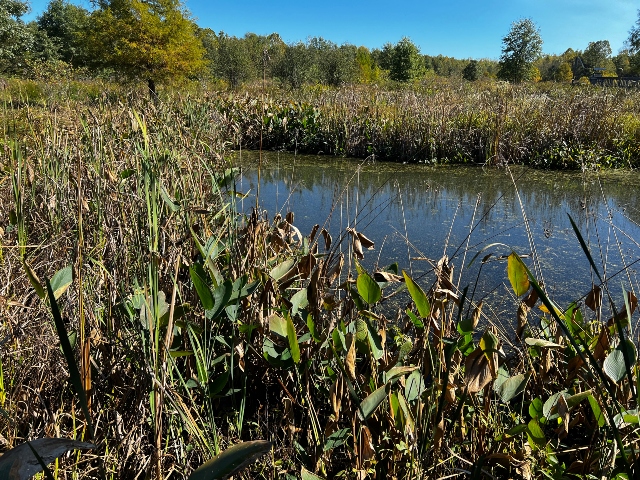
While visiting southern Illinois, I came across this aquatic plant, native to swamps, ponds and other wetlands in the southern and central United States.
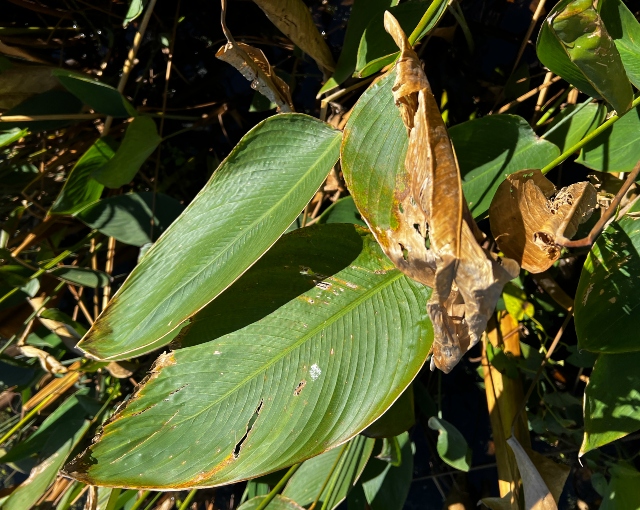
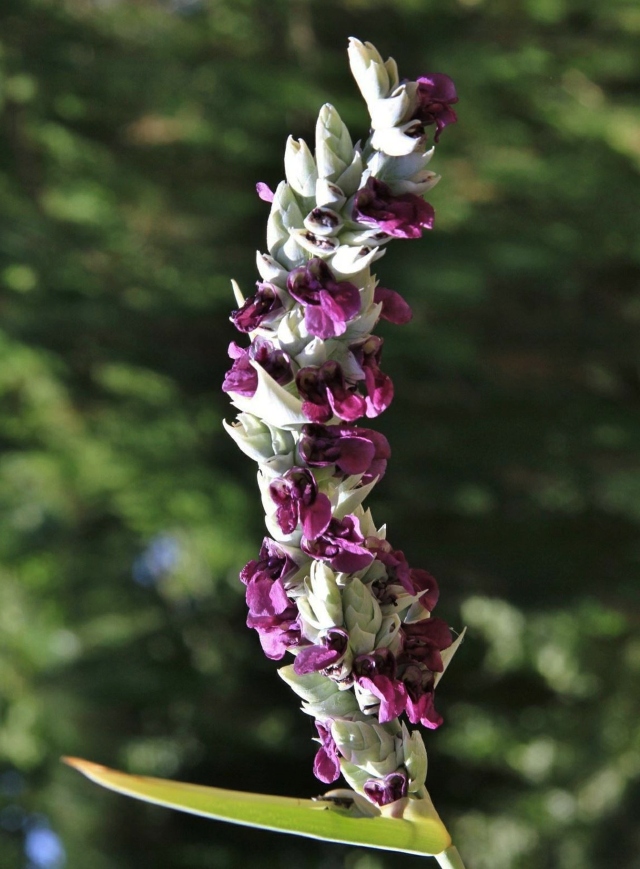
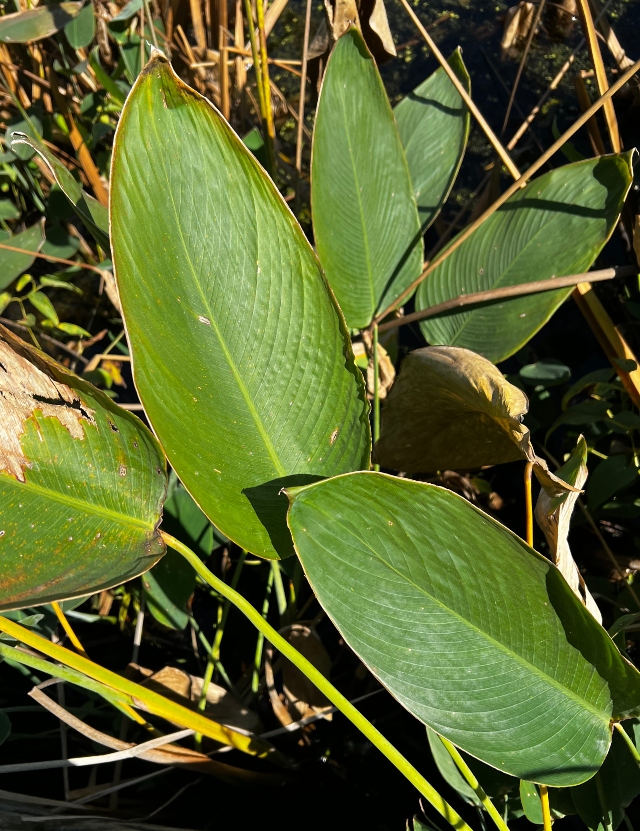
Also known as Water Canna, with its large, blue-green leaves, it looks a lot like the tropical cannas commonly seen in landscape plantings. In late Summer, this native plant produces tall spikes of purple flower clusters.
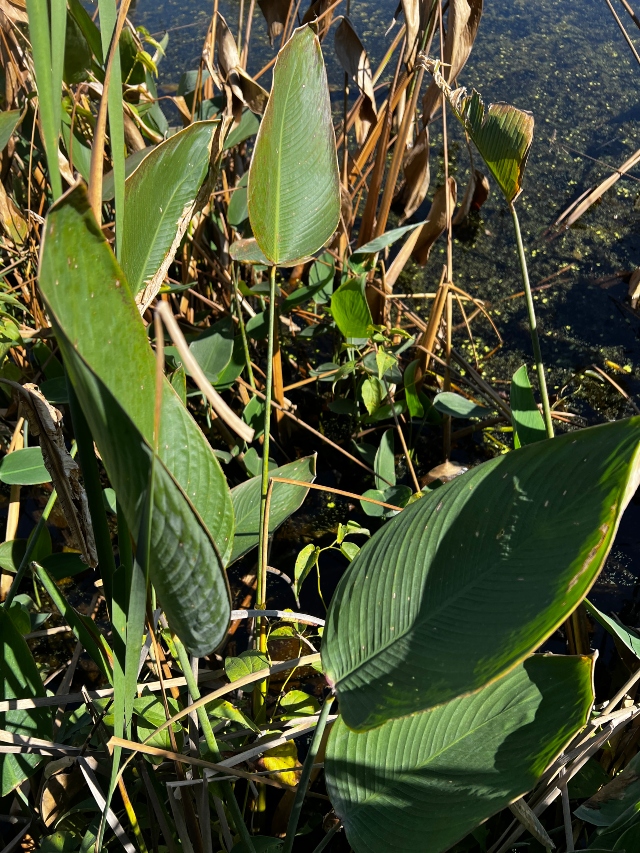
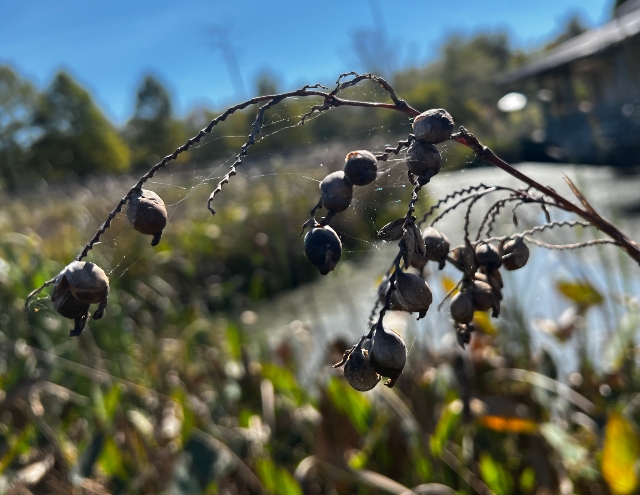
Powdery Alligator-flag is an herbaceous perennial growing from thick rhizomes. The leaves give this plant a tropical look. The thick stalks are longer than the paddle-shaped blades. It produces round, dark brown seeds inside a paper-like covering.
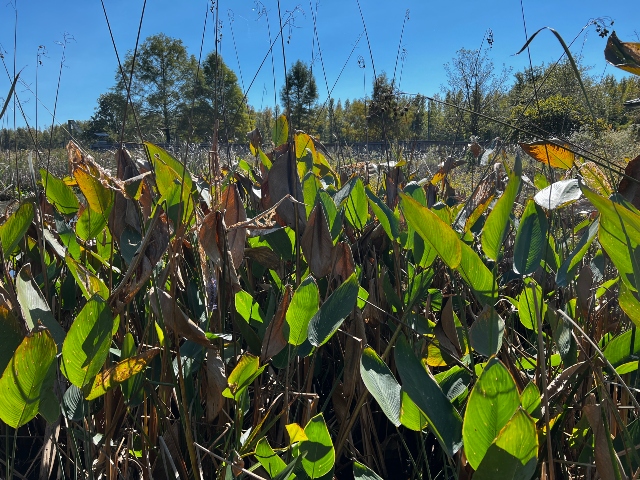
Combined, the leaf stalks and blade may reach 10 feet in height, making them the largest leaves of almost any native North American plant, excluding the leaves of palm trees.
The entire plant appears to be dusted with a fine white powder (glaucous-coated), hence another common name for it – Powdery Thalia.
Its flower stalk is a tall wand bearing clusters of purple blossoms. The flowers are in tight, side-by-side pairs along the zigzag flower-stalk branches. The actual petals are not very showy. What appear as petals are actually highly modified stamens.
This is a neat native plant that I have never encountered before.