
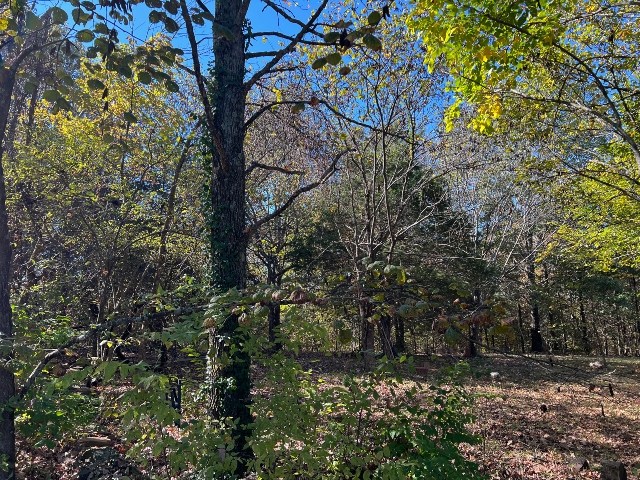
While visiting Illinois, I got to see this small, bright green, predatory insect with raptorial forelegs like a praying mantis and delicate lacewing‑like wings. Despite their common name and appearance, Mantisflies are not closely related to Praying Mantises
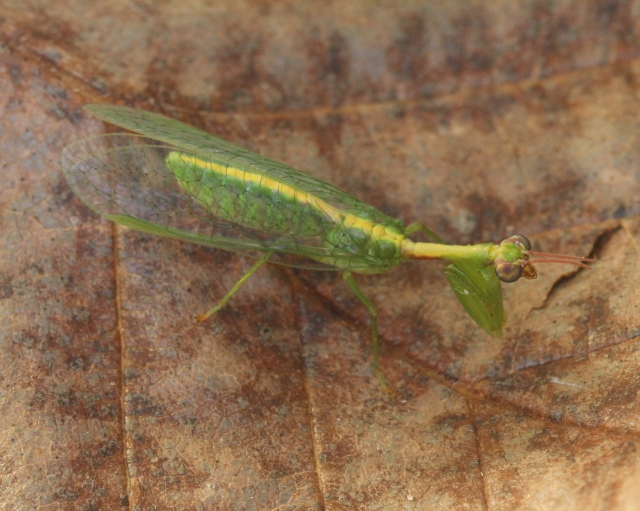
Adults are sit-and-wait predators that use spiked front legs to capture prey. Larvae are specialized parasitoids that develop within spider egg sacs, feeding on spider eggs. The species occurs across the Americas from the Caribbean through Central and North America to South America.
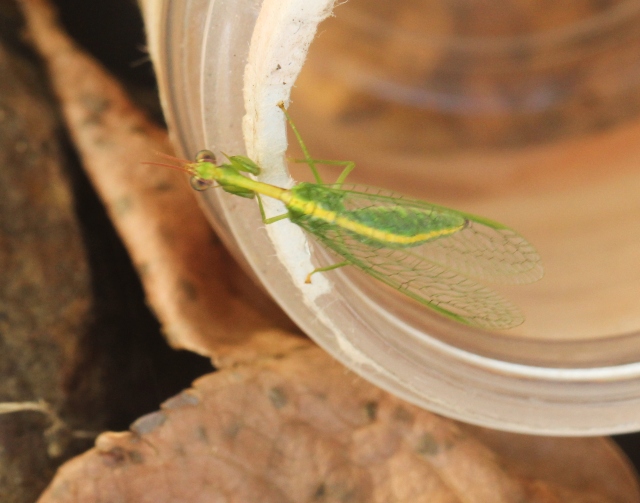
The Green Mantisfly can be distinguished from a Praying Mantis by its smaller size (under 1 inch long), roof-like wing posture at rest, and placement in the order Neuroptera rather than Mantodea. Their forelegs with spiny femur and tibia that close via a hinge mechanism are characteristic of the family, but shared with praying mantises due to convergent evolution.
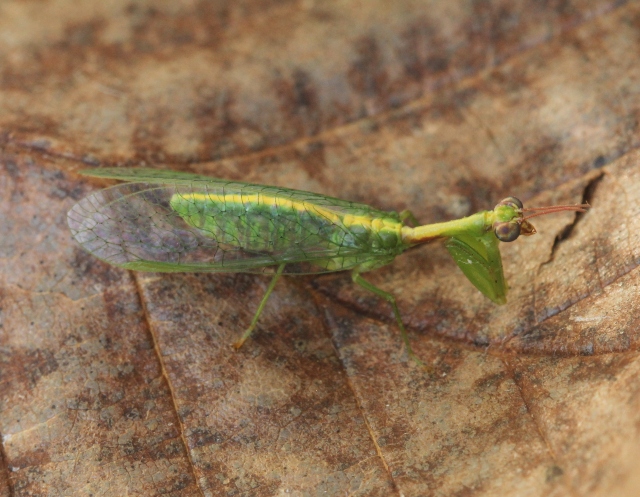
This insect can be found in diverse terrestrial habitats where spiders and small insects occur. Adults are often observed on vegetation and building walls. No specific microhabitat requirements are documented beyond association with spider populations. Mantisflies are frequently attracted to ultraviolet light sources at night.
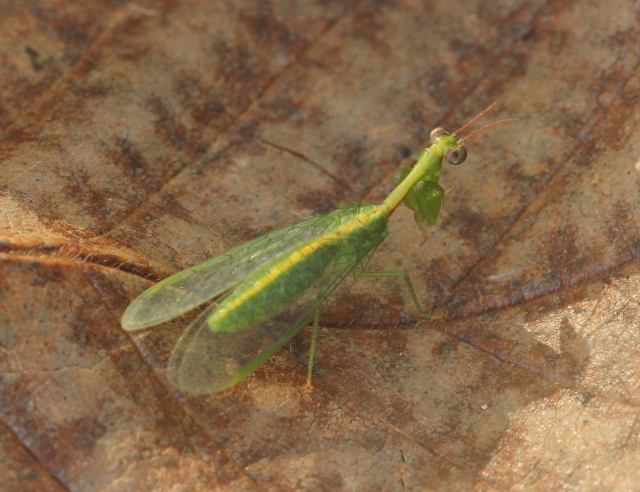
Adults groom their forelegs, which is important for maintaining predatory function. Keeping their forelegs in good working order allows them to effectively catch aphids and other small soft-bodied insects. They are beneficial to people as adults due to their preferred food being small insect pests.
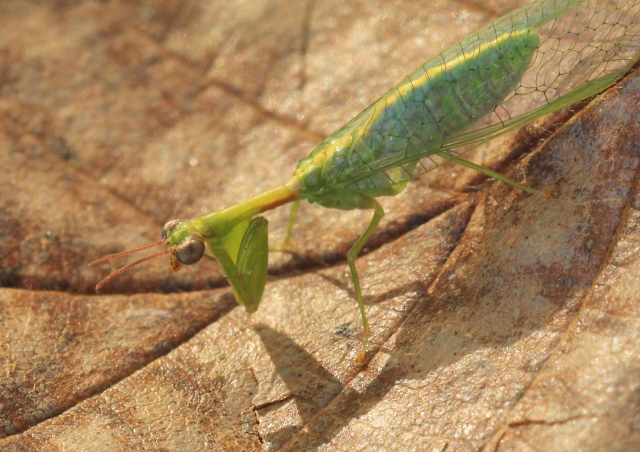
This fascinating and unusual insect has captured the attention of many due to its unique appearance. It was a great experience to see one while on my travels.