
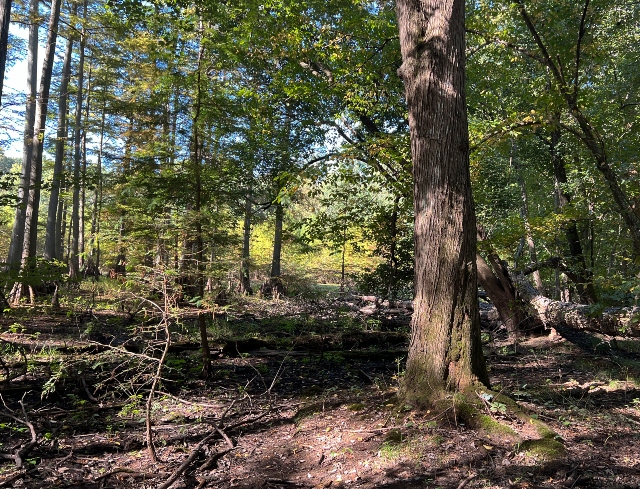
While hiking along the edge of a southern Illinois swamp, I noticed this attractive and common species of fungi often associated with decaying wood. It regularly grows from wooden structures, like porches, decks, and other treated lumber, as well as from decomposing deadwood in forests.
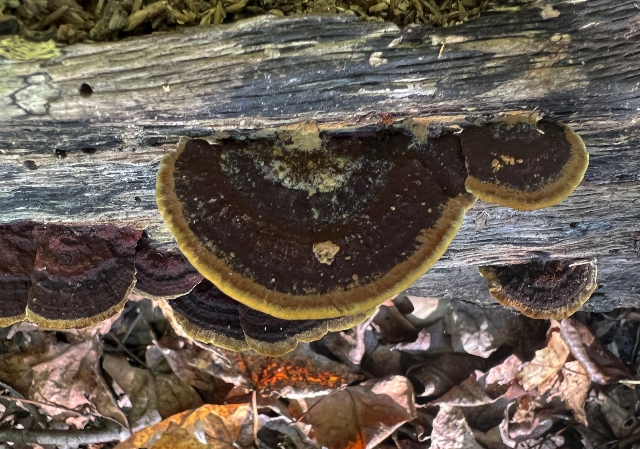
This mushroom is an annual or reviving species, meaning it lives for just one year or can act more like a perennial. The difference in lifestyle usually depends on location and climate. It appears most prolifically during the late Summer and Fall seasons. In warmer climates, it may even persist over Winter. It is widely distributed across North America.
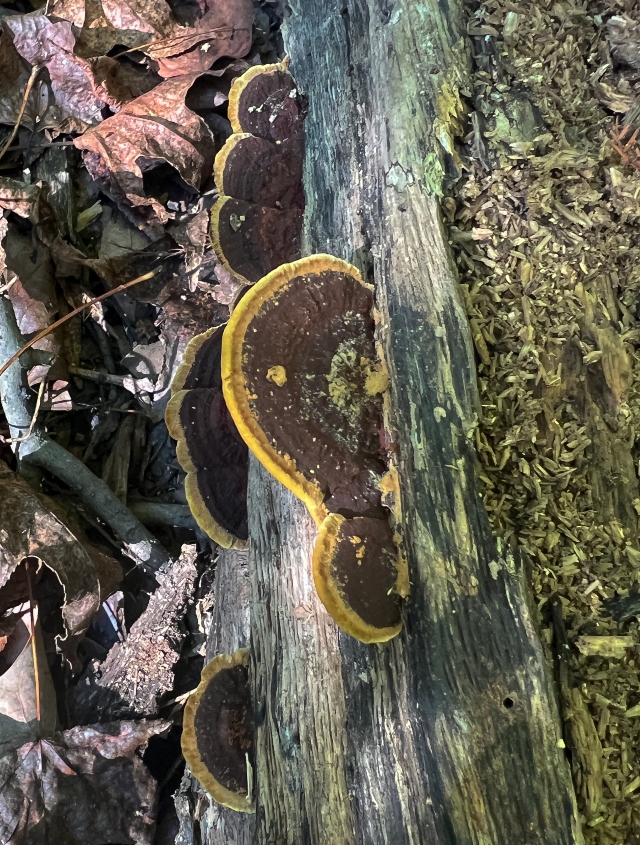
The Rusty Gilled Polypore is a saprobic species, meaning it obtains nutrients by decomposing dead or decaying organic material. It is known for its distinctive feature of having gills instead of the typical pores found in polypores. The cap ranges in size from one to six inches wide.
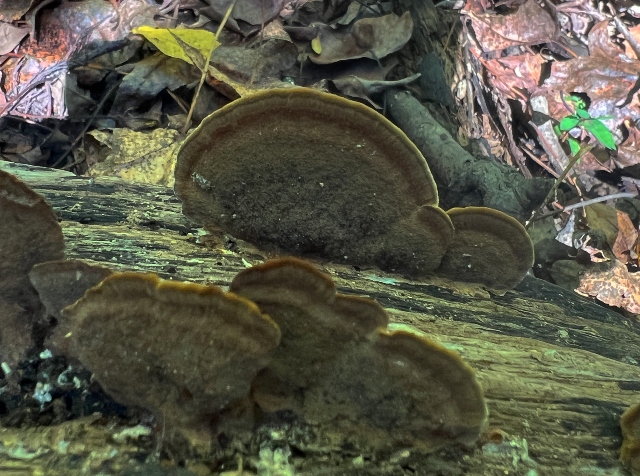
It is loosely bracketed or fan-shaped and has a texture that transitions from velvety in its youthful phase to smooth as it matures. The coloring is frequently distinctively concentric, with zones of color and texture. When young, the cap is yellow to orange, but it gradually turns yellow-brown to dark brown with age. It is often nearly black towards the point of attachment to the wood. The outer edge usually retains its yellow or orange hue.
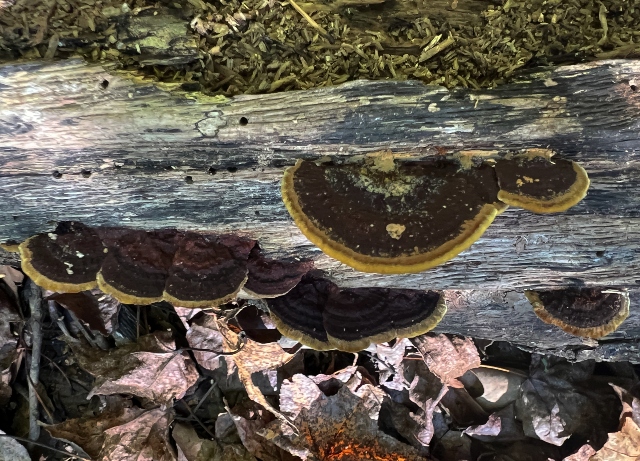
Due to its propensity to grow on lumber, it is a commonly encountered fungus. The Rusty Gilled Polypore is a prime example of nature’s vast adaptability and fungi’s complex ecological roles.