
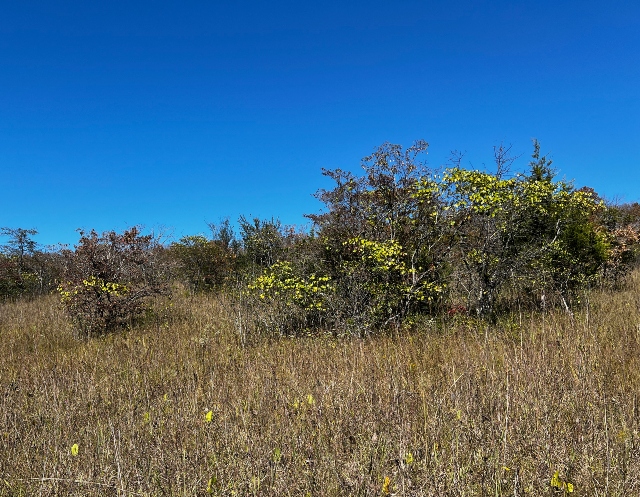
While looking for reptiles and amphibians in a Missouri glade in October, I saw a fair number of pale purple flowers in bloom. This is a North American species of wild onion that is native to central Canada and the central United States. It prefers dry, rocky soil.
Prairie Onion is a one-to-two foot tall chive-like perennial forming tufts of slender, solid leaves and stems. The leaves have a distinct oniony smell when bruised and often die back by the time the plant flowers in mid to late Summer. The leaves are important for the plant’s energy production.
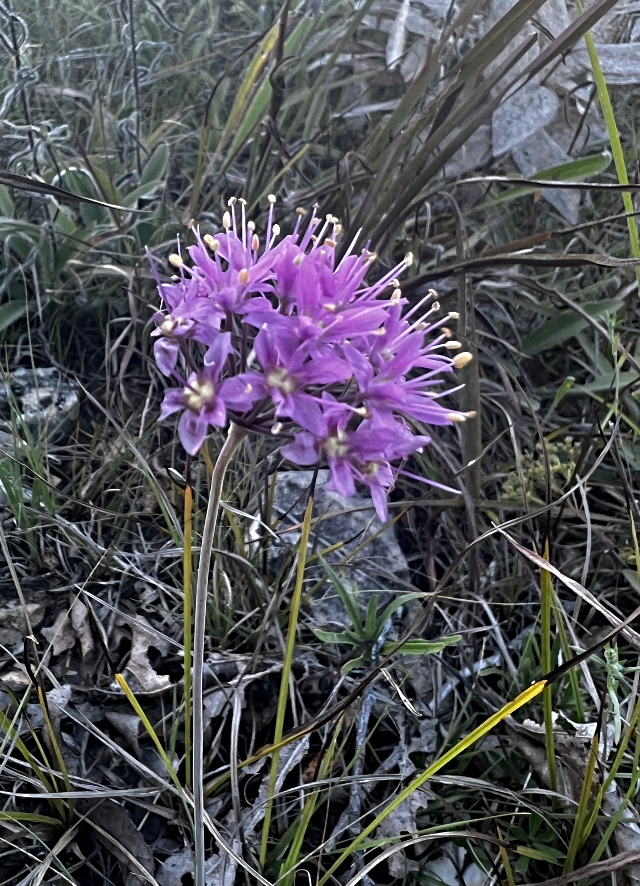
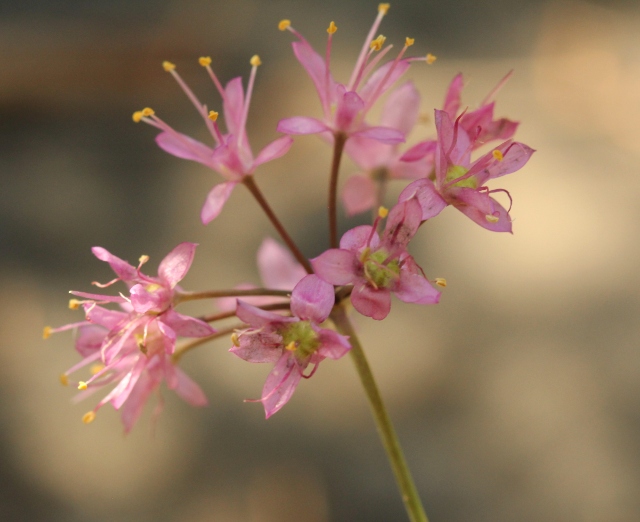
Each plant has a single cluster at the end of a long, naked stem. The 1-1/2 to 2-inch round group of 1/4-inch flowers, are pale pink to deep pinkish purple, sometimes white, with a spot of yellow in the center and long yellow-tipped stamens. The rounded flower clusters are known as umbels.
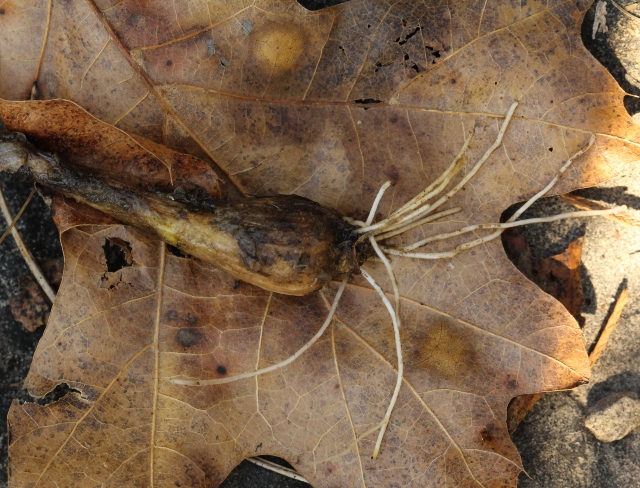
The root system consists of a bulb with unusually deep secondary roots for such a small plant. This, no doubt, promotes survival during dry weather. The bulbs of wild onions have a strong flavor but can be eaten raw or parboiled. Early explorers ate them, and they were also used by settlers to treat colds, coughs, and asthma, and to repel insects.
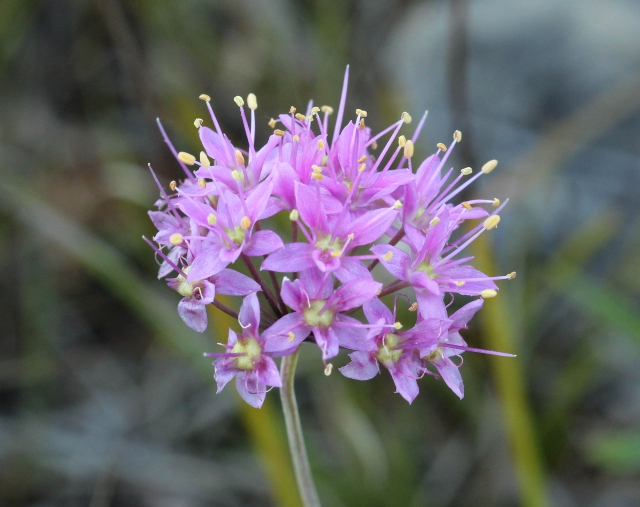
Sometimes known as Autumn Onion, this plant has a delicate beauty when in bloom, resembling a starburst effect.