
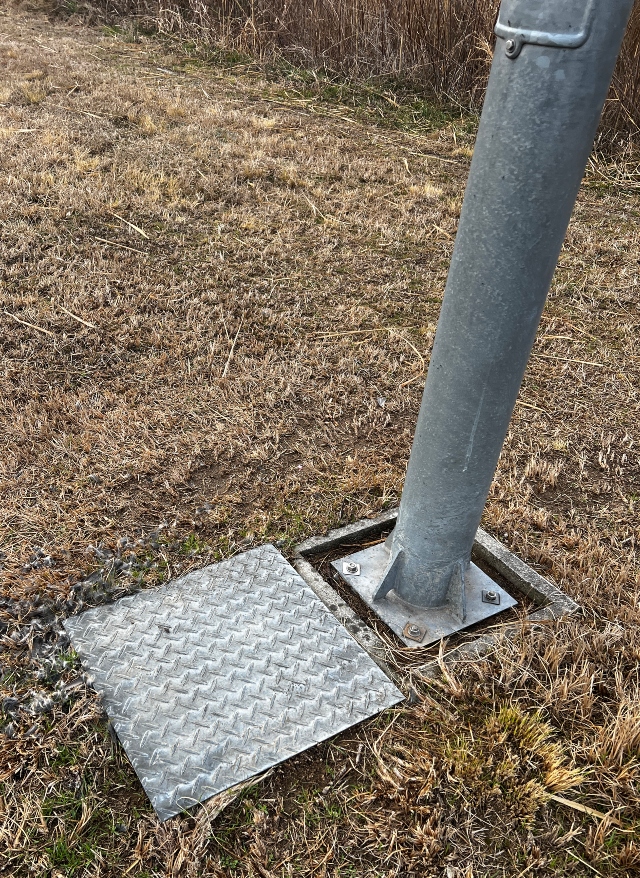
While walking along the Ashida River, I noticed that the light fixtures along the towpath have panels covering underground pits. Lifting these panels exposed some neat invertebrates.
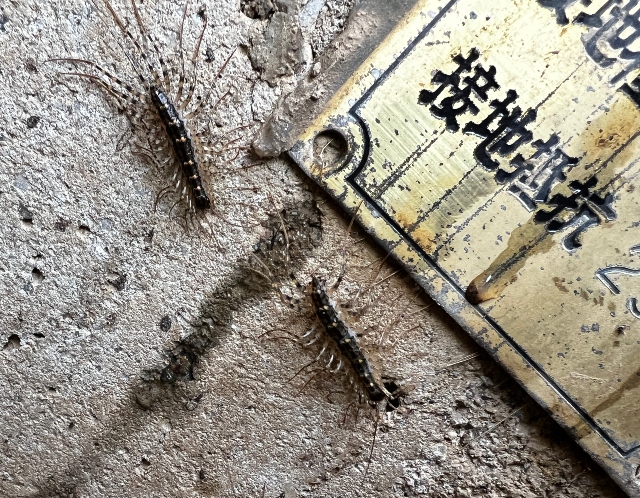
Japanese House Centipedes are insectivores that hunt and eat other arthropods, such as insects and arachnids. Their delicate legs enable them to reach surprising speeds of up to 1-1/3 feet per second.
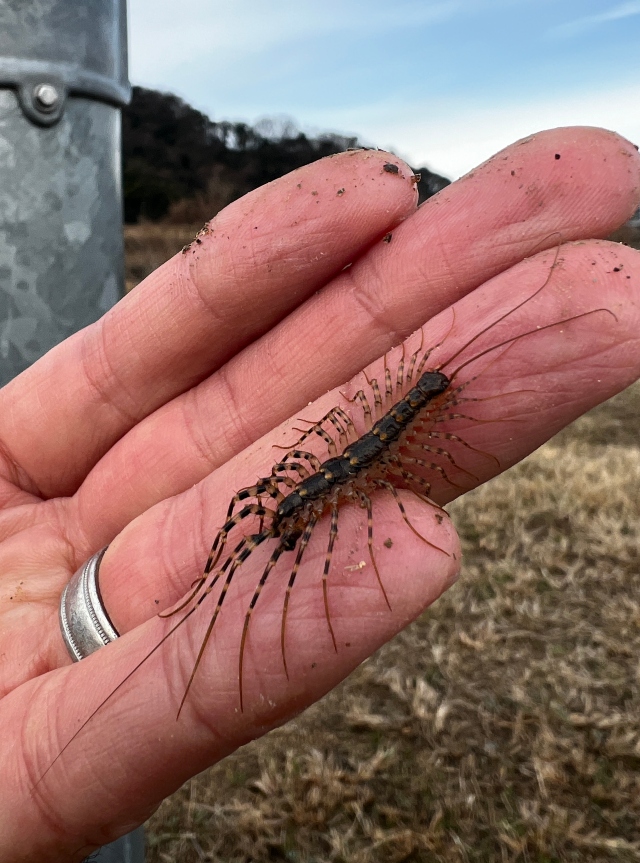
This creature has developed automimicry in that its tail-like hind legs present the appearance of antennae. When the centipede is at rest, it is not easy to tell its front end from its back end.
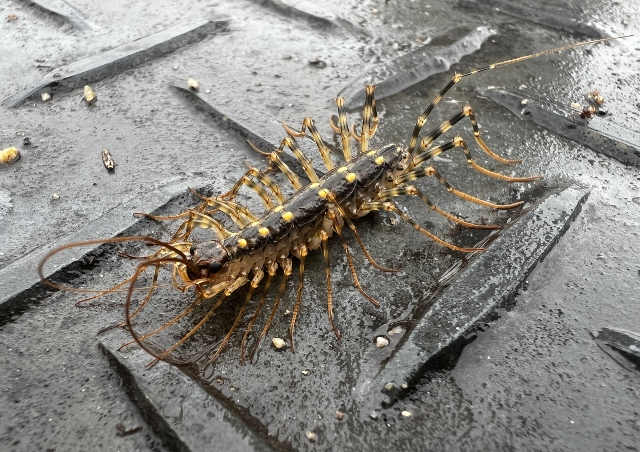
Unlike most other centipedes, House Centipedes and their close relatives have well-developed faceted eyes. They are mostly nocturnal predators. Despite their developed eyes, they seem to rely mostly on their antennae when hunting.
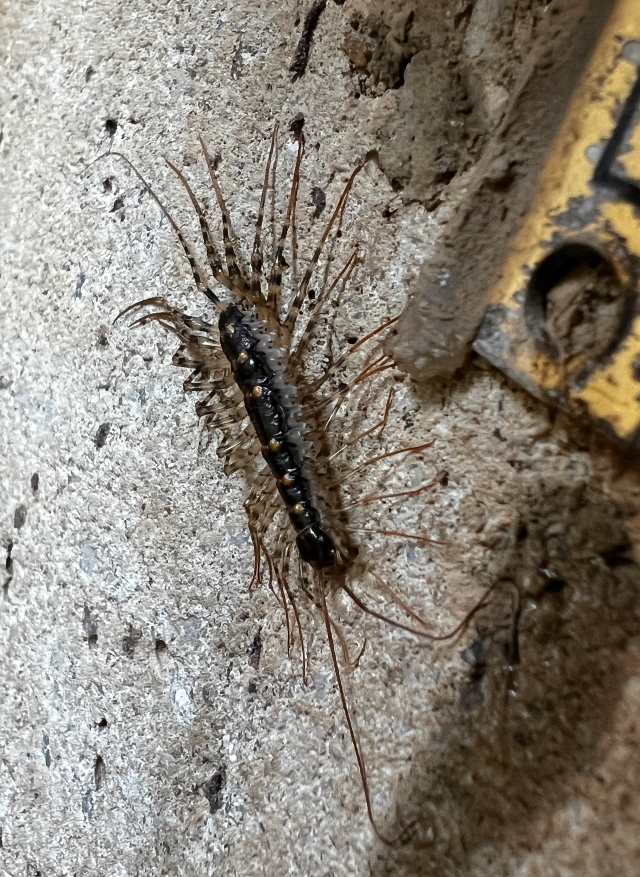
Outdoors, they prefer to live in cool, damp places. Their respiratory systems do not provide any mechanism for shutting their spiracles (small openings on the body surface for breathing), so they need an environment that protects them from dehydration and excessive cold.
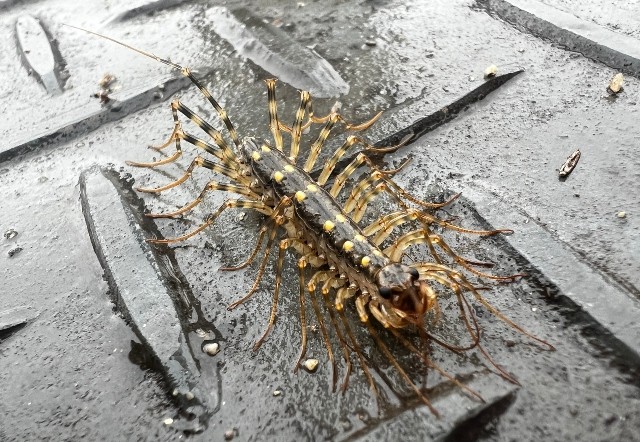
Most live outside, primarily under large rocks, piles of wood or leaves, in bark and especially in compost piles. They often emerge from hiding during the watering of gardens or flowerbeds.
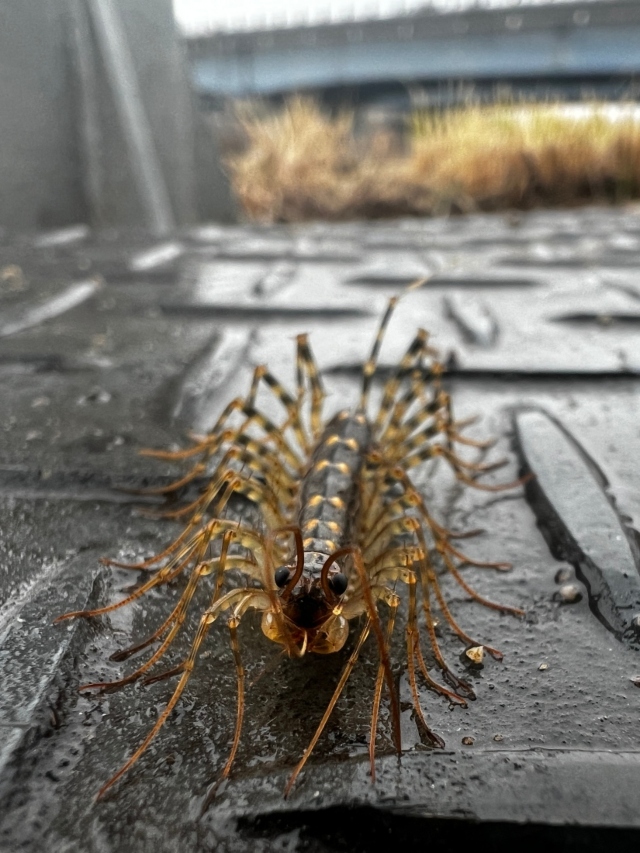
Those that live indoors usually do on the ground levels of homes. While many homeowners may be unsettled by them, they pose no threat towards humans, and are beneficial as they eat pests, such as cockroaches.