
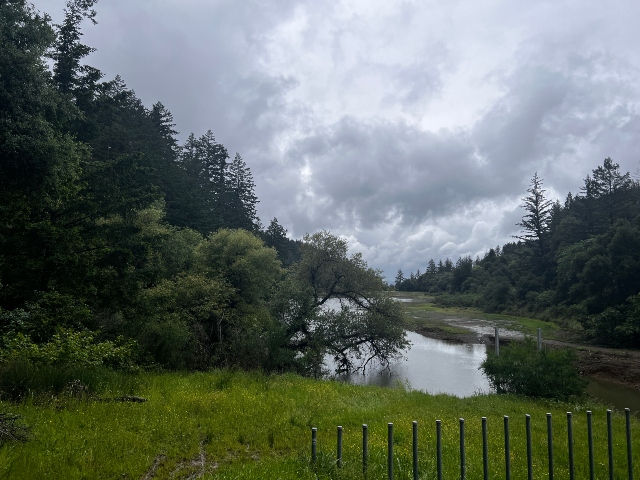
I have found a few examples of this creature over the years, the most recent being on my trip to California in April of 2026. Centipedes require a moist microhabitat because they lack the waxy cuticle of insects and arachnids, causing them to rapidly lose water. Accordingly, they avoid direct sunlight by staying under cover during the daytime and are active at night.
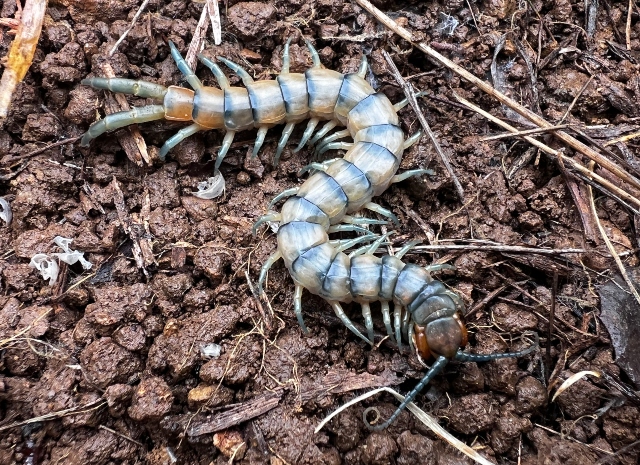
With the Latin Name, Scolopendra polymorpha, this species’ coloration is variable, hence the species name “polymorpha” which means “many forms.” It has several alternative common names, one being Multicolored Centipede. The body segments have one dark lateral stripe, so it is also known as the Tiger Centipede or Tiger-striped Centipede.
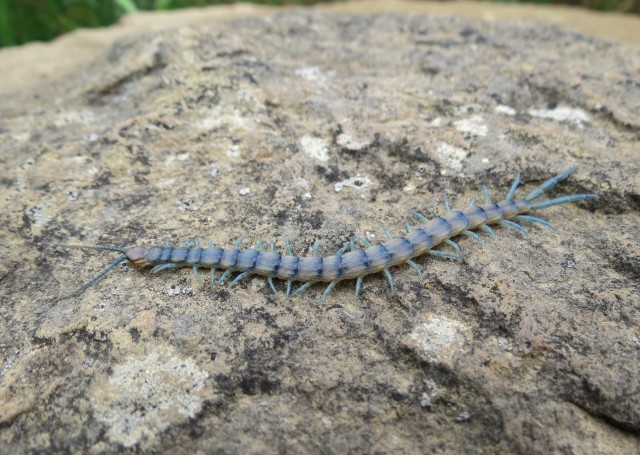
The Common Desert Centipede is indigenous to the Southwestern United States and northern Mexico. It inhabits dry grasslands, forests, and deserts; in these habitats they generally take up residence under rocks, though they have been observed creating burrows in suitable environments and inside of rotting logs.
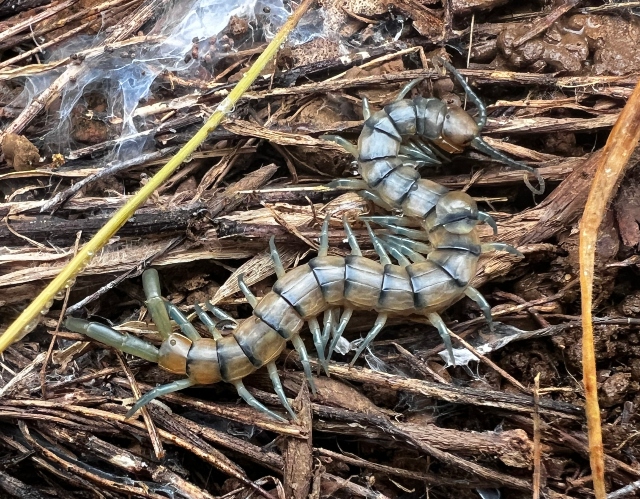
Centipedes are predominantly generalist carnivores, hunting for a variety of prey items that can be overpowered. These fascinating predators have been around for over 400 million years, and they’ve gotten really good at one thing: Hunting. With more than 3,000 species worldwide, centipedes are some of nature’s most effective pest controllers consuming many insects.
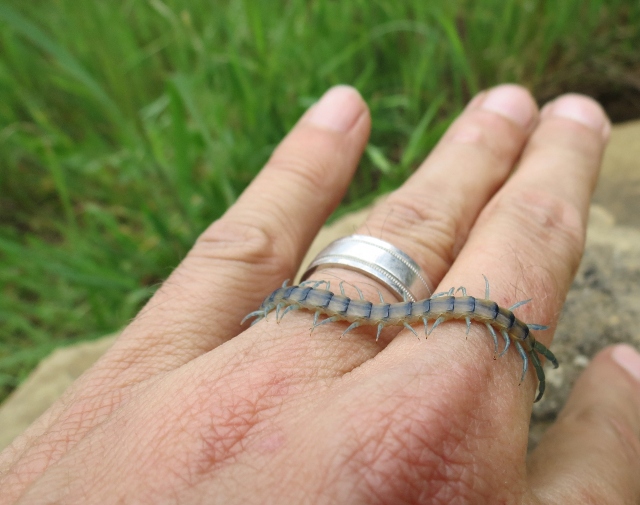
All centipede species are venomous, nocturnal predators that use venom to subdue and kill their prey. Unlike other venomous invertebrates, they neither bite nor sting. Instead they use structures called gnathosomes or gnathopods to inject venom into their prey. These are paired pincer-like appendages in front of the legs. Their “bite” is actually a pinch.
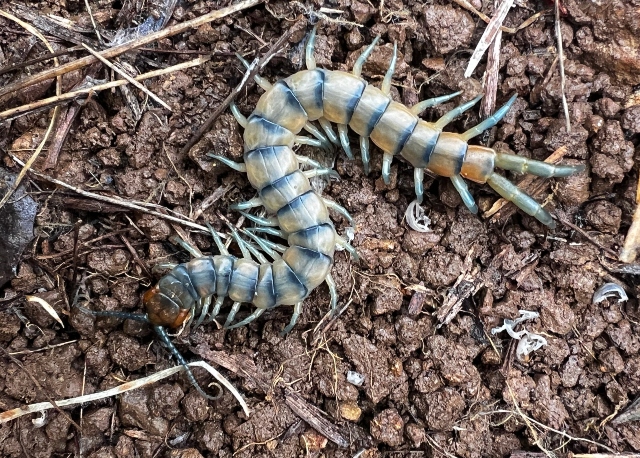
Scolopendra polymorpha is of a decent size, generally reaching 4 to 7 inches in length. Common Desert Centipede mothers take care of their eggs coiling around and grooming them. They may do this to protect them from mold and bacteria. Once the young hatch, she will further care for them for a few more days until they disperse.
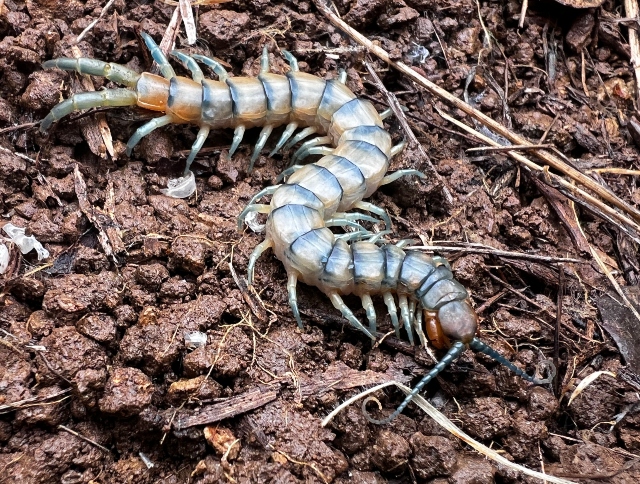
This is always a neat find while in search of reptiles and amphibians.