
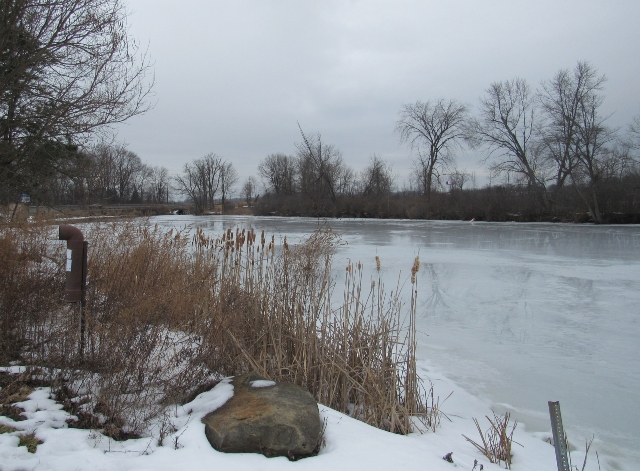
Back in February I was hiking on Akron (OH) and I saw this easily identifiable duck. Adult males feature a bright red head, yellow eyes, a black chest, and a gray body. Females are duller and browner, with a light area around the base of the bill.
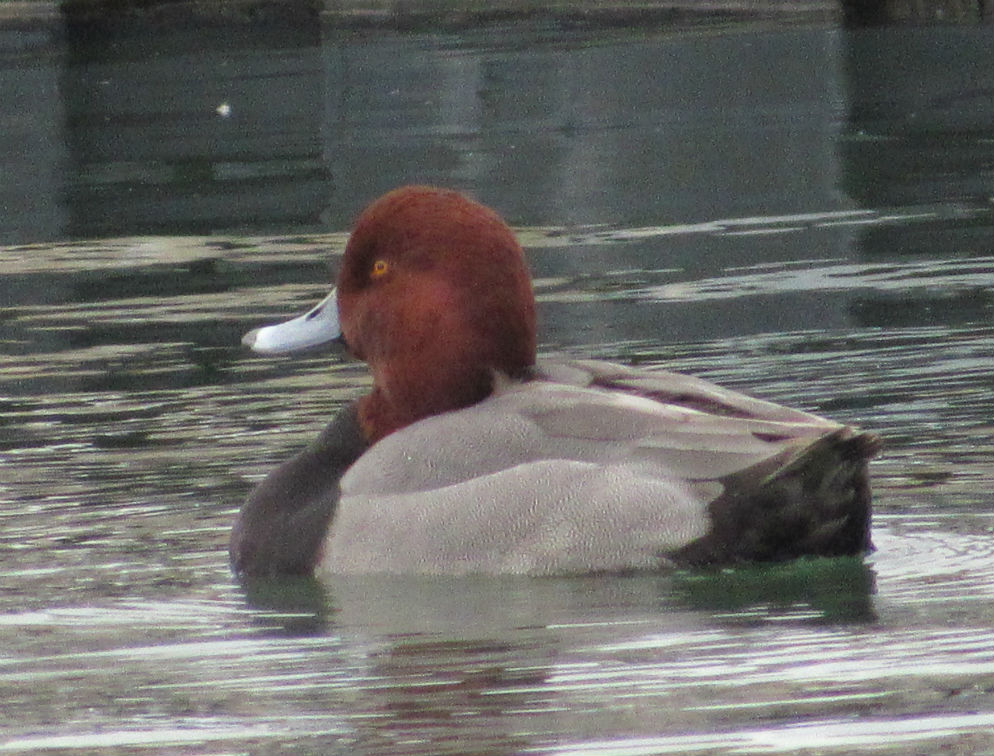
This is a type of diving duck that is adapted to find food underwater. Its legs are placed farther back on the body, which makes walking on land difficult. Its foot webbing is larger than other ducks and its bill is broader, to aid in underwater foraging. Small, semi-permanent wetlands in non-forested habitat where the water is deep enough to provide dense emergent vegetation is considered ideal breeding habitat for this bird.
Courting male Redheads perform a gymnastic “head throw” display, bending nearly in half with the neck curved far over the back until the head touches the tail. The bird then snaps its neck forward while giving a loud, catlike mee-ow call.
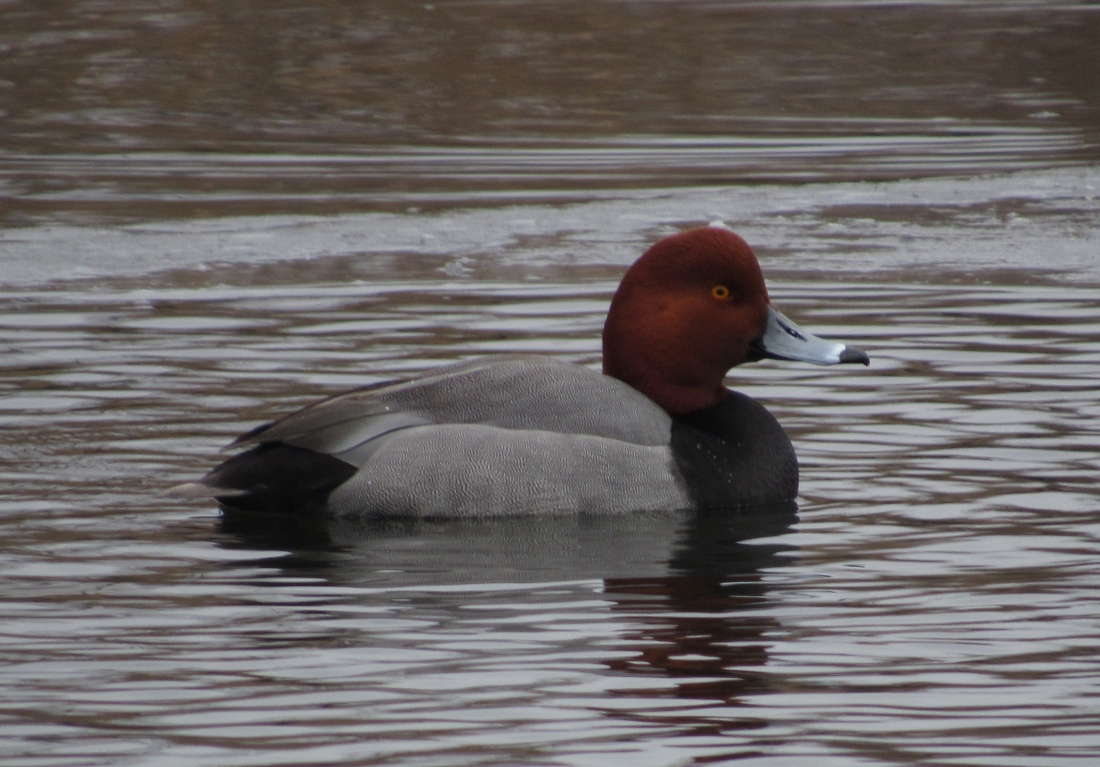
When wintering, Redheads switch to large areas of water near the coast that are protected from wave action but can also be found in reservoirs, lakes and bays. They feeds mostly on aquatic vegetation, but aquatic invertebrates are also eaten, especially in the Summer.
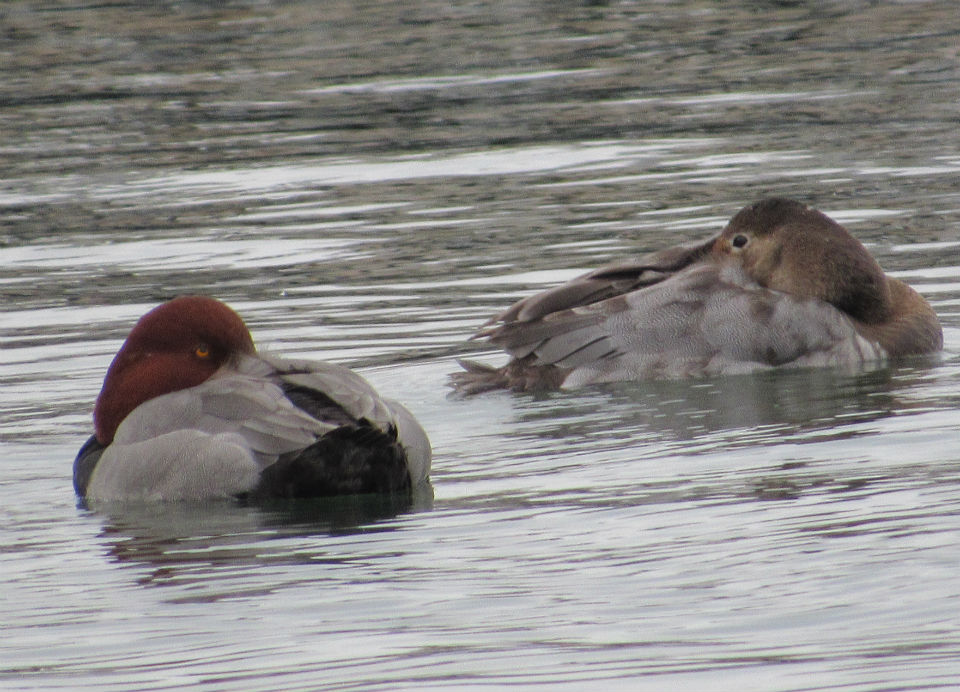
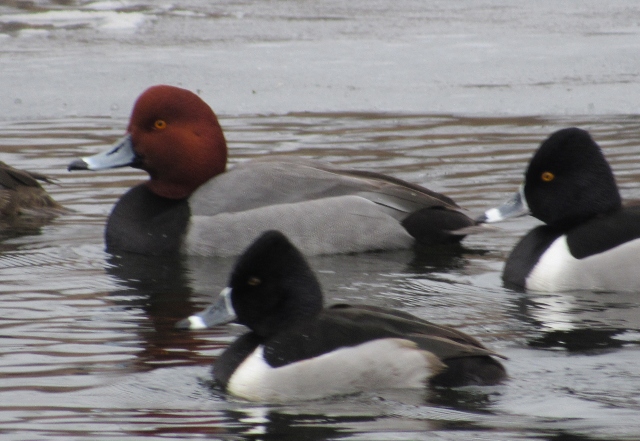
In migration and Winter, they are highly sociable, gathering in large flocks called “rafts,” often mixing with other duck species including Canvasbacks (shown here), Scaup, Wigeon, and American Coots. Redheads are so exceptionally gregarious that sometimes they alight at hunting decoys before the hunters have finished setting them up.
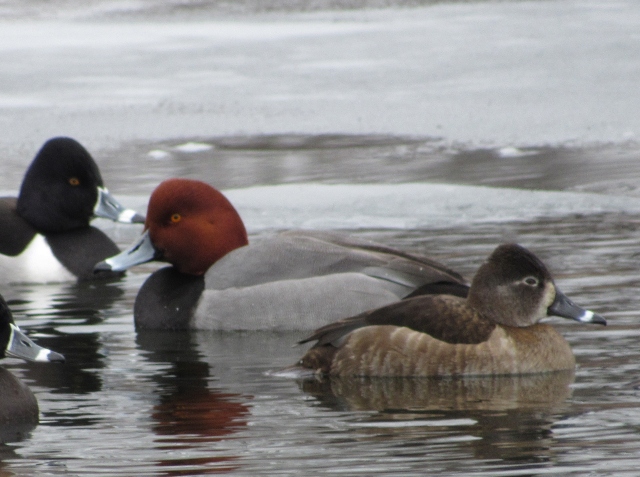
Many ducks lay some of their eggs in other birds’ nests (a strategy known as “brood parasitism”), but female Redheads are perhaps tops in this department. Their targets include other Redheads as well as Mallard, Canvasback, Northern Pintail, Gadwall, Northern Shoveler, Ruddy Duck, American Wigeon, and even Northern Harrier.
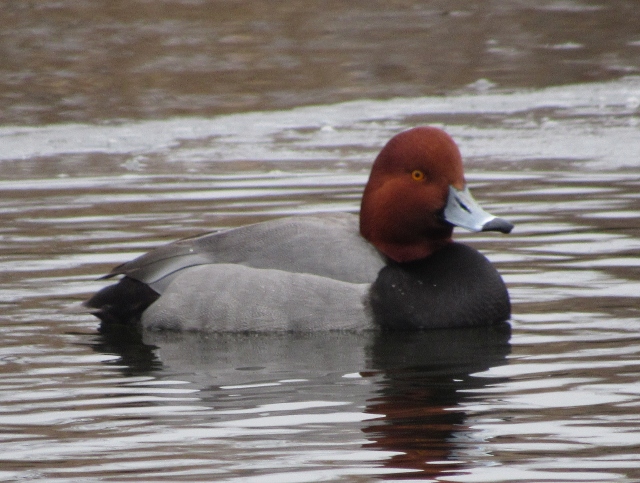
With a gleaming cinnamon head setting off a body marked in black and business gray, adult male Redheads light up the open water of lakes and coastlines – especially during dreary Winter months. I made my day to see them on a cold February morning.