
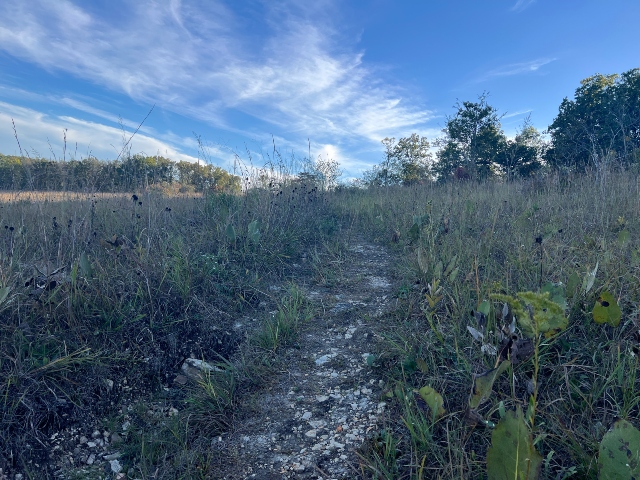
While hiking in Jefferson County, Missouri glades, I noticed this member of the Orchid Family in bloom along the edges of trails. Orchids are famous for their outrageous diversity in flower shapes. Their weird flower parts – lips, columns, saclike pollen masses, sticky pads, and more – are adaptations to enable pollination by various insects.
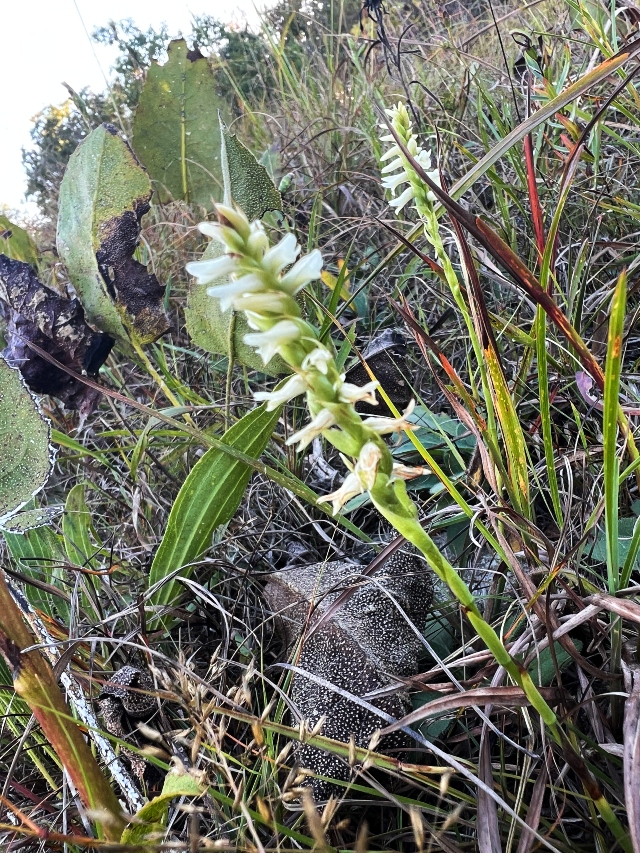
The spiral pattern of Lady’s Tresses is thought to encourage pollination by bees. Nodding Ladies’ Tresses, however, have gone a step further and reproduces asexually (its seeds contain multiple embryos that do not require fertilization to be viable). This ability to create seeds without pollination or even fertilization might help explain this plant’s success as one of our most common and widespread orchids.
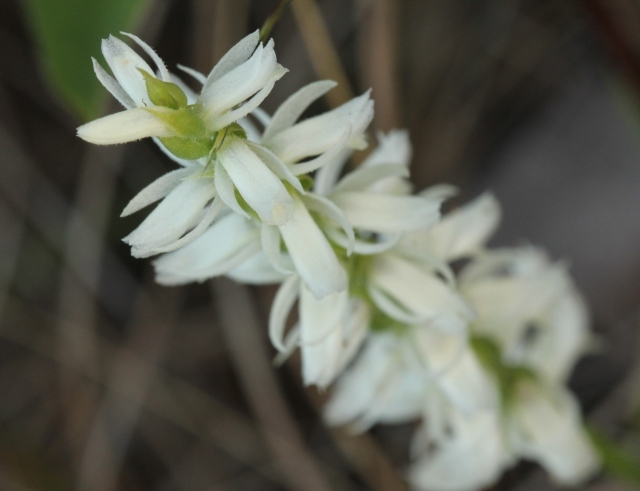
Each flower is less than half an inch long and consists of three sepals and three petals, all curved forward to give the flower a long bell shape. Flowers are slightly to strongly nodding (hence the name), with older flowers usually nodding more than new ones.
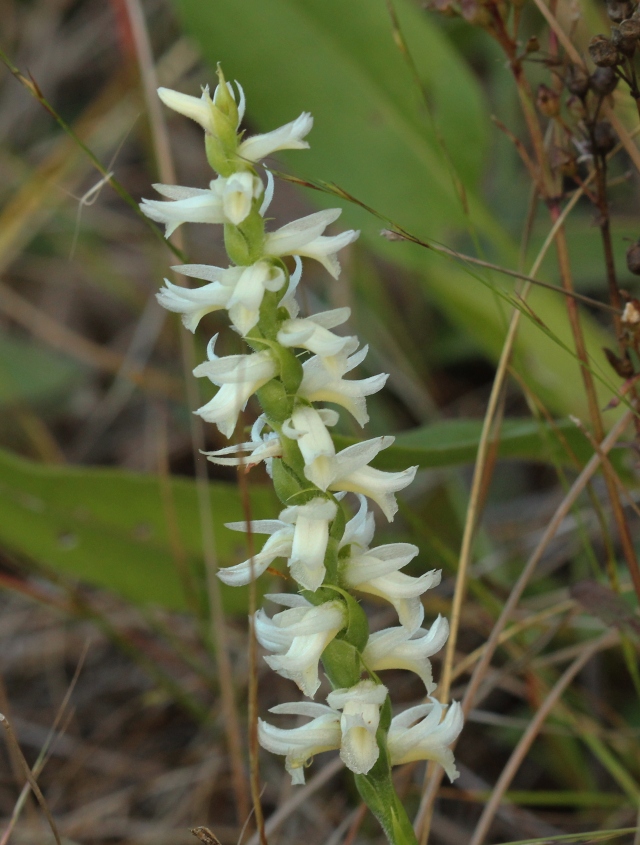
This plant is native in central and eastern North America, from Ontario and Quebec to the north, Nebraska to the west, Texas to the south, and Nova Scotia to the east. It occurs in glades, upland prairies, and old fields on acidic substrates; it can also be found in acidic soils in moist forests, thickets, and open stream valleys.
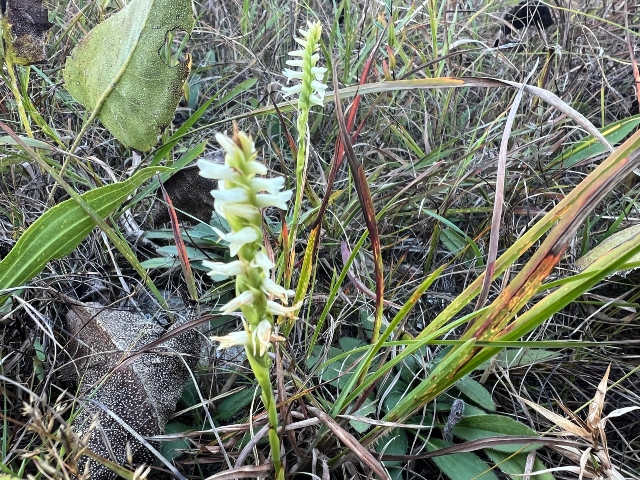
The common name of “Ladies’ Tresses” apparently arose because the spiral arrangement of the flowers resembles long, braided or curled hair. One of the reasons many common names of plants have endured for so long is their poetic or colorful way of describing some aspect of the plant; they are easy to remember.
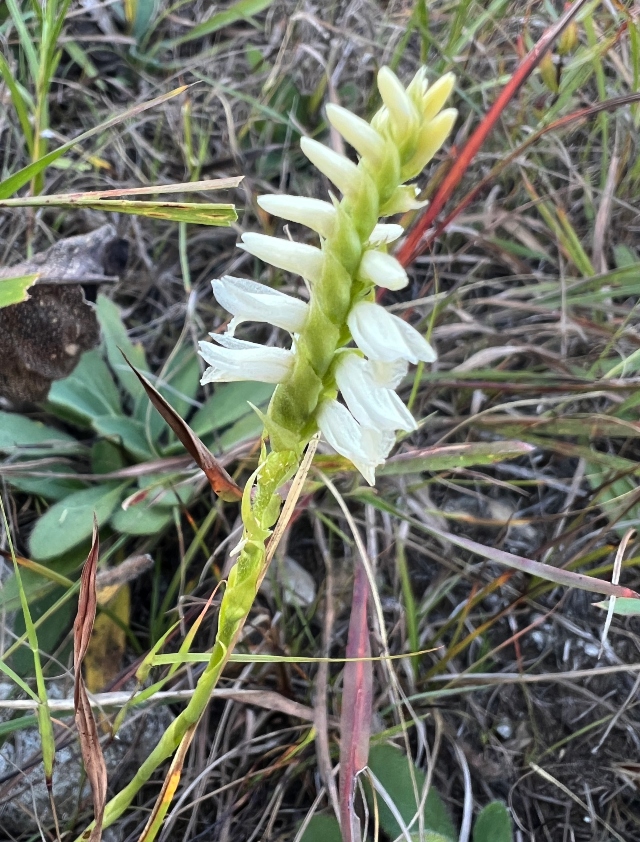
Nodding Lady’s Tresses is a perennial herb that may attain a height of 6 to 18 inches.