
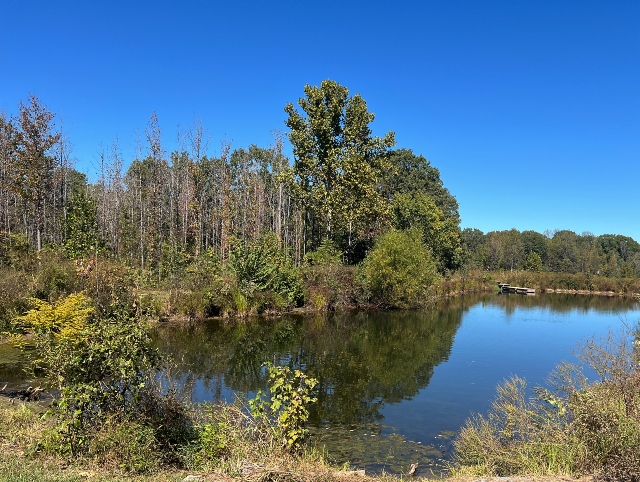
While visiting Illinois, I got to see one of these amphibians for the first time. The Crawfish Frog is a medium-sized, burrow-dwelling frog native to central U.S. prairies, known for its distinctive spotted pattern and reliance on crayfish burrows for survival.
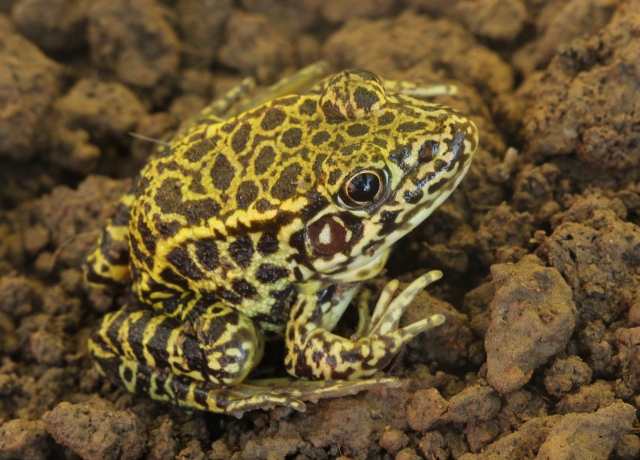
A bulky, odd-looking frog, it is typically 2-1/2 to 3 inches long. Its chunky body has a distinct humped back when at rest. It is dark gray in color and characterized by dark spots outlined with a light border on the back. Its belly is white without spots.
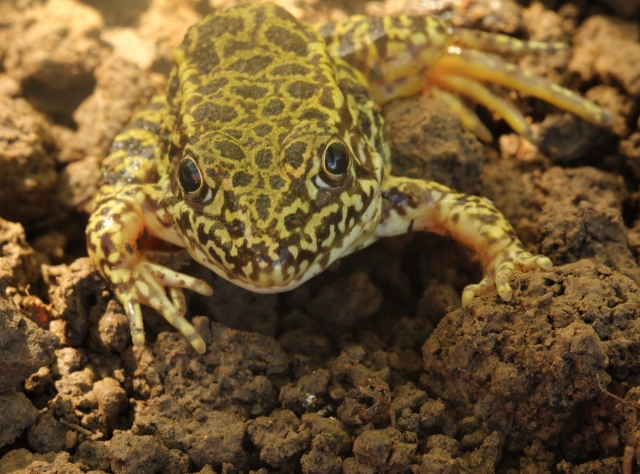
These frogs are closely associated with prairies, grasslands, and moist meadows, often occupying crayfish burrows for most of the year. Burrows provide protection from predators, extreme temperatures, grassland fires, and frost.
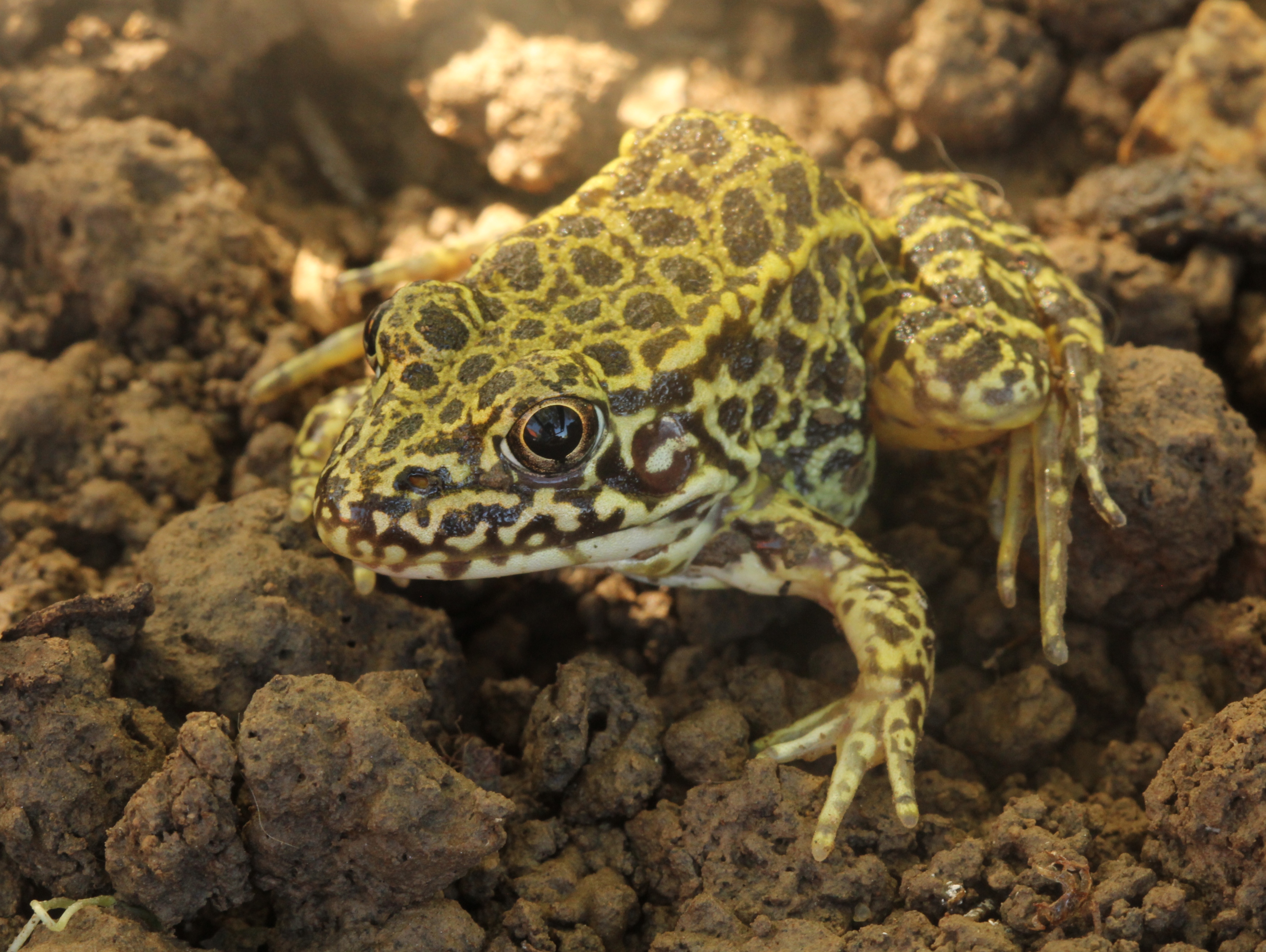
Crawfish frogs may remain underground at depths of several feet, emerging only to feed or migrate to breeding sites. They are highly site-faithful, often returning to the same burrow after breeding.
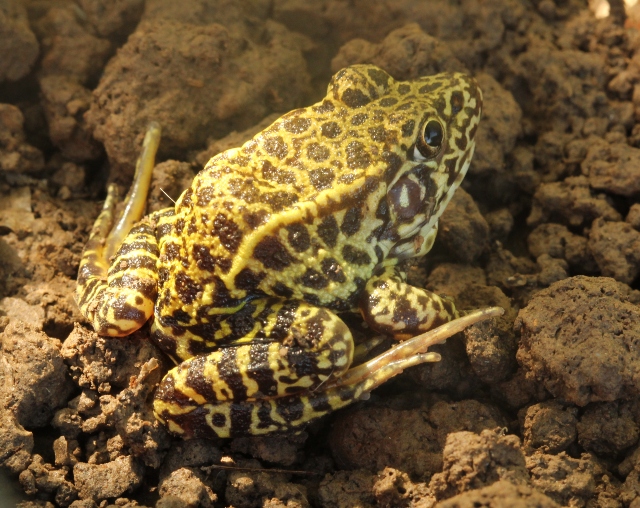
Like many amphibians, they are opportunistic ambush predators, feeding on insects, spiders, millipedes, centipedes, earthworms, ants, and occasionally small crawfish. They typically wait near the burrow entrance to strike passing prey.
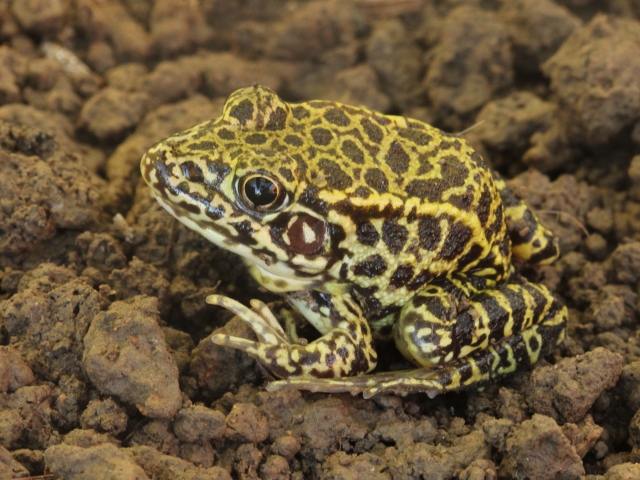
Male crawfish frogs produce a loud, deep, resonant snore repeated at irregular intervals during the mating season. It can be heard from over a mile away under good listening conditions. Large choruses may sound like hogs at feeding time or a distant motor speedway.
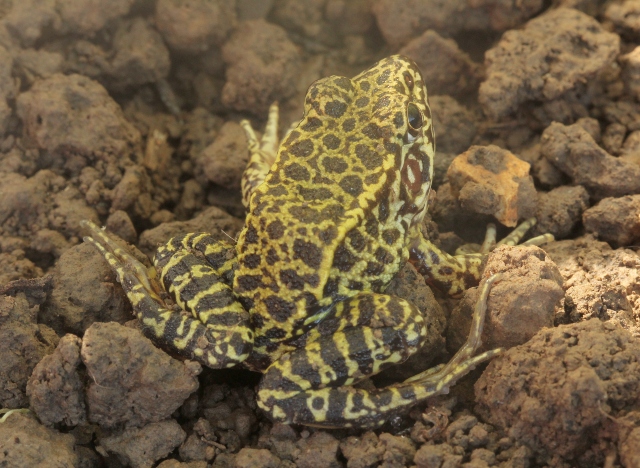
Crawfish frogs are more often heard than seen, and their unique burrowing and migratory behaviors make them a fascinating yet vulnerable species in North American grasslands.