Partridge Pea

01 Partridge Pea_8865

I saw several examples of this very cool plant on my latest adventure to Illinois and Missouri. The Partridge Pea is found in the eastern United States, excluding Vermont, Maine, and New Hampshire. A member of the Legume Family, like other legumes, it is a nitrogen-fixing plant, with microorganisms helping to produce the nitrogen compounds necessary for the plant to survive. The microorganisms inhabit root nodules, which provide them with a safe habitat, while giving the plant access to the nutrients.

02 Partridge Pea_8866

Partridge Pea’s leaves consist of 10 to 15 pairs of small, narrow leaflets that are somewhat delicate to the touch. Like other members in its family, the plant displays nyctinasty, wherein the leaves open and close in response to day and night cycles.

03 Partridge Pea_8868

This is considered an important honey plant, often occurring where few other honey plants are found. Nectar is not available in the flowers, but is produced by small orange glands at the base of each leaf. Ants often seek the nectar and are frequent visitors. Partridge Pea’s seed is one of the major food items of Northern Bobwhite and other quail species, because it remains in sound condition throughout the Winter and early Spring.

04 Partridge Pea_9099

Partridge Pea thrives in areas that have been burned recently before declining in numbers in the following years. It is a pioneer species, growing densely in depleted sites that cannot support other plants. It is considered an excellent choice for planting in disturbed areas, as it will quickly cover an area, preventing erosion, while still allowing other plants to become established.

05 Partridge Pea_8489

Hanging from this species, the fruit is a flat green pod that closely resembles a vegetable you may have in your garden. These pods will slowly brown until they are mature, eventually falling into the soil to become their own individual plant. The flowers have yellow anthers that produce reproductive pollen, and purple anthers that produce food pollen, but no nectar. Long-tongued bees such as bumblebees, honey bees, long-horned bees, and leafcutting bees pollinate the flowers.

06 Partridge Pea_9102

This was a really neat native plant to come across on my travels.

Third Eye Herp
E-mail

Hentz Orbweaver

01 Hentz Orb Weaver_9018

I saw a couple examples of this arachnid on my recent trip to southern Illinois. One had her web in the vegetation along Snake Road and the other was at a gas station across the street from the hotel that I stayed. In late Summer and early Autumn, after the severe heat of Summer and before the leaves of trees begin to turn color, Hentz’s Orbweaver spiders become conspicuous.

02 Hentz Orb Weaver_6129

Generally nocturnal, they may become day-active in the Fall. Females are about 1/2 an inch long, while males are somewhat smaller. The upper surface of the abdomen is brown and hairy. The legs display alternating light and dark brown bands. The undersurface of the abdomen is black, with two white spots.

04 Hentz Orb Weaver_6124

Their orb-shaped web is very large and is often constructed on buildings and other man-made structures, sometimes several feet above ground, especially near outdoor lights. The orb part of the web may be nearly 2 feet in diameter. As with other orbweavers, they frequently replace their webs.

03 Hentz Orb Weaver_8571

Flying insects such as moths and crane flies are their principal prey. Once caught in sticky strands of the web, they are bitten and trussed by the spider, which later eats them. Most people are not keen on having spiders around their homes (or of walking right into them on hiking trails) but remember that spiders do us the service of free, nontoxic pest control.

05 Hentz Orb Weaver_6137

The amazing web patterns of spiders have fascinated humans for millennia. In Greek mythology, a skilled weaver named Arachne challenged the goddess Athena to a weaving contest that ended with the human being changed into a spider for her pride.

Third Eye Herp
E-mail

Cherrybark Oak

01 Cherrybark Oak_8621

While visiting southern Illinois, I went on a short hike to see one of the most highly valued Red Oaks in the southern United States. Its leaf structure is unusual in that the lobes are not necessarily paired on opposite sides of the leaf, instead they appear alternate or sometimes haphazard in arrangement.

02 Cherrybark Oak_8622

Cherrybark Oaks often attain heights of 100 to 130 feet and trunk diameters of 36 to 60 inches, making it among the largest of the red oaks in the South. The name “Cherrybark” comes from its similarity to the bark of Black Cherry. The bark is gray and has scaly, narrow ridges.

05 Cherrybark Oak_8624

With the Latin Name of Quercus pagoda, this species is characterized by leaves with pointed, bristle-tipped lobes and acorns that take two years to mature. The name “pagoda” refers to the pagoda-like shape of its leaves when viewed from above.

04 Cherrybark Oak_8627

This tree grows mostly in humid, temperate climate characterized by hot Summers and mild Winters where surface soil pH is acid to medium acid. It is a lowland tree, but is seldom numerous on wet or swampy soils. In natural stands, dissemination of acorns by gravity is important on steep slopes. The hoarding habit of squirrels is also significant in acorn dispersal.

03 Cherrybark Oak_8627

Wildlife consumes the acorns of the Cherrybark Oak. Mammals and birds that include acorns as a substantial part (10 percent or more) of their diets are the Gray Squirrel, Wild Turkey, and Blue Jay, followed by the Wood Duck, Red-bellied Woodpecker, Redheaded Woodpecker, White-breasted Nuthatch, Common Grackle, Raccoon, White-tailed Deer, and Eastern Fox Squirrel.

Third Eye Herp
E-mail

American Bumblebee

01 American Bumblebee_9110

While walking through a field in southern Illinois, I noticed a bumblebee that looked different from all others that I had seen previously. The American Bumblebee is a large insect with the queen measuring almost an inch. The queen is mostly black, including the legs, spurs and the base of the wings.

02 American Bumblebee_9103

Once the most prevalent bumblebee in the southern United States, populations of the American Bumblebee have decreased significantly in recent years. Overall, the population dropped nearly 90% in just the first two decades of the 21st century. These declines are most pronounced towards the northern extent of the species’ range.

03 American Bumblebee_9105

Like most bumblebees, it faces threats from multiple sources, including pesticides, habitat loss or degradation, urban development, climate change, and diseases that can be introduced by non-native bee species. It is strongly suspected that the American Bumblebee was infected with a virus when European Bumblebees were imported into North America to pollinate greenhouse tomatoes.

04 American Bumblebee_9109

This insect tends to live and nest in open farmland and fields, where it feeds on several food plants, favoring sunflowers and clovers, and functions as a pollinator. In order to release the pollen, they are able to grab onto the flower and move their flight muscles rapidly, causing the flower to vibrate, dislodging pollen. This process is known as “Buzz Pollination.”

05 American Bumblebee_9107

Bumblebees are active under conditions during which Honeybees and other smaller bees stay at home, and can readily absorb heat from even weak sunshine. They are beneficial and effective pollinators, helping to pollinate not only wildflowers, but also crops and gardens. The easiest way to help bumblebees is to provide them with some undisturbed natural habitat.

Third Eye Herp
E-mail

Gilled Polypore

01 Gilled Polypore_8608

While exploring the edge of a swamp in southern Illinois, this mushroom caught my attention. The majority of polypores don’t have gills, rather they have smooth pore surfaces underneath. But, there always has to be one fungus that refuses to play by the rules, and the Gilled Polypore takes up that calling and flaunts it.

02 Gilled Polypore_8603

From above, Gilled Polypore looks for all the world like Turkeytail Mushroom with its multi-colored, fuzzy, zoned cap. But flip it over and you will find that this little polypore has gills.

03 Gilled Polypore

Gilled Polypores favor hardwood logs as their habitat. They are most commonly seen growing on dead or decaying tree trunks, stumps, or roots. Despite the suggestion of its species name betulina, its growth is not confined to birch trees. It grows scattered or clustered in overlapping shelves.

04 Gilled Polypore_8604

This mushroom prefers humid climates and is typically found near bodies of water like streams or rivers. It can be found throughout North America, Europe, and Asia. Gilled Polypore is also cultivated in controlled environments for commercial production.

05 Gilled Polypore_8611

Fungus plays an important role in the ecosystem, breaking down dead wood and returning nutrients to the soil. This species also helps to recycle carbon and nitrogen, aiding in the growth of new plants and trees.

06 Gilled Polypore_8605

In addition to its ecological benefits, Gilled Polypore is used medicinally in some cultures. It is believed to be a natural immune system booster and has been used for centuries as a traditional remedy for various ailments.

Third Eye Herp
E-mail

Flier

01 Flier_8733

While herping in southern Illinois this month, I caught this sunfish which is endemic to the southern United States. It is the only species in the monospecific genus Centrarchus.

02 Flier_8726

The Flier is similar in appearance to a Crappie. It is deep-bodied and saucer-shaped. It is generally olive-green to brassy in color, with numerous black spots on sides arranged in rows on adults. They reach a total average length of 5 to 7 inches, with a maximum size of about 8 inches.

03 Flier_8722

Fliers often reside in dark, tannic, acidic backwaters of coastal swamps, creeks, ponds and canals. They thrive in areas with thick vegetative cover and can survive in locations with minimal levels of dissolved oxygen. Insect larvae, small crustaceans, worms, small fish and algae make up their diet.

04 Flier_8725

A key identification characteristic of this fish when immature, is a dark eyespot, which has a reddish border on the dorsal fin. This eyespot disappears as the fish grows. Fish biologists have speculated the dark spot, when coupled with their eye, gives the appearance of a much larger fish. This adaptation is believed to deter potential predators.

05 Flier_8724

A Second World War United States Navy submarine was named the USS Flier after this fish.

Third Eye Herp
E-mail

Trumpet Vine

01 Trumpetflower_8607

It was hard not to notice the large, distinct flowers of this plant as I walked along railroad tracks in southern Illinois. Native to eastern North America, this vine is often cultivated for its attractive, reddish orange flowers. It can escape cultivation, sometimes colonizing so densely it seems a nuisance, its habit has earned it the names Hellvine and Devil’s Shoestring.

02 Trumpetflower_8609

Trumpet Vine’s rapid colonization by suckers and layering makes it useful for erosion control. Its magnificent flowers never fail to attract Ruby-throated Hummingbirds within its range. Adapted to eastern forests, Trumpet creeper grows tall with support. This plant climbs by means of aerial rootlets and can reach a height of up to 35 feet.

03 Trumpetflower_8606

This plant’s three inch flowers are long, tubular and reddish-orange with a yellowish throat and bloom in the Summer for about three months. The flowers are followed by large seed pods. As these mature, they dry and split and hundreds of thin, brown, paper-like seeds are released.

04 Trumpetflower_8604

Trumpet Vine’s habitat is bottomland forests, open woods, banks of streams and rivers, cliffs, pastures, old fields, fencerows, thickets, waste places, roadsides, railroads, and other disturbed areas. It is well-adapted for disturbed areas, and it is commonly seen growing on telephone poles along roadsides. or in this case, along train tracks.

05 Trumpetflower_8603

Some people develop a skin rash after touching this plant, so another common name for it is “Cow-itch.”

Third Eye Herp
E-mail

Western Worm Snake

1 Western Worm Snake_2138

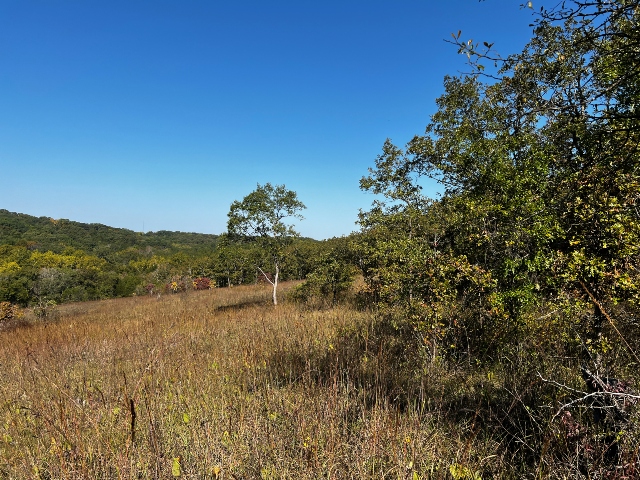
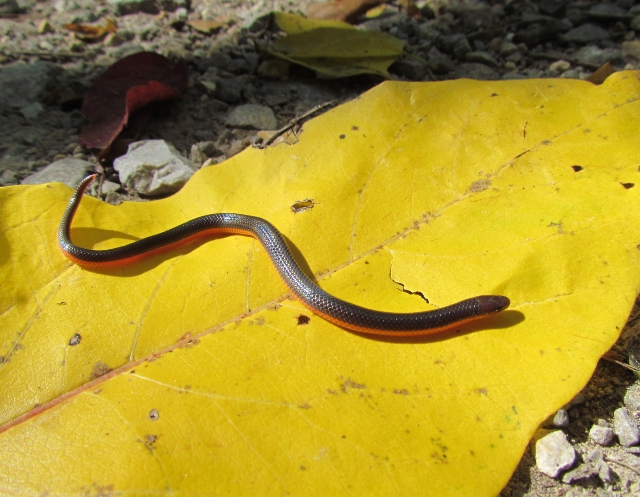
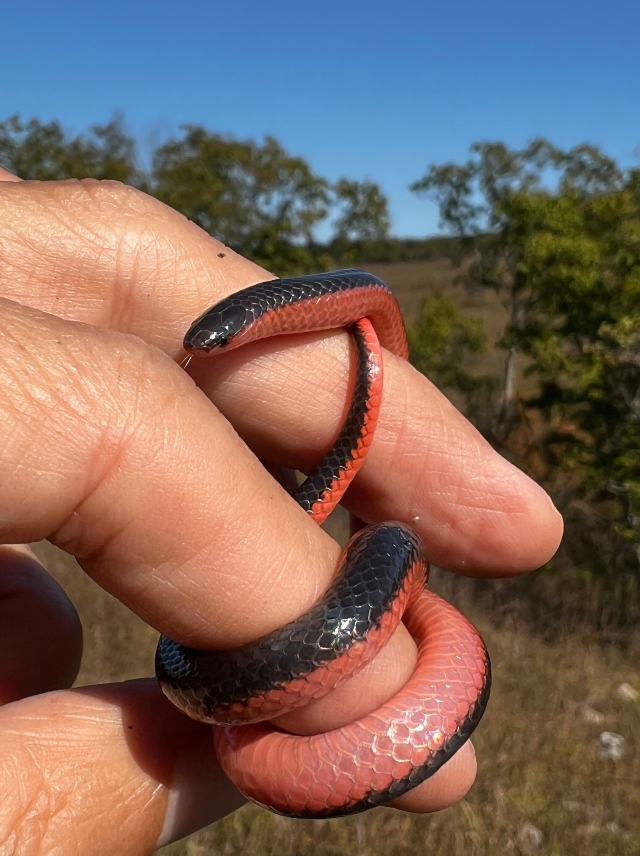
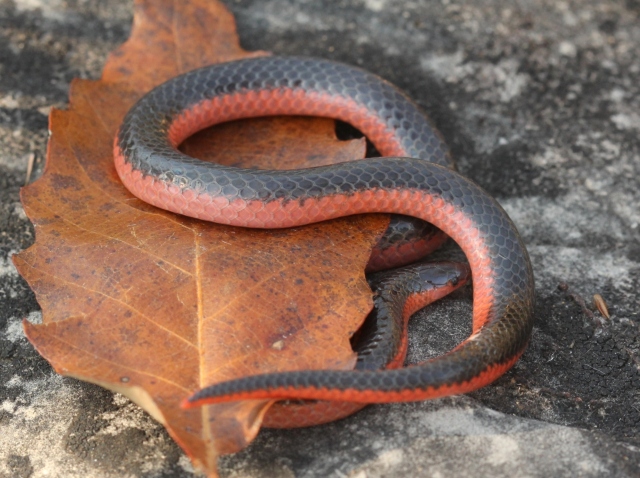
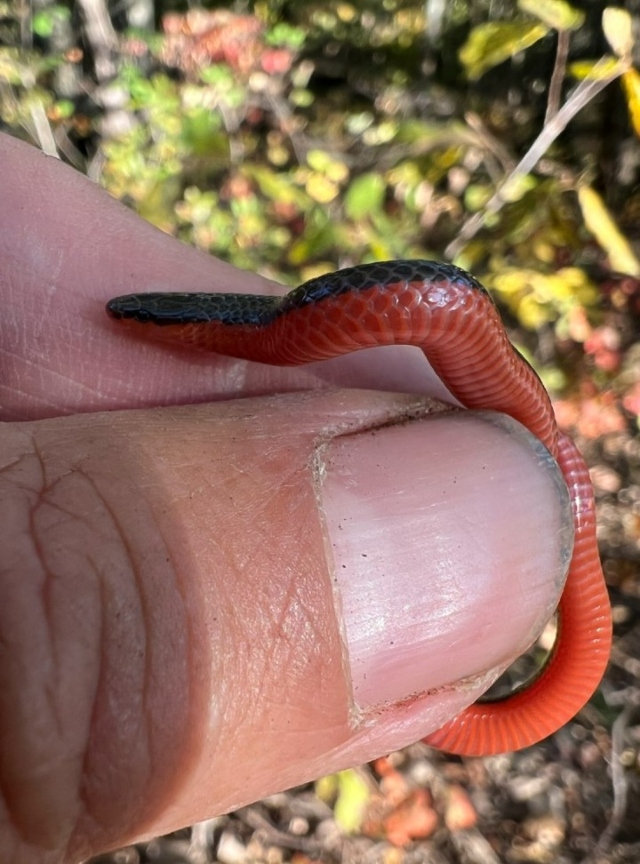
While flipping rocks in Missouri glades, I occasionally find these small serpents. This two-toned snake has an upperside color that is brown-to-black and an underside that is salmon-pink and extends up the reptile’s sides.

2 Western Worm Snake_3560

This secretive creature is less than a foot long and seldom seen. If threatened, this snake, like other snakes, can often release foul smelling musk from its cloaca. Unlike most snakes, if handled, it may press its pointy tail tip into the captor’s hand as a defense mechanism.

3 Western Worm Snake_2427

The Western Worm Snake’s diet include earthworms, slugs, and some slender, soft-bodied insect larvae such as beetle grubs. This species has a pair of enlarged teeth at the rear of its mouth that is presumed to help with swallowing earthworms.

4 Western Worm Snake_4247

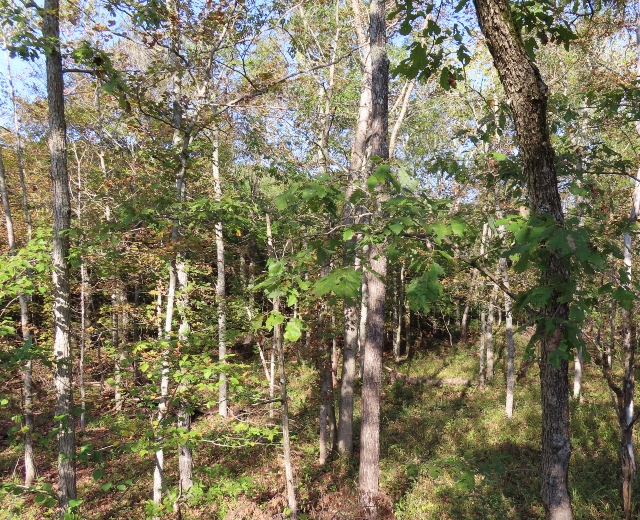
It is most often encountered on rocky, forested hillsides and on rocky, open glades, especially in the Spring and Fall. Within these larger habitats, they require slightly moist places to reside. It rarely ventures out in the open. Instead, it spends most of its time in burrows underground, under thick leaf litter, or beneath large rocks or logs.

5 Western Worm Snake_8972

Worm Snakes do not live in my area of Ohio, so it’s always cool to come across one in the wild.

Third Eye Herp
E-mail

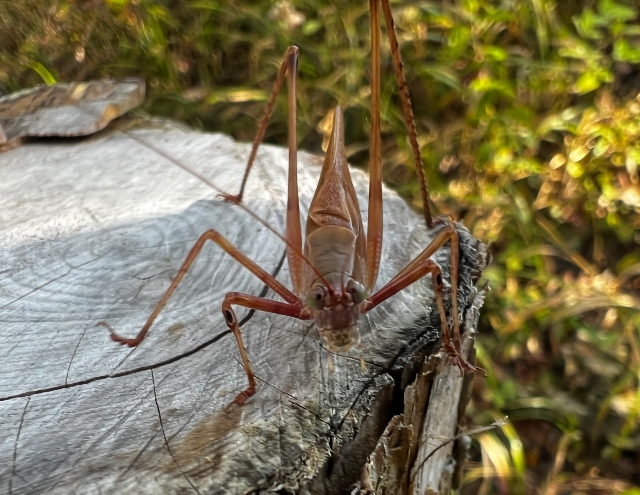
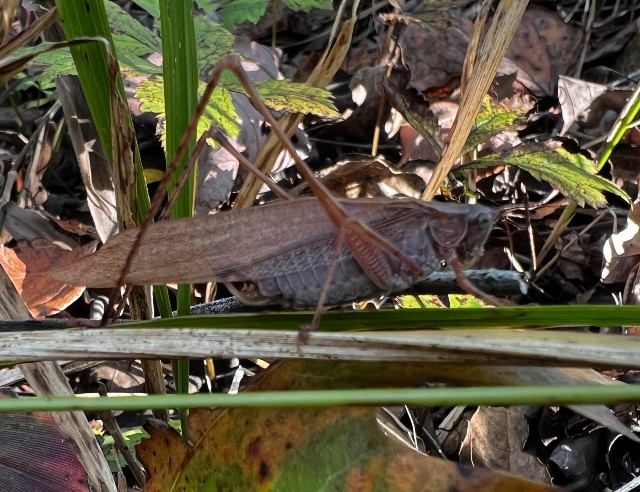
Fork-Tailed Bush Katydid

01 Brown Katydid_1533

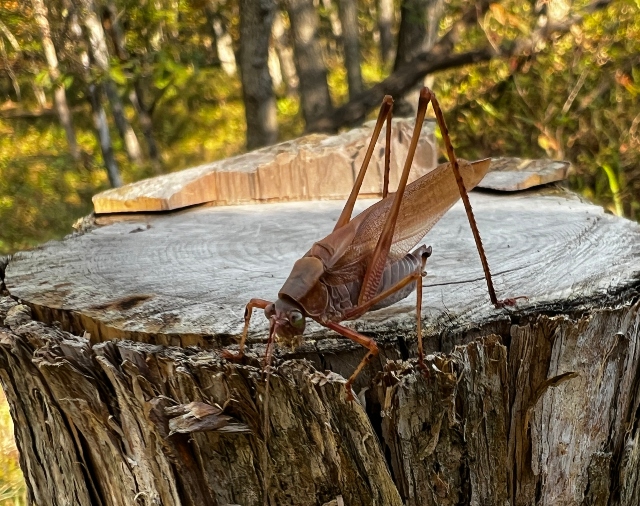
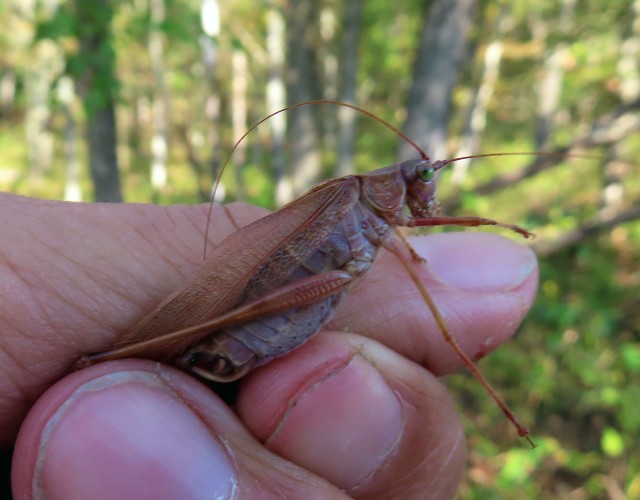
While in a wooded area at the edge of a glade in Missouri, I came across this cool creature. It ranges throughout the lower 48 states and southern Canada. Its color is usually leafy green, but different populations, in different regions, may have brownish, rusty, pinkish, or other casts – especially in Autumn.

02 Brown Katydid_2131

The Fork-tailed Bush Katydid is one of about 250 species of katydids, also called Long-horned Meadow Grasshoppers (family Tettigoniidae), they occur in North America north of Mexico. They all have very long antennae, and many resemble green leaves. They eat the foliage of a variety of shrubs and other plants.

03 Brown Kaydid_1534

Males have a split “tail” on the tip of the abdomen called a furcula that is key in identification. This appendage is where their species name of furcata came from and helps identify them from other similar species. Females have a long appendage extended from their abdomen as well, called an ovipositor, that is used in egg laying.

04 Brown Katydid_2130

This species and others in its genus are called “Bush Katydids” because they are most common in bushes, thickets, and other shrubby areas. You may also find them in the margins of woodlands and overgrown fields. Fork-tailed Bush Katydids are mostly nocturnal and may be attracted to lights at night. They are good fliers and hoppers.

05 Brown Katydid_2125

It’s hard to imagine a late-summer night without the many sounds of katydids, crickets, and their relatives. Few people are aware of the diversity of insect singers that fill our Summer days and nights with distinct, unique songs, as identifiable as various bird songs.

Third Eye Herp
E-mail

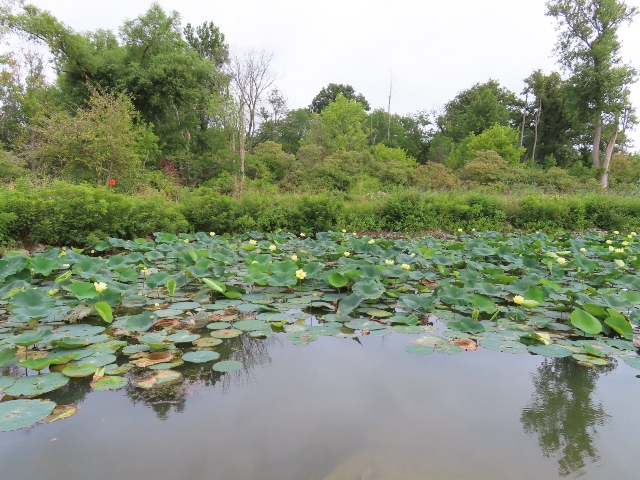
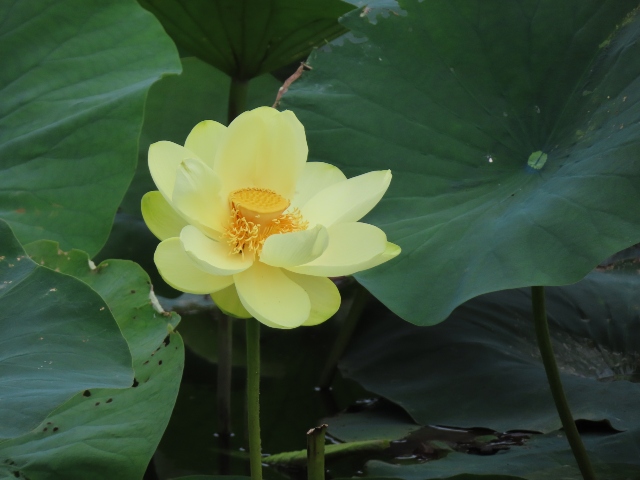
American Lotus

01 Lotus - Nelumbo lutea_0466

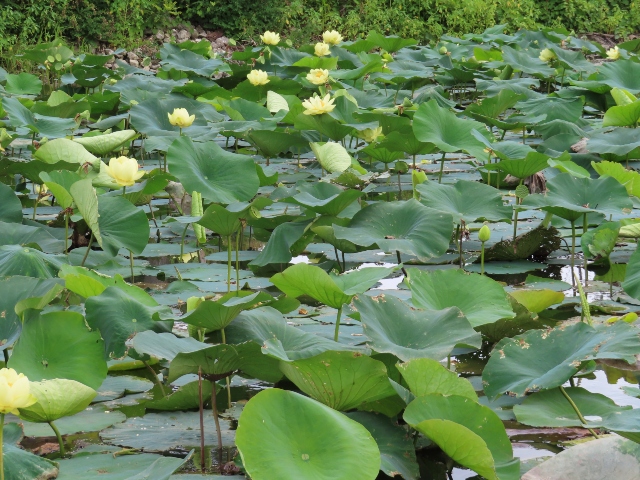
While herping waterways in northwest Ohio, I saw a number of these plants. American Lotus is an emergent aquatic flora. It grows in lakes and swamps, as well as areas subject to flooding. The roots are anchored in the mud, but the leaves and flowers emerge above the water’s surface.

02 Lotus - Nelumbo lutea_0467

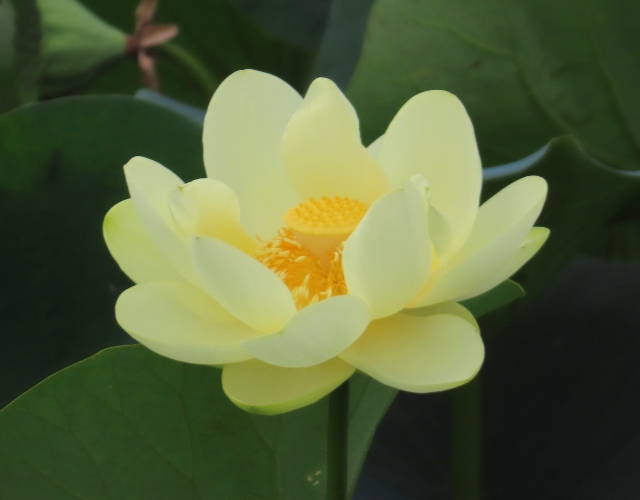
Flowering begins in late Spring and may continue into the Summer. The species name lutea means “yellow” in Latin and refers to the flowers, which may be white to pale yellow. American Lotus’ flowers that grow up to 10″ across, making them one of the largest flowers in North America. This perennial typically grows 3 to 6 feet tall.

03 Lotus - Nelumbo lutea_0469

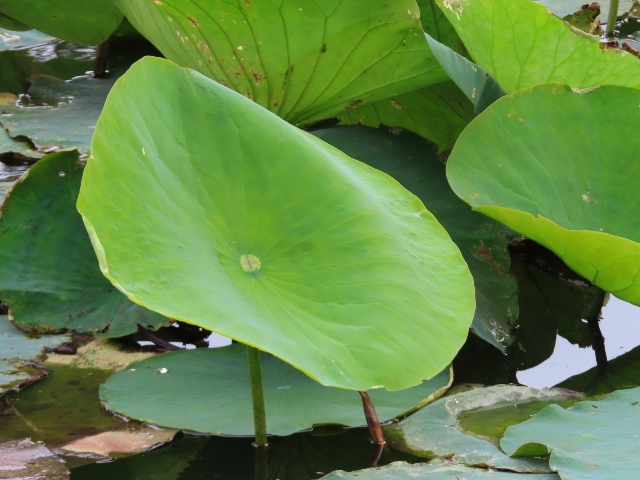
This plant’s leaves are blue-green, shed water, and are normally held above water level on long stems. They are circular and extremely variable in size, being up to 2 feet wide. This valued native wildflower is sometimes planted as an ornamental in aquatic gardening.

04 Lotus - Nelumbo lutea_0468

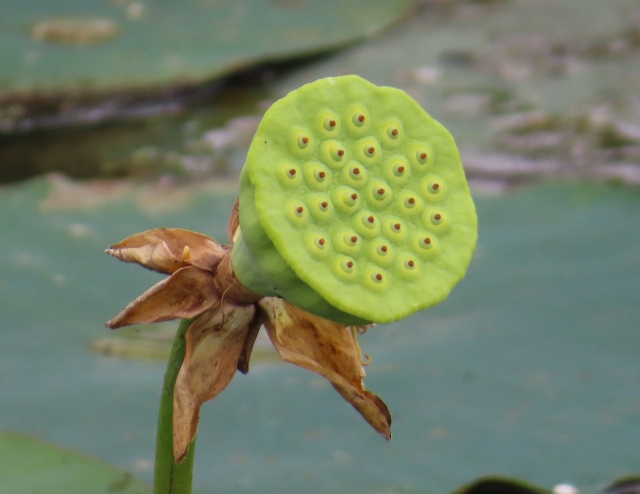
American Lotus’ unique seed pod emerges as an inverted cone-like structure from the center of the bloom. As the pod develops, it turns from pale yellow to dark brown and resembles a shower head. It is very popular in dried floral arrangements and terrarium decorations.

05 Lotus - Nelumbo lutea_0470

This plant was an important food source for Native Americans, who dug up the starchy roots with their feet. Young shoots were eaten as greens; the unripe seeds taste like chestnuts and when ripe can be hulled and roasted. Waterfowl eat the seeds, and large colonies are important nurseries for fish and other aquatic life as well as shelter for ducks.

06 Lotus - Nelumbo lutea_0477

This is indeed a very cool plant that is enjoyable to see on my travels.

Third Eye Herp
E-mail