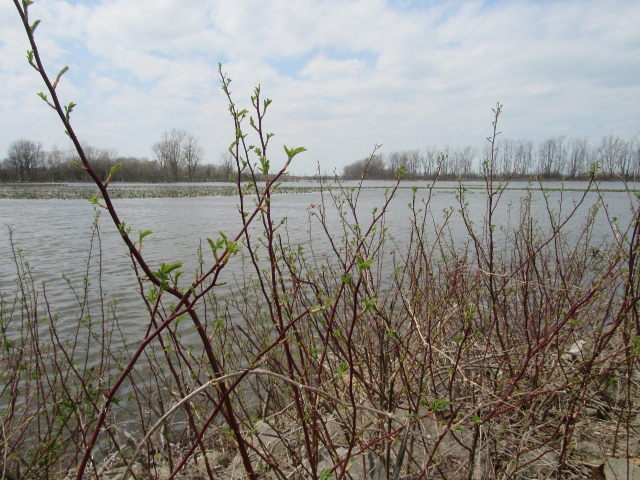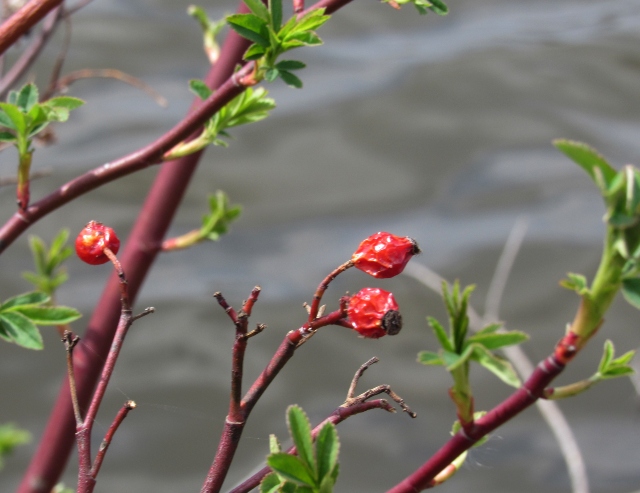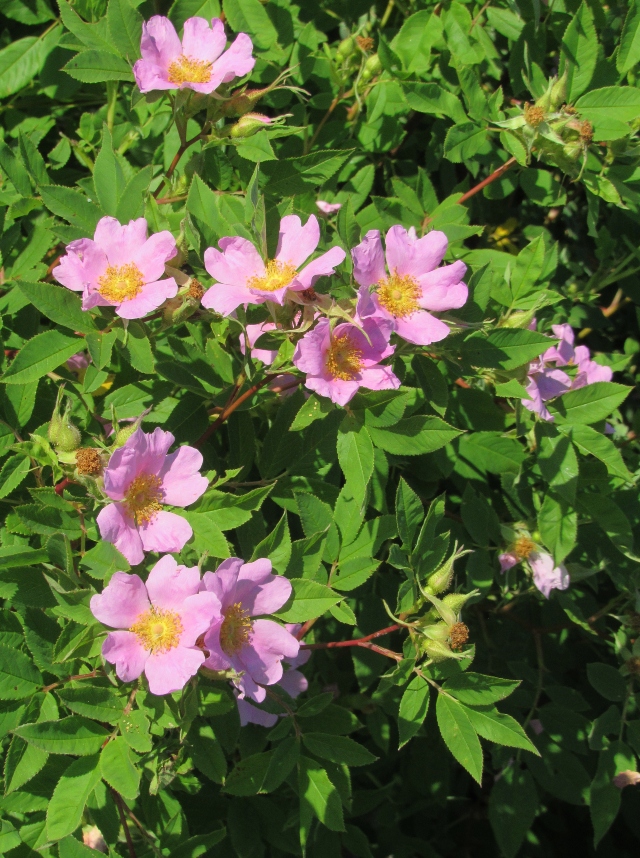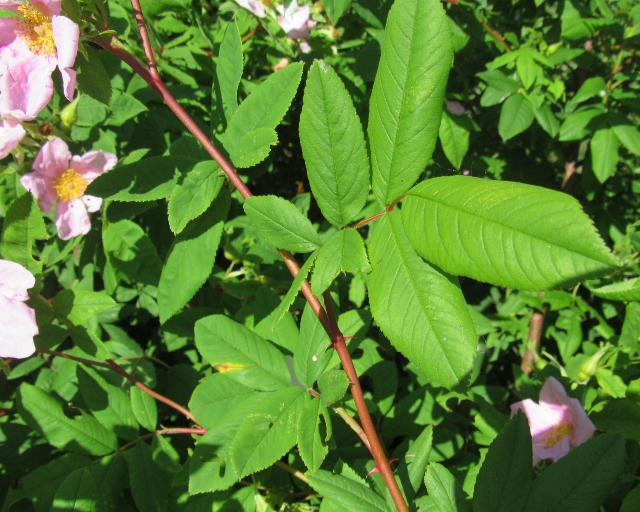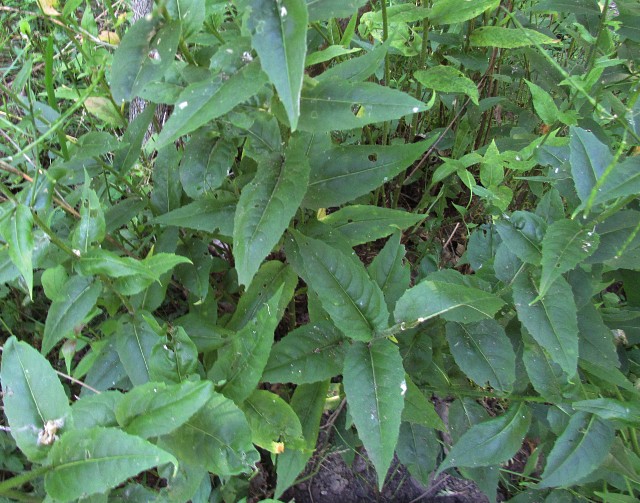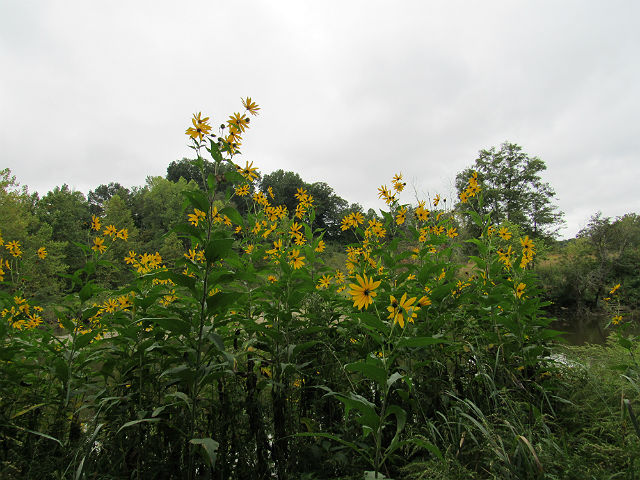
While hiking on the Ohio & Erie Canal Towpath, I often see this plant. It may reach 3 to 7 feet in height and in some instances can grow to 12 feet. It is found along streams, damp prairies and roadsides in the eastern and central parts of Canada and the United States, primarily in the northern Great Plains and Great Lakes Region.
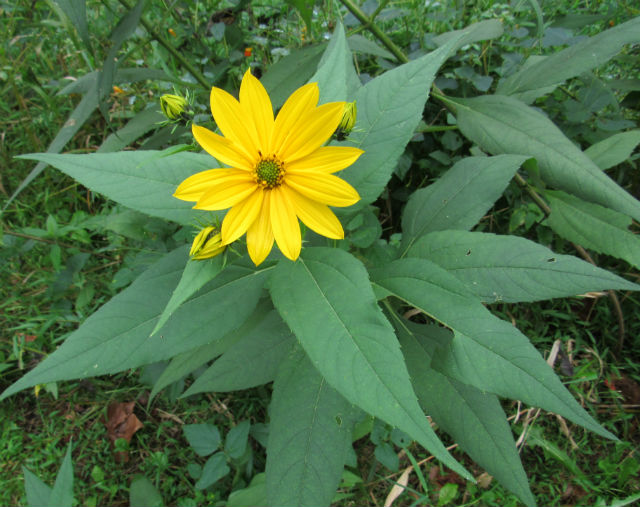
Notwithstanding its name, the Sawtooth Sunflower often has leaves that are toothless or only slightly serrated. There is considerable variation in the size of plants across different locations, and the leaves are somewhat variable in their size and shape.
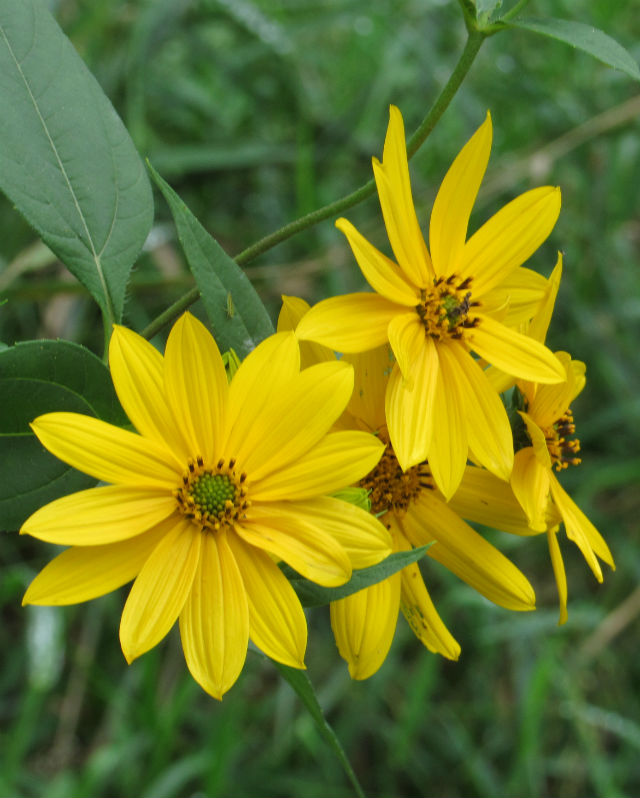
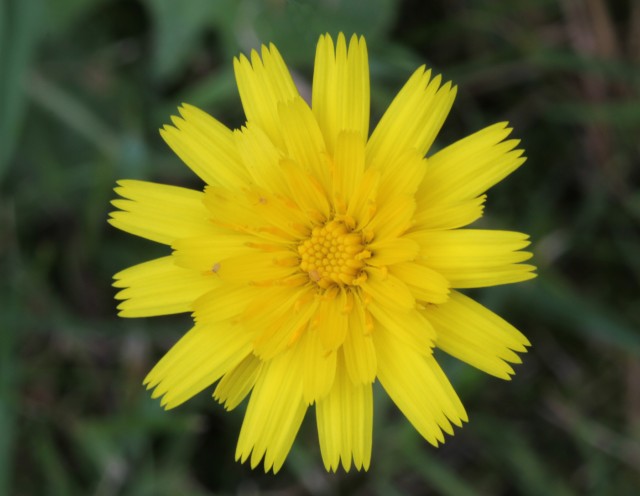
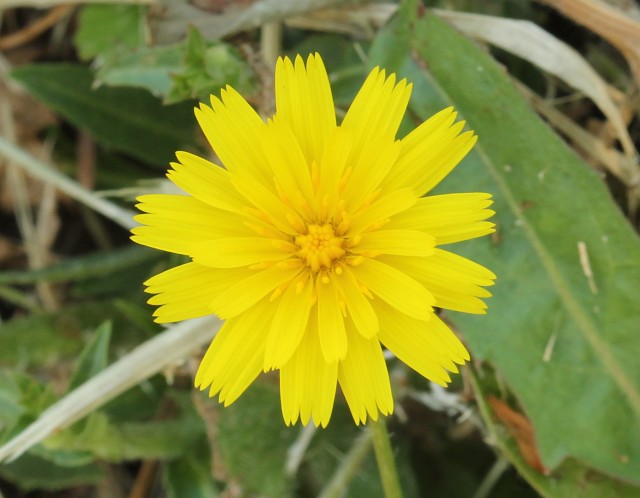
The flowerheads are yellow, to 3-1/2 inches across, with 10 to 25 fairly wide ray florets.
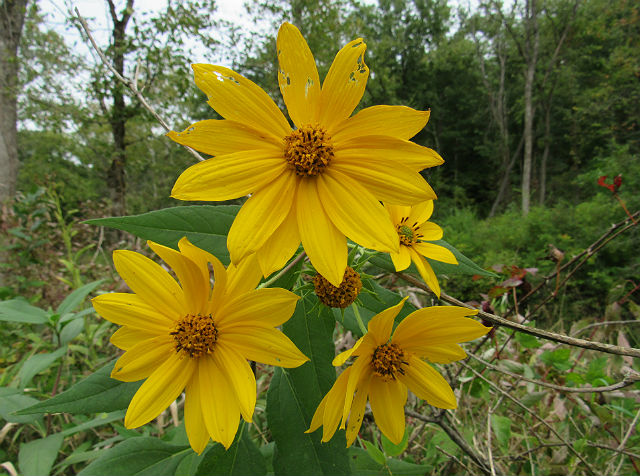
This sunflower can be distinguished from other types by its smooth reddish stems, which often have a powdery white substance that can rubbed off. The lower stems on large older plants can become slightly woody in appearance and feel.
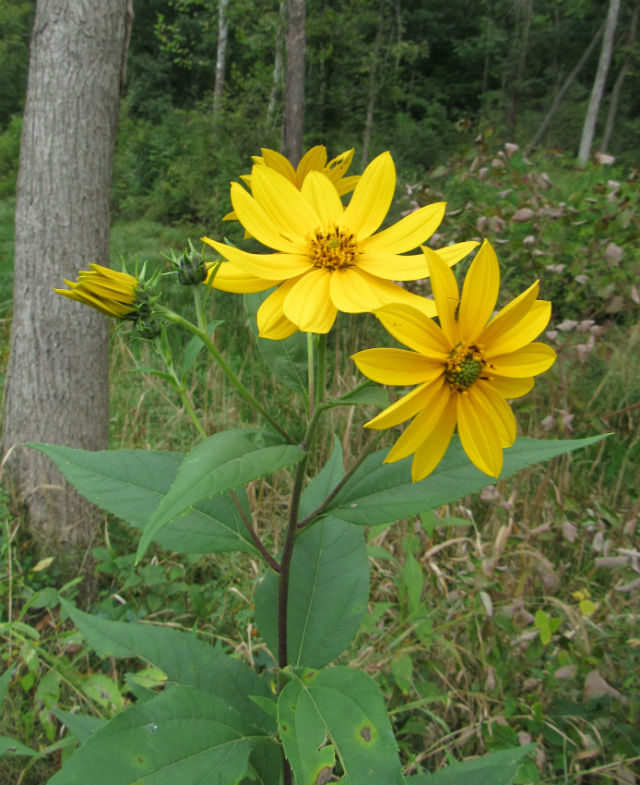
The species’ deep roots improve soil structure and water infiltration, increase drought resilience in plant communities, and its robust flowering displays can enhance pollinator foraging networks, boosting reproductive success of co-flowering native plants.
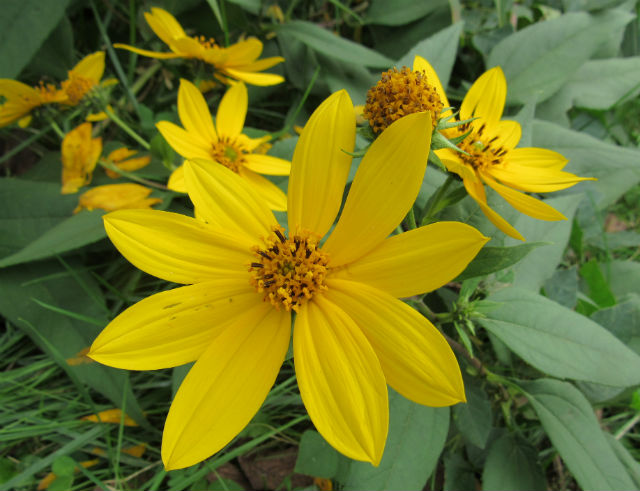
The most common visitors to the Sawtooth Sunflower are bees, especially long-tongued species. Among these are Honeybees, Bumblebees, Cuckoo Bees, Digger Bees, and Leaf-cutting Bees. The seeds of this plant are a favorite food of birds, like Bobwhite Quail, Mourning Dove, Redwing Blackbird, American Goldfinch, several types of Sparrows.