

While visiting Japan, I saw several examples of this long-legged wading bird, native throughout temperate Europe and Asia, as well as parts of Africa. It is resident in much of its range, but some populations from the more northern areas migrate southward in Autumn.
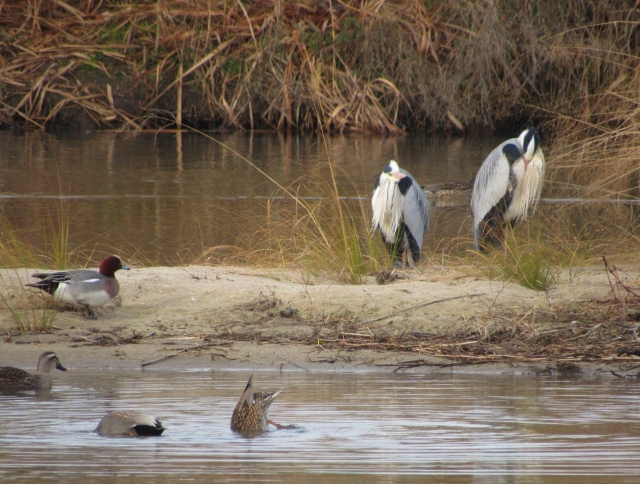
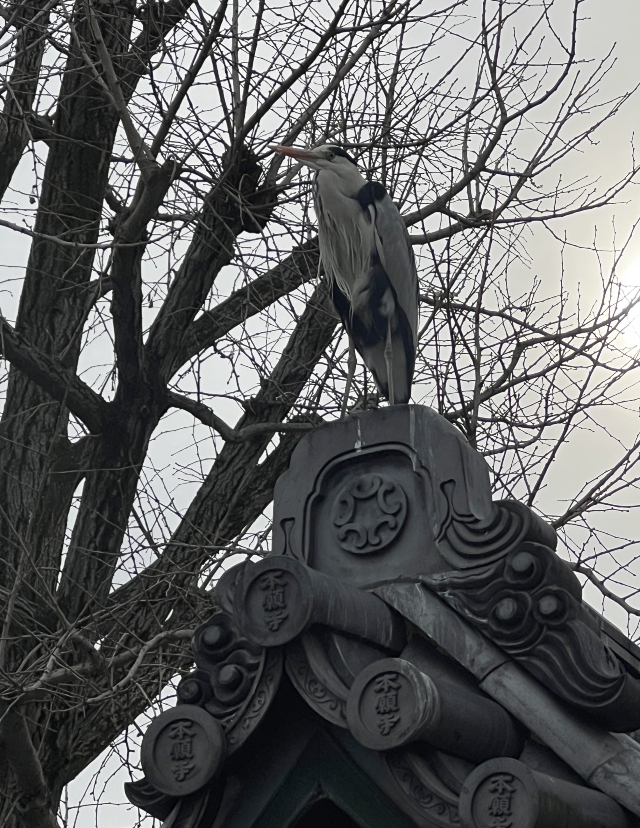
A bird of wetland areas, it can be seen around lakes, rivers, ponds, marshes and on the sea coast. It feeds mostly on aquatic creatures which it catches after standing stationary beside or in the water, or by stalking its prey through the shallows. These birds seemed acclimated to humans and I often saw them in park and even urban settings.
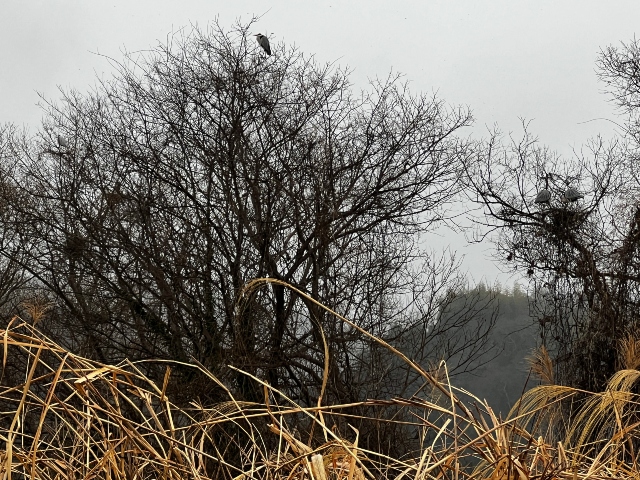
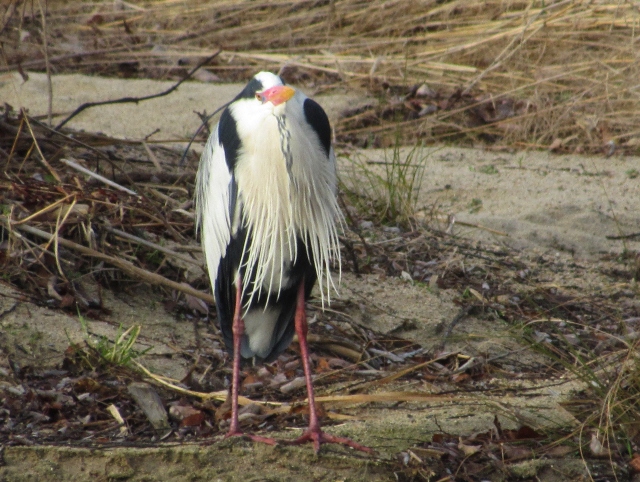
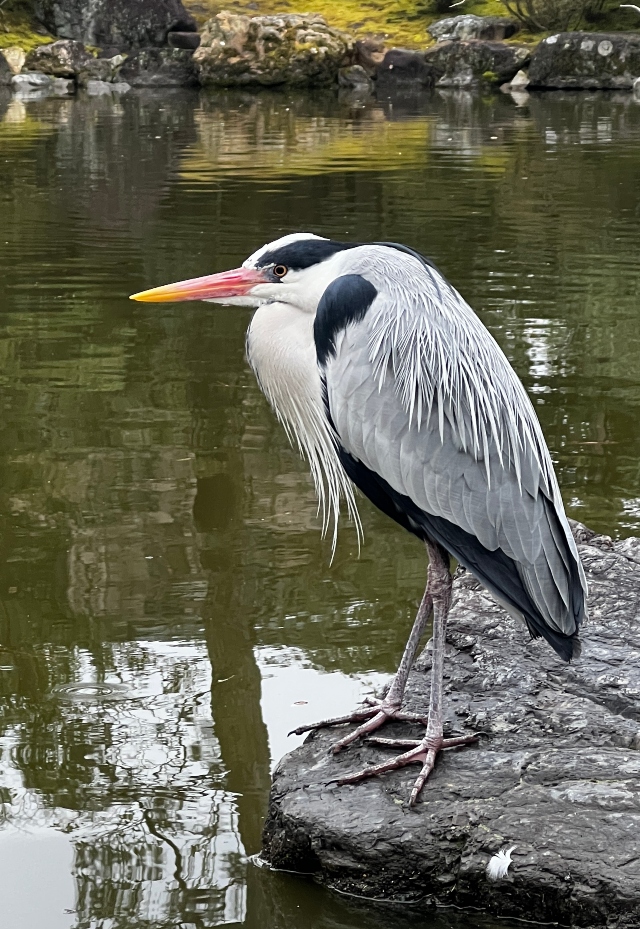
They are very similar in appearance of Great Blue Herons, which I frequently see in my home state of Ohio. They stand at 3 feet tall, weigh 2 to 4 pounds, and have a white head and neck with a broad black stripe that extends from the eye to the black crest. The body and wings are grey above and the underparts are greyish-white, with some black on the flanks. The long, sharply pointed beak is pinkish-yellow and the legs are brown.
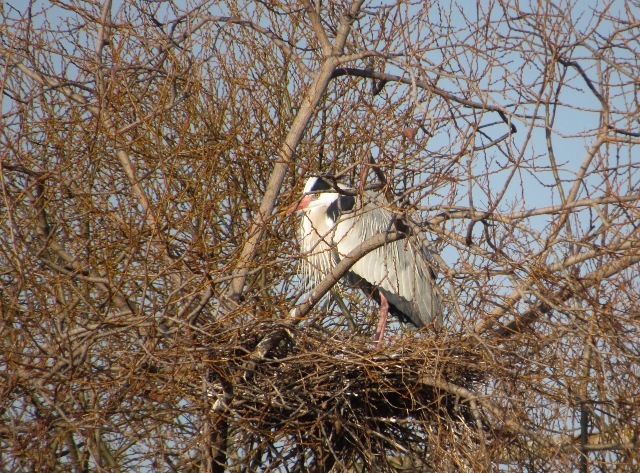
These birds breed colonially in Spring, typically building their nests high in trees. A clutch of usually three to five bluish-green eggs is laid. Both males and females incubate the eggs for around 25 days, and then both feed the chicks, which fledge when they are 7-8 weeks old.
Their main call is a loud croaking “fraaank,” but a variety of guttural and raucous noises can be heard at the breeding grounds. The male uses an advertisement call to encourage a female to join him at the nest, and both sexes use various greeting calls after a pair bond has been established.
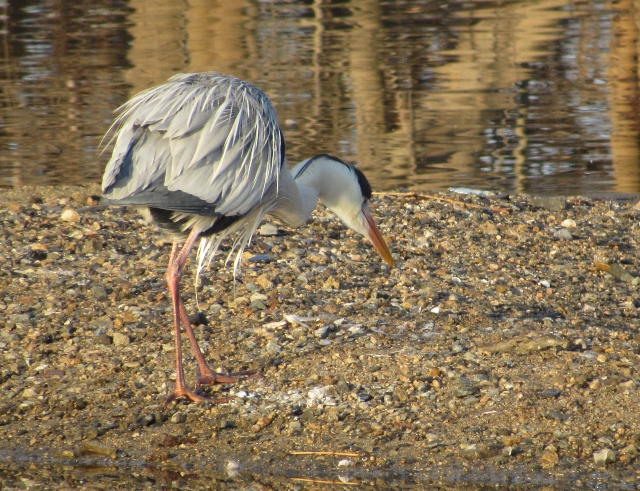
Grey Herons are apex predators in their aquatic ecosystem. Fish, amphibians, crustaceans, and insects are caught in shallow water with the heron’s long bill. They may stand motionless in the shallows, or on a rock or sandbank beside the water, waiting for prey to come within striking distance. Alternatively, they move slowly and stealthily through the water with their body less upright than when at rest and its neck curved in an “S.”
It has able to straighten its neck and strike with its bill very quickly. Small fish are swallowed head first, and larger prey and eels are carried to the shore where they are subdued by being beaten on the ground or stabbed by the bill. They are then swallowed whole or have hunks of flesh torn off.
The oldest recorded Grey Heron lived for 23 years, but the average life expectancy in the wild is about 5 years. It was great to see this majestic bird in a variety of habitats and in a number of places that I visited in the Land of the Rising Sun.