
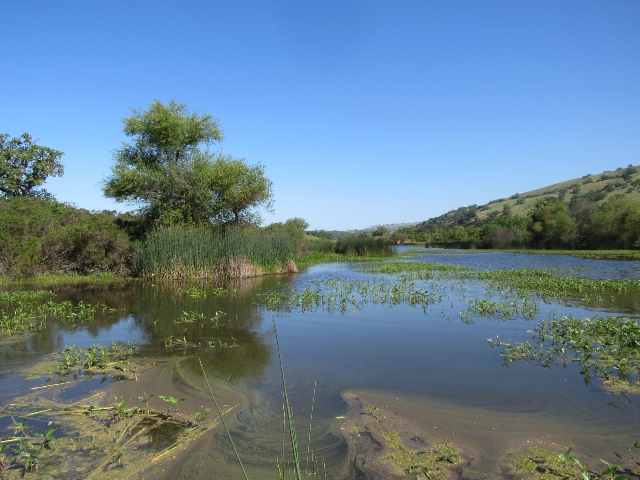
While hiking along the edge of a lake on Mount Hamilton in California, I spotted a few examples of distinctive-looking ducks. Males are known for their striking appearance in Spring, featuring a bright, powder-blue bill, rich chestnut-red body, and bold white cheeks with a black cap. Males are dull brown in Autumn, turning grayish-brown, like females, in Winter.
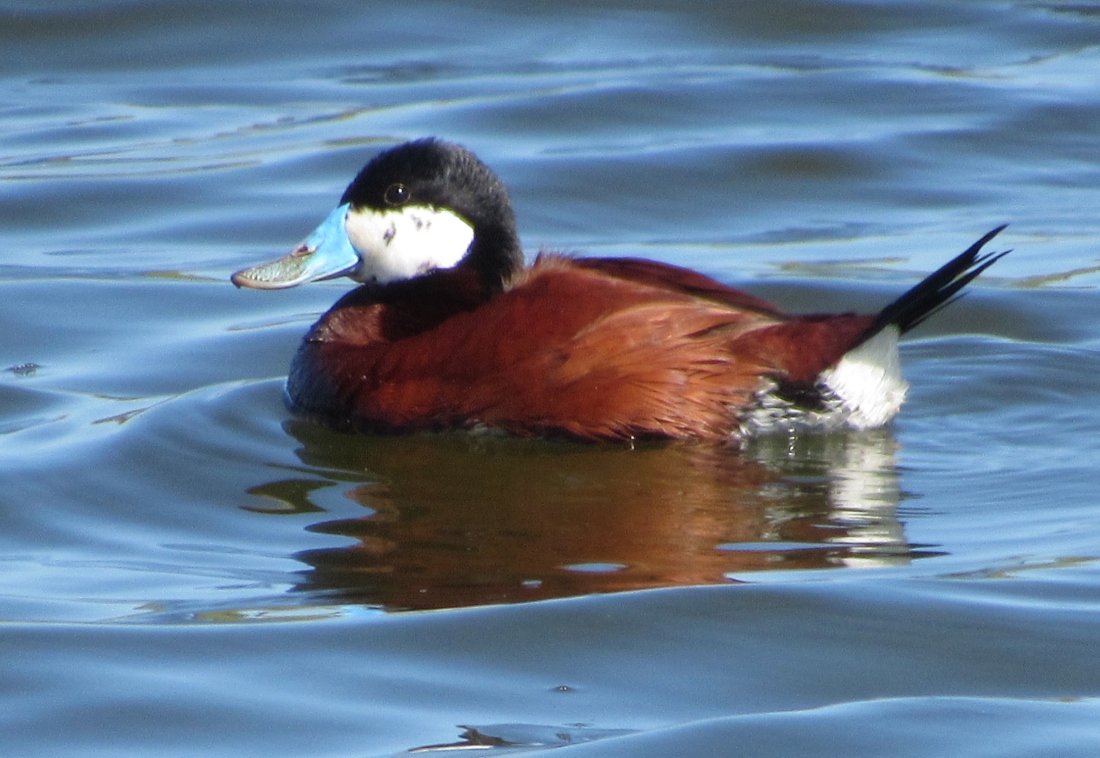
The Ruddy Duck is one of six species within the Stiff-tailed Duck Family. Stiff-tailed Ducks occupy heavily vegetated habitats in North and South America as well as the British Isles, France, and Spain.
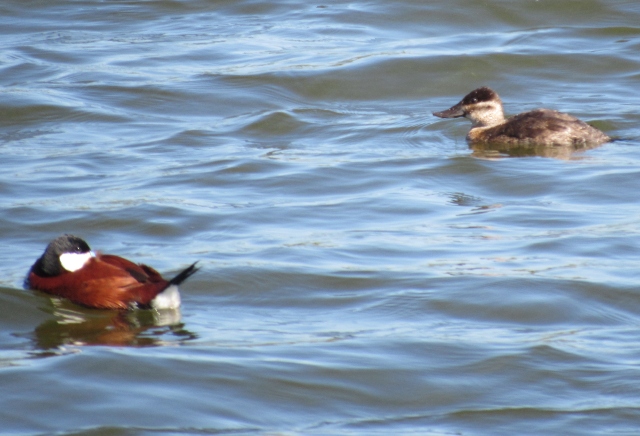
This bird has also been nicknamed “butterball,” a term used to describe an individual that is somewhat fat, due to its short and stout stature, which makes activities like flying and walking upright awkward. On takeoff it must patter across the surface of the water to become airborne, then it whirs along on rapidly beating wings. On land it is almost helpless.
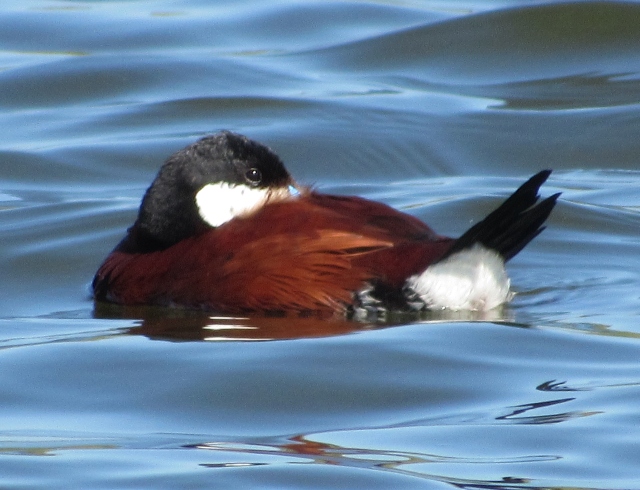
The Ruddy Duck is a small, compact duck with a sturdy, scoop-shaped bill, and a stiff tail which it holds cocked upward. It has a slightly peaked head and a fairly short, thick neck. It is an excellent diver that is often seen in tight groups, appearing to “bob” on the water.
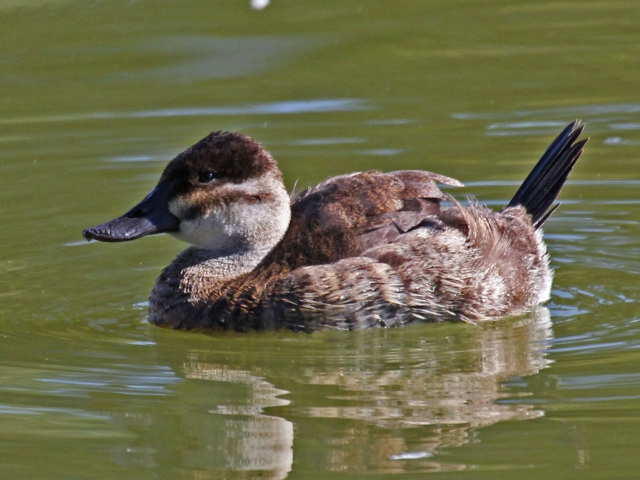
It forages by diving and swimming underwater, propelled by feet, using its bill to strain food items from mud at the bottom of ponds. It rarely forages by dabbling at the surface of the water. The Ruddy Duck feeds on the seeds and roots of plants including pondweeds, sedges, smartweeds, and grasses. It also consumes aquatic insects, mollusks, crustaceans, and rarely small fish. Insects and their larvae may be main foods eaten in Summer.
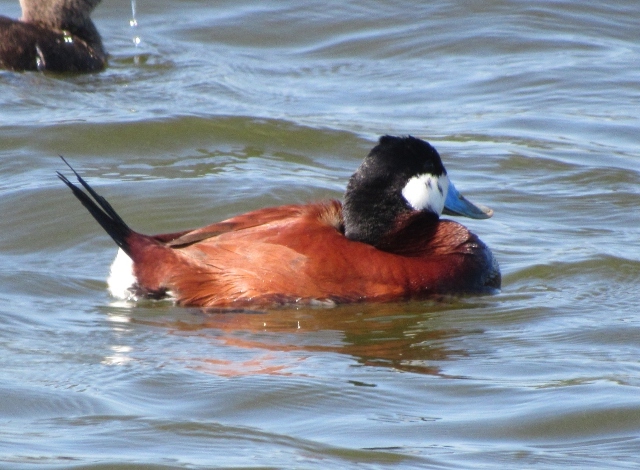
It was neat to see this colorful creature with a bright blue bill while herping the Golden State.