
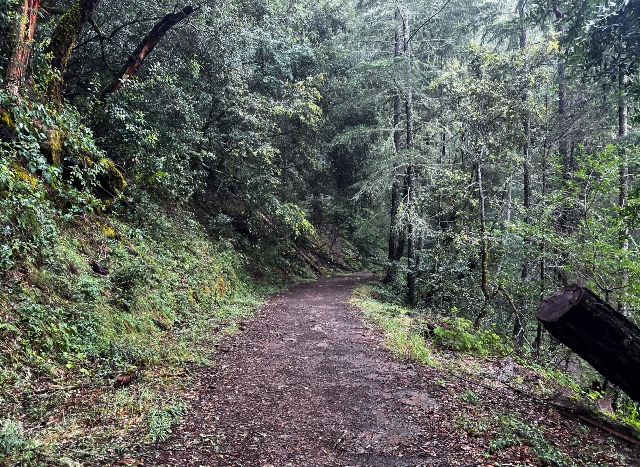
After many years of searching, I finally found this “lifer” amphibian on my visit to California this Spring. On a rainy day I hiked a trail in the Santa Cruz Mountains and after seeing 30-something California Newts, this fine creature was in the middle of the path.
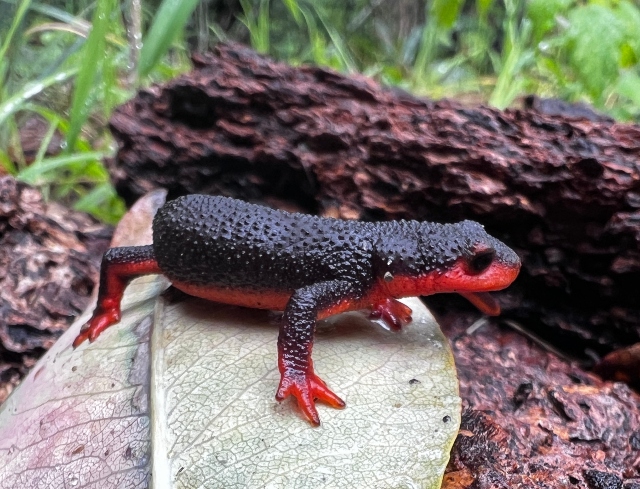
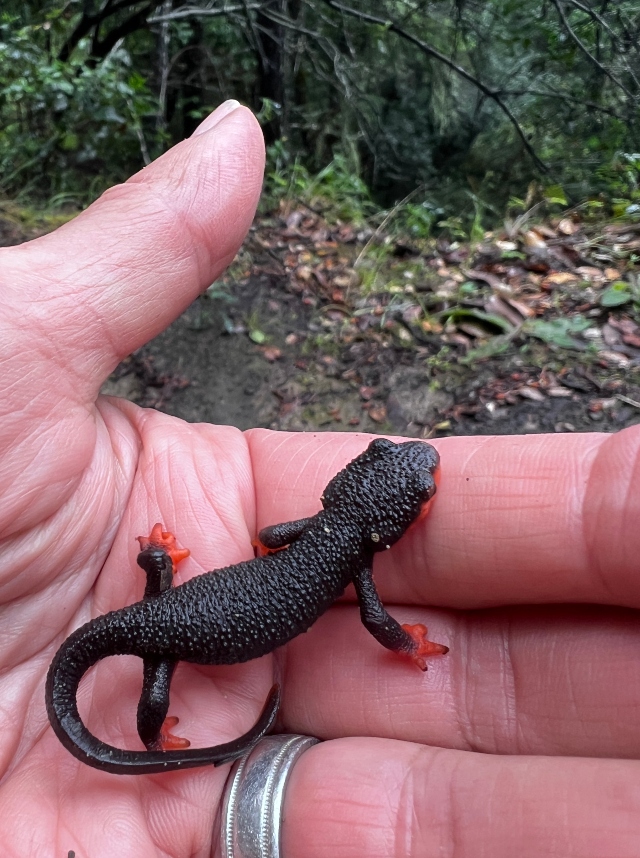
The Red-bellied Newt is a salamander that is native to coastal woodlands in northern California and is terrestrial for most of its life. When full grown, it measures between 5-1/2 to 7-1/2 inches from nose to tail tip. It has grainy skin, and is brownish-black on top with a tomato-red underbelly.
It inhabits primarily redwood forests, but is also found within mixed conifer, valley-foothill woodland, montane hardwood and hardwood-conifer habitats. This amphibian feeds on arthropods, worms and snails in water and on forest floor in ground litter. The Red-bellied Newt requires rapid streams with rocky substrate for breeding and egg-laying.
After hatching from eggs, the newts begin their lives as aquatic larvae similar to tadpoles, though elongated and with external gills. Once newt larvae mature into their adult form, which takes about four to six months, they leave the water and reside mainly underground. Red-bellied Newts can live for 20-30 years.
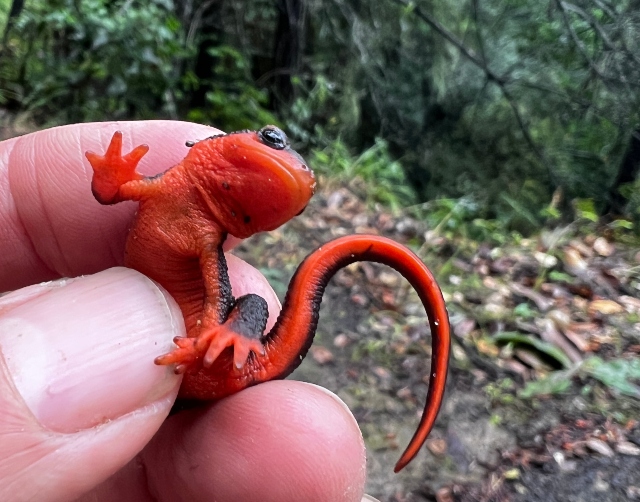
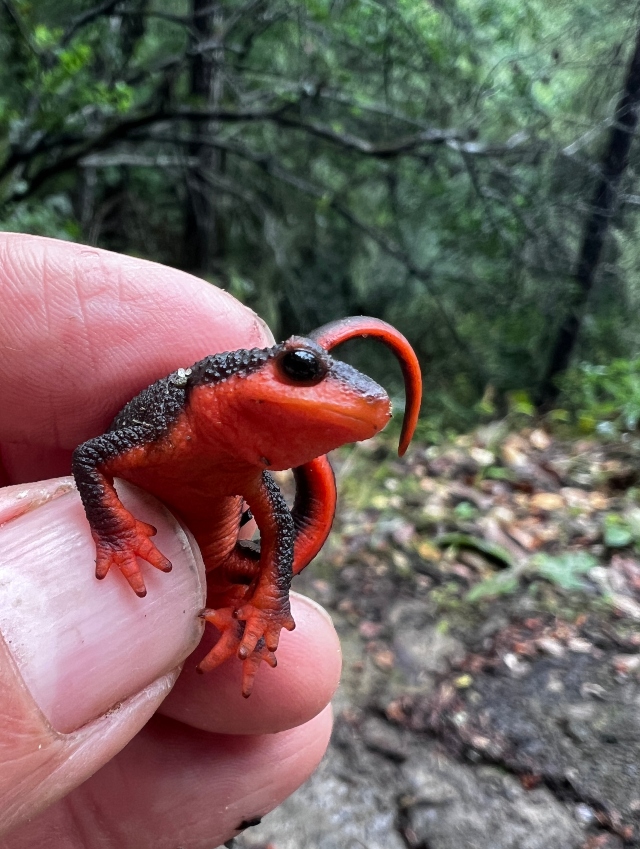
When disturbed, this species pulls its head and tail back to reveal its bright-red underside. This serves as a warning to potential predators, as Red-bellied Newts have enough of a neurotoxin in their skin, eggs, and embryos to potentially kill an adult human, or 1,200 to 2,500 mice. Because they are so poisonous, they are nearly inedible and have no reported predators other than a few species of snakes which are resistant to their toxin.
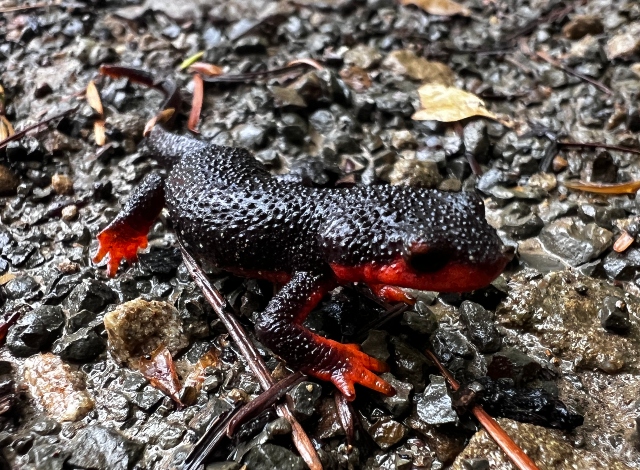
Like other newts, Red-bellied Newts have the ability to regenerate several body parts, including their limbs, eyes, hearts, intestines, upper and lower jaws, and damaged spinal cords.
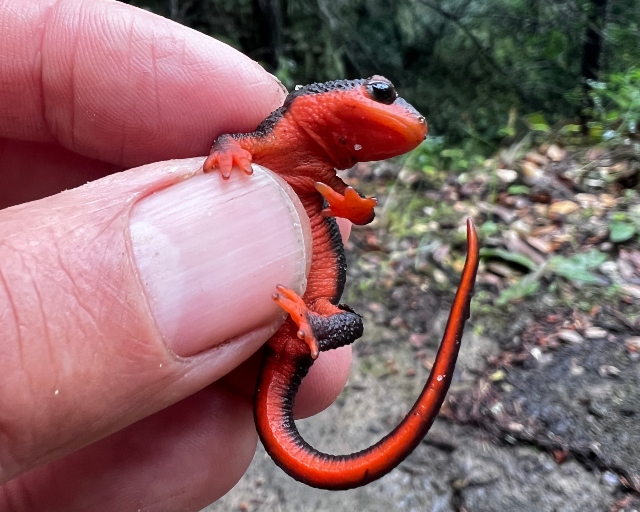
This was an exciting find and the highlight of my trip to the Golden State this year.