
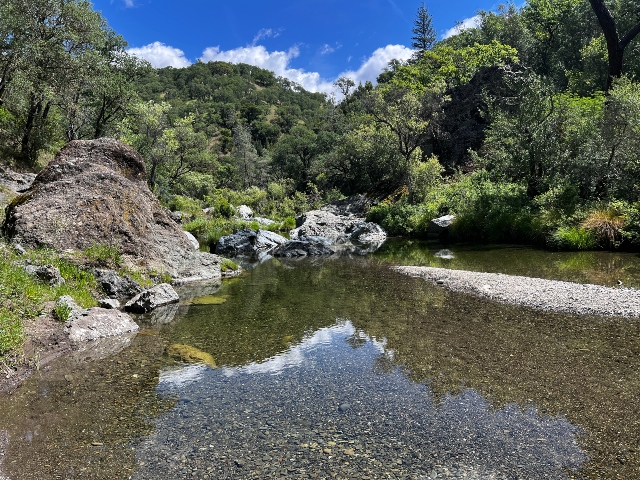
While visiting Henry W. Coe State Park in California, I saw a few of these insects on my hike. They inhabit coastal mountains, dry open grasslands, and areas associated with low vegetation, often on rocky substrates or near manzanita (also seen on this hike).
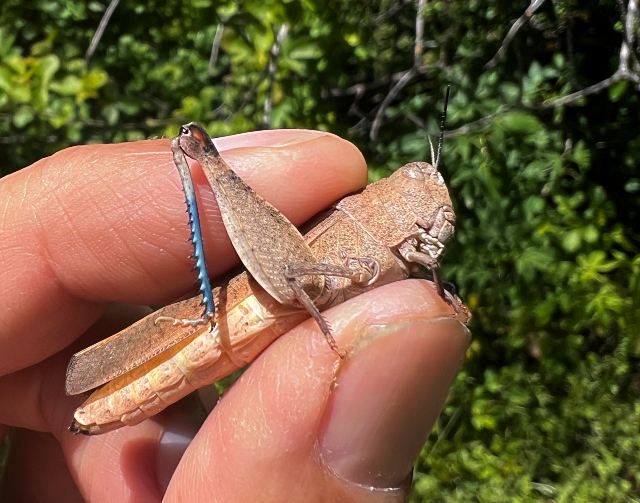
The Thalassica Grasshopper belongs to a group known as Band-winged Grasshoppers. An ancient group dating back to the Early Triassic Period (around 250 million years ago), this family of grasshoppers are found almost everywhere in the world except Antarctica.
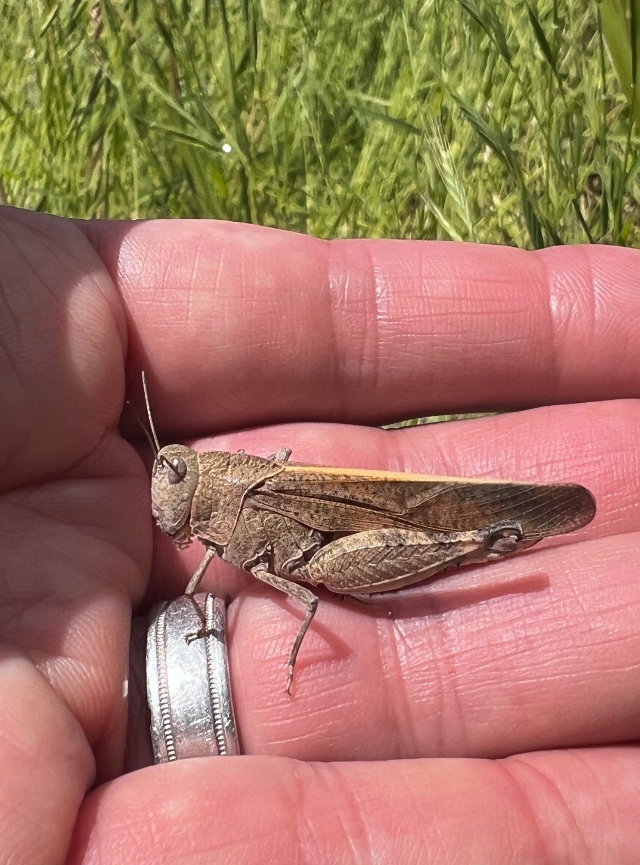
The body colors of many grasshoppers tend to simulate the color of their habitat background. This is particularly true of species inhabiting rocky or sandy environments. This insect is diurnal and relatively tame, flying short distances when disturbed, and is commonly observed on rocks, grasses, or in flight over open areas, like meadows- but when resting it can be hard to see.
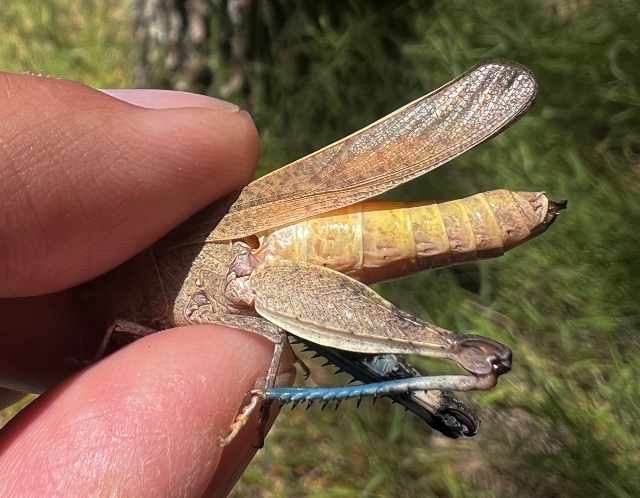
The Thalassica Grasshopper is endemic to California in the United States. Its head is notably broad above and below, featuring large and prominent eyes. Its hind legs are strongly developed for jumping, with the inside coloration being black and the hind tibiae being blue.
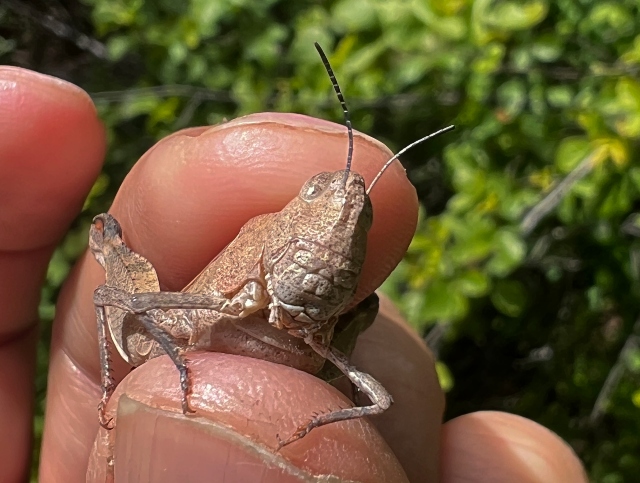
This herbivorous creature feeds on a variety plants available in its habitat. Foraging occurs mainly during the day, with adults and nymphs grazing on vegetation in grasslands and shrublands, particularly on warm, sunny days. The Thalassica Grasshopper can survive in highly saline environments, a rare trait that sets it apart from many terrestrial insects.
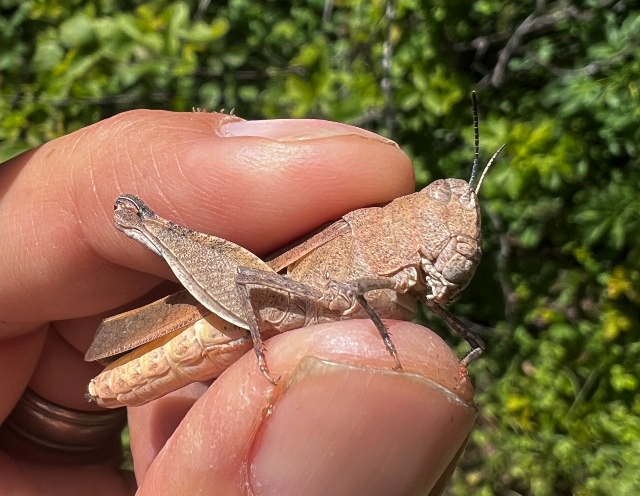
It was neat to come across this unexpected find while on my California trip.