Northwestern Salamander

Hiking through the woods in Northern California, I came across this large, dark amphibian along the edge of the trail. It was the largest wild salamander I’ve ever seen – a Northwestern Salamander. 

Like the Spotted Salamanders and Jefferson Salamanders from Ohio, these are “mole salamanders,” which spend much of their adult life underground. They can get up to 9-3/4 inches in total length.

Unlike their eastern counterparts, Northwestern Salamanders are mildly poisonous and have glands like a toad that secrete poison when the amphibian feels threatened. They are harmless to people (unless you try to eat one). Finding this big salamander, the first I’ve ever seen, was the highlight of the herping day.

Third Eye Herp
E-mail

Los Gatos (Bobcat)

I’m staying in the city of Los Gatos (The Cats) California. Today, while walking along the edge of a lake, a large creature jumped out from the tall vegetation and ran about 30 yards, concealing itself. Can you see it in the tall grass?

It was the first ever Bobcat I’ve ever seen in the wild. Fortunately it was just as curious about me as I was about the wildcat, so I also managed to get the photo below.

It was an unexpected and welcome nature sighting.

Third Eye Herp
E-mail

Banana Slugs

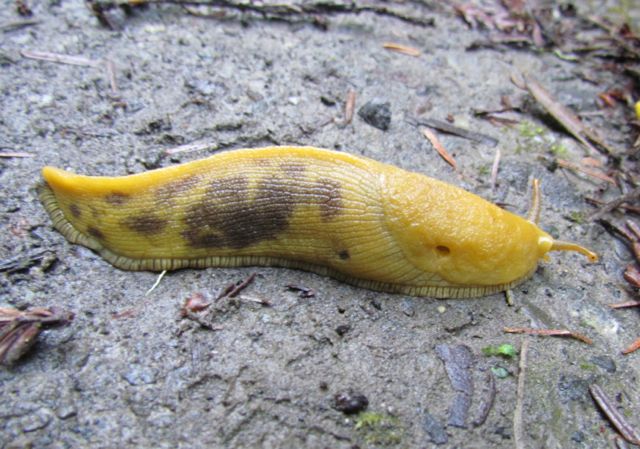
While exploring the dark, damp redwood forest floor today, it was hard not to notice the vibrant yellow coloration of Banana Slugs. While often bright yellow, they are also sometimes spotted with brown, looking like an overripe banana.
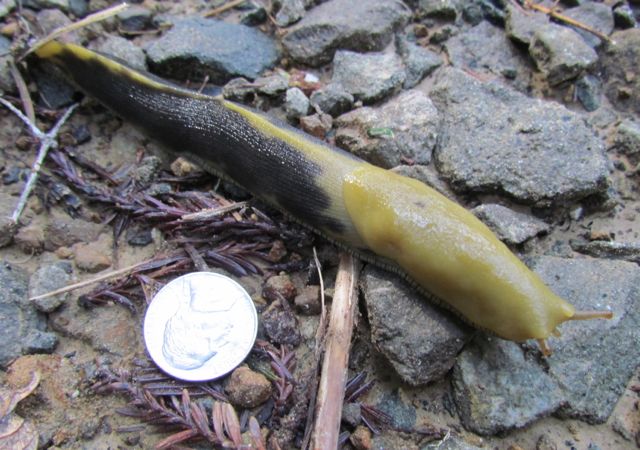
Not only are they colorful, but they are the second largest terrestrial slug in the world, growing up to nearly 10 inches. Here’s a photo of one taken next to a nickel for a size reference.
They use two pairs of feelers to sense their environment. The larger, upper pair, termed “eyestalks,” are used to detect light or movement. The second, lower pair are used to detect chemicals. The tentacles can retract and extend themselves to avoid damage. Slugs have a respiratory hole for breathing on one side (almost always on the right) of their bodies.

Slugs are mollusks and because they don’t live in the water, dehydration is a major problem for them. For this reason they secrete protective slime to keep from losing water. 
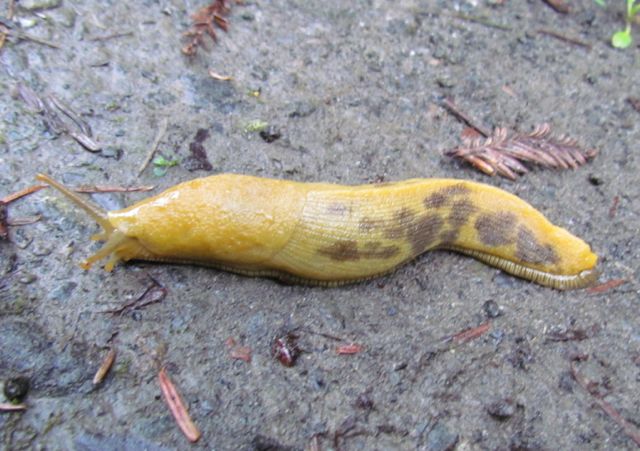
Some people regard slugs as slimy, disgusting garden pests. But not everyone sees them that way. UC Santa Cruz has adopted the banana slug as their mascot. The students’ embrace of such a lowly creature was their response to the fierce athletic competition fostered at most American universities.

By consuming dead organic matter, slugs contribute to decomposition and the nutrient cycles and are an important aspect of the ecosystem. Here’s a Banana Slug eating a banana peel on a trashcan in a State Park.

Third Eye Herp
E-mail


Snapping Turtles

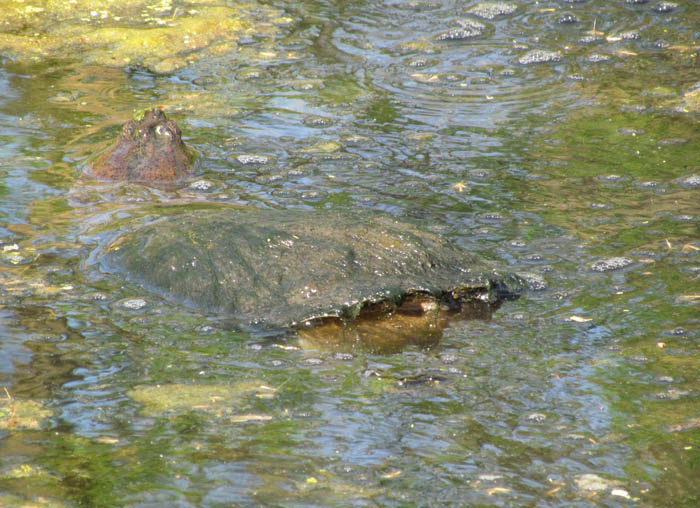
I like Snapping Turtles. They’re big and have a prehistoric appearance. With a long, alligator-like tail, elephantine legs, fierce disposition, and powerful jaws – they’re a reminder of when reptiles ruled the earth “back in the day.” Today was a particularly good day for seeing these turtles. Most of their time is spent at the bottom of shallow waterways. They are generally not aggressive when in the water. In the springtime they occasionally bask. This one was particularly large.

A little further down the path, these two males were having a territorial dispute. Here’s one of them on the lookout for the submerged male nearby.

The two individuals would face each other and then slowly and then deliberately lunge forward, like sumo wrestlers. They would scratch, kick and bite each other. Occasionally one would roll the other over in the water. It’s not often that one can see wild behavior like this occurring.

Snapping Turtles have large heads which cannot be withdrawn into their small shells. This turtle, which I saw a week ago, displays the long tail and jagged top shell.

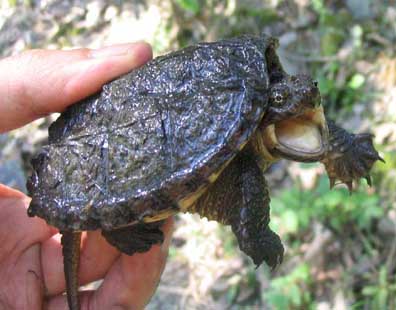
They have a very small bottom shell, which exposes their legs. It is for this reason that they are thought to be so defensive when out of the water. Here’s a cute little one that I found while herping five years ago.

These turtles are the largest in Ohio (and much of the northeast), sometimes weighing 35 pounds. The biggest one I’ve ever caught and measured had a 14 inch shell. Though I’ve seen some that I’m pretty sure were bigger. A few years ago my friend Dale and I went fishing and he caught a Snapping Turtle. For some reason he did not want to hold it, but he let me hold it and took this picture with his cell phone.

Third Eye Herp
E-mail

Bloodroot

This delicate wildflower is one of the plants that ushers in spring in late winter and then fades quietly away as the heat of summer arrives. Bloodroot is aptly named. When the root is cut, the stem exudes a red sap that looks just like blood. In addition to having a single, white flower – each plant has only one leaf.

Research has reported that Bloodroot contains some very interesting and important chemical substances, like sanguinarine, which has anesthetic properties.

Research has also confirmed that the Bloodroot plant contains chemical substances that help Bloodroot to work effectively as an antibacterial, anti-inflammatory, anti-oxidant, and antiseptic agent.

Many cultures have used this plant’s red juice as a dye and as insect repellent.

Third Eye Herp
E-mail

Blanding’s Turtles

I was exploring this beaver marsh not far from my home, and saw my first wild Blanding’s Turtles ever. These are large turtles, about the same size and shape as an army helmet.

Although essentially aquatic, the Blanding’s Turtle often wanders about on land, but seldom far from water. Unlike other species of pond turtles, this large but very timid turtle has no difficulty in swallowing food out of water.

Blanding’s turtles make extensive movements across land in search of suitable nesting areas, as well as traveling among wetlands.

Until recent years, the Blanding’s Turtle was thought to be gone from Ohio. The Blanding’s – named after it’s discover, naturalist William Blanding – is distinguished by its yellow-colored throat and is native to most of the Great Lakes region, but is either threatened or endangered in many states.

Third Eye Herp
E-mail

Green Stink Bug

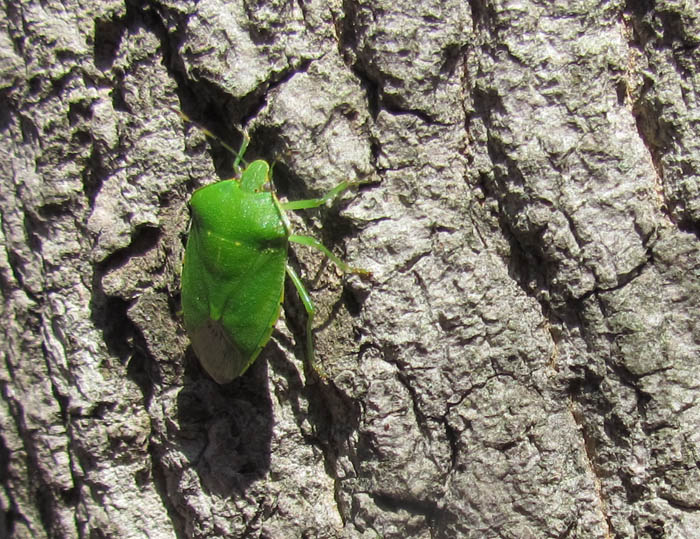
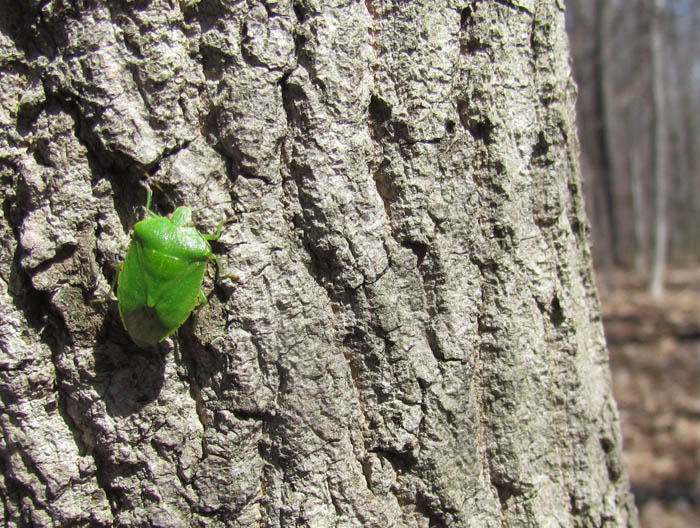
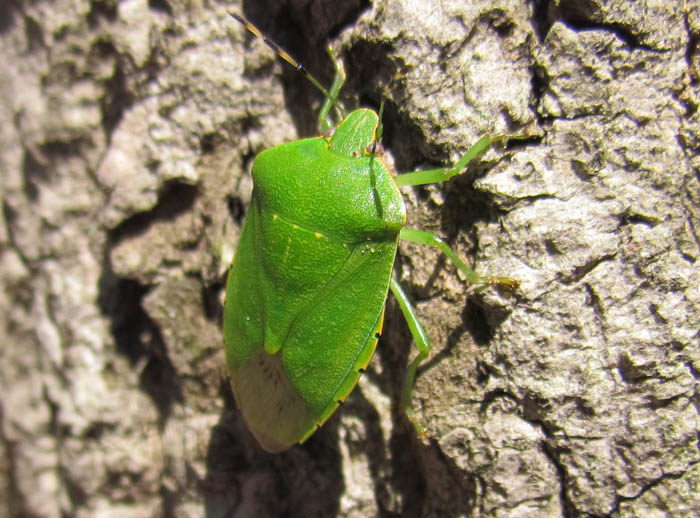
“Stinkbug” is the common name for a family of insects. There are thousands of species, found in most parts of the world. Stinkbugs are so named because they secrete a foul-smelling liquid that is repulsive to most predators. Most stinkbugs are dull in color, usually gray or brown, but some are such colors as brilliant green – like this one I saw today.

These insects are also sometimes known as “Shield Bugs,” because of their shape. Adult stink bugs hibernate in order to survive the winter. In the fall I often see Brown Stinkbugs sunning themselves on my house and shed, catching the last warm rays of sun for the year.

Like a skunk, a stinkbug will only give off a very bad smell if it is bothered. To most predators, a stinkbug tastes as bad as it smells.

Third Eye Herp
E-mail

American Toad

The Cuyahoga River floodplains are breeding areas for several types of amphibians. Walkers and bike riders on the Canal Towpath can hear up to 10 different species calling throughout the spring and summer.

The long, musical trills of American Toads could be heard a few feet off the Towpath today. I decided to check it out. It’s an odd sensation to be in the middle of a chorus of dozens of calling amphibians. The short movie below will give you an idea of what it sounded like.

MVI_5528

It takes some careful and concentrated scanning of the area to actually see the toads, but if you stay long enough and remain still, they will emerge from their hiding spots and resume their calls. This one happened to be right below my feet.

American Toads are considered to be “explosive breeders,” with large numbers arriving at a pool within a very short time. The entire breeding process is over in a week or two.

Toads don’t cause warts. The bumps on their skin contain poison glands. It’s the defense mechanism for a relatively slow-moving amphibian. Toads are harmless to humans (unless you try to eat one). Another defense is to inflate themselves with air. By “puffing up,” the toad appears bigger.

American Toads are extremely helpful to people, especially in gardens where they will eat huge numbers of pests, including insects and slugs. They can live up to 30 years.

Third Eye Herp
E-mail

Coltsfoot

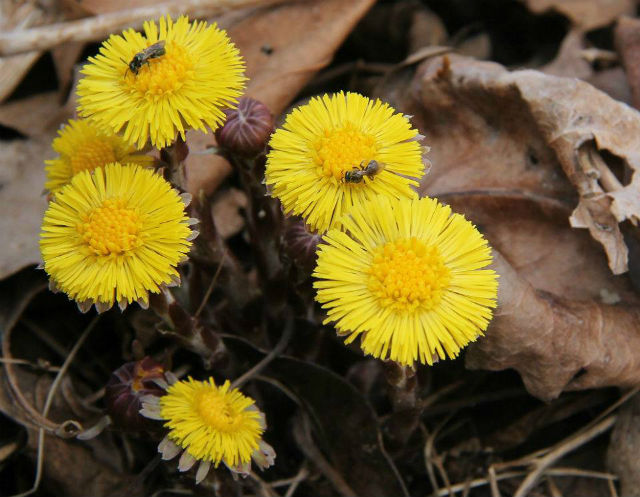
Walking through the brown, still getting ready for spring woods, it’s hard not to notice a vibrant, yellow wildflower that looks very much like a dandelion. Though it has many common names, I was taught this plant as being Coltsfoot.

It is often found in colonies of dozens of plants. The flowers appear in early spring before dandelions appear. The leaves, which resemble a colt’s foot in cross section, do not appear usually until after the seeds are set. So the flowers often appear on stems with no apparent leaves, and the later-appearing leaves then wither and die during the season without flowers.

Coltsfoot is not native to the United States, but it has been here a long time. It was most likely brought here by settlers as a medicinal item. Coltsfoot has been used in herbal medicine for its purported cough-suppressing effects. The plant has been used historically to treat lung ailments such as asthma as well as various coughs.

coltsfoot

Its Latin name is Tussilago farfara; “tussilago” itself means “cough suppressant.” It was so popular in Europe at one time that French pharmacists painted its flowers on their doorposts.

Third Eye Herp
E-mail