Western Chorus Frog

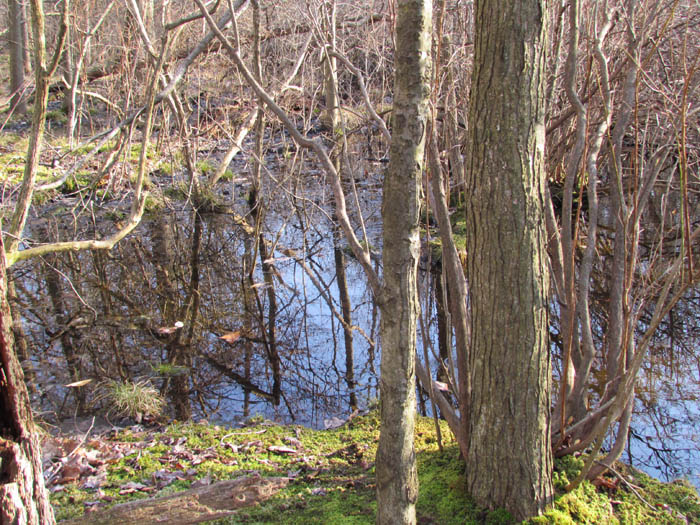
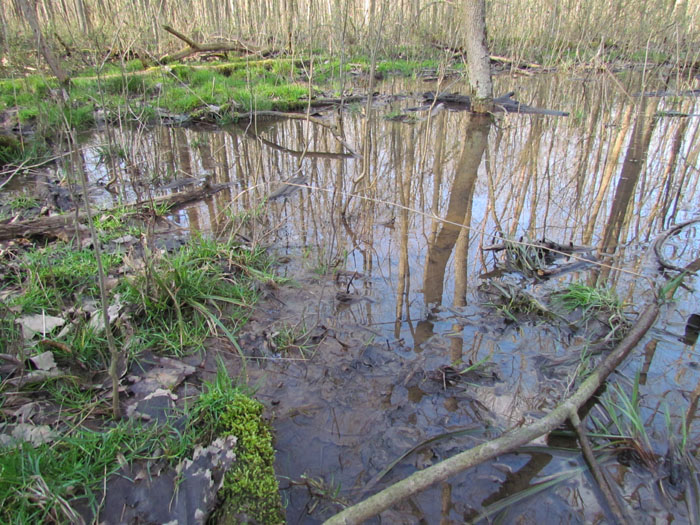
Hiking through the Metroparks today, I heard the sound of frogs calling off in the distance. I had not been to the spot I was exploring in the springtime and was unaware that there were vernal pools deeper in the woods. The frog calls were not the “peeps” of Spring Peepers or the chicken-like sounds of Wood Frogs. They weren’t even the long, melodious trills of American Toads – they were from something different. As I approached the woodland pool, here’s what it looked like.
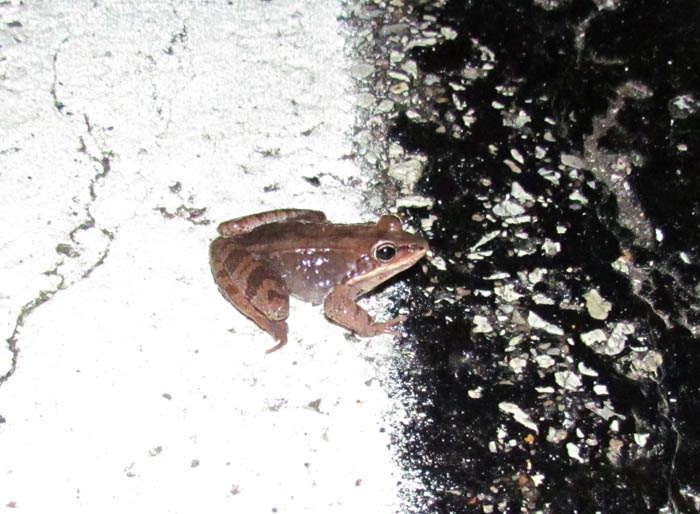
It was the sounds of a frog I have not seen for five years. This frog’s call resembles the sound made by rubbing one’s finger over the teeth of a hard plastic comb; a long cr-e-e-e-e-e-k. It was the Western Chorus Frog, which is about the same size as the Spring Peeper. It can be identified by its three distinctive dark stripes which normally run down the back, and a dark stripe on each side. Since it was still daylight, I needed to use quite a bit of stealth to locate one – they are quite wary. Here’s a short video with the sounds I heard.

MVI_5416

Western chorus frogs are widely distributed throughout Ohio. They become rare in northeastern Ohio east of Cleveland. It took some time, but I was finally able to spot this male calling.

These frogs feed on a variety of small invertebrates including beetles, ants, flies, leaf hoppers, and spiders.  Their only defense is their small size which they use to attempt to conceal themselves from the many birds, mammals, garter snakes, and other larger frogs which all enjoy preying upon them. Here’s what a female carrying eggs looks like.

Third Eye Herp
E-mail

Herping with High School Students

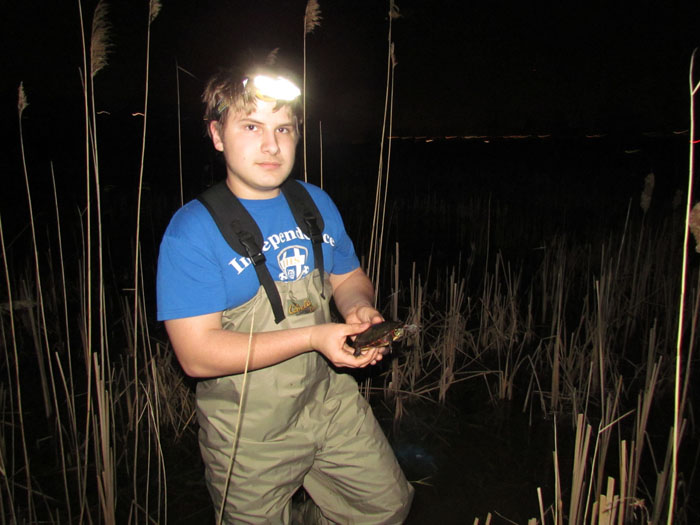
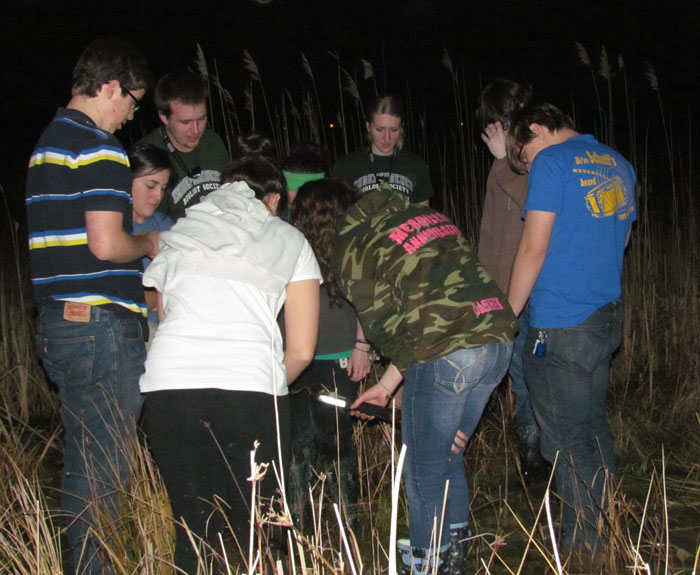
Last night I accompanied a group of high school students into the floodplains of the Cuyahoga River to see what we could turn up. Usually we go later in the year, but it’s been warm and the frogs have been calling. Often we catch the tail end of Spring Peeper season and the beginning of American Toad and Leopard Frog season. There do not appear to be any salamanders breeding in the pools. We started out at a small pond getting some practice in listening to and locating Spring Peepers.

There’s a bit of a contest between the students as to who can locate the first one (it’s not as easy as you might think). This year Andy found the first one. He had a bunch of good finds last night.

After the students got an understanding of the challenge and were given the basic overview of why frogs call, satellite males, breeding competition, etc., it was time to head into the valley.

We could hear the long trills of American Toads as well as the occasional “snores” of Leopard Frogs through the constant calling of Spring Peepers. This wasn’t a herp, but it is one of my favorite invertebrates – an Eastern Toebiter – we also saw a few Water Scorpions.

We’ve never found reptiles on previous trips to this location this early in the year, but last night was different.

Northern Brown Snake

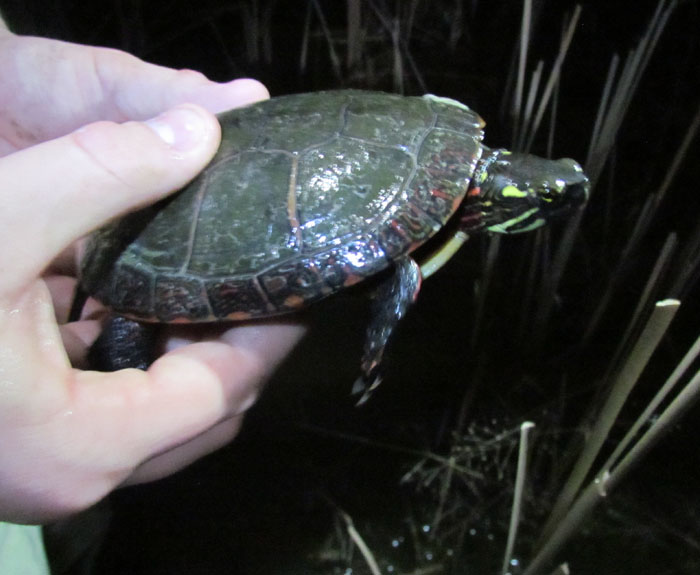
Then Andy started catching turtles; a few turned up in the floodplains yesterday.

Can I get a closer picture of that Midland Painted Turtle, Andy?

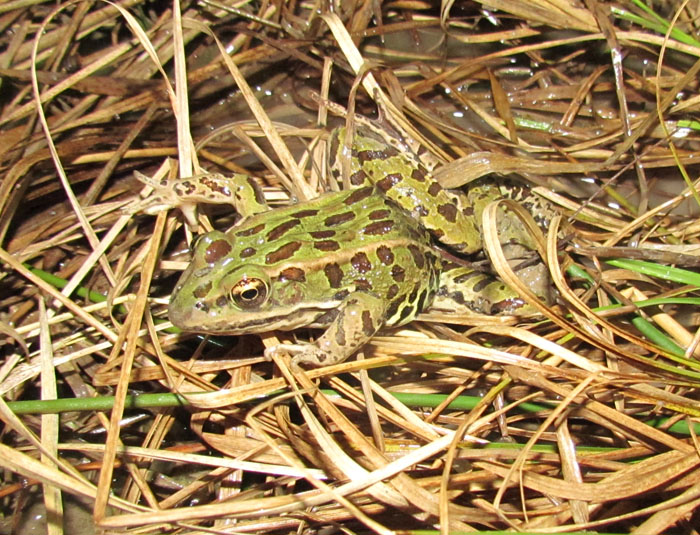
Spring Peepers were what the students were finding the most of, but bigger frogs were caught as well.

Northern Leopard Frog

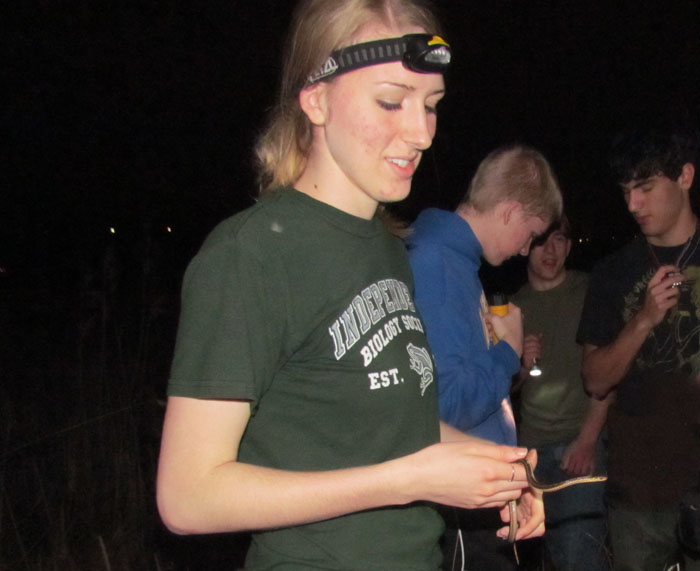
Megan caught the second snake of the night.

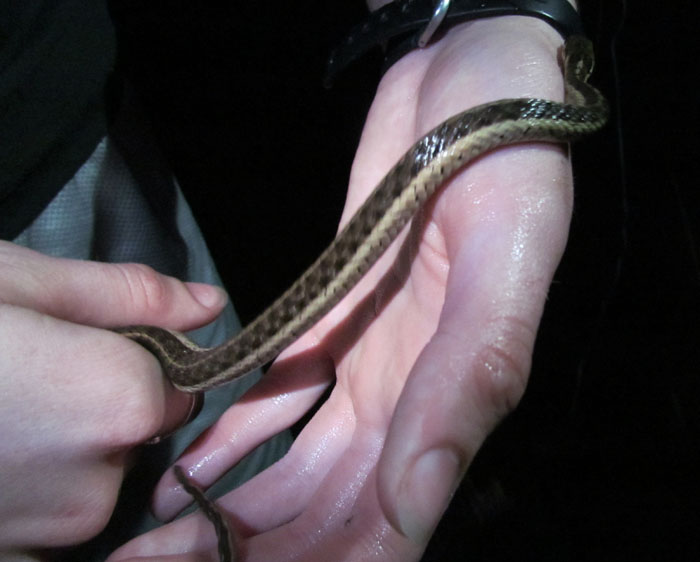
Eastern Garter Snake

Although they are rather loud, Spring Peepers are very small. It can be a frustrating experience to locate one, even if it’s only a couple of feet away and calling. This photo gives an idea of how tiny they are.

There’s no time like Toad Time, and a fair number of American Toads were found, though they were not calling in full force yet.

Most of the twenty-something students found and/or caught an amphibian.

My 10 year old nephew Max and I were bent on catching a Western Chorus Frog. We heard a few calling, but they eluded us. We had a pretty good time anyway.

Third Eye
E-mail

Spotted Turtles

Today I went on a quest for a reptile I’ve never seen in the wild before. Here’s what the habitat (a place that I have never been to) looked like.

It was quite warm for mid-March today – 80 degrees. I was beginning to think that maybe I should have went when it was still cooler outside. But wait, what’s that movement over there in the water?

Spotted Turtles breeding. These are a small, black turtle with distinctive yellow spots on the shell. The head of the spotted turtle is often colorfully adorned with reddish-orange to yellow blotches on the sides and chin. The forearms may also be bright orange.

This handsome turtle shows a preference for shallow, sluggish water – especially marshes and bogs where vegetation is abundant. Spotted Turtles are extremely rare throughout Ohio.

The spots on spotted turtles vary greatly throughout their range. Some can have over a hundred spots, while others have no spots at all.

It was a great day for herping – I also saw my first Green Frog, Eastern Garter Snakes and Northern Brown Snake of the year.

Third Eye Herp
E-mail

Alison Holds Amphibians

I never thought I’d see the day, but today it happened. Don’t believe me? Then read on.

Alison and I took a boy named Evan out to see some signs of spring (which officially is only a week away). We heard frogs calling from woodland pools, so we stopped to check it out.

All those ripples and swirls are from Wood Frogs swimming around, looking for mates.

There were a few Wood Frogs on land too, heading for the water. This one was pretty colorful.

So we caught it, to check it out more closely. These amphibians can be easily identified by their “robber’s mask.”

Evan decided that further investigations were in order.

A bit of log turning revealed a Spotted Salamander.

They spend most of their life underground, but head to the pools in March to lay eggs. Then they return back to the woods.

Of course Evan would hold it, but the big question was would Alison hold it?

She did!

Third Eye Herp
E-mail

Herping with Lance, Lauren, Luke and Logan

The “4 Ls” caught word of spring and the annual amphibian migration. “We want to go on a salamander hunt,” they said.

“OK,” I replied. So off we went.


We soon found out that finding wild herps isn’t as easy as looking at pictures of them on the internet. We could hear the “clucking” of Wood Frogs and the chirps of Spring Peepers, but where were they? Logan thought that lifting logs was a good strategy.

Then we found that if we were quiet, still and patient, our quarry would soon reveal itself.

Hey, what’s inside this log?

Not everyone is stoked about finding their first Spotted Salamander.

But Lance is.

And so is Lauren – we found four in total.

A non-migrating Redback Salamander.

Salamanders are sweet, but we won’t be happy until we catch a frog.

Lauren taking the “Wood Frog Challenge,” those frogs simply did not want to get caught.

 It was a great way to spend the afternoon.


Third Eye Herp
E-mail


Tonight’s Amphibian Migration

How do you know that spring has arrived? Some would say it’s when they see their first Red-winged Blackbird. Some would say that it’s when a particular flower starts to bloom. But that’s all nonsense. Spring is officially here when Spring Peepers start calling. But before they do that, they must wake up from hibernation and migrate to woodland pools, where they lay their eggs. In these parts, Wood Frogs, Spotted Salamanders and Jefferson’s Salamanders often join them.
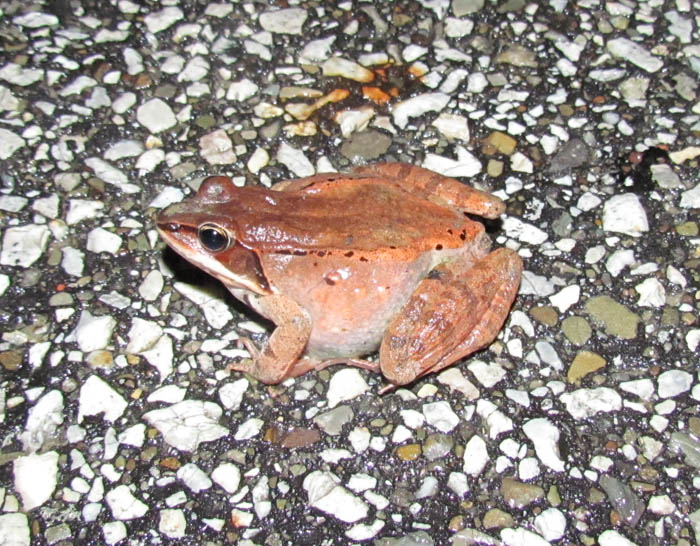
It rained pretty heavily until early afternoon, but then it stopped. But it still turned out to be a very good night for seeing amphibians. Wood Frogs were everywhere. I’ve never seen so many in one night (we only stayed for an hour).

Here’s a female heavy with eggs. Unfortunately they didn’t close the road like they usually do, so there were quite a few casualties. We called a ranger and he stopped by shortly thereafter to close it.

Although the Wood Frogs were calling in full force, there weren’t many Spring Peepers calling yet. Only two were seen on the road.

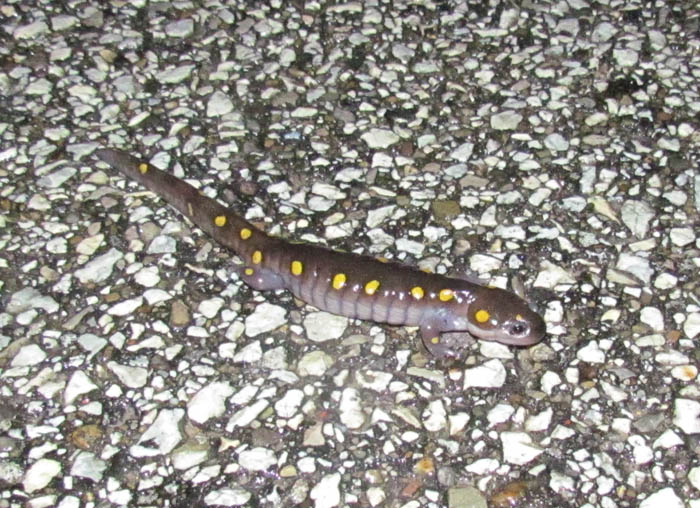
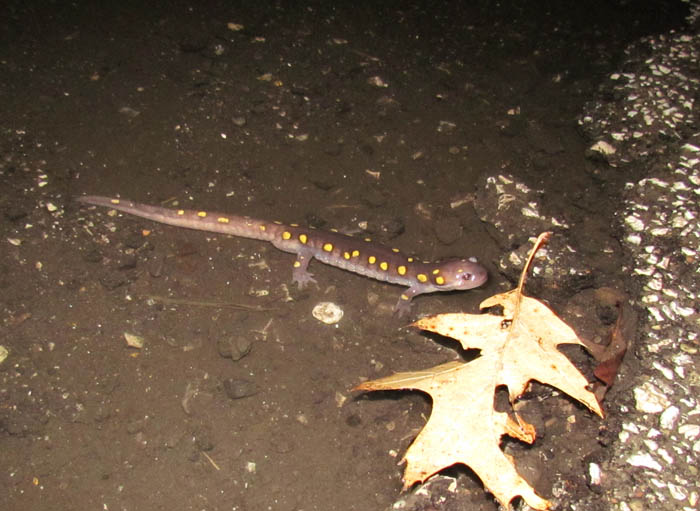
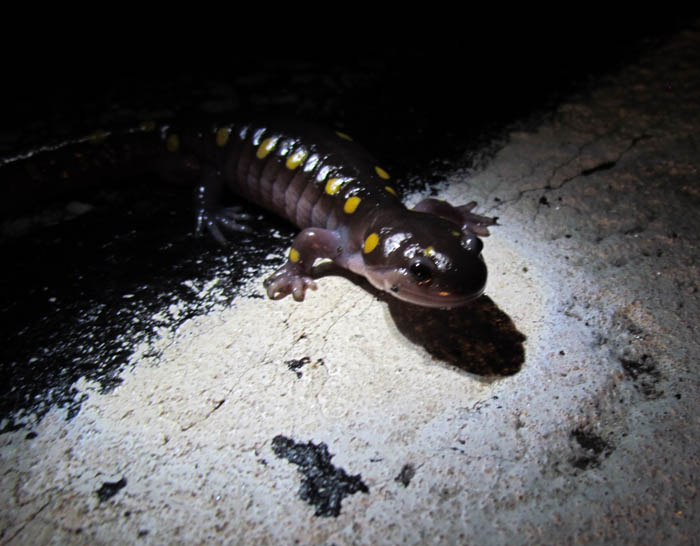
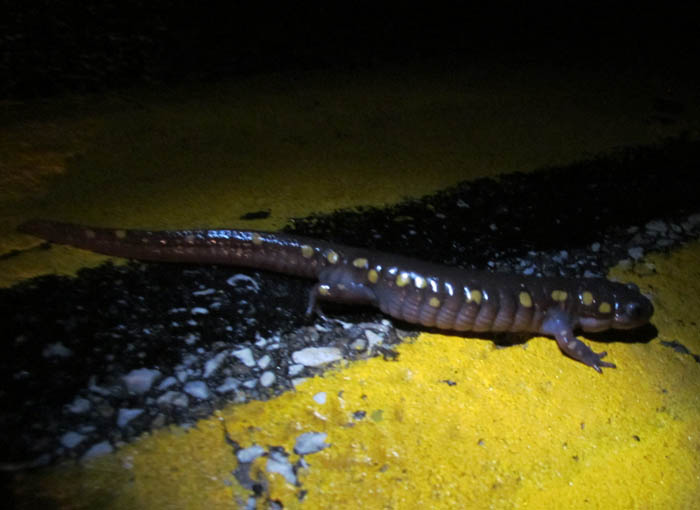
Salamanders tend to start crossing a bit later at night, but eventually they made their presence known. Here’s the first of many Spotted Salamanders.
One with relatively few spots.

But the Wood Frogs kept coming too. Sometimes I’d be photographing one and two or three would hop right on by.
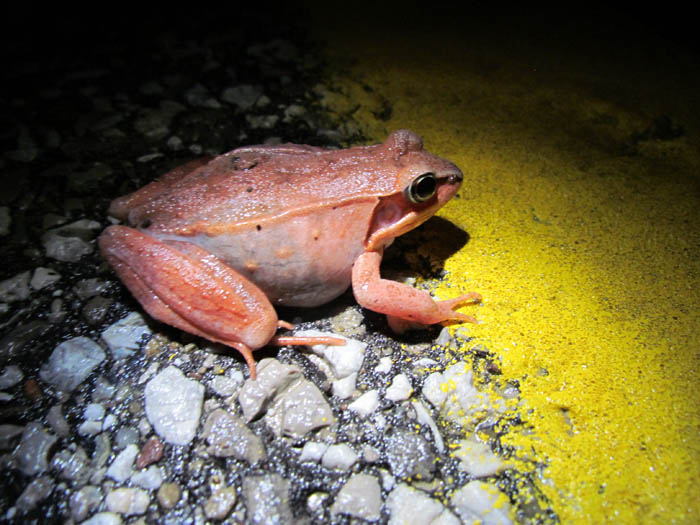
A few were orange and a few were pink.

A hybrid/intergrade salamander that no one can quite figure out.

This spotted was just chillin’ in a roadside puddle after making it across the street.

And this one successfully crossed the “finish line” too.

Hey, that’s a spotted salamander, but it’s not a Spotted Salamander. This newt was probably looking to cash in on some tasty amphibian eggs.

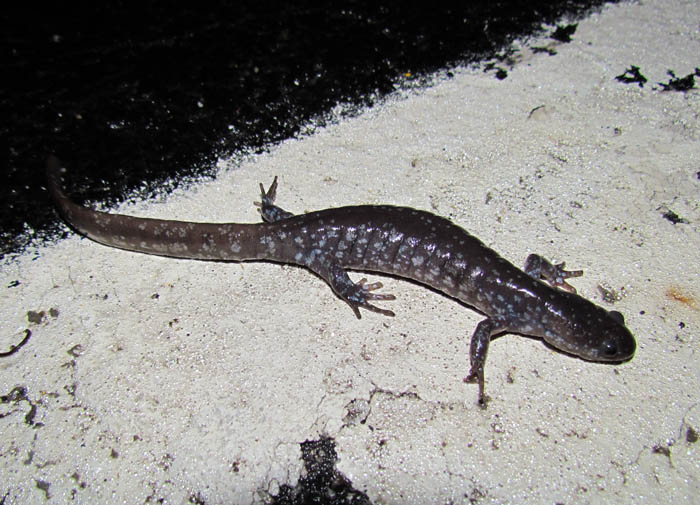
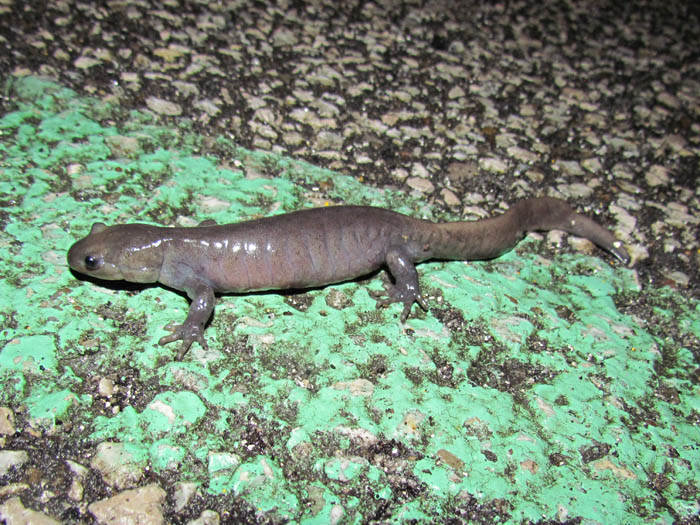
Gray is my favorite color, and this Jefferson’s Salamander certainly was a fine sight to see.

It was quite a night!

Third Eye Herp
E-mail

Turtle Mania!

Today was one of those days when it seemed everyone was enjoying the outdoors.

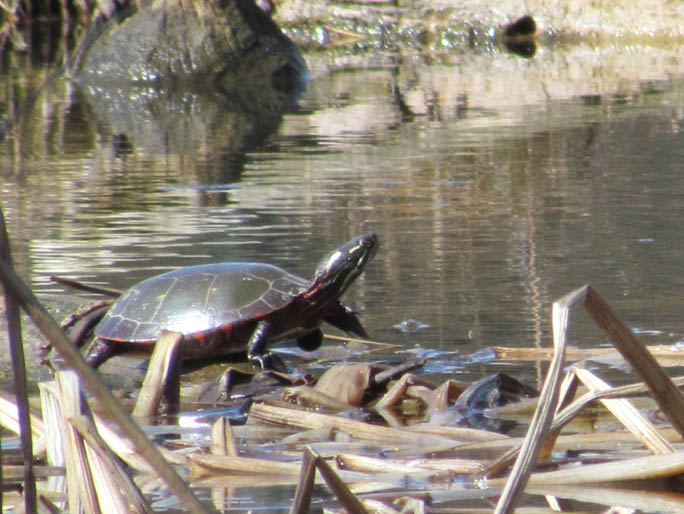
And turtles were out in full force too – catching some rays. This Midland Painted Turtle was the first one that I saw.

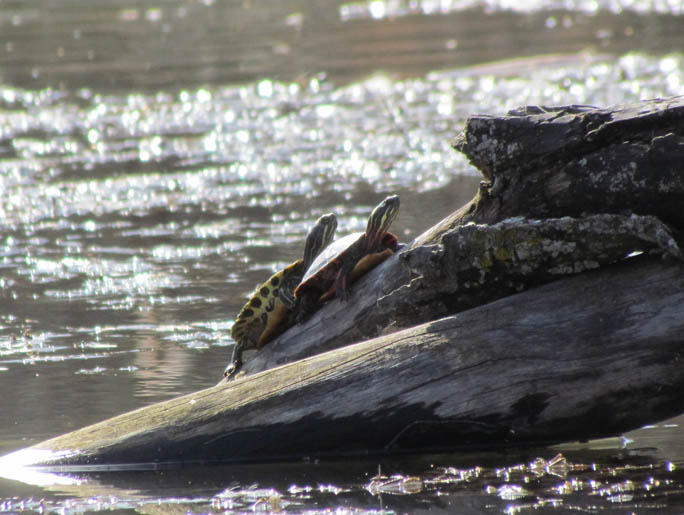
In the same pond was a young Red-eared Slider hanging out with a juvenile Painted Turtle.

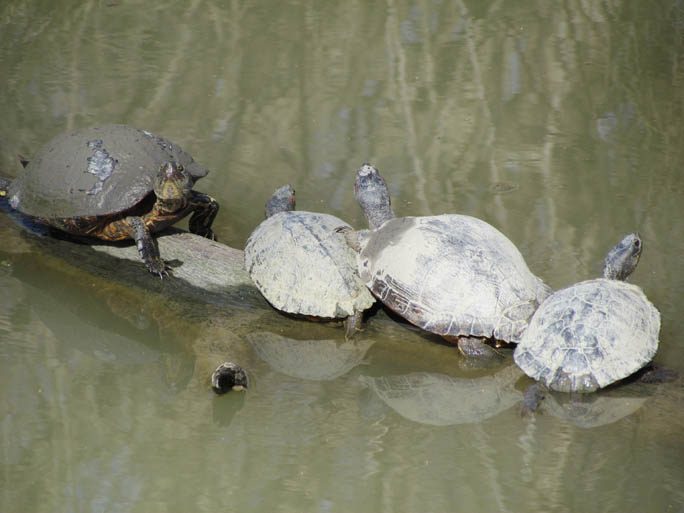
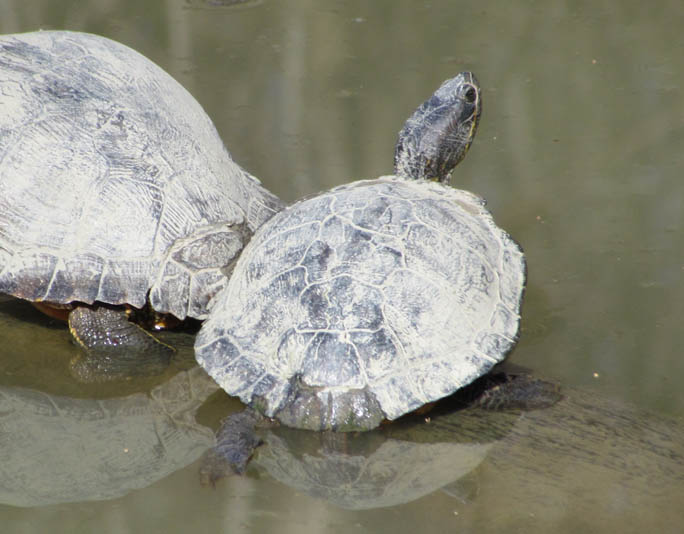
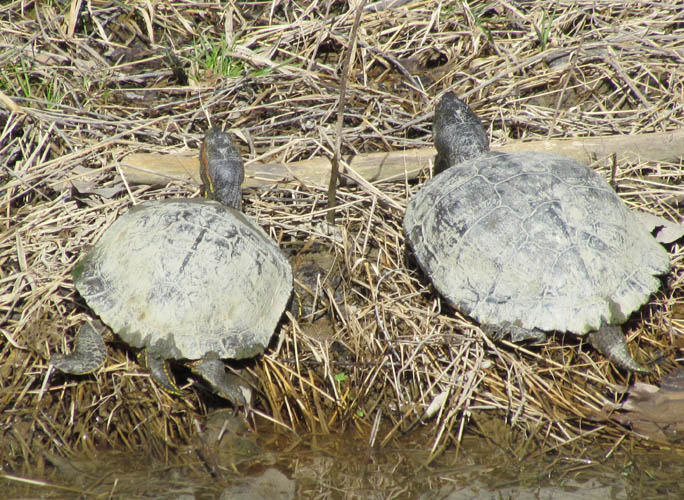
Afterwards I came across this four-turtle combo. The two in the middle are Red-eared Sliders.

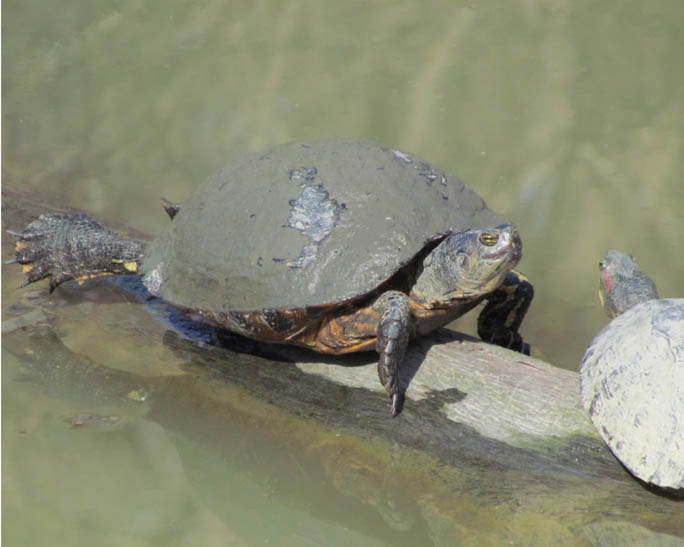
The one on the left is an adult River Cooter the size of a football.

During the winter, most water turtles go deep into the mud and leaves at the bottom of waterways. Then they let themselves get cold. Their bodies slow down, so they don’t need to eat anymore. Their hearts slow down too, so that they beat only once every few minutes. They stop breathing through their lungs. Because their bodies are running at such a slow speed, they don’t need much oxygen, but they do need some. They can get the small amount of oxygen they need from the water; it is absorbed through specialized skin cells.

The one on the right is an old Red-ear. As they age, males often get darker and occasionally lose their red coloration. Many of the turtles were still coated with their “hibernation mud.” A double dose of dirty Sliders:

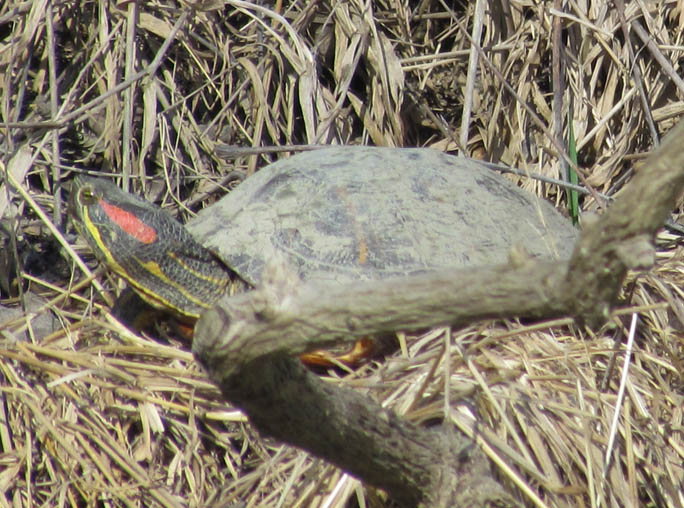
This Red-ear is showing off how the reptile received its common name.

It was an awesome day to be out and see nature gearing up for spring.

Third Eye Herp
E-mail

Water Strider

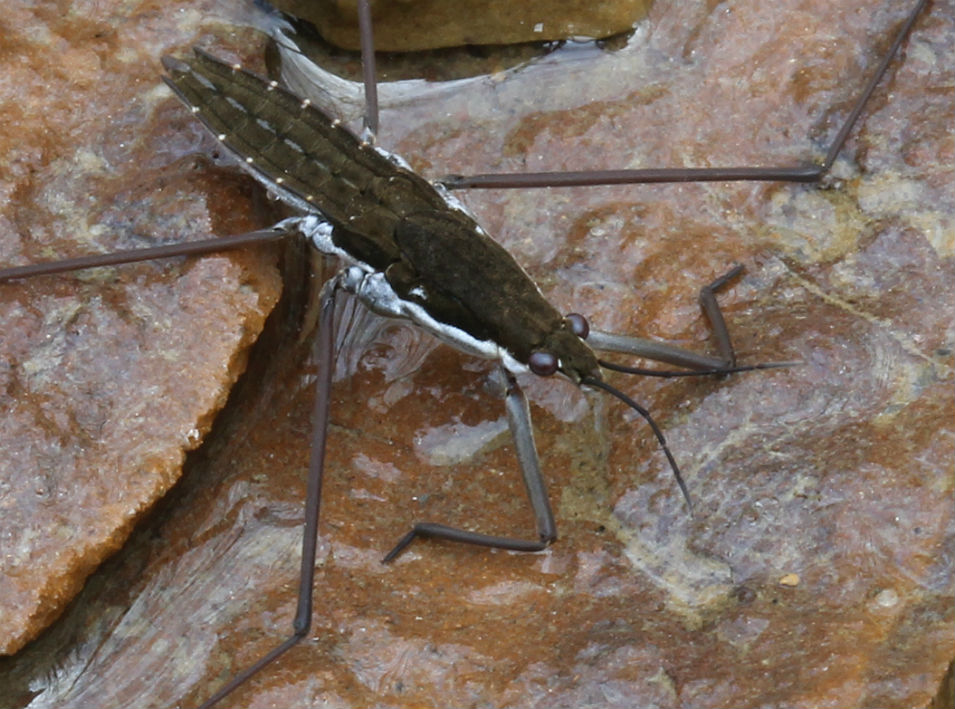
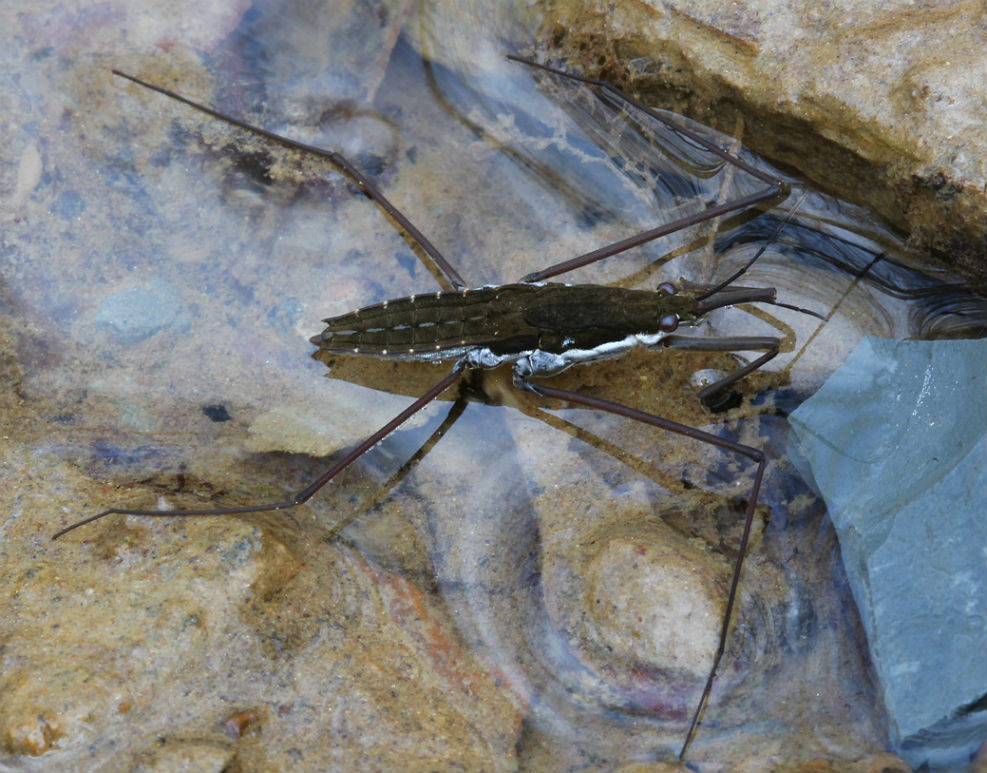
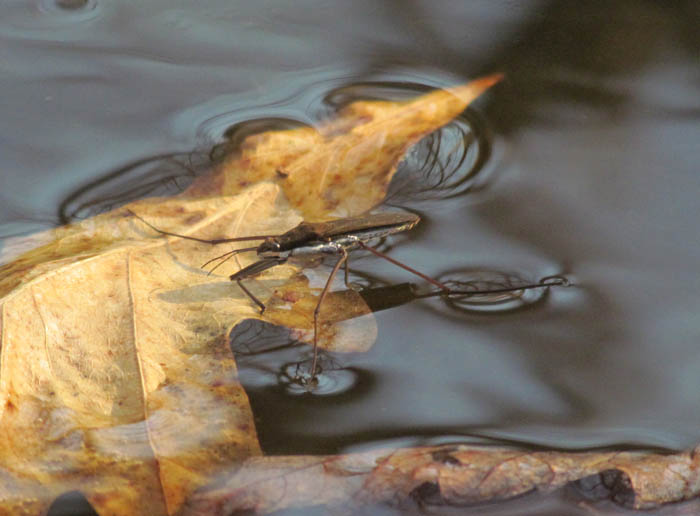
Spring is just around the corner. It was 70 degrees and pleasant today. Many people were walking around, enjoying the weather. I decided to check out a vernal pool where frogs and salamanders will soon be migrating to. Since it is fishless, it’s a good place for the amphibians to lay their eggs. Although I didn’t see any frogs or salamanders, an insect skimming across the water caught my eye.

strider064

Water Striders are able to skate on top of water due to a combination of several factors. They use the high surface tension of water and their long legs (which give them an even distribution of weight) to help them stay above water. New research reveals the Water Strider’s legs are covered with microscopic hairs that trap tiny air bubbles, allowing the insect to simply float.

strider058

These insects live on the surface of ponds, slow streams, marshes, and other quiet waters. They have very good vision and move quickly on the water. The short front legs of a Water Strider are for grabbing prey (often mosquitoes, their larva and other small insects).

Water Striders can live for many months and adults can overwinter. They crawl inside plant stems and seek other forms of shelter when it gets cold. Other common names for Water Striders are: water bugs, magic bugs, pond skaters, skaters, skimmers, water scooters, water skaters, water skeeters, water skimmers, water skippers, water spiders and Jesus bugs.

Third Eye Herp
E-mail


Cecropia Cocoon

Cleveland sure has crazy weather. Yesterday it was 70 degrees. I was getting a serious case of “spring fever.” And today it was 40. And rainy. And overcast. I went out for a walk in the woods anyhow. Here’s what the trees looked like:

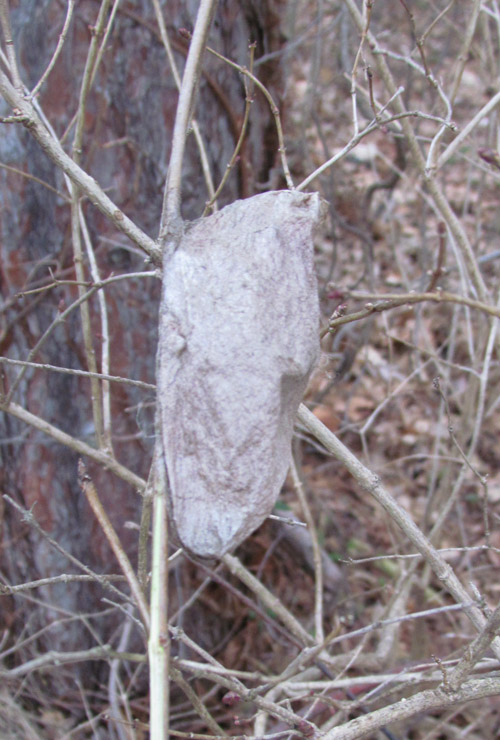
But then I came across this, a Cecropia cocoon. The Cecropia is North America’s largest moth with a wingspan approaching six inches. It is my favorite moth (though it is tied with the Luna Moth in that regard). The cocoon consists of three distinct layers – the first is a hard shell, the second is an air space filled with wisps of silk, and the inner layer is rough silk. It is thought that the air space creates insulation.

Cecropia moth cocoons are often over 3 inches long and this one is in that size category. I’ll keep this cocoon and post photos once the moth emerges (which probably won’t be until 3 or 4 months). If you like big moths, check out “A Polyphemus Moth Story.”

Third Eye Herp
E-mail

Fun with Fungus

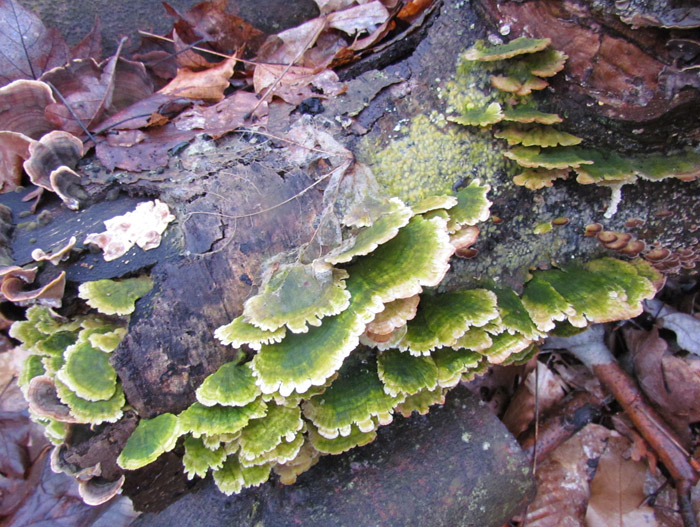
Did you know that fungi are more closely related to people than to plants? It’s OK, I didn’t know that either until I took Biology at CSU a couple of years ago. I contemplated this as I saw several different types of rather eye-catching fungus while out this afternoon.

In addition to the beauty of some types, fungi provide a critical part of nature’s continuous rebirth: fungi recycle dead organic matter into useful nutrients. Fungi feed by absorbing nutrients from the organic material in which they live.

Fungi were listed in the Plant Kingdom for many years. Then scientists learned that fungi show a closer relation to animals, but are unique and separate life forms. So now fungi are placed in their own Kingdom.

You probably use fungal products every day without being aware of it. People eat mushrooms of all shapes, sizes and colors. Yeasts are used in making bread, wine, beer and solvents. Drugs made from fungi cure diseases and stop the rejection of transplanted hearts and other organs. Fungi are also grown in large vats to produce flavorings for cooking, vitamins and enzymes for removing stains.

Third Eye Herp
E-mail