Western Diamondback Rattlesnake

Driving on a deserted dirt byway last night, I saw this up ahead in the road. The Western Diamondback Rattlesnake has such a hold on the human psyche, that it has been a symbol of the American Southwest from prehistoric into historic times. It figures in ancient mythology, ceramics and rock art and in modern story and media.

The Western Diamondback, which can exceed seven feet in length, is the king of our twenty odd species and sub-species of Southwestern desert rattlers, not only in terms of size, but also in terms of its fearsome reputation.

This reptile is equipped with a venom, elliptical pupils and heat-sensing facial pits. It has reserve fangs to replace any which break off. The pits, in effect, infrared detectors, guide the snake to warm blooded prey such as rodents, even in the total darkness. Its rattles – a distinguishing feature it shares only with other rattlesnakes – grow segment by segment, each rattle the remnant of a shed skin.

From the sheer standpoint of size, it ranks as one of the world’s largest and most dangerous snakes. They are largely defensive and tend to stand their ground if provoked.

Eventually, after taking a few photos, the snake went on its way and I went on mine. It’s always exciting to encounter one of these impressive snakes in the field.

Third Eye Herp
E-mail


White Prickly Poppy

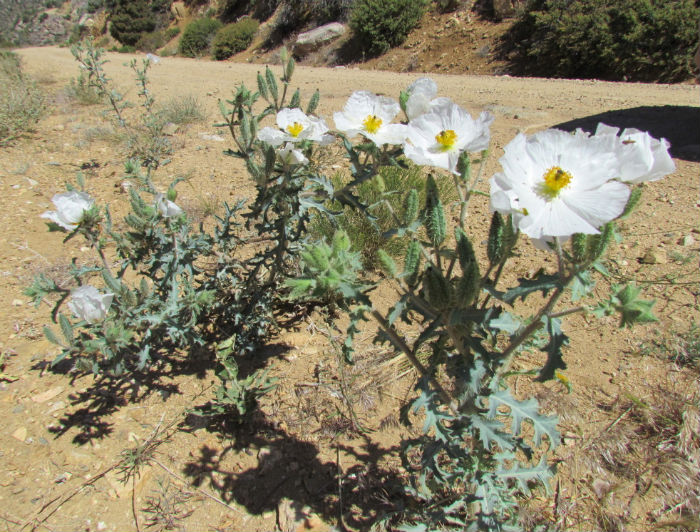
I saw a few of these in Arizona today. A member of the poppy family, it has flowers that grow to 3 inches across with numerous yellow stamens.

One researcher noted that the leaves of the white prickly poppy are so prickly that cattle will not even eat it during severe drought periods.

The seeds of the white prickly poppy are said to be an excellent source of food for quail and other birds because of their high oil content. Additionally, the oil from this plant was used as an alternative fine lubricant during World War II.

Records of its use date as far back as the Aztecs, when their priests would use the plant in their sacrifice rituals. The Comanche’s so revered the plant for its many uses that they made offerings to it during harvesting.

This particular plant was being visited by young katydids.

Third Eye Herp
E-mail

Yellow-bellied Bee Assassin

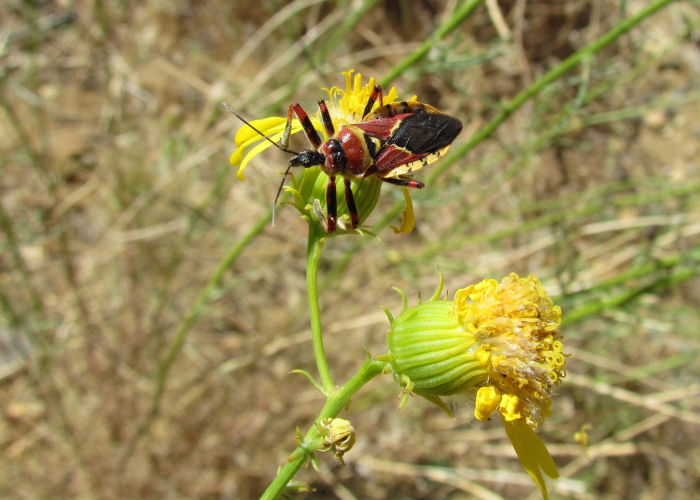
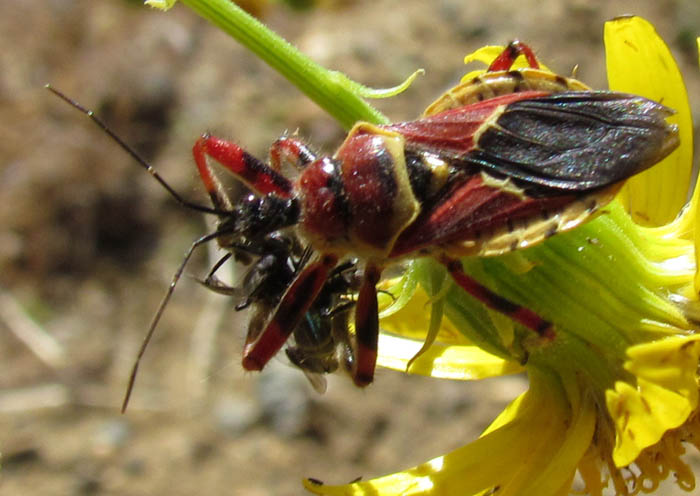
The name says it all for this insect. The Yellow-bellied Bee Assassin waits for bees to land on flowers and then grabs them.

It was amusing to watch a group of these attempt to capture any insect that landed on the flowers – sometimes butterflies much bigger than themselves.

There are at least 100 species of Assassin Bugs, named because of their habit of lying in ambush for their insect prey.

With speed and accuracy, this bug uses its long beak to stab the victim and then inject it with a lethal toxin that dissolves the victim’s tissue, then it sucks up the liquefied tissue.

Third Eye Herp
E-mail

White-faced Ibis

Wading birds in the Mojave? It may not seem that it could be possible, but the desert is full of surprises.

These were seen at a Wildlife Management Area I was visiting in Nevada.

The White-faced Ibis is a long-legged wading bird with reddish eyes and a long, slender, downward-curved bill. Its plumage is chestnut colored with green and purple iridescence. These are the first wild ibis I’ve ever seen.

They are found in wetland habitats such as marshes, swamps, ponds, rivers, irrigated agricultural lands, along shores, and in shallow water. These birds are wary and shy, making getting close to them difficult.

Third Eye Herp
E-mail

Glossy Snake

This snake’s smooth, shiny scales distinguish it from the similar looking Gopher Snake, which has keeled dorsal scales. They are also smaller than gopher snakes, with narrow, pointed heads, and a variety of patterns and colors. Here’s one that I found in Arizona.

It is usually found in relatively flat, open, shrubby areas with sandy soil. This nocturnal ground-dweller is good burrower that spends the majority of its time underground. The Glossy Snake is a constrictor that feeds on small mammals, lizards, snakes, and birds.

It is a mild mannered snake that rarely attempts to bite. I haven’t seen one of these snakes in a few years, so I was stoked to come across one again in the wild.

Third Eye Herp
E-mail

Joshua Tree

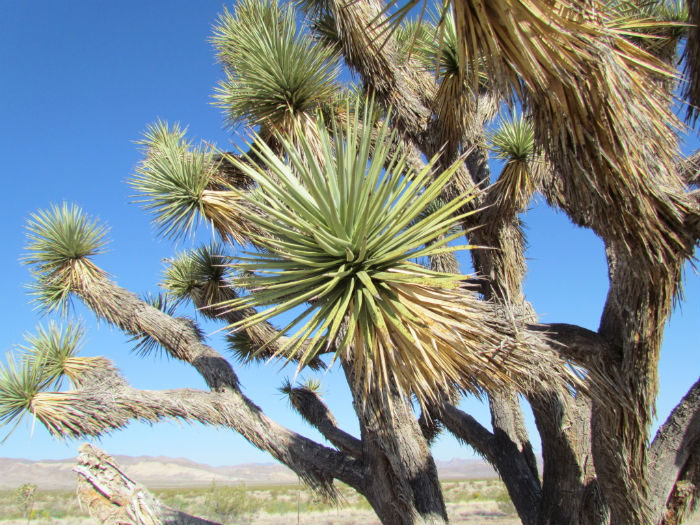
The Joshua Tree, the largest of the yuccas, grows only in the Mojave Desert. Natural stands of this picturesque, spike-leafed evergreen occur nowhere else in the world. Its height varies from 15-40 feet with a diameter of 1-3 feet.

The name Joshua Tree was given by a group of Mormon settlers who crossed the Mojave Desert in the mid-19th century. The tree’s unique shape reminded them of a Biblical story in which Joshua reaches his hands up to the sky in prayer.

Joshua Trees (and most other yuccas) rely on the female Yucca Moth for pollination. No other animal visiting the blooms transfers the pollen from one flower to another.

The spiny leaf iis turned upwards in hopes it will catch any moisture in the air. Then it stores the water in the limbs and trunk. The Joshua Tree often grows in groups called groves and has a lifespan of about 200 years.

Third Eye Herp
E-mail

Eastern Collared Lizard

If I has to pick my favorite desert lizard, it would probably be the Collared Lizard. Today I went to the Cerbat Mountains in Arizona and found a species of Collared Lizard that I’ve never seen in the wild before, the Eastern Collared Lizard (previously I had found Great Basin Collared Lizards).

Why do I like these lizards so much? Well, with their oversized head, ability to run on their hind legs and their immense appetite for other lizards – they remind me of a miniature Tyrannosaurus Rex.

The two distinct black “collar” markings on its neck is what gives this lizard its common name. It does not hesitate to bite when captured and it can easily draw blood with its powerful jaws. Though it is wary, agile and quick to avoid being caught. This one that I caught today was mild mannered.

This reptile is primarily an inhabitant of rugged terrain with numerous large rocks or boulders that can be used for basking spots and lookouts. It is a decent-sized lizard, often more than a foot in total length.

Third Eye Herp
E-mail

Desert Bighorn Sheep

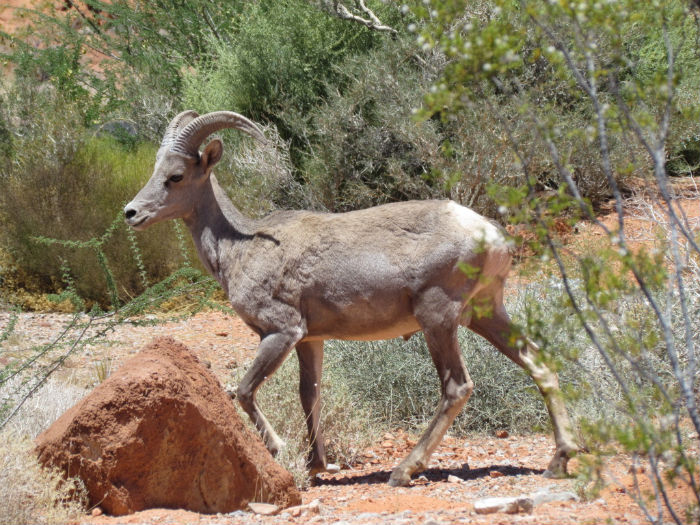
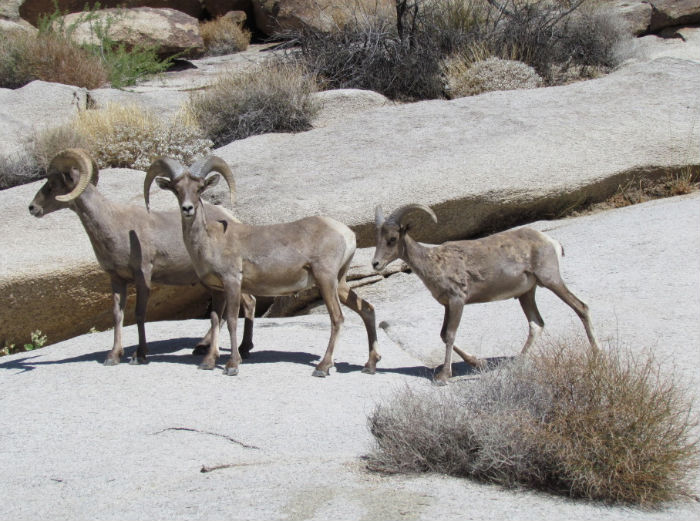
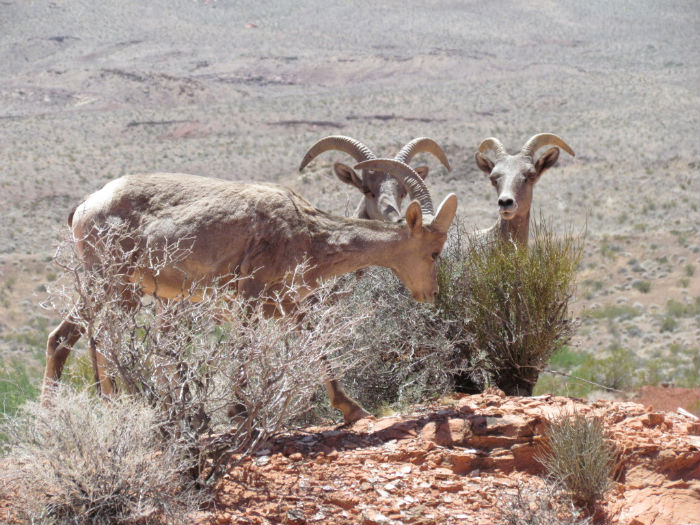
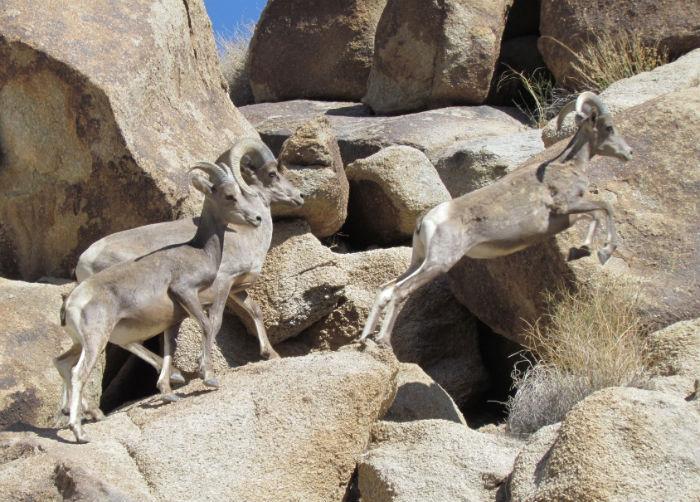
The Desert Bighorn Sheep is found in Nevada’s mountainous desert and is designated the official state animal of Nevada. They are stocky, heavy-bodied sheep; large rams grow to 4-1/2 feet tall and can weigh as much as 200 pounds. I saw two herds of them today.

With their unique padded hooves, bighorns are able to climb the steep, rocky terrain of desert mountains with speed and agility. 


Both the male and female develop horns soon after birth and their horns continue to grow throughout life. Older rams have impressive sets of curling horns that can measure over three feet long and one foot of circumference at the base.

The horns of females are much smaller and lighter and do not tend to curl. Desert Bighorn Sheep use their horns for fighting, and as tools to break open cactus, which they consume.

Bighorn sheep are gregarious, sometimes forming herds of over 100 individuals, but small groups of 8-10 are more common. Mature males usually stay apart from females and young for most of the year in separate bachelor herds.

Third Eye Herp
E-mail

Mudpuppy

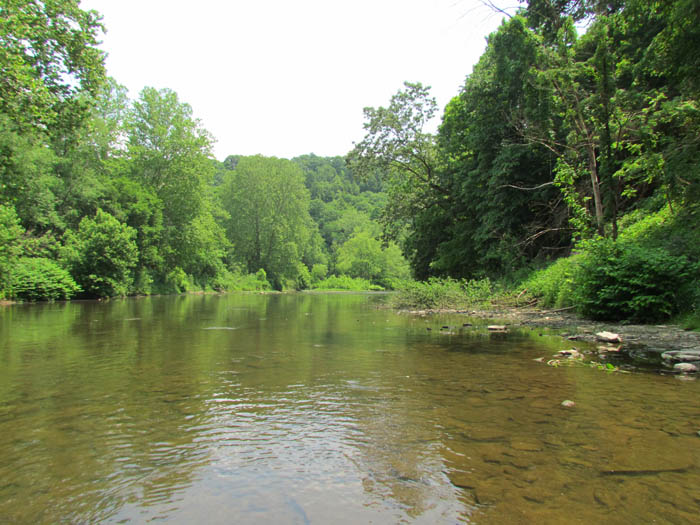
This creek near the Ohio/Pennsylvania border looked like a cool place to explore.

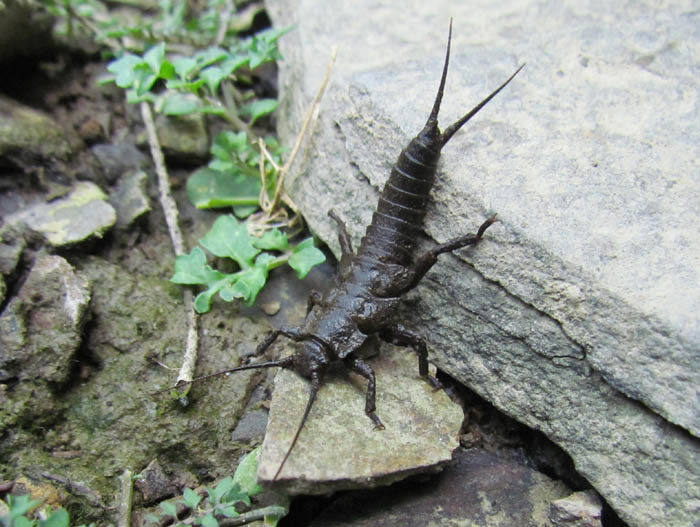
There were many cool freshwater invertebrates to be found, such as this: a Stonefly larva.

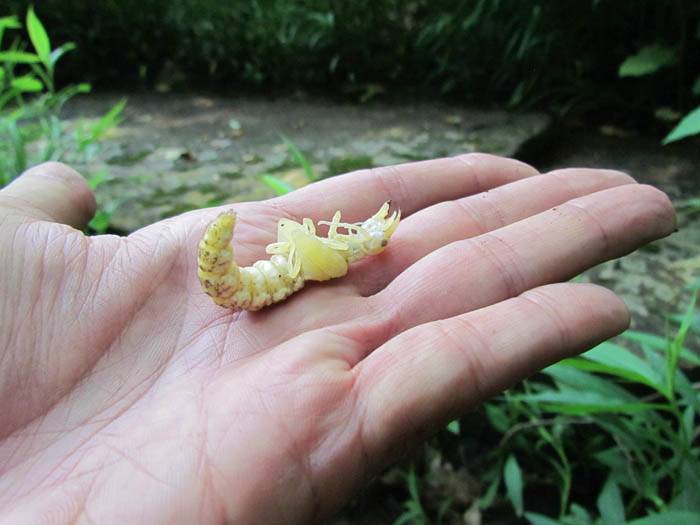
A bit later I found something that I’ve never seen before, a Dobsonfly pupa. It was pretty weird looking.

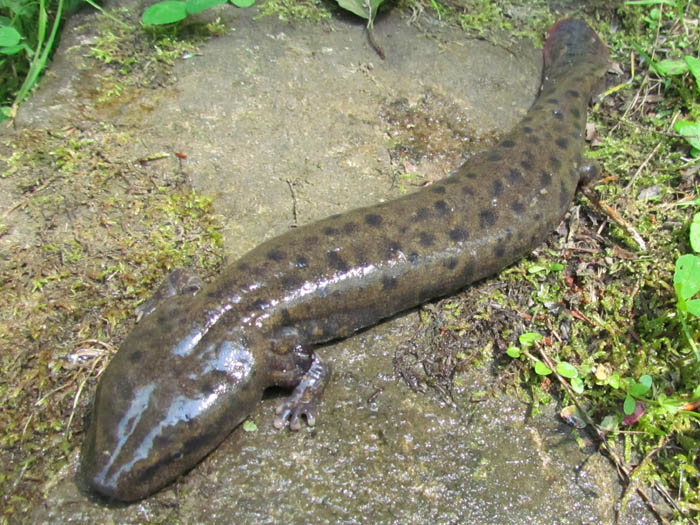
Turning rocks in the creek revealed a number of small fish like darters, suckers and catfish. One rock had a large creature under it that at first I thought was a catfish. Then I realized that it had no fins and I was looking at an amphibian that I have not seen in the wild for over 20 years – a Mudpuppy.

Mudpuppies are large aquatic salamanders. They have gills and spend their entire life underwater. They show a degree of parental care, tending to their eggs after attaching them to submerged stones and logs.

Mudpuppies prefer shallow lakes and streams that have slow moving water and rocks to hide under. They have a voracious appetite and eat a large variety of food items, which enable them to survive under diverse conditions. These foods include worms, water insects, crayfish, mollusks and small fish.

It was awesome to see one of these big amphibians in the wild again!

Third Eye Herp
E-mail