Banded Darter

We have some surprisingly colorful fish in northeast Ohio, some of them rivaling the appearance of tropical varieties. Today I found a couple of great examples of one of the more common darter species found in Ohio – the Banded Darter.

These 2-inch fish can be found in all sizes of streams, from small creeks to large rivers. In the same family as Perch, Darters are small, bottom dwelling fish with two dorsal fins. They are often noted for their brilliant coloration.

Like many darters, breeding males are very brightly colored (right), while females are duller in appearance (left).

Third Eye Herp
E-mail

Great Blue Heron

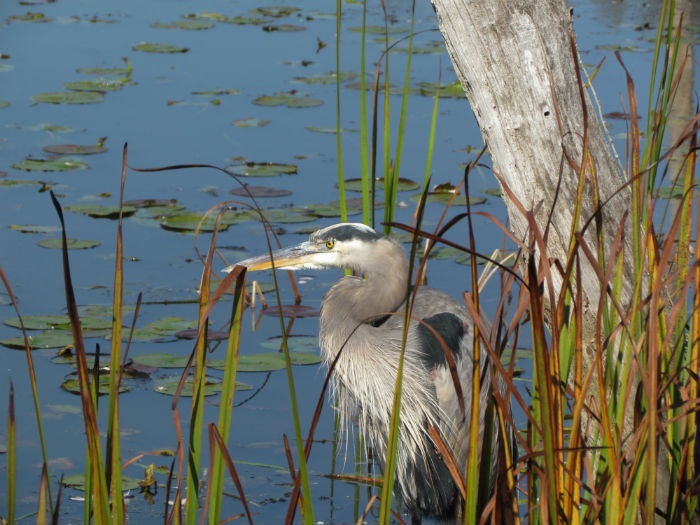
Of the many bird species that inhabit wetlands, perhaps none is more iconic than the Great Blue Heron. Great Blue Herons get their name from their blue-gray plumage and their large size. A fully grown adult bird is an impressive sight. It can stand about 4 feet tall, with a wing span of 6 feet.

Great Blue Herons are one of the most widespread species of wading birds in the Western Hemisphere.

Males perform elaborate courtship displays during the mating season. They also construct nests of sticks and twigs as high as 50 or 60 feet in trees to discourage predation by animals like raccoons. Great Blue Herons use the same nests year after year, adding on to them during each breeding season. As a result, these nests can get quite large over time.

heron_8296

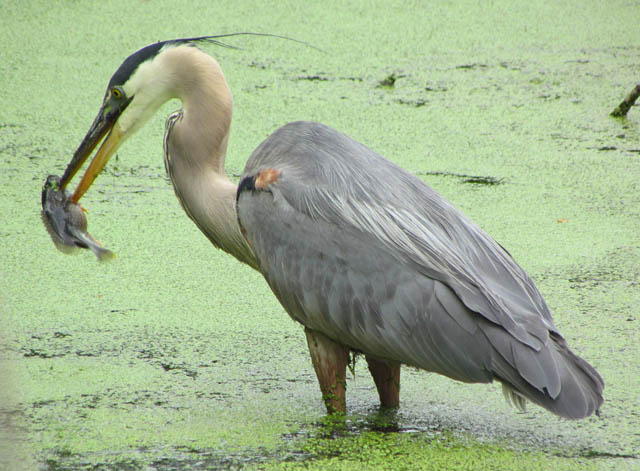
Great Blue Herons are not picky eaters. They feed on a wide range of aquatic animals, such as fish, frogs, snakes, small turtles and aquatic insects. In upland areas, they will also feed on small mammals, such as mice. These birds are solitary hunters and are rarely found in close proximity to one another.

Their feeding technique is to stand very still, watching for movement in the water by a potential food source. When the time is right, they swiftly dart their head into the water, spearing their hapless victim with their beak.

fish_5958

Third Eye Herp
E-mail

Queen Snake

Walking along this creek, it was apparent that it contained a large number of crayfish.

They could be seen scurrying along the bottom, slowly exploring the surfaces of rocks, or rapidly backswimming away when they sensed my approach.

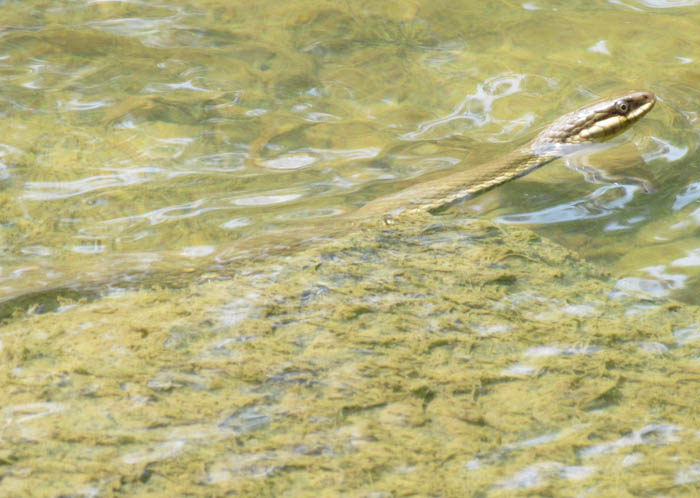
It wasn’t long before I came upon a Queen Snake, also in the water and actively exploring the rocks in the bed of the creek. It would swim over to a rock and poke around along and under the edges before moving on to another rock.

This snake is semi-aquatic and only eats one thing: crayfish. Not just any kind of crayfish, but those which have recently shed their exoskeleton and therefore are soft-bodied for a period of time before their shell hardens.

These are medium-sized snakes, typically about 2-3 feet in length. This particular snake is a female and probably carrying babies. Queen Snakes give birth to live offspring.

They often bask on overhanging shrubbery or tree branches at the water’s edge. When not basking or foraging, Queen Snakes often remain concealed beneath flat rocks on the shoreline.

Third Eye Herp
E-mail

Black Swallowtail

A couple of weeks ago I was out walking and I came upon this green butterfly chrysalis. It looked like it was from a swallowtail, but I’d never seen a green swallowtail chrysalis, just brown ones. So I e-mailed a photo of it to by 10 year old nephew Max. He said that it was from a Black Swallowtail. Max indicated that they could have either a green or a brown chrysalis (who knew?).

I set the thing up in one of these plastic-type aquariums and put it in the kitchen to keep an eye on it. A swallowtail will overwinter in its chrysalis, and emerge as an adult butterfly the following Spring or Summer.

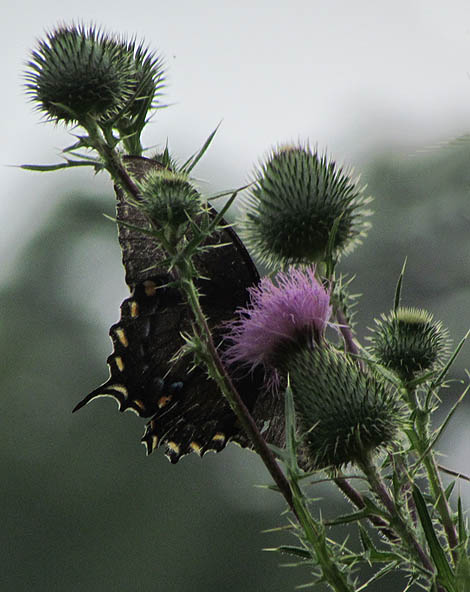
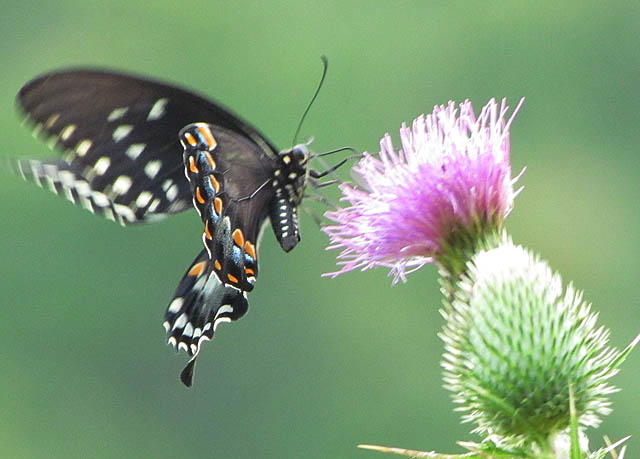
This morning I saw this. This butterfly is a mimic, meaning its pattern copies another animal. Its cousin, the Pipevine Swallowtail is poisonous to many predators. By copying the Pipevine Swallowtail, the Black Swallowtail gains protection from predators, even though it is not poisonous.

 black swallowtail_3826

Like most butterflies, the Black Swallowtail is a good pollinator. As it visits plants, looking for nectar, it spreads pollen from flower to flower so the plants can grow.

black swallowtail_3810

Humans have greatly helped the Black Swallowtail. They brought non-native carrot species from Europe to North America. The Black Swallowtail uses non-native carrot species as food for its caterpillars (another food source is Queen Anne’s Lace).

Third Eye Herp
E-mail

Bee Balm

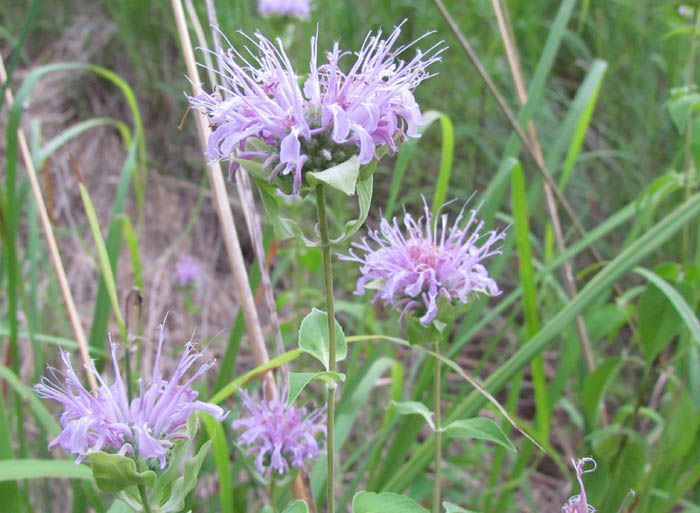
When I first saw Bee Balm I knew that it was something that I wanted growing in my yard, due to the crazy-looking flower this plant has. I was a bit surprised to find out that Bee Balm is native to Ohio, though the wild version does not have the vibrant colors that the cultivated varieties feature. Here a few that I saw while walking the Canal Towpath.

The flowers are well known to attract hummingbirds and insects, such as bees, butterflies and beetles. This plant is a member of the mint family and one characteristic of mints is a square stem. It’s kind of weird to feel a plant stem with “corners,” but Bee Balm has them.

It’s fragrant leaves are often used to make potpourri. Bee Balm has been used in folk medicine as a “mint tea” to treat respiratory and digestive ailments. The oil from this plant is an essential flavoring ingredient in Earl Grey tea.

Third Eye Herp
E-mail

Dragonfly

When I was in grade school a read I book titled Nature Thought of It First, which illustrates how man has adapted principles of nature’s tools, traps, defenses, weapons, and inventions for his own purposes. Dragonflies, with their ability to hover in the air, are man’s inspiration for the invention of helicopters.

Dragonflies are characterized by large multi-faceted eyes, two pairs of strong transparent wings, and an elongated body. They are some of the fastest insects in the world. Dragonflies are valuable predators that eat mosquitoes and other small insects. They are usually found around marshes, lakes, ponds, streams, and wetlands because their larvae, known as “nymphs,” are aquatic.

In the United States dragonflies and their relatives, the damselflies are sought out as a hobby similar to birding and butterflying, known as “oding,” from the dragonfly’s Latin species name, odonata. Oding is especially popular in Texas, where 225 different species of odonates have been observed.

Along with butterflies, dragonflies fascinate and capture our imagination. No doubt, their prowess as aviators has a lot to do with that fascination. Dragonflies flit and dart to and fro, up and down, hovering and zigzagging. Their aerial movements are the envy of human pilots and aeronautical engineers everywhere – their ability to catch (and devour) flying insect pests is nothing short of amazing.

The predecessors of modern dragonflies and damselflies appeared more than 300 million years ago. One of these, Meganeura monyi, is the largest flying insect ever known. Fossils of this giant dragonfly ancestor show it had a wingspan of 2-1/2 feet compared with modern species wing spans of just a few inches.

Third Eye Herp
E-mail

Florida Box Turtle Laying an Egg

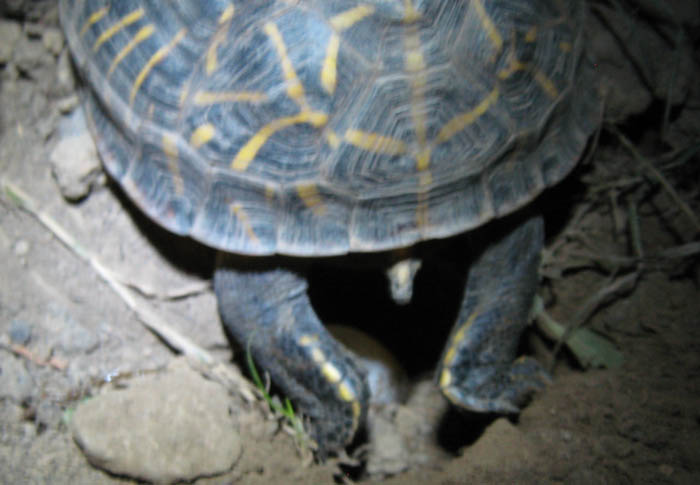
I was feeding my aquatic turtles at 8:00PM when I noticed some activity in the Florida Box Turtle pen nearby.

This turtle was busy digging a hole. First she’d scoop out dirt with one back foot until she got tired, then she’d switch feet.

This went on for quite some time. Before I knew it, it was 9:00. But the reptile just kept on slowly but surely digging.

It was pretty exhausting just watching. This friendly neighborhood deer came by to keep me company for awhile.

By 10:00PM I was ready to take a nap. I seriously needed a cup of coffee. But that turtle just kept on digging.

A little while later this raccoon stopped by and was watching me watching the turtle from the deck.

Finally, at 10:15 – an egg!

Then she quickly covered it in dirt to make it look like nothing ever happened.

Third Eye Herp
E-mail

Mayapple

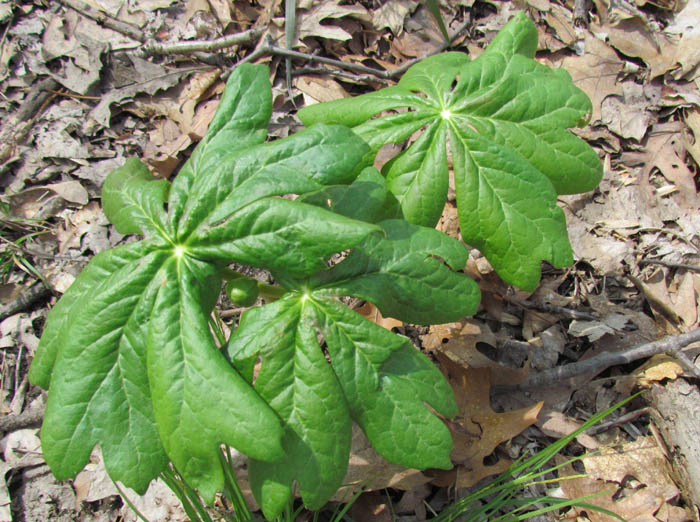
Hiking through North Chagrin Reservation in March, I noticed this twisting up through the forest floor. It’s a Mayapple -  Mayapple is a perennial native herb found growing in moist soils in rich woods, thickets and pastures in eastern North America.

By April the umbrella-like plants were really starting to grow. They can get to 18 inches tall. Two large, dark green, palmate leaves grow to protect the large white flower. The leaves can get to be 12 inches across.

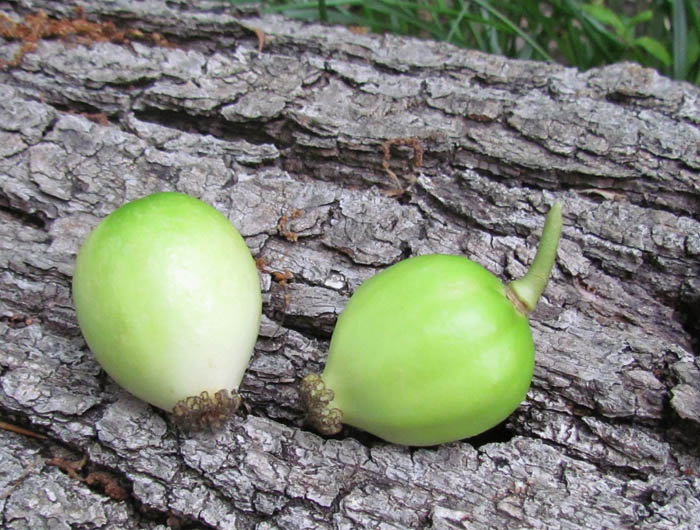
In May I saw a few Mayapples beginning to bloom in central Ohio. Mayapple flowers turn into crab apple-sized edible fruit.  The fully ripe fruit is eaten raw, cooked or made into jams, jellies, marmalade and pies.

By June I plucked a couple of Mayapples to try out. It is best to wait until the fruit turns yellow before eating. It has a sweet, peculiar, but agreeable flavor. May apples are just one of the many delicious (and often overlooked) ways of celebrating Summer.

Third Eye Herp
E-mail


Wood Duck

While exploring a nearby National Park, many birds were observed calling, making nests, bonding and getting ready to produce offspring – or already raising them. One of these is the Wood Duck – perhaps the most colorful of North American waterfowl.

Reverence for their appearance goes all the way back to prehistoric Indians who regularly featured them on bowls and pipes. The adult male has distinctive multicoloured iridescent plumage and red eyes, with a white flare down the neck. The female is less colourful and has a white eye-ring. Both males and females have crested heads.

These birds live in wooded swamps, where they nest in holes in trees. They are one of the few duck species equipped with strong claws that can grip bark, allowing them to perch on branches.

After hatching, the ducklings jump down from the nest tree and make their way to water. The mother calls them to her, but does not help them. The ducklings may jump from heights of up to 300 feet without injury.

We often think of colorful birds with exotic lifestyles as living in far away places, but we have some very interesting species here in northeast Ohio.

Third Eye Herp
E-mail
 

Corn Snake Clutches for 2012

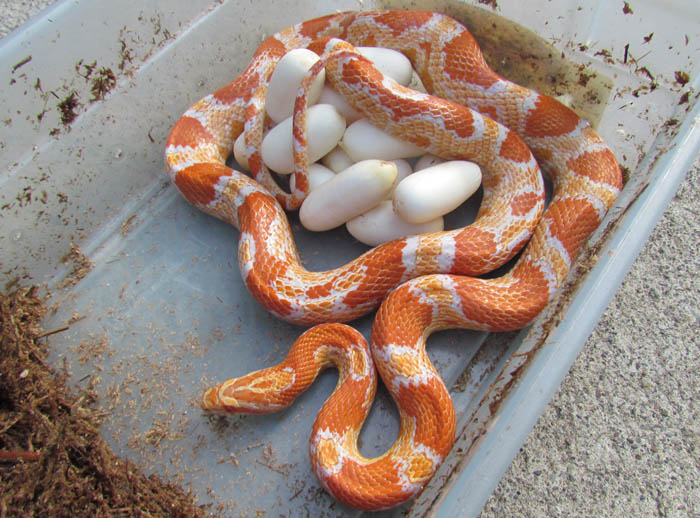
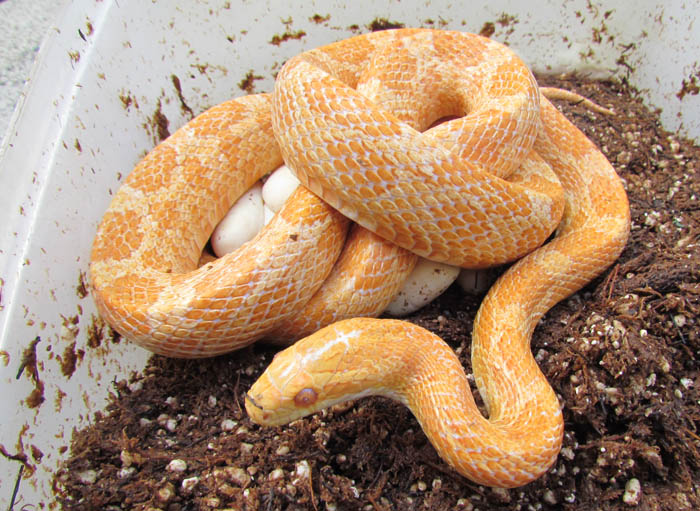
Now that vacation is over, it’s time to get “back to business” and tend to my snakes. I’ve had several Corn Snakes lay eggs during the past few weeks. Their docile nature, moderate adult size, attractive colors and patterns, and comparatively simple care make Corn Snakes popular pet reptiles.

Over the past few decades many “morphs” (color and pattern variations) have been developed. Though there are well over 100 morphs (and more new ones each year). I just work with a few that I find appealing. These are the types I hope to produce later this Summer.

First clutch: Reverse Okeetee – my favorite morph (bred to a male Reverse Okeetee).

Vanishing Pattern Ghost (bred to Vanishing Pattern male).

Aberrant Reverse Okeetee (bred to male Reverse Okeetee).

Creamsicle (bred to Reverse Okeetee).

Vanishing Pattern Ghost (bred to Vanishing Pattern male).

Butter Motley (bred to Striped Butter), I got a few bad eggs in this clutch.

Striped (bred to Vanishing Pattern Ghost).

It should be a fun season!

Third Eye Herp
E-mail