Beavertail Cactus

01 Beavertail Cactus_5395

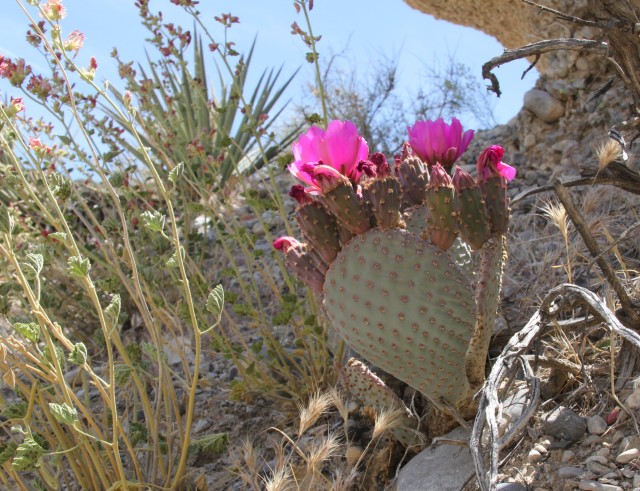
While hiking through the Arizona and Nevada desert, I often seen this classic arid-land plant. Found in the southwestern United States, it occurs mostly in the Mojave, Anza-Borrego, and Colorado Deserts, as well as in the Colorado Plateau and northwest Mexico.

02 Beavertail Cactus_030

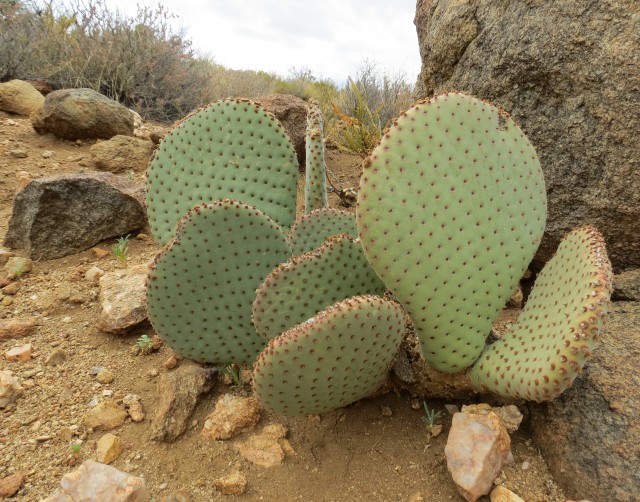
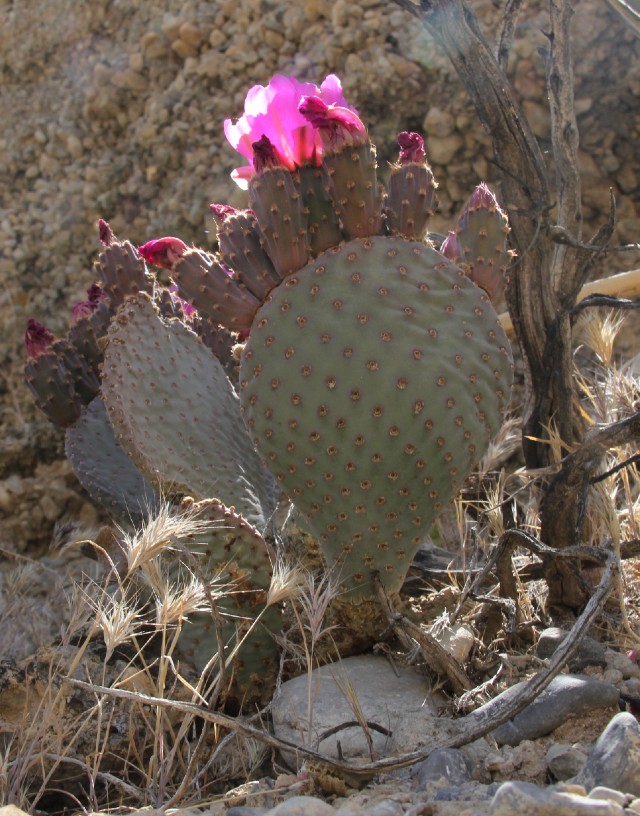
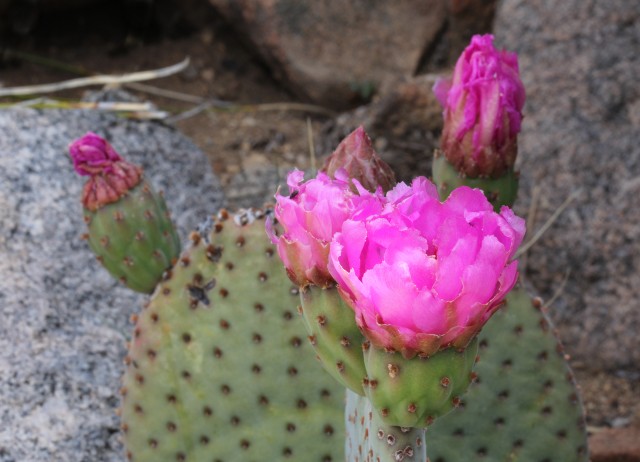
Beavertail Cactus looks like the Prickly Pear Cactus, but does not have long spines. This is a medium-to-small species that grows to about a foot tall, with pink-to-rose colored flowers. This plant can be found in chaparral, desert and grassland. It grows in well drained soil composed of sand, gravel, cobble and even on boulders.

03 Beavertail Cactus_5330

A single plant may consist of hundreds of fleshy, flattened pads. These gray-green, jointed stems are wide and flat resembling the tail of a Beaver. Although they lack spines, they have many small barbed bristles, called glochids, that easily penetrate the skin.

04 Beavertail Cactus_034

The Cahuilla Native Americans used this plant as a food staple. Its buds were cooked or steamed, and then were eaten or stored. Its large seeds were ground up to be eaten as mush. The Desert Tortoise enjoys eating the juicy pads and the magenta-colored flowers of this plant.

05 Beavertail Cactus_054

Beavertail is usually the first cactus in the Mojave Desert to bloom, flowering as early as February and through May.

Third Eye Herp
E-mail

Louisiana Swamp Crayfish

01 Lousiana Swamp Crayfish_3187

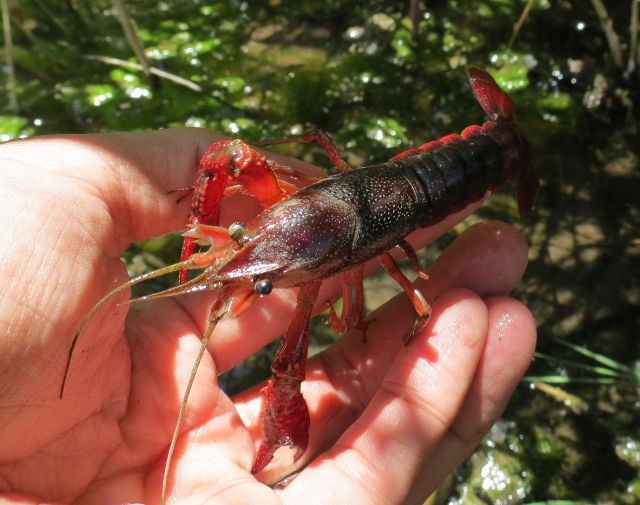
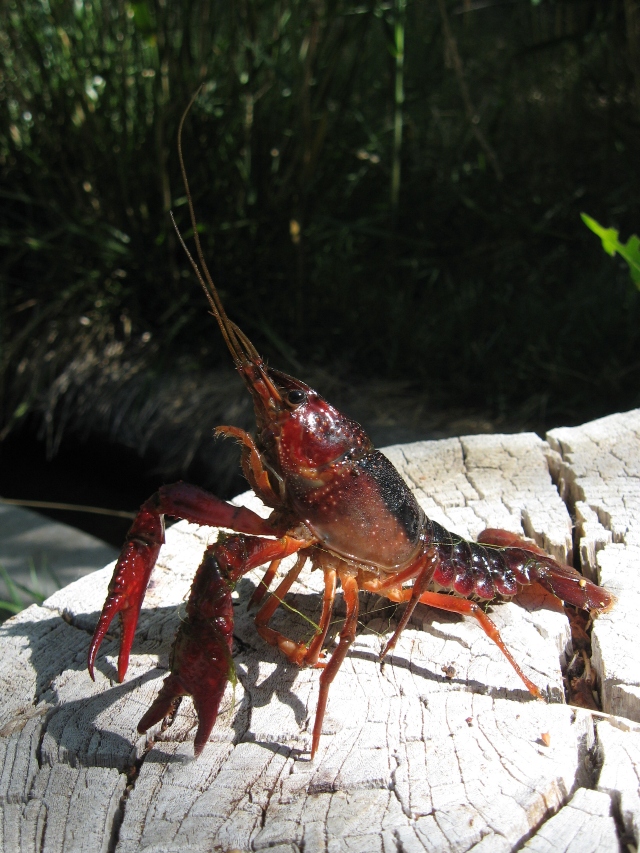
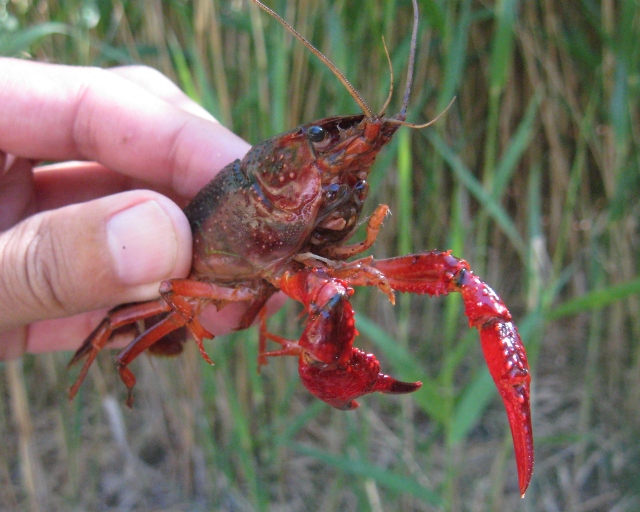
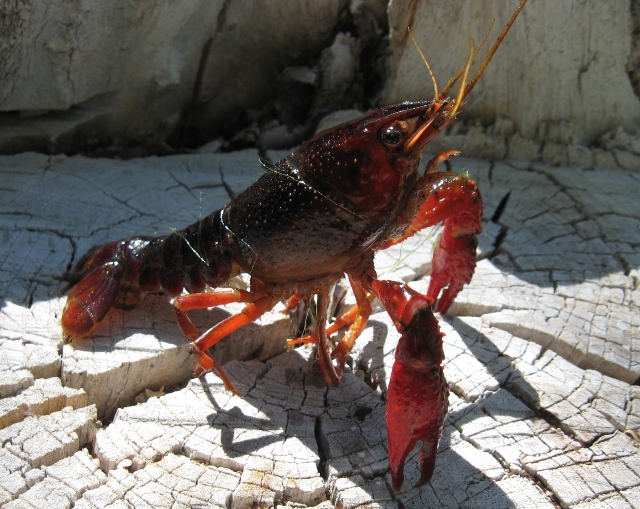
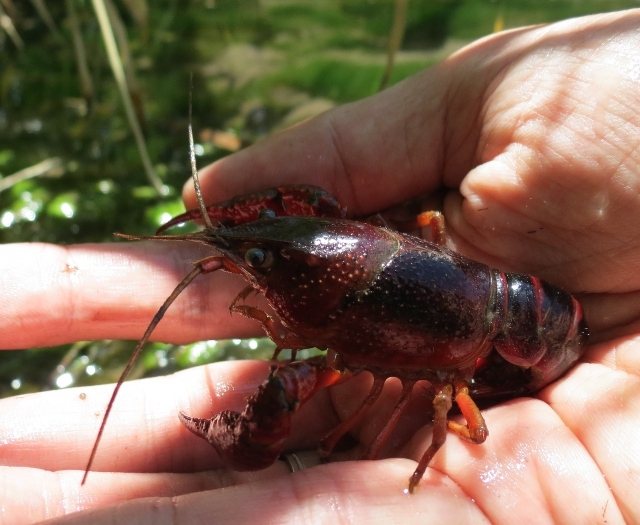
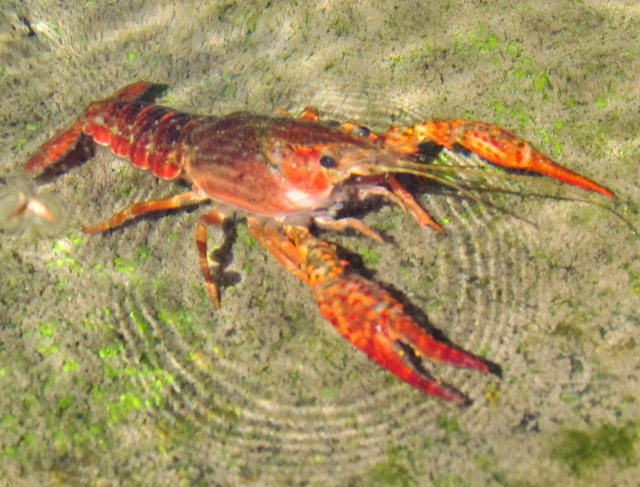
I have found this brightly colored crustacean while visiting both southern Nevada and southern California.

02 Lousiana Swamp Crayfish_3158

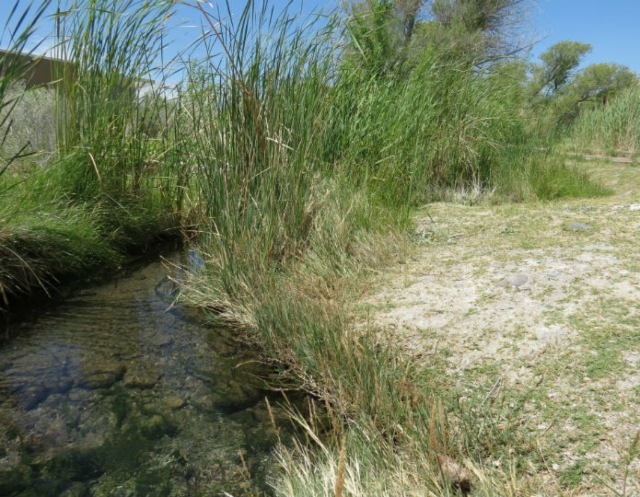
The Lousiana Swamp Crayfish is found in rivers, bayous, swamps, ditches, ponds, lakes, and rice fields throughout the southcentral United States and northeastern Mexico. It seems to prefer flooded wetland habitats with periodically flowing, well-oxygenated water. This species retreats into burrows when surface water dries up.

03 Lousiana Swamp Crayfish 107

This creature is a physical ecosystem engineer, constructing burrows consisting of a single opening, which may be covered with a mud plug or raised above ground level in the form of a chimney to reduce evaporative loss further from the water’s edge. The opening leads to a tunnel which widens to an enlarged chamber at the end.

04 Lousiana Swamp Crayfish 102

Crayfish are opportunistic omnivores. They can detect small amounts of blood and decomposition scents in the water to track down and feed on partially decomposed plant material, living soft plants, and virtually any type of animal matter.

05 Lousiana Swamp Crayfis 103

The Lousiana Swamp Crayfish is a very successful invasive species. Not only can it be found in many parts of the United States where it is not native, but can also be found in inland waters on all continents except Australia and Antarctica. In the United States it is readily available though the biological supply trade and specimens and is sometimes released following classroom or laboratory use. It is also popular among anglers as bait for Largemouth Bass.

06 Lousiana Swamp Crayfish_3164

Part of the reason it is now found in other countries is importation for crayfish farming. Eating freshwater crayfish is common in many countries. The first known introductions of this species took place in the 1920s: 1924 in California and 1927 in the Hawaiian Islands, 1927 in Japan, and 1929 in China. In the mid-1960s, a batch of crayfish was sent to Uganda and Kenya, and soon afterwards, to other African countries.

07 Lousiana Swamp Crayfish_8063

The life cycle of the Louisiana Swamp Crayfish is relatively short, with an onset of sexual maturity occurring in as few as two months and a total generation time of four and a half months. Although they look attractive (for a crustacean), this species competes aggressively with native crayfish species for food and habitat.

Third Eye Herp
E-mail

Black-headed Grosbeak

01 Black-headed Grosbeak_8549

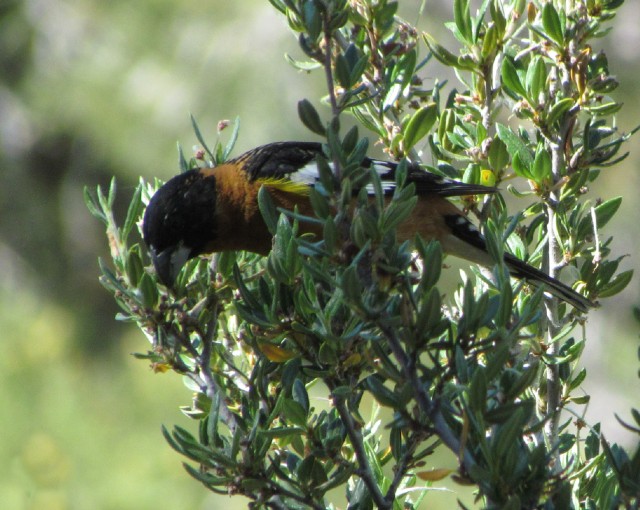
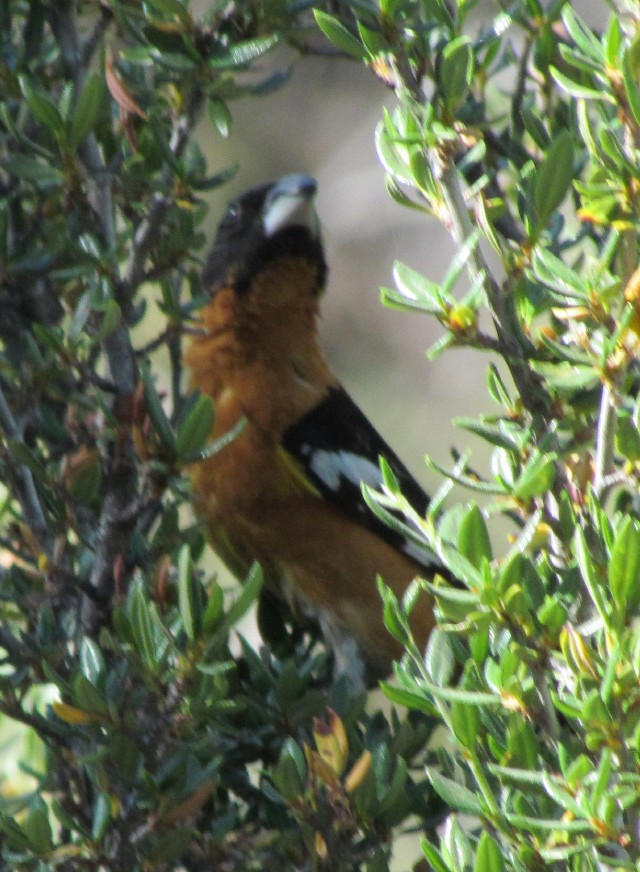
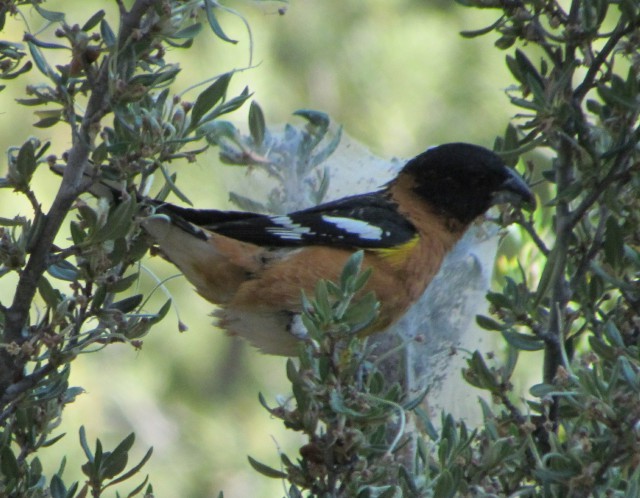
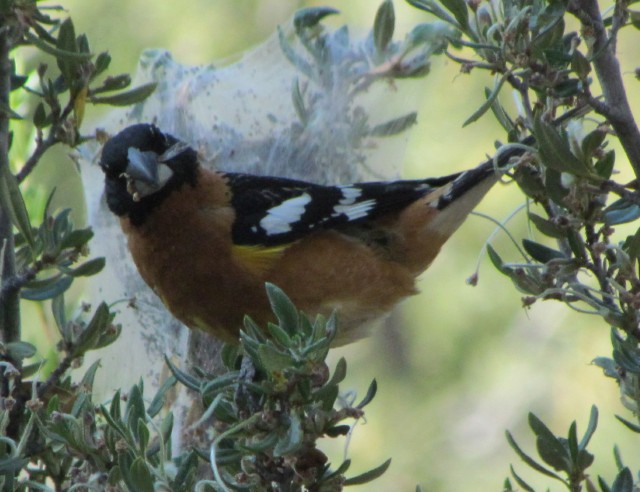
While hiking on Mount Charleston, Nevada (near Las Vegas), I spotted a bird which I have never seen before. In western North America the sweet song of the Black-headed Grosbeak caroling down from the treetops sounds like a tipsy American Robin welcoming Spring. The flashy black, white, and cinnamon males and the less flamboyant females sing from perches in desert thickets, mountain forests, and suburbs.

02 Black-headed Grosbeak_8368

This bird eats pine and other seeds, berries, insects, spiders and fruit. During the Summer, it mostly eats spiders and insects, switching to seeds and berries in the Fall and Winter. At feeders they effortlessly shuck sunflower seeds with their heavy bills.

03 Black-headed Grosbeak_8357

The Black-headed Grosbeak is one of the few birds, along with the Black-backed Oriole, that can safely eat the poisonous Monarch Butterfly. This species consumes many Monarchs, perhaps over one million per year in the overwintering colonies in Mexico. They eat them in roughly 8-day cycles, apparently to give themselves time to eliminate the butterfly’s toxins.

04 Black-headed Grosbeak_8371

This bird prefers to live in deciduous and mixed wooded areas. It likes to be in areas with large trees and thick bushes, such as patches of broadleaved trees and shrubs within conifer forests, including streamside corridors, river bottoms and suburban areas.

05 Black-headed Grosbeak_8372

The Black-headed Grosbeak’s scientific name is well-suited. Its species name, melanocephalus, means “black-headed.” And its genus name, Pheucticus, refers either to the Greek pheuticus for “shy” or phycticus meaning “painted with cosmetics,” fitting for a showy bird that forages in dense foliage.

Third Eye Herp
E-mail


Indian Paintbrush

01 Indian Paintbrush_7522

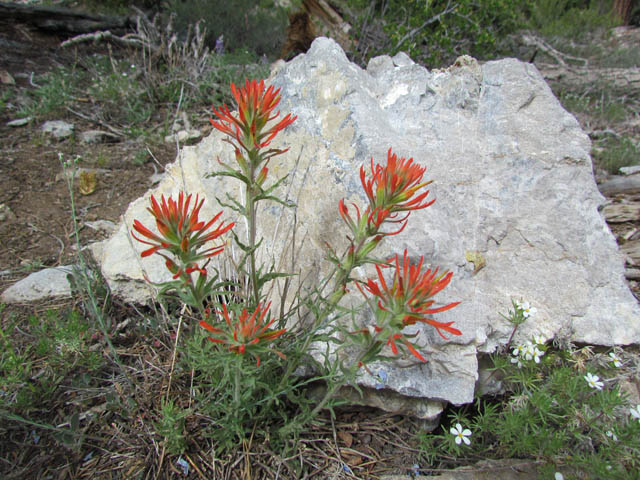
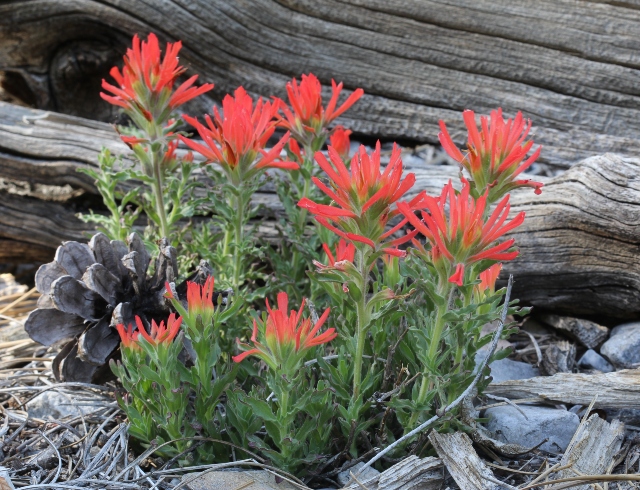
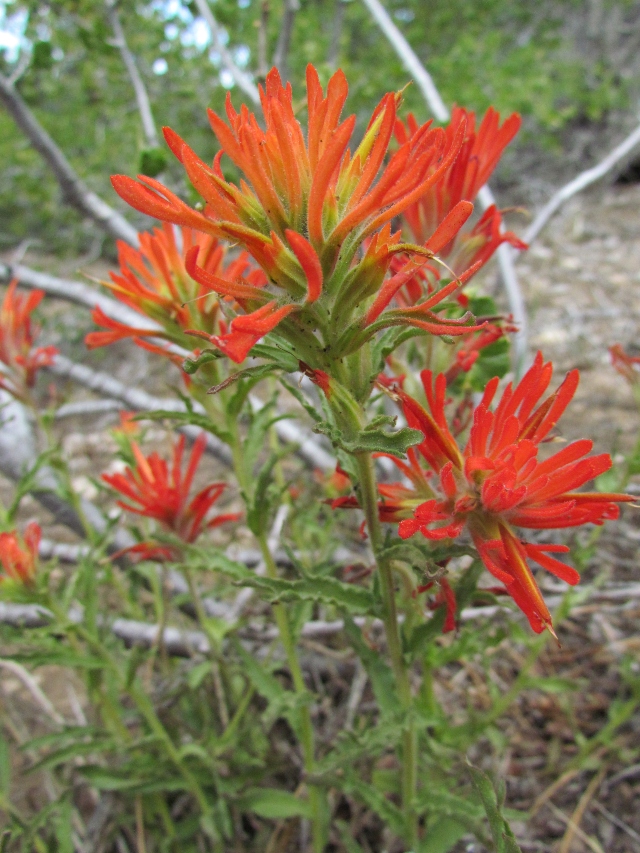
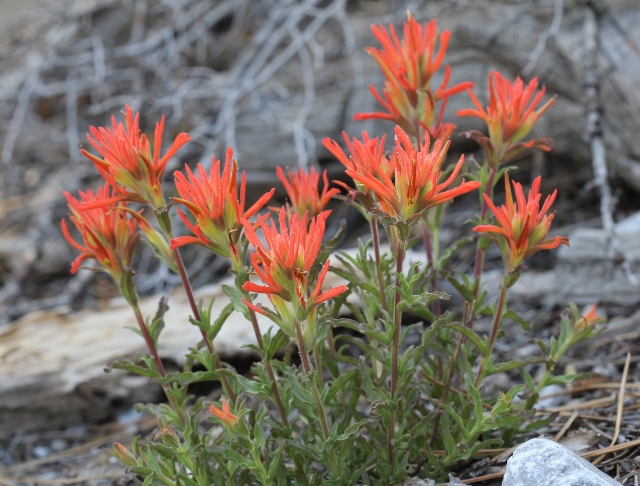
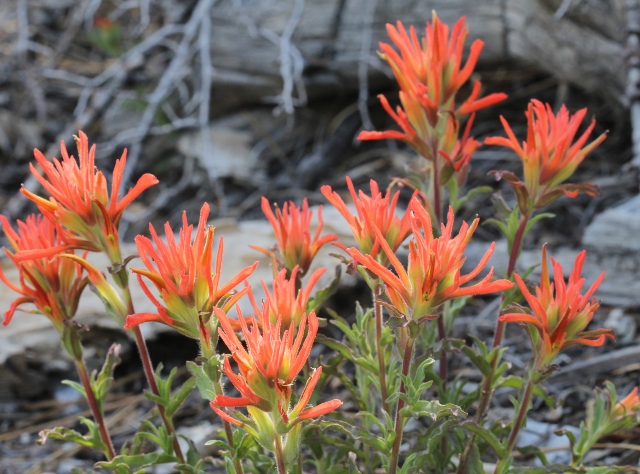
While hiking on Mount Charleston in Nevada I came across a number of wildflowers; this one was particularly distinctive.

02 Indian Paintbrush 065

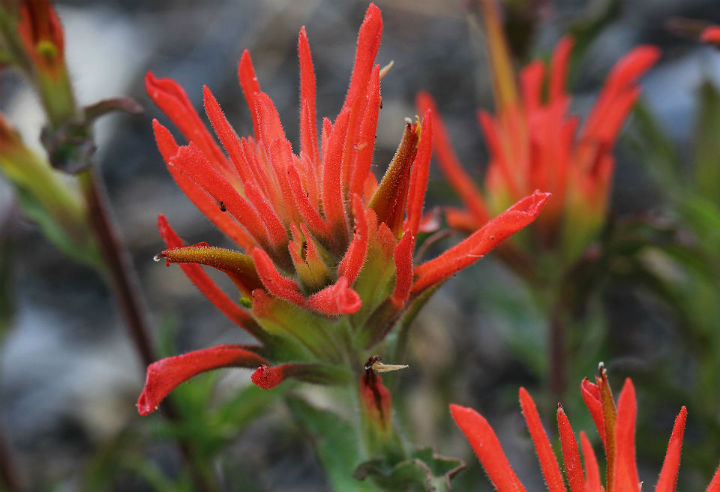
Indian Paintbrush is a hemiparasite, meaning that although it is green and can photosynthesize, it also has the ability to sequester nutrients from other organisms, in this case, perennial grasses.

04 Indian Paintbrush_7509

Despite being parasites for part of their lives, these plants, like other flowering plants, rely on pollinators for reproduction. A variety of insects visit Indian Paintbrush flowers, especially bees. This is somewhat surprising since the color red is difficult for insects to see.

03 Indian Paintbrush 068

However, like most red flowers, it is especially adapted for pollination by hummingbirds. Hummingbirds have long bills that allow them to reach the nectar rewards at the end of long, tubular flowers.

05 Indian Paintbrush 072

Ironically, this plant was used by Native Americans as both a love charm in food and as a poison used to against their enemies, as this species is known to have toxic properties.

06 Indian Paintbrush

Indian Paintbrush generally prefers sunlight and moist, well drained soils. Their root systems connect with and grow into the root systems of other planets to harvest nutrients from their host plants. For this reason, they are not able to be transplanted easily.

07 Indian Paintbrush 069

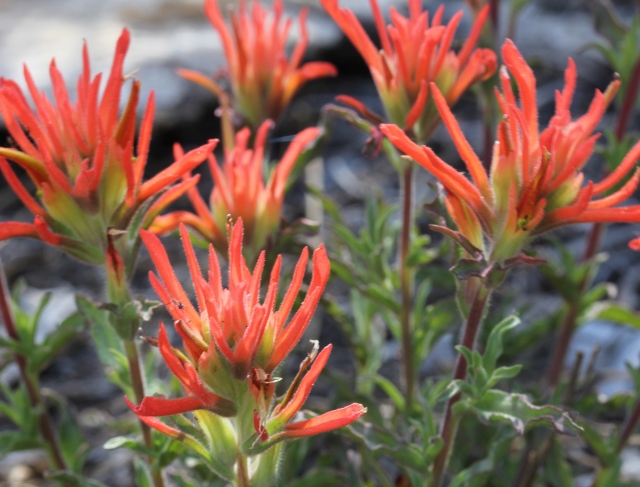
That red color we so often admire is actually bracts, or specially modified leaves, as opposed to flowers. The plant’s true flowers are actually smaller, slender green growths hidden among the bracts.

Third Eye Herp
E-mail

Desert Spiny Lizard

01 Desert Spiny Lizard_1110

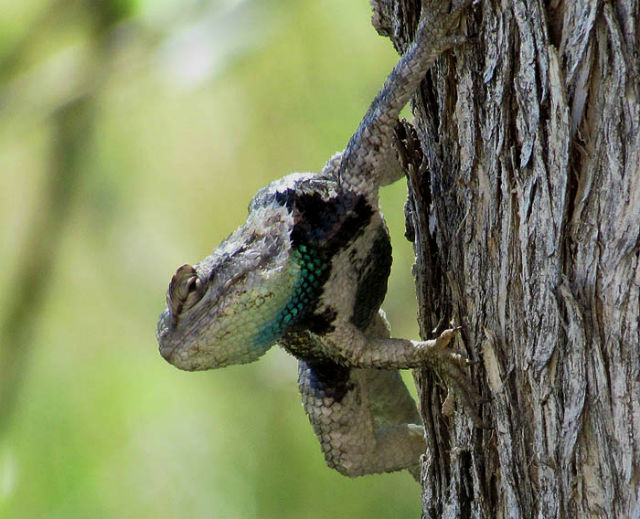
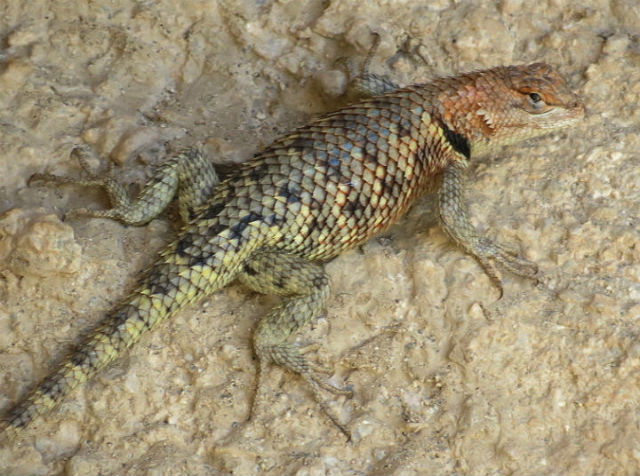
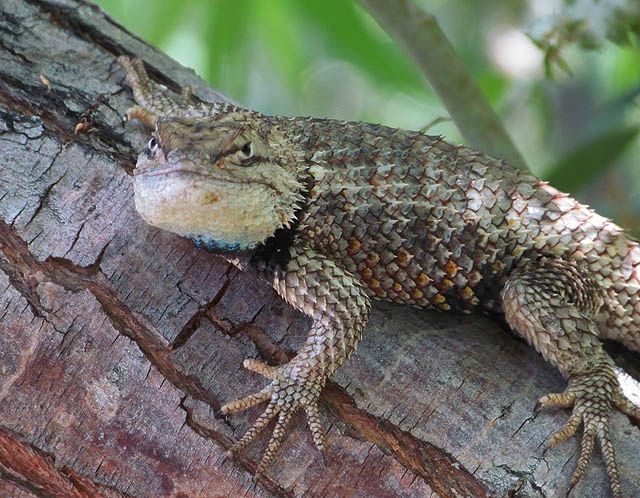
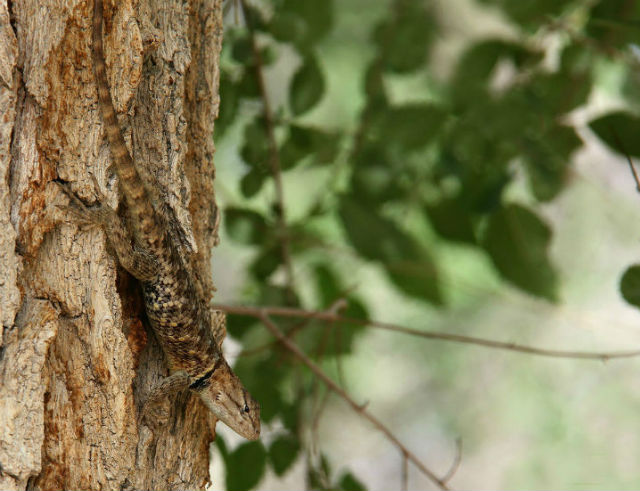
I often encounter this fine lizard on Cottonwood Trees that line waterways in the Mojave Desert. In some cases I hear them before I see them, as they run up tree trunks making a surprising amount of noise. They are squirrel-like in how they case each other around tree trunks as well as how to go to the opposite side of the tree trunk as a percieved predator.

02 Desert Spiny Lizard_1615

Usually, during the morning hours, they will be out basking in the sun on rocks or any hard surface that is in direct sunlight, but like many desert reptiles, they seek shelter, usually underground in burrows or any suitable cover that provides shade, during the hottest part of the day.

03 Desert Spiny Lizard_0098

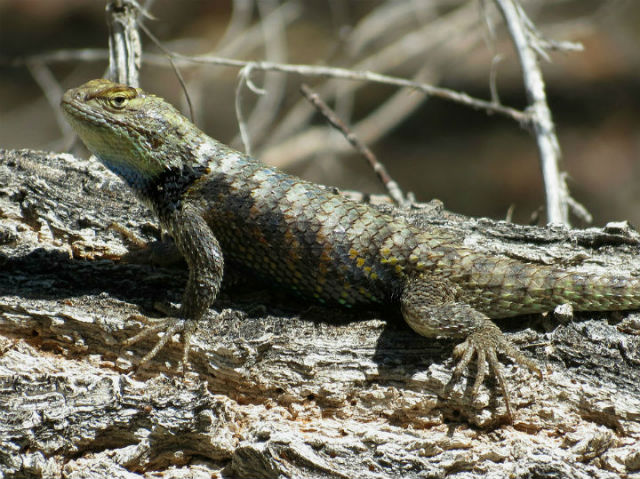
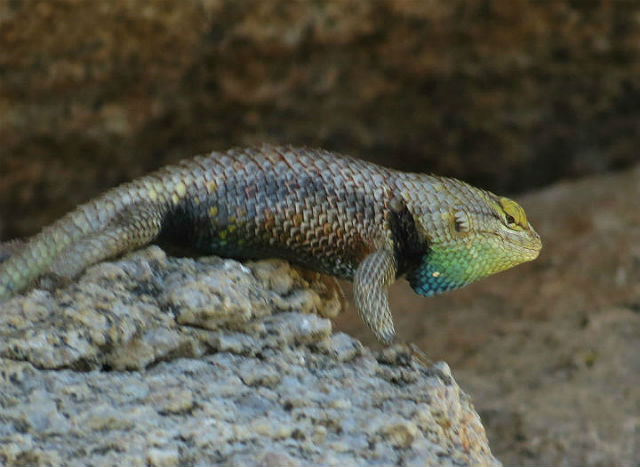
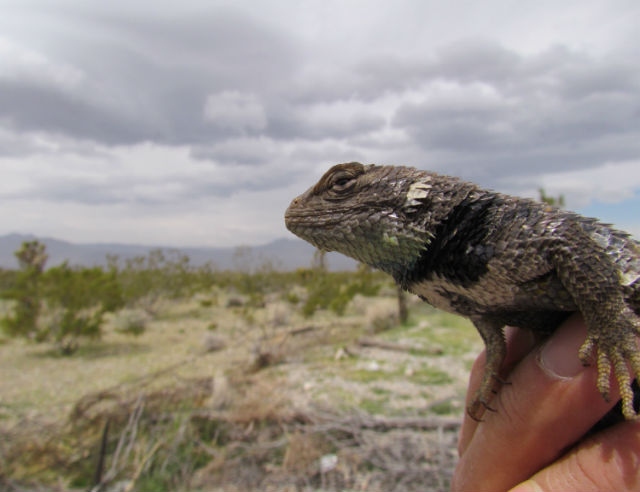
These are medium-to-large lizards that can grow up to a foot in total length. True to their name, these robust reptiles have keeled, pointed scales and feel rough.

04 Desert Spiny Lizard_2921

Adult male Desert Spiny Lizards usually have conspicuous blue/violet patches on the belly and throat, and a green/blue color on their tails and sides. They stake out areas and as part of their territorial displays, can frequently be seen doing push-ups on tree trunks, logs, rocks and even roads.

05 Desert Spiny Lizard_7254

The Desert Spiny Lizard is widely distributed throughout the Mojave, Sonoran and Colorado deserts, as well as parts of the Great Basin and and Central California Coast, in arid and semiarid environments.

06 Desert Spiny Lizard_2848

They primarily prey on insects such as ants, beetles, caterpillars, flies and grasshoppers. They also feed on spiders, centipedes, and small lizards, as well as consuming some plant material.

07 Desert Spiny Lizard_1164

These lizards exhibit metachromatism, meaning they change color depending on the temperature. Desert Spiny Lizard change to darker colors during the Winter to allow them to absorb more heat from the sunshine, and become lighter during the Summer to reflect the sun’s radiation. They also change color with the seasons and for mating.

08 Desert Spiny Lizard_20011

Although not the largest species of lizard in the Mojave Desert, it is spectacular in its own way and quite a challange to catch.

Third Eye Herp
E-mail

Wolf’s-Milk Slime

01 Wolf's-Milk Slime Mold_0078

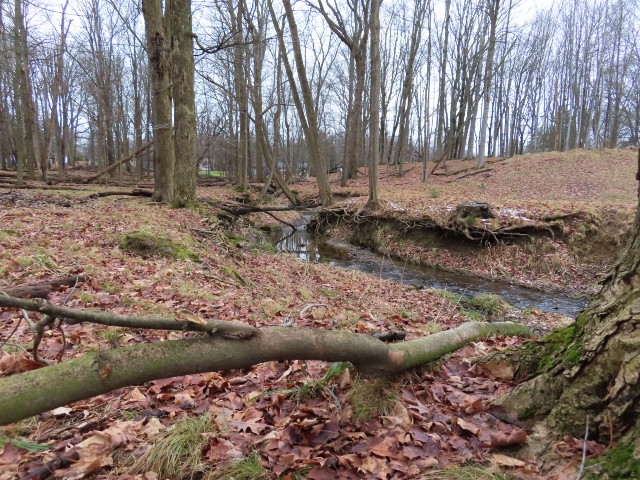
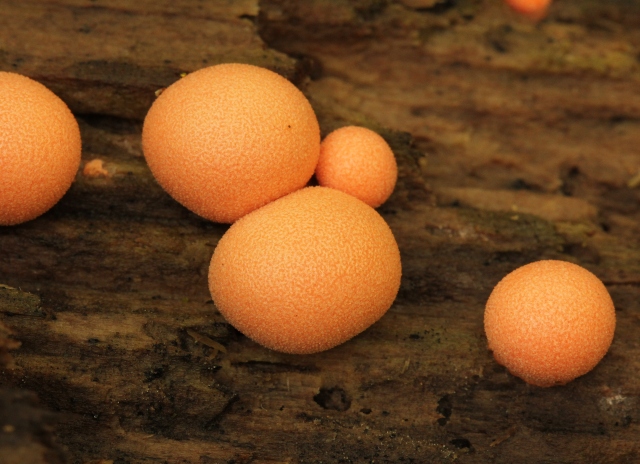
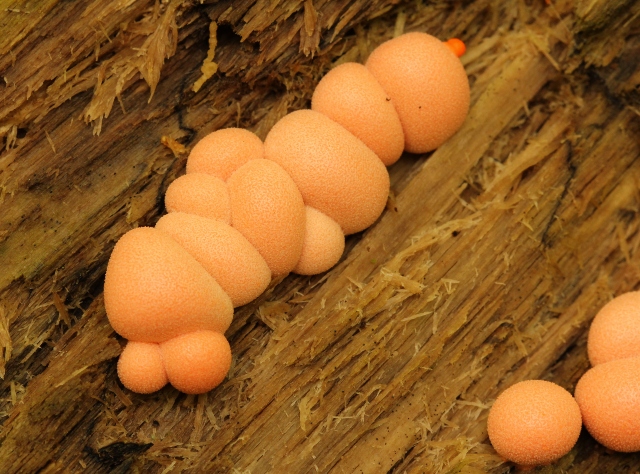
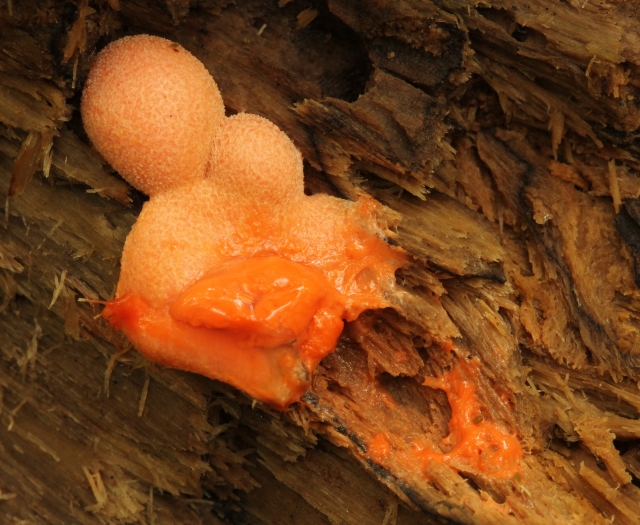
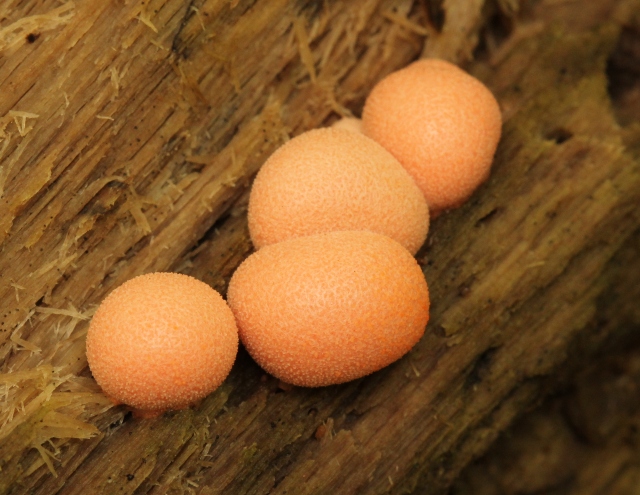
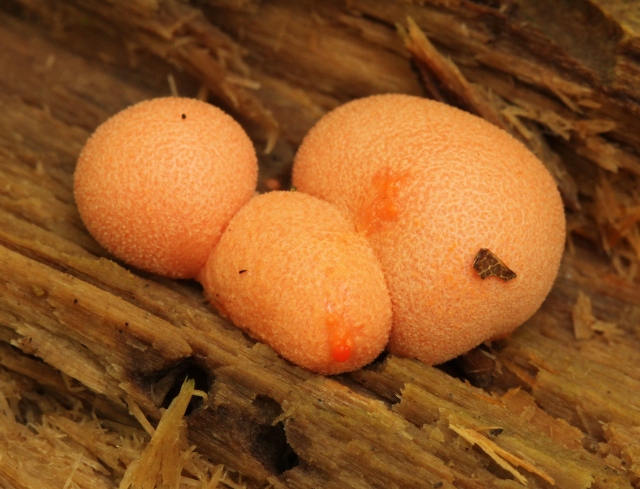
While hiking in a wooded lot across the street from my house, I noticed tiny orange globs on some on the logs on the forest floor. The fruiting bodies of this organism are small in width and height – about 1/3 -5/8 of an inch.

02 Wolf's-Milk Slime Mold_1745

This slime mold resembles a tiny orangish-pink puffball. Before it is fully mature, you can pop it and a pinkish-orange substance, with the texture of toothpaste, will ooze out. As the fruiting bodies age, they turn brown or purple. Found after rains on well-rotted logs throughout North America, Wolf’s-Milk Slime is probably our continent’s most frequently noticed slime mold. This species feeds on bacteria, yeasts, and fungi that colonize decaying materials such as rotting wood.

03 Wolf's-Milk Slime Mold_1746

Like fungi, slime molds are interesting and strange – and well worth learning about. Slime molds are so weirdly beautiful that they have even inspired science fiction movies (such as “The Blob” in 1958). They are also studied for their unusual cellular characteristics.

04 Wolf's-Milk Slime Mold_1748

Wolf’s Milk Slime Mold is a plasmodial slime mold, a group of slime molds that live part of their lives as a large single cell (from tiny to over 12 inches) containing many nuclei called a plasmodium. The plasmodium spends its time moving through the soil, under logs and over dead leaves and grass feeding on bacteria.

05 Milk Slime Mold_1747

Thought it may seem like one, this species isn’t actually a mushroom or fungus. Slime molds, or myxomycetes are a group of fungus-like organisms that at one time were regarded as animals, then thought to be plants, and then fungi. Now, because of DNA studies, slime molds are believed to be most closely related to protozoa.

06 Wolf's-Milk Slime Mold_1749

Slime molds are colorful, fanciful creatures. Blackberry, Toothpaste, Many-goblet, Chocolate Tube and Scrambled Egg Slime all have interesting stories to go along with their names. Wolf’s Milk Slime, for example, is so named because when the non-moving, reproductive structure is young, the pinkish, milky substance it secretes evidently reminded someone of wolf’s milk.

Third Eye Herp
E-mail

White Spruce

01 White Spruce_0066

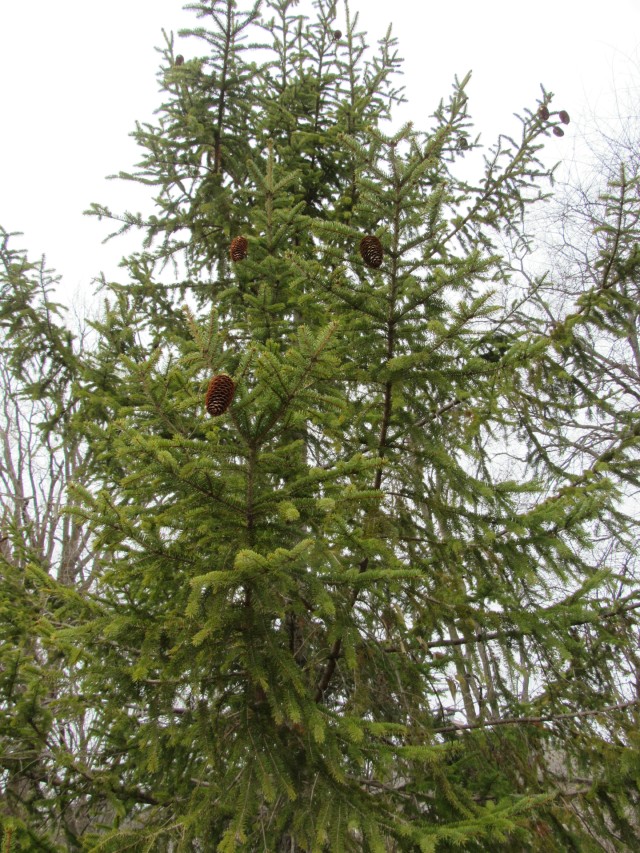
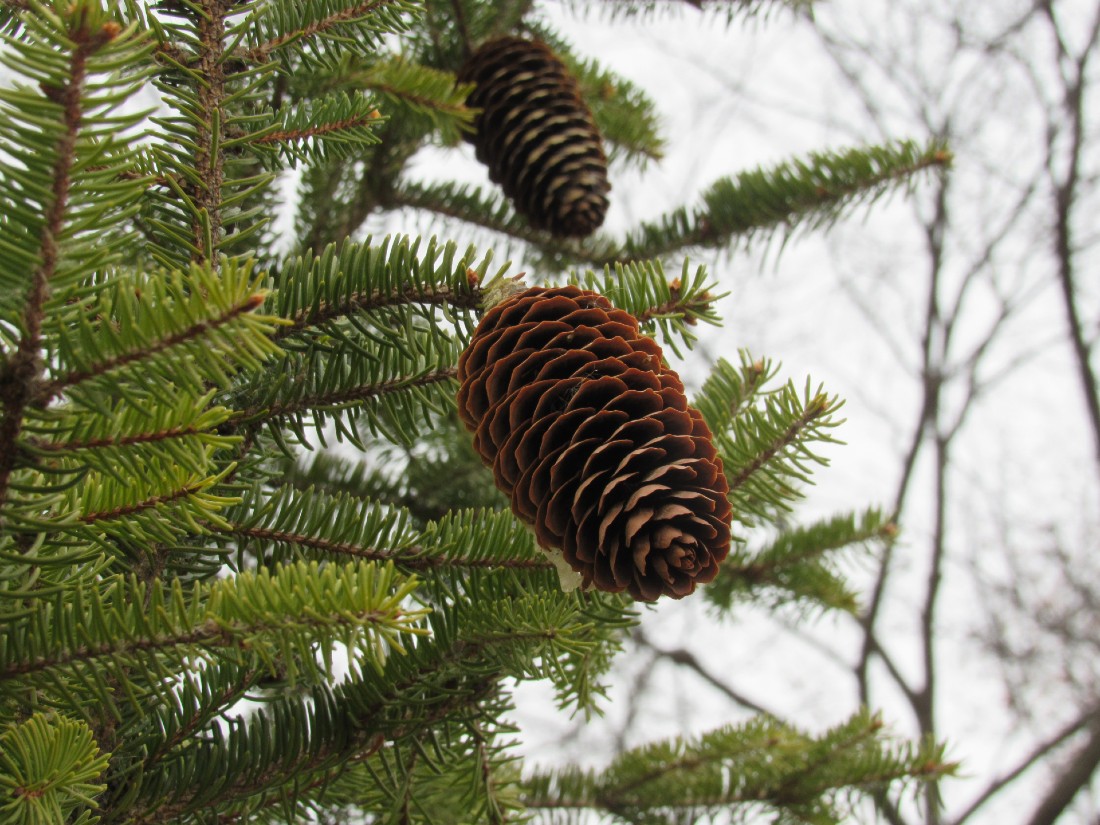
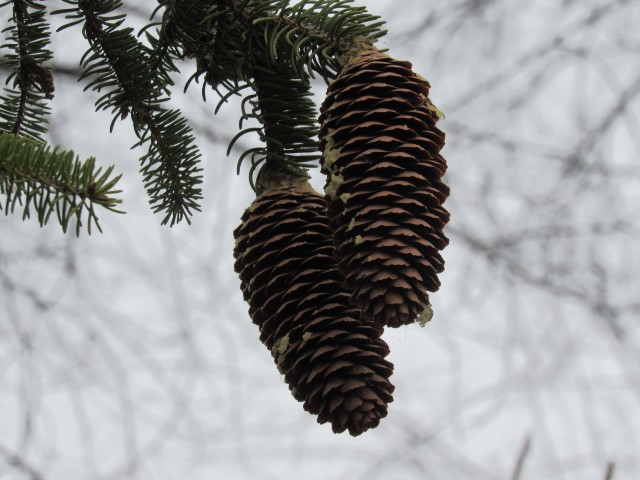
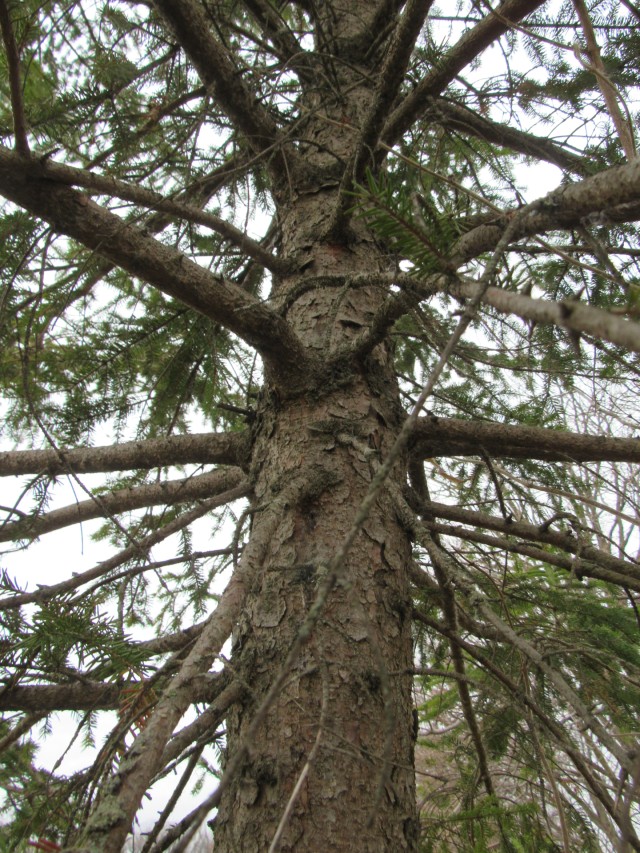
While visiting Indiana I came across this tree which I have never encountered before. Its seed cone is longer than wide, with woody scales attached at the base. White Spruce has the smallest cones of any of the spruces. They are typically 1 to 2 inches long, cylindrical and pendulous, often clustered near the top of the tree.

02 White Spruce (Picea glauca)_0061

White Spruce hails from northern climes and is one of the first tree species to colonize after glaciers recede. This evergreen usually grows to heights of 50 to 100 feet. This species is the northernmost tree species in North America, reaching just north of 69°N latitude in Canada’s Mackenzie River delta.

03 White Spruce_0060

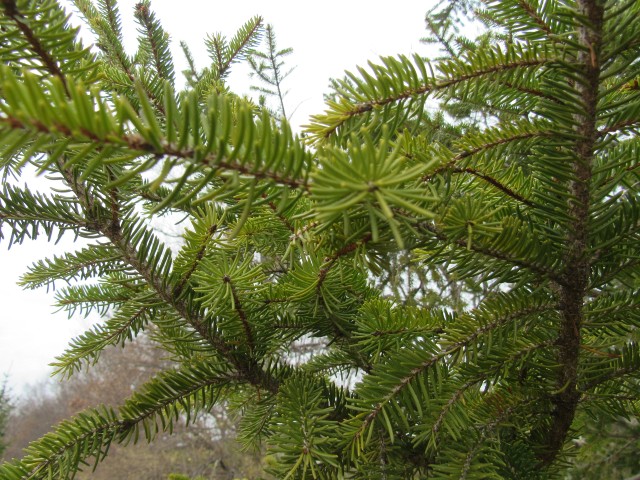
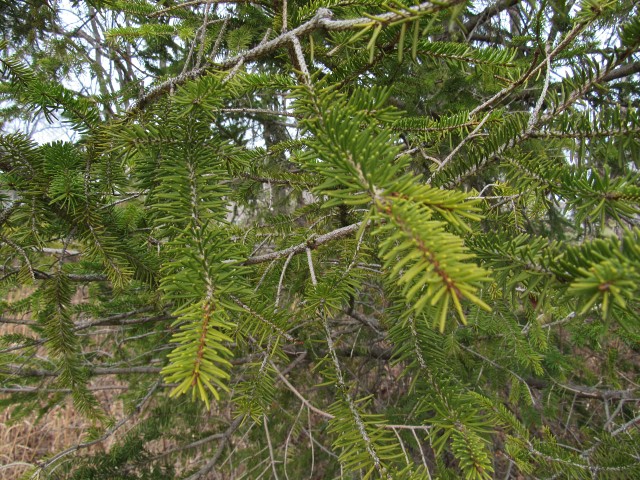
The pale green, pointed evergreen needles are 1/2 to 3/4 inch long. They are four-sided, often crowded on the upper surface of the stem. The aromatic needles can persist for three to four years before dropping. Scientifically known as Picea glauca, the waxy coating on its needles gives them a blue-green (glaucous) appearance, hence the Latin species name.

04 White Spruce_0064

This tree adapts to a surprising variety of environments and climates. It prefers moist, well-drained alluvial soil, but grows on a wide diversity of sites. White Spruce is rarely found in pure stands.

05 White Spruce_0063

White Spruce is the most commercially important timber species in the far north woods. Almost white, its wood is soft, light-weight, and moderately strong with a straight grain. It is used for wood fiber, house logs, and musical instruments.

06 White Spruce_0059

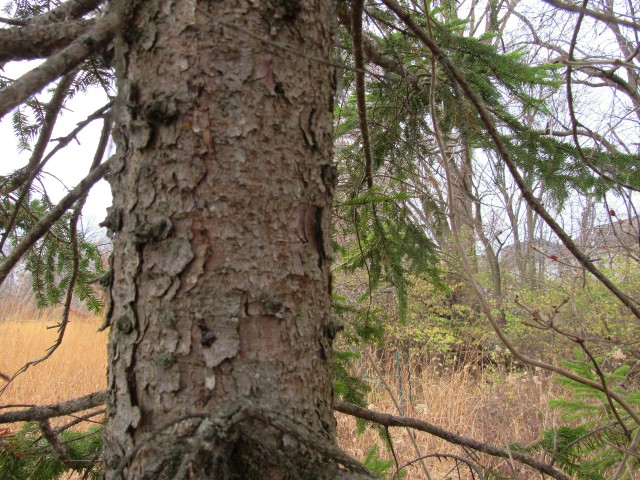
Its bark is thin and scaly, flaking off in small circular plates 2 to 4 inches across. This tree was an important fuel source for early colonists and Native Americans of the north woods. In addition to human use, this tree provides cover for Moose, Martens and Lynx.

07 White Spruce_0065

White Spruce has been the most popular selection for the U.S. Capitol Christmas tree, being used 13 times (as of 2020) since the tradition began in 1964.

Third Eye Herp
E-mail

Spotted Lanternfly

01 Spotted Lanternfly_5982

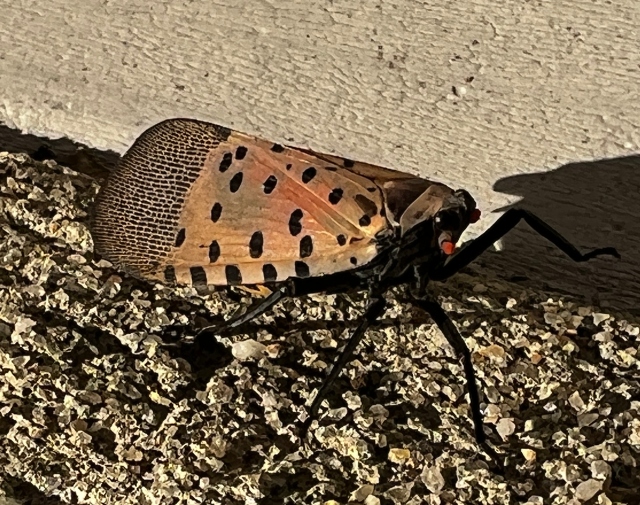
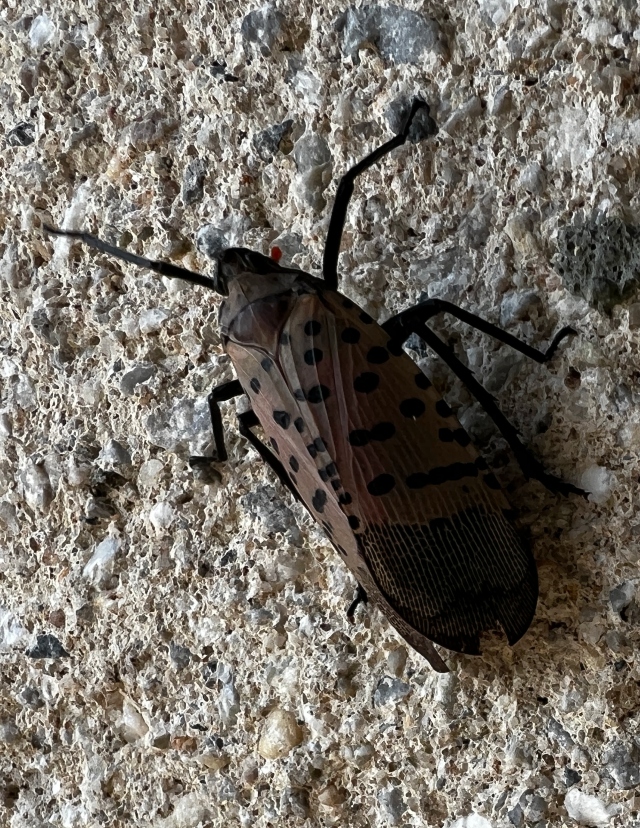
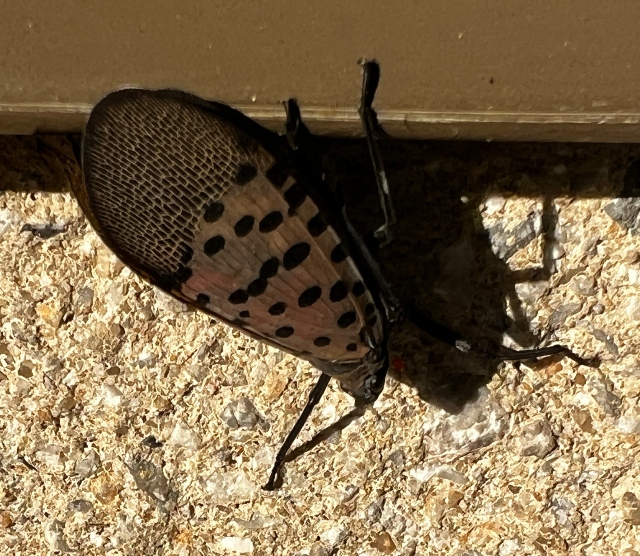
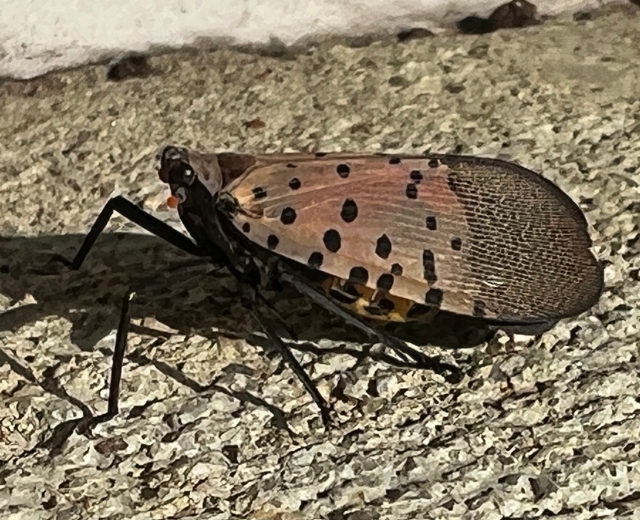
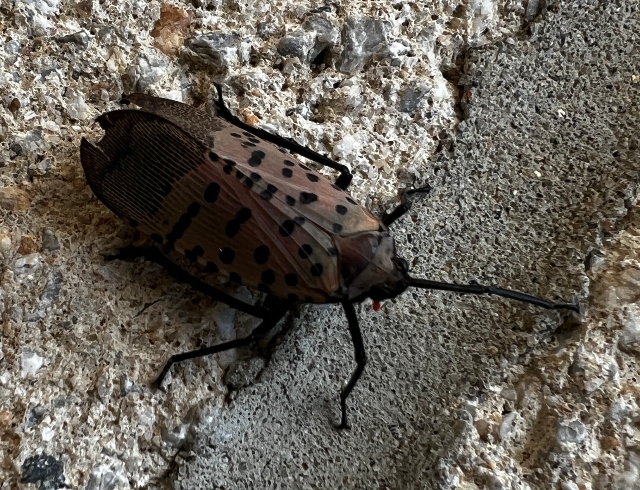
While visiting Bronxville, New York, I noticed several insects on the wall outside a sports outfitter store. The Spotted lanternfly is an invasive insect insect from Asia that primarily feeds on Trees of Heaven (Alianthus altissima) but can also eat a wide variety of plants, such as grapevine, hops, maple, walnut, and fruit trees.

02 Spotted Lanternfly_5993

The Spotted Lanternfly belongs to a family known as planthoppers – this name comes from their remarkable resemblance to leaves and other plants of their environment and that they often “hop” for quick transportation in a similar way to that of grasshoppers. However, planthoppers generally walk very slowly.

03 Spotted Lanternfly_5976

Like other True Bugs, planthoppers begin life as an egg and then, growing, undergo a number of immature stages (nymphs) before a final molt renders them a winged, sexually mature adult.

04 Spotted Lanternfly_5987

Adults begin to appear in July and are approximately 1 inch long and ½ inch wide at rest, with eye-catching wings. Their forewings are grayish with black spots. The lower portions of their hindwings are red with black spots and the upper portions are dark with a white stripe. They are laterally flattened and hold their broad wings vertically, in a tent-like fashion, concealing the sides of the body and part of the legs.

05 Spotted Lanternfly_5977

The Spotted Lanternfly is indigenous to parts of China and Vietnam. In addition to the United States, it has also spread invasively to Japan and South Korea. Planthoppers use their wings to assist these jumps rather than to make sustained flights. On September 29, 2014, the Pennsylvania Department of Agriculture and the Pennsylvania Game Commission first confirmed the presence of the Spotted Lanternfly in Berks County, Pennsylvania, northwest of Philadelphia.

07 Spotted Lanternfly_5975

Although it is an attractive-looking insect, a large potential range exists for the Spotted Lanternfly to become established in almost all of the eastern part of the United States, as well as critical wine- and hop-growing valleys of the Pacific coastal states.

Third Eye Herp
E-mail

Leatherleaf

01 Leatherleaf_0687

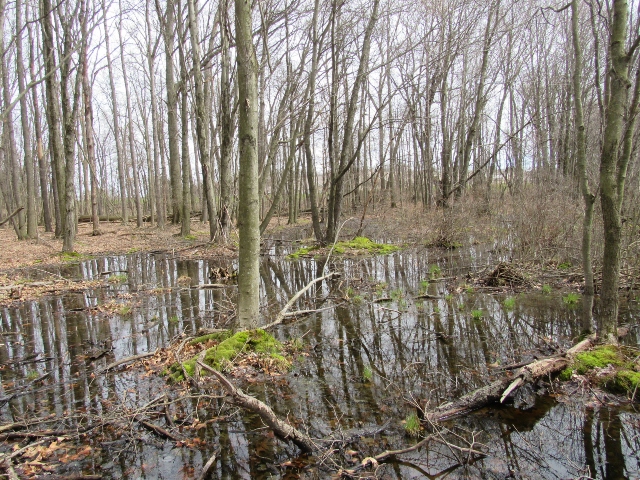
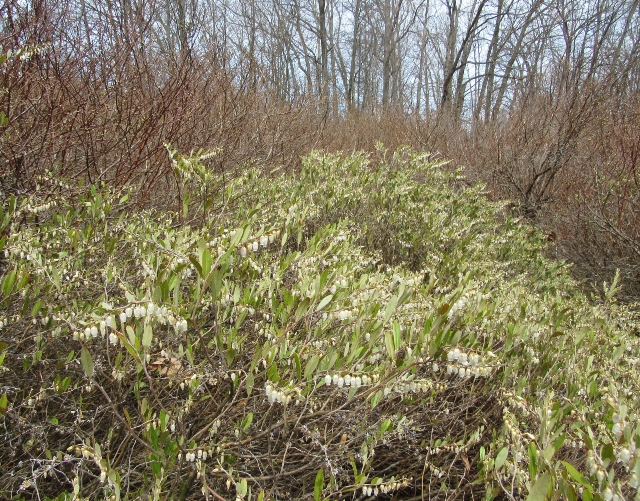
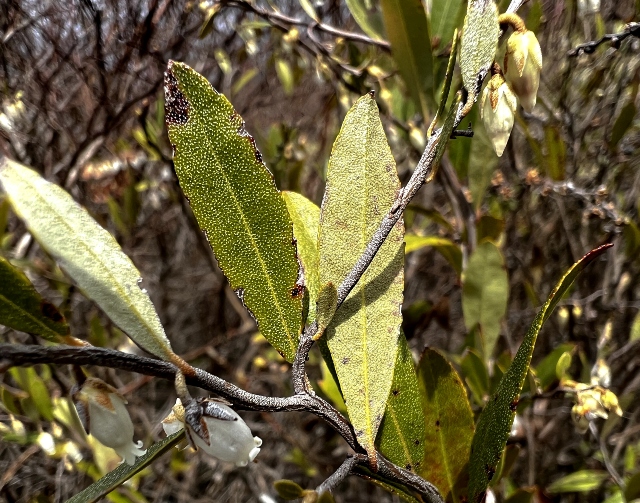
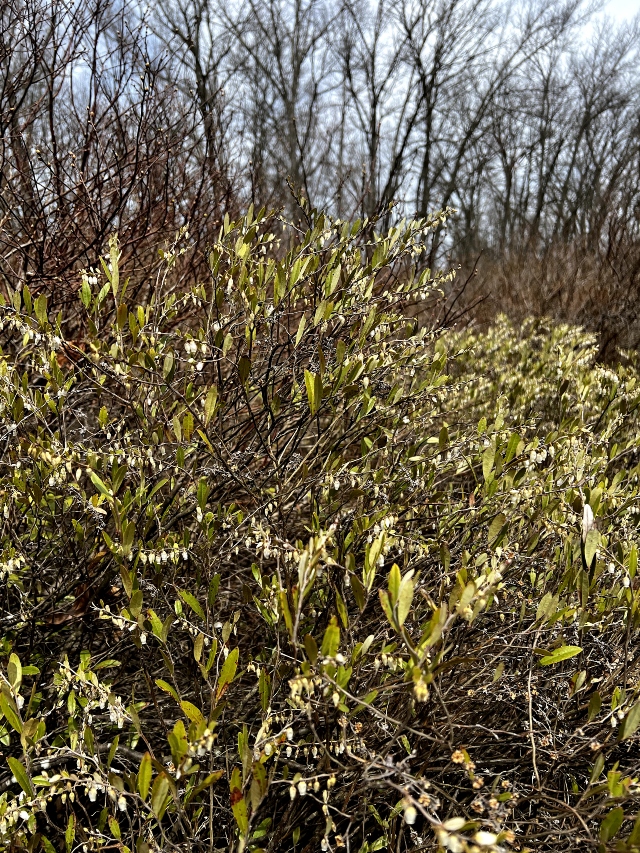
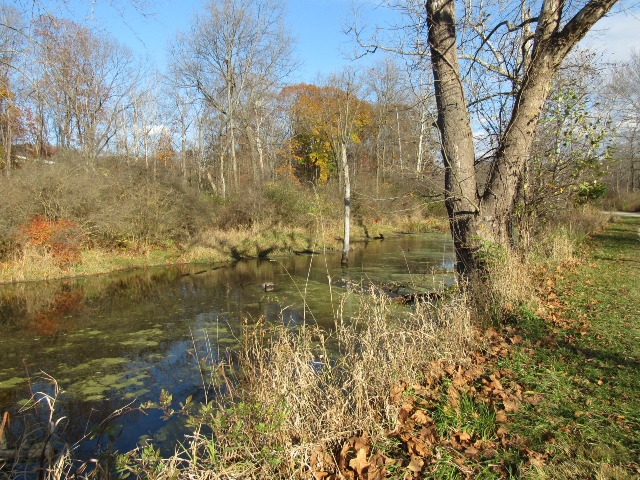
While visiting a bog on Kent, Ohio, I came across this neat plant. It is a species characteristically found in sphagnum peat bogs. Leatherleaf provides cover for nesting mallards and some other ducks. It recovers quickly in peatlands that have been severely disturbed or mined for peat.

02 Leatherleaf_0691

This plant has a distribution throughout the cool temperate and subarctic regions of the Northern Hemisphere from eastern North America to bogs in Finland and Japan.

03 Leatherleaf_0908

Leatherleaf is often the first woody plant to encroach on the open water of a kettle hole lake. It is a small, dense, mound-shaped shrub, growing to 5 feet high, often spreading to form thickets.

04 Leatherleaf_0907

As its common names implies, Leatherleaf has thick, leathery leaves to minimize water loss from transpiration. To conserve nutrients and maximize photosynthesis, its brownish evergreen leaves persist for nearly two seasons and are gradually shed as new leaves become established.

05 Leatherleaf_0905

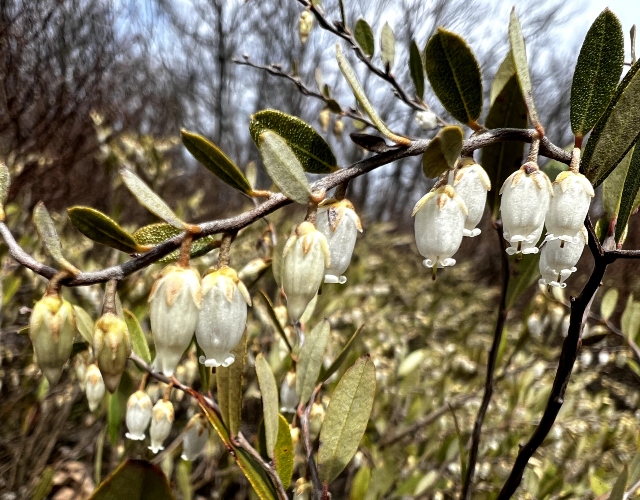
It’s urn-shaped white flowers appear in early Spring, often while ice is still present.

Third Eye Herp
E-mail

Canada Goose

01 Canada Geese_2310

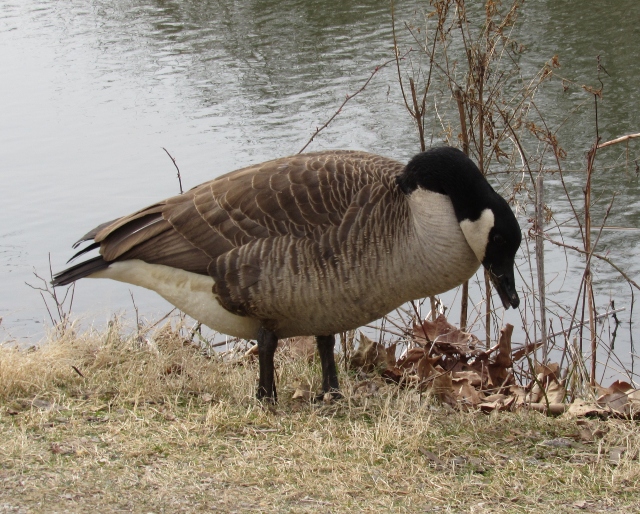
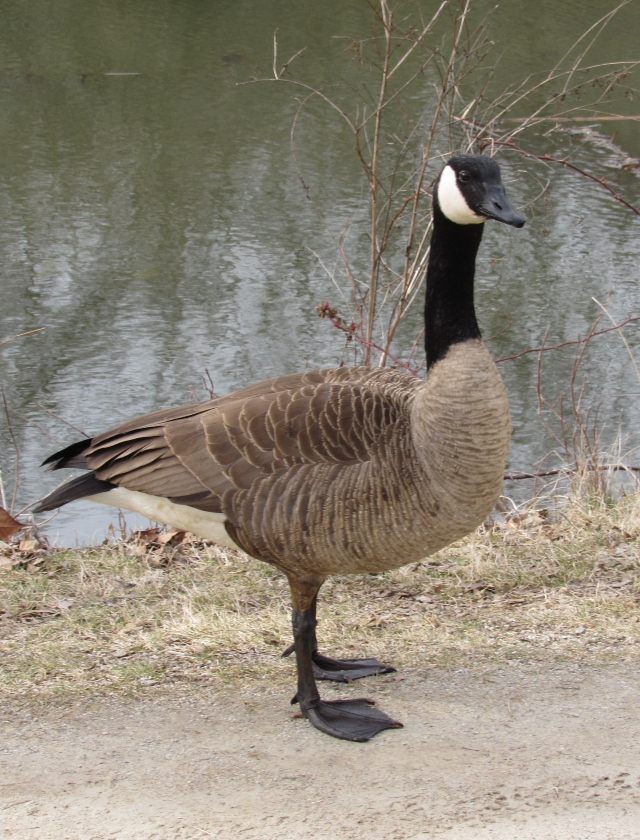
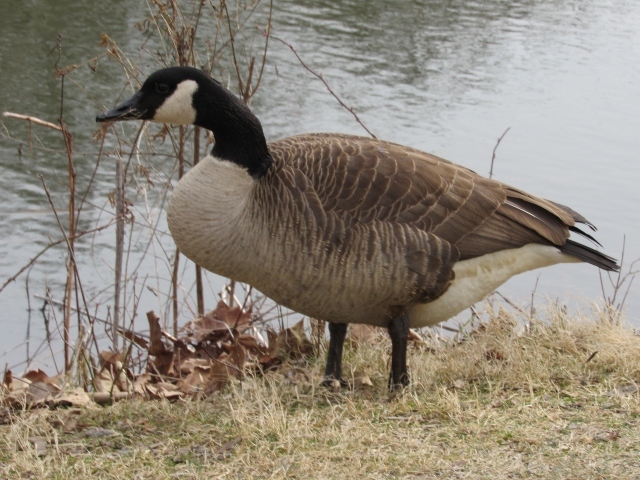
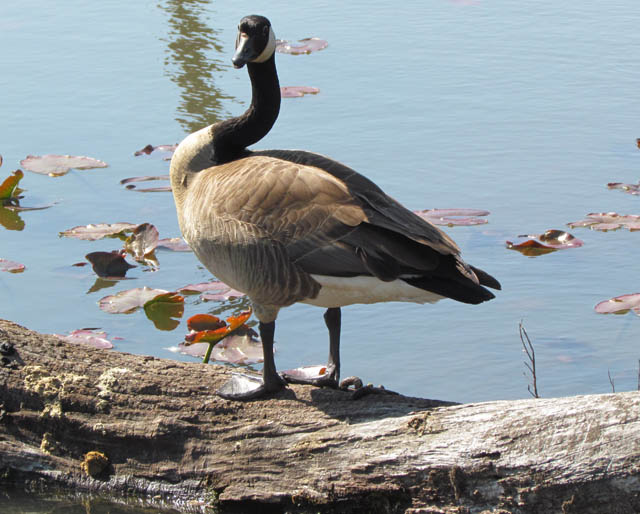
The big, black-necked Canada Goose with its signature white chinstrap marking is a familiar and widespread bird of fields and parks. Thousands of “honkers” migrate north and south each year, filling the sky with long V-formations. The size of this goose varies considerably – some are the size of a large duck and others are two to three times larger.
02 Canada Goose_0568

At least 11 subspecies of Canada Goose have been recognized, although only a couple are distinctive. In general, the geese get smaller as you move northward, and darker as you go westward. The four smallest forms are now considered a different species: the Cackling Goose.
03 Canada Goose_1145

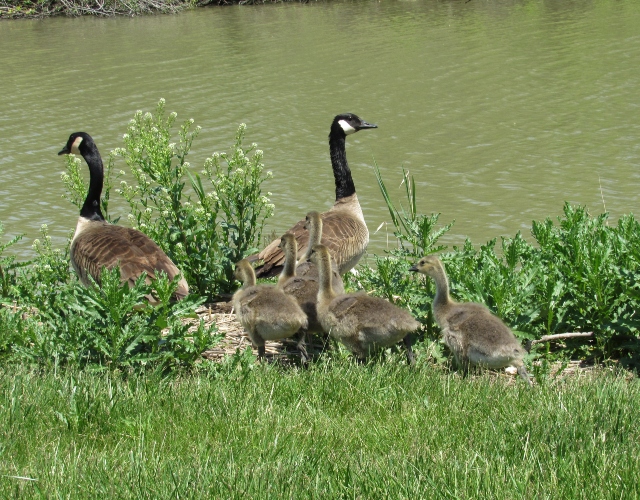
Once rare in the Buckeye State due to overhunting, in 1956, the Ohio Division of Wildlife introduced 10 breeding pairs of Canada Geese to three state wetlands. That helped populations rebound. By 1979 the geese were nesting in half of Ohio’s 88 counties. Today, they’re nesting and breeding everywhere, with an estimated population of well over 100,000.
04 Canada Goose_0575

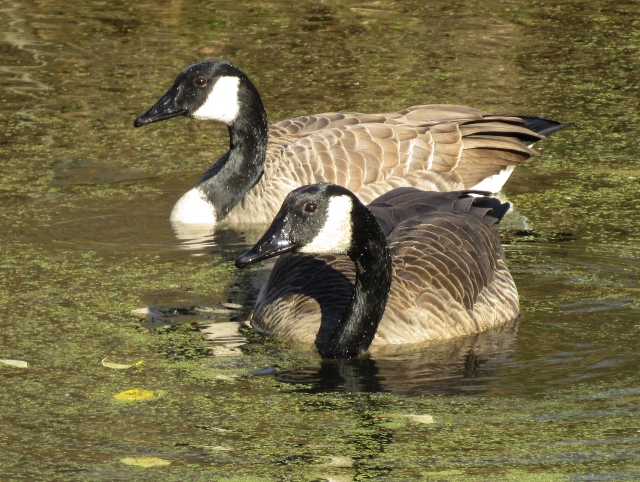
In recent years, Canada Goose populations in some areas have grown substantially, so much so that many consider them pests for their droppings, bacteria in their droppings, noise, and confrontational behavior. This problem is partially due to the removal of natural predators and an abundance of safe, human-made bodies of water near food sources.
05 Canada Geese_2308

Canada geese are protected under both the Federal Migratory Bird Treaty Act and Ohio state law. This protection extends to the geese, goslings, nests, and eggs.
06 Canada Geese_2317

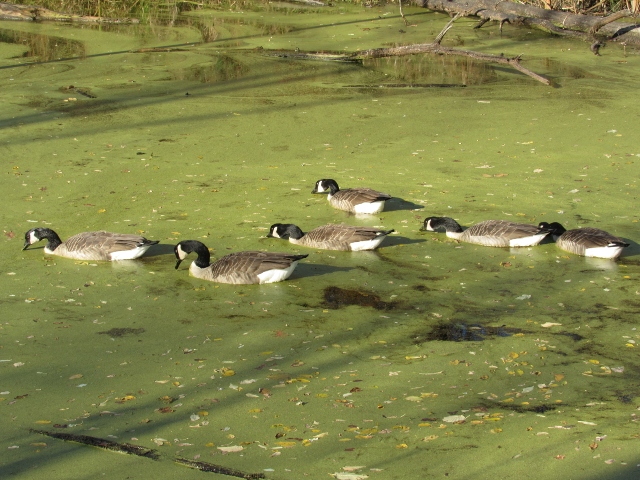
Canada Geese are primarily herbivores, although they sometimes eat small insects and fish. Their diet includes green vegetation and grains. The Canada goose eats a variety of grasses when on land. It feeds by grasping a blade of grass with the bill, then tearing it with a jerk of the head.
07 Canada Goose_0567

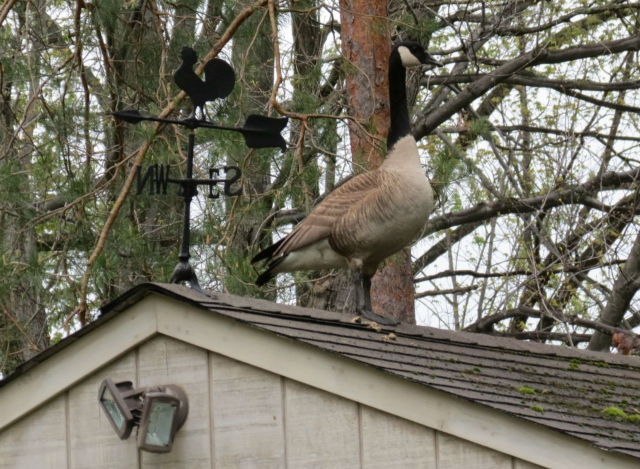
These birds fly in a distinctive V-shaped flight formation, with an altitude of 3,000 feet for migration flight. The maximum flight ceiling of Canada geese is unknown, but they have been reported at 29,000 feet. Flying in the V formation has been the subject of study by researchers. The front position is rotated, since flying in front consumes the most energy.
08 Canada Goose_2069

During the second year of their lives, Canada geese find a mate. They are monogamous, and most couples stay together all of their lives. If one dies, the other may find a new mate. The female lays from two to nine eggs with an average of five, and both parents protect the nest while the eggs incubate, but the female spends more time at the nest than the male.

09 Canada Goose_4954

As soon as the goslings hatch, they are immediately capable of walking, swimming, and finding their own food (a diet similar to that of adult geese). Parents are often seen leading their goslings in a line, usually with one adult at the front and the other at the back. While they might appear short-tempered, snappy and threatening, Canada geese are really much like any doting parents — fiercely protective of their brood.
10 Canada Goose_3559

Nonmigratory Canada Goose populations have been on the rise. This species is frequently found on golf courses, parking lots, and urban parks, which would have previously hosted only migratory geese on rare occasions. Owing to its adaptability to human-altered areas, it has become one of the most common waterfowl species in North America.
Third Eye Herp
E-mail