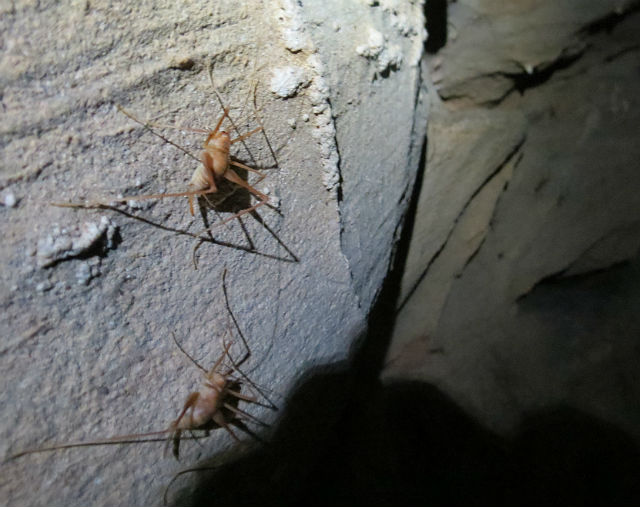
Although it’s cold outside, the inner temperatures of caves is remarkablely stable. So some cool creatures can be found if a person is willing to do a little bit of exploring.
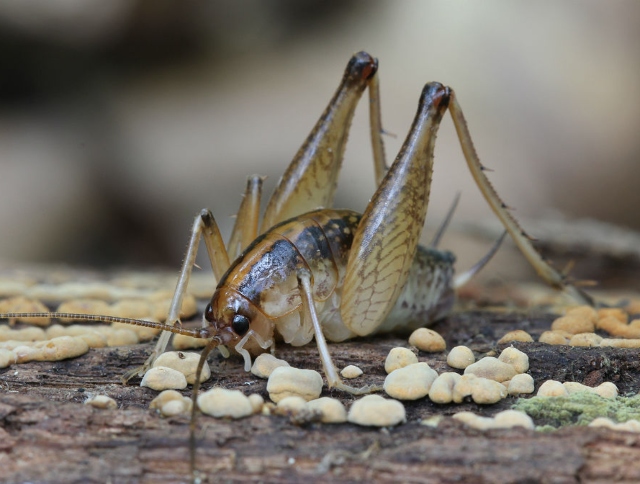
Camel Crickets get their common name from their humpbacked appearance, which is similar to that of a Camel. Also commonly known as Cave Crickets or Spider Crickets, this species can be found in caves, as well as damp, cool areas underneath damp leaves, stones and rotting logs.

These insects are widespread in the United States and in the world and have a lifespan of about one to two years. They do not possess sound producing organs, and therefore they do not chirp. Additionally, unlike other cricket species, the adults do not have wings.
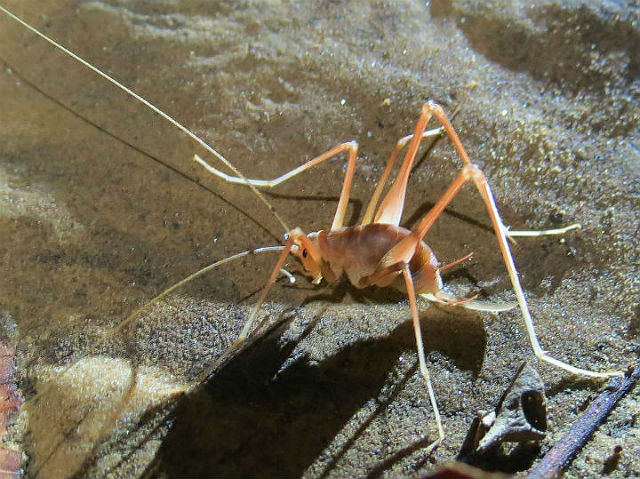
Camel Cricket have very long antennae as well as long back legs, which enable them to jump several feet. They tend to be light tan to dark brown in color. These crickets are almost entirely nocturnal, so long antennae and other appendages allow them to feel their way around in the dark.
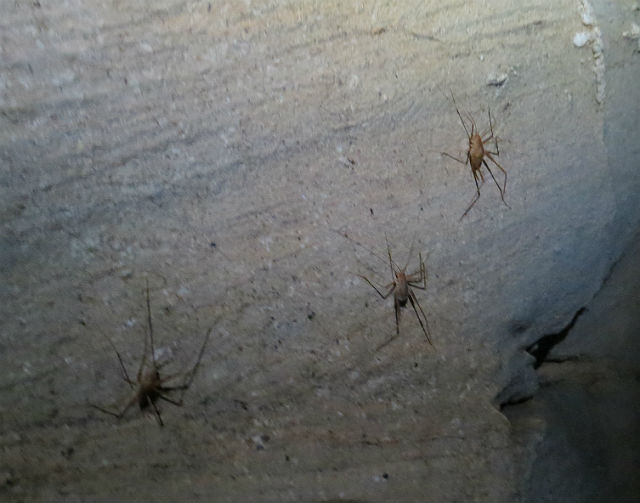
At the tip of the abdomen is a pair of long cerci (paired appendages on rearmost segment), and in females, an ovipositor (a tube-like organ used for laying of eggs) which is cylindrical, pointed, long and narrow, smooth and shiny.
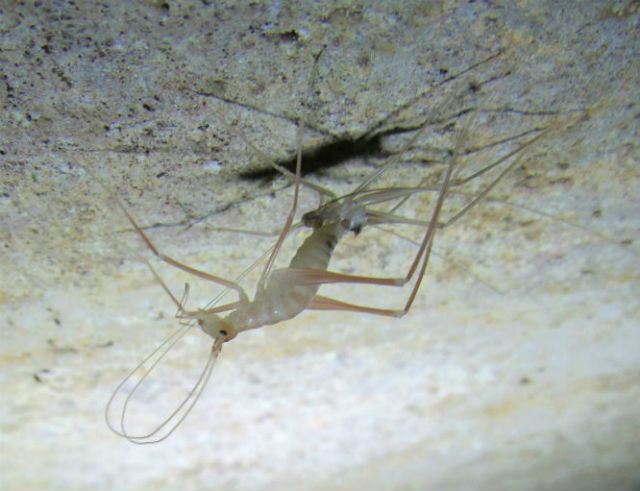
Camel Crickets need to shed their exoskeleton periodically, a process known as molting. This is done as the insect grows, because the exoskeleton cannot expand.
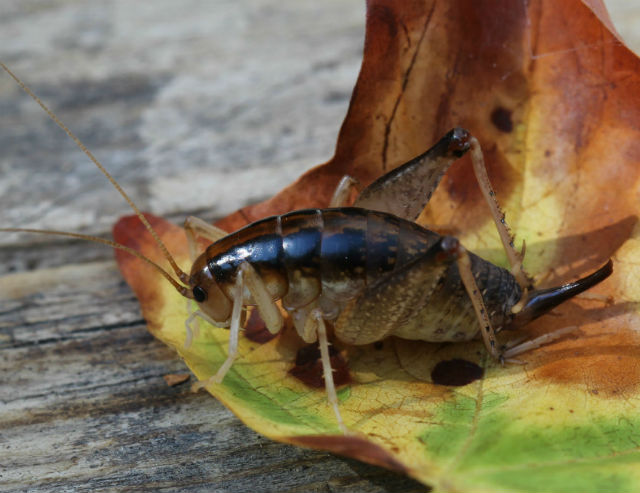
These creatures are omnivores and eat what is readily available, from plants to carrion to fungi.
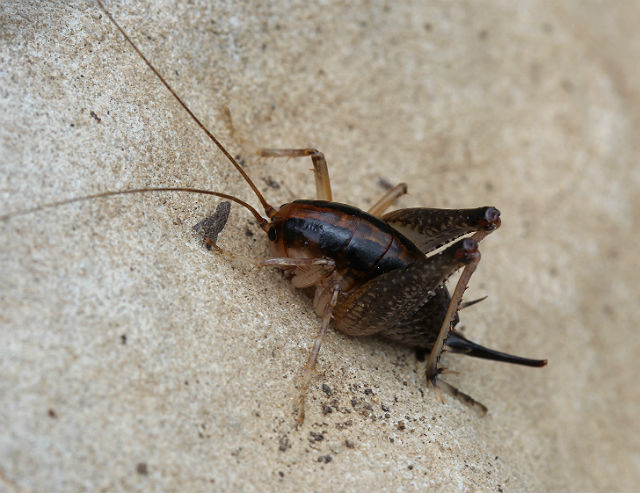
I enjoyed finding these unusual creatures as a kid and still like coming across them in the present day. I most often find them under rocks and fallen limbs in slightly damp locations. I usually come across them in the Autumn months while flipping logs, looking for salamanders.
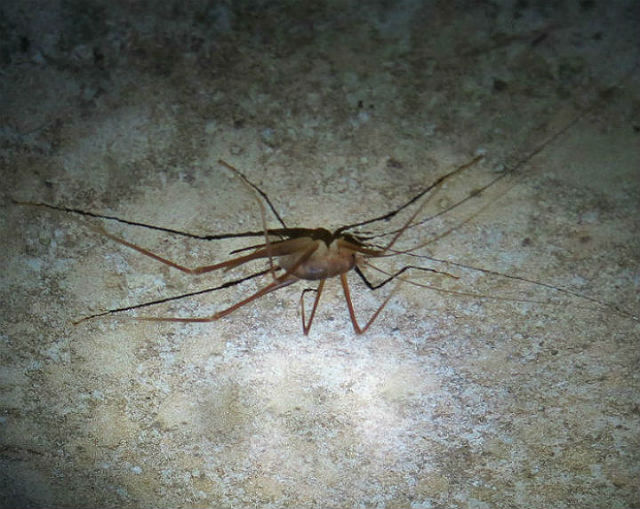
Growing to about an inch long, there are about 150 species of Camel Crickets in the United States.
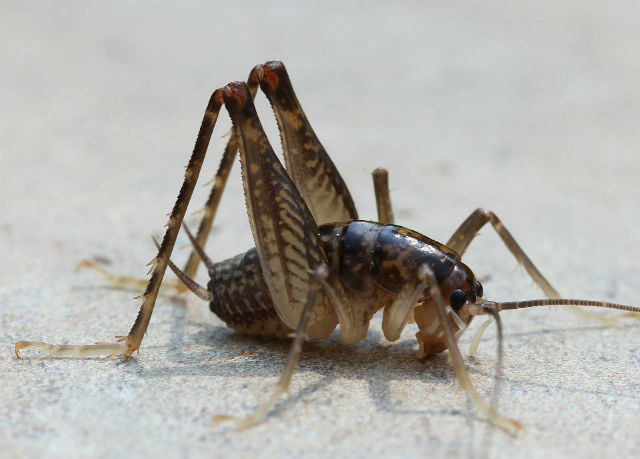
In 2023 this fine insect was named The 2023 USA Cave Animal of the Year: https://www.nps.gov/articles/000/cave-cricket.htm