Grey Heron

01 Grey Heron_5272

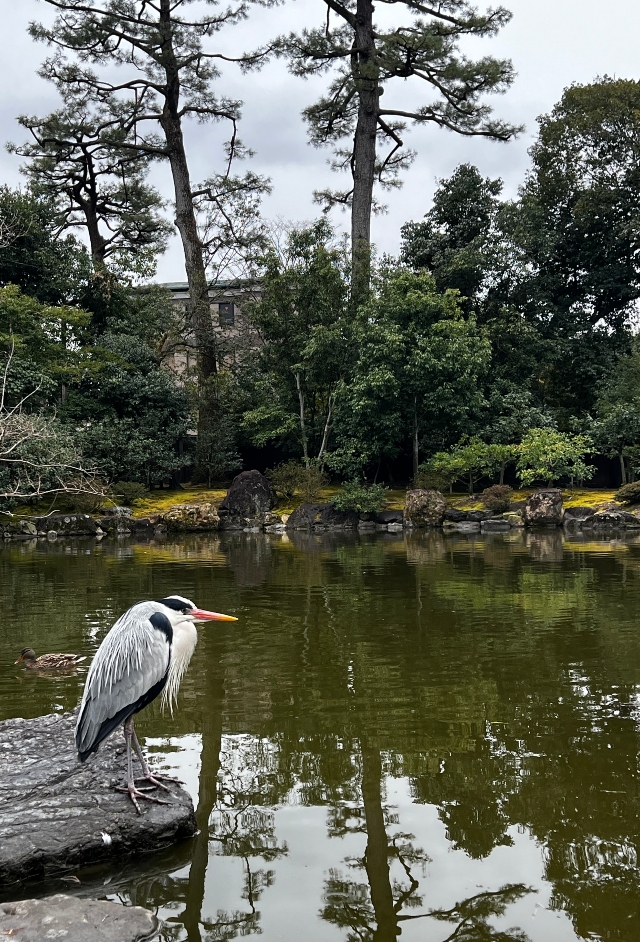
While visiting Japan, I saw several examples of this long-legged wading bird, native throughout temperate Europe and Asia, as well as parts of Africa. It is resident in much of its range, but some populations from the more northern areas migrate southward in Autumn.
02 Grey Herons_3604

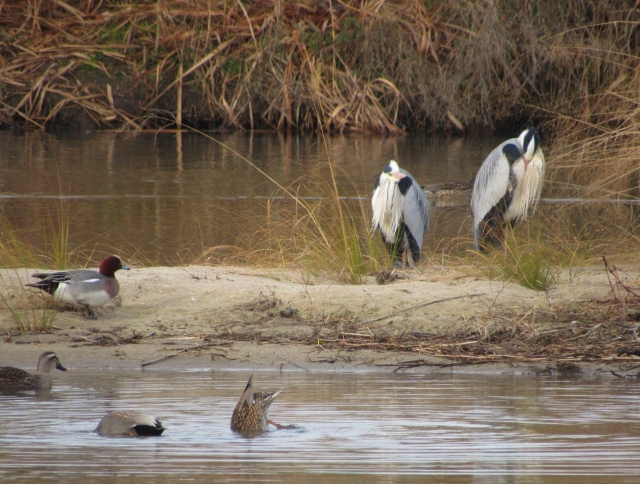
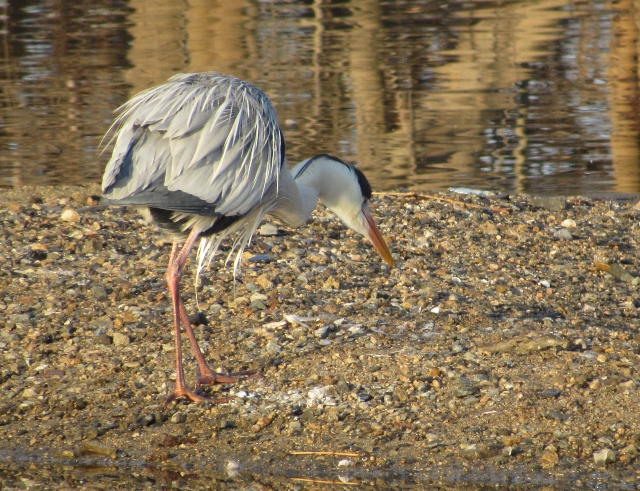
A bird of wetland areas, it can be seen around lakes, rivers, ponds, marshes and on the sea coast. It feeds mostly on aquatic creatures which it catches after standing stationary beside or in the water, or by stalking its prey through the shallows. These birds seemed acclimated to humans and I often saw them in park and even urban settings.
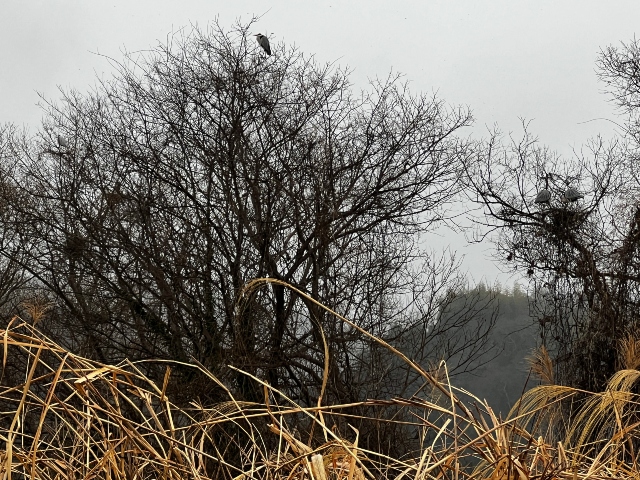
03 Grey Heron_5046

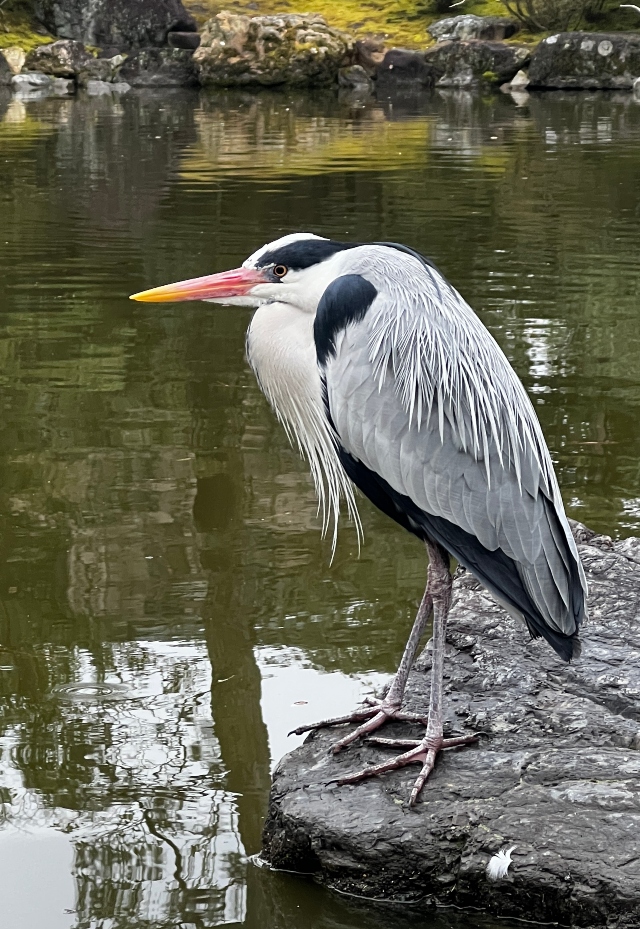
They are very similar in appearance of Great Blue Herons, which I frequently see in my home state of Ohio. They stand at 3 feet tall, weigh 2 to 4 pounds, and have a white head and neck with a broad black stripe that extends from the eye to the black crest. The body and wings are grey above and the underparts are greyish-white, with some black on the flanks. The long, sharply pointed beak is pinkish-yellow and the legs are brown.
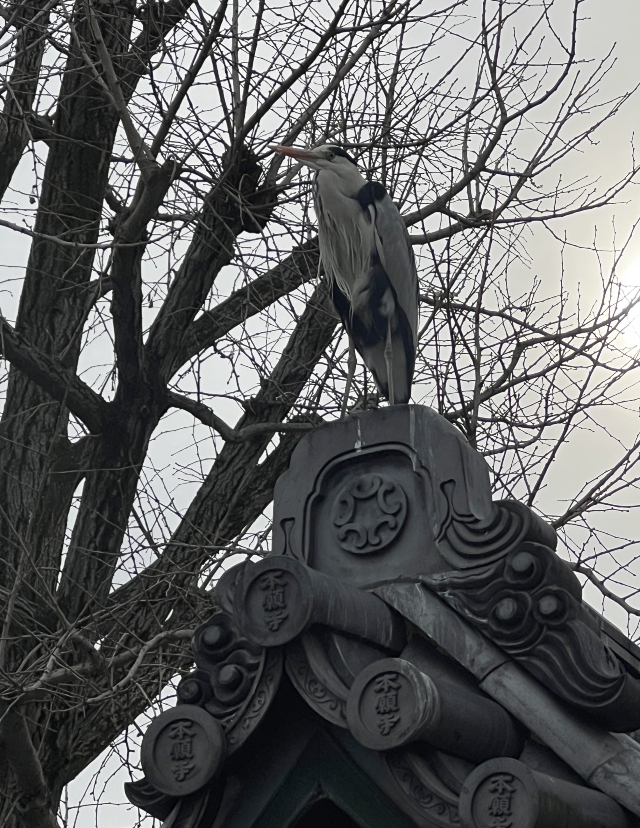
04 Grey Heron_5160

These birds breed colonially in Spring, typically building their nests high in trees. A clutch of usually three to five bluish-green eggs is laid. Both males and females incubate the eggs for around 25 days, and then both feed the chicks, which fledge when they are 7-8 weeks old.
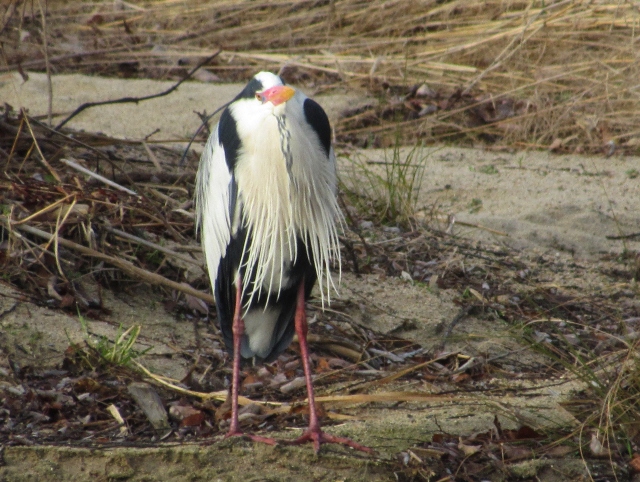
05 Grey Heron_3366

Their main call is a loud croaking “fraaank,” but a variety of guttural and raucous noises can be heard at the breeding grounds. The male uses an advertisement call to encourage a female to join him at the nest, and both sexes use various greeting calls after a pair bond has been established.
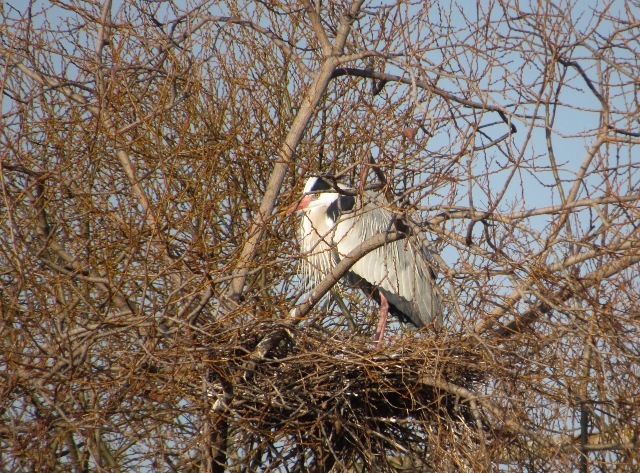
06 Grey Heron_3892

Grey Herons are apex predators in their aquatic ecosystem. Fish, amphibians, crustaceans, and insects are caught in shallow water with the heron’s long bill. They may stand motionless in the shallows, or on a rock or sandbank beside the water, waiting for prey to come within striking distance. Alternatively, they move slowly and stealthily through the water with their body less upright than when at rest and its neck curved in an “S.”
07 Grey Heron_5270

It has able to straighten its neck and strike with its bill very quickly. Small fish are swallowed head first, and larger prey and eels are carried to the shore where they are subdued by being beaten on the ground or stabbed by the bill. They are then swallowed whole or have hunks of flesh torn off.
08 Grey Heron_3822

The oldest recorded Grey Heron lived for 23 years, but the average life expectancy in the wild is about 5 years. It was great to see this majestic bird in a variety of habitats and in a number of places that I visited in the Land of the Rising Sun.
Third Eye Herp
E-mail

Japanese House Centipede

01 Japanese House Centipede__4686

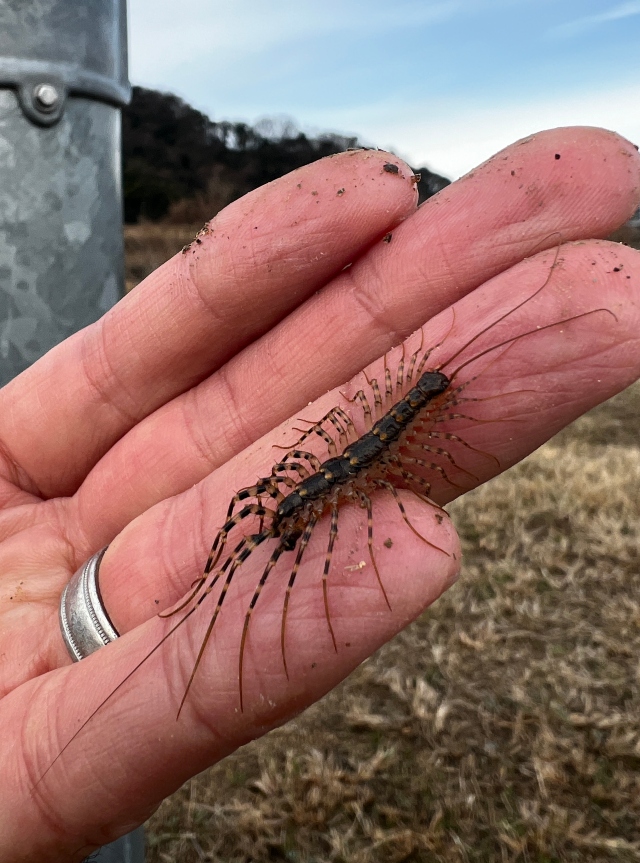
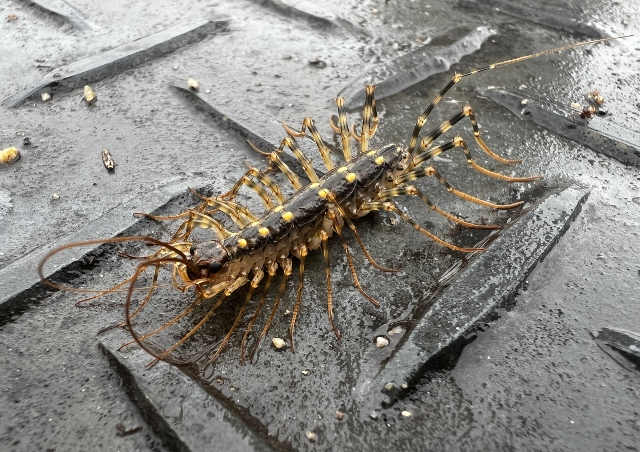
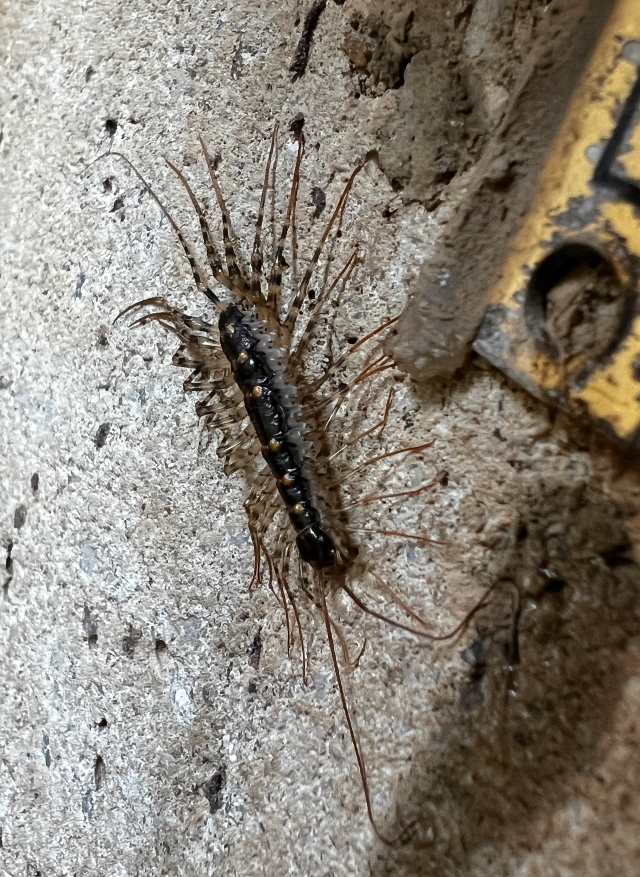
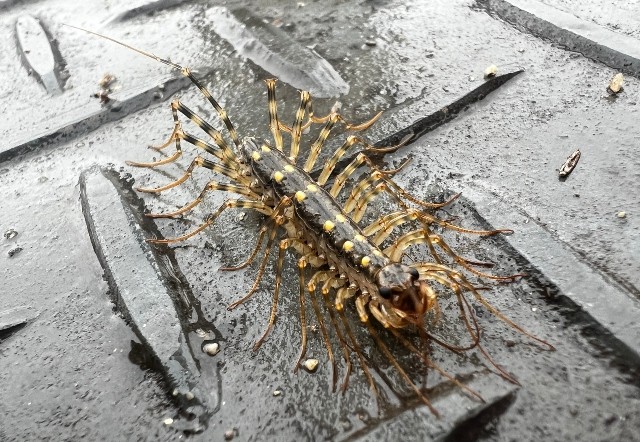
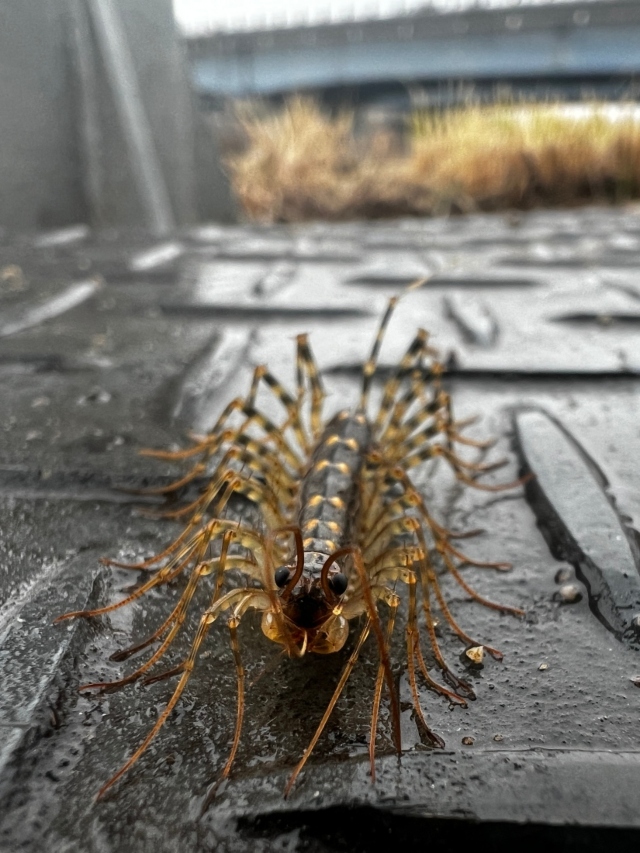
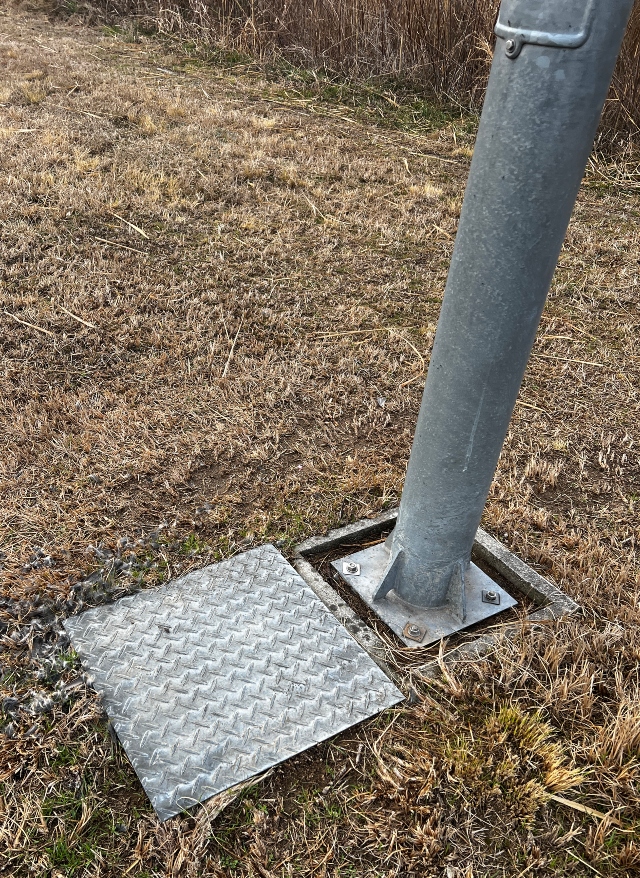
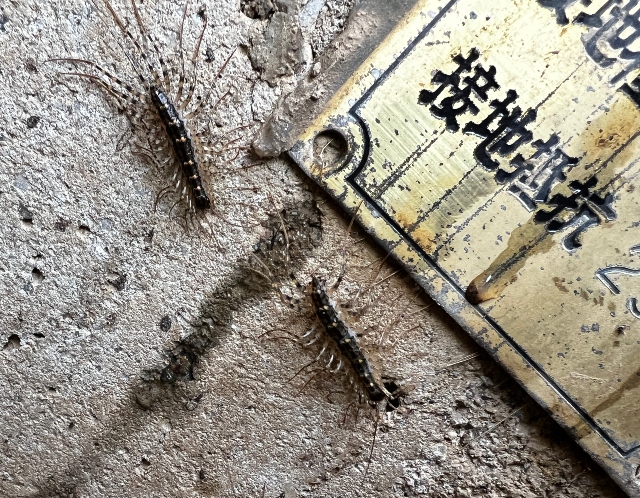
While walking along the Ashida River, I noticed that the light fixtures along the towpath have panels covering underground pits. Lifting these panels exposed some neat invertebrates.

02 Japanese House Centipede__4667

Japanese House Centipedes are insectivores that hunt and eat other arthropods, such as insects and arachnids. Their delicate legs enable them to reach surprising speeds of up to 1-1/3 feet per second.

03 Japanese House Centipede__4674

This creature has developed automimicry in that its tail-like hind legs present the appearance of antennae. When the centipede is at rest, it is not easy to tell its front end from its back end.

04 Japanese House Centipede__5030

Unlike most other centipedes, House Centipedes and their close relatives have well-developed faceted eyes. They are mostly nocturnal predators. Despite their developed eyes, they seem to rely mostly on their antennae when hunting.

05 Japanese House Centipede__4668

Outdoors, they prefer to live in cool, damp places. Their respiratory systems do not provide any mechanism for shutting their spiracles (small openings on the body surface for breathing), so they need an environment that protects them from dehydration and excessive cold.

06 Japanese House Centipede__5022

Most live outside, primarily under large rocks, piles of wood or leaves, in bark and especially in compost piles. They often emerge from hiding during the watering of gardens or flowerbeds.

07 Japanese House Centipede_5028

Those that live indoors usually do on the ground levels of homes. While many homeowners may be unsettled by them, they pose no threat towards humans, and are beneficial as they eat pests, such as cockroaches.

Third Eye Herp
E-mail

Japanese Beard Fern

01 Japanese Beard Fern_4391

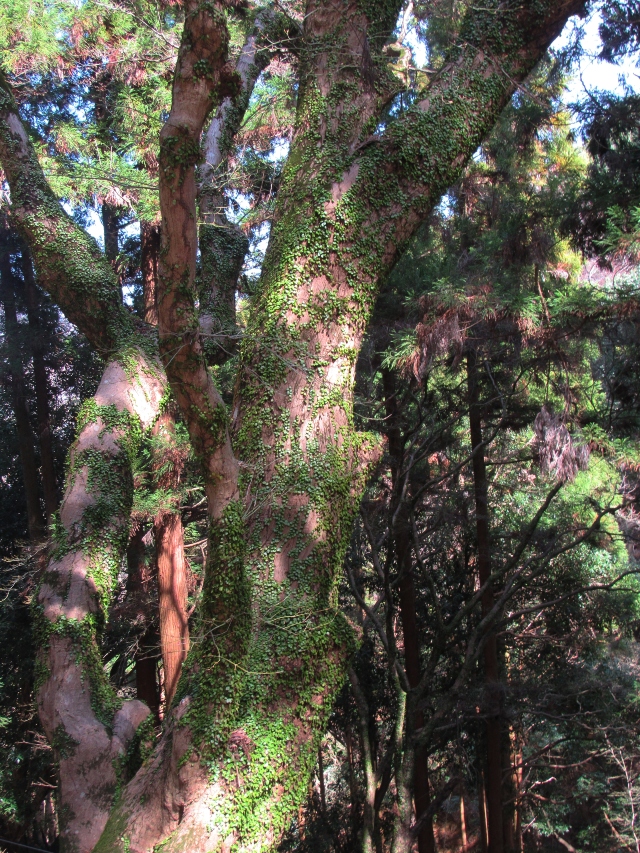
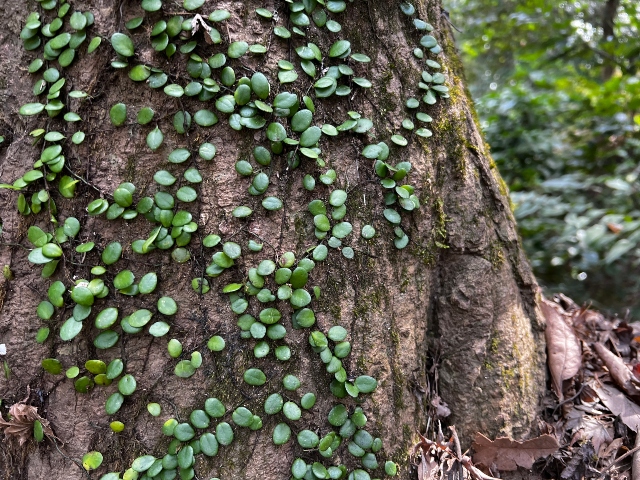
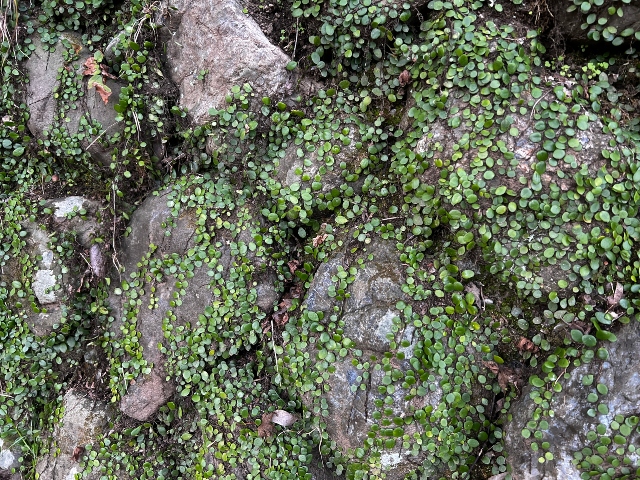
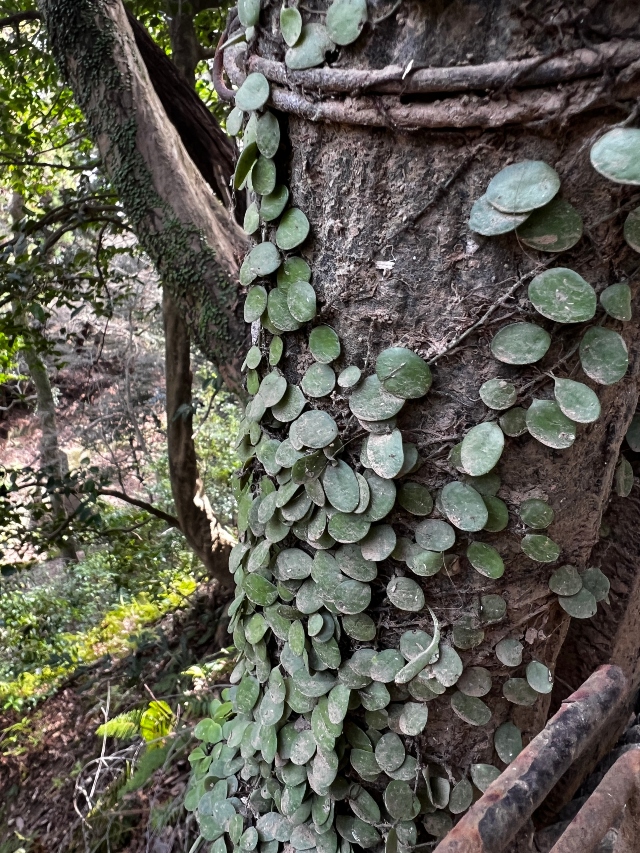
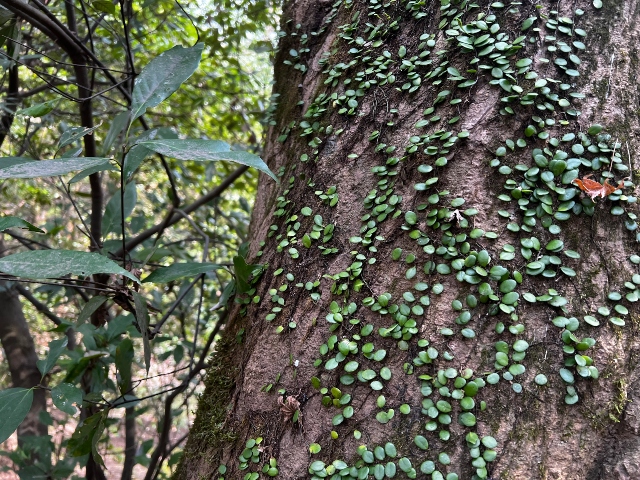
While visiting Kyoto, Japan, I noticed this neat plant in wooded areas. Japanese Beard Fern is a type of small fern also known as Green Penny Fern. It is native to southern and eastern Asia, from India to Japan.

02 Japanese Beard Fern_5198

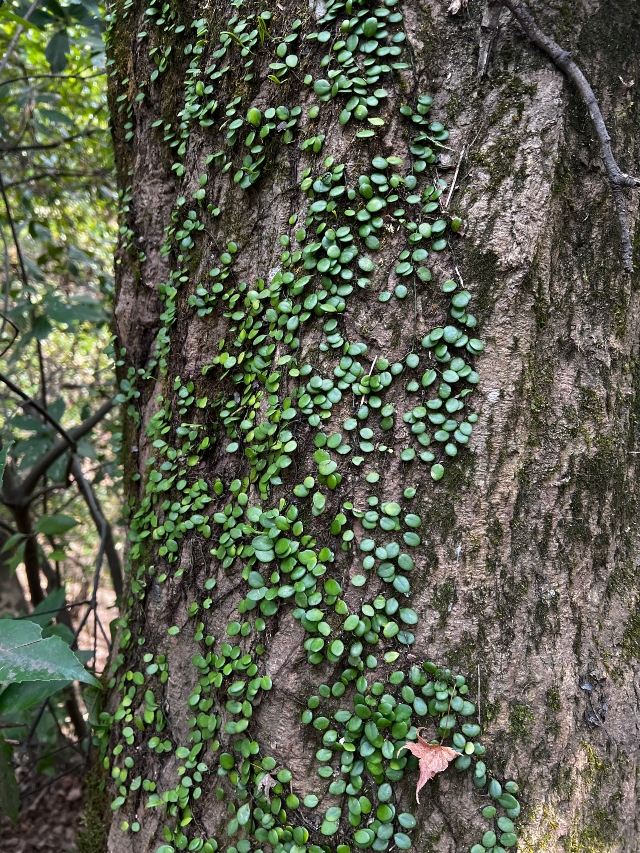
It can grow directly from well-drained soil, but is also commonly found on the surface of trees and rocks. Japanese Beard Fern does not grow average-looking fern fronds, but it’s still popular as a potted plant.

03 Japanese Beard Fern_5201

This plant thrives in low light conditions and it most often found in shaded areas. High humidity is essential for its growth, so a naturally damp environment is necessary as well. I most often saw this plant in cool, shadowy habitats.

04 Japanese Beard Fern_5199

Japanese Beard Fern is an evergreen epiphyte. An epiphyte, from Ancient Greek epi-, meaning “upon,” and phutón, meaning “plant,” is a plant or plant-like organism that grows on the surface of another plant.

05 Japanese Beard Fern_5200

Epiphytes derive their moisture and nutrients from the air, rain, water (in marine environments) or from debris accumulating around them. This is a different biological adaptation than deriving water and nutrients from soil.

06 Japanese Beard Fern_5202

The sterile fronds are round to elliptic, thick and alternate. The fertile fronds are linear to spatulate and standing up. Their leaflets are only about half an inch in size.

07 Japanese Beard Fern_5196

It was neat to see this unique and interesting plant decorating trees and rocks while hiking through the woods on our trip to Japan.

Third Eye Herp
E-mail

Brown-eared Bulbul

01 Brown-eared Bulbul_3257

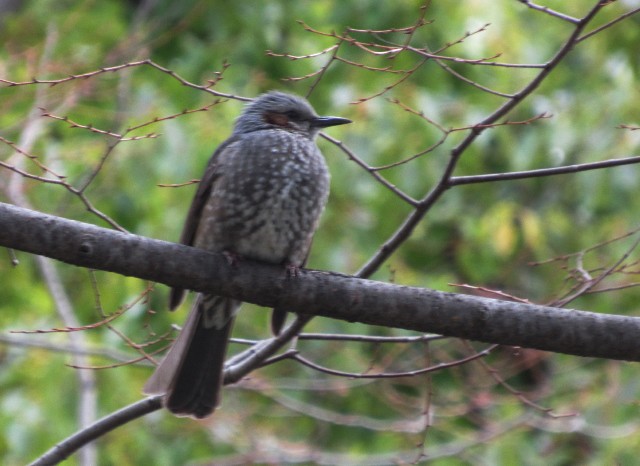
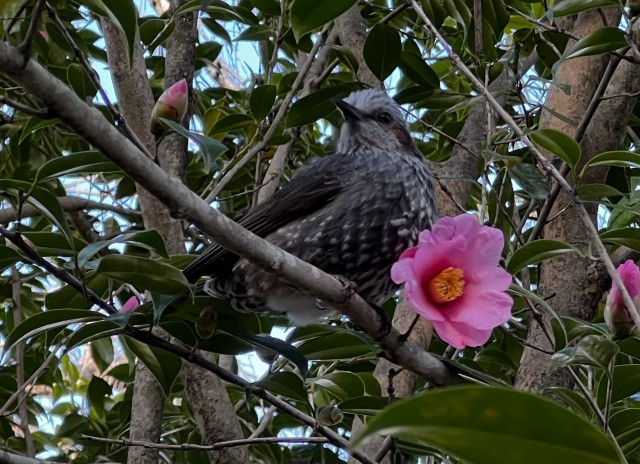
While visiting Japan, I saw a number of examples of this medium-sized bird native to Eastern Asia. It is extremely common within the northern parts of its range and its noisy squeaking calls are a familiar sound in most areas of Japan.

02 Brown-eared Bulbul_3255

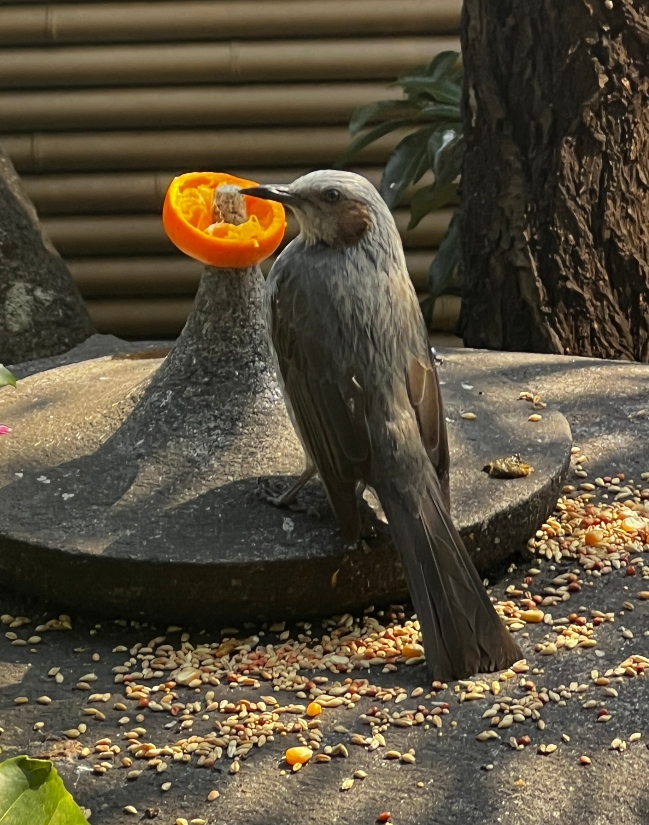
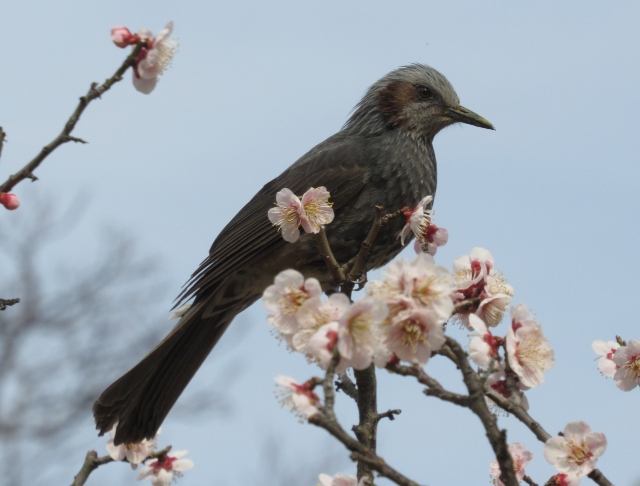
Reaching a length of about 11 inches, Brown-eared Bulbuls are grayish-brown, with brown cheeks (the “brown ears” of their common name) and a long tail. While they prefer forested areas, they readily adapt to urban and rural environments.

03 Brown-eared Bulbul_4833

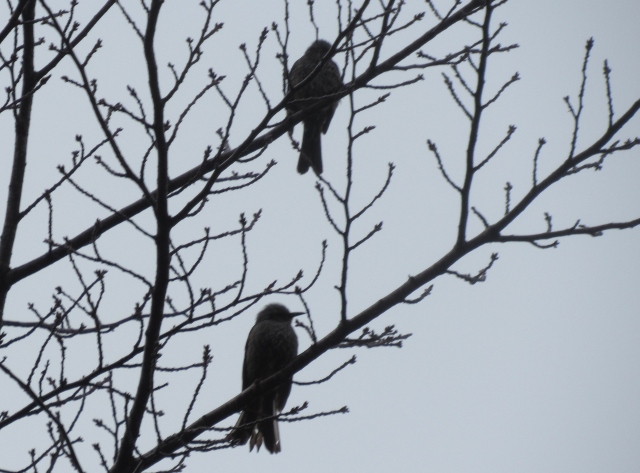
These migratory birds move to the southern parts of their range in Winter, but they have taken advantage of changes in crops and farming practices in recent decades to overwinter in areas farther north.

04 Brown-eared Bulbul_3214

Brown-eared Bulbuls primarily feed on insects during warmer weather, while they mainly take fruits and seeds in the Fall and Winter. In Japan, they can usually be seen in towns, parks and bird feeders. In Spring, they often eat the nectar of cherry blossoms.

05 Brown-eared Bulbul_4263

Its loud cry isn’t the only trait that makes it easy to recognize in rural and suburban habitats. Along with its shrill vocalizations, this songbird has an undulating flight pattern, which makes it easy to distinguish from other species.

06 Brown-eared Bulbul_5225

The Brown-eared Bulbul normally occurs in groups outside of the breeding season, which is generally April to July. Females usually lay four eggs in a sturdy, cup-shaped nest, placed in the lower branches of a tree.

07 Brown-eared Bulbul_3228

It was nice to see this interesting bird just about wherever I went on my visit.

Third Eye Herp
E-mail

Japanese Grass Lizard

01 Japanese Grass Lizard_3818

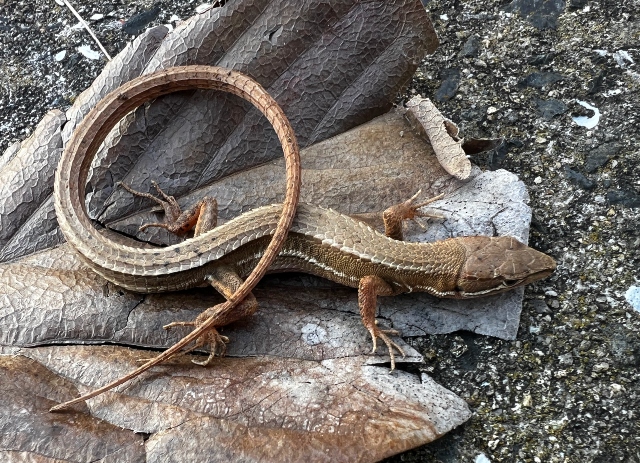
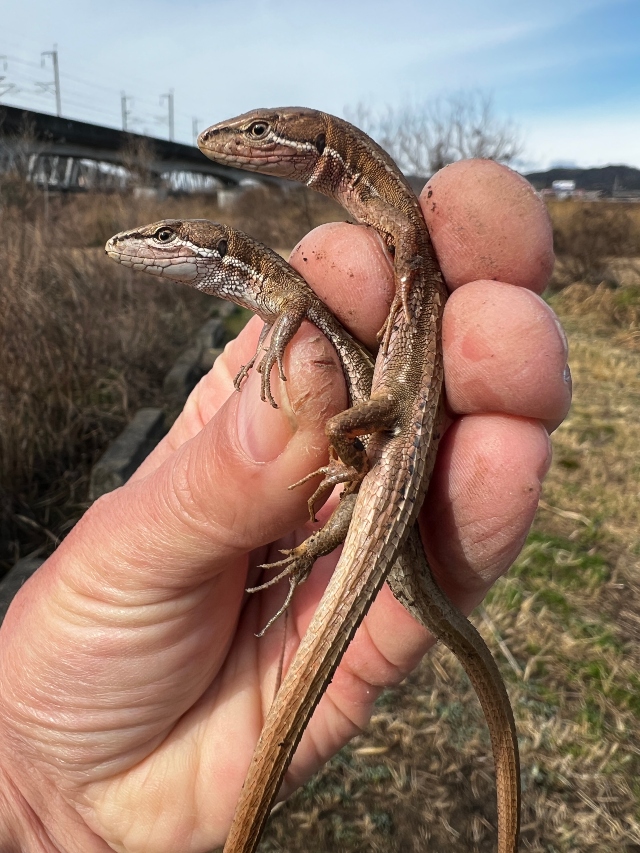
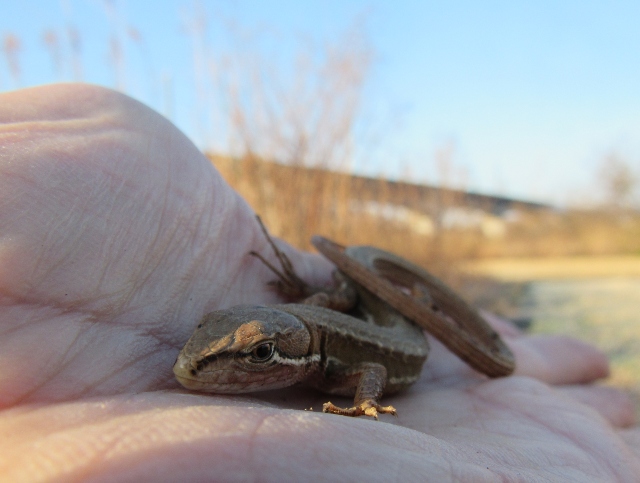
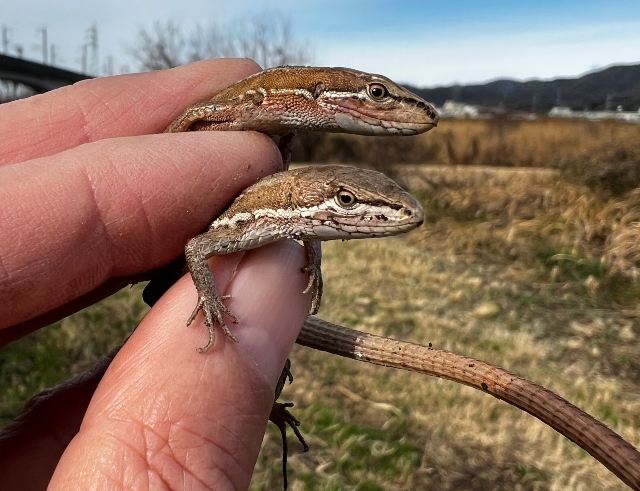
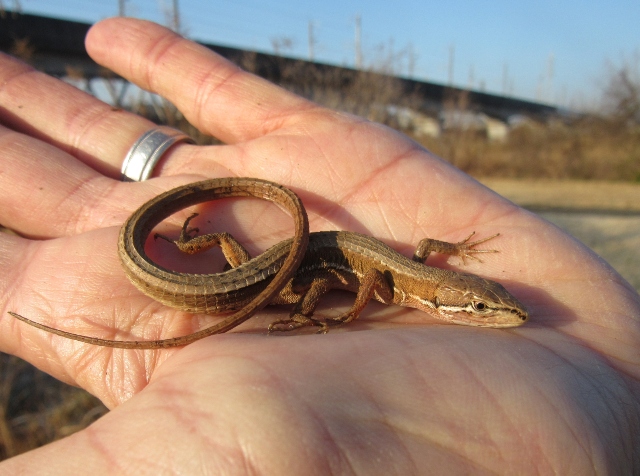
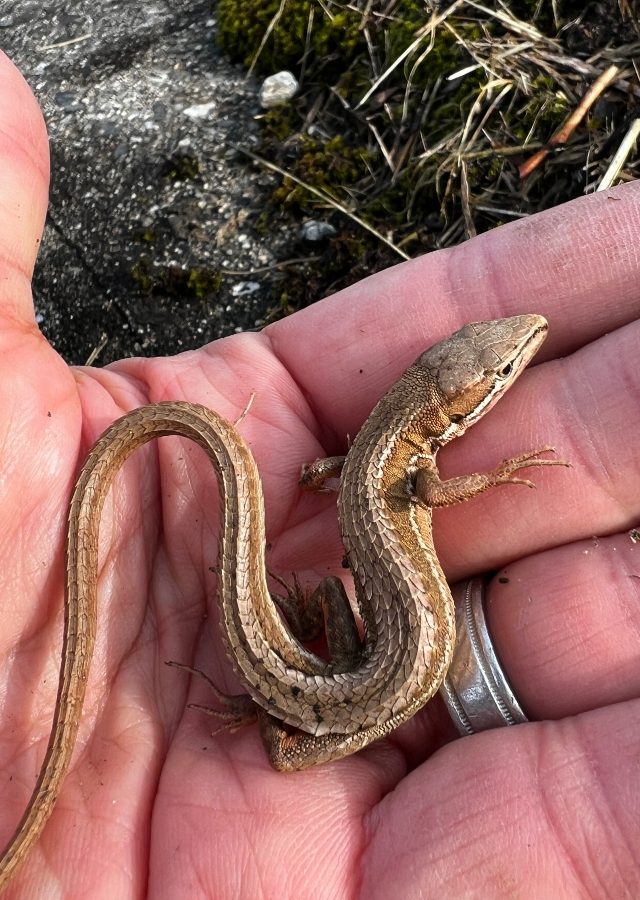
While vacationing in Japan, I found my first “international herp.” This reptile is a species belonging to the Wall Lizard Family. It resides in grassy areas and thickets, as well as around human homes.

02 Japanese Grass Lizard_4857

The Japanese Grass Lizard is a reptile that is native to Japan and is widely distributed throughout the country. It is dull brown in color, with a dark brown stripe running from the eye to the tail, and a light-colored line underneath.

03 Japanese Grass Lizard_4697

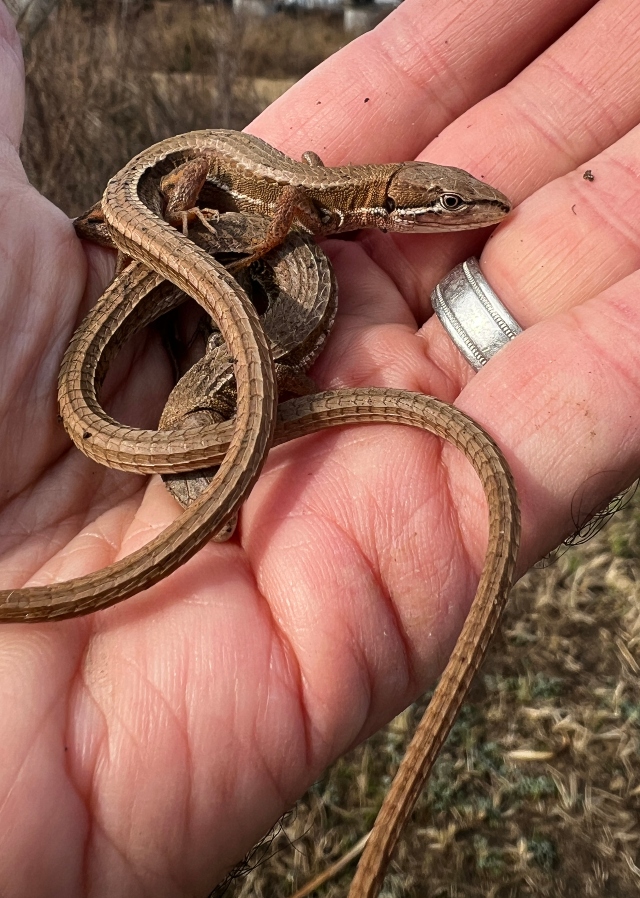
In terms of size, it is relatively small compared to other lizard species. On average, it reaches a length of about 6-8 inches. Males are slightly larger than the females. Their bodies are slender and elongated, allowing them move swiftly through grassy habitat.

04 Japanese Grass Lizard_3856

Perhaps the most distinctive feature of the Japanese Grass Lizard is its tail. With a tail that can be over 300% longer than their body, they have the longest tails of any living animal on earth when compared to its body length. Its tail serves multiple functions, including balance and locomotion.

05 Japanese Grass Lizard_4699

Like many lizards, it uses the sun to control its body temperature. It often basks in sunny spots to warm up. In rural areas this lizard may be glimpsed as it quickly runs across a road or hiking trail to move from one patch of grassland to another.

06 Japanese Grass Lizard_4702

When in danger, it escapes by climbing up grass or dead branches. If attacked, it can use caudal autonomy (dropping its tail) to keep the attention of a predator while it escapes.

07 Japanese Grass Lizard_3857

While their primary source of food consists of insects such as beetles, ants, and flies as well as other small invertebrates, such as spiders, isopods and millipedes, they also consume plant matter like fruit and flowers.

08 Japanese Grass Lizard_4705

Myths of this creature describe it as a small but agile little snake with a venomous and deadly bite. Its Japanese name is “kanahebi” (カナヘビ). “Hebi” means “snake” in Japanese, although this lizard is not a snake and is harmless to humans. Whatever you call it, this reptile was an exciting find for me.

Third Eye Herp
E-mail