
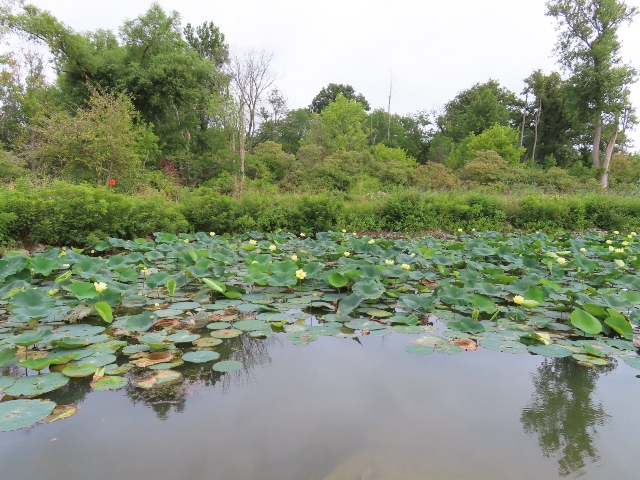
While herping waterways in northwest Ohio, I saw a number of these plants. American Lotus is an emergent aquatic flora. It grows in lakes and swamps, as well as areas subject to flooding. The roots are anchored in the mud, but the leaves and flowers emerge above the water’s surface.
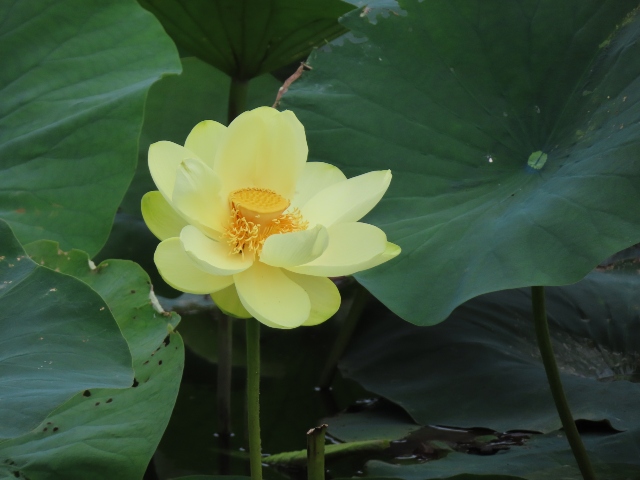
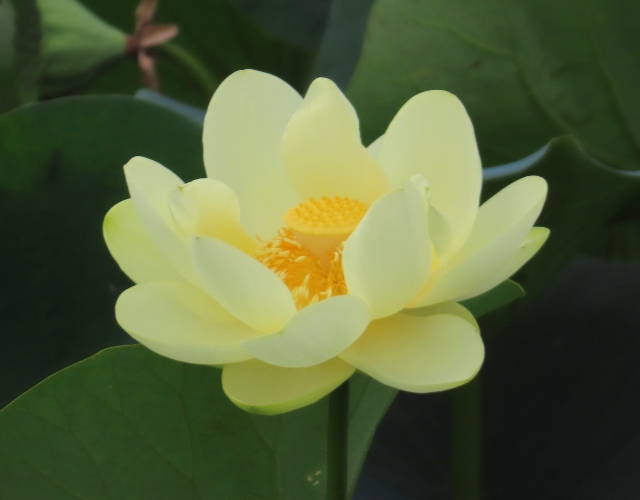
Flowering begins in late Spring and may continue into the Summer. The species name lutea means “yellow” in Latin and refers to the flowers, which may be white to pale yellow. American Lotus’ flowers that grow up to 10″ across, making them one of the largest flowers in North America. This perennial typically grows 3 to 6 feet tall.
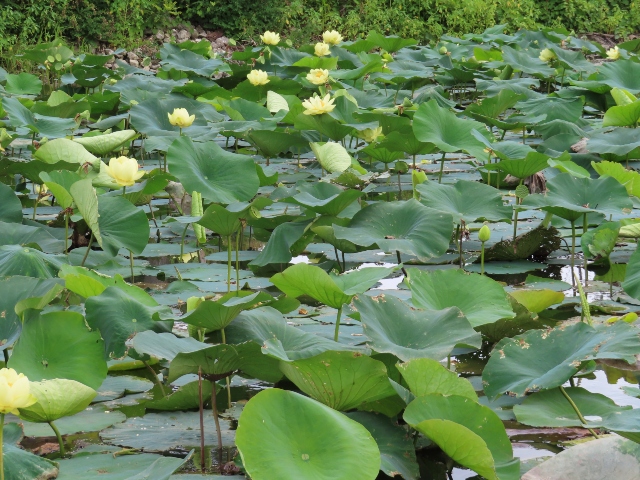
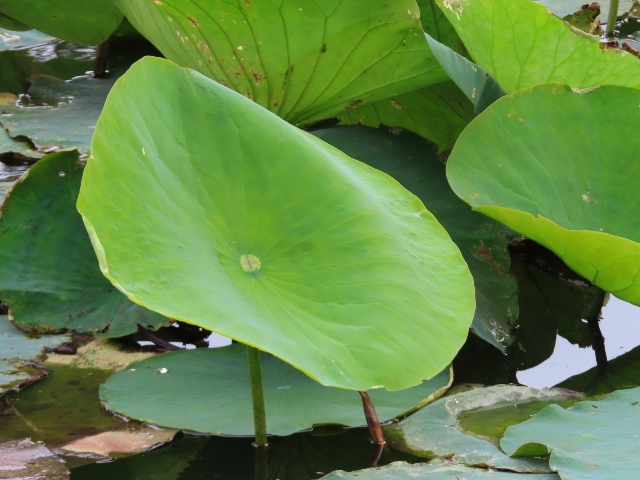
This plant’s leaves are blue-green, shed water, and are normally held above water level on long stems. They are circular and extremely variable in size, being up to 2 feet wide. This valued native wildflower is sometimes planted as an ornamental in aquatic gardening.
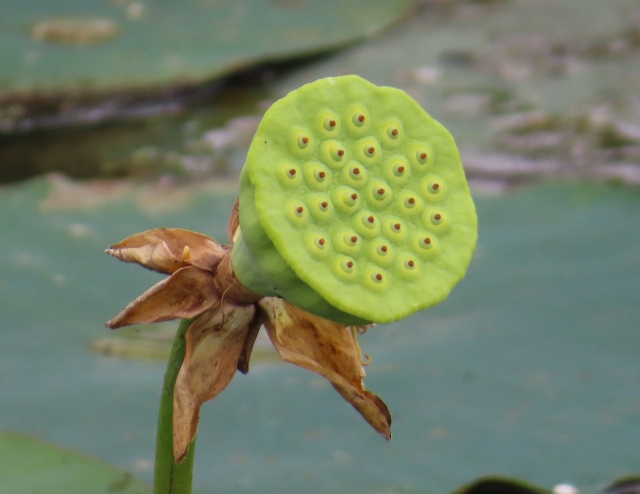
American Lotus’ unique seed pod emerges as an inverted cone-like structure from the center of the bloom. As the pod develops, it turns from pale yellow to dark brown and resembles a shower head. It is very popular in dried floral arrangements and terrarium decorations.
This plant was an important food source for Native Americans, who dug up the starchy roots with their feet. Young shoots were eaten as greens; the unripe seeds taste like chestnuts and when ripe can be hulled and roasted. Waterfowl eat the seeds, and large colonies are important nurseries for fish and other aquatic life as well as shelter for ducks.
This is indeed a very cool plant that is enjoyable to see on my travels.