
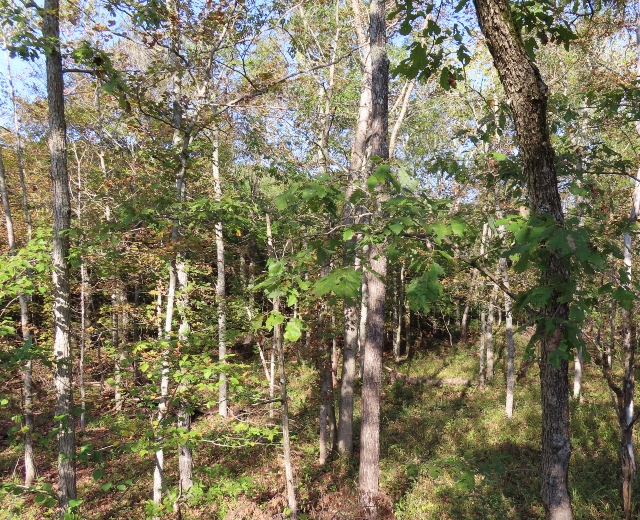
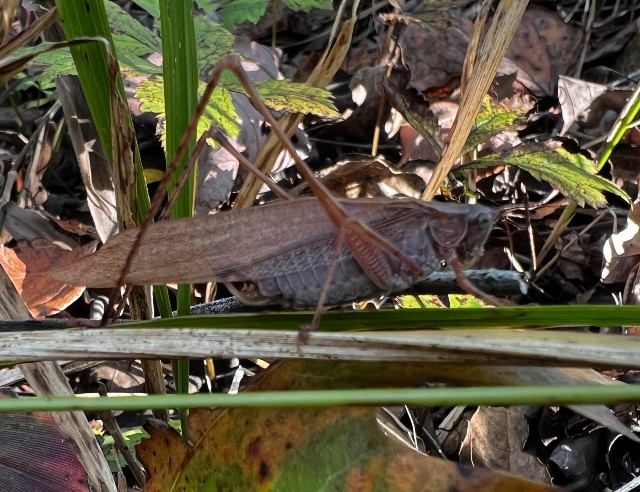
While in a wooded area at the edge of a glade in Missouri, I came across this cool creature. It ranges throughout the lower 48 states and southern Canada. Its color is usually leafy green, but different populations, in different regions, may have brownish, rusty, pinkish, or other casts – especially in Autumn.
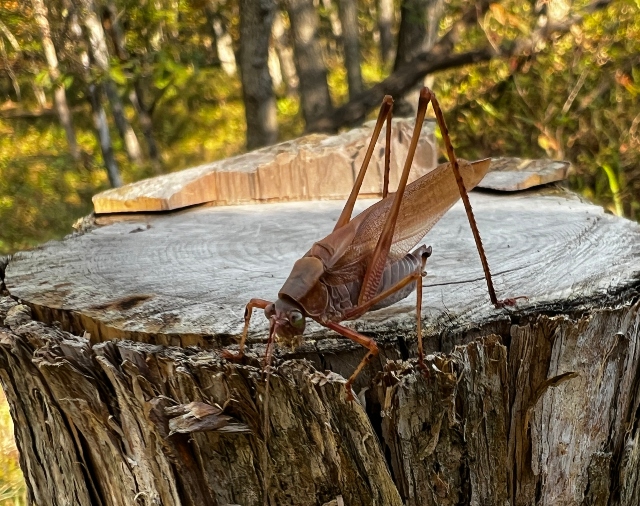
The Fork-tailed Bush Katydid is one of about 250 species of katydids, also called Long-horned Meadow Grasshoppers (family Tettigoniidae), they occur in North America north of Mexico. They all have very long antennae, and many resemble green leaves. They eat the foliage of a variety of shrubs and other plants.
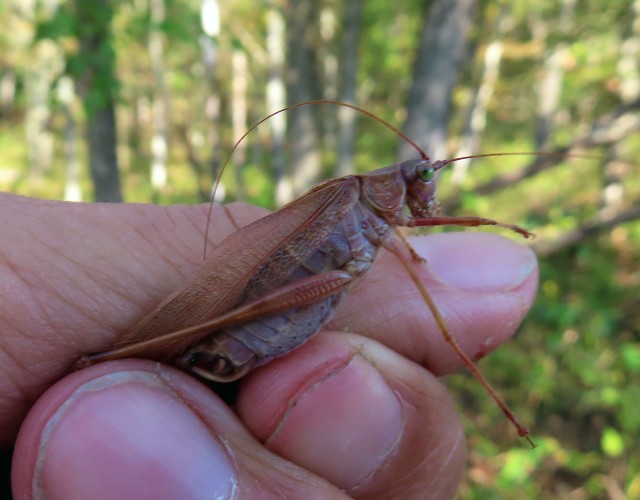
Males have a split “tail” on the tip of the abdomen called a furcula that is key in identification. This appendage is where their species name of furcata came from and helps identify them from other similar species. Females have a long appendage extended from their abdomen as well, called an ovipositor, that is used in egg laying.
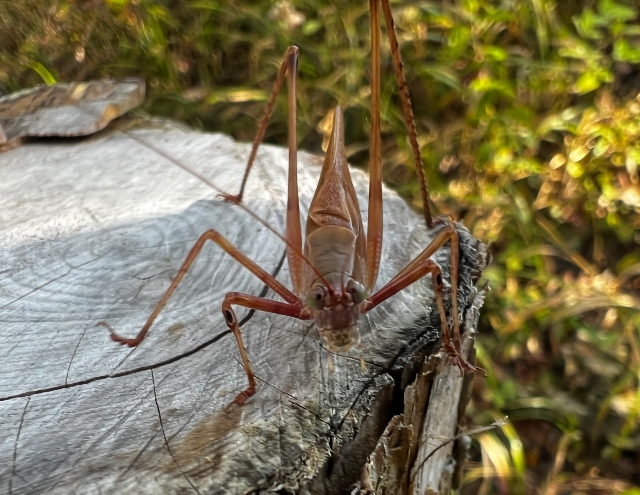
This species and others in its genus are called “Bush Katydids” because they are most common in bushes, thickets, and other shrubby areas. You may also find them in the margins of woodlands and overgrown fields. Fork-tailed Bush Katydids are mostly nocturnal and may be attracted to lights at night. They are good fliers and hoppers.
It’s hard to imagine a late-summer night without the many sounds of katydids, crickets, and their relatives. Few people are aware of the diversity of insect singers that fill our Summer days and nights with distinct, unique songs, as identifiable as various bird songs.