

While hiking along a river in Japan, I saw several of these distinctive birds. The Eurasian Wigeon is a widespread dabbling duck of Europe and Asia, recognizable by the male’s rufous head with a creamy crown and gray body, and the female’s warm brown plumage. Males have a brilliant white patch on upper wings, that is visible in flight or at rest.

They like to live in open wetlands, such as wet grasslands or marshes with some taller vegetation, slow-flowing large rivers, and shallow lakes and lagoons. They especially favor areas surrounded by woods and agricultural land.
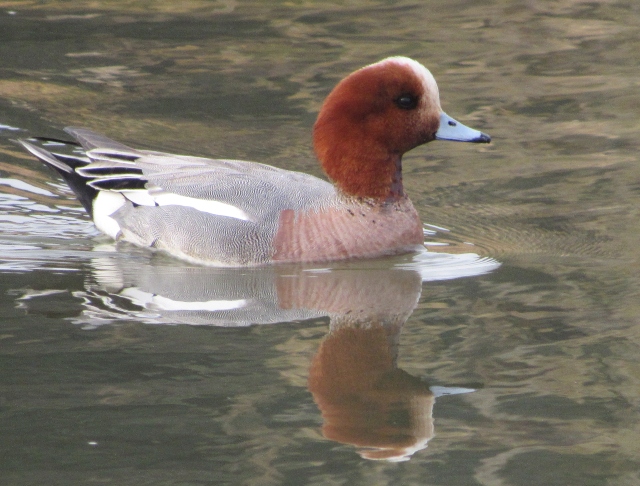
Eurasian Wigeons are herbivores and feed on both aquatic and terrestrial plants. They eat leaves, roots, stems, grasses, grains, and seeds. They usually feed by dabbling for plant food or by grazing on land, which they do very readily.
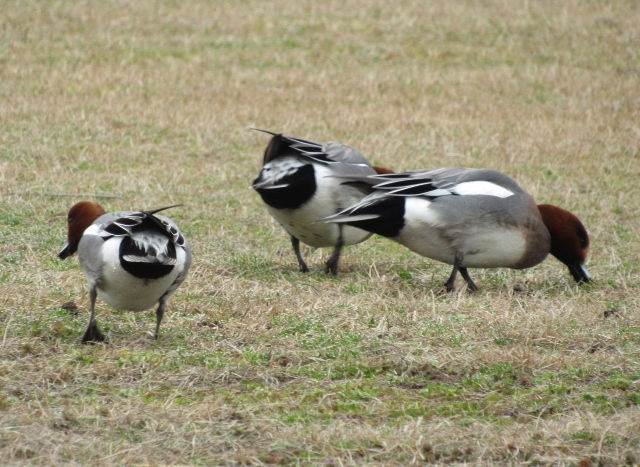
They are active during the daylight hours, spending their time feeding, resting, or swimming, but sometimes may feed at night. They nest on the ground, near water and under cover. During the breeding season, Eurasian Wigeons prefer to nest in pairs or small groups.
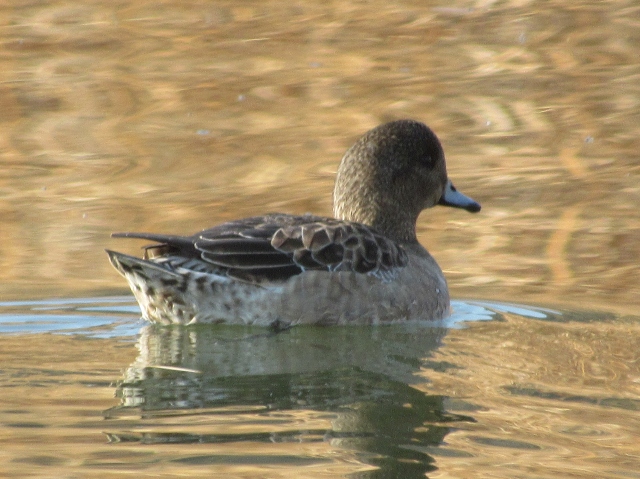
This bird is highly gregarious outside of the breeding season and will form large flocks. It will join with flocks of the American Wigeon in the United States, and may also hybridize with them.
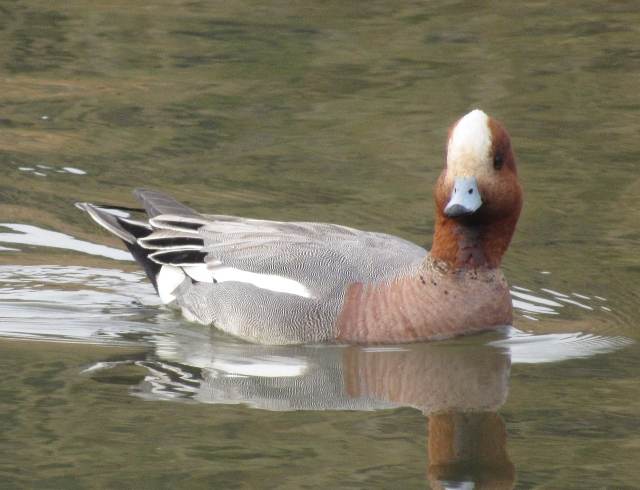
Eurasian Wigeons are noisy birds; the male has a clear whistle that sounds like pjiew pjiew, whereas the female has a low growl that sounds like rawr.