
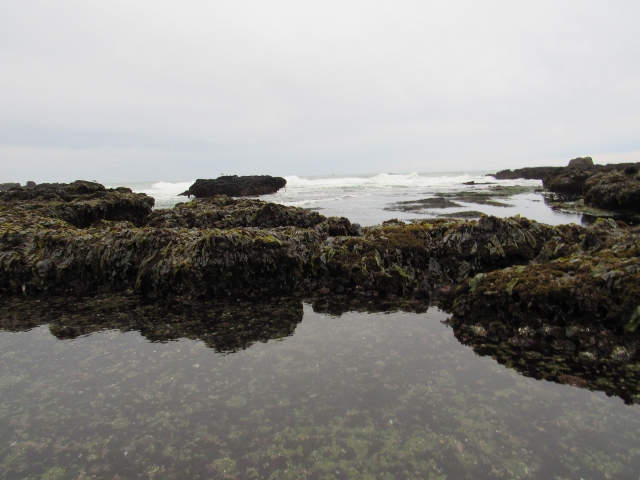
When it’s low tide these creatures are quite conspicuous. They can be identified by several light colored plates that form the a cone that sits on top of a dark stalk.
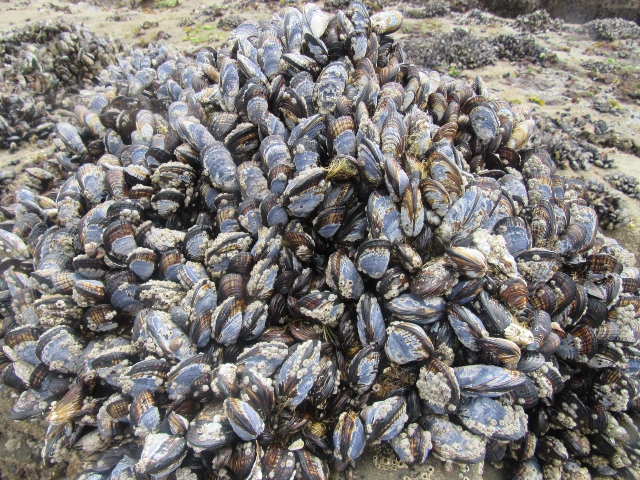
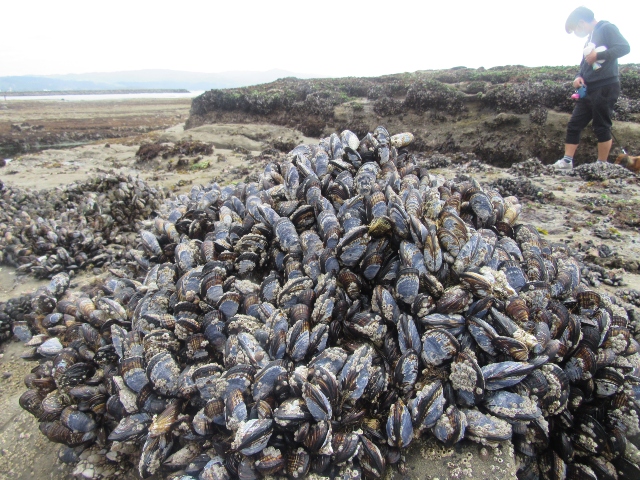
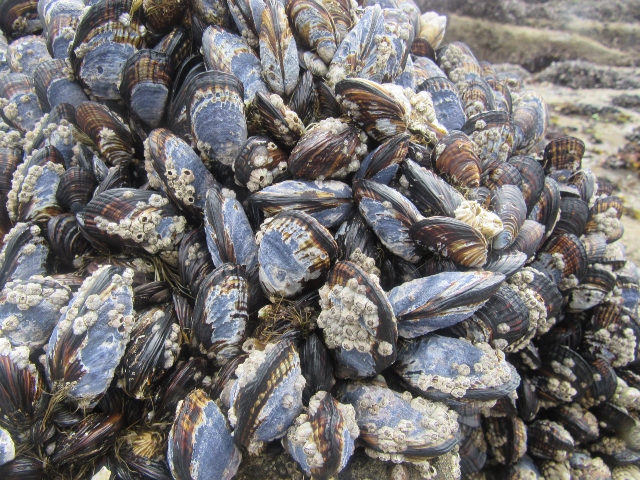
These barnacles are typically found in large clumps and often in the midst of mussels. They can grow several inches long depending on the conditions. Gooseneck barnacles have a fleshy, muscular stalk reaching 4 to 6 inches in length with a calcareous tip.
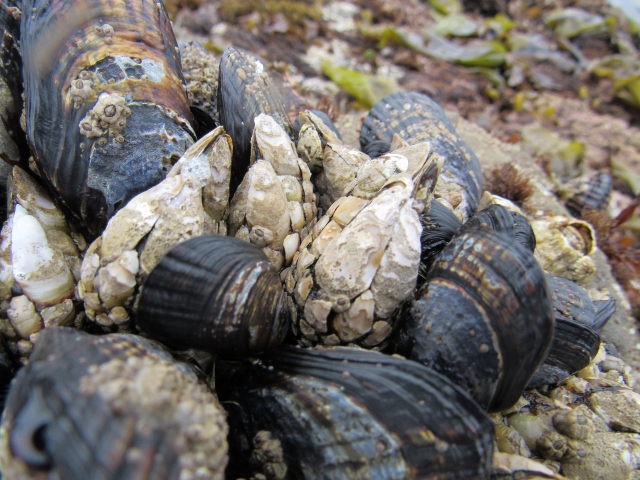
Barnacles are filter-feeding crustaceans that live attached to hard surfaces of rocks and flotsam in the ocean intertidal zone. Barnacles filter-feed when the tide is high, using small feather like appendages called cirri to catch plankton.
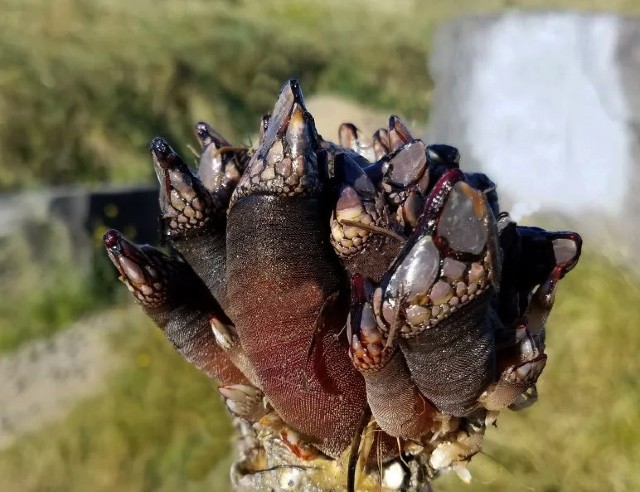
Goose barnacles, like all barnacles, are exclusively marine invertebrates but, unlike many other members of their class, they are hermaphrodites, meaning that they have both male and female sexual organs.
Their eggs hatch into free-swimming larvae, which drift with the ocean currents as one of the immense number of animals that comprise zooplankton. Once they attach to the rocks as larvae, where they do not move from for their entire lives.
In folklore, Barnacle Geese were once held to emerge fully formed from Goose Barnacles. In culture, Barnacle Bill became a comic folk-type of a seaman, appearing in several films and a drinking song.