

Perched on a grass stem or displaying in flight over a field, breeding male Bobolinks are striking. No other North American bird has a white back and black underparts (some have described this look as wearing a tuxedo backwards). Added to this are the male’s rich, straw-colored patch on the head and his bubbling, virtuosic song. Females are less fancy and mainly a lightly patterned warm brown.
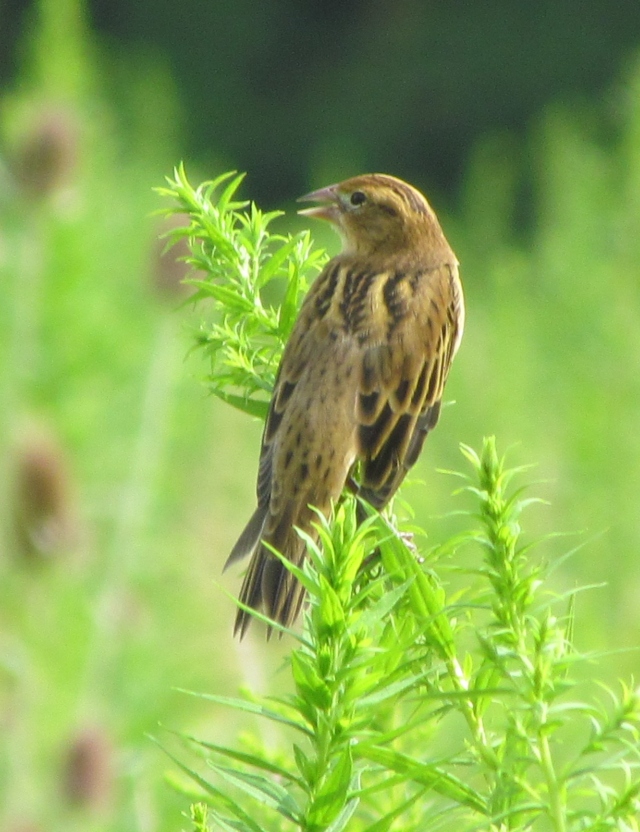
The Bobolink is one of the world’s most impressive songbird migrants, traveling some 12,500 miles to and from southern South America every year. Throughout its lifetime, it may travel the equivalent of 4 or 5 times around the circumference of the earth.

A migrating Bobolink can orient itself with the earth’s magnetic field, thanks to iron oxide in bristles of its nasal cavity and in tissues around the olfactory bulb and nerve. Bobolinks also use the starry night sky to guide their travels.
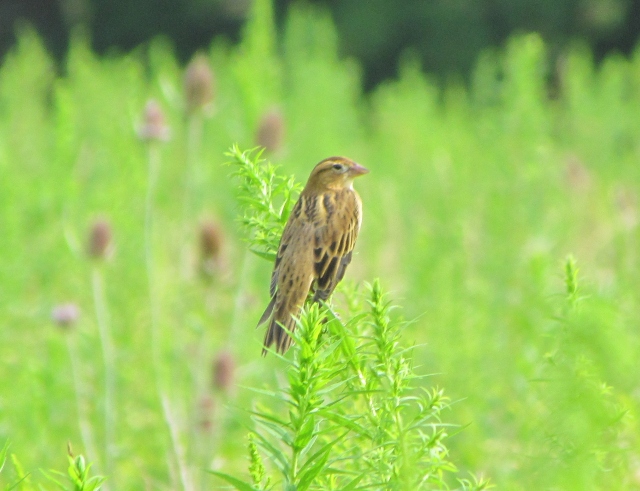
With a Latin Name of Dolichonyx oryzivorus, the species name of the Bobolink, oryzivorus means “rice eating” and refers to this bird’s appetite for rice and other grains, especially during migration and in Winter.
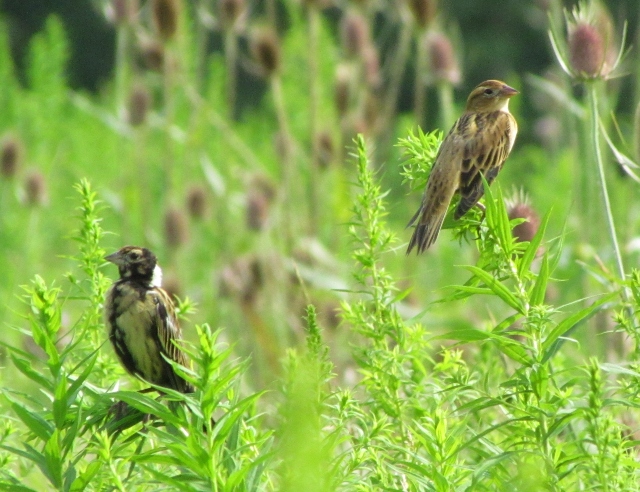
The song of the male Bobolink is distinctive and virtuosic — a disorienting stream of whistles, gurgles, squeaks, and other sounds delivered so rapidly and covering so much sonic ground it can sound like two birds singing at once. Their bubbling song has inspired poets from Emily Dickinson to William Cullen Bryant and ushers in Spring across the grasslands of the northern United States and southern Canada.