
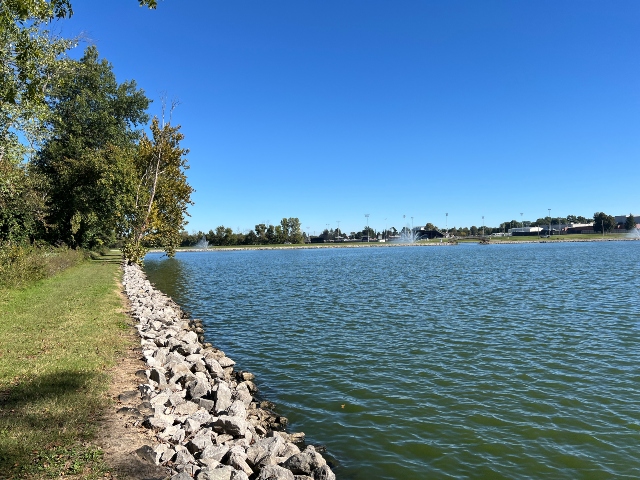
While visiting a public fishing spot in central Illinois, I found this “lifer” serpent last week. Like other North American water snakes, it is a livebearer, producing on average 10 to 15 fully functioning offspring in late Summer.
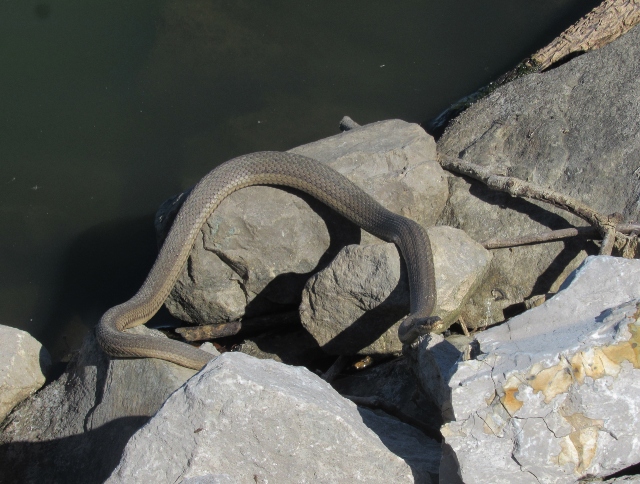
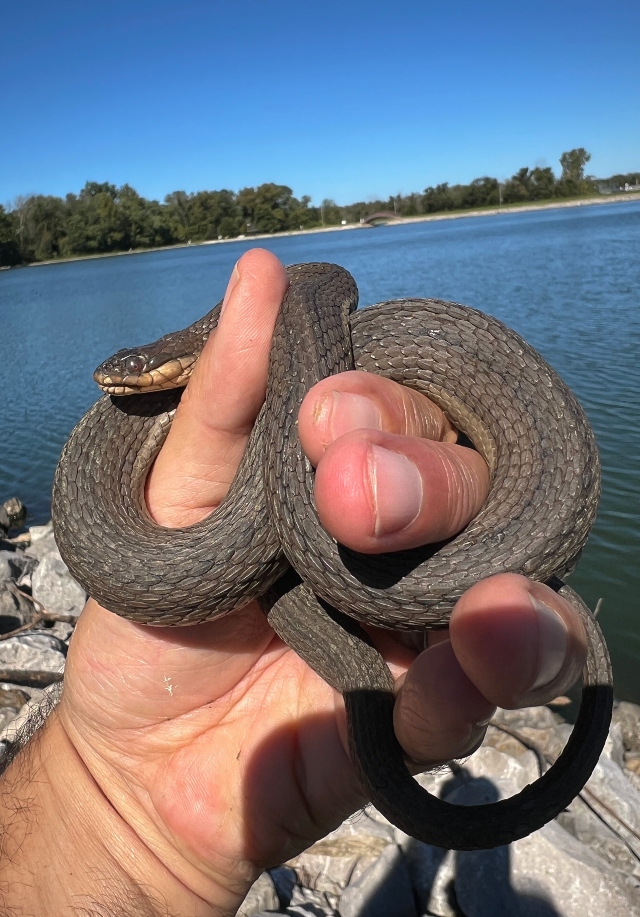
The Graham’s Crayfish Snake averages 18 to 28 inches in length. It is relatively stout-bodied and brown or dark olive with a broad, yellow stripe is present along each of its lower sides. Its belly is unmarked.
This reptile occurs along the margins of waterways, such as mud-bottom marshes, oxbow lakes, rivers and streams. It particularly likes roadside ditches that are abundant with crayfish.
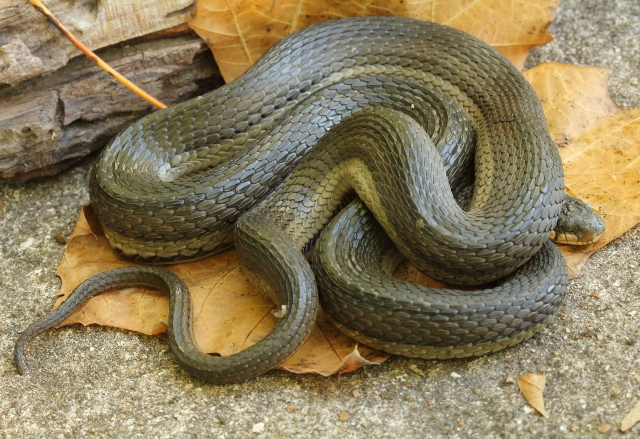
This reclusive, semiaquatic snake often takes shelter under rocks or logs, and other debris at the water’s edge, but also spends some of its time in crayfish burrows. It commonly basks on rocks at the edge of water and branches overhanging water. It is active in the day, except in the hot Summer months when it becomes nocturnal.
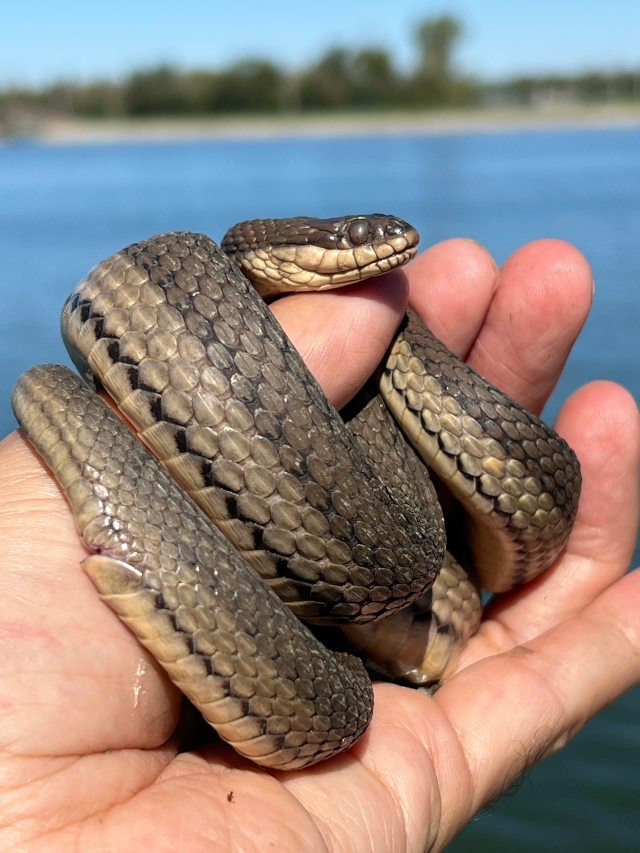
As its common name suggests, the Graham’s Crayfish Snake mainly eats crayfish that have just shed their exoskeleton, though it will also consume other crustaceans, amphibians and fish.
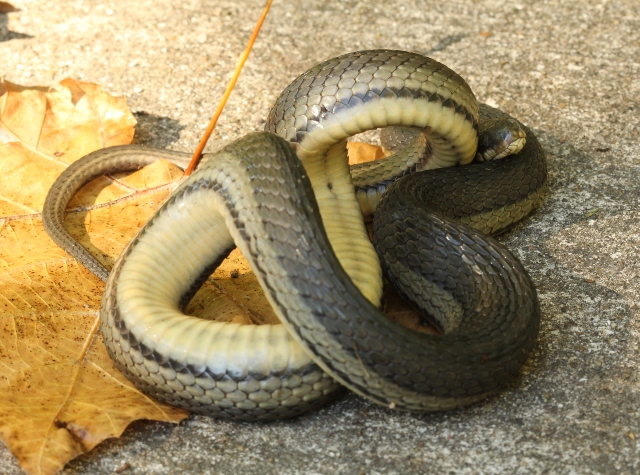
This species is named in honor of James Duncan Graham (1799–1865), who collected the original (type) specimen used to describe the species. He was a surveyor and early member of the U.S. Army Corps of Topographical Engineers.