Bleeding Shiner

01 Bleeding Shiner_5445

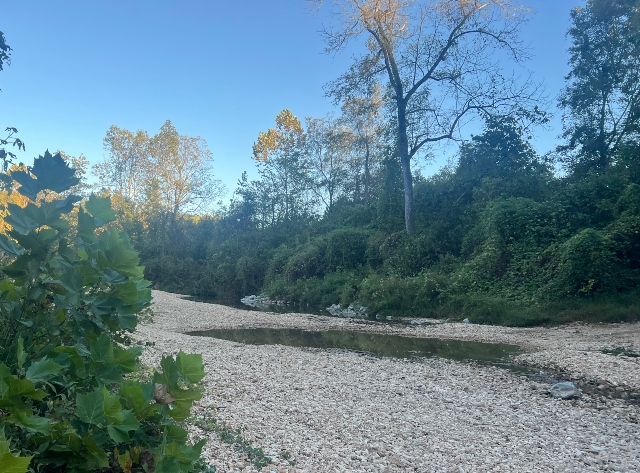
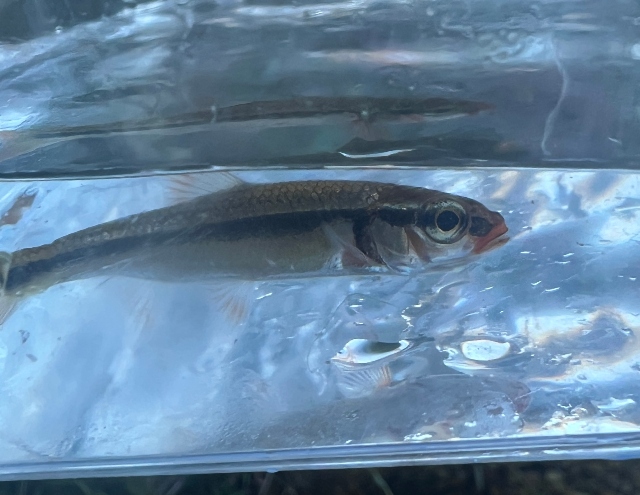
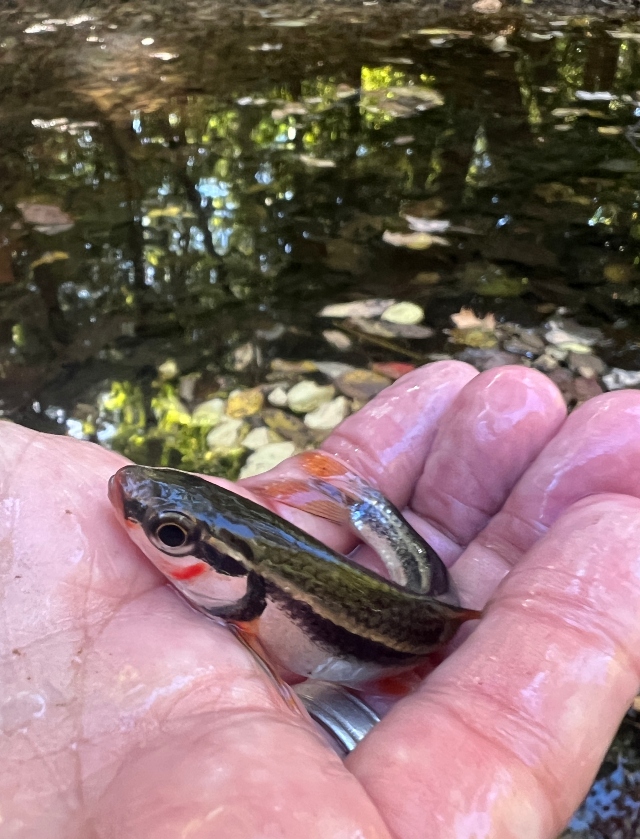
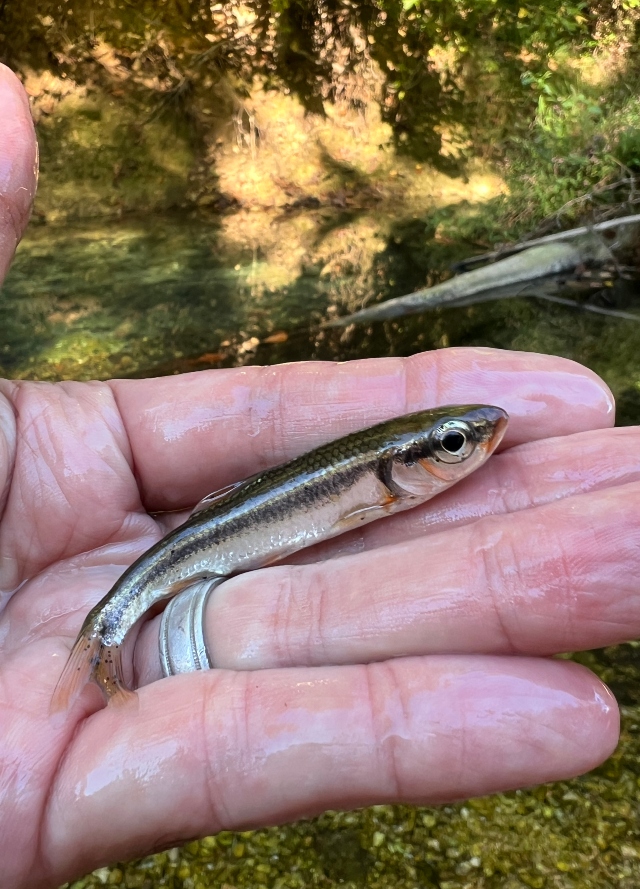
While investigating a creek in southern Illinois this month, I came across this distinctive fish which I had never encountered before. It is a type of minnow with a total length averaging 3-1/2 to 4-1/2 inches.
02 Bleeding Shiner_5455

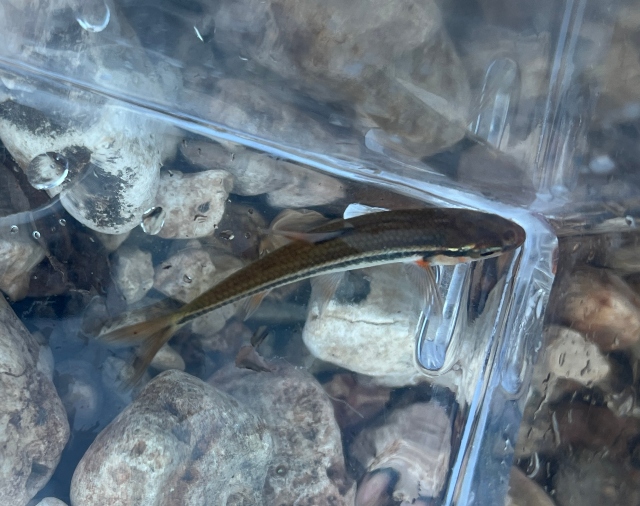
The Bleeding Shiner has an olive-brown back. Its sides are silvery with bold, black stripes extending from the tip of its snout to its tail, bordered by an iridescent golden stripe. This creature’s gill opening has a prominent, crescent-shaped, dark bar. Its belly is silvery white.
03 Bleeding Shiner_5501

Like several other shiners found in clear Ozark streams, males sport brilliant red coloration during breeding season – especially in May and early June. Breeding males develop darker markings, and parts of their head, body, and fins turn to bright crimson. Its breeding tubercles are the largest on its head, but can also be present on the foreparts of body and on some fins.
04 Bleeding Shiner_5446

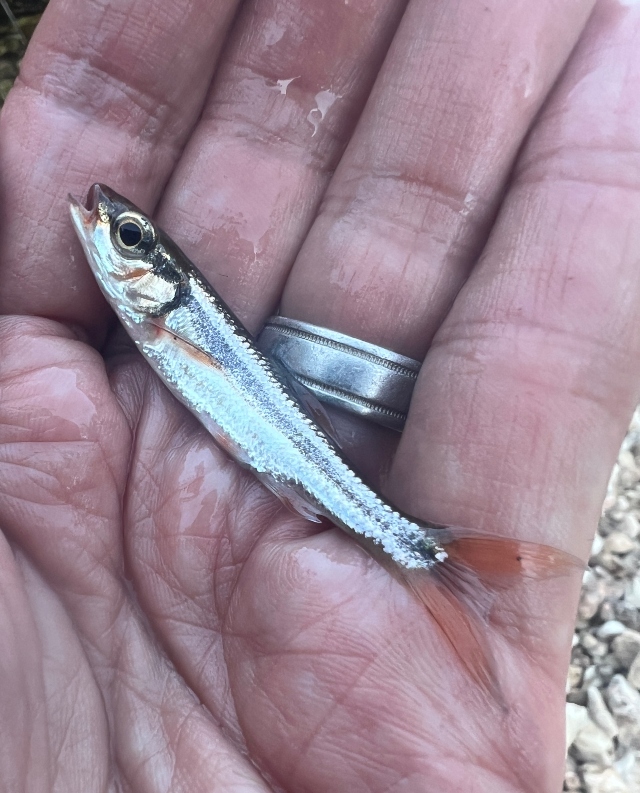
This minnow inhabits clear, small creeks to moderately large rivers that have persistent, strong flow. It typically is found over a clean, gravelly or rocky bottom, near riffles or in pools with noticeable current. The young tend to occupy quieter water than the adults.
05 Bleeding Shiner_5449

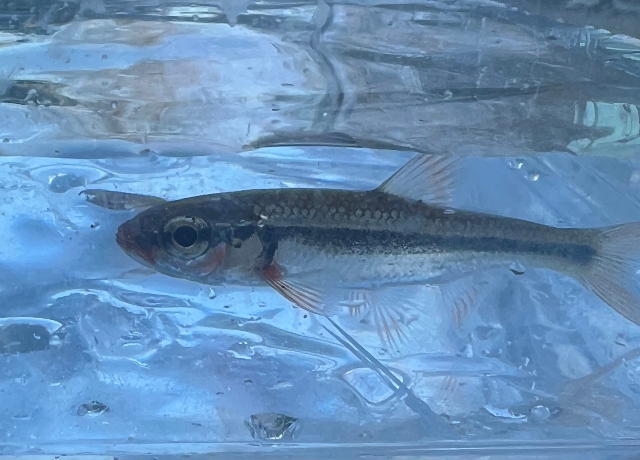
These fish are found in communities in the midwater. They swim together in schools along with other types of minnows for protection and safety. They prefer to reside in streams and rivers that are less than 8 inches deep. The examples I saw were in schools of over 50 fish.
06 Bleeding Shiner_5444

The Bleeding Shiner’s large eyes suggest that this fish hunts its food primarily by sight. It feeds to a considerable extent on insects and other small invertebrates found floating on the water’s surface or drifting with the current.
07 Bleeding Shiner_5486

This was a fun and unexpected find on my Illinois adventure.
Third Eye Herp
E-mail

Graham’s Crayfish Snake

01 Graham's Crayfish Snake_4989

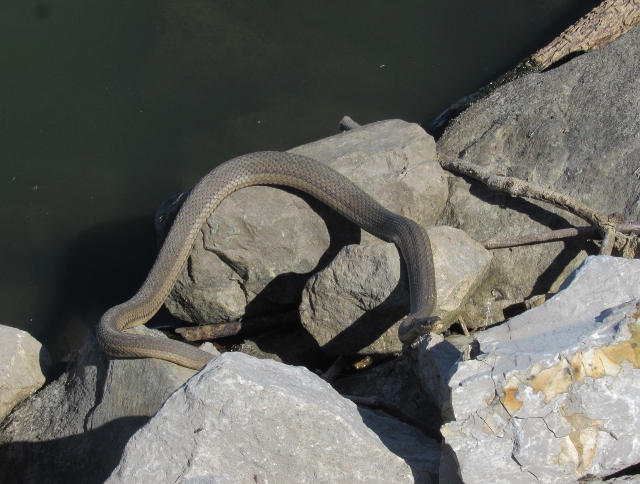
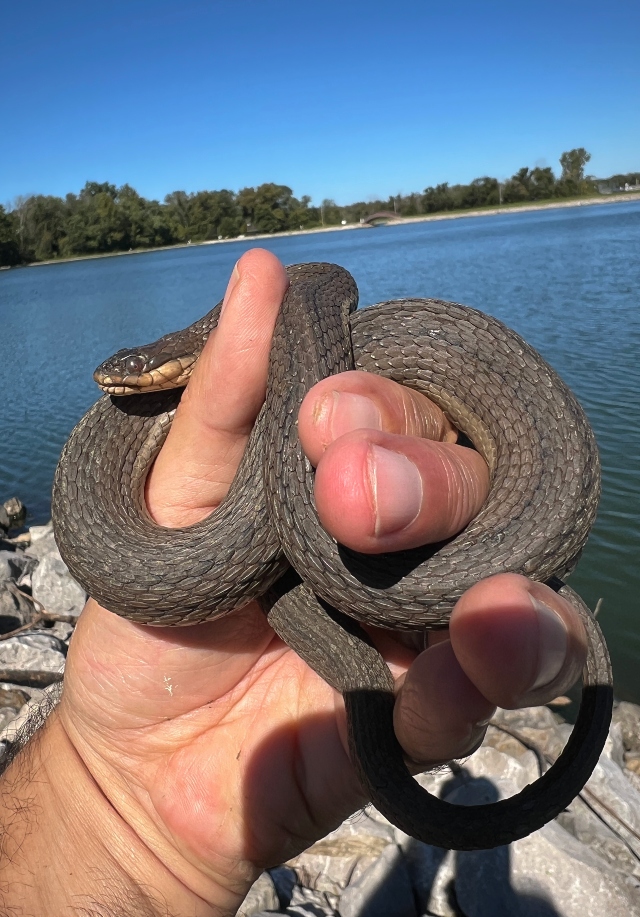
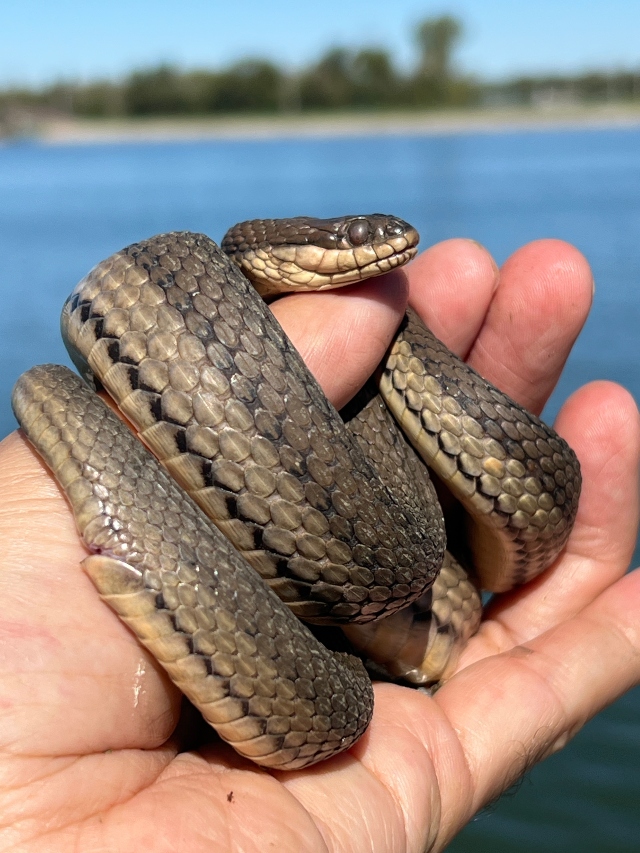
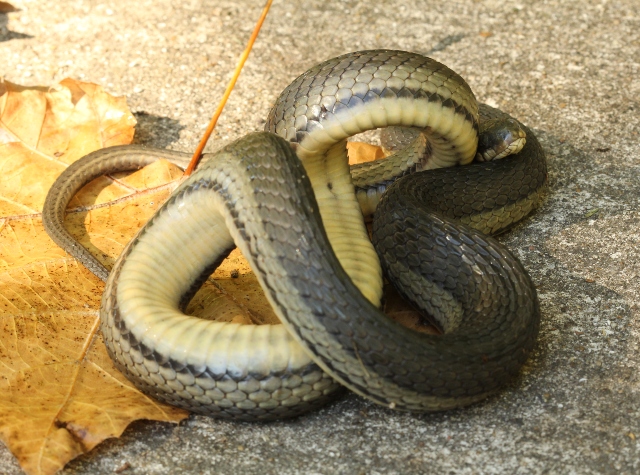
While visiting a public fishing spot in central Illinois, I found this “lifer” serpent last week. Like other North American water snakes, it is a livebearer, producing on average 10 to 15 fully functioning offspring in late Summer.

02 Graham's Crayfish Snake_6977

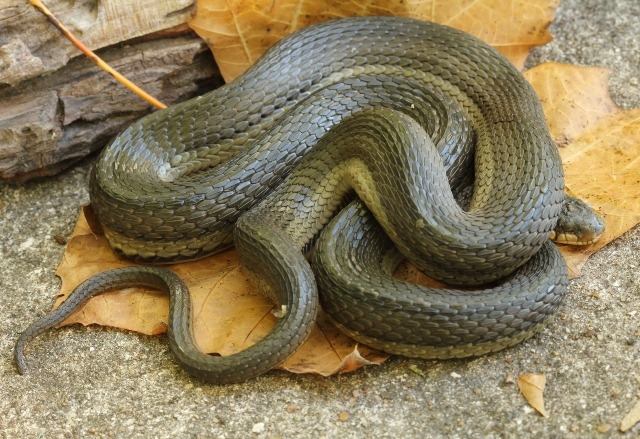
The Graham’s Crayfish Snake averages 18 to 28 inches in length. It is relatively stout-bodied and brown or dark olive with a broad, yellow stripe is present along each of its lower sides. Its belly is unmarked.

03 Graham's Crayfish Snake_5026

This reptile occurs along the margins of waterways, such as mud-bottom marshes, oxbow lakes, rivers and streams. It particularly likes roadside ditches that are abundant with crayfish.

04 Graham's Crayfish Snake_8381

This reclusive, semiaquatic snake often takes shelter under rocks or logs, and other debris at the water’s edge, but also spends some of its time in crayfish burrows. It commonly basks on rocks at the edge of water and branches overhanging water. It is active in the day, except in the hot Summer months when it becomes nocturnal.

06 Graham's Crayfish Snake_5025

As its common name suggests, the Graham’s Crayfish Snake mainly eats crayfish that have just shed their exoskeleton, though it will also consume other crustaceans, amphibians and fish.

Graham's Crayfish Snake_8385

This species is named in honor of James Duncan Graham (1799–1865), who collected the original (type) specimen used to describe the species. He was a surveyor and early member of the U.S. Army Corps of Topographical Engineers.

Third Eye Herp
E-mail

Powdery Alligator-flag

01 Alligator Flag_2264

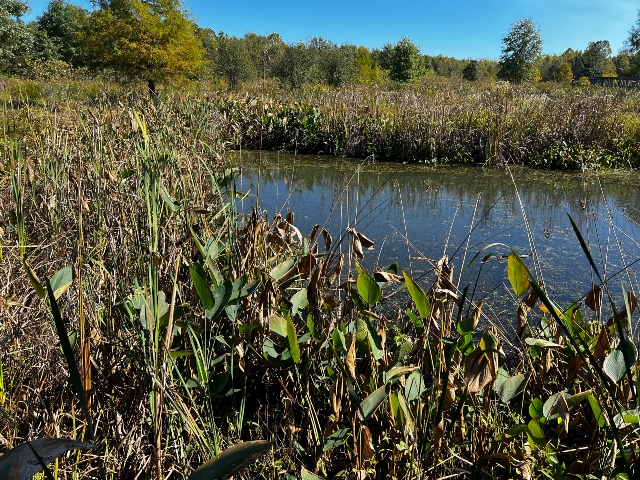
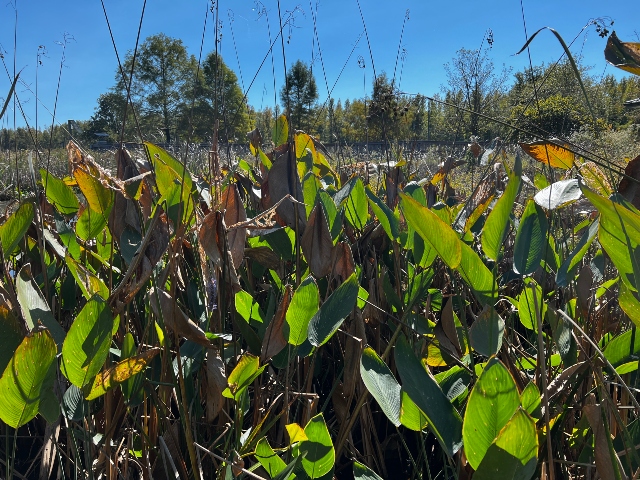
While visiting southern Illinois, I came across this aquatic plant, native to swamps, ponds and other wetlands in the southern and central United States.

02 Alligator Flag_2266

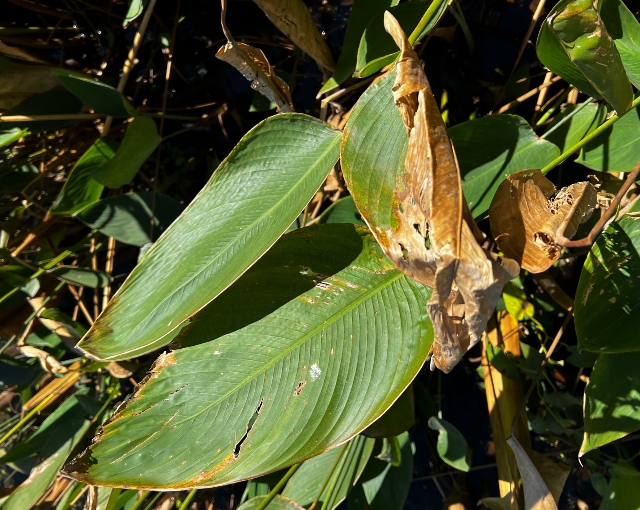
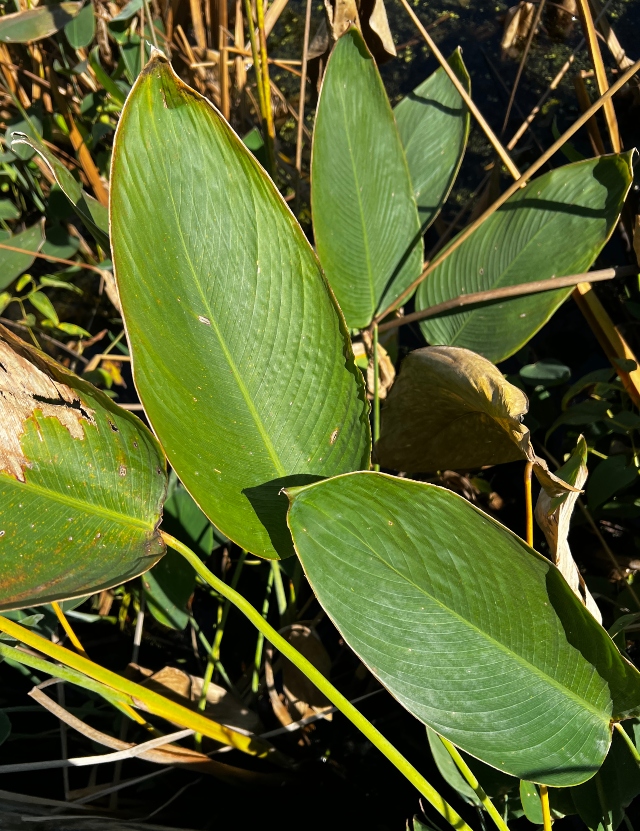
Also known as Water Canna, with its large, blue-green leaves, it looks a lot like the tropical cannas commonly seen in landscape plantings. In late Summer, this native plant produces tall spikes of purple flower clusters.

03 Alligator Flag_2272

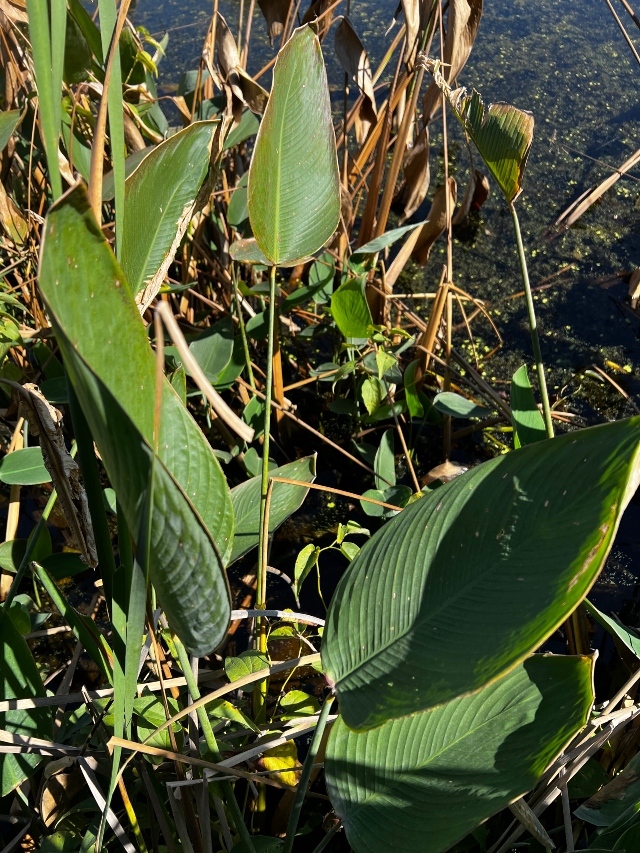
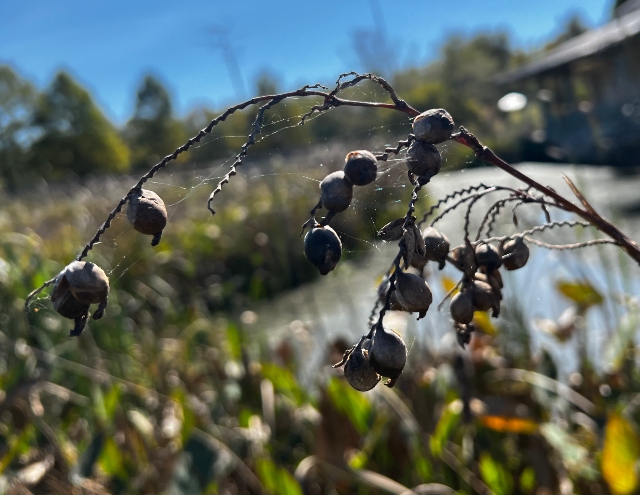
Powdery Alligator-flag is an herbaceous perennial growing from thick rhizomes. The leaves give this plant a tropical look. The thick stalks are longer than the paddle-shaped blades. It produces round, dark brown seeds inside a paper-like covering.

04 Alligator Flag_2276

Combined, the leaf stalks and blade may reach 10 feet in height, making them the largest leaves of almost any native North American plant, excluding the leaves of palm trees.

05 Alligator Flag_3019

The entire plant appears to be dusted with a fine white powder (glaucous-coated), hence another common name for it – Powdery Thalia.

06 Alligator Flag_2277

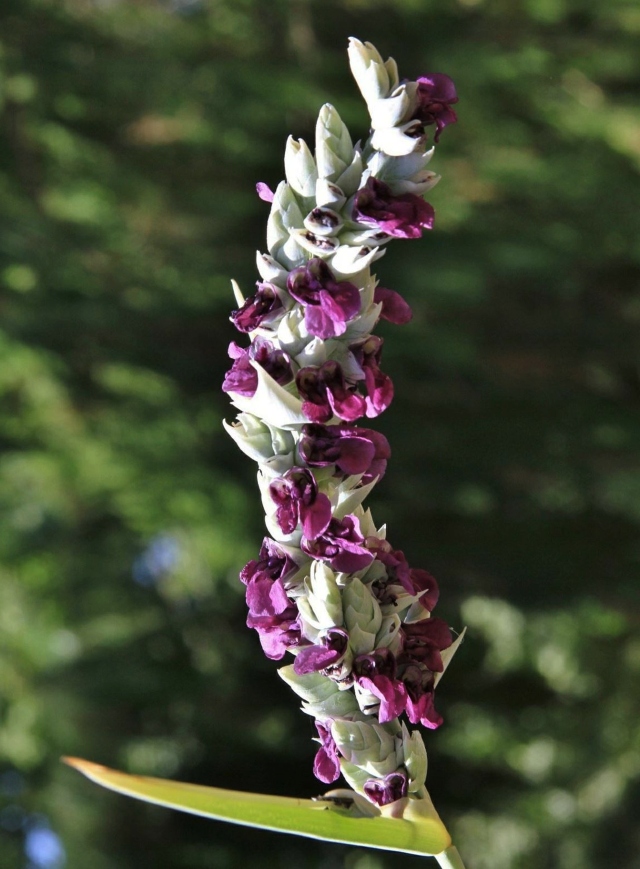
Its flower stalk is a tall wand bearing clusters of purple blossoms. The flowers are in tight, side-by-side pairs along the zigzag flower-stalk branches. The actual petals are not very showy. What appear as petals are actually highly modified stamens.

07 Alligator Flag_2265

This is a neat native plant that I have never encountered before.

Third Eye Herp
E-mail

Haldeman’s Grasshopper

01 Haldeman's Grasshopper_8496

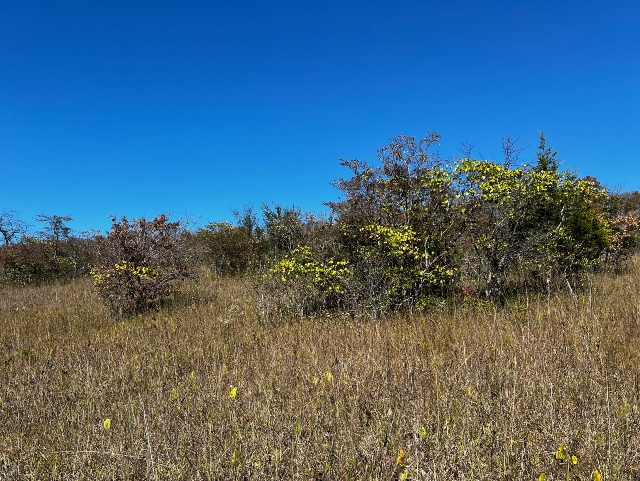
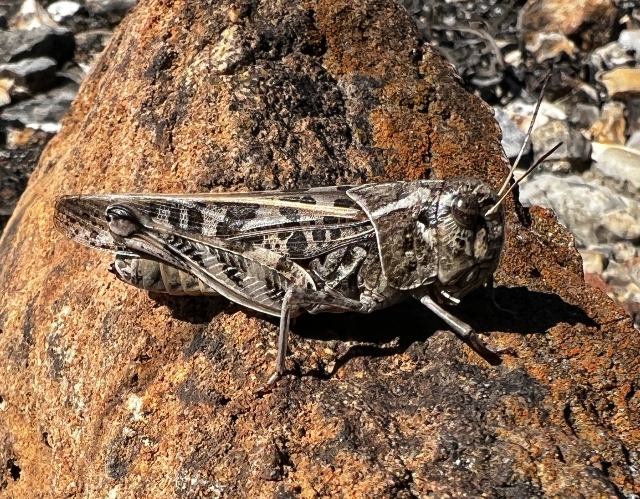
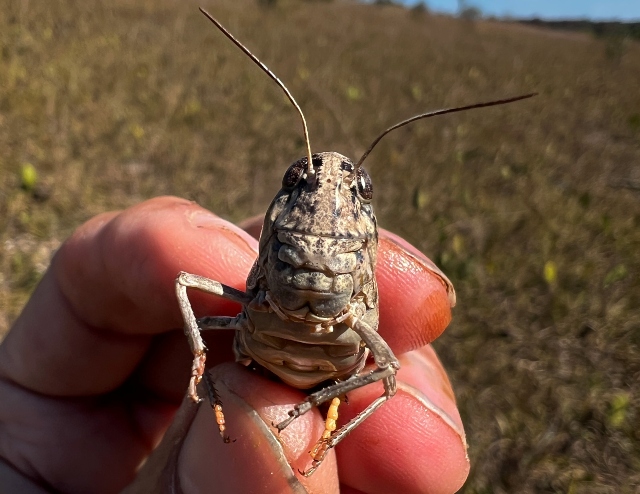
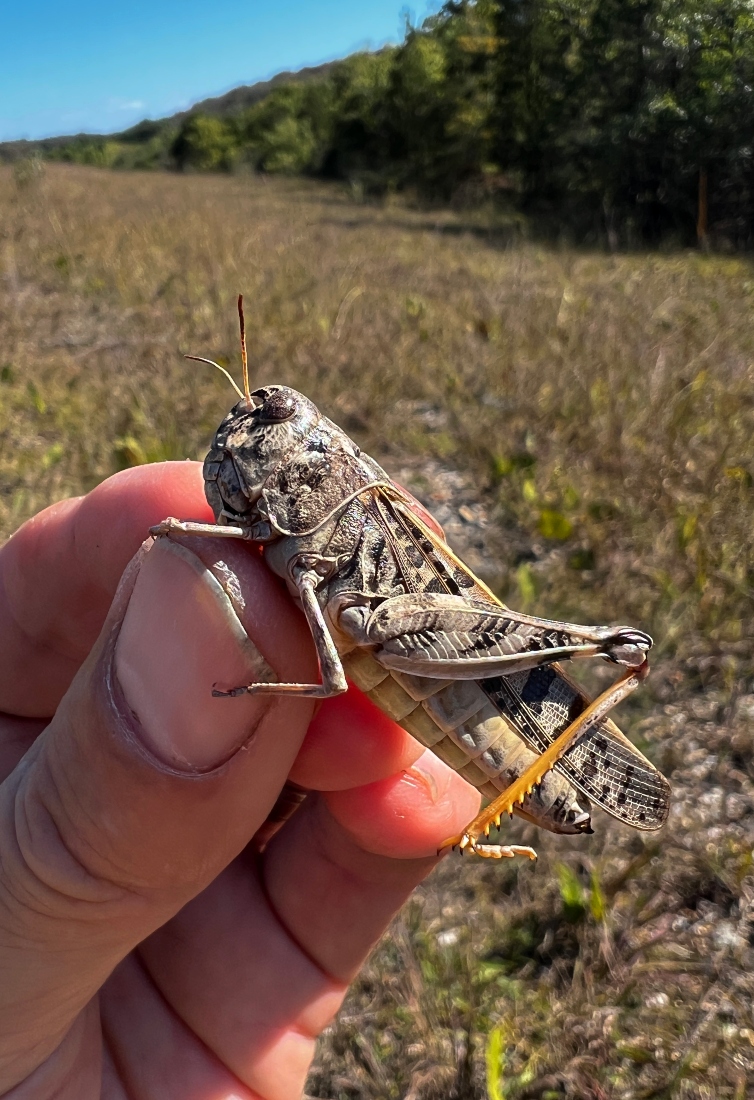
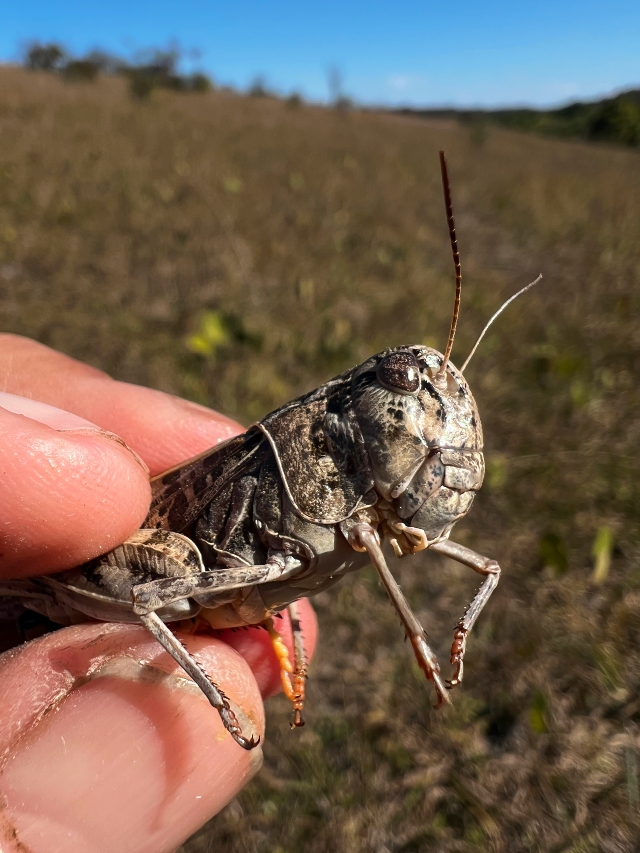
While looking for reptiles and amphibians in a Missouri glade, I came across several of these distinctive looking insects.

02 Haldeman's Grasshopper_8508

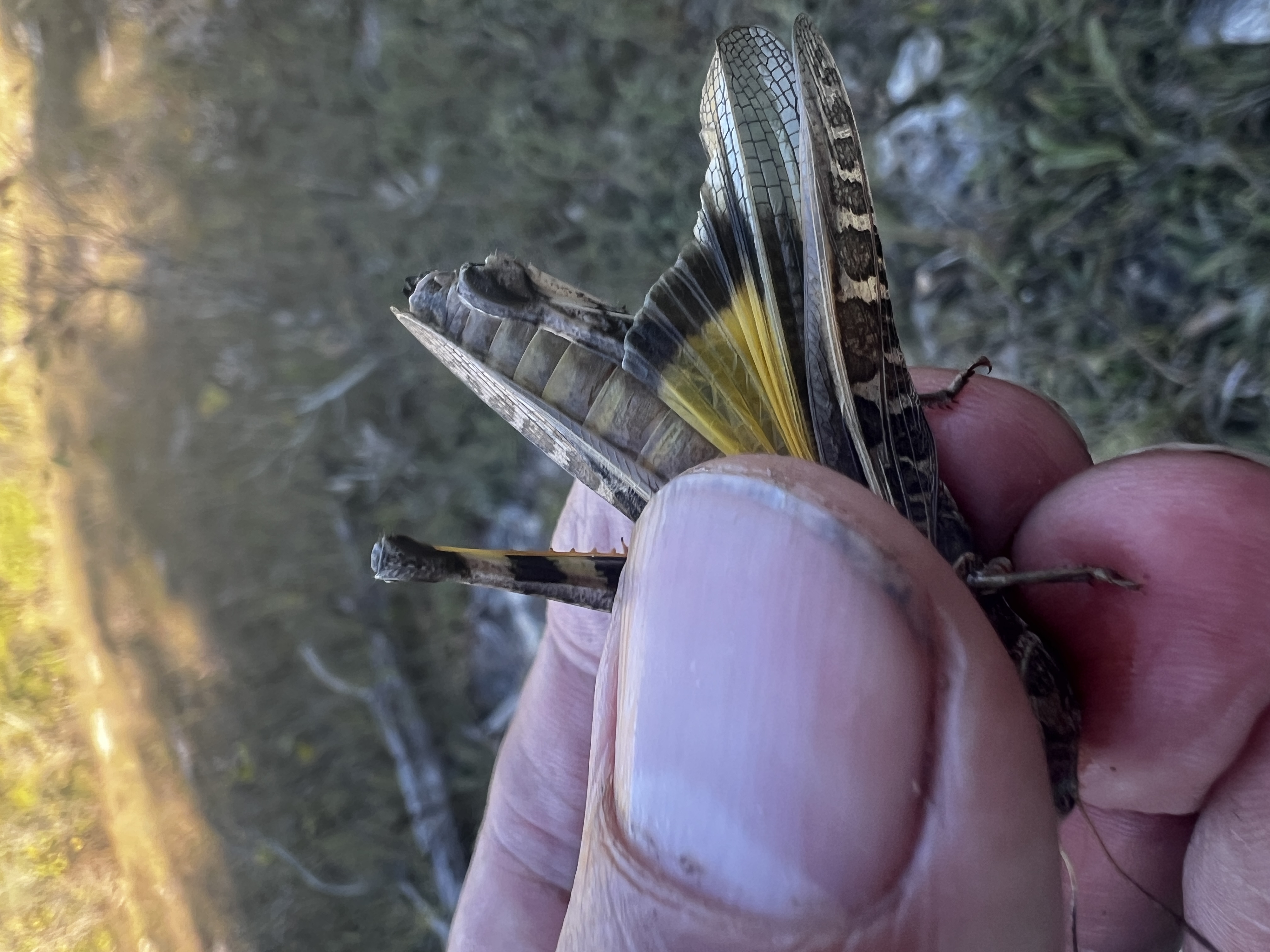
This is a large, light brown-to-gray grasshopper with extensive dark spotting. Its flying wings can be red, orange, or yellow; bordered with a black band and a long spur; the outer edge is transparent.

03 Haldeman's Grasshopper_8539

The Haldeman’s Grasshopper is a resident primarily of prairies west from southernmost Canada to Oklahoma, the Texas Panhandle and New Mexico, and from Michigan, Illinois, Missouri, and Arkansas to almost or to just barely the east base of the Rockies.

04 Haldeman's Grasshopper_8503

This creature’s habitat is open grasslands, especially situations with gravelly patches. It can be found in both flatlands and hillsides, as well as in sandhills areas. It is a common species and is not too picky about where it lives, as long as the habitat is relatively dry, has vegetation, and is open and sunny.

05 Haldeman's Grasshopper_8499

The Haldeman’s Grasshopper eats mostly grasses, but also consumes a wide range of herbaceous plants, and occasionally other insects. It overwinters as an immature grasshopper and reaches adulthood in its second Summer. Adult females are significantly larger than males.

06 Haldeman's Grasshopper_8504

Most often seen as adults in June and July, this was the first time I’ve come across these cool creatures.

Third Eye Herp
E-mail