
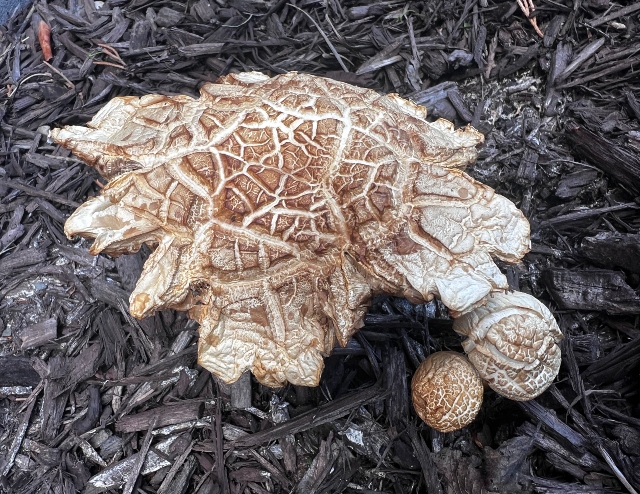
After parking my car in an industrial park, I noticed this distinctive organism growing in the mulch along the edges of the paved parking lot.
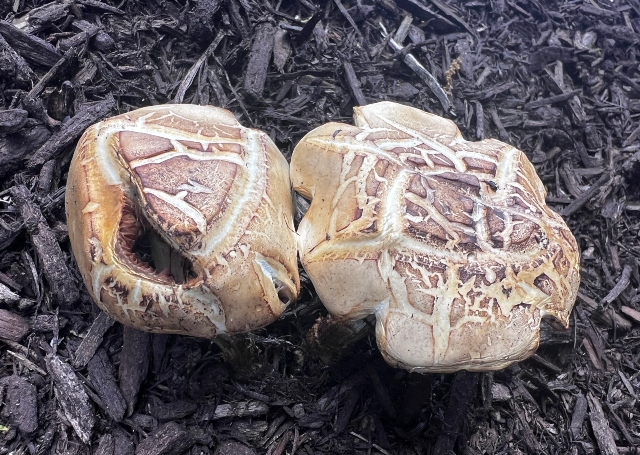
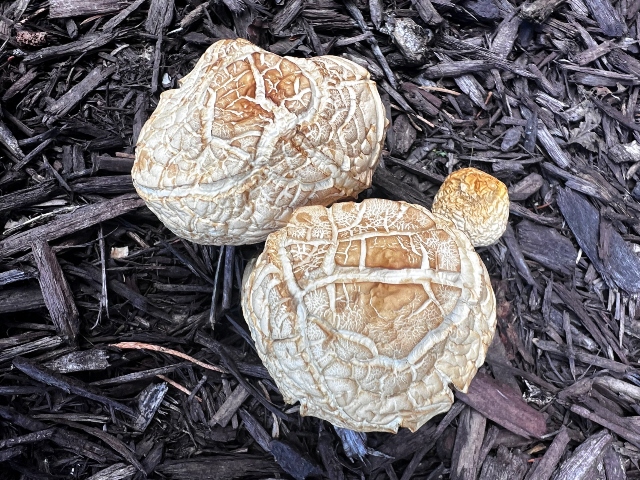
It is commonly known as the Bearded Fieldcap and can be found in a range of environments, such as woodland areas, gardens, and in other grassy environments. It is strikingly white when young and later becomes yellow with age.
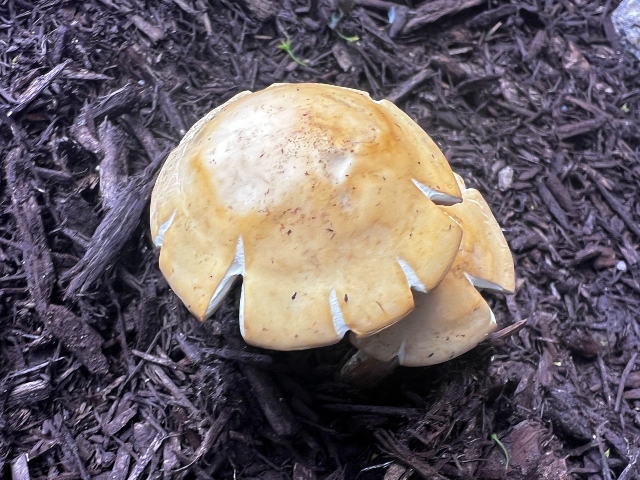
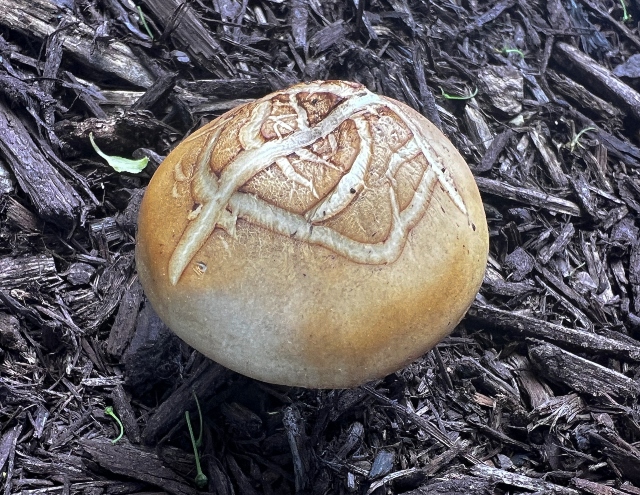
The cap is of a fleshy consistency and cracks distinctly from sun exposure. This mushroom’s caps can look surprisingly different from each other.
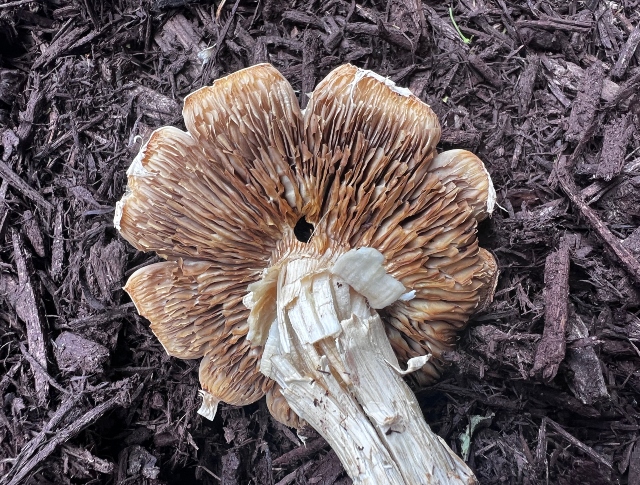
These mushrooms are usually 1 to 3 inches across and grow larger with age. The caps are usually bell-shaped when they’re young, but they eventually morph into becoming almost flat with age. The cap’s edge remains slightly in-rolled, often showing hanging white veil remnants – hence the common “bearded” name.
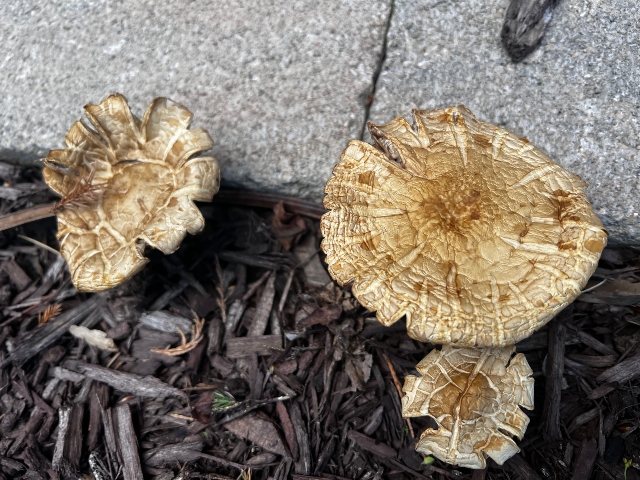
Bearded Fieldcap’s gills begin pale, often whitish or cream, and darken to brown as the spores mature. The gills are crowded with frequent short-gills that sometimes have slightly whitish edges at maturity.
The species is ecologically important as a decomposer of grassy organic matter and is frequently encountered in manmade landscapes such as parks and lawns.
Fungi like this secrete special enzymes onto dead plants and animals, dissolving tough materials like lignin and cellulose. This process turns dead waste into simple nutrients like nitrogen, carbon, and phosphorus.
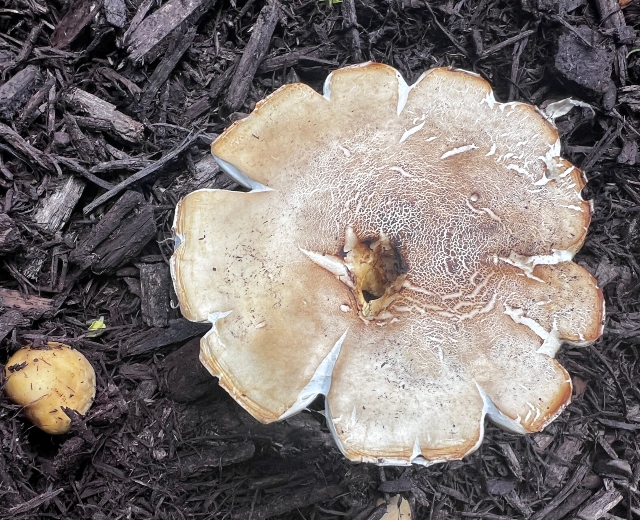
It was cool to see the interesting lines, shapes and variation in the appearance of this mushroom – each one was like an intricate work of art.