
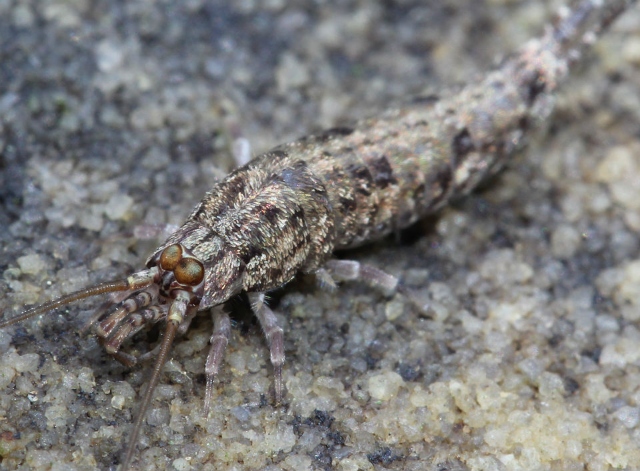
Sometimes you don’t have to go very far to find cool creatures. Such is the case with this one. Although I have found them in California, I have also found them in my backyard.
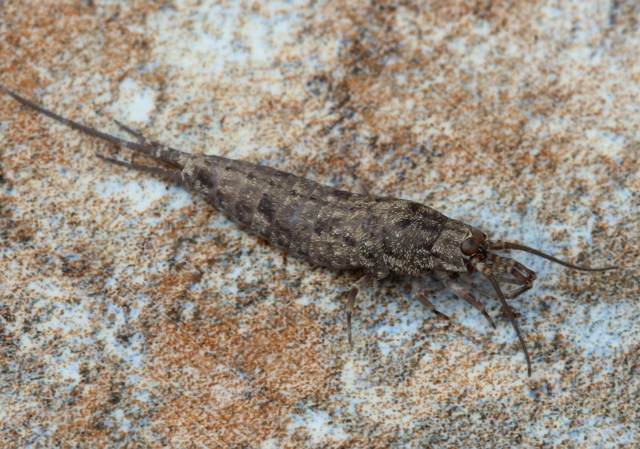
Among insects currently residing on planet earth, these are some of the most evolutionarily primitive. Fossil evidence shows they first appeared along with arachnids in the mid-Devonian period, which was 400 million years ago.
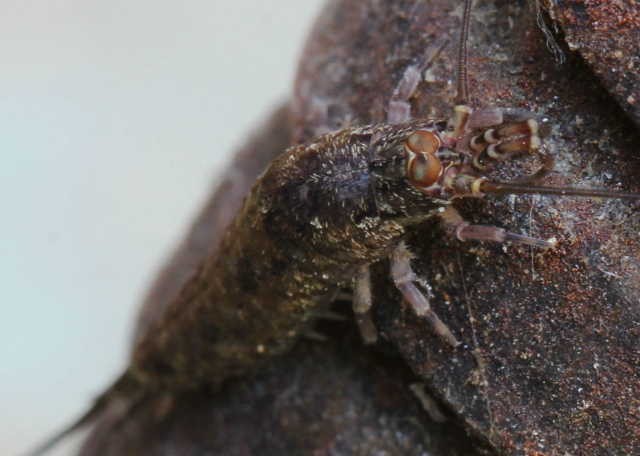
Jumping Bristletails are small (less than one inch in total length) insects with elongated bodies and backs that are arched, especially over the thorax. Their abdomen ends in three long tail-like structures.
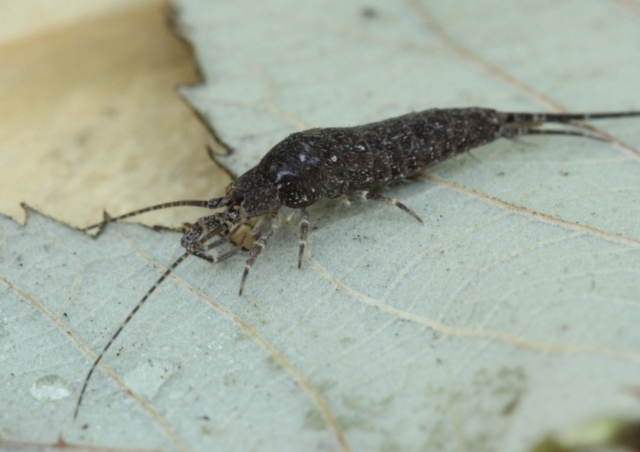
Unlike other insect orders, they do not have olfactory receptor-coreceptors (sense of smell); these have either been lost or were never present in the first place.
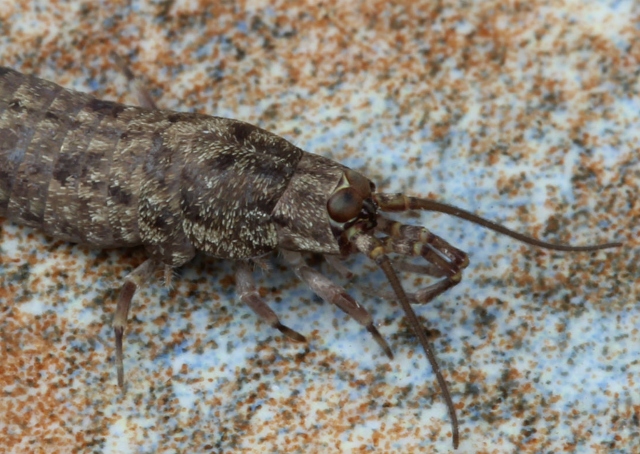
Further unusual features are that they cement themselves to the substrate before molting, often using their own feces as glue. Their bodies are covered with readily detached scales, that make them difficult to grip and also may protect the exoskeleton from abrasion. Unlike most insects, the adults continue to molt after reaching adulthood.
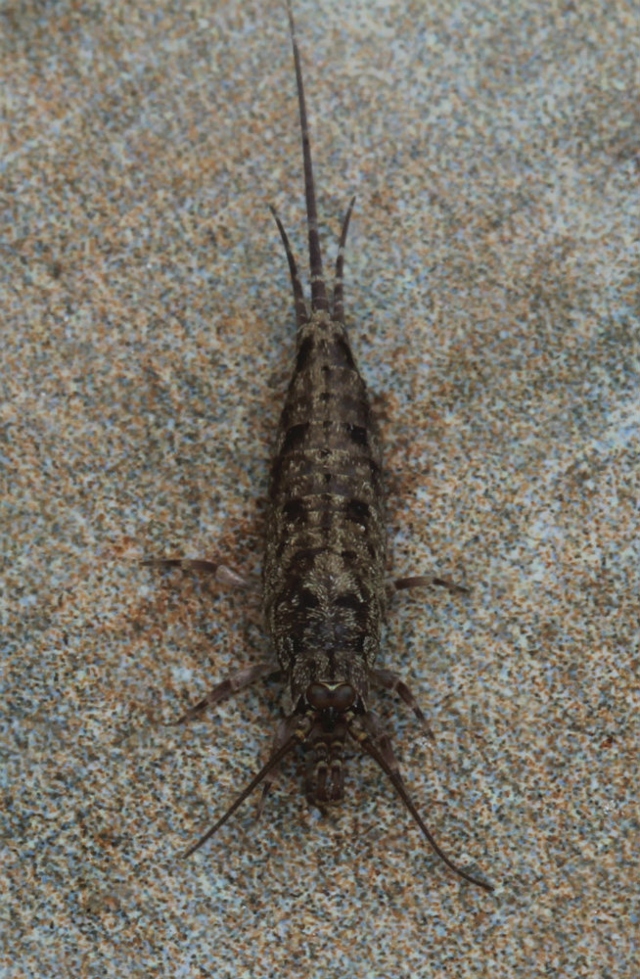
Bristletails occur in a wide range of habitats. While most species live in moist soil, others have adapted to chaparral, and even sandy deserts. They feed primarily on algae, but also lichens, mosses, or decaying organic detritus. They are considered beneficial, as they are recyclers of organic matter.
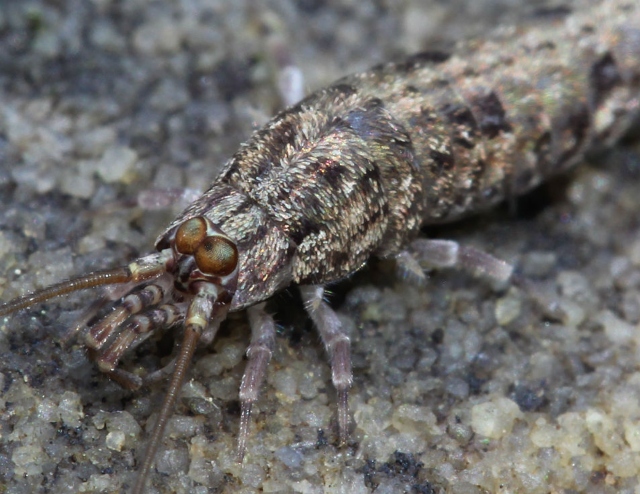
The reason for part their name is obvious when you startle them: they can propel themselves as much as four inches forward if they detect danger.
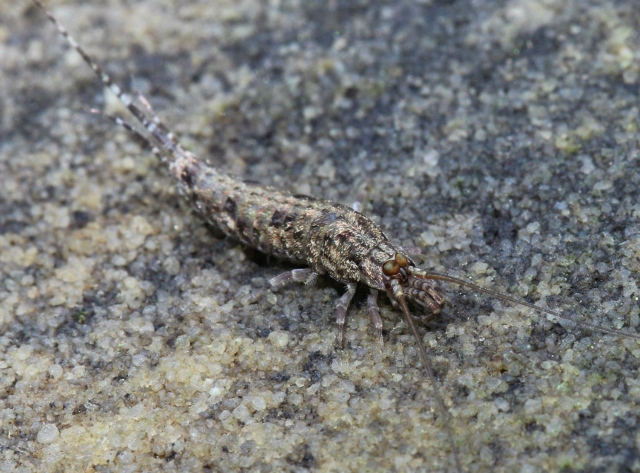
There are about 250 species of this neat insect worldwide, including the Arctic, with 24 of them in North America.