Western Amethyst Laccaria

01 Laccaria amethysteo-occidentalis_6181

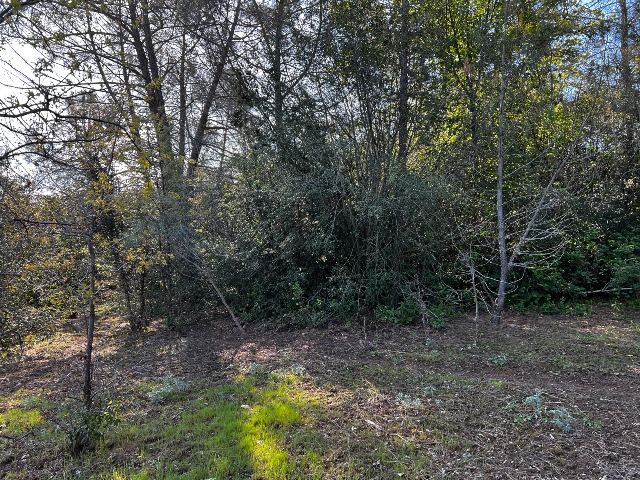
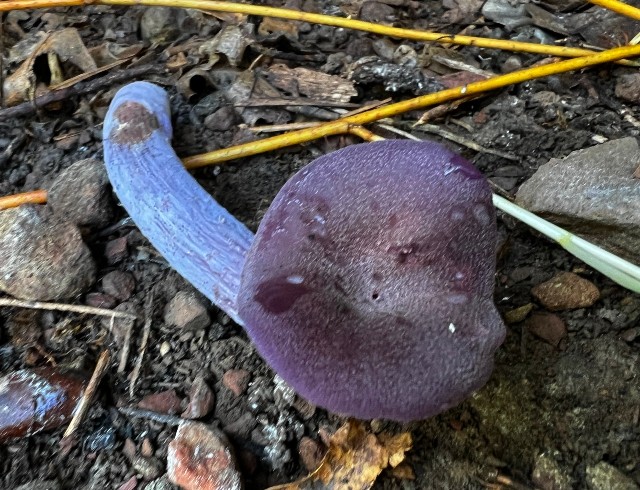
While exploring Mount Hamilton in Central California, I had a truly fun fungi find. While lifting a piece of corrugated metal in search of snakes, this purple organism caught my eye. Its habitat is pine forests, it seems to especially prefer living under Douglas Firs.
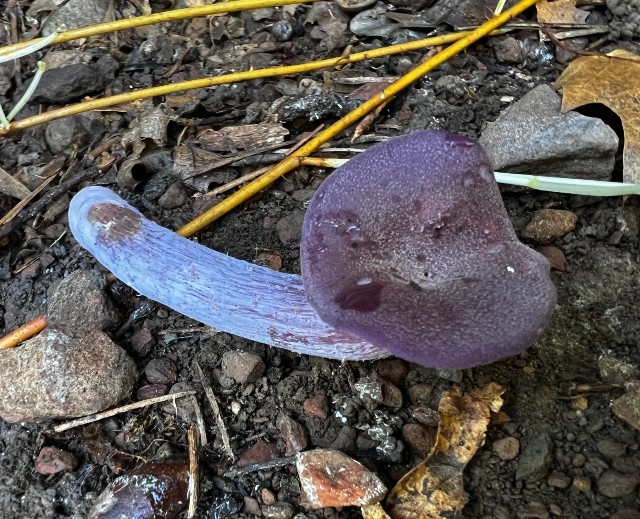
02 Laccaria amethysteo-occidentalis_6170

This species can be recognized by its deep purple cap, thick purple gills, and its long, shaggy to grooved stem, as well as by their white spores. The color of this mushroom, except the gills, fades fast as it loses moisture. In fact, unless you find this fungus when very fresh, often the only purple you see on it is in the gills.
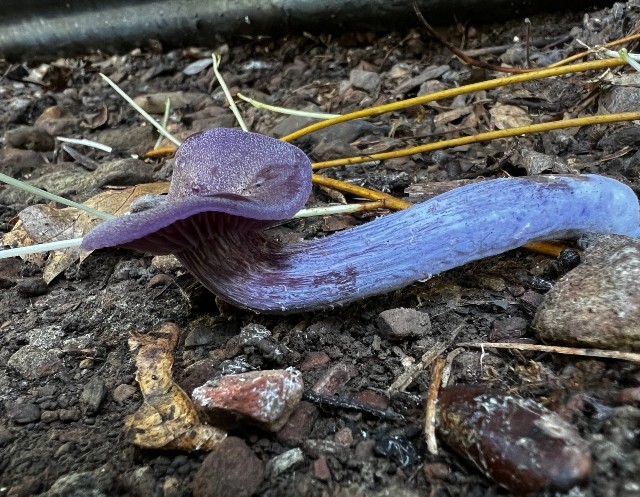
03 Laccaria amethysteo-occidentalis_6172

Fungi like this mushroom play a vital role in ecosystems by acting as decomposers, nutrient cyclers, and mutualists. They break down organic matter, release essential nutrients, and form beneficial relationships with plants and other organisms.
Laccaria amethysteo-occidentalis_6171

This was a neat and unexpected find on my California trip.
Third Eye Herp
E-mail

Western Gray Squirrel

01 Western Gray Squirrel_5052

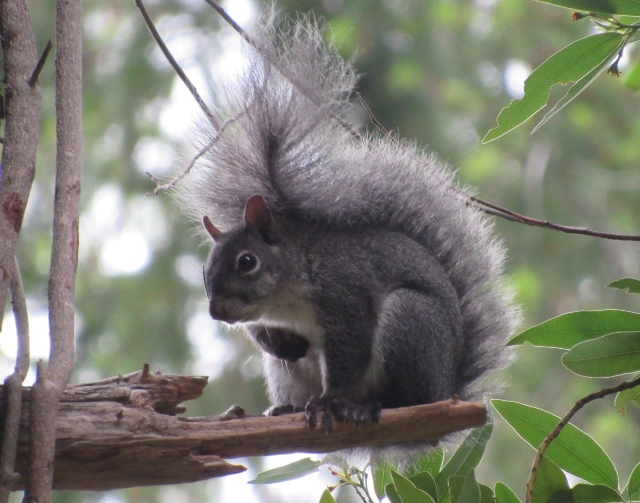
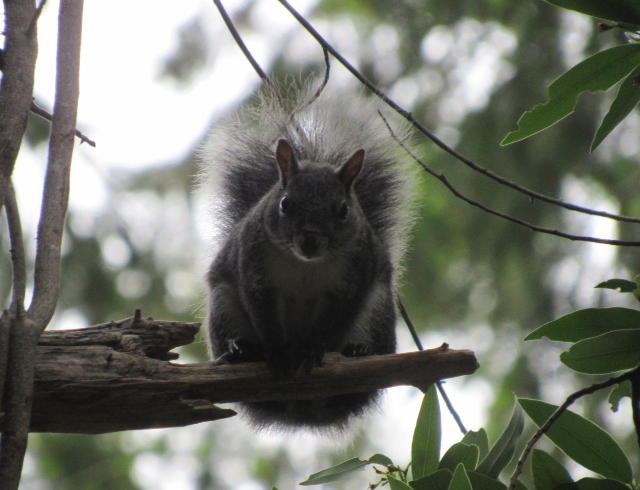
I sometimes see this creature while hiking through wooded areas in California. I often see it in small groups of animals, rather than individuals. The Western Gray Squirrel is the largest tree squirrel native to the Pacific Northwest.

02 Western Gray Squirrel_5049

They are steel gray on the back, with contrasting white on the belly and throat, resulting in the name, “Silver Gray Squirrel” in some parts of their range. They are distinguished by their very long and bushy tails that are primarily gray with white-frosted outer edges.

03 Western Gray Squirrel_5039

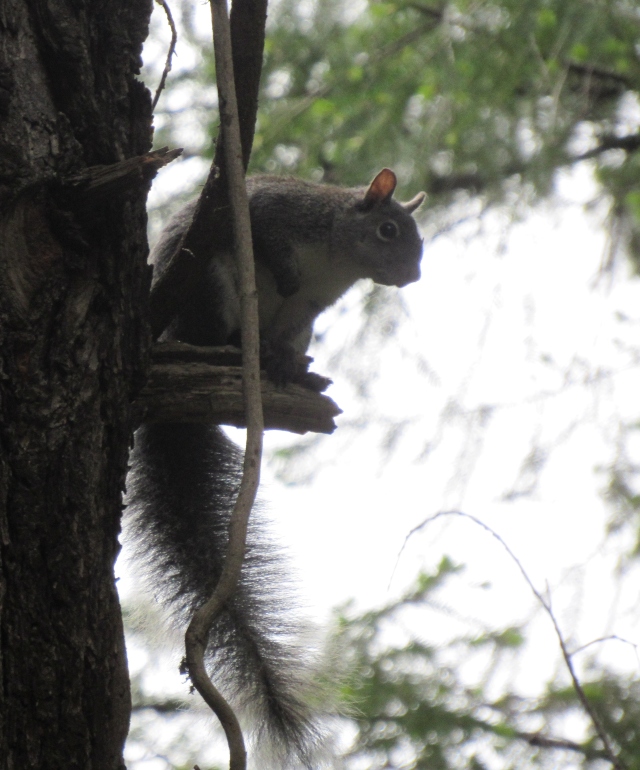
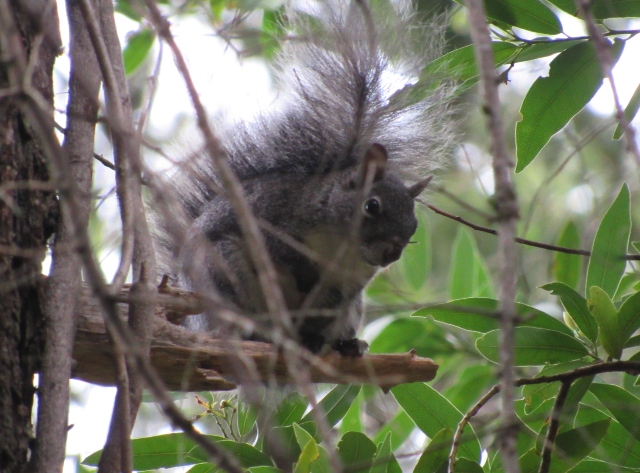
These mammals are forest dwellers. Time on the ground is spent foraging, but they prefer to travel distances from tree to tree. They are strictly diurnal, and feed mainly on seeds and nuts, particularly pine seeds and acorns, though they will also take berries, fungus and insects.

04 Western Gray Squirrel_5032

When on alert, they will spread their tails lavishly, creating an umbrella effect that shields them and possibly provides cover from overhead predators. They are scatter-hoarders making numerous caches of food when it is abundant, and thus contribute to the seed dispersion of their food trees.

05 Western Gray Squirrel_5045

Like other tree squirrels, the Western Gray Squirrel has hypermobile joints, which means their ankles can rotate 180 degrees. This allows squirrels to descend trees head first. They can also use their rear claws to hold on to the tree trunk in this position, leaving their front paws free to eat.

Third Eye Herp
E-mail

Field Chickweed

01 Field Chickweed_3244

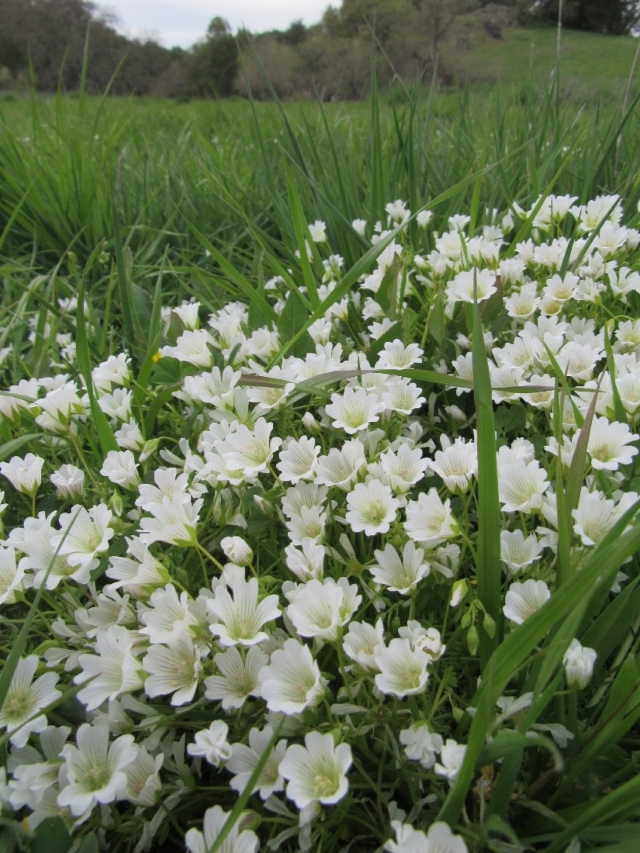
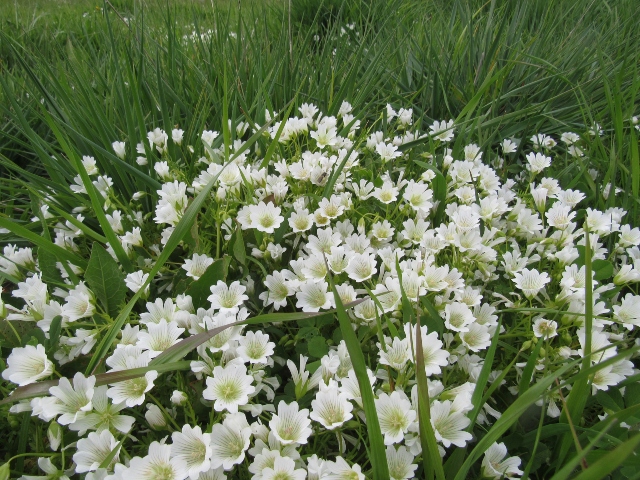
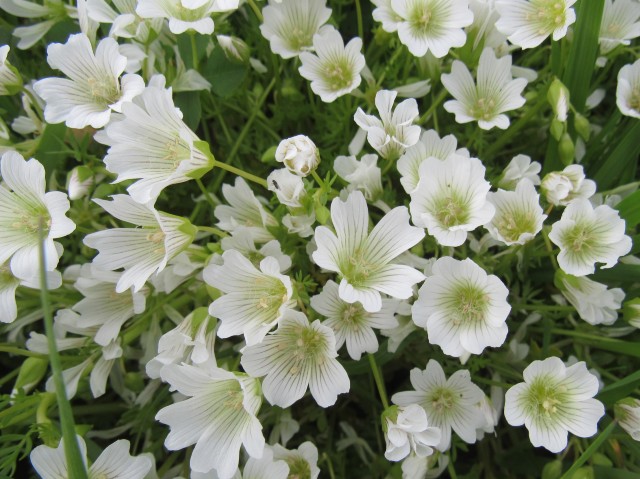
Some places where I search for reptiles and amphibians in California are blanketed with this small white wildflower.

02 Field Chickweed_5482

Field Chickweed is a spring-blooming matted or clumped perennial herb that pops up in a variety of open sunny habitats. It grows throughout North America, but is infrequent in the Southeast.

03 Field Chickweed_5485

This herbaceous perennial plant grows to 3–10 inches tall, forming leafy stems that often branch near the base. Pairs of opposite leaves occur along the stems.

04 Field Chickweed_3245

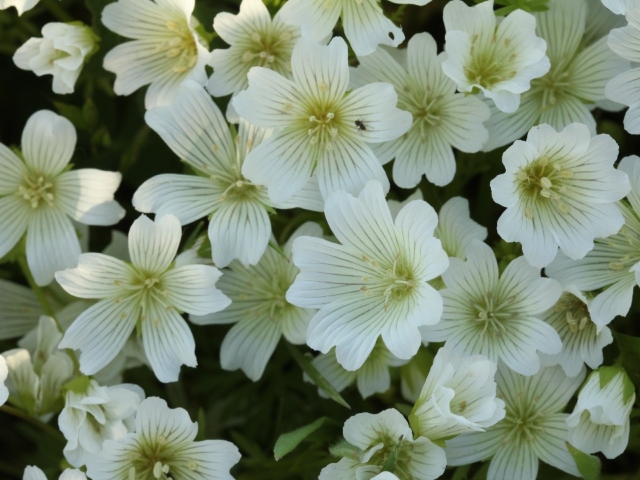
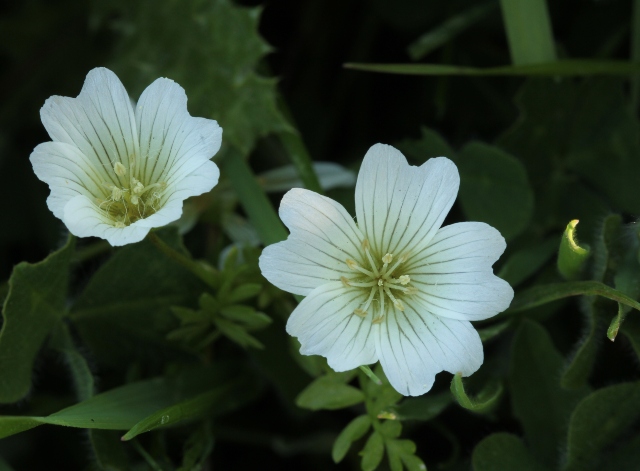
Individual flowers are about 1/3″ inches across and sport five white petals. The nectar and pollen of the flowers attract primarily bees, including little Carpenter Bees, Cuckoo Bees, and Mason Bees.

05 Field Chickweed_3242

The seeds of Field Chickweed are eaten by many small rodents, including the Deer Mouse, Meadow Jumping Mouse, House Mouse, and Thirteen-lined Ground Squirrel.

Third Eye Herp
E-mail

Western Boxelder Bug

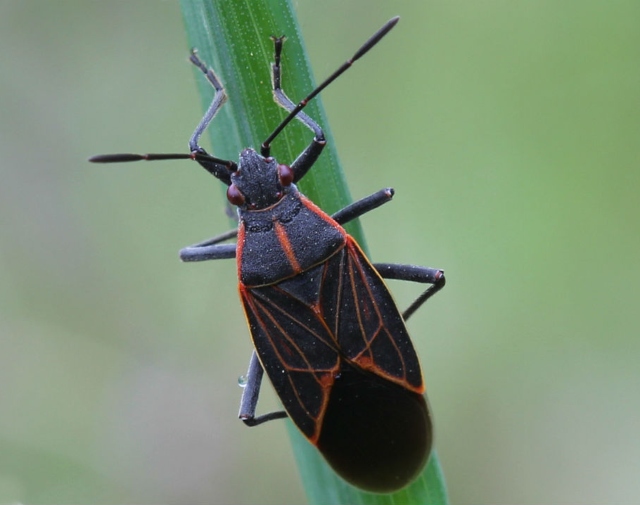
01 Western Boxelder Bug_0893

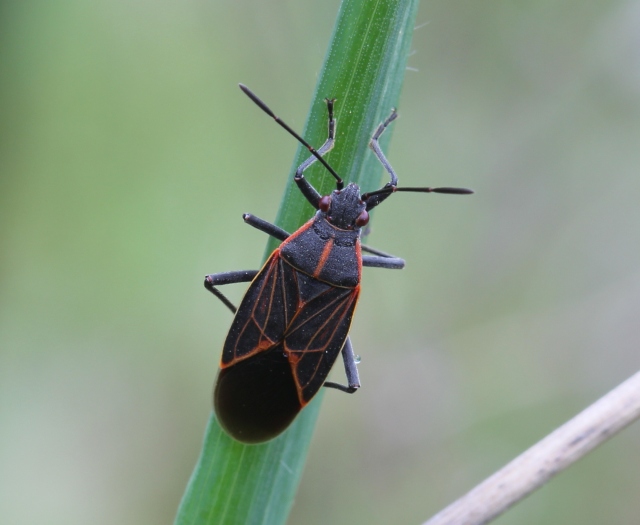
This interesting insect is native to much of North America and occurs from British Columbia, Canada, south to California and east to Nevada, Utah and Texas. It can be found wherever its principle host Boxelder, occurs.

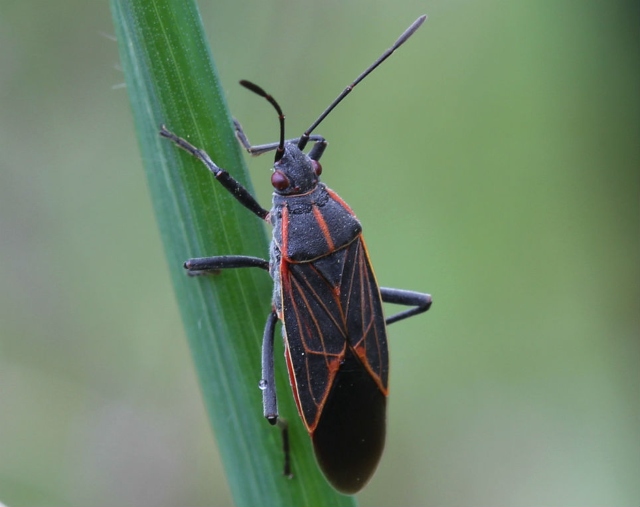
02 Western Boxelder Bug_5002

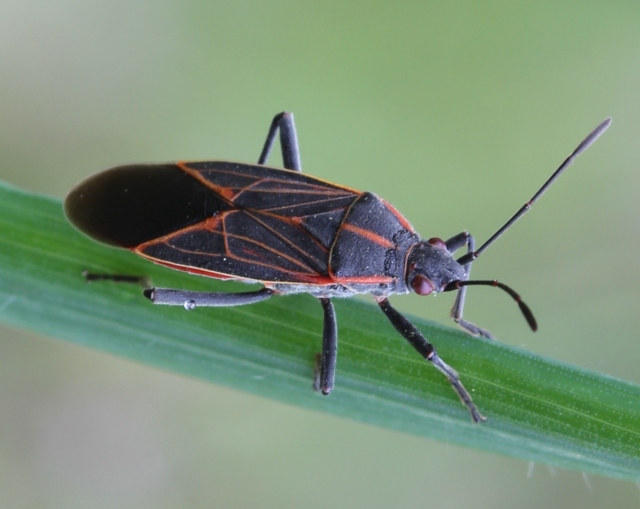
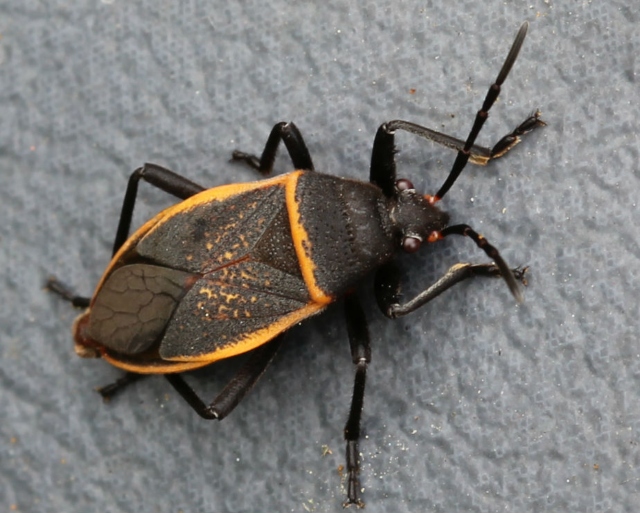
The adult Western Boxelder Bug is around 1/2 inch long, and about a third that in width. Its topside is grayish-black and has several reddish lines running across it. Its prominent red veins on its wings are a good way to differentiate it from the Common Boxelder Bug.

03 Western Boxelder Bug_5001

The Boxelder is a small to medium sized tree that is the most widely distributed of the North American Maples. Boxelder Bugs generally confine their feeding to seeds or fruits and, other than reducing the quantity of viable seed or damaging fruits, they do not injure their host plants.

04 Western Boxelder Bug_4978

During certain times of the year boxelder bugs cluster together in large groups while sunning themselves on warm surfaces (rocks, shrubs, trees, and man-made structures) near their host tree.

05 Western Boxelder Bug_5002

Belonging to an order of insects known as Hemiptera, all Hemiptera have piercing-sucking mouthparts and outer wings that are half-leathery and half membranous, which is the origin of the order name meaning “half-wing.” Most insects in this order are plant feeders.

06 Western Boxelder Bug_5001

Western Boxelder Bugs survive the Winter as adults in protected places around home landscapes and inside unheated parts of buildings. They sometimes become active outdoors during warm sunny days in late Winter. But their active season doesn’t really begin until temperatures regularly reach 70 degrees and their host trees begin having leaves.

Third Eye Herp
E-mail

Brown Turban Snail

01_Brown_Turban_Snail_1209

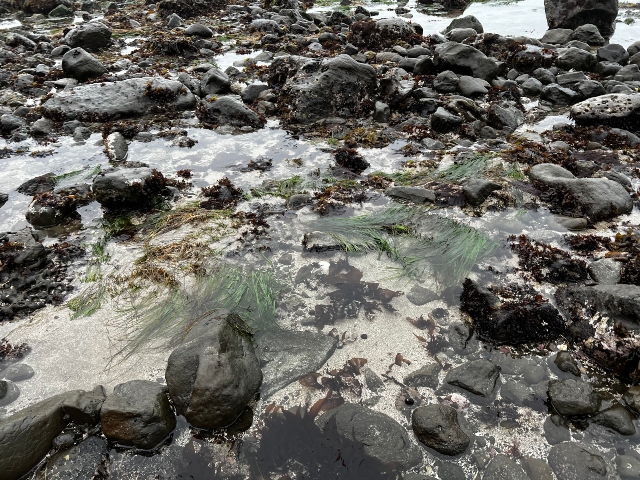
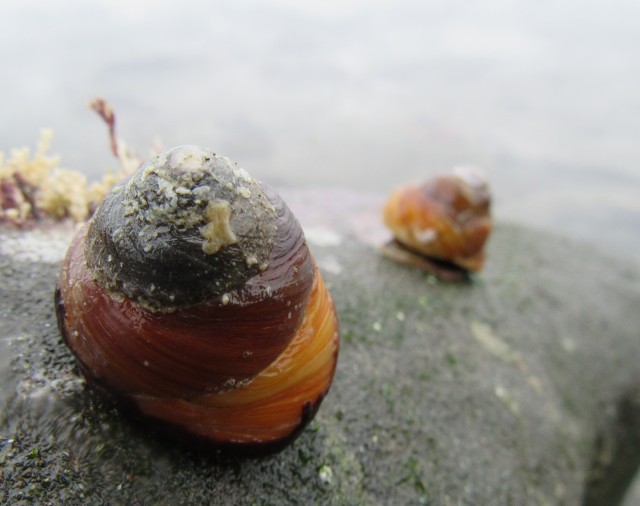
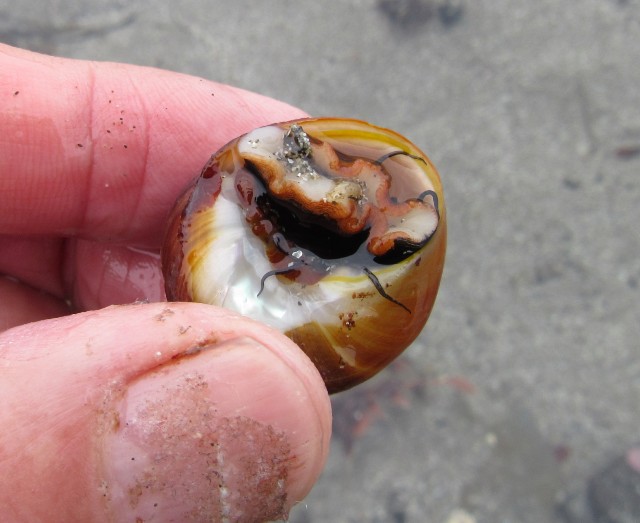
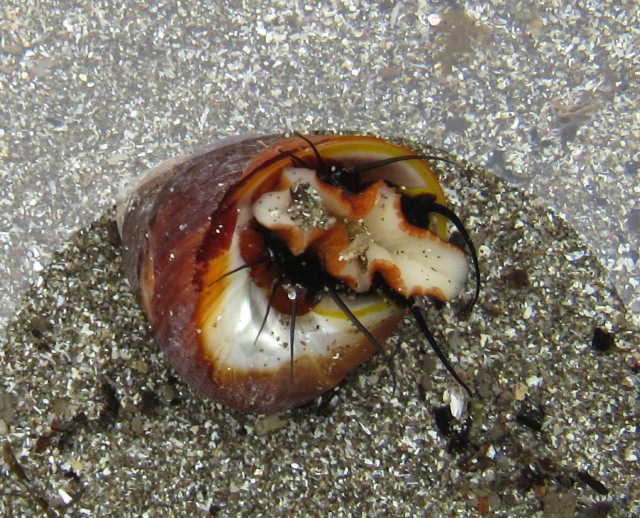
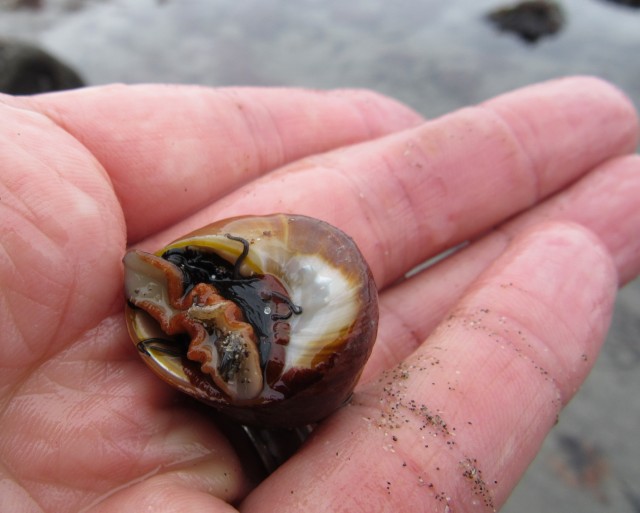
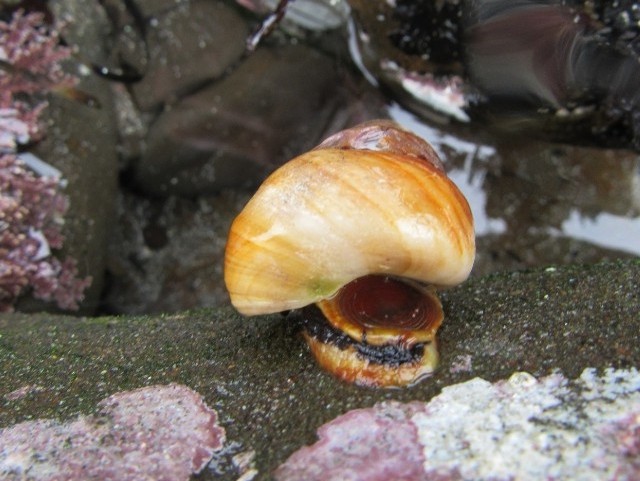
While tidepooling on the California coast, I came across a few of these cool mollusks. This species occurs in the Pacific Ocean from Oregon to Santa Barbara Islands, California.

02 Brown Turban Snail_3135

With its smooth, conical shell, a brown turban snail looks like a “foot” wearing a large hat. The shell, usually covered with red algae, is orange or bright brown.

03 Brown Turban Snail_3128

This herbivore is common in the low intertidal and shallow subtidal areas, and is most commonly found on kelp, upon which it feeds. When an individual dies, the shell is often rapidly utilized by hermit crabs, which use the hard shells to protect their soft abdomen. If you see a brown turban shell rapidly moving across the reef, it is occupied by a hermit crab.

04 Brown Turban Snail_3127

If a Brown Turban Snail is dislodged from an irregular rock bottom, it can readily right itself, but on a gravel bottom it uses pebbles as a tool. It picks up pebbles with the front of its foot and transfers them to the back part of its foot. This changes the snail’s center of gravity, enabling it to roll over and right itself.

05 Brown Turban Snail_3130

Like other snails and slugs, to feed it uses a radula (belt-like organ with numerous teeth on it) to rasp away the surface layer of tissue on blades of kelp and other algae.

06 Brown Turban Snail_3132

Italian chefs serve these snails cooked in oil and served in their shell. They are removed and eaten with a pin. Brown Turban Snails are important prey species for predators including Sea Otters, Octopuses, Rock Crabs, and Sea Stars. They are able to sense chemicals that are released from some predators and flee towards shore in response.

Third Eye Herp
E-mail