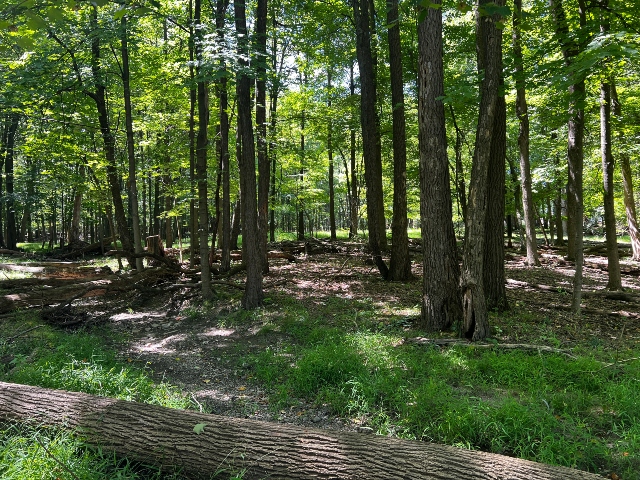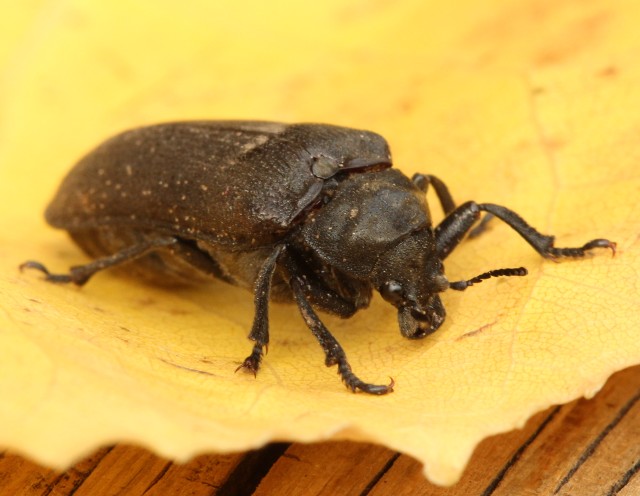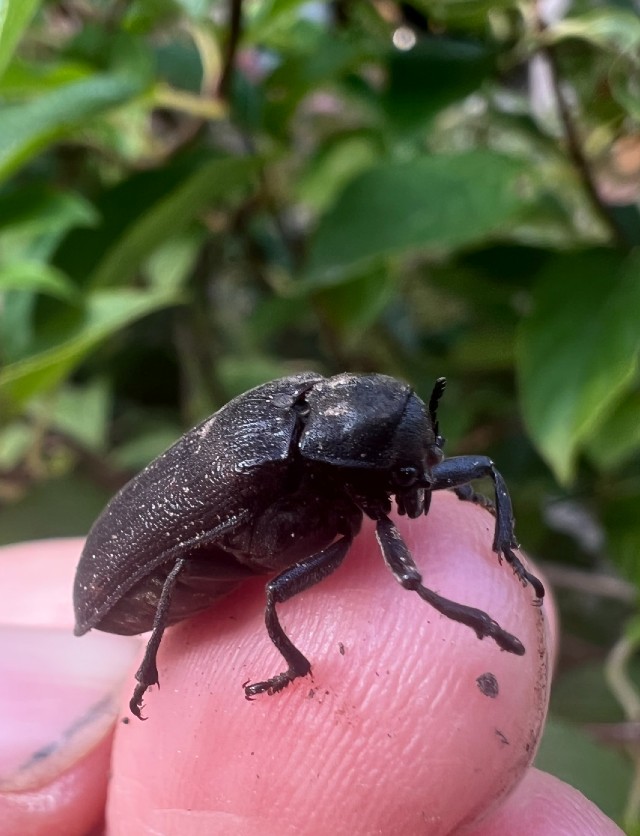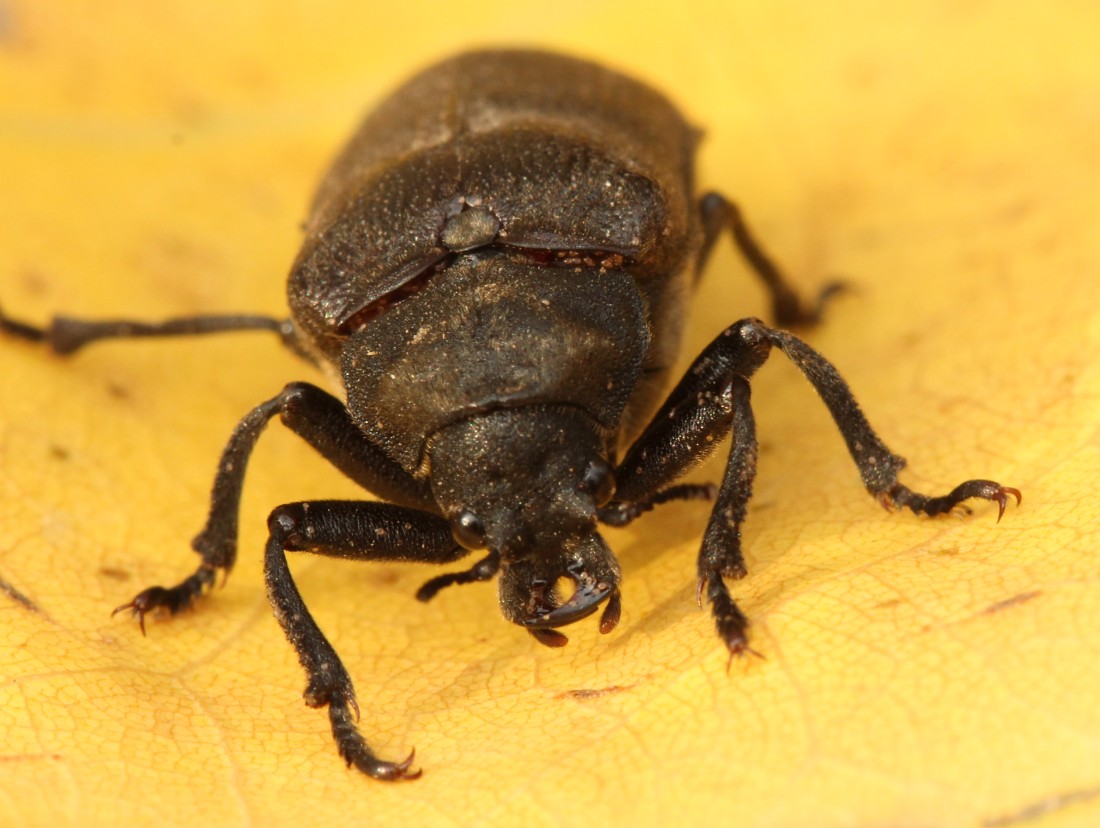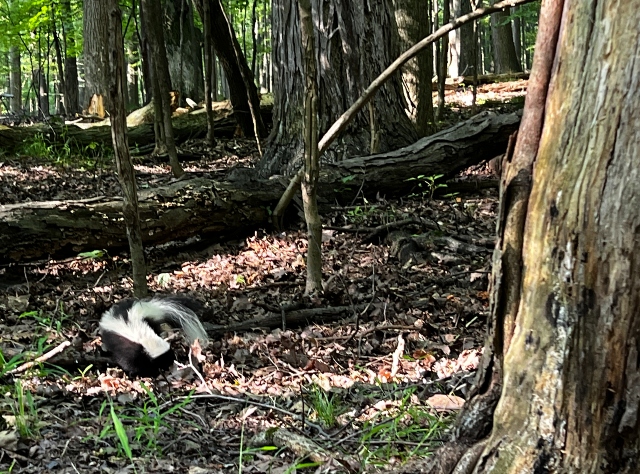
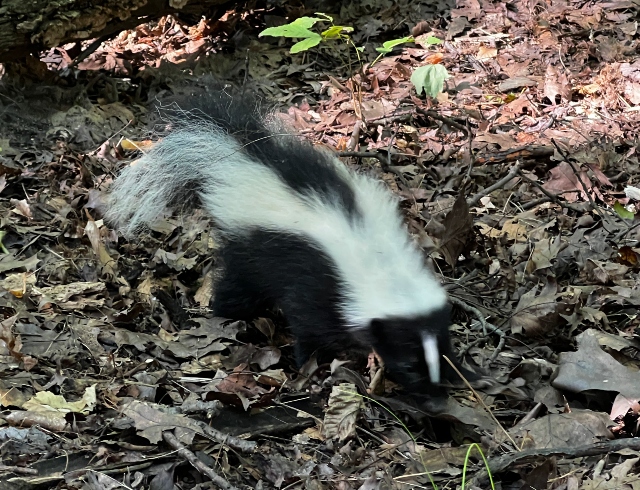
While on a walk in the woods, I heard the shuffling around of leaves. Closer examination revealed a creature rooting through the forest floor looking for something to eat. The Striped Skunk is one of the most recognizable of North America’s animals and is a popular figure in cartoons and children’s books.
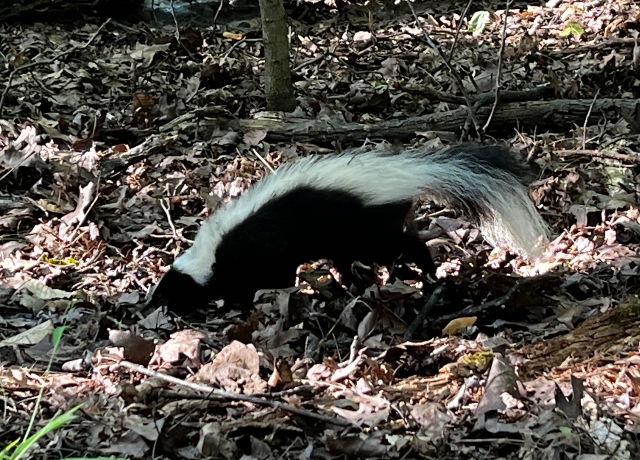
This mammal is stoutly-built and short-limbed, with a small, conical head and a long, heavily furred tail. The color patterns of the fur vary greatly, but generally consist of a black base with a white stripe extending from the head which divides along the shoulders.
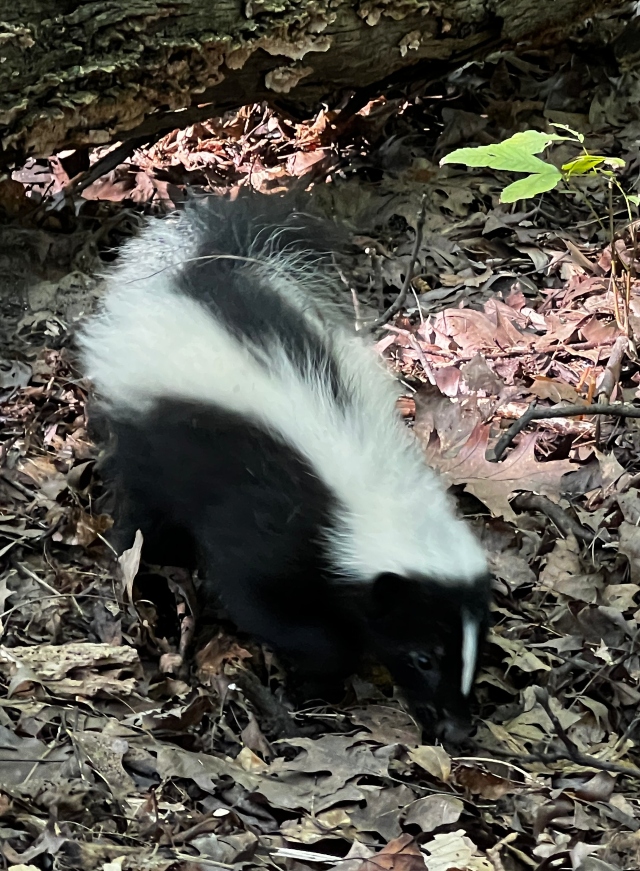
Like all skunks, it possesses two highly developed scent glands, which provide a chemical defense against predation. Because of its formidable defensive capability, it has few natural enemies, with their most notable predator being the Great Horned Owl.
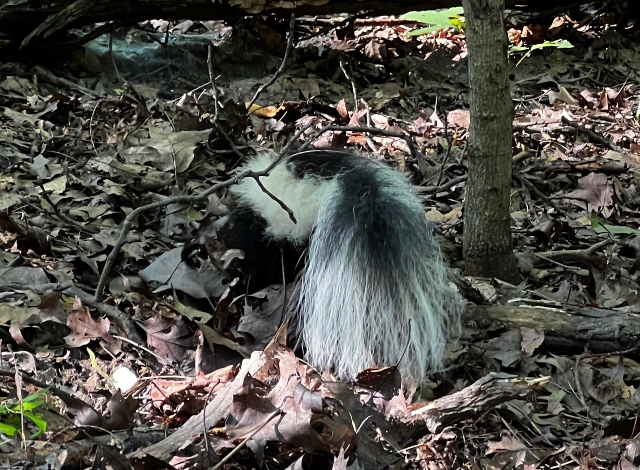
The Striped Skunk inhabits a wide variety of habitats, particularly mixed woodlands, brushy corners and open fields interspersed with wooded ravines and rocky outcrops. Some populations, particularly in northwestern Illinois, prefer cultivated areas over uncultivated ones.
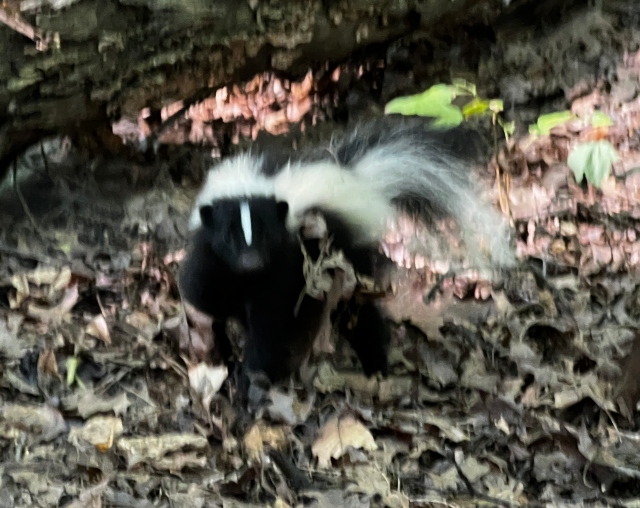
While primarily an insectivore, they are adaptable enough to incorporate other animals and even vegetable matter into their diet. They use their sharp claws to tear apart rotting logs to find grubs, dig in the soil for insects, and pin down prey. Their practice of digging creates small-but-noticeable pits in the ground, which can provide evidence of their presence in an area.
This animal has firmly embedded itself in American culture, with songs “Dead Skunk” by Loudon Wainwright III and cartoon characters – the Warner Bros. character “Pepé Le Pew” and the Disney character “Flower” from “Bambi.”