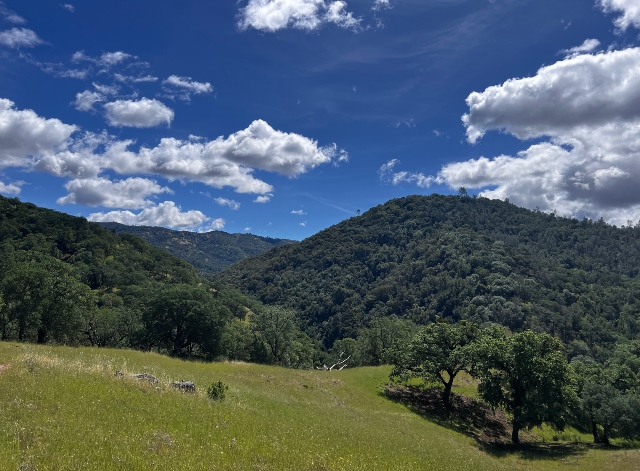
White Globe Lily

01 White Globe Lily_2599

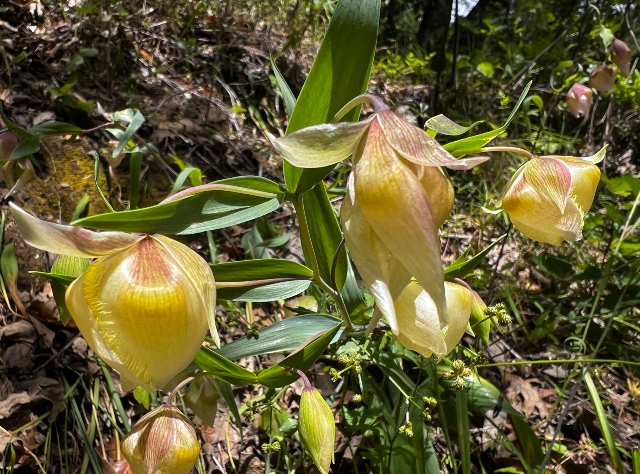
While hiking in Henry W. Coe State Park, I saw this plant that is also known as Fairy Lantern, White Globe-tulip, Alabaster Tulip, Indian Bells, Satin Bells, Snowy Lily-bell, and Snow Drops.
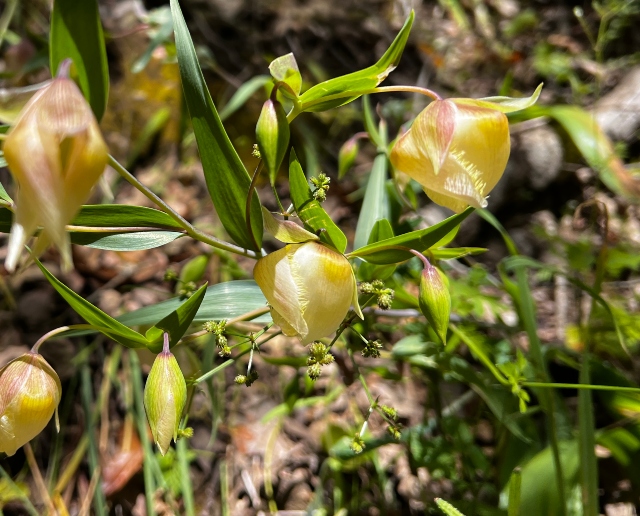
02 White Globe Lily_2621

This is a native wildflower endemic (limited) to California. It is found primarily in the central coastal hills and Sierra Nevada foothills up to 5,000 feet. It favors environments that receive full sun, but tolerates partial shade. It can be found on hillsides and rocky slopes, such as road cuts and river canyons.
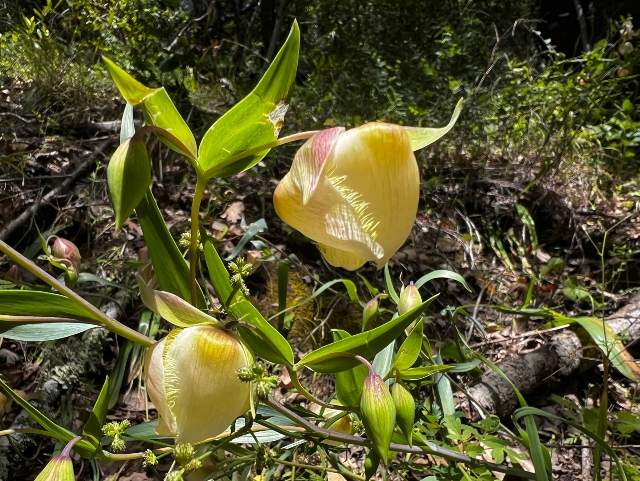
03 White Globe Lily_2622

It blooms from early to late Spring, depending on the habitat and elevation. It is unique within its genus in that its flowers remain in a bud-like state, hanging downward, never fully opening its petals. It seemingly protects its inner sensitive space by closing it off to the outside world.
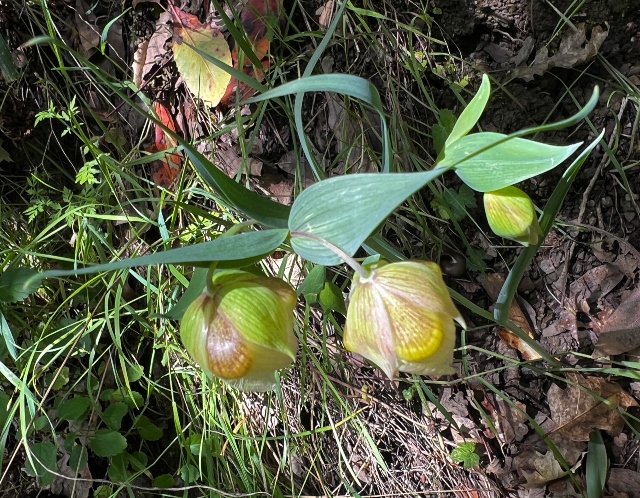
04 White Globe Lily_2625

White Globe Lily shares the distinguishing characteristics of the Lily Plant Family – simple linear leaves, perennial bulbs, and flowers with three petals and three sepals. It isn’t just a pretty flower; it plays an essential role in its ecosystem. By attracting a variety of pollinators, such as bees, butterflies, and hummingbirds, it helps maintain biodiversity in its habitat.
05 White Globe Lily_2624

Besides its ecological role, the White Globe Lily has cultural significance as well. Native American tribes have historically used the plant for various medicinal purposes, including as a poultice for wounds.
Third Eye Herp
E-mail

Thalassica Grasshopper

01 Trimerotropis thalassica_2613

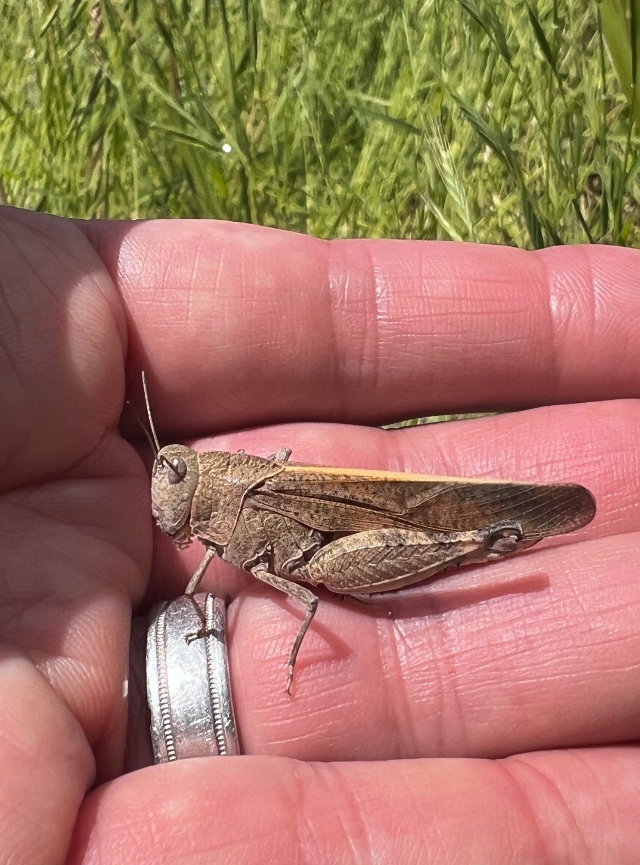
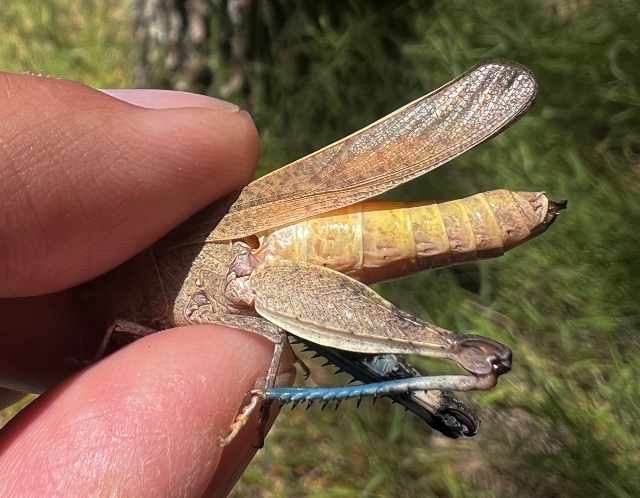
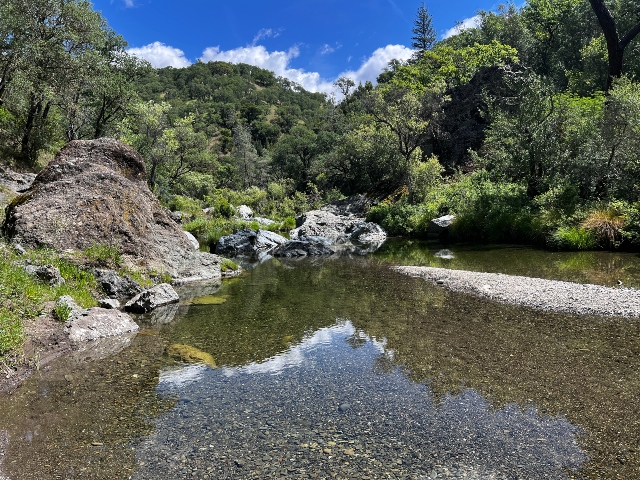
While visiting Henry W. Coe State Park in California, I saw a few of these insects on my hike. They inhabit coastal mountains, dry open grasslands, and areas associated with low vegetation, often on rocky substrates or near manzanita (also seen on this hike).

02 Trimerotropis thalassica_2618

The Thalassica Grasshopper belongs to a group known as Band-winged Grasshoppers. An ancient group dating back to the Early Triassic Period (around 250 million years ago), this family of grasshoppers are found almost everywhere in the world except Antarctica.

03 Trimerotropis thalassica_2640

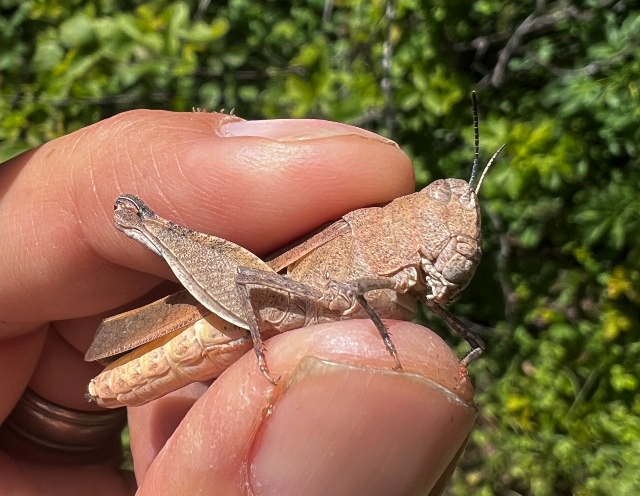
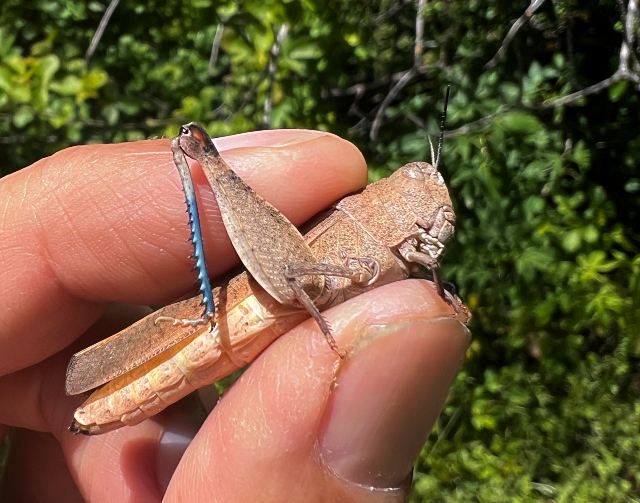
The body colors of many grasshoppers tend to simulate the color of their habitat background. This is particularly true of species inhabiting rocky or sandy environments. This insect is diurnal and relatively tame, flying short distances when disturbed, and is commonly observed on rocks, grasses, or in flight over open areas, like meadows- but when resting it can be hard to see.

04 Trimerotropis thalassica_2638

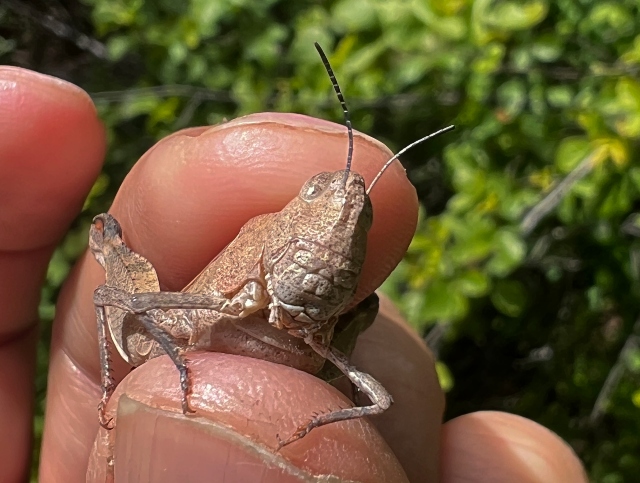
The Thalassica Grasshopper is endemic to California in the United States. Its head is notably broad above and below, featuring large and prominent eyes. Its hind legs are strongly developed for jumping, with the inside coloration being black and the hind tibiae being blue.

05 Trimerotropis thalassica_2619

This herbivorous creature feeds on a variety plants available in its habitat. Foraging occurs mainly during the day, with adults and nymphs grazing on vegetation in grasslands and shrublands, particularly on warm, sunny days. The Thalassica Grasshopper can survive in highly saline environments, a rare trait that sets it apart from many terrestrial insects.

06 Trimerotropis thalassica_2620

It was neat to come across this unexpected find while on my California trip.

Third Eye Herp
E-mail

Crowded Parchment

01 Parchment Fungi_2330

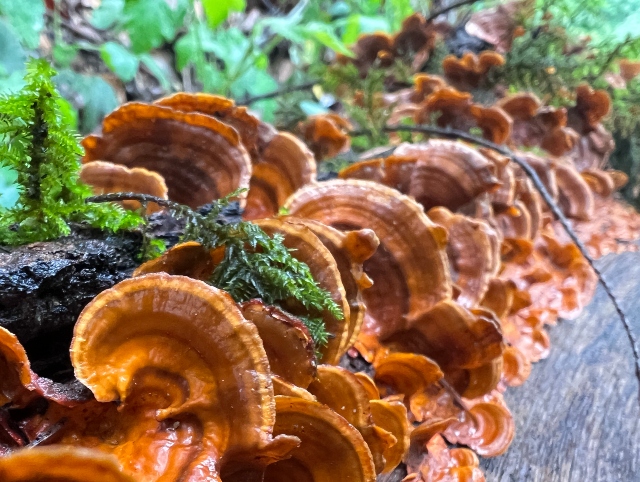
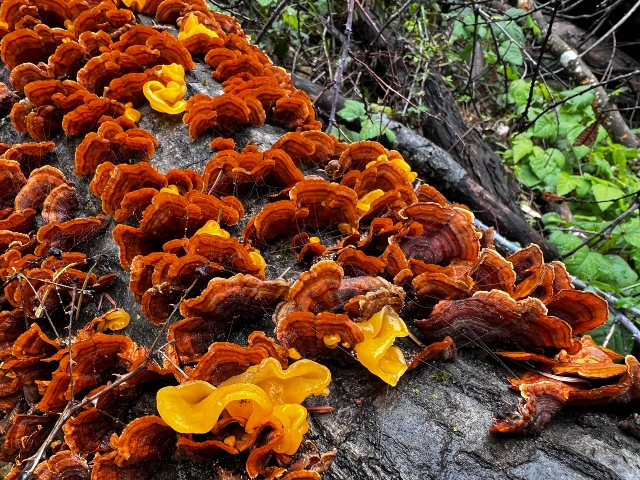
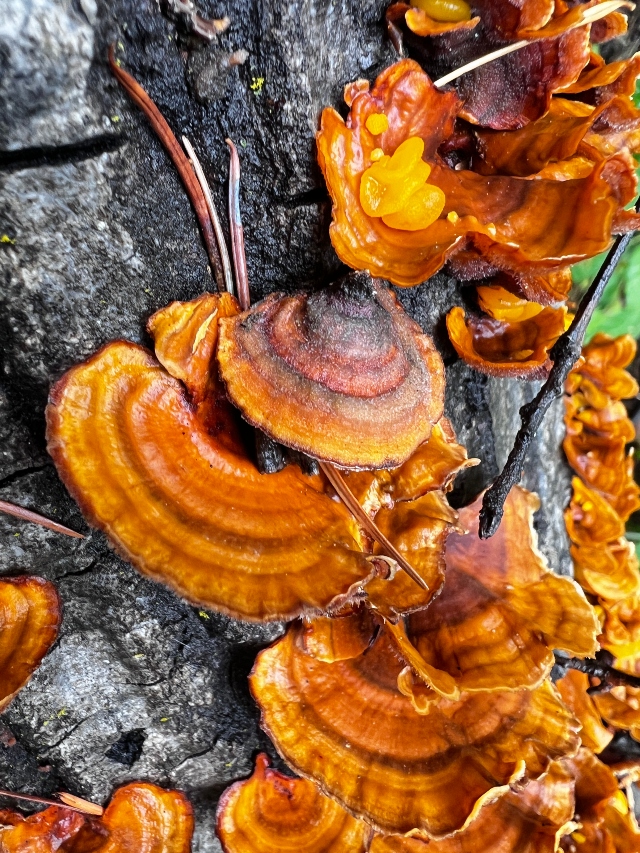
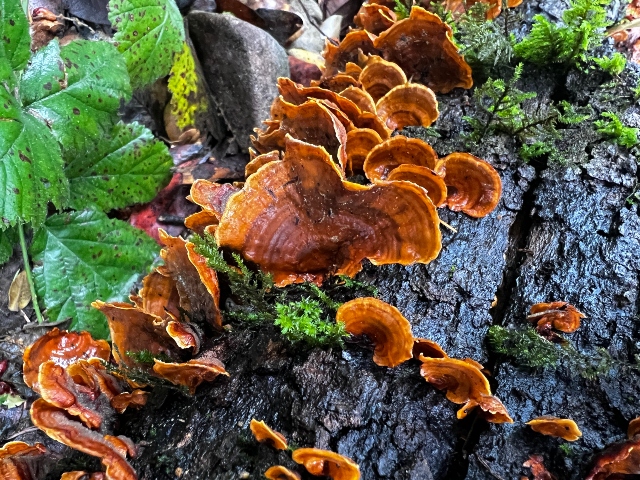
While hiking in a California forest in search of salamanders, this brightly colored mushroom caught my eye. The caps have concentric color zones ranging from bright orange to reddish-brown, fading to cream with age.

02 Parchment Fungi_2334

This saprophytic (feeding on dead and decaying organic matter) species has thin, leathery, shelf-like fruiting bodies that grow on dead or decaying wood. It grows densely, often from gaps in bark, and can fuse laterally, sometimes hosting algae or being parasitized by jelly fungi (as was the case here, with Witches’ Butter).

03 Parchment Fungi_2346

Crowded Parchment are characterized by thin, tough, leathery caps that often overlap and fuse into tangled masses, resembling dried parchment or ruffled petticoats on wood.

04 Parchment Fungi_2340

This fungus helps to decompose dead hardwoods such as oak, beech, and maple, and plays a key role in breaking down lignin and recycling nutrients in forest ecosystems. Unlike many shelf fungi, the underside is smooth, lacking gills or pores, which is a key identification feature.

05 Parchment Fungi_2337

This was a welcome and colorful find on an otherwise rainy day in California.

Third Eye Herp
E-mail

Red-bellied Newt

01 Red-bellied Newt_2371

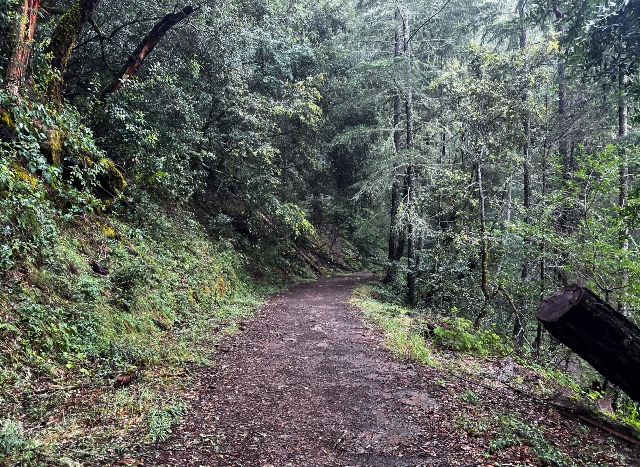
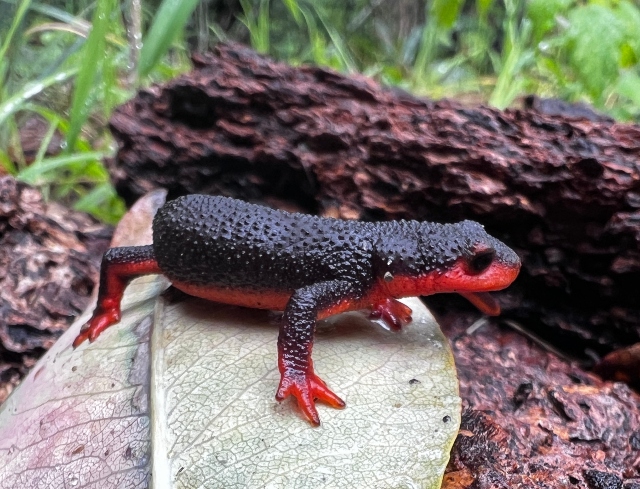
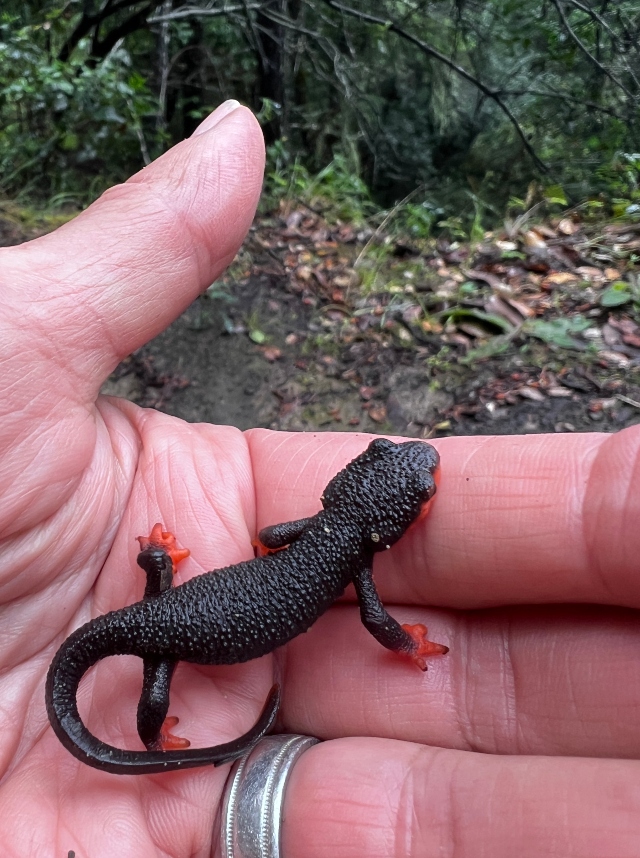
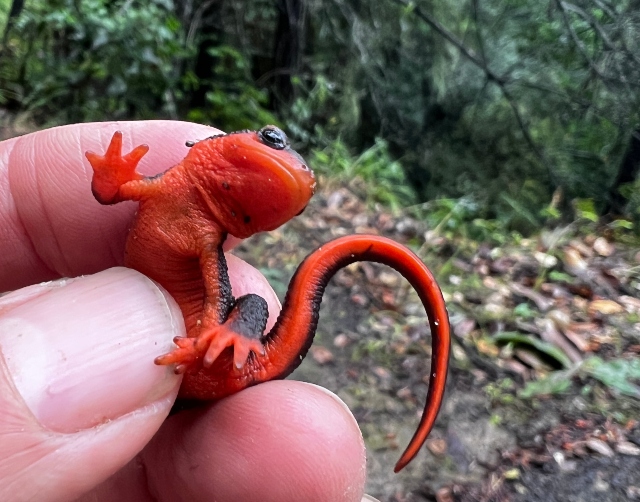
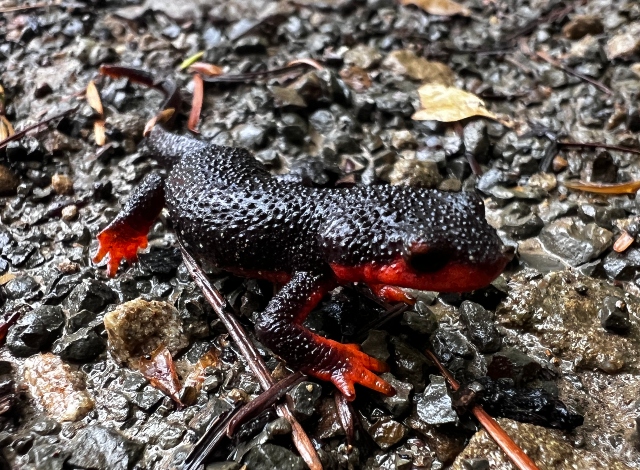
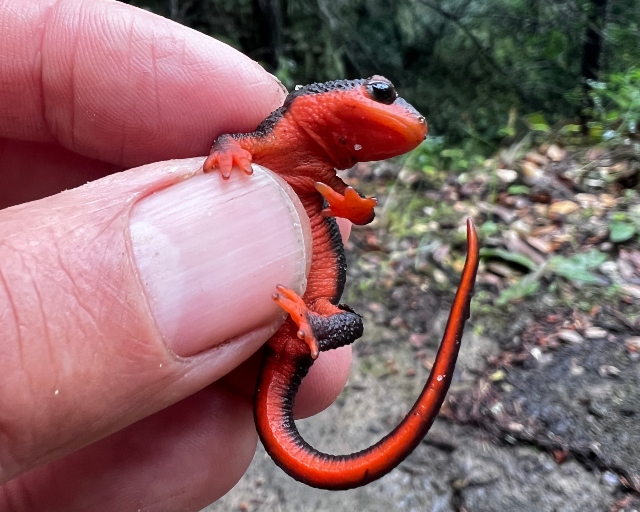
After many years of searching, I finally found this “lifer” amphibian on my visit to California this Spring. On a rainy day I hiked a trail in the Santa Cruz Mountains and after seeing 30-something California Newts, this fine creature was in the middle of the path.

02 Red-bellied Newt_2400

The Red-bellied Newt is a salamander that is native to coastal woodlands in northern California and is terrestrial for most of its life. When full grown, it measures between 5-1/2 to 7-1/2 inches from nose to tail tip. It has grainy skin, and is brownish-black on top with a tomato-red underbelly.

03 Red-bellied Newt_2395

It inhabits primarily redwood forests, but is also found within mixed conifer, valley-foothill woodland, montane hardwood and hardwood-conifer habitats. This amphibian feeds on arthropods, worms and snails in water and on forest floor in ground litter. The Red-bellied Newt requires rapid streams with rocky substrate for breeding and egg-laying.

04 Red-bellied Newt_2386

After hatching from eggs, the newts begin their lives as aquatic larvae similar to tadpoles, though elongated and with external gills. Once newt larvae mature into their adult form, which takes about four to six months, they leave the water and reside mainly underground. Red-bellied Newts can live for 20-30 years.

05 Red-bellied Newt_2391

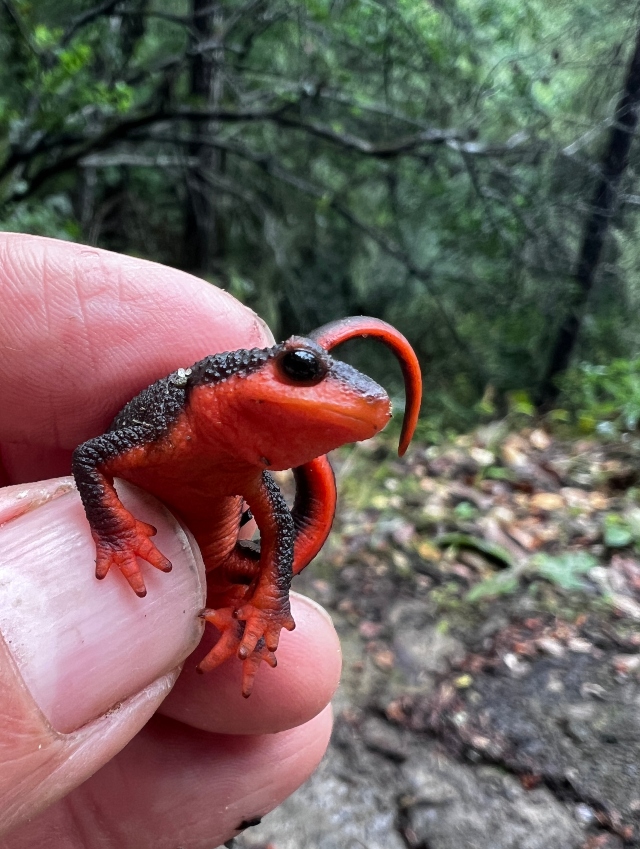
When disturbed, this species pulls its head and tail back to reveal its bright-red underside. This serves as a warning to potential predators, as Red-bellied Newts have enough of a neurotoxin in their skin, eggs, and embryos to potentially kill an adult human, or 1,200 to 2,500 mice. Because they are so poisonous, they are nearly inedible and have no reported predators other than a few species of snakes which are resistant to their toxin.

06 Red-bellied Newt_2377

Like other newts, Red-bellied Newts have the ability to regenerate several body parts, including their limbs, eyes, hearts, intestines, upper and lower jaws, and damaged spinal cords.

07 Red-bellied Newt_2388

This was an exciting find and the highlight of my trip to the Golden State this year.

Third Eye Herp
E-mail