Yellow-eyed Ensatina

Yellow-eyed Ensatina_0730

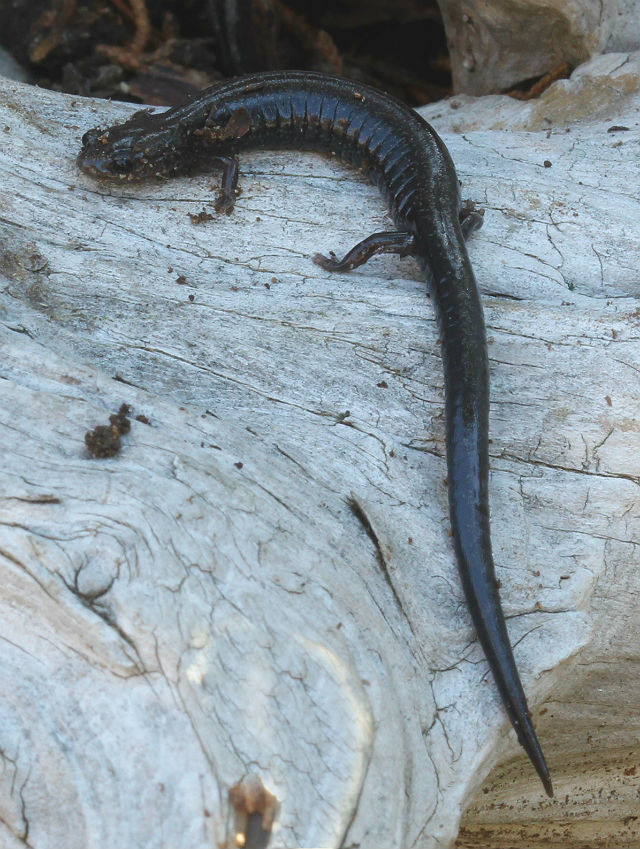
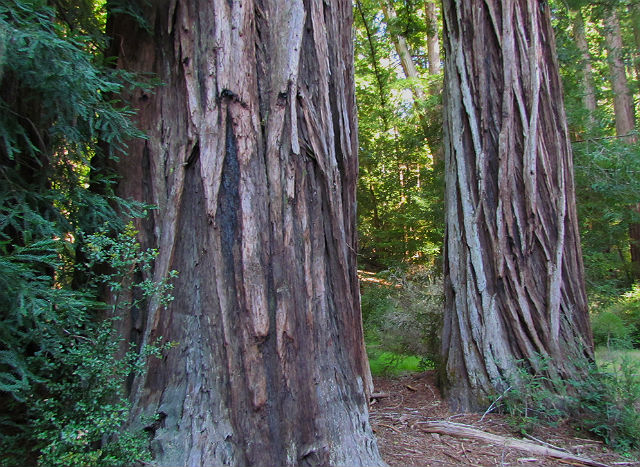
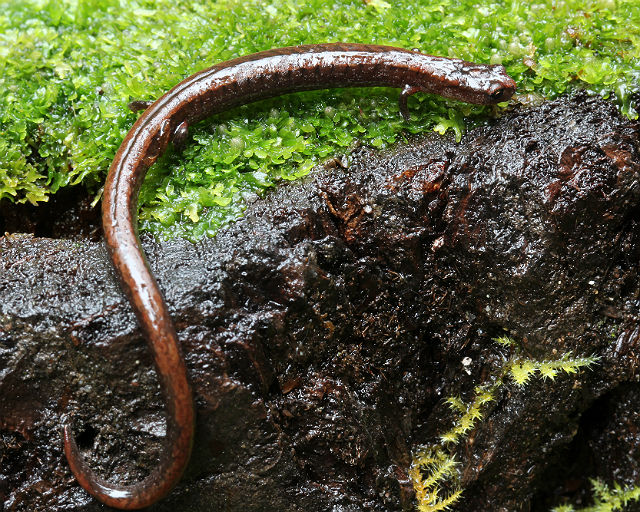
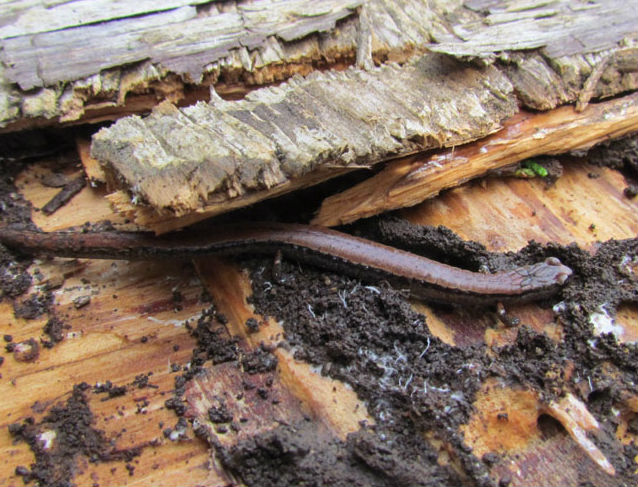
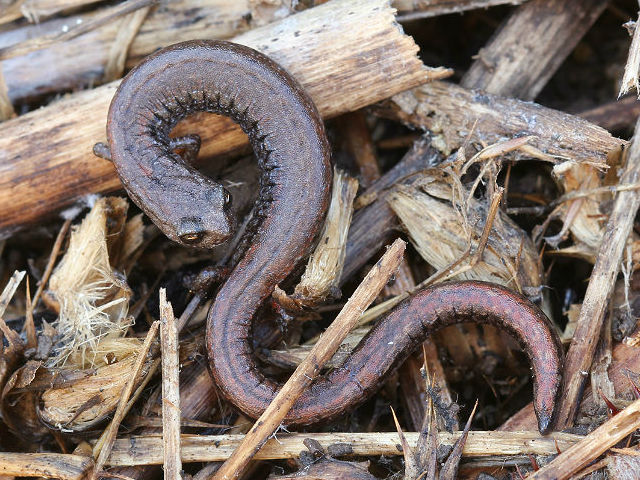
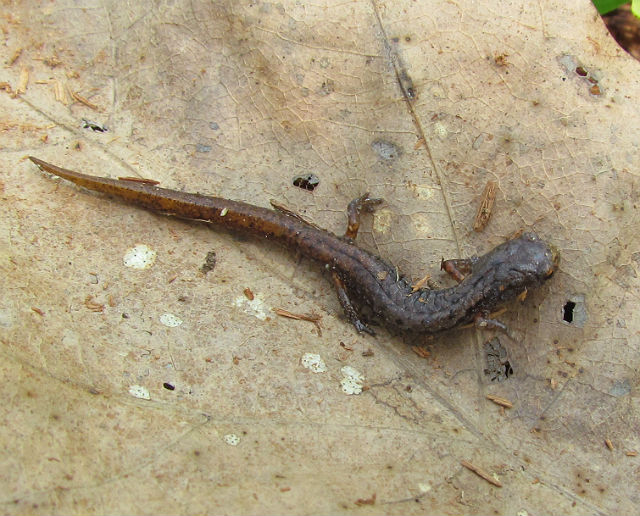
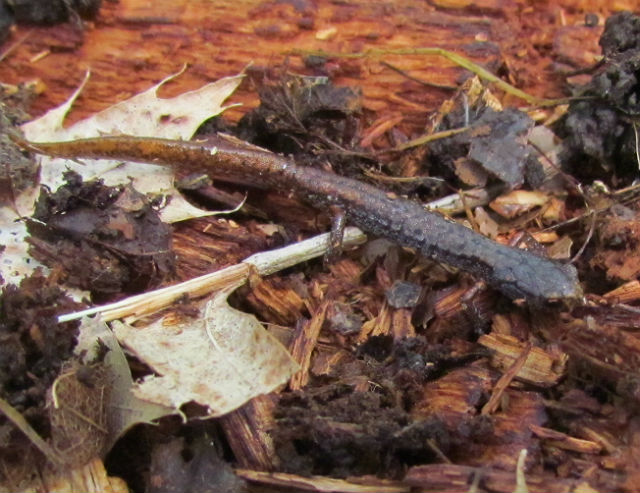
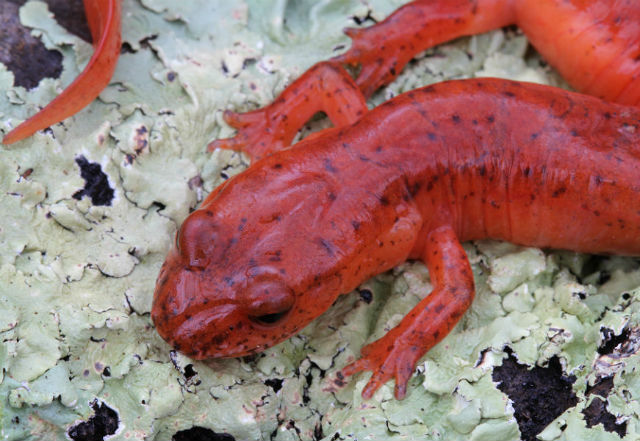
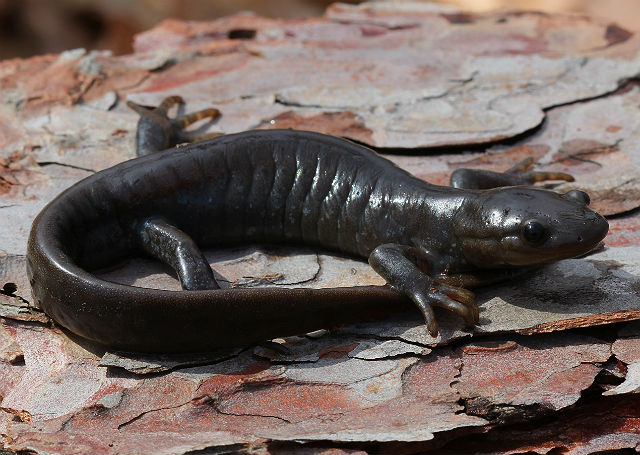
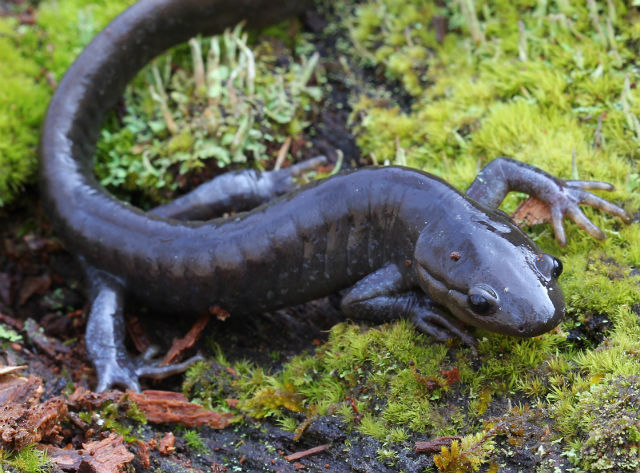
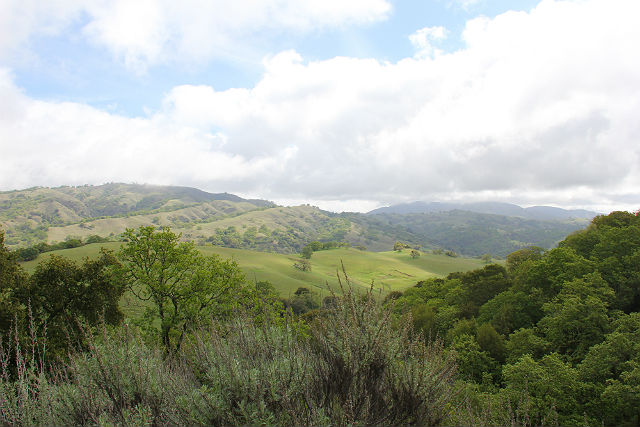
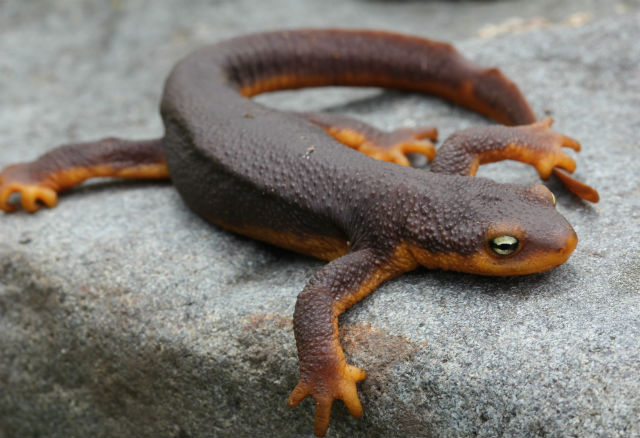
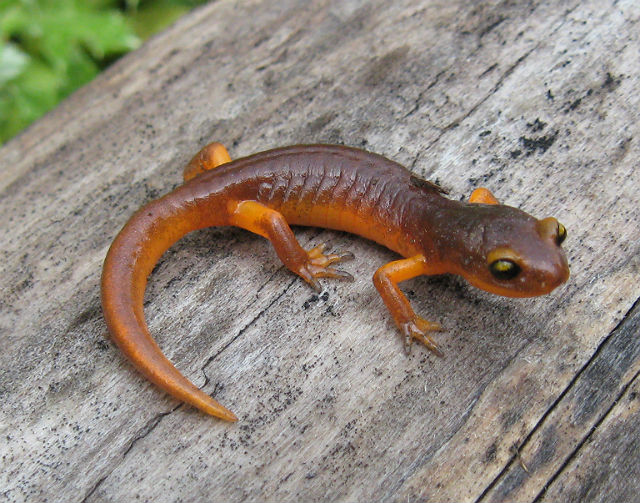
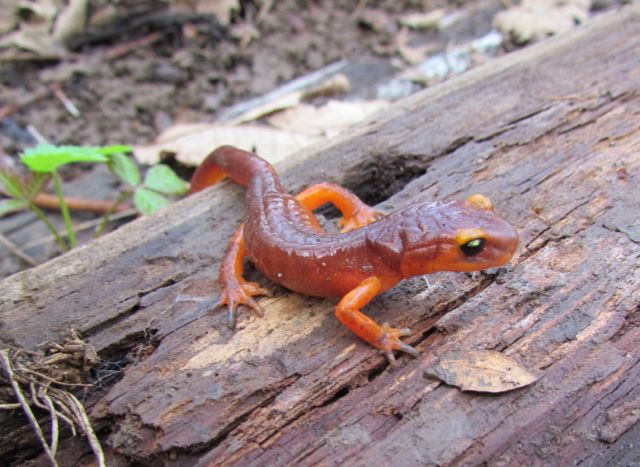
An Ensatina is a type of lungless salamander found in coniferous forests, oak woodland and chaparral. I came across a few of them on my recent visit to California.
Yellow-eyed Ensatina 057

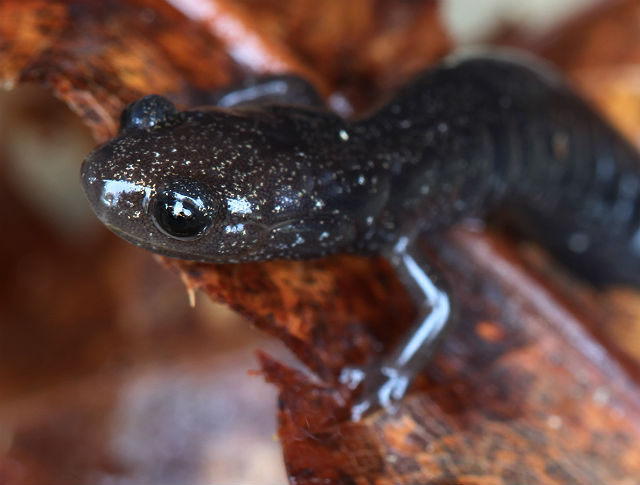
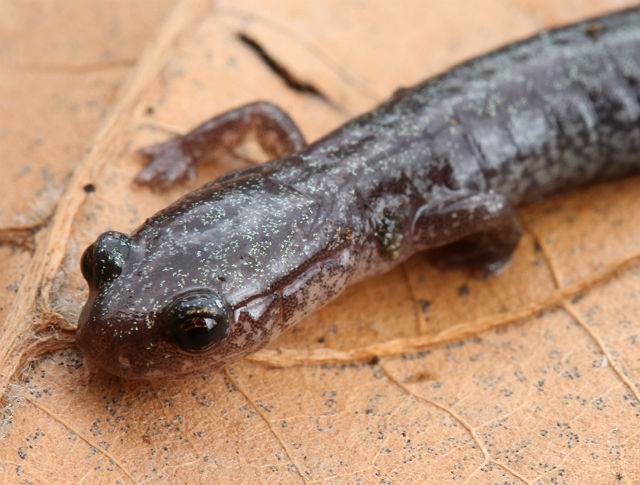
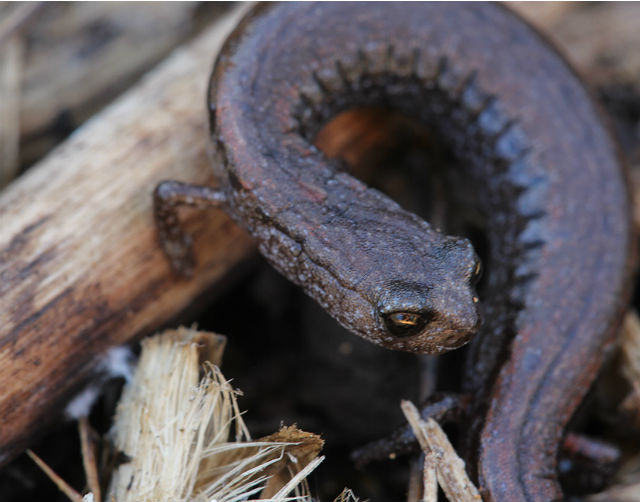
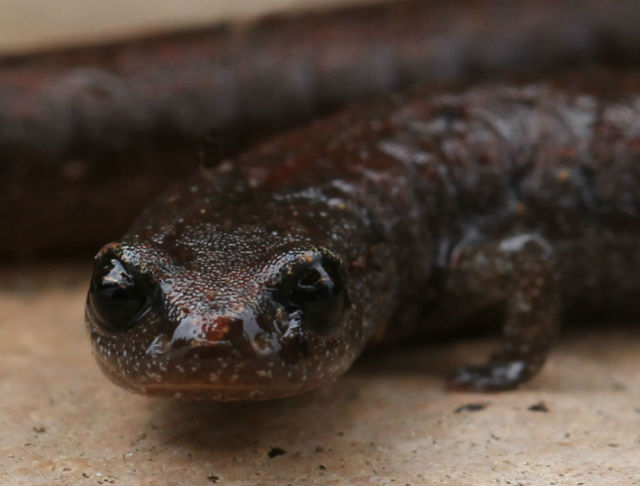
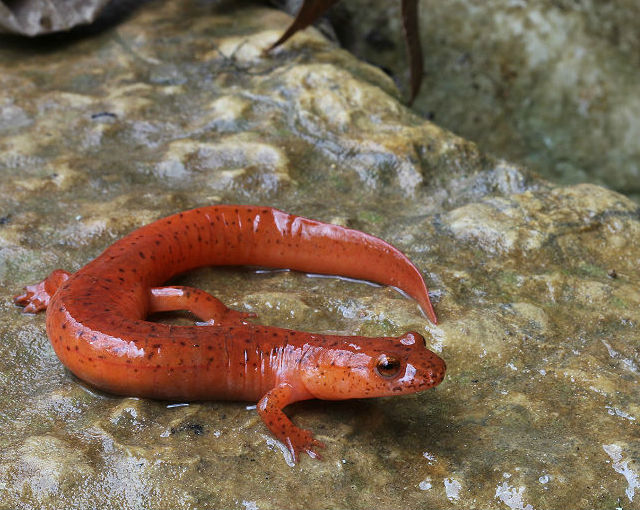
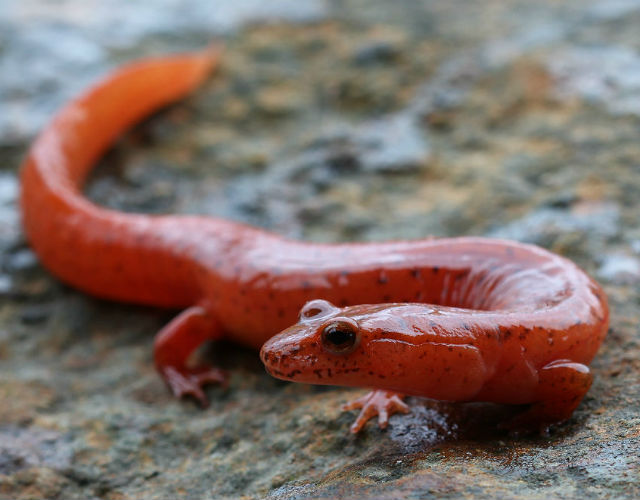
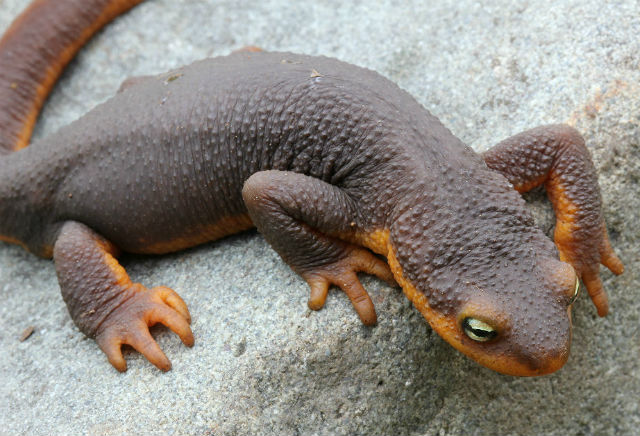
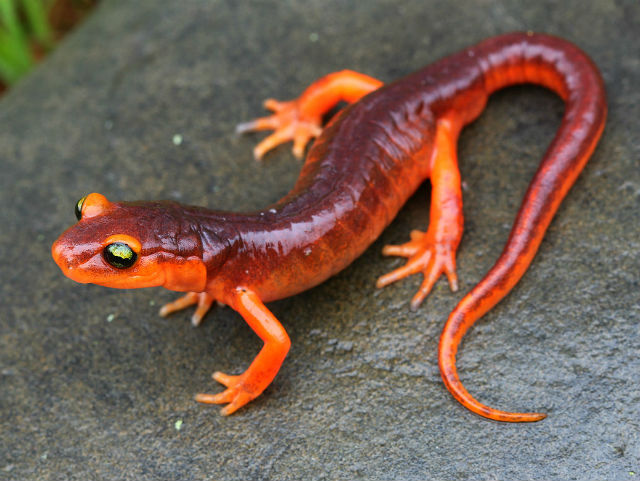
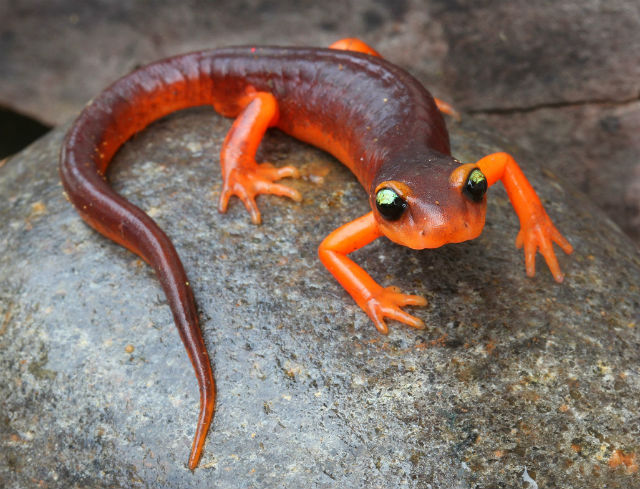
One of their characteristics are their large, expressive eyes. They also feature a tail that is constricted at the base. A bright yellow patch on the eye gives this salamander its common name.
Yellow-eyed Ensatina_5125

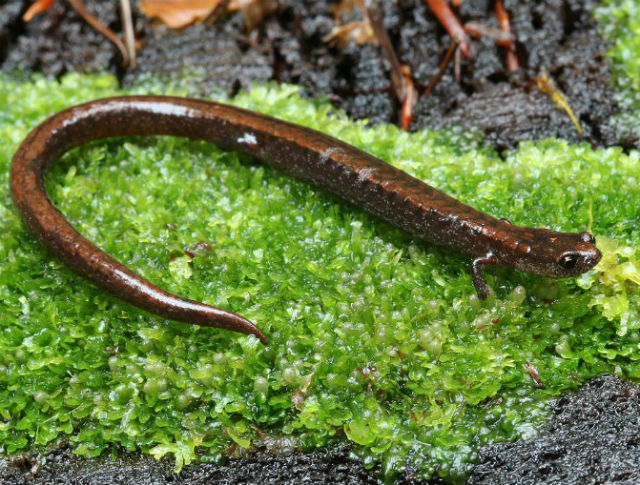
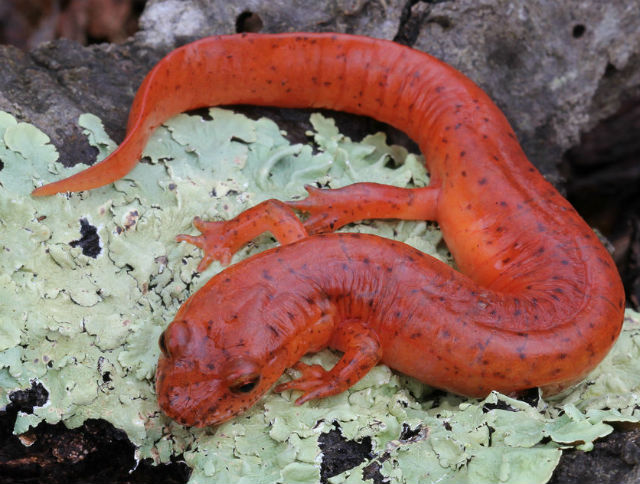
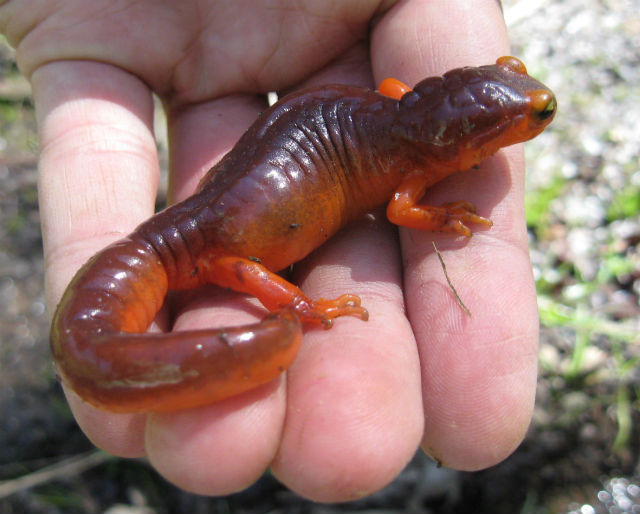
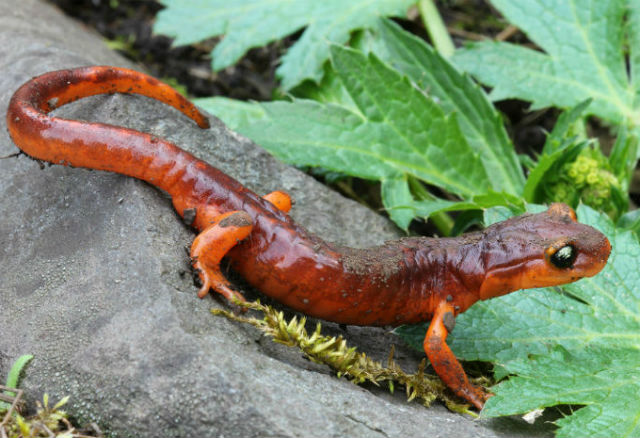
This subspecies of Ensatina is orange-brown to dark brown above, with orange coloring below. They are typically 3-5 inches in total length.
Yellow-eyed Ensatina 187

Since they are lungless, they conduct respiration through their skin, which requires them to live in damp environments on land and to move about on the ground only during times of high humidity.
Yellow-eyed Ensatina 095

When feeling threatened, an Ensatina can drop its tail to distract the attention of a predator while the amphibian can crawl away to safety. The tail can grow back. As another defense behavior, an Ensatina will stand tall in a stiff-legged defensive posture with its back arched and its tail raised up and secrete a milky white poisonous substance, while swaying from side to side.
Yellow-eyed Ensatina_1945

These amphibians eat a wide variety of invertebrates, including worms, ants, beetles, spiders, scorpions, centipedes, millipedes, sow bugs and snails. They tend to catch their food with their sticky tongue, like a toad does.
Yellow-eyed Ensatina_5167

These are neat creatures to encounter and I had a great time seeing them in the field when herping California.

Third Eye Herp
E-mail

Longtail Salamander

longtail salamander 0004

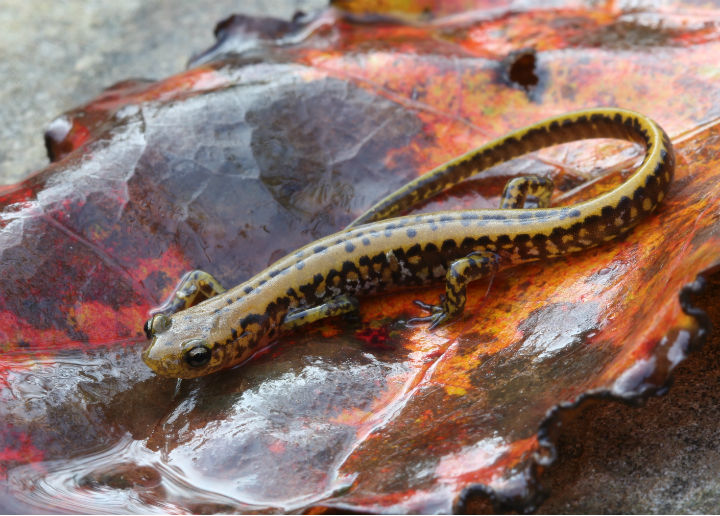
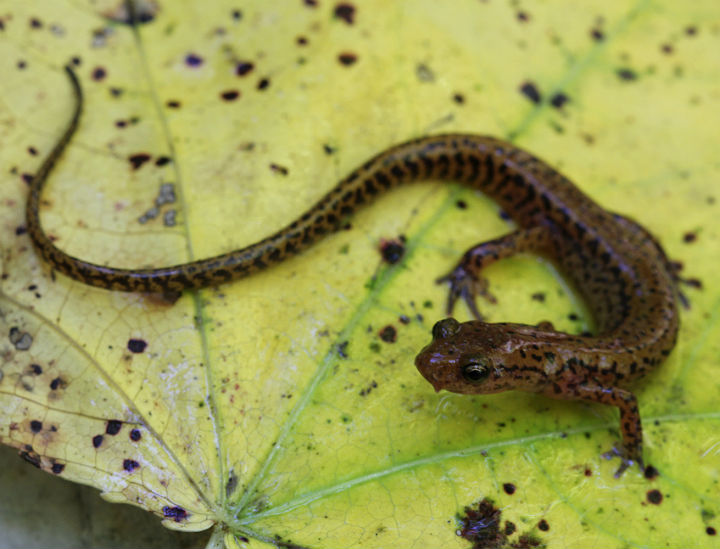
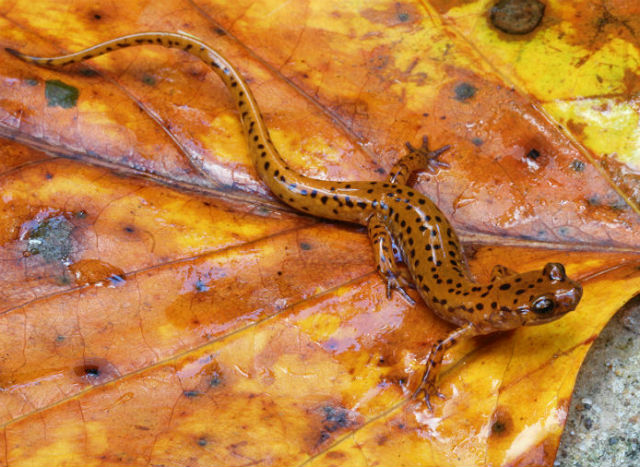
One of Ohio’s longest salamanders, the tail of this aptly named animal comprises 60-65% of its total length (up to 9”). They do not live in my part of northeast Ohio, but I have found them while visiting the southern part of the state, as well as in Kentucky. The examples in the photos above and below lost sections of their tails, which grow back, though not as long or with the same color and pattern of the original.

longtail salamander 98

This amphibian can be rather attractive, with a ground color that is usually some shade of yellow or orange, but it may be brownish in some individuals. They feature black spots on their back, sides and legs. The herringbone-like pattern on the tail is the key identifying characteristic to differentiate it from its lookalike – the Cave Salamander.

longtail salamander 20061

Streams, springs, seeps, caves, and wet shale banks are the primary habitats for this amphibian. I usually find them under rocks along the banks of creeks.

longtail salamander 02

Females lay between 60 and 110 eggs in the Winter and attach them to the undersides of rocks that are submerged in water. The eggs hatch in 4 to 12 into an aquatic gilled larval stage that inhabit streams until they metamorphose.

longtail salamander 26

Like all salamanders, it is a carnivore. Long-tailed salamanders feed on a wide variety of aquatic and forest-floor dwelling invertebrates such as spiders, flies, mites, ticks, slugs and worms

longtail salamander 12

This is a lungless salamander that breathes through its skin. Like most other lungless salamanders, the home ranges of adults do not typically exceed more than a few dozen square yards.

longtail salamander 9002

I always enjoy coming across these colorful, elongated creatures while searching for reptiles and amphibians.

Third Eye Herp
E-mail

Ravine Salamander

ravine_3177

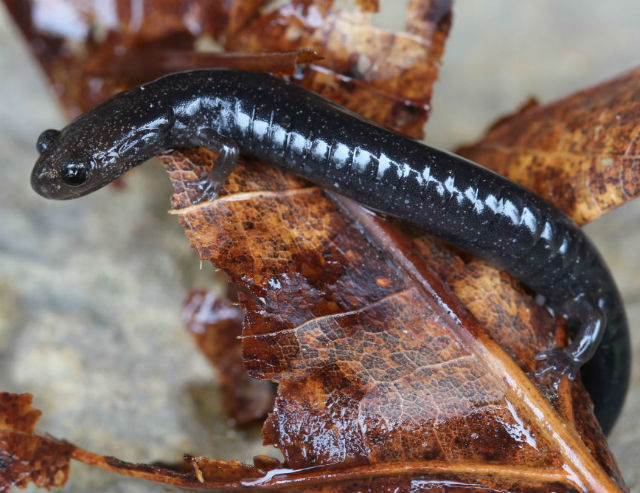
This amphibian can easily be mistaken for the “leadback” phase of a Redback Salamander. It has short limbs and is somewhat worm-like in appearance and movement.

ravine_9011

The background color is brownish black to black and flecked with a varying amount of fine silvery white to golden specks. This is Ohio’s most slender salamander. One-half of this animal’s total length is made up of its tail.

ravine210

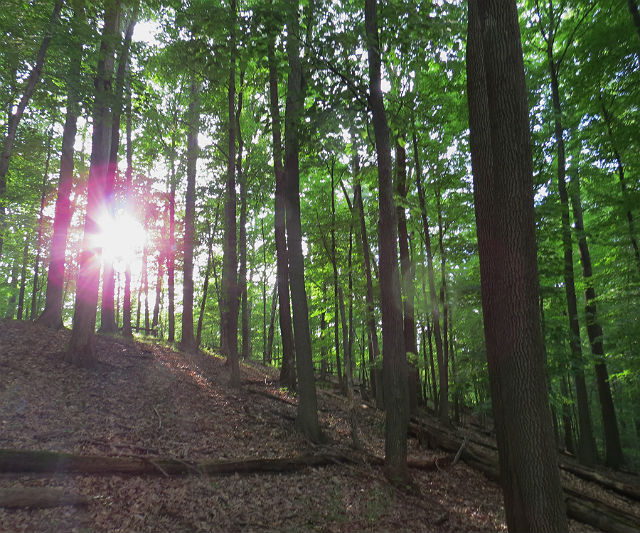
Ravine Salamanders reside in forests and are often found on the slopes of valleys and ravines where it lives among the leaf litter, hiding under logs, stones or stumps. Unlike many amphibians, this creature completely terrestrial, laying eggs on land. The eggs hatch as tiny juveniles.

ravine_9013

During Spring and Fall they can be found on the surface under leaf litter and other debris, but they burrow into the ground or retreat into deep, moist crevices to avoid the warmer temperatures of Summer.

ravine_8466

Adult Ravine Salamanders are 3–4½ inches in total length. They are found in eastern Kentucky, Ohio, southern West Virginia, western Virginia, northwestern North Carolina and northeastern Tennessee.

ravine_8452

This is a species of amphibian is in the “lungless salamander” family, which contains many species. Like other members of its genus, Ravine Salamanders lack lungs and conduct respiration through their skin and lining of their mouths. For this reason they need damp conditions in order to function.

Third Eye Herp
E-mail

California Slender Salamander

slender salamander 006

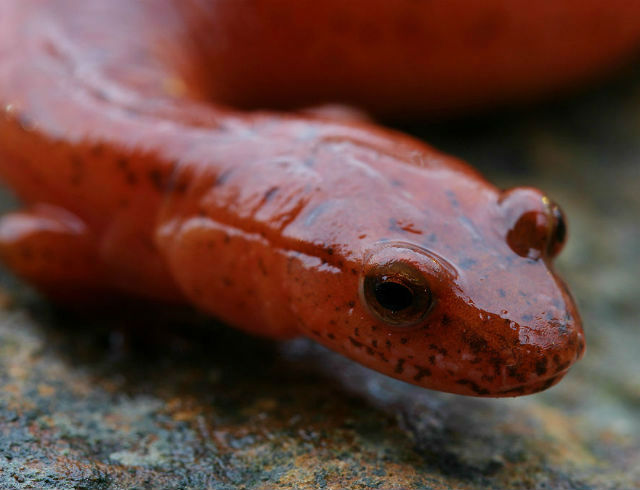
This creature is a lungless salamander that is found primarily in coastal mountain areas of Northern California. It is very commonly encountered and I’ve seen several on my current trip to the Golden State.
slender salamander  092

Its “slender” image comes from short limbs, a long, slender body with a narrow head and a very long tail. This gives them a worm-like appearance.

slender salamander  003

Like other lungless salamanders, they conduct respiration through their skin and their mouth tissues, which requires them to live in damp environments on land and to move about on the ground only during times of high humidity.

slender salamander 095

As you might imagine, an animal this small has plenty of predators. For defense. the California Slender Salamander Slender salamanders use several defense tactics, including coiling and remaining still, relying on cryptic coloring to avoid detection.

slender salamander_9442

They also can uncoil quickly and spring away, repeatedly bouncing over the ground, then remaining still again to avoid detection. If grapped this amphibian can detach its tail, which wriggles on the ground to distract a predator from the salamander long enough for it to escape.

IMG_6219

They are predators themselves, and use a sit-and-wait technique, catching prey that wanders by with their projectile tongue. Their diet consists of a variety of invertebrates, including springtails, small beetles, snails, mites, spiders and isopods.

slender salamander 001

The lifestyle of this tiny salamander remind me of one that I frequently encounter in my home state of Ohio – the Redback Salamander. Seeing either amphibian in the field is always an enjoyable experience.

Third Eye Herp
E-mail

Four-toed Salamander

four-toed salamander_7230

This small, slender salamander is orange to grayish brown above, sometimes with small black and bluish speckles on the sides. This is Ohio’s smallest salamander – and the first one I’ve ever found. Adults are 2 to 3 inches long; their tails make up over half their length.

four-toed salamander_3654

Though it ranges throughout much of the state, it only occurs where boggy ponds or spring-fed creeks are available in or near damp wooded habitats. As its name implies, this amphibian has only four digits on its front and hind feet.

four-toed salamander_3650

Four-toed Salamanders can voluntarily detach their tails, which continue to wiggle to distracting predators. This autonomization of their tails in unique. The tails of most salamanders must be grasped to come off.

four-toed salamander_3651

It was cool to finally meet this uncommon and secretive creature in the wild.

Third Eye Herp
E-mail

Spring Salamander

spring salamander_04_28 Powershot 366

This amphibian is found in Canada and the United States. Spring Salamanders are semi-aquatic, spending a majority of their time in springs, wet caves, and cool, clear mountain brooks. Spring Salamanders can also be found under stones and logs near stream edges.

spring salamander 182

This is one of the largest species of lungless salamanders and can reach about 8 inches in total length. It is usually salmon-pink to brown-pink with a few small, dark spots on the back and sides, usually forming a row along the sides.

spring salamander 177

Because they are lungless, and obtains oxygen through its skin, the Spring Salamander is limited to areas where there is adequate oxygen and moisture. Though is not confined to the water, however, and will sometimes leave its aquatic habitat and venture out on land in search of food.

spring salamander 036

As an adult, the Spring Salamander’s tail has a prominent, knife-like keel on the top that enables it to swim in swift-moving water. Adults also have toxic, skin secretions and red coloration that mimics more toxic species, for protection from predators.

spring salamander 035

It is primarily nocturnal. The Spring Salamander hunts at night for a wide variety of food consisting of insects, crustaceans, centipedes, millipedes, earthworms, snails, spiders, and occasionally small frogs and salamanders.

spring salamander 170

It was pretty cool to see several of these amphibians in the wild during my recent trip to Kentucky.

Third Eye Herp
E-mail

Jefferson Salamander

jefferson salamander_1352

The Jefferson Salamander belongs to a group of amphibians known as mole salamanders, named because they spend most of their life underground. The only time you are likely to see them is now, when they are migrating to temporary pools in the woods to mate and lay eggs.

jefferson salamander 009

Egg masses contain 20-30 eggs are attached to fallen tree branches underwater. The time it takes for the eggs to hatch depends on water temperature and ranges from 2-8 weeks. The aquatic larvae complete metamorphosis in 2-3 months and like frog tadpoles, they go from an aquatic existence to a life lived on land. Here’s a newly metamorphosed individual that I found in July of last year.

jefferson_0446

This amphibian is usually dark gray and often has silver or blue specks on its sides. The secretive adults hide under stones or logs, in leaf litter and in burrows in hardwood forests with damp conditions. Around here they share their habitat with Spotted Salamanders, though they are much less common. They tend to be more slender than spotteds, but are about the same overall length (about 7 inches).

jefferson salamander 028

The Jefferson Salamander feeds on insects, spiders, earthworms, slugs, pillbugs and other invertebrates. Because the adult salamanders spend most of the time outside of the breeding season hidden, their exact feeding habits are not known. Ecologically, salamanders play important roles in the organization of many terrestrial and aquatic communities. They are increasingly being used as indicators of environmental heath.

jefferson salamander 025

But they have an additional value to humans in the form of medical research subjects. Salamanders have extraordinary ability to regenerate toes, feet and entire limbs – they are the only vertebrate that can do this. Understanding the basis for their limb and tissue regeneration could have significant implications for the field of medicine.

jefferson salamander 023

The Jefferson Salamander is yet another of nature’s mysteries, cloaked in dark coloration and living an underground lifestyle that we know almost nothing about. I’m lucky if a see one or two of these fine salamanders each year, and I was glad to come across one this week.

Third Eye Herp
E-mail

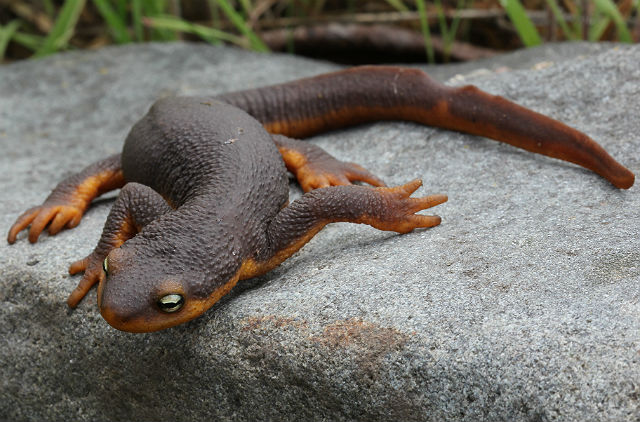
California Newt

california newt 026

California Newts are large salamanders reaching a total length of around 8 inches. They are slow moving and have “expressive” faces. These amphibians have dry, warty skin that is not slimy and are light brown to black with a yellow to orange belly.

california newt 060

The California Newt has a unique way of fending off predators. First they raise their head and point their tail straight out to expose their bright underside as a warning. If the predator attacks, the California Newt secretes neurotoxin through its warty skin and can cause paralysis and or death to its attacker.

california newt 049

They spend the most of their lives under logs and in animal burrows during dry months. But during Spring rains, they migrate to breeding ponds. Several places in California close roads to insure the safe passage of these salamanders.

california newt 045

Newts eat mostly bugs and worms, as well as slugs and snails. When feeding, adults flip out their sticky tongues to capture prey. They can live up to 20 years in the wild.

Third Eye Herp
E-mail

Cave Salamander

cave salamander_7999

Are you ready to spend a few days in southern Illinois? I found this small cave in the “Land of Lincoln,” let’s see what creatures lurk inside.

cave salamanders_8005

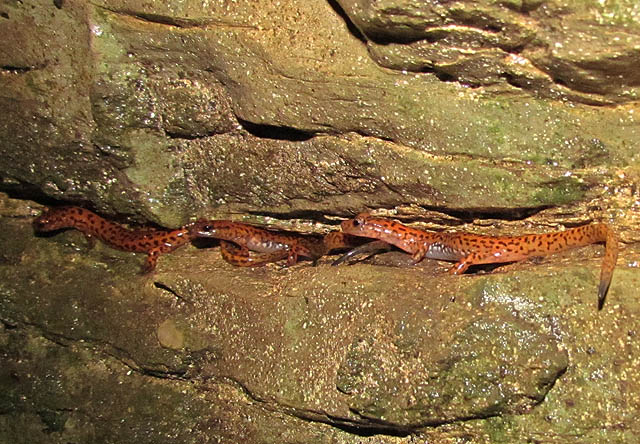
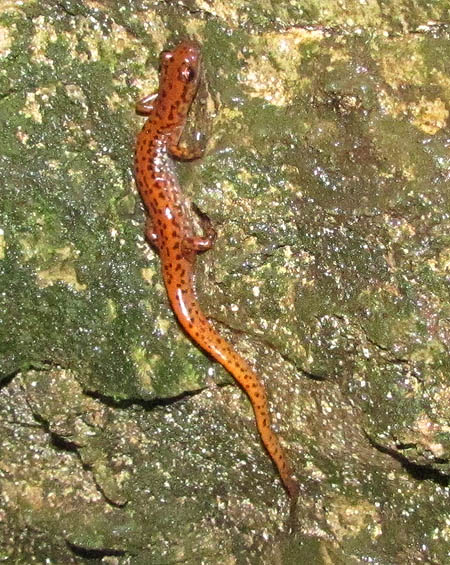
Cave Salamanders! These exceptionally slender salamanders are usually around 6 inches in length. They are easily identified by their bright ground color. The young of this species is often yellow in color, while the adults are usually a bright orange with black spots randomly covering their body.

cave salamander_8004

These colorful creatures remind me of geckos, the way they can run up the sides of cave walls. When pursued, a Cave Salamander scampers quickly, often waving its tail to distract attention away from its head.

cave salamander_1417

Although it usually occurs in caves, this species also can live in wooded areas, along rocky streams and springs, under rocks on glades during the spring and even in wells and swamps.

cave salamander_1416

Those living in caves live in the twilight zone, the dimly lit area beyond the cave entrance, but also occur far back in areas of permanent darkness.

cave salamander

The Cave Salamander’s diet consists mostly of small insects and other invertebrates. It’s always a thrill to encounter this exceptionally beautiful amphibian.

cave salamander_1423

Third Eye Herp
E-mail

Northern Slimy Salamander

forest_09_16 029

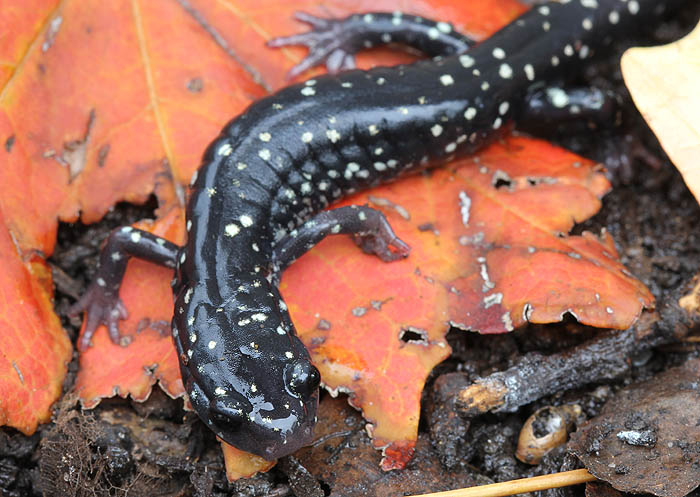
There are several common ways a small and relatively defenseless animal might avoid being eaten by predators. One method might be blending in with the surrounding environment, thereby avoiding detection. Another tactic would be the ability to make a fast escape. Still another strategy to not be eaten is to be poisonous, or at the very least, distasteful. The Slimy Salamander, however, employs none of these techniques.

slimy salamander_0936

This amphibian might be better named if it were called the “Sticky Salamander,” because it secretes a glue-like substance from its skin when threatened. This substance can be very difficult to remove from hands or clothing. It prevents the animal from being eaten by some predators. It’s scientific species name glutinosus is the Latin adjective “sticky.”

slimy salamander_0931

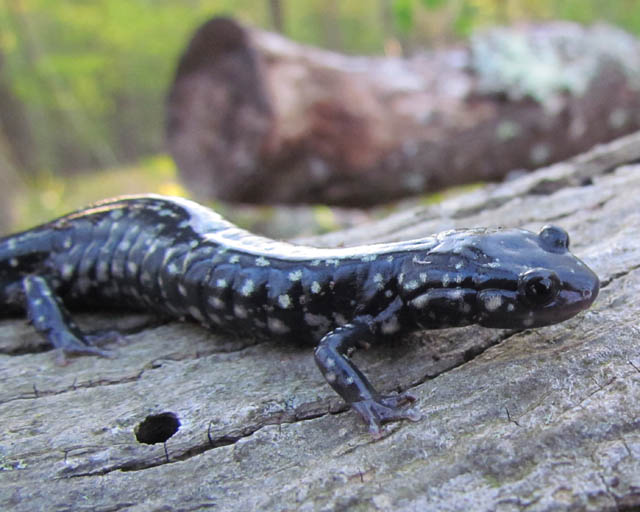
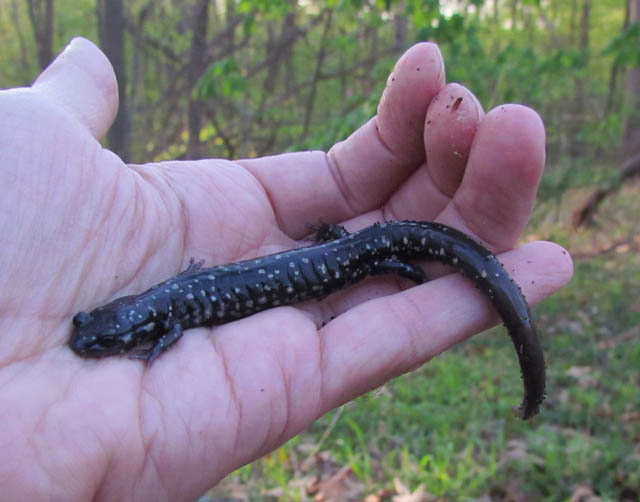
The relatively cool, wet Summer we’ve been experiencing has made for ideal conditions to come across this woodland salamander and I’ve seen a few over the past several weeks. This attractive amphibian is black with a scattering of small silvery-white flecks all over it. The amount of flecking can vary among individuals; flecks may be absent on some and plentiful on others.

slimy salamander_3028

The Northern Slimy Salamander is found throughout much of the northeastern United States. Though slender, it is relatively long, reaching total lengths of over 7 inches. It likes to hide under rotting logs or in stumps. Although entirely land-dwelling, it needs a damp habitat. It is a lungless salamander, so wet conditions are essential, because it breathes through its moist skin.

slimy salamander_3034

The Slimy Salamander emerges from its burrow at dusk and retreats at dawn. It hunts insects and other small invertebrates and catches food by flicking out its tongue. It is occasionally active on rainy days. Not only is it good looking, but the Slimy Salamander is also a true original when it comes to defending itself.

Third Eye Herp
E-mail