Seaside Daisy

01 Seaside Fleabane_3459

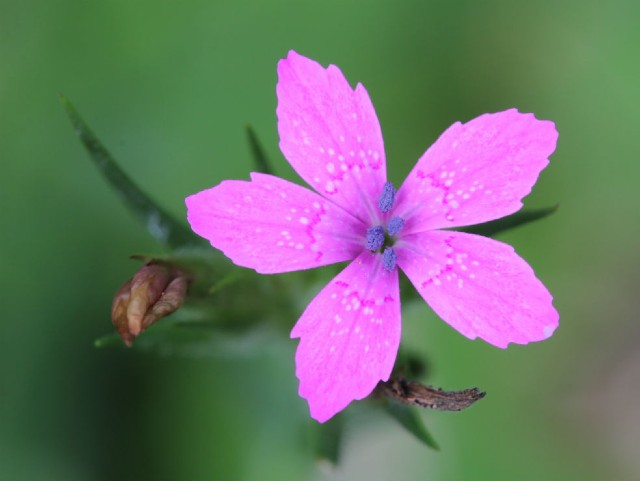
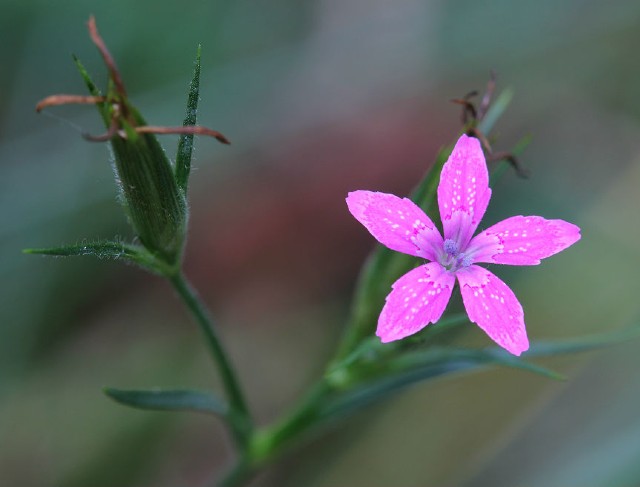
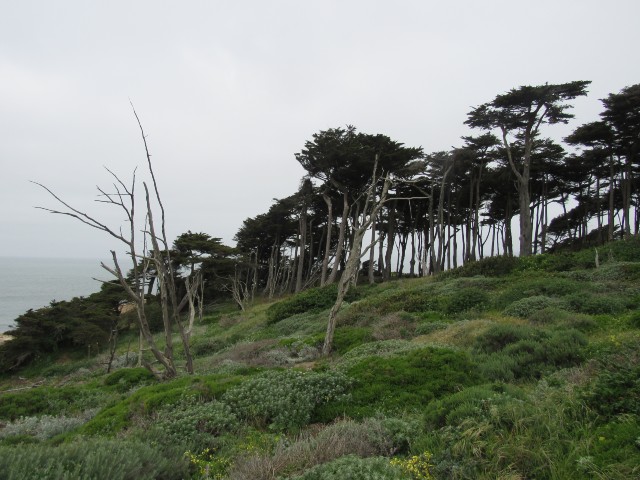
While on the Pacific Coast in April, I came across this cool-looking plant. This wildflower is native to the coastline of Oregon and California where it grows on beaches, coastal bluffs and dunes.

02 Seaside Fleabane_3478

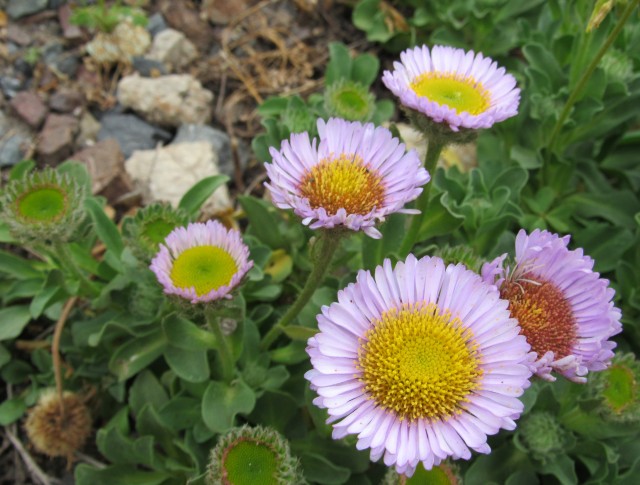
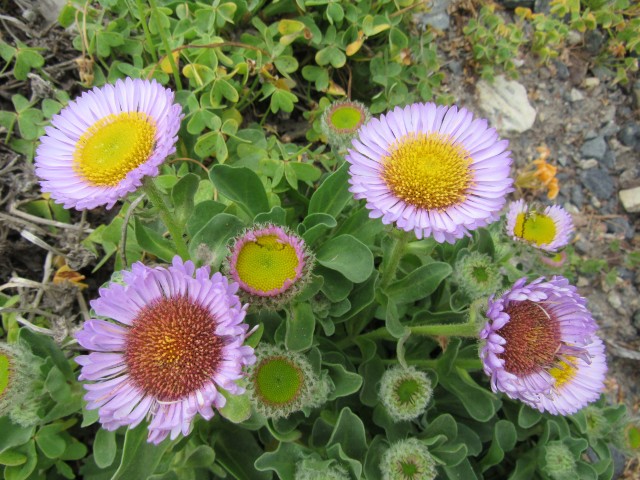
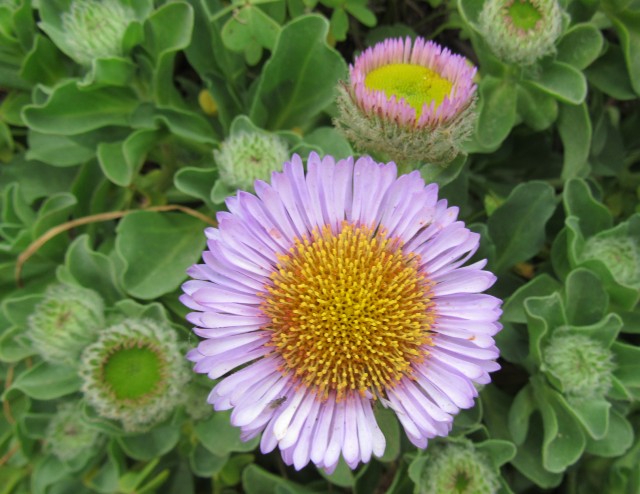
Seaside Daisy is a low-growing perennial, which forms a cushion of semi-double, lavender-to-pink flowers adorned with yellow centers.

03 Seaside Fleabane_3474

This plant blooms for months from mid-spring until late summer, when its blossoms almost cover its leathery foliage of thick, spoon-shaped, blue-green leaves.

04 Seaside Fleabane_3476

Its Latin name is Erigeron glaucus. The name erigeron is from the Greek eri meaning “early” and geron meaning “old man,” referring to the fact that the flowers bloom in spring, then turn gray like hair.

05 Seaside Fleabane_3472

This fine plant is also known as Seaside Fleabane and Beach Aster.

Third Eye Herp
E-mail

Snakefly

01 Snakefly_5506

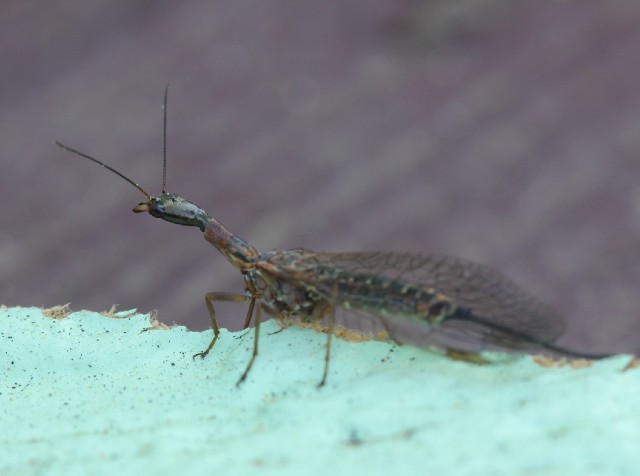
While at my friend’s house in California in April, I noticed this cool creature on the screen door. At first I thought that it was a Mantisfly, but closer examination showed it to be an insect that I had never encountered before.

02 Snakefly_5500

Snakeflies are family of predatory insects. They are a relict group and have been considered living fossils, as species from the early Jurassic period (140 million years ago) closely resemble modern-day species.
03 Snakefly_5496

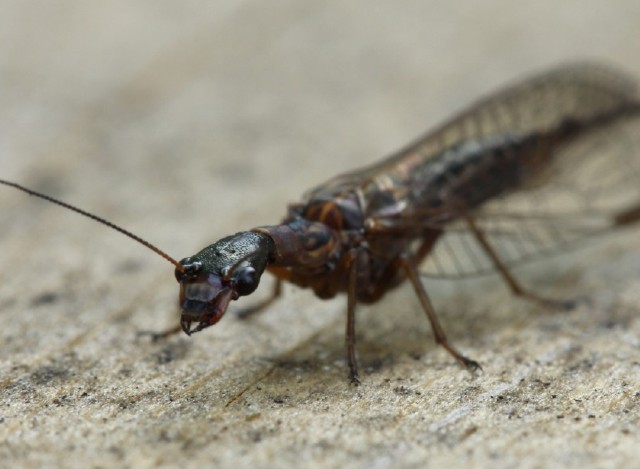
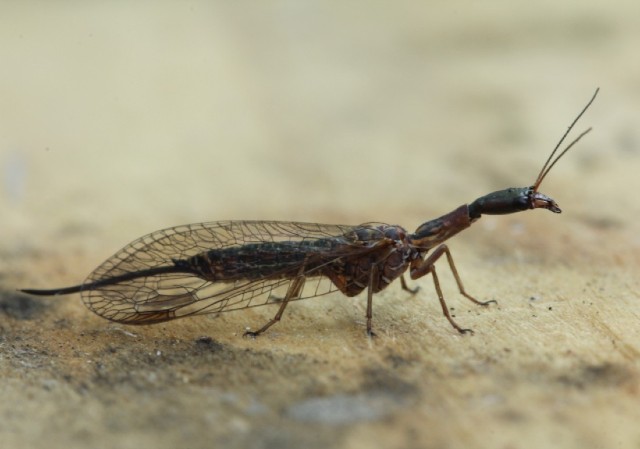
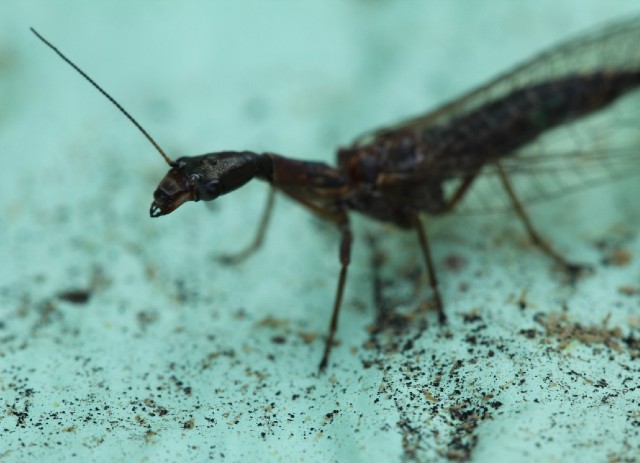
An adult Snakefly resembles a Lacewing in appearance, but it has a notably elongated thorax (which look like a neck) which, together with the mobile head, gives the group their common name. Snakeflies have transparent wings that are longer than their actual bodies.

04 Snakefly_5505

Females (like this one) have a large and sturdy ovipositor. This tubular structure is at the end of the insect’s abdomen and is used for depositing eggs, often in a well-hidden location. It is thought that they lay their eggs in the crevices in the bark of trees.

05 Snakefly_5491

At less than an inch in total length, adult Snakeflies are territorial and carnivorous organisms. They are diurnal and are important predators of aphids and mites.

06 Snakefly_5497

This was a very cool and unexpected find on my latest visit to the Golden State.

Third Eye Herp
E-mail

Southern Alligator Lizard

01 Southern Alligator Lizard_3994

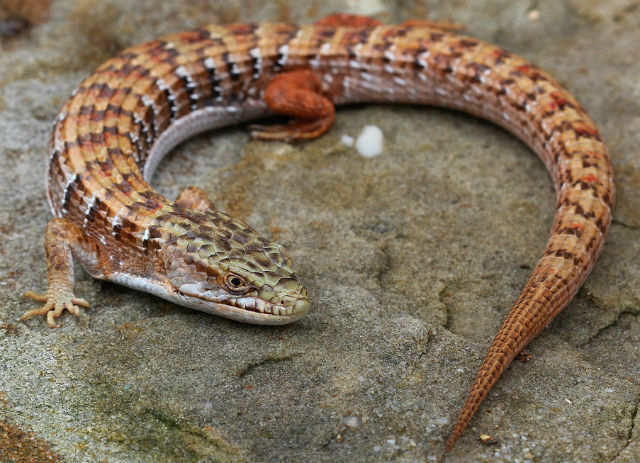
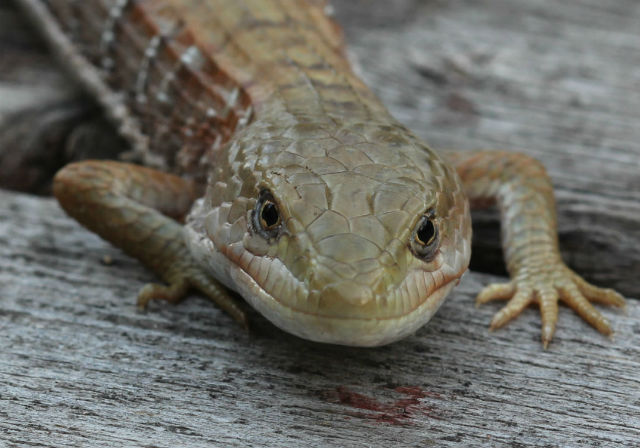
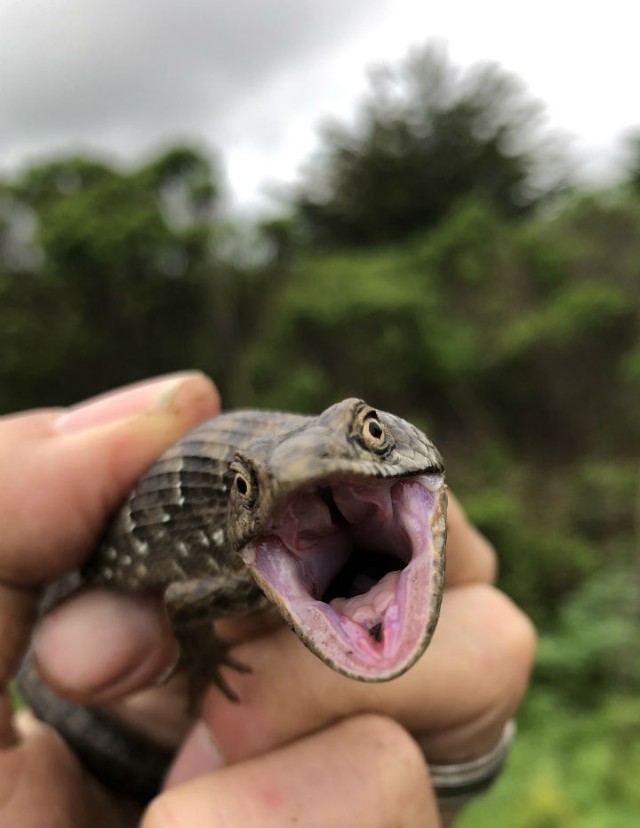
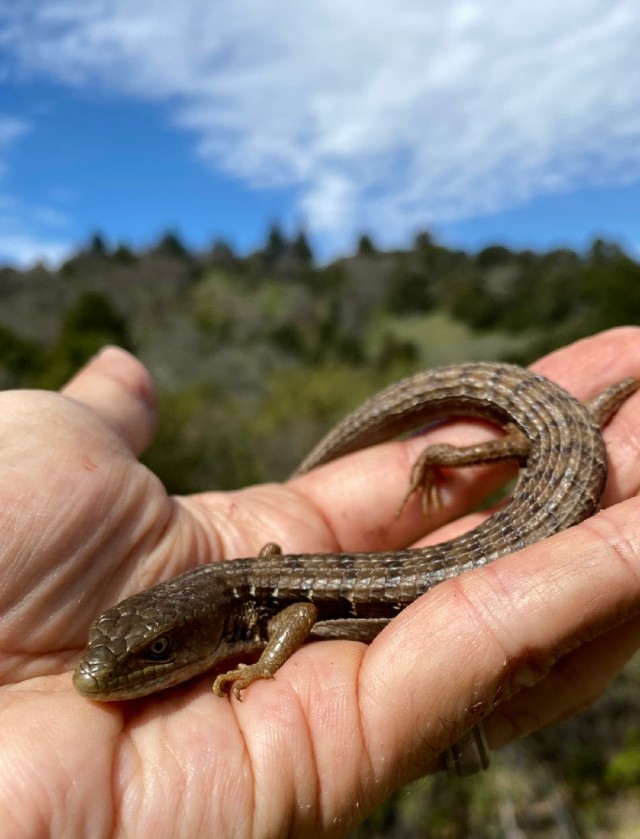
This is a relatively common lizard native to the Pacific Coast of North America. I enjoy seeing it when I visit California.

02 Southern Alligator Lizard 001

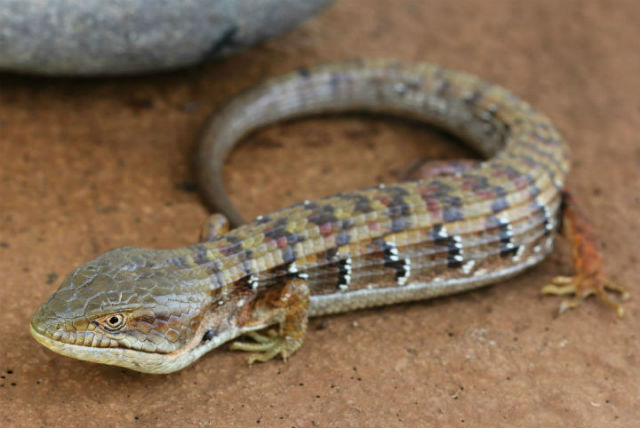
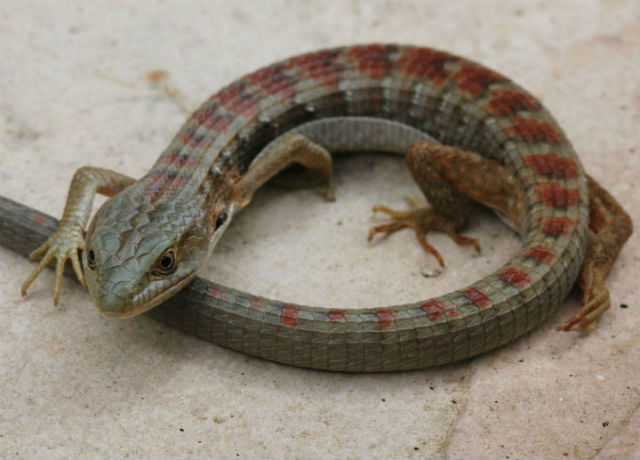
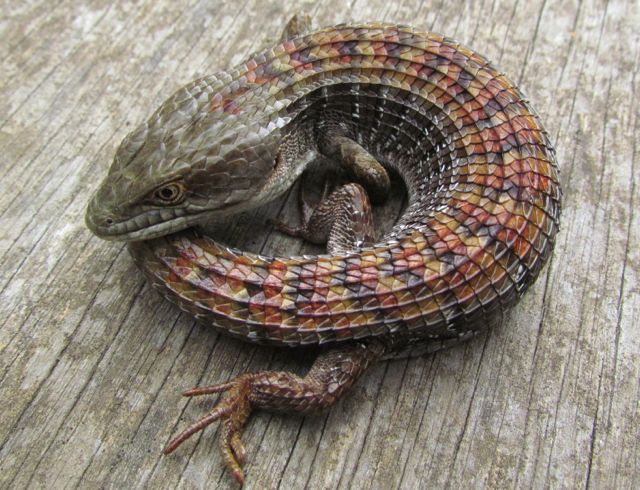
Their backs are brown with black spots that form numerous bands across the body’s width. They sometimes feature orange, yellow and white markings.

03 Southern Alligator Lizard_8587

These reptiles live in a variety of habitats. I tend to find them in grassy, brushy, or rocky openings within forested areas. I often find them hidden underneath logs.

04 Southern Alligator Lizard_E1524

The common name “alligator lizard” is a reference to the fact that the back and belly scales of these lizards are reinforced by bone, as they are in alligators.

05 Southern Alligator Lizard_5289

This creature has small legs and a long, somewhat prehensile tail that can be twice as long as its body. Like many lizards, they can detach their tail deliberately as a defensive tactic; the tail will grow back, although generally not as long as the original.

06 Southern Alligator Lizard_2332

One interesting characteristic this lizard has is a fold along each of its sides. The folds allows its body to expand to hold food or eggs.

07 Southern Alligator Lizard_9416

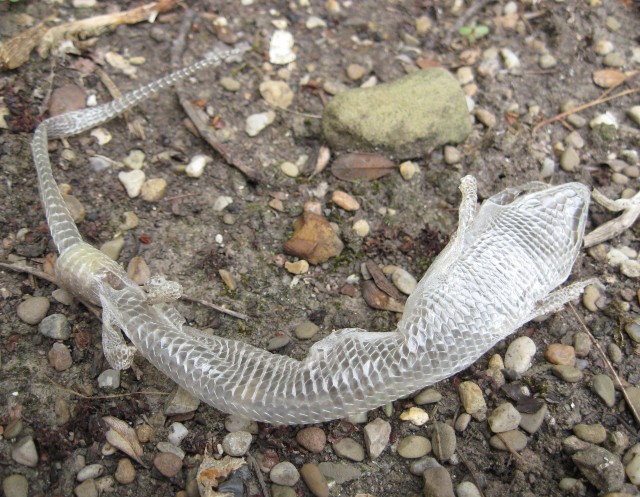
These lizards are thought to be more closely related to snakes than most other species of lizards. Like snakes, they shed their skin in a single intact piece by turning it inside out as they crawl out of it.

08 2009-06-30 009

The Southern Alligator Lizard eats small arthropods, slugs, lizards, small mammals, and occasionally young birds and eggs.

09 Southern Alligator Lizard_2584

This a a neat “classic” American reptile that is fun to come across while out herping.

Third Eye Herp
E-mail

Sea Otter

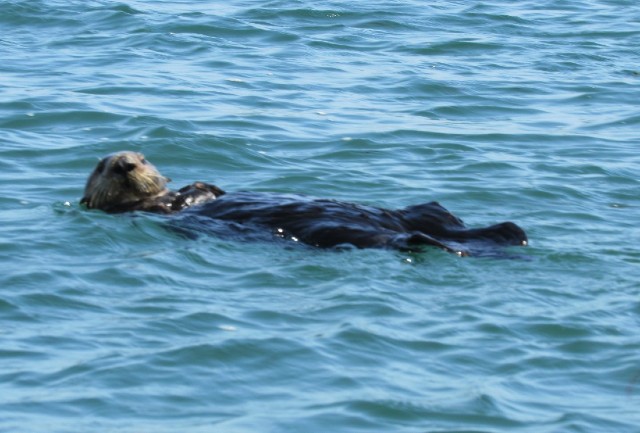
00 IMG_0851

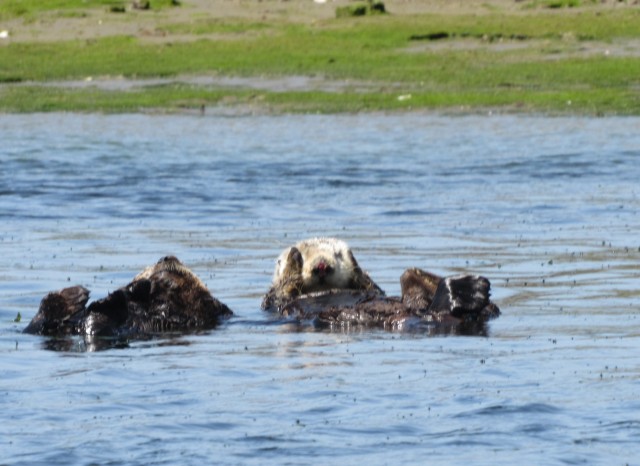
This is a cool a creature that I have observed both from shore and from the water, while kayaking in California. It is native to the California coast. Adult Sea Otters typically weigh between 30 and 99 pounds, making them the heaviest members of the weasel family, but among the smallest marine mammals.

01 Sea Otter_3637

Unlike most marine mammals, the sea otter’s primary form of insulation is an exceptionally thick coat of fur – the densest in the animal kingdom. Although it can walk on land, the sea otter is capable of living exclusively in the ocean.

02 Sea Otter_1275

The Sea Otter is most often seen near the shore, where it forages for marine invertebrates such as sea urchins, various mollusks and crustaceans and some species of fish. It is one of the few mammal species to use tools, utilizing rocks to dislodge prey and to open shells.

03 Sea Otter_3617

In most of its range, it is a keystone species, controlling sea urchin populations which would otherwise inflict extensive damage to kelp forest ecosystem.

04 Sea Otter_3639

Their numbers were once estimated at 150,000–300,000 before Sea Otters were hunted extensively for their fur between 1741 and 1911. The world population fell to 1,000–2,000 individuals living in a fraction of their historic range.

05 Sea Otter_1276

A ban on hunting, Sea Otter conservation efforts, and reintroduction programs into previously populated areas have contributed to their numbers rebounding, and the mammal now occupies about two-thirds of its former range. The recovery of the sea otter is considered an important success in marine conservation.

Third Eye Herp
E-mail

Blue Witch

01 hamilton 030

This is an evergreen shrub up to three feet high and wide, displaying purple flowers about one inch in diameter. It can be found in chaparral habitat and low-elevation oak woodlands in California and parts of Baja California and Arizona.

02 purple nightshade blue witch 141

It has bright purple or blue frilly flowers with thick yellow anthers at the center. The flowers close into spherical buds overnight. Its dark gray-green oval-shaped leaves grow on hairy green stems. All parts of the plant are toxic to people and some animals. However, it is very attractive to insects.

03 purple nightshade blue witch 144

Though the main bloom period is spring and summer, some flowers will occur for most of the year. When a Blue Witch flower finishes blooming, it bears small round green fruits which turn purple when ripe and resemble tiny eggplants.

04 purple nightshade blue witch 143

While beautiful to look at, it is also a tough shrub which can grow in rocky and clay soils and springs up in areas recovering from wildfires or other disturbances.

05 purple nightshade blue witch 145

This plant is also known as Purple Nightshade, Purple Witch and Parish’s Nightshade – it was neat to encounter it while hiking on Mount Hamilton during my visit to California.

Third Eye Herp
E-mail

Green-winged Teal

01 Green-winged Teal_3308

While driving to Point Reyes National Seashore, I noticed a group of waterfowl in a waterway, so I decided to check them out.

02 Green-winged Teal_3309

This is the smallest dabbling duck in North America. Males have a cinnamon-colored head with a bright green crescent that extends from the eye to the back of the head. In flight, both sexes flash deep-green wing patches.

03 Green-winged Teal_3330

The females are light brown, with plumage much like a female Mallard. They lay an average of 8-9 eggs.

05 Green-winged Teal_3320

These birds have closely spaced, comblike projections around the inner edge of their bills. They use them to filter tiny invertebrates from the water, allowing the ducks to capture smaller food items than other dabbling ducks.

04 Green-winged Teal_3310

The Green-winged Teal is very common and widespread, occurring in marshes, rivers and bays. In the Summer, it can be found in open country near shallow freshwater lakes and marshes.

06 Green-winged Teal_3348

Green-winged Teal have an extensive wintering range, having been recorded as far north as Alaska and Newfoundland and as far south as northern South America.

Third Eye Herp
E-mail

Sierra Fence Lizard

01 Sierra Fence Lizard_5501

While visiting Yosemite National Park I had my first-ever encounter with this subspecies of Fence Lizard. The habitat of this creature is covered with snow for much of the year.

02 Sierra Fence Lizard_5589

Though the weather was cool and there was still patches of snow on the ground, these reptiles were out catching the sun’s rays. Sierra Fence Lizards prefer open sunny areas and are often seen basking in the sun on rocks, fallen logs, trees, fences and walls.

03 Sierra Fence Lizard_5608

These medium-sized lizards are usually about six inches in total length and are covered in spiny gray, tan, or brown scales with a pattern of darker waves or blotches.

04 Sierra Fence Lizard__5596

Their favored habitats include grassland, sagebrush, broken chaparral, woodland, coniferous forest, farmland and even some urban areas. Here they bask, defend their territories, and feed on beetles, ants, flies, caterpillars and spiders.

05 Sierra Fence Lizard_5592

A protein in the Sierra Fence Lizard’s blood can kill the bacterium that causes Lyme disease, the most common tick-carried disease in the northern hemisphere. When disease-carrying ticks feed on the lizard’s blood, the disease-causing bacteria are killed and the ticks no longer carry the disease.

06 Sierra Fence Lizard_5602

It was neat to encounter yet another subspecies of this widespread and adaptable reptile while on my visit to California.

Third Eye Herp
E-mail

California Broad-necked Darkling Beetle

01 California Broad-necked Darkling Beetle_5023

The term “darkling beetle” refers to several genera within the insect family Tenebrionidae which includes about 20,000 species. These genera are also referred to as “pinacate beetles.”
02 California Broad-necked Darkling Beetle_4442

These insects are found worldwide, but are most commonly encountered in the deserts of the western United States, with as many as 450 species in California alone.
03 California Broad-necked Darkling Beetle_5100

Known commonly as “stinkbugs,” some beetles in this genus emit noxious odors in the chemical class quinones from the ends of their abdomens or behind their heads as a defensive mechanism.

04 California Broad-necked Darkling Beetle_0996

Many types of this beetle do “headstands” to ward off predators – whether they have the ability to produce bad odors or not.

05 California Broad-necked Darkling Beetle_5436

Typically they can be found under stones, around decaying matter, or walking right out in the open. I mainly find them under plywood boards that I lift while looking for snakes.

06 California Broad-necked Darkling Beetle_9150

This is one of the largest species of Darkling Beetles I have encountered. At home I keep two other species and raise them for their larval state: the mealworm, which is used to feed pet reptiles, birds and amphibians.

Third Eye Herp
E-mail

Silver Bush Lupine

01 Lupine_4351

While exploring Mount Hamilton in north-central California, it was hard not to notice this colorful purple wildflower.

02 Lupine_4352

This plant grows in the hills and valleys of the Golden State. It requires good drainage and needs little water once the roots are established.

03 Lupine_4353

When Silver Bush Lupine blooms, its flower is light blue to purple on three- to twelve-inch stalks. Its foliage is silver with a feathery texture.

04 Lupine_4357

Not only is it beautiful, but this plant performs a valuable function. It is a member of the Legume Family and has nitrogen-fixing nodules on their roots.

05 Lupine_4354

As a result, they are important for soils, as they can take nitrogen from the air and “fix” it into the ground for the purposes of plant growth and prosperity.

06 Lupine_4360

Like other perennial shrubs, Silver Bush Lupine can live for many years.

Third Eye Herp
E-mail

Western Painted Turtle

01 Western Painted Turtle_7880

This reptile is not native to Ohio, but I do see it occasionally in Cuyahoga Valley National Park and Summit County Metroparks. These turtles are probably released pets. I have also found it on my visits to California, where it is also not native.

02 Western Painted Turtle_5162

This is the largest of the four subspecies of Painted Turtles and attains a carapace length of up to 10 inches. Like others in its species, it is brightly marked.

03 Western Painted Turtle_1590

The Western Painted Turtle is native to the midwestern states of Oklahoma northward to the Dakotas and extends as far as Saskatchewan, Canada. It reaches the eastern portion of its range in upper Michigan and Ontario.

04 Western Painted Turtle_6049

These turtles feed mainly on plants and small animals, such as fish, crustaceans and aquatic insects. Turtles don’t have teeth, but instead have horny ridges that are serrated and sharp on their upper and lower jaws.

05 Western Painted Turtle_5170

The Western Painted Turtle is rather adaptable and is known to occur in prairie pothole wetlands as well as river floodplains and oxbows. It and its relatives, the Eastern, Midland and Southern Painted Turtles, are the most widespread turtles in North America.

Third Eye Herp
E-mail