Fathead Minnow

Fathead Minnow 068

The Fathead Minnow has natural geographic range extends throughout much of North America, from central Canada south along the Rockies to Texas, and east to Virginia and the northeastern United States. This minnow has also been introduced to many other areas via bait bucket releases.
fathead minnow 021

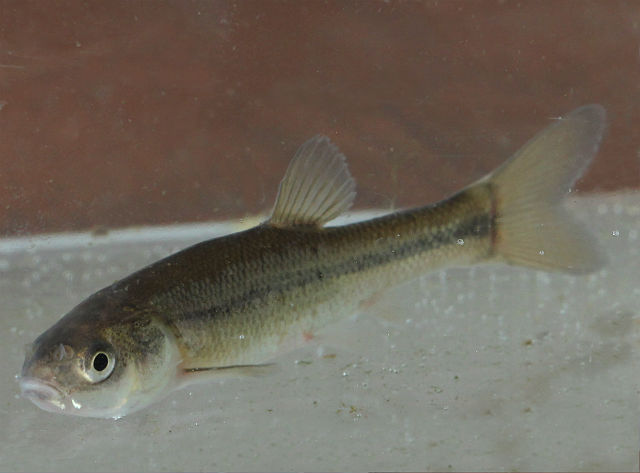
Though not very “flashy,” being dull olive-grey in appearance, this is a very successful fish. Their tolerance for multiple environmental conditions, characteristics of their life history and their popularity as bait species contribute to their widespread distribution.

Fathead Minnow 036

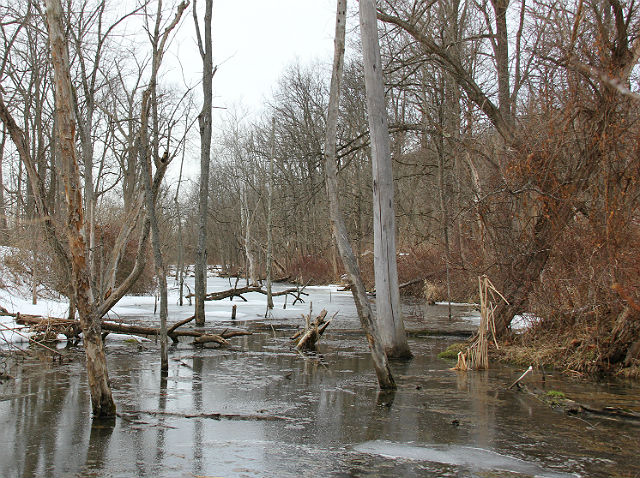
The Fathead Minnow is quite tolerant of turbid, low oxygen water and can most commonly be found in small lakes, ponds and wetlands. They can also be found in larger lakes, streams and other habitats as well.
Fathead Minnow 044

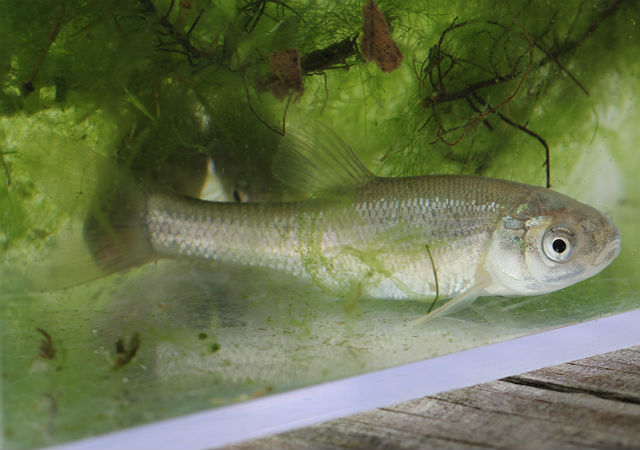
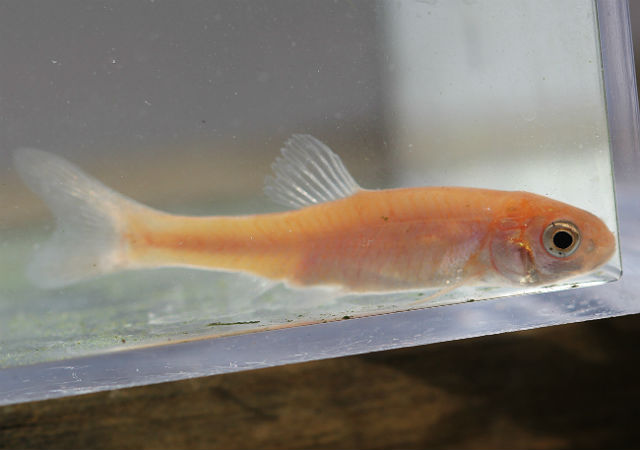
The golden (xanthic) strain is known as the “Rosy Red” and is a very common feeder fish sold in the United States. This color version of the fish is also sold in the pet trade.
Fathead Minnow 002

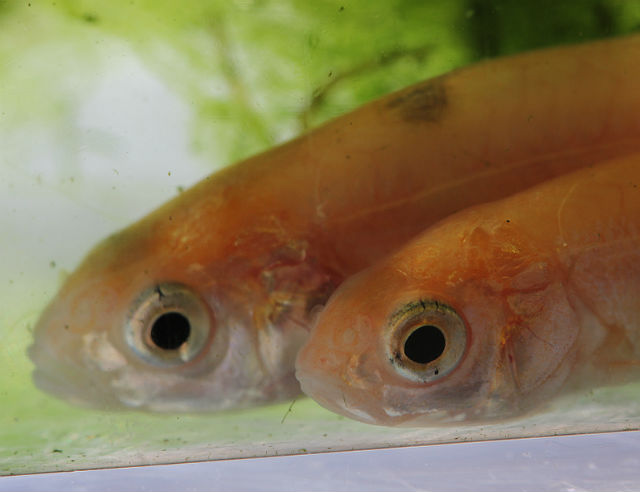
Now only is this well-known to fishermen and aquarists, but to science the Fathead Minnow famous for producing Schreckstoff, which is a distress signal. The alarm substance is released when the fish is injured by a predator and can be detected by other Fathead Minnows, which then hide or dash away.
Fathead Minnow 010

And if all that wasn’t enough, this species is also important as a biological model in aquatic toxicology studies. Because of its relative hardiness and large number of offspring produced, EPA guidelines outline its use for the evaluation toxicity of aquatic environments. It has been the most widely utilized North American model for ecotoxicology since the mid-twentieth century.
Fathead Minnow 038

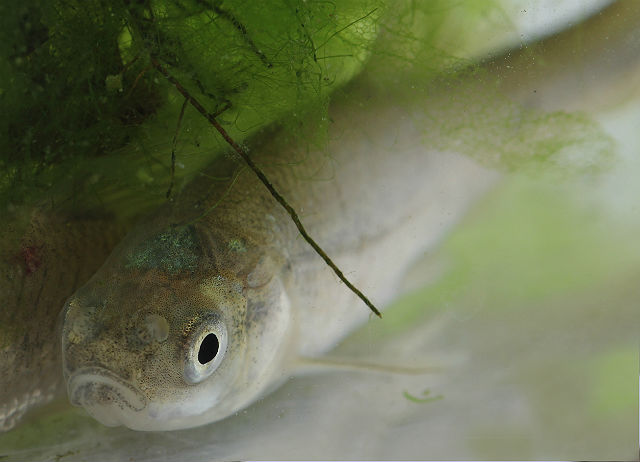
Averaging only 2-3 inches long, the Fathead Minnow is a little fish with a lot going for it.
Third Eye Herp
E-mail

Stonefly

stonefly010

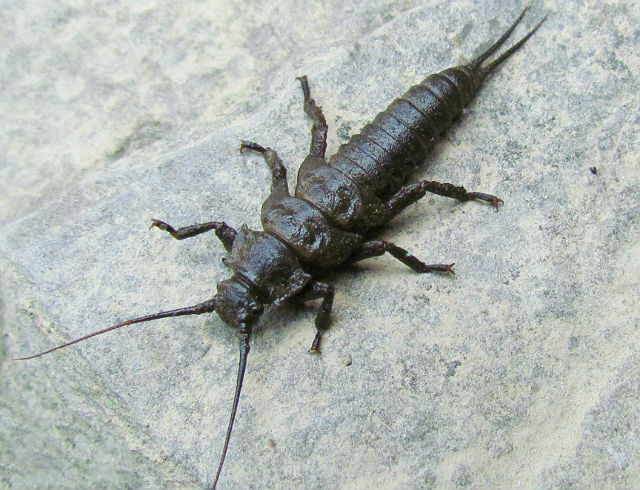
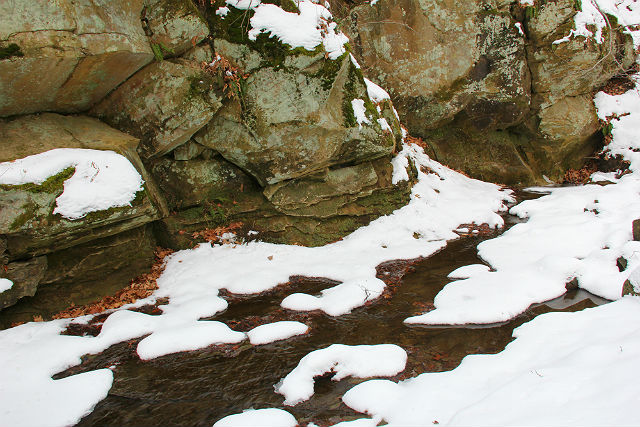
Even in the winter you can find cool stuff by overturning rocks found in creeks. As the name “Stonefly” implies, they typically crawl around under rocks in streams. These are ancient insects of a very old and stable lineage. They have changed very little in the last million years. They are the aquatic, immature stage of a fairly short-lived winged adult insect.

stonefly_7914

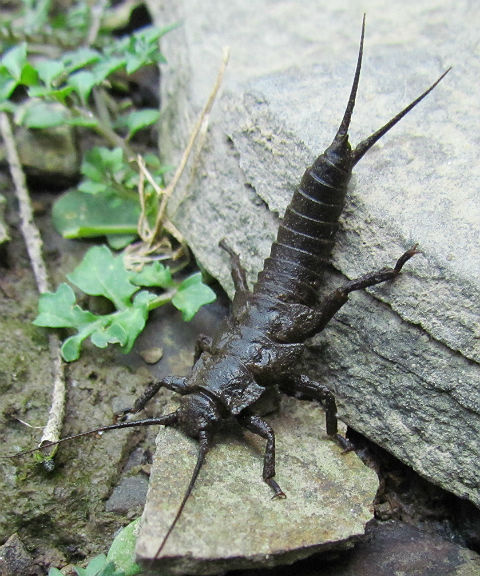
To make their final transformation, the nymph crawls up overhanging roots, vegetation or rocks protruding from the water, sheds its skin, and flies away as an adult. Adults engage in an interesting behavior known as “drumming.” When drumming, stoneflies strike themselves against an object, producing a signal of pulses and pauses.

stonefly_7915

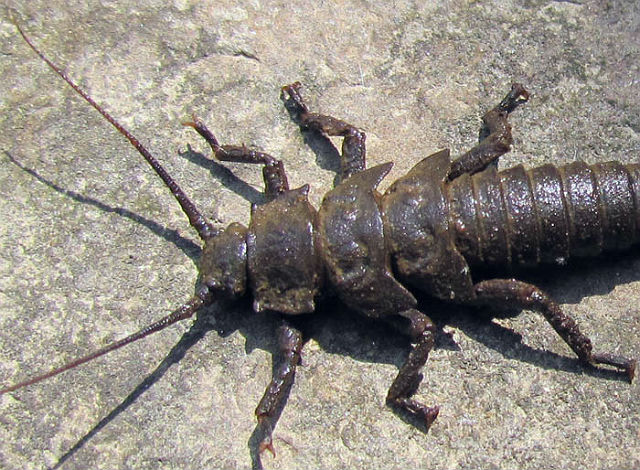
Stoneflies are usually associated with well oxygenated streams or sections of lakes with plenty of waves. They are predatory on a variety of other aquatic insects and invertebrates.

stone_7919

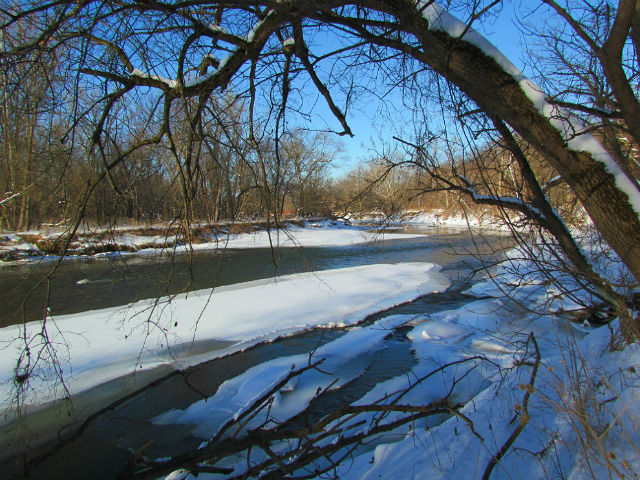
They are not just cool to look at, they are also an important part of stream and river fauna, providing food for fish and birds. Their absence is often a good indicator that a stream is polluted. These insects are so important that conservation agencies and game fishermen keep charts of when they hatch.

Third Eye Herp
E-mail

Red-breasted Merganser

Red-breasted Merganser_1725

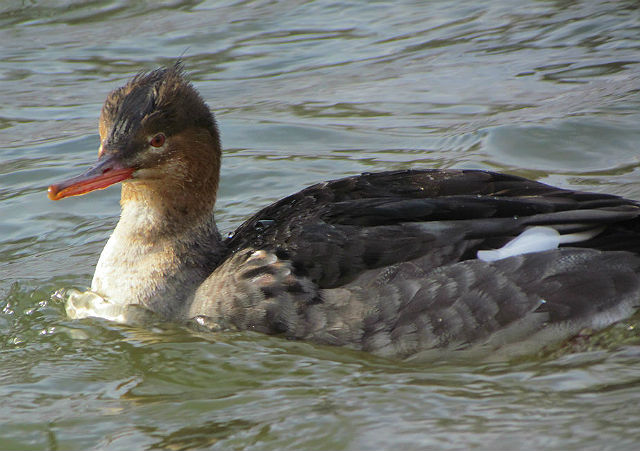
Near Station Road Bridge on the Ohio & Erie Canal Towpath, I encountered a group of very cool, colorful birds. Red-breasted Mergansers are sometimes referred to as “sawbills” due to the toothy edges of their bills, which allow them to more easily grasp fish.

Red-breasted Merganser_1884

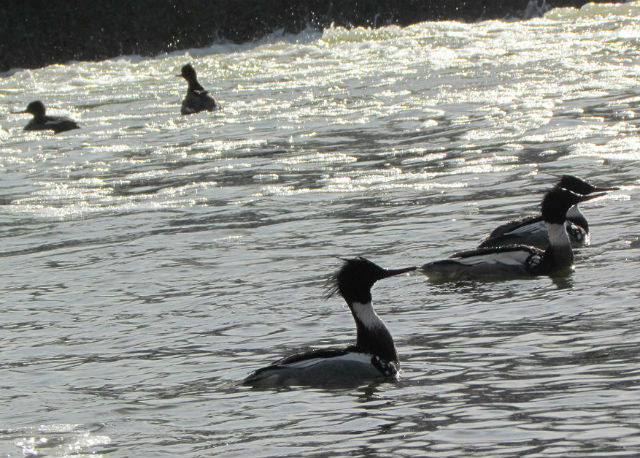
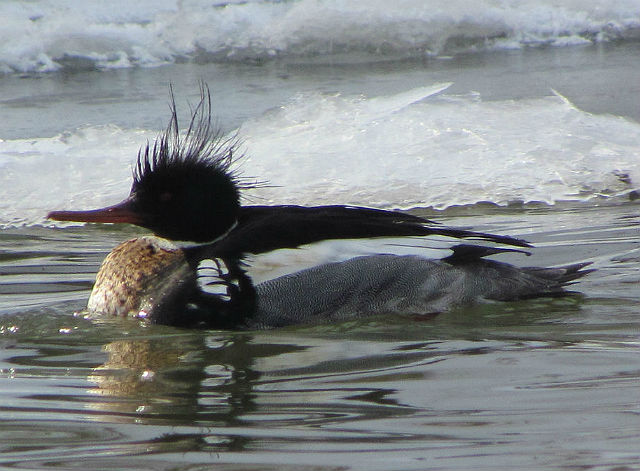
The male shows a striking, wide band of white that extends almost the full length of the body and a dark band across his chest. The dark, tufted green head appears black at a distance. This bird’s slender neck and tapered body give it a streamlined appearance when in flight.

Red-breasted Merganser_1853

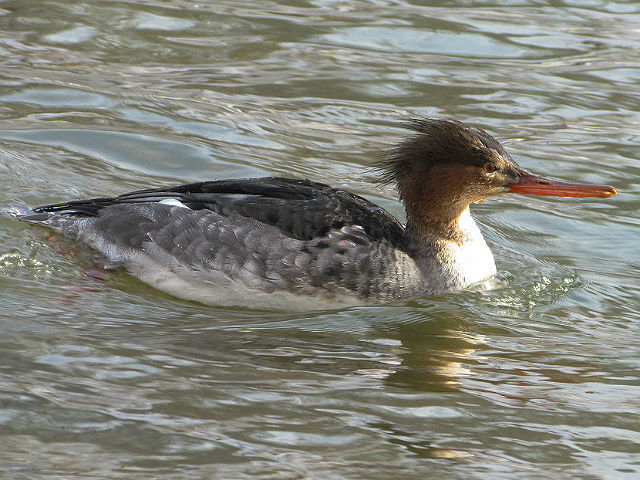
The female Red-breasted Merganser has a has a cinnamon-brown head and dusky gray back, occasionally enlivened by a small white blotch in front of the tail. The female also has lighter red eyes and feet than the male, which tend to be a deep red. Both females and males have a double crest of plumes at the back of their heads.

Red-breasted Merganser_1865

Red-breasted Mergansers search for fish mainly in shallow waters. They are a “diving duck” rather than a “dabbler” like a Mallard. They have rapid, efficient flight and can swim and dive well by propelling themselves with their feet. However, they cannot walk well, because their feet are so far back on their bodies.

Red-breasted Merganser_1852

These birds are highly social and are usually seen in groups, except during breeding season, when pairs separate to mate and nest. During their fall migration they may gather in large groups of up to 15,000. Red-breasted Mergansers are commonly seen foraging for food and nesting near other bird species.

Red-breasted Merganser_1890

They locate food in several different ways: They float at the surface, looking underwater as they go; they dive in deep or shallow water to search for prey; or they dive in formation with other Red-breasted Mergansers to herd schooling fish.

Red-breasted Merganser_1796

The unique bill, vibrant colors, and shaggy crest on the back of the head give these birds a distinct visual appeal. Watching their diving and social behavior made for an enjoyable outing that took place only a few minutes from my home.

Third Eye Herp
E-mail

Common Teasel

teasel004a

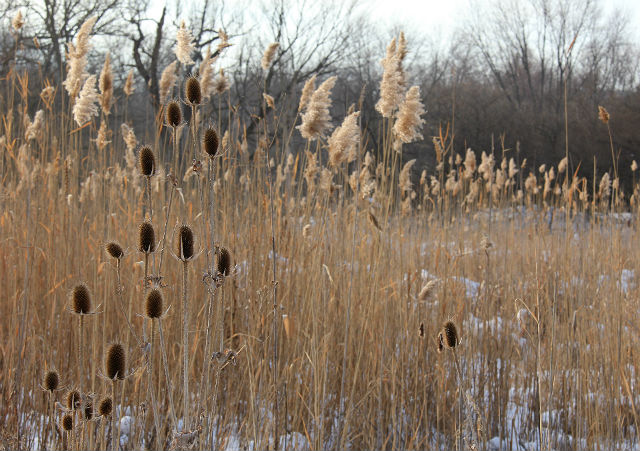
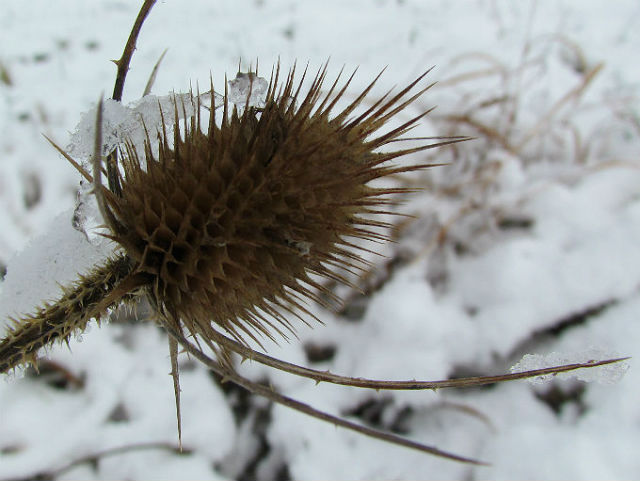
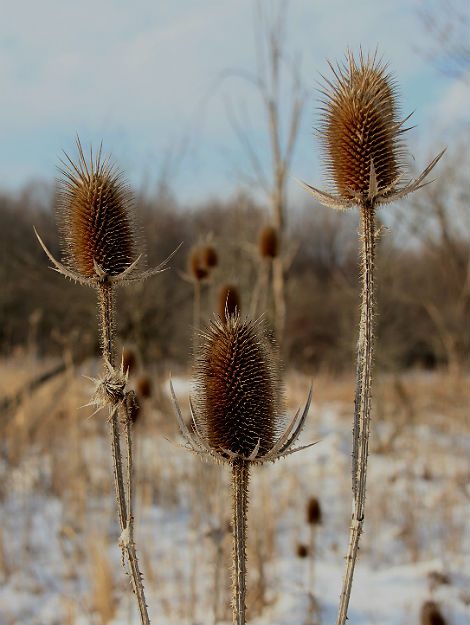
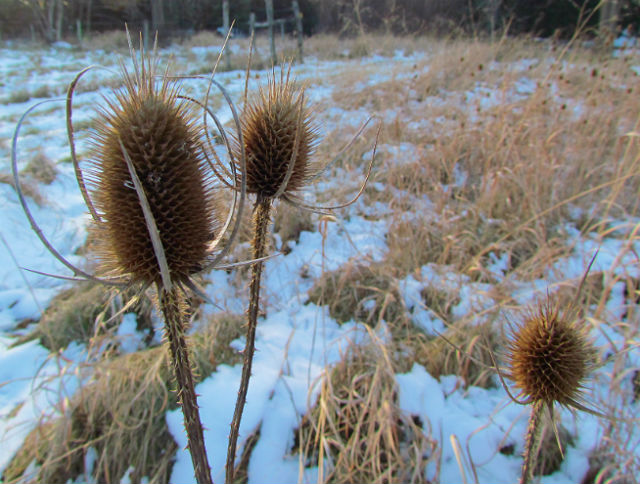
Dried large, spiny, club-like flower heads, some over two inches long and loosely enclosed in cage-like bracts add shapes and colors to Winter landscapes.

teasel_9363

Common Teasel’s unique form has allowed it to garner many common names like barber’s brush, brushes and combs, card teasel, church broom, gypsy combs and Venus’ cup – just to name a few.

teasel009a

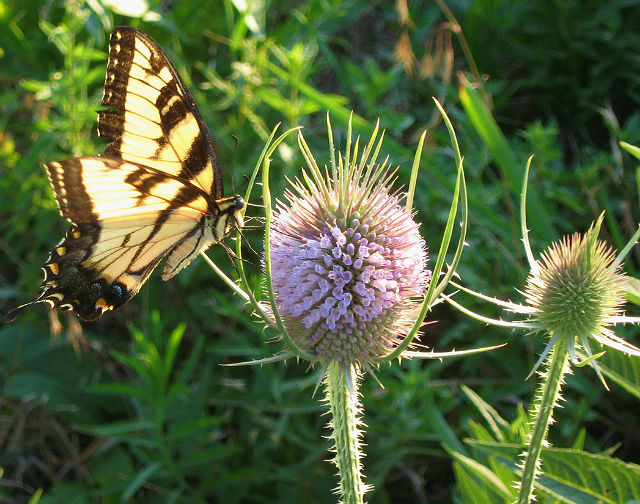
When alive and green in the Summer, numerous tiny purple flowers appear in circular rows around the flower heads. Here’s one in August being visited by a Tiger Swallowtail.

teasel_1461

Common Teasel is native to Europe and was imported into North America, possibly as an ornamental or more likely because the dried flowers were used in wool production. The dried heads were once cultivated by wool companies, fixed as spindles and used to raise nap or tease wool cloth, hence the common name.

teasel_9717

This plant tends to be found in damp grassland and field edges or along roadsides. Although picturesque to look at, Common Teasel also is an excellent source of Summer nectar and pollen for insects and Autumn seeds for birds.

Third Eye Herp
E-mail

Fox Squirrel

fox squirrel_1490

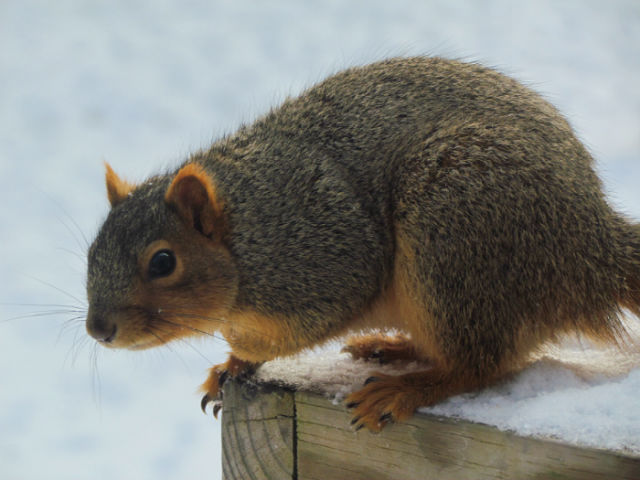
This squirrel is the largest of the four squirrel species in Ohio; gray, red and flying squirrels are the other three. Fox squirrels were not originally inhabitants of Ohio. The extensive, heavily wooded forest of pre-settlement Ohio was not their preferred habitat. Only when early settlers cleared away forests and created open areas, did this animal make the Buckeye State its home.

fox squirrel_1468

Fox squirrels make use of hickory, oak, beech, black walnut, maple, elm and buckeye trees for food and shelter. Fox Squirrels use two types of nests: leaf and den. Leaf nests are constructed from leaves and twigs and are located in the forks of tree branches. Dens are formed in hollow tree trunks or branches.

fox squirrel_1441

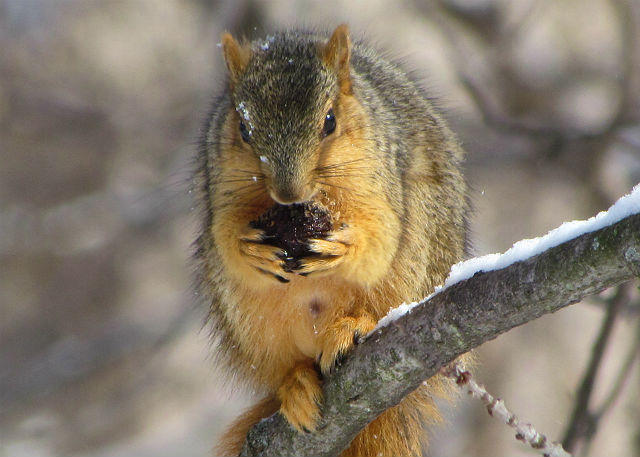
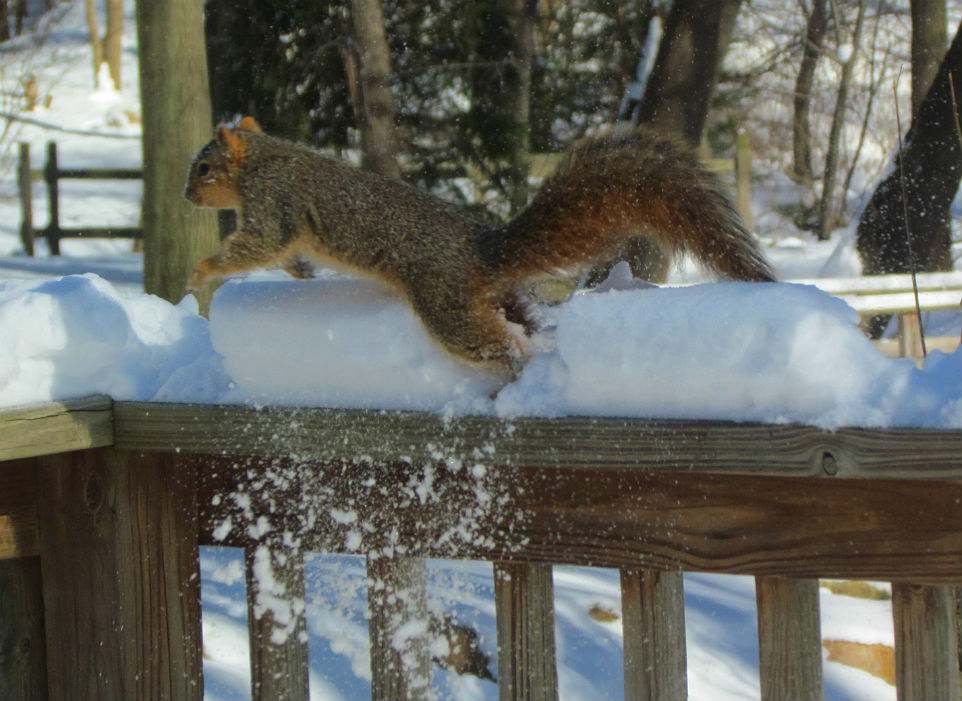
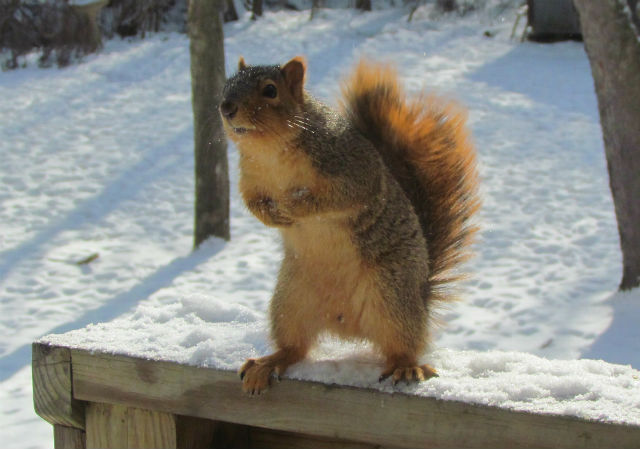
In contrast with our other native squirrels, the Fox Squirrel is less nervous and adjusts well to small woodlots in farmland or suburbia. They can often be seen in city parks…and on my backyard deck. Fox Squirrels have reddish-orange bellies and get their name from that color resembling the color of a Red Fox’s fur.

fox squirrel_1434

Fox Squirrels spend considerable time foraging on the ground, where they move with a rolling walk or hop, searching for food with their keen senses of smell and sight. They don’t hibernate, so they must depend upon buried acorns and nuts, or bird feeders, for winter fare. Many acorns buried in the fall are never found and later sprout to become trees.

fox squirrel_1455

Squirrels’ long bushy tails are used for a variety of purposes. They can be wrapped around a squirrels face to keep them warm or used as an aid in balancing when they run along tree limbs. With a little practice, watching a squirrel’s tail movements gives you a clue to their mood. Quick jerks of the tail signal that they are nervous or upset.

fox squirrel_1446

Squirrels are members of the highly successful rodent family, which includes members ranging in size from tiny mice to the South American Capabara, which is as big as a dog.

fox squirrel_1436

February is an important time for these animals.  That is when they begin raising their offspring. An average of three pups are born naked and blind.  They do not venture out of the nest until they are two months old, and accompany their mother for another three months after that. Squirrels typically live 4-7 years in the wild.

Third Eye Herp
E-mail

Black-Footed Polypore

black-footed polypore 072

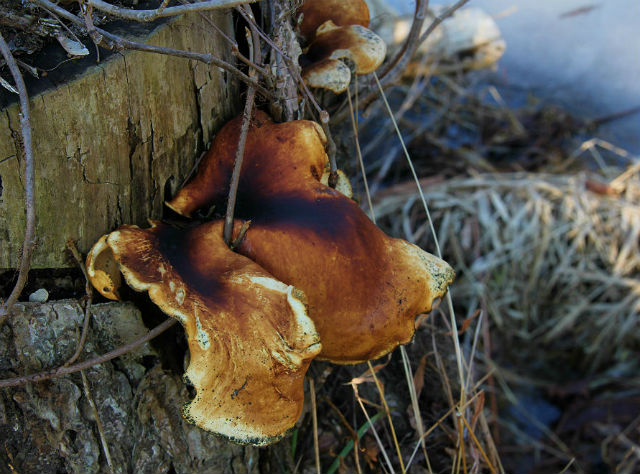
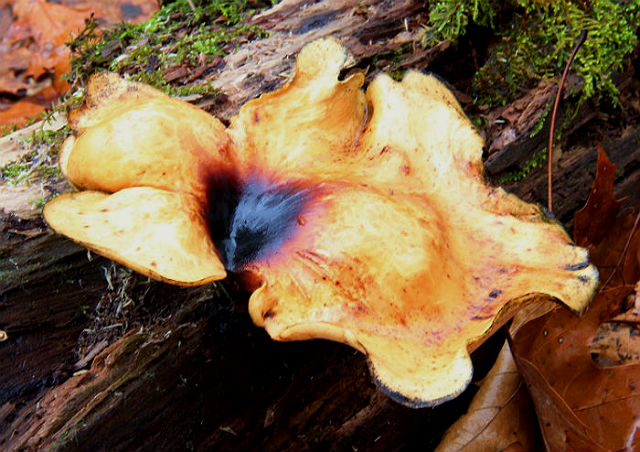
The Black-Footed Polypore has a smooth, wavy cap that is often sunken in the center. Its off-center stalk is black near the base. It can grow singly or in groups on dead wood and stumps of trees. Although it is typically seen in Autumn, it has the ability to overwinter.

black-footed polypore 026

This species lives within rotting logs as a whitish network of cells that digests and decomposes the dead wood. When ready to reproduce, mushrooms develop and emerge from the log. Not only is its appearance distinct, sometimes convex and sometimes funnel-shaped, but it is rather large – about 8 inches across.

polypore032

This is one of the many fungus species that live on decaying wood. It and other related fungi play an incredibly important role in breaking down the tough materials wood is made of and returning those nutrients to the soil.

black-footed polypore 035

Mushrooms decorate woodlands the way wildflowers do, adding to our enjoyment of hikes. Many mushrooms are most prominent in the Fall, when wildflowers are winding down. Mushrooms that overwinter are an especially welcome sight on a February day like today.

Third Eye Herp
E-mail

Cellar Spider

cellar spider 014d

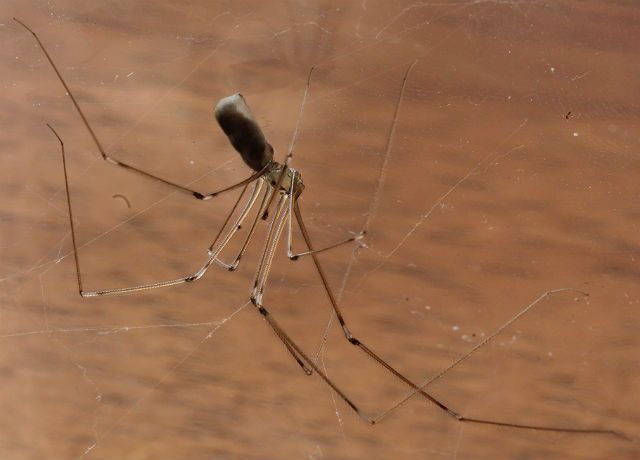
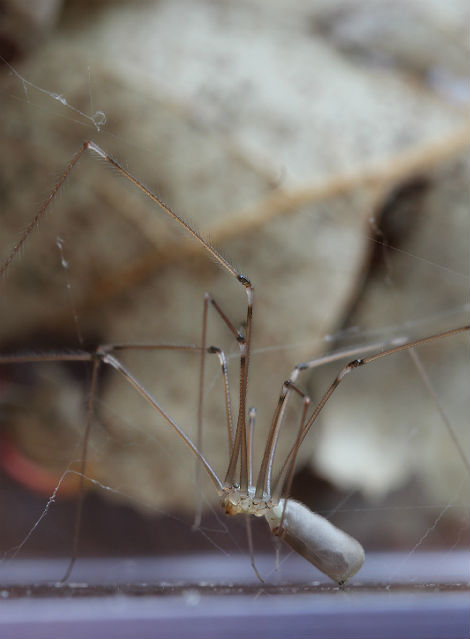
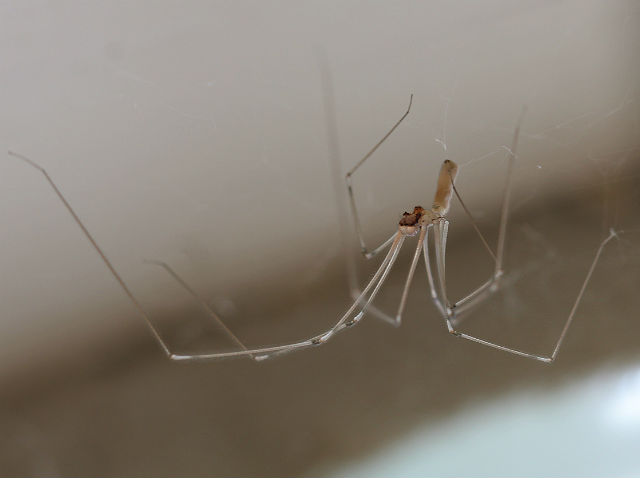
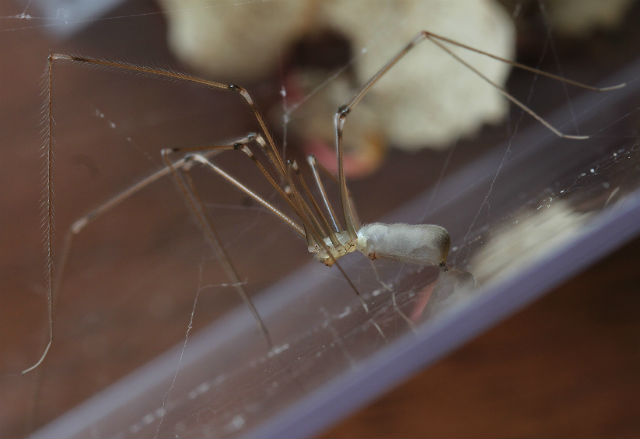
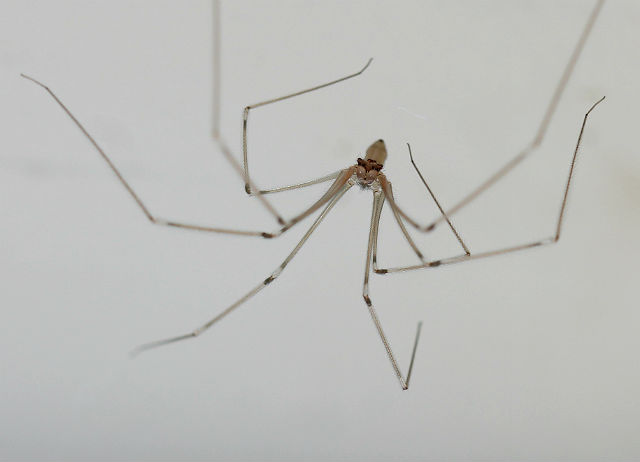
Its habit of living on the ceilings of rooms, caves, garages or cellars gives rise to one of the common names for this arachnid. It is easy to identify, because Cellar Spiders typically have extremely long and skinny legs with small bodies. Cellar Spiders are considered beneficial in some parts of the world because they kill and eat other spiders, including species that are venomous to humans.

cellar spider 020

Originally from the subtropics, they are not native to the United States, but are quite familiar to many. I often encounter them in my basement or garage. They are unable to survive in cold weather and consequently are restricted to (heated) houses in some parts of their range. One species, Pholcus phalangioides, is common in buildings worldwide.

cellar spider 024

This is the only spider species described by the Swiss entomologist Johann Kaspar Füssli, who first recorded it for science in 1775. Confusion often arises over another one if its common names, because “daddy longlegs” is also applied to an unrelated arthropod – the harvestman.

cellar spider 028

An unusual behavior of theirs is that these spiders will rapidly vibrate in a circular fashion in their web if threatened, making them difficult to see. Although they look delicate, they can easily catch and eat other spiders (even those much larger than themselves) and insects.

cellar spider 023

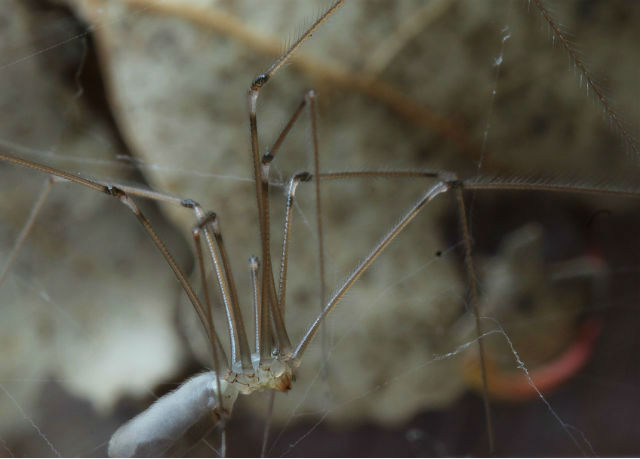
A Cellar Spider doesn’t move around very much; it usually stays in its web. It spends most of its life hanging upside down and waiting for prey. The web is usually a very messy cobweb structure.

cellar spider 022

When food is scarce, this creature may abandon its web and find the web of another spider. It will then tap on the web, mimicking a trapped insect. When the owner of the web comes to catch its “prey,” the Cellar Spider captures and eats it.
Third Eye Herp
E-mail

Cattails

Cattails_9335

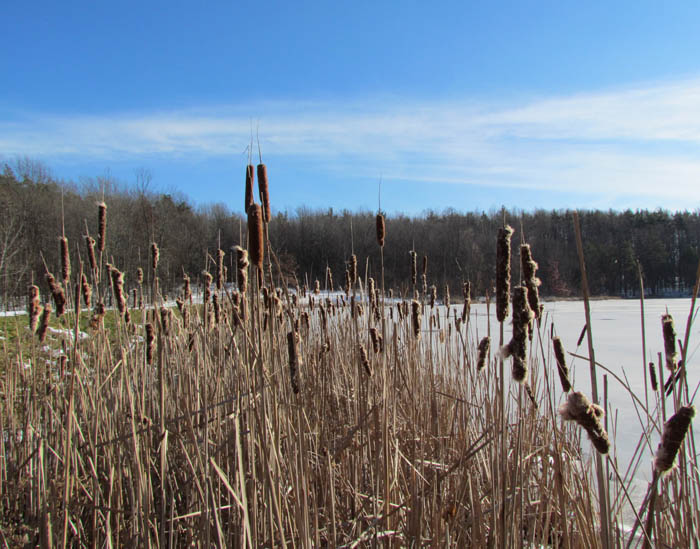
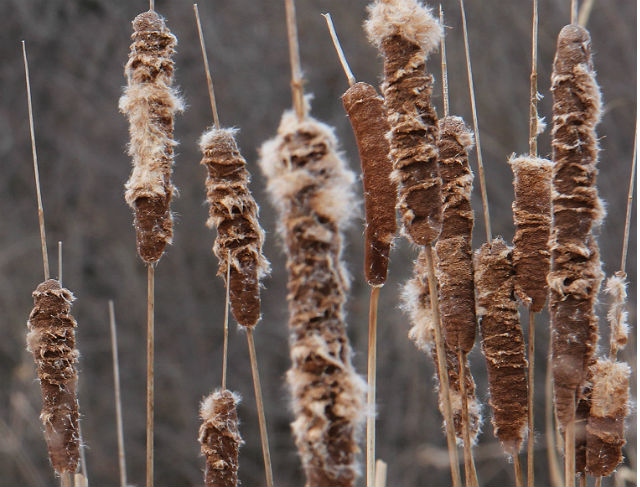
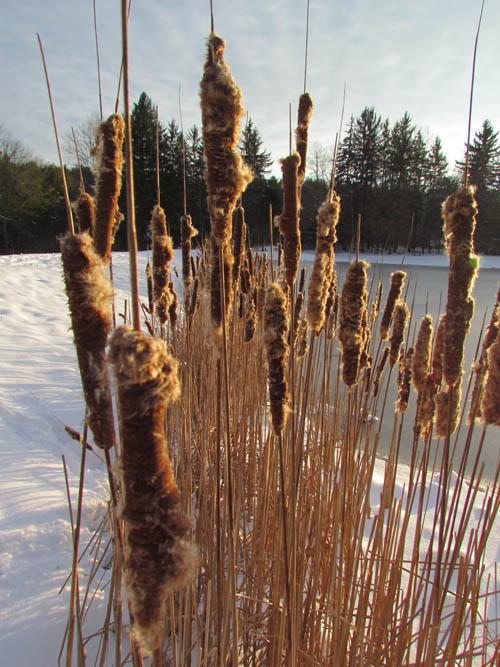
Cattails are one of the most common and easily identified of our water-loving plants. Most people are familiar with the long green leaves and hotdog-shaped brown flower spikes.

cattails011

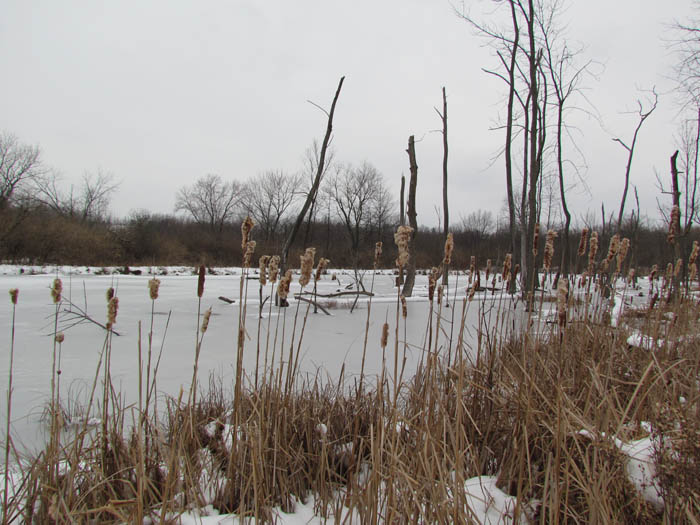
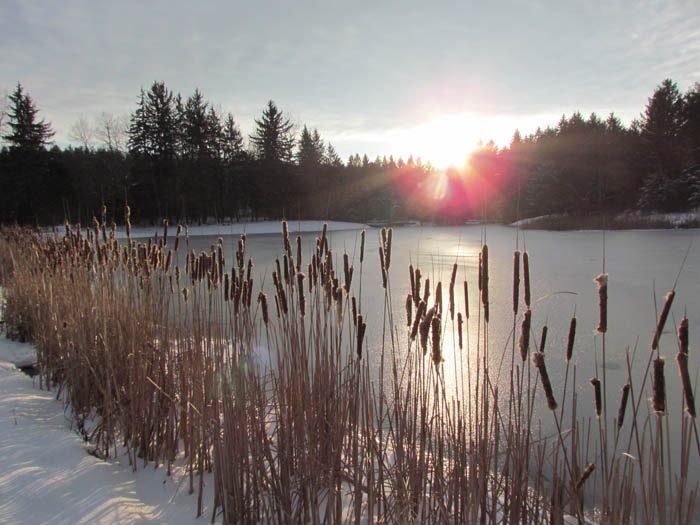
Cattails grow along lake edges and in marshes, often in dense colonies. The plants are often home to many insects, birds and amphibians.

Cattails_9181

They are a food source for Canadian geese, muskrats, insects and pond snails. Many birds find the soft texture of the seeds appropriate for lining their nests.

cattails022

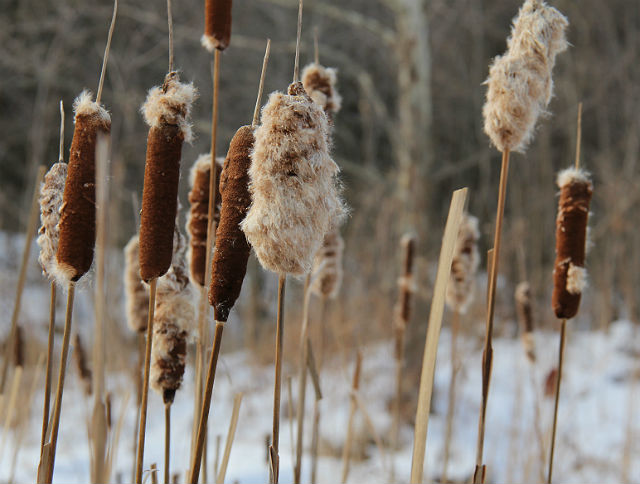
The Cattail’s flower has a brown, cylinder-shaped section with a yellow spike and blooms from May to August. In Autumn, the brown cylinder bursts, releasing the cotton-like seeds into the wind.
Cattails_8989

For centuries its dried leaves have been used for weaving chair bottoms, mats and baskets. The roots are a edible (I’ve eaten them many times) and nutritious (containing more starch than potatoes and more protein than rice).

Cattails_8985

Despite all its uses to people and wildlife, sometimes this plant is simply nice to look at; it is often featured in autumn-themed floral arrangements.

Third Eye Herp
E-mail

Downy Woodpecker

downy woodpecker_9668

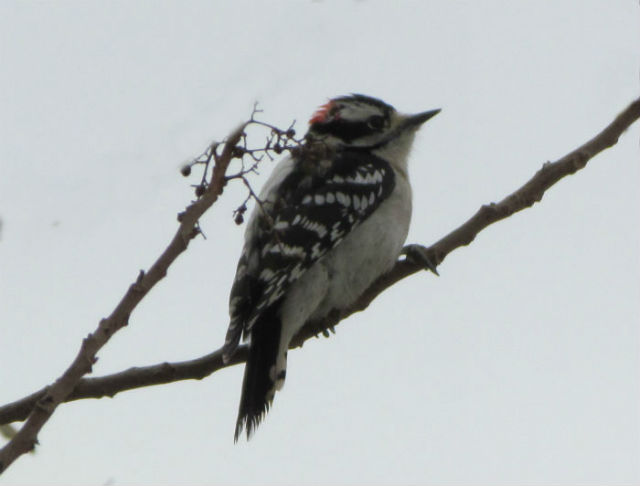
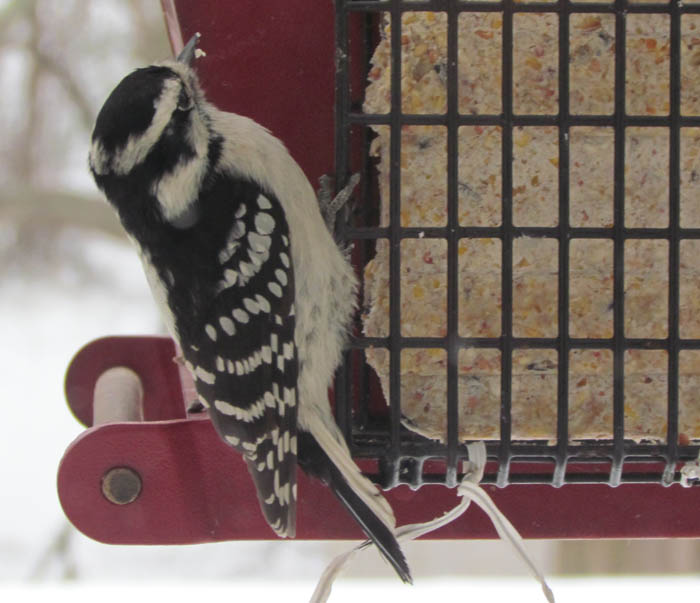
Not only is this bird one of our most common and widespread woodpeckers, it also has adapted to a variety of habitats. It can be found in mature hardwood forests as well as in fencerows along fields. It also regularly visits bird feeders.

downy woodpecker_8930

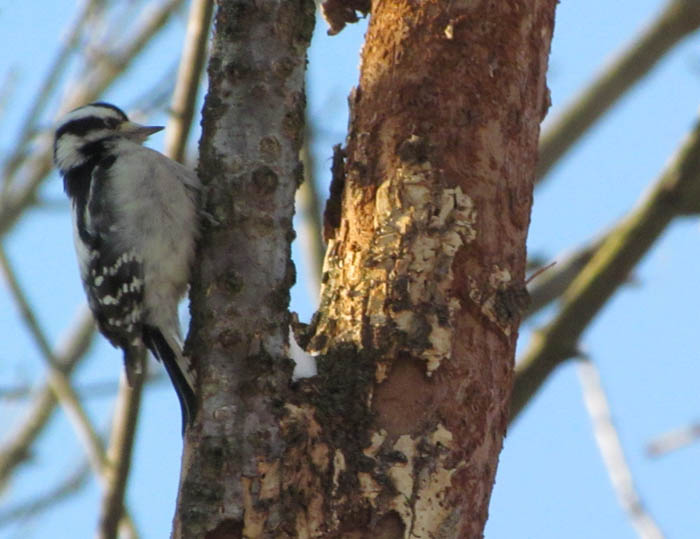
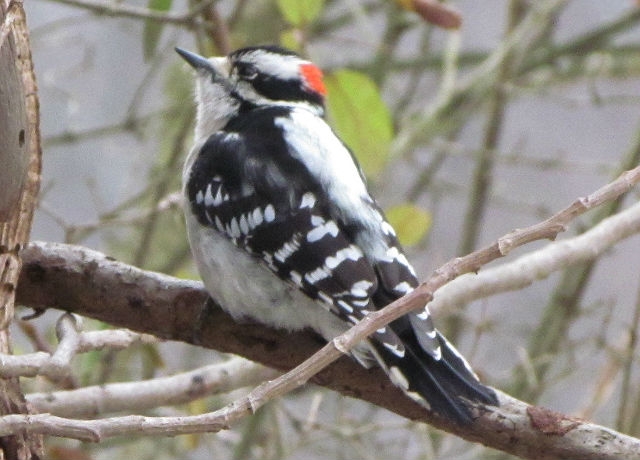
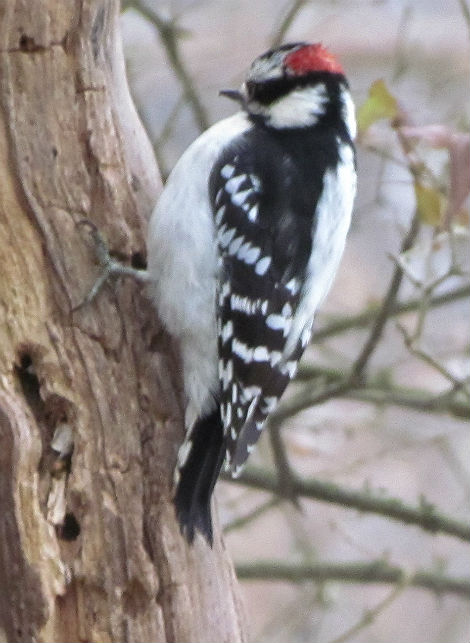
The Downy Woodpecker, our smallest woodpecker, is six inches long and has a small black bill. It has a white chest and back, black wings with white spots, a black tail and a black head with a white “mustache” and white “eyebrows.”

downy woodpecker_9949

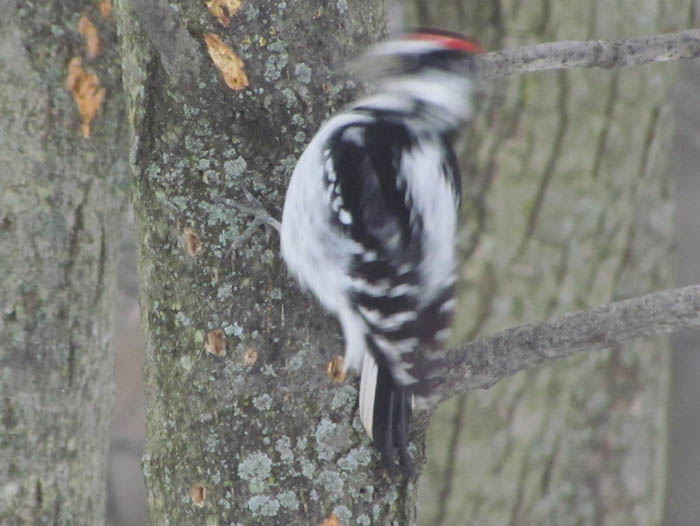
This bird always seems to be hard at work, constantly foraging for food or excavating holes in trees to be used as nests. Like other woodpeckers, it has several adaptations that allow it to hammer away relentlessly on trees. This includes a sturdy bill and strong neck muscles. Its brain is encased in a protective cavity in its reinforced skull.

downy woodpecker_9946

Another characteristic this bird shares with other woodpeckers is nostrils surrounded by feathers. This helps to filter out the sawdust created by pecking away at wood. The male has a small red patch on the back of his head; the female lacks this marking.

downy woodpecker_8687

Downy Woodpeckers use their bills to drill into trees and dig out insects like beetles, wasps, moths and their larvae. In the Winter they sometimes “join forces” and mix with other flocks of different species of birds while looking for food.

downy woodpecker_9950

While hiking its pretty commonplace to observe this bird busily searching trees and shrubs in search of insect eggs, cocoons and hibernating insects and spiders. It also consumes nuts and seeds, like this one was doing on the Ohio Erie Canal Towpath. They can be quite acrobatic in their pursuit of a meal.

downy woodpecker_8838

I usually don’t have to go far to see this lively creature which stays here year-round – sometimes all I have to do is look out the kitchen window.

Third Eye Herp
E-mail

Pixie Cup Lichen

pixie cup lichen 004

Pixie Cup Lichen typically grows on moss on the forest floor, usually on logs or at the base of trees. I have these growing in the rock garden in my backyard. Like other types of lichens, it is a symbiotic relationship between algae and a fungus. The algae provide nutrients with their chlorophyll while being protected from drying out by the fungus.

pixie cup lichen 013

They are shaped like somewhat battered and sand-blasted miniature golf-tees. This lichen has an extremely rough appearance. The rim of the cup often has a reddish tint. The stem has scales which become larger the further down, as it reaches the ground. The “undergrowth” is a mass of these flattish scales. They are only about half an inch tall.

pixie cup lichen 016

The cup is thought to act as a spore dispersal mechanism when hit by raindrops. Pixie Cups and related species contain Didymic Acid which was once collected from the lichen and used in folk-lore medicine to treat tuberculosis.

pixie cup lichen 005

Not only is it an example of a symbiotic relationship with a cool shape and texture, but Pixie Cup Lichen is a sign of life that can been seen in the winter if you do some careful searching.

pixie cup lichen 017

Third Eye Herp
E-mail