Common Raven

The Common Raven has accompanied people around the Northern Hemisphere for centuries, following their wagons and hunting parties in hopes of a quick meal.

These birds are surprisingly large. They aren’t as social as crows; they tend to be seen alone or in pairs. Their throat is covered by thick and shaggy feathers and they have a thick, heavy bill.

Common Ravens prefer open landscapes, such as tundra, seacoasts, open riverbanks, rocky cliffs, mountain forests, plains, deserts, and scrubby woodlands. They store foods of all kinds, including nuts, bones, eggs, and meat.

These birds are very important in native cultures throughout their range. They an important mythic creature in western Native American traditions. In many cultures they are viewed as a symbol of wisdom, fertility and creation.
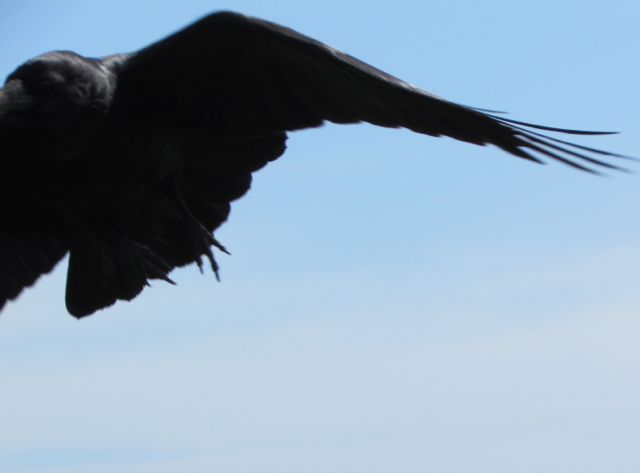
Unlike crows, Common Ravens typically soar and glide. On this windy day near the ocean, they would often hover on wind currents, remaining suspended in the air. They are acrobatic fliers and have been observed flying upside down for as far as one kilometer.

Common Ravens engage in seemingly playful acts such as yanking the tails of cats and dogs. They are among the smartest of all birds and are capable of learning innovative solutions to newly encountered problems.

Third Eye Herp
E-mail

Northern Pacific Rattlesnake

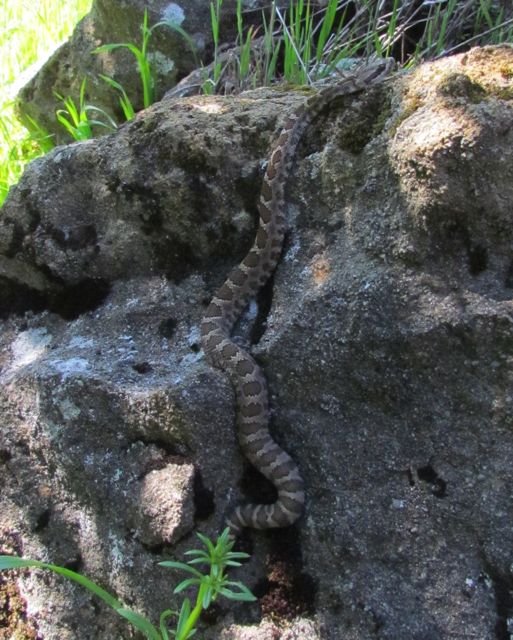
The Northern Pacific Rattlesnake is the most widely distributed venomous reptile in California; it is one of the nine subspecies of the western rattlesnake. The one pictured below is a baby that was born last year.

This rattlesnake is one of the most broadly tolerant of all rattlers in its choice of habitats, though they prefer areas with rocky areas and ledges. It can be found at higher elevations than any other rattlesnake – up to 9,000 feet.

The snake preys upon small mammals, birds and lizards. It uses its tongue and heat sensing pits (the holes in its face between the eyes and nostrils) to hunt.

It uses venom to kill and break down the tissue of the animal, which helps to digest the victim. The Northern Pacific Rattlesnake hunts during the day on warm days, but waits until nightfall when the days become really hot.

Rattlesnakes add a rattle to their string each time their skin is shed. The rattle is composed of hardened keratin, the same material as a human’s fingernails.

Adult snakes typically reach 24-60 inches in length. They are stout and have fairly large eyes with vertical pupils and a long, dark cheek patch. Often the blotches that run down the snake’s back become bands further down, giving the snake a “raccoon tail.”

Rattlesnakes are live-bearing, and typically give birth to between 2 and 8 young in mid-September to October. Newborn rattlesnakes are fully venomous but lack a rattle; they have a small, modified scale at the tip of their tail called a “button.”

Though feared, rattlesnakes are valuable predators, and likely an important control agent for some species of small mammals.

Third Eye Herp
E-mail


Harbor Seal

Driving along Highway 1 in the evening, I noticed a group of large rocks on a sandbar in the ocean. As I observed them, I noticed one of them move. I decided to investigate further. It turns out that the “rocks” were really Harbor Seals.

Harbor Seals have spotted coats in a variety of shades from white or silver-gray to black or dark brown. They reach five to six feet in length and weigh up to 300 pounds.

Since Harbor Seals cannot rotate their hind flippers underneath their hips, when on land they move by undulating in a caterpillar-like motion.

Their food includes herring, flounder, and perch. They will also consume octopus, squid and shrimp. A Harbor Seal’s diet varies seasonally and regionally and often is subject to local prey availability.

Seals have large eyes to see in dark, deep water. They have long necks, which they can shoot out quickly to catch fish while swimming. A seal’s whiskers help it hunt and navigate by sensing pressure waves from fish and underwater objects.

These days, many of the females are tending to their pups, which are born between February and April and weigh 20-24 pounds at birth. A pup can swim at birth and will sometimes ride on its mother’s back when tired. Pups make a bleating noise that sounds like maaaa. They sound like children and it’s a bit haunting.

It was a great way to end a day in the field to come across this unexpected surprise and experience these marine mammals.

Third Eye Herp
E-mail

Northwest Forest Scorpion

Although scorpions are usually associated with deserts, they actually occupy a range of habitats from coastal beaches to mountains to tropical rainforests.

Their large front claws and long tail featuring a stinger at the end of it allow them to be easily recognized. Because of their secretive habits, scorpions are seldom seen – even in places where they are common.

The Northwest Forest Scorpion may be encountered under rocks, logs and in burrows. It is medium-sized, ranging from 2-3 inches. It is a communal, rather shy and a slow-to-act scorpion, preferring to play dead or hide rather than sting. All scorpions are venomous, though few are dangerous to humans.

Like its relatives, the Northwest Forest Scorpion will eat anything it can catch, though its diet mainly consists of insects. After dark they leave the safety of their shelters and either actively seek out or lie in wait to ambush prey.

A really cool thing about scorpions is that they glow under a UV light and it just so happens that I have a UV flashlight with me in this trip. The glowing is thought to attract insects (some of which apparently can see UV light) at night.

Third Eye Herp
E-mail

Coast Redwood

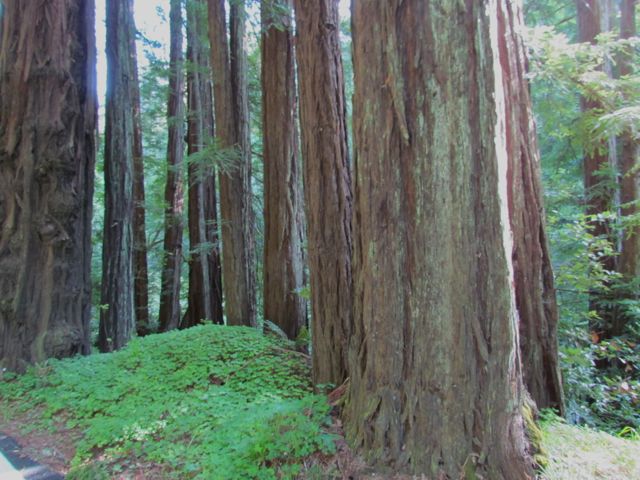
The Coast Redwood is the world’s tallest tree. It’s hard not to think about prehistoric times when seeing their gigantic trunks. Found mostly in California, it grows in natural stands in a long, thin, coastal area along the Pacific Ocean.

Throughout the year it rains quite a lot in this thin coastal strip and it is quite foggy most of the time. Because of this, the tree can absorb enough water to survive.

Although we often think of life on the forest floor, different species of plants, lichens, salamanders and invertebrates live high up in the the complex branch systems of redwoods.

This tree provides cover for life on the forest floor as well. It sheds large slabs of thick back. Many different types of cool creatures can by found by looking under the shed bark at the foot of the tree; I found my first California snake this way.

These immense trees have delicate foliage. Narrow, three-quarter inch needles needles grow flat along their stems, creating feathery formations.

Because of the dramatic atmosphere, these redwood forests have been used as scenery in movies like Star Wars and Jurassic Park.

The world’s tallest living tree is named “Hyperion” (fans of the largest trees give them names) and is no less than 379 feet. In the most favorable parts of their range, Coast Redwoods can live more than two thousand years.

Third Eye Herp
E-mail

California Toad

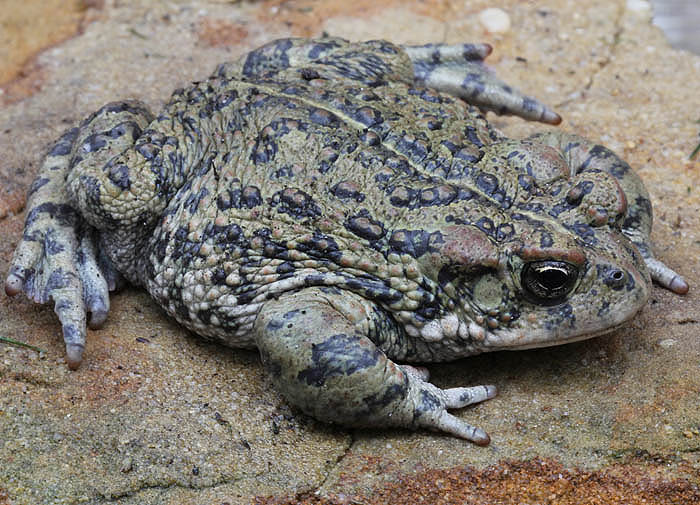
The California Toad is large and robust with dry, warty skin. It is slow moving, often getting about by walking or crawling instead of hopping.

california toad_0950

This species is generally nocturnal except in the Spring, when it is also active during the daytime. Here’s a small one that I found by a reservoir yesterday.

Toads eat spiders, insects, slugs and worms. Their prey is located by vision, afterwards the toad lunges with its large, sticky tongue to catch its food and bring it into its mouth.

The California Toad inhabits a variety of habitats, including marshes, springs, creeks, small lakes, meadows and woodlands. These amphibians spend much of their time underground. Although they are avid diggers, they generally use small mammal burrows or crevices under logs and rocks.
california toad_0959

These are one of the larger types of toads native to the United States. I did some herping with Sarah and Connie over the weekend. And Sarah found that they can be quite a handful.

Connie agreed with this assessment.

Third Eye Herp
E-mail

Western Yellow-belly Racer

Western Yellow-belly Racer_1622

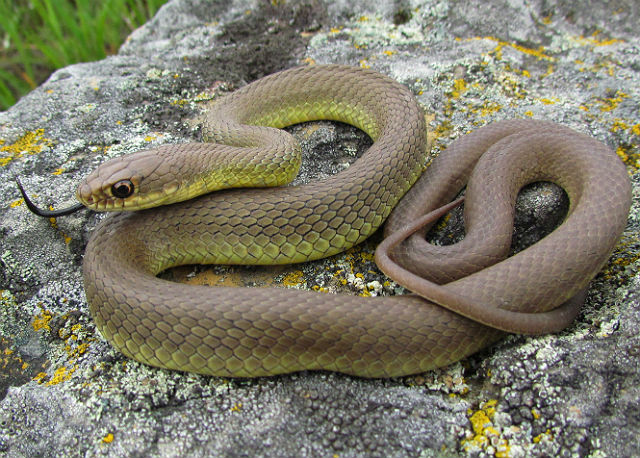
Racers are slender and agile snakes. Adults are uniformly pale blue, bluish-green, olive-green, gray, or brown above. As you might expect, the belly is cream to bright yellow in color.

Western Yellow-belly Racer_1612

Young racers are marked with brown blotches which disappear as the reptile grows. Racers are a family of snakes that can be found across the United States, living in abandoned fields, sparse brushy areas and clearings in woodlands.

This species is active by day and will take shelter under rocks, brush or in animal burrows if pursued. As the name implies, they can move very fast – especially through tall grass or brush.

Western Yellow-belly Racer_1619

This snake averages about three feet in length and does not constrict its prey, rather it simply overpowers it. The racer’s food items includes frogs, lizards, snakes, small rodents and birds.

Western Yellow-belly Racer_1620

I enjoy coming across them in the morning when the weather is cool and they are somewhat easy to catch. Their large scales have a satiny shine and their alert, curious nature gives them a special appeal.

Third Eye Herp
E-mail

Jerusalem Cricket

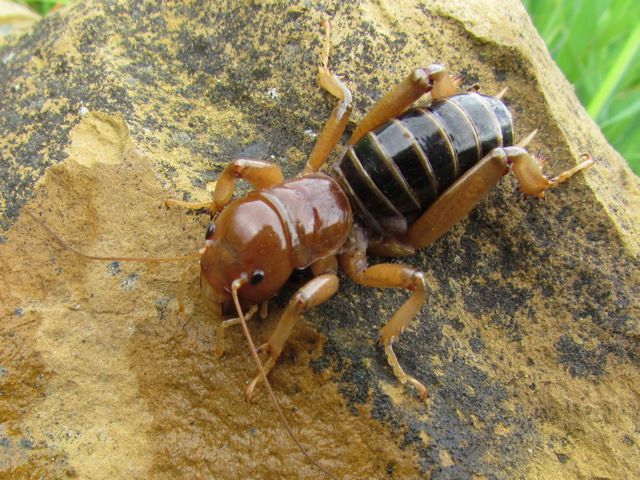
The Jerusalem Cricket is impressive. Many people are startled when they see a one; it is a large insect. The creature’s odd physical appearance has been cause for fear and superstition and it has been given a variety of monikers.

In California, they are known as “potato bugs,” due to their tendency to nibble on potatoes and other crops grown in direct contact with the soil.

They are slow moving. For defense, Jerusalem Crickets can bite with considerable force if handled. They also can kick with their spiky legs as a method of keeping an attacker at bay.

Jerusalem Crickets are distributed throughout much of western North and Central America, where they live in a variety of habitats – from coastal and desert sand dunes to mountains and tropical forests.

This insect spends most of its life underground. Its large, almost humanoid head supports the necessary muscles that assist the jaws in digging in the soil and feeding on plant material.

Throughout their range Jerusalem Crickets are a paradox – being familiar, yet exotic, insects; due to their secretive nature, not a lot is known about them.

Third Eye Herp
E-mail

California Poppy

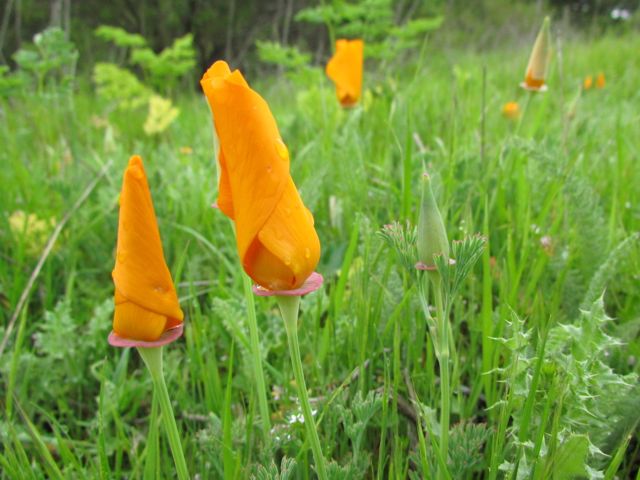
As I travel through the northern part of the state, the hills are alive with the vibrant colors of wildflowers. The California Poppy was designated the state flower in 1903.

Early Spanish explorers called this flower copa de oro – meaning “cup of gold.” California Indians valued the poppy as a food source and for the oil extracted from the plant. The Golden State celebrates it by having California Poppy Day every April 6.

This is a small plant, with one flower per slender stem. A mature plant may be as short as two inches, yet the hardy seeds can spread far and wide and take root in sandy, difficult soil where other plants’ seeds may fail.

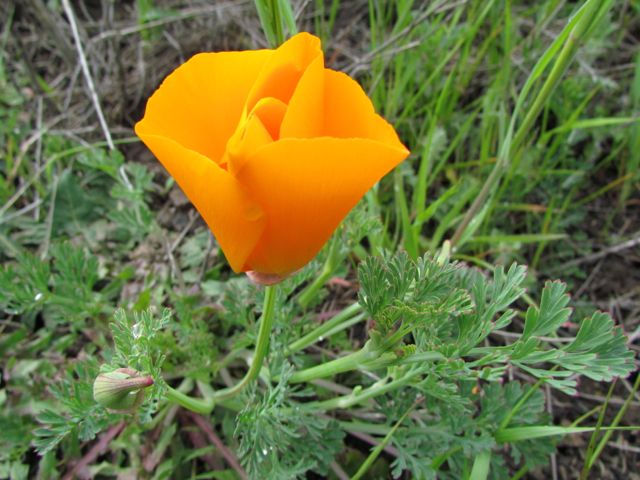
The California Poppy is the most well known flower in the state and even schoolchildren are taught to recognize it. The satiny 1-3 inch wide petals form a shallow cup-shaped flower that is vivid golden orange in color.

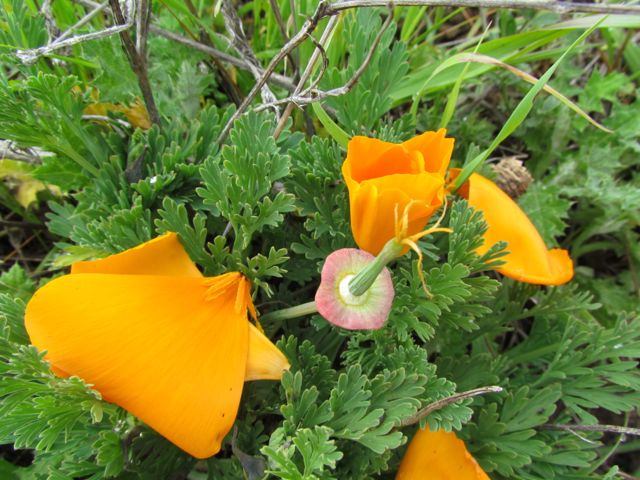
The flowers bloom on plants with have bluish-green parsley-shaped leaves, usually wider than they are tall. The flowers can be seen from February to September.

At the base of the flower is a distinctive expanded rim which looks like a circle. This allows for easy identification if this plant at times when it is not in bloom.

Third Eye Herp
E-mail

Coast Range Fence Lizard

Are you ready to spend a week in sunny California? Let’s see what wildlife is stirring at this time of year.

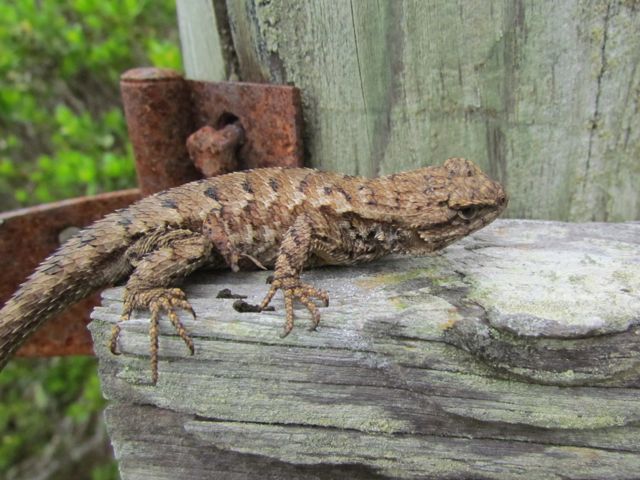
First up is this Coast Range Fence Lizard. Fence Lizards have overlapping, pointed scales and are part of a large family of reptiles known as Spiny Lizards. They are also commonly called “swifts” because of their speed.

Largely based on temperature, individuals can lighten or darken considerably; when individuals darken, their markings become difficult to see.

This lizard is conspicuous and common. It’s usually found on or near the ground, in rock and wood piles, tree trunks, and the lower branches of shrubs. And of course, basking on wooden fences.

Males have iridescent blue throats and bellies and do “pushups” flash the bright color to court females or defend their territories from males.

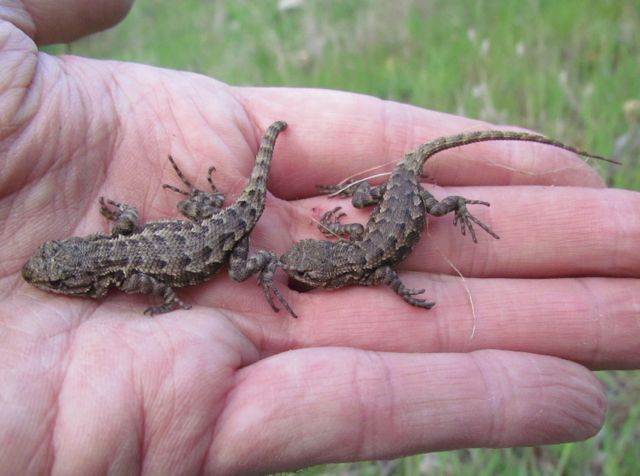
Adult Coast Range Fence Lizards measure about six inches in total length. They seem to prefer elevated basking sites where they can keep an eye on their territory and watch for insects. Here’s a couple of babies that hatched last year.

These reptiles may be beneficial to man in a way other than eating many insects. A protein in their blood kills the bacterium that causes Lyme Disease. Further studies of this reptile may result in a eventual cure to Lyme Disease.

Third Eye Herp
E-mail