Fragrant Bracket Fungus

Fragrant Bracket Fungus_3490

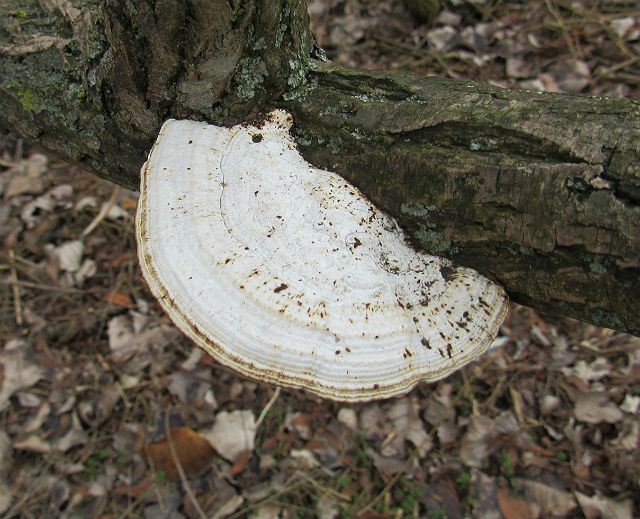
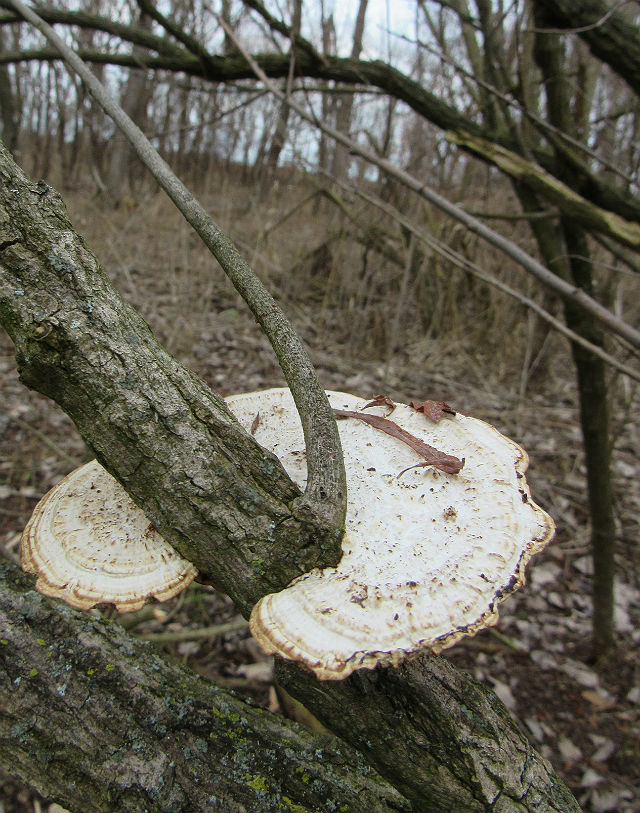
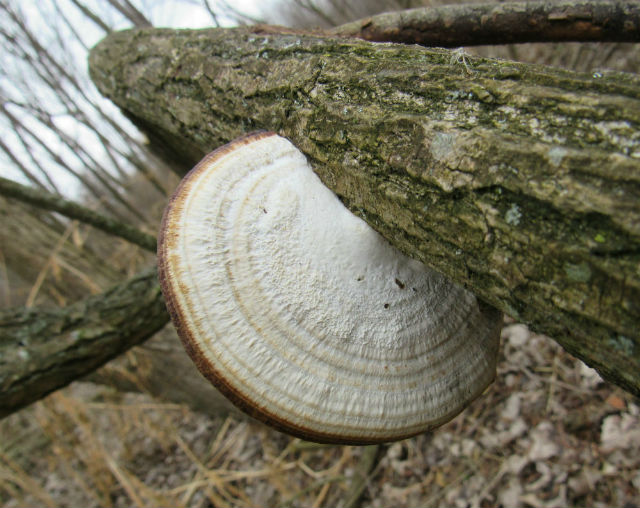
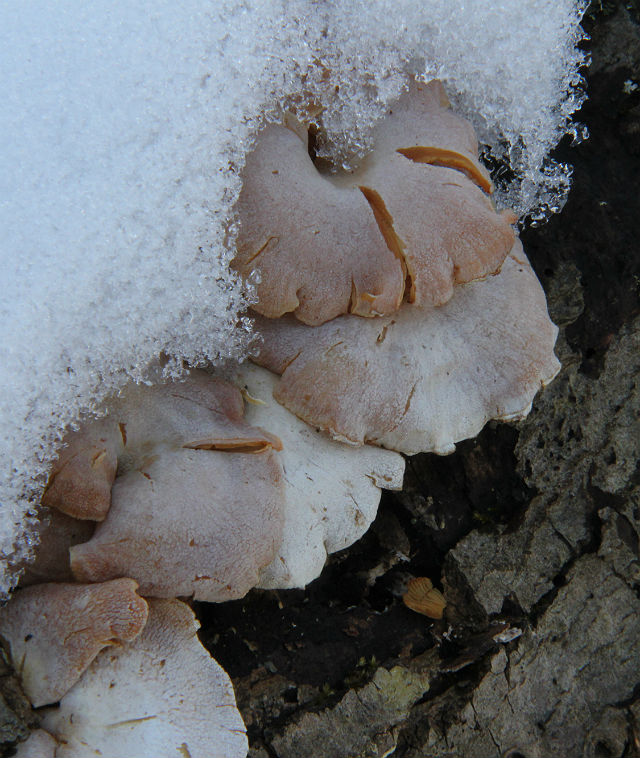
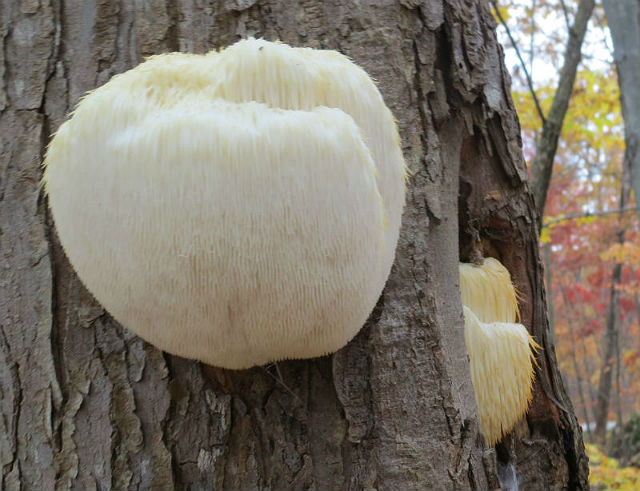
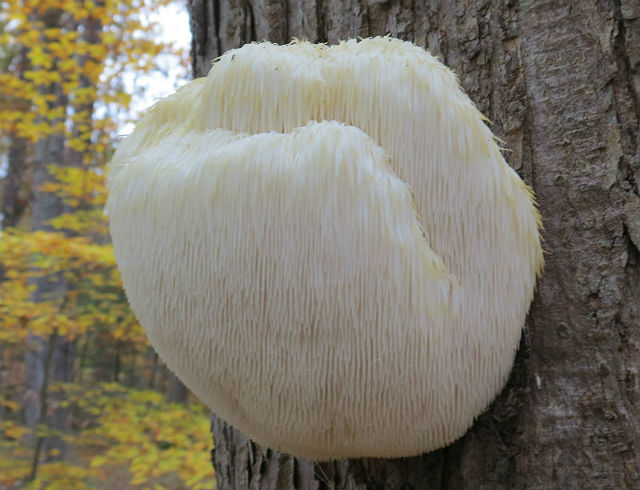
While on a hike in Cleveland Lakefront Nature Preserve, I noticed a fair number of these white organisms.
Fragrant Bracket Fungus_3481

Looking at its Latin Name, Trametes suaveolens, Trametes means “one who is thin,” while suaveolens means “sweet-smelling” in reference to the anise scent of fresh specimens.
Fragrant Bracket Fungus_3484

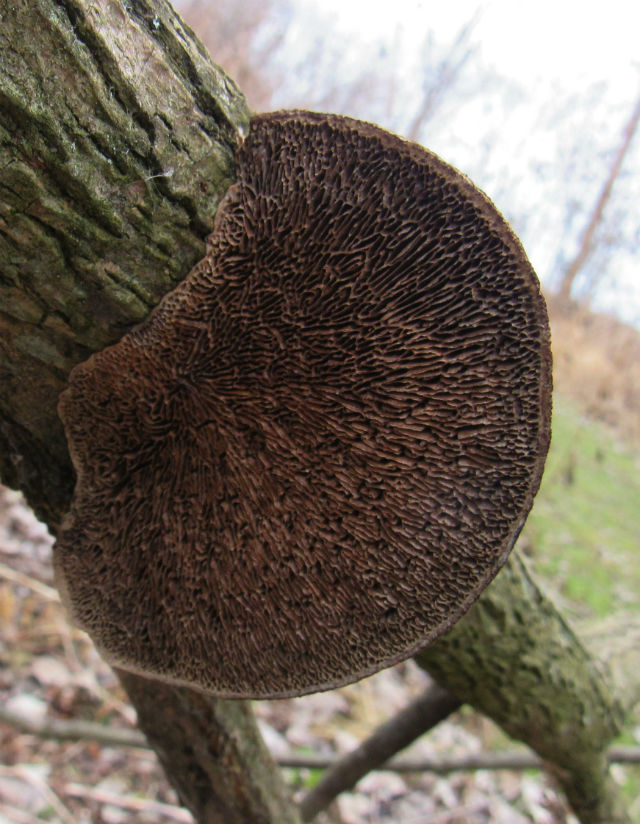
It is found mainly on living or dead broad-leaved trees – usually Poplar and Willow. This fungi is known as a polypore; a type that forms fruiting bodies with pores or tubes on the underside.
Fragrant Bracket Fungus_3489

Most polypores inhabit tree trunks or branches while consuming the wood. They play a very significant role in nutrient cycling and carbon dioxide production of forest ecosystems.

Fragrant Bracket Fungus_3478

Bracket Fungus is also known as Shelf Fungus, because they produce shelf- or bracket-shaped fruiting bodies called conks. Most of the fungus is hidden from view within the body of the tree and it consists of an extensive network of filamentous threads.

Seeing these fungi on an otherwise dreary day added some brightness to the woodland environment where they reside.

Third Eye Herp
E-mail

Orange Mycena

Orange Mycena_10_08sr 092

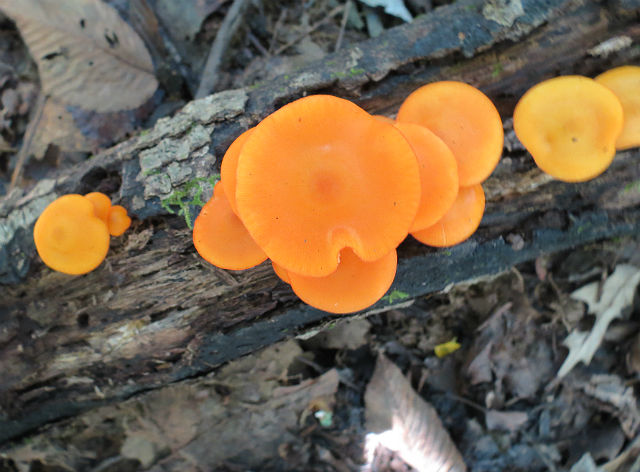
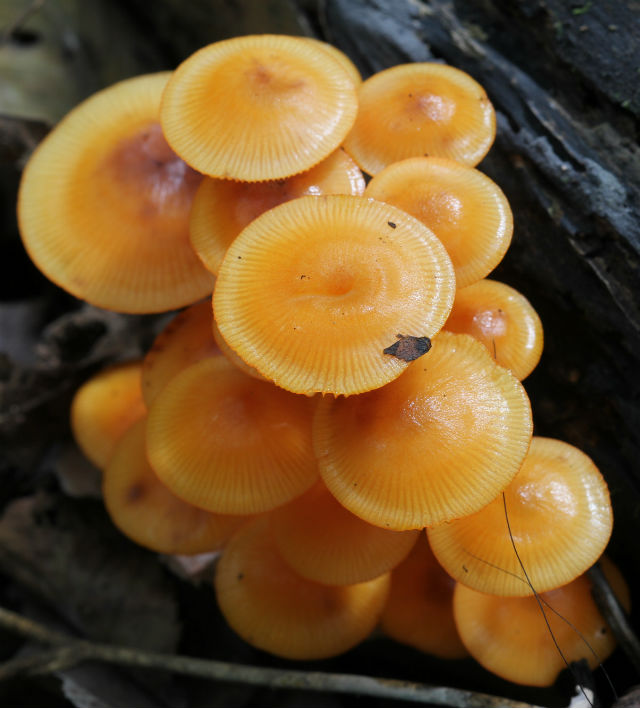
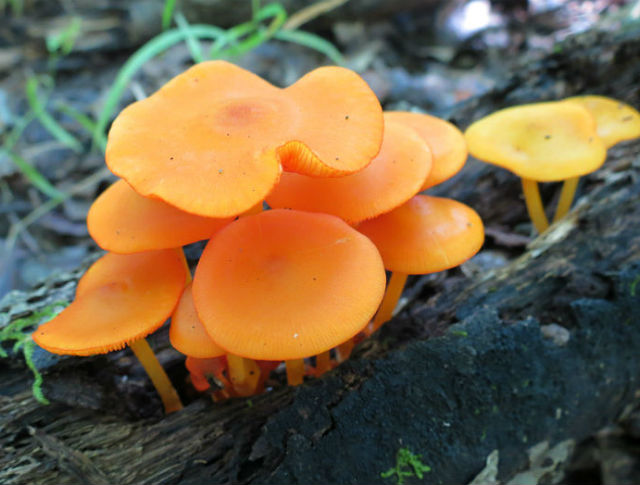
In the dark, damp swamps of southern Illinois, this fun fungus really stands out. Its bright orange coloration can be noticed from a distance.

Orange Mycena_7530

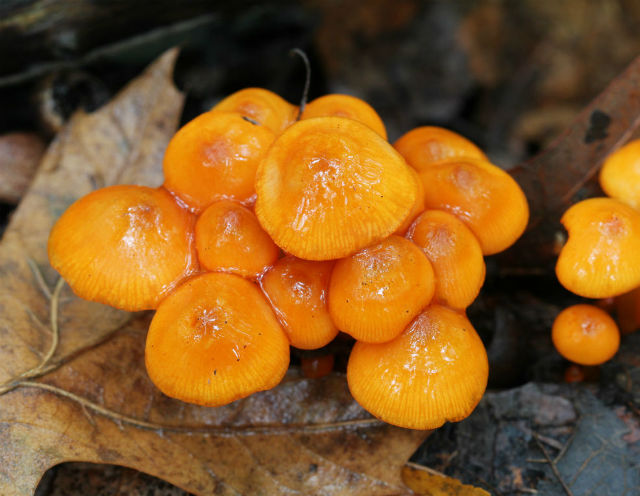
Though their caps are rather small (usually less than an inch), because they are typically found in clusters, Orange Mycena make for an eye-catching addition to the environment.

Orange Mycena 2013_10_08sr 058

This mushroom tends to grow on deciduous logs, which contain the moisture it needs to thrive. When handled, its orange pigment may stain your skin.

Orange Mycena_8041

Their brilliant hue fades as the mushrooms mature and the surface of the caps are sticky, especially in damp situations.

Orange Mycena_3773

Orange Mycena is a North American species and has been reported throughout the eastern and central United States and Canada.

orange mycena_7531

This striking and colorful mushroom provides the same service as many others – breaking down and digesting organic matter and in doing so, returning nutrients to the soil.

Third Eye Herp
E-mail

Brown Russula

Brown Russula_6858

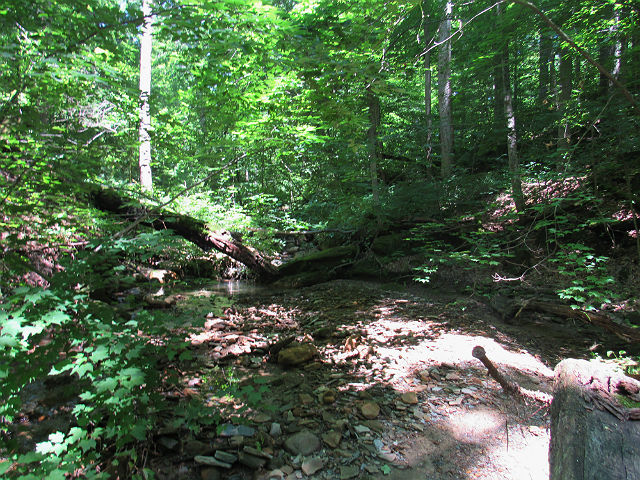
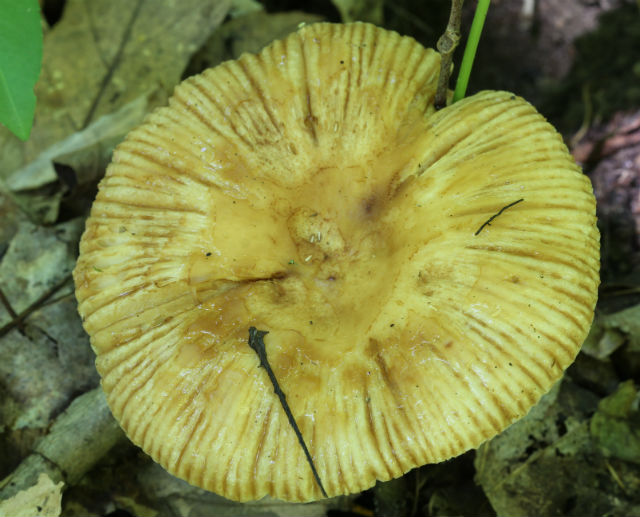
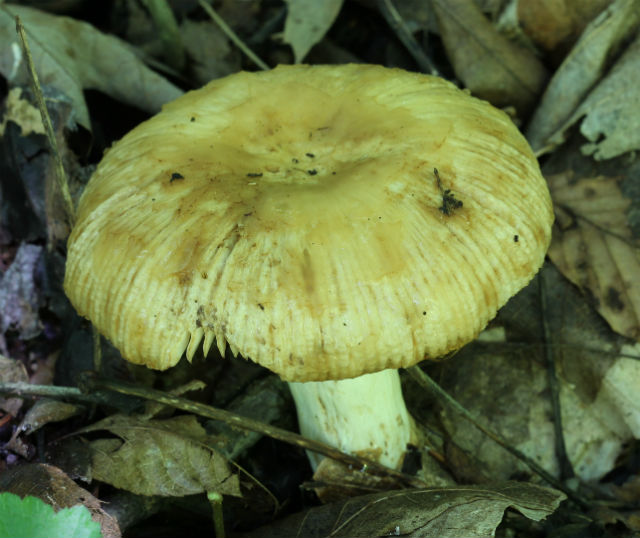
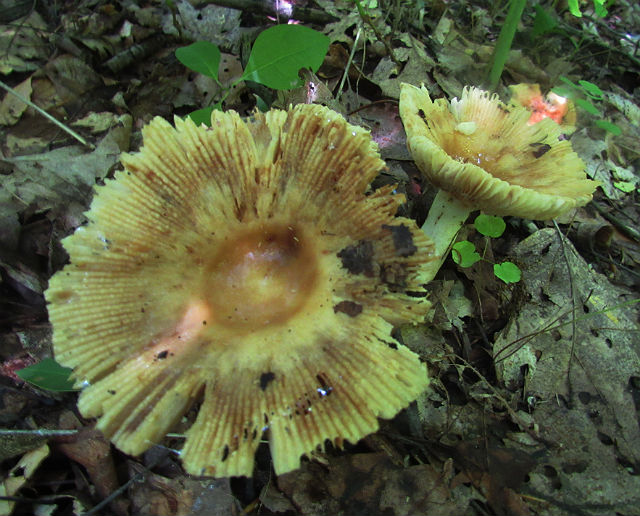
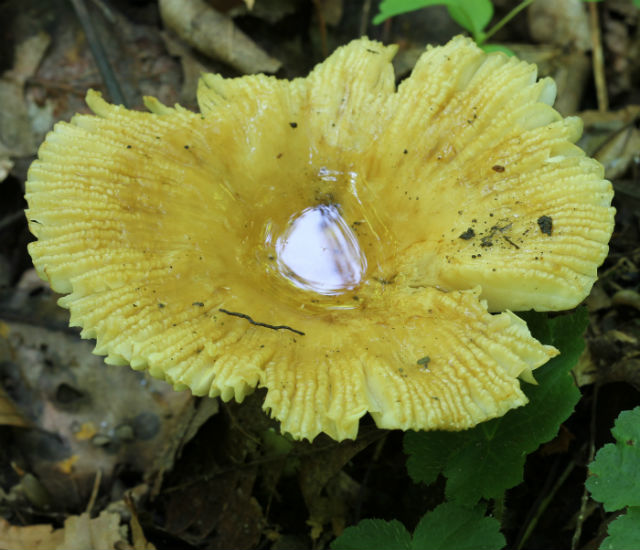
While hiking in Hinckley Reservation, it was hard not to notice this large-capped mushroom that in some cases seemed to be turning itself inside-out.

Brown Russula_2992

Not only is it interesting looking, this organism has a waxy, benzaldehyde odor, kind of like a maraschino cherry.

Brown Russula_2988

These, like many fungi, are mycorrhizal, meaning they have are a symbiotic (mutually beneficial) relationship with plants. The mushroom has fibers that surround a tree rootlets.

Brown Russula_7107

The mushroom fiber’s helps the tree absorb water and nutrients while the tree provides sugars and amino acids to the mushroom. It is estimated that about 85% of plants depend on mycorrhizal relationships with fungi.

Brown Russula_2983

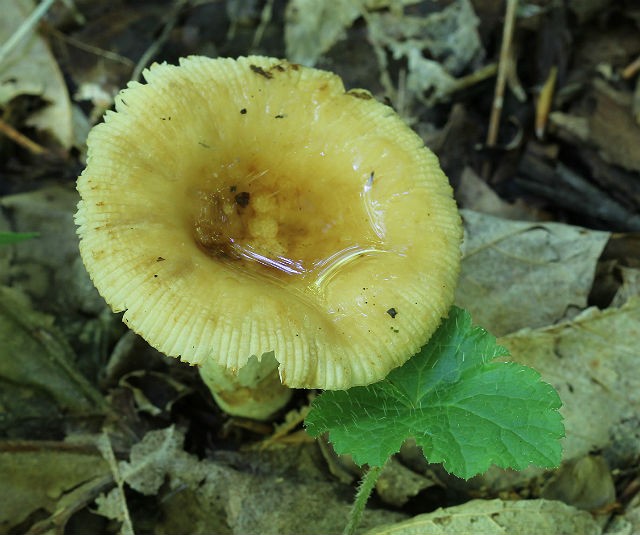
Brown Russula’s 4-inch cap becomes broadly convex or flat, and sometimes even gets a shallow central depression (in this case holding water).

Brown Russula_2986

This was a fun fungi find on a summertime walk through the woods.

Third Eye Herp
E-mail

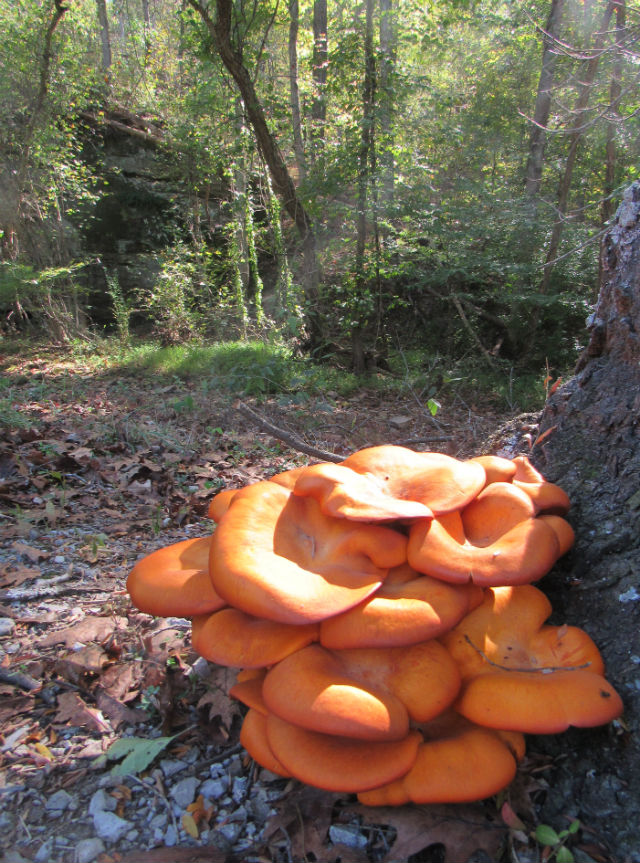
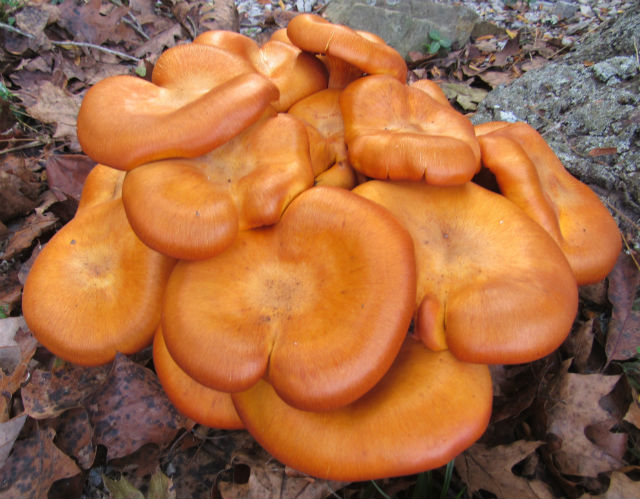
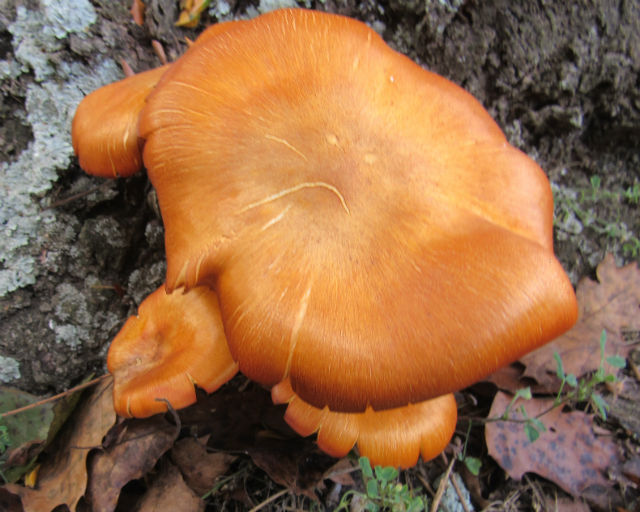
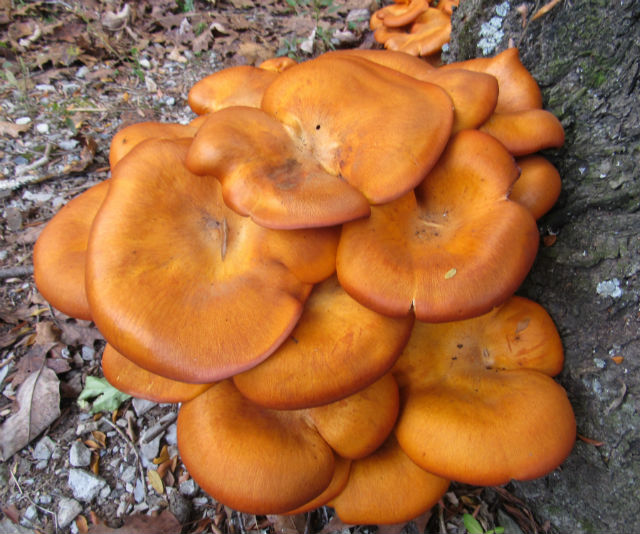
Jack-O-Lantern Mushroom

jack-o-lantern mushroom_9304

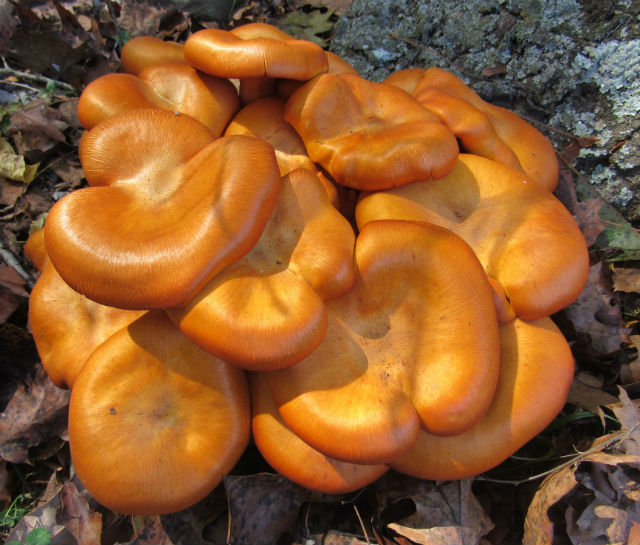
While visiting southern Illinois, it was hard not to notice this organism that often produces its fruiting bodies in abundance this time of year in large clusters on old rotting stumps of hardwood trees.

jack-o-lantern mushroom_9324

It may get its name bacause it’s bright orange, like the pumpkins used to make Jack-O-Lanterns. However, there’s another reason for its common name. This fungus actually glows in the dark! Not the whole fungus, but just the gills on the underside of the mushroom.

jack-o-lantern mushroom_9323

The yellow-orange to orange cap is first convex in shape, becoming flat and then finally funnel-shaped with a margin that turns downward.

jack-o-lantern mushroom_9319

To further add to the Halloween image, Jack-O-Lantern Mushrooms are a trick, not a treat. People sometimes eat Jack O’Lanterns thinking they are Chanterelles, which are edible. The two types of mushroom can look pretty similar, and they bloom at the same time, but unlike Chanterelles, these are distasteful.

jack-o-lantern mushroom_9301

Eating a Jack-O-Lantern Mushroom won’t kill you. Nevertheless, it’s nice to look at, cool because it glows in the dark and useful because it performs a valuable function that only fungus can do, which is break down dead wood into useable components to be recycled into the forest.

Third Eye Herp
E-mail

Hapalopilus croceus

Hapalopilus croceus_4137

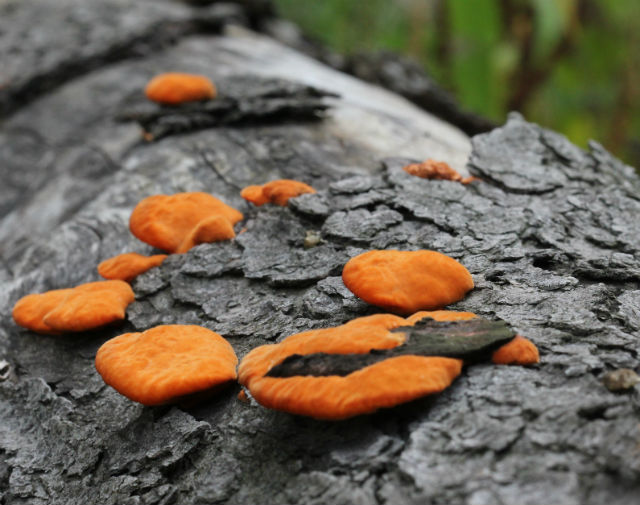
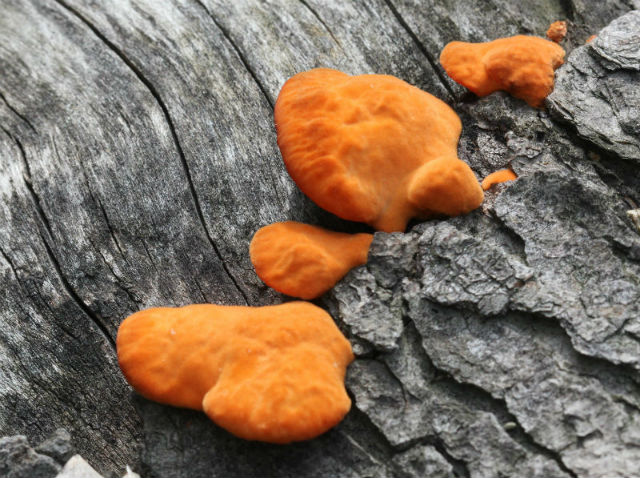
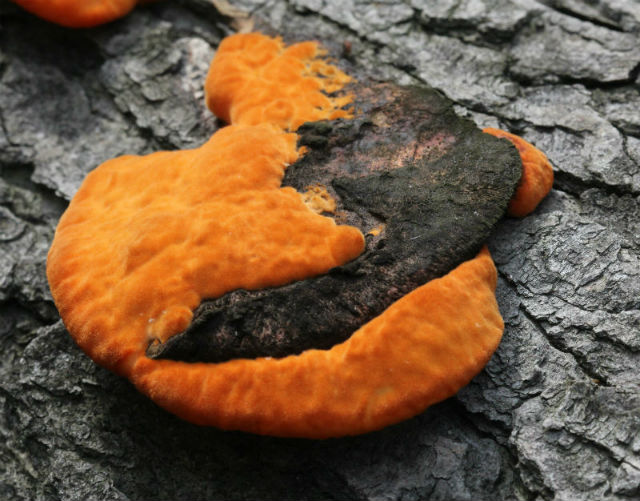
While hiking in the Cuyahoga River Valley, I noticed the orange glow of Hapalopilus croceus (this fungus has no common name) displaying its brilliant color.

Hapalopilus croceus _0477

I have never encountered (or heard of) this organism before, so it was an unexpected find. This is a rather uncommon fungus found in Asia, Europe, Oceania, and North America. Hapalopilus croceus is nationally red-listed (threatened) in 11 European countries.

Hapalopilus croceus_0474

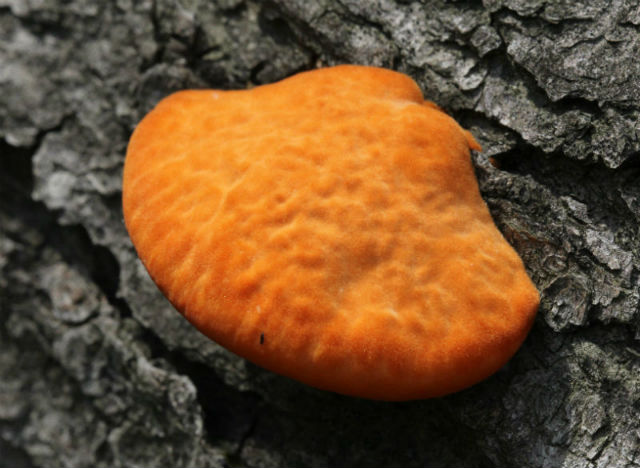
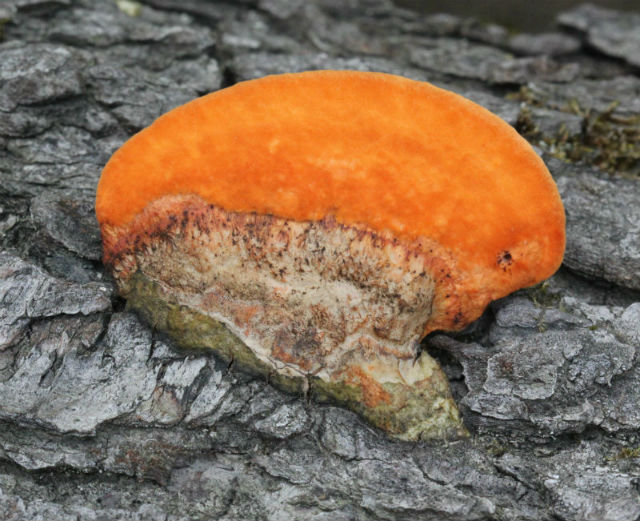
When fresh, this mushroom has a vibrant orange color, but it tends to fade or brown with age. This conspicuous wood-inhabiting fungus has habitat confined to wooded meadows and pastures.

Hapalopilus croceus_0469

The stalkless, broadly attached, fan-shaped fruiting body has a colorful cap and grows on decaying broadleaf wood, especially fallen Oaks.

Hapalopilus croceus_0472

Like its polypore relatives, Hapalopilus croceus contributes a crucial role in nature’s continuous rebirth, by breaking down dead wood and turning it into useful nutrients.

Hapalopilus croceus_0485

Fungi digest their food outside their bodies by releasing enzymes into the surrounding environment and converting organic matter into a form they can absorb; nothing else is able to perform the function of reducing dead wood back down into soil.

Third Eye Herp
E-mail

False Turkey Tail Mushroom

turkeytail_8806
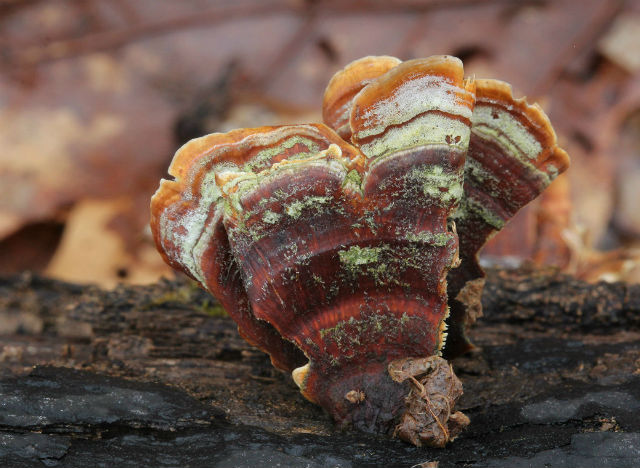
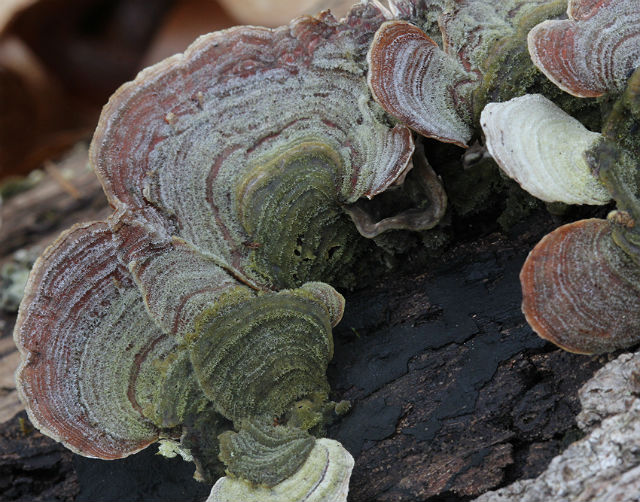
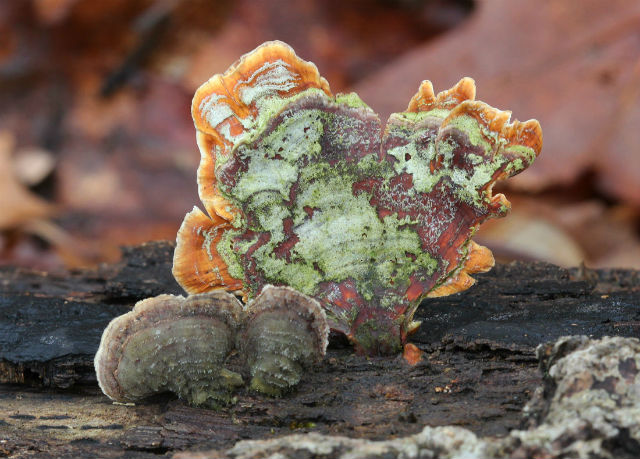
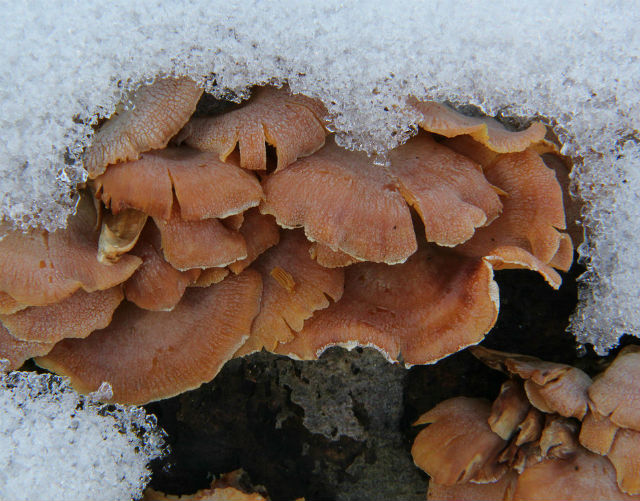
Like the “true” Turkey Tail, this has a colorful, somewhat fuzzy cap which displays patterns of brown, red, orange, buff and green.

false turkeytail_8857

The stemless fruiting body is shell-like, tough and inedible. It grows on tree bark. This fungus is native to North America, where it is widespread and grows all year round.

false turkeytail_8860

Both Turkey Tail and False Turkey Tail are highly variable in appearance and look strikingly similar. So how do you tell them apart? The answer can be found by looking at the underside of the cap. Turkey’s Tail has tiny holes for its spore tubes, while False Turkey Tail has a smooth to slightly wrinkly underside with no visible holes.

turkeytail_8804

While an imposter, False Turkey Tail Mushroom plays a crucial role in woodlands by breaking down dead wood, recycling nutrients back into the soil and creating space for new growth.

It also provides color to woodlands on Winter days.

Third Eye Herp
E-mail

Bitter Oyster

Bitter Oyster 2343

Bitter Oyster is a widely distributed fungus that is also known as Luminescent Panellus, Stiptic Fungus, or Astringent Panus. It is more common in eastern North America than in the west. It frequently grows in groups, residing in dense forests. It is often found on logs, stumps and trunks of deciduous trees such as Birch, Oak and Beech.

Bitter Oyster 036

This little mushroom has reportedly been used as a styptic (blood thickening) agent. It is a relatively common species that is prevalent Spring through Fall (it can also be found in Winter in warm climates, or during Winter warm spells in temperate areas).

Bitter Oyster 009

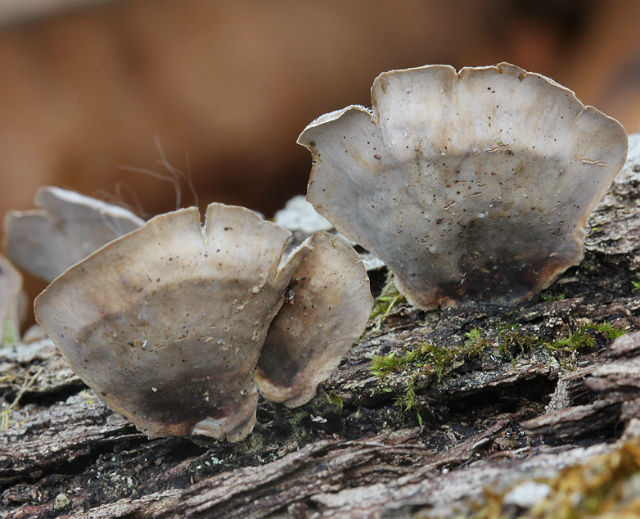
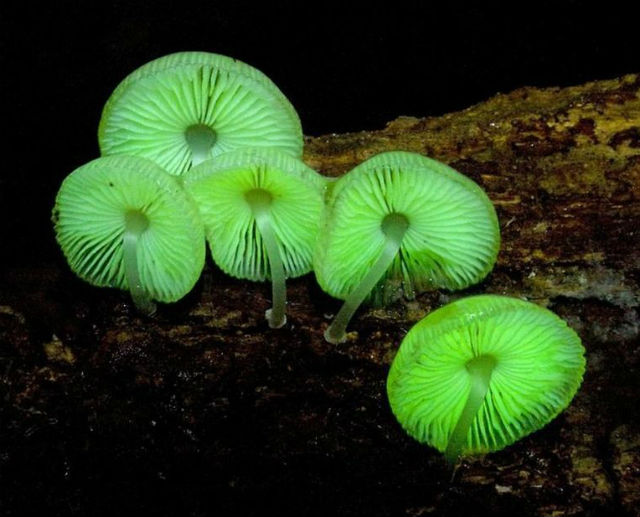
Bitter Oyster is an unassuming fungus by day. It forms waves of soft beige shelves and blends in with its surroundings. The edges of the mushroom cap have small rounded teeth that are curved inward. But at night things change; its gills, under their own power, glow – a characteristic known as bioluminescence.

Bitter Oyster 037

The luminescent glow of this and other fungi inspired the term “foxfire,” coined by early settlers in eastern and southern North America. Although generally very dim, in some cases foxfire is bright enough to read by. Bitter Oyster is a pretty cool organism that often goes unnoticed in today’s world.

Third Eye Herp
E-mail

Crowded Parchment Fungus

Crowded Parchment Fungus_2875

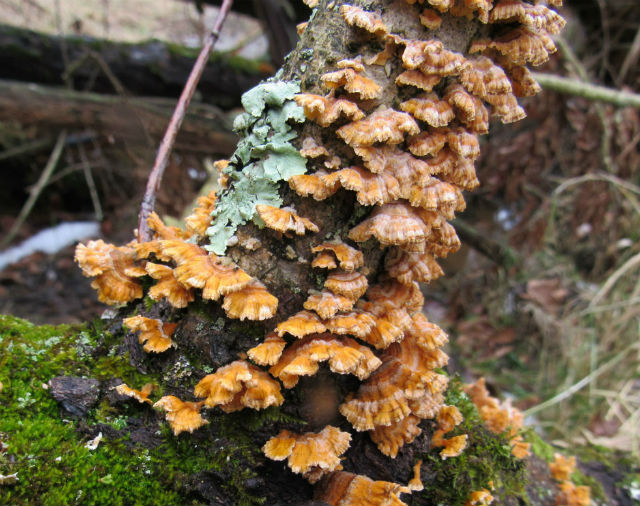
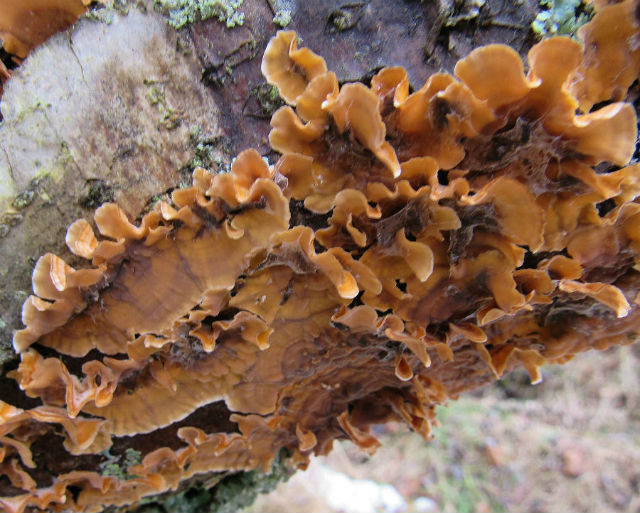
While taking a Winter walk in Cuyahoga Valley National Park, this bright fungus caught my eye.

Crowded Parchment Fungus_0022

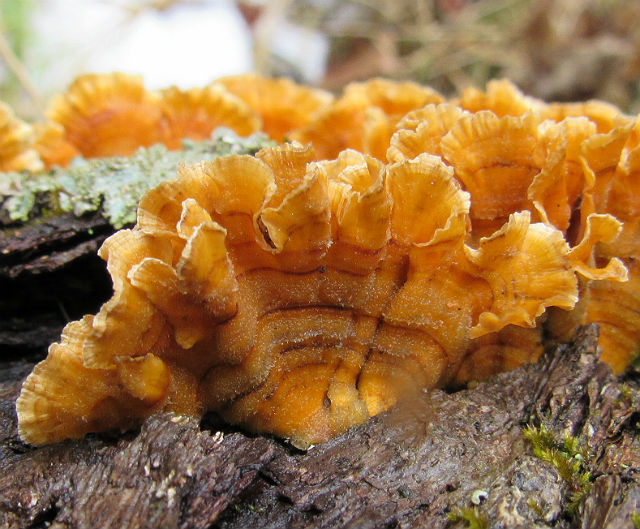
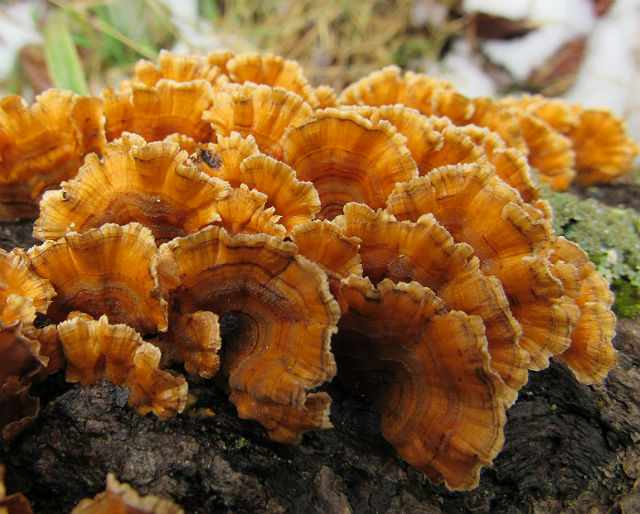
Its distinguishing features include orange coloration and often being found crowded on the dead twigs, branches and stumps of deciduous trees from July through January.

Crowded Parchment Fungus_0019

The fruiting bodies of look like fans, with tiny ripple patterns on the them. They are about three quarters of an inch wide, project sideways from branches, logs, and stumps, and may fuse together, side by side.

Crowded Parchment Fungus_0021

This is the most common parchment fungus and unlike mushrooms, it grows without a stalk. The key role of these forest recyclers is to break down dead matter and return nutrients to the soil to become available to plants once again.

Crowded Parchment Fungus_0023

The function of fungi in breaking down dead wood is crucial. Wood is so tough that animals cannot digest it. However, certain fungi are able to biodegrade it using enzymes, allowing the vast amounts of dead wood in woodlands to be broken down.

Third Eye Herp
E-mail

Lion’s Mane Mushroom

IMG_7964

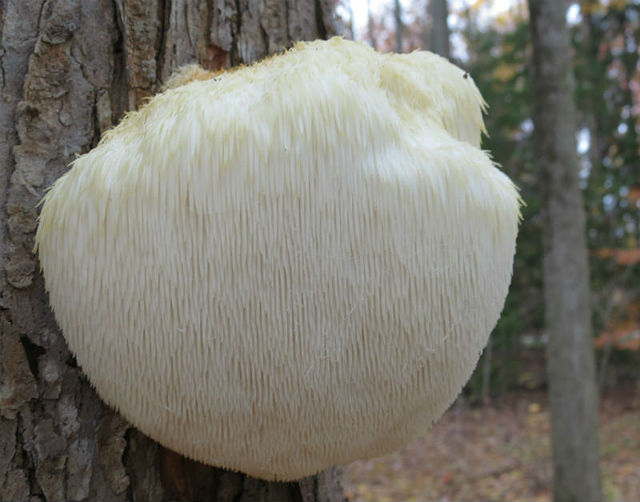
While hiking in Brecksville Reservation, I caught sight of a grapefriut-sized odd looking fungus that I’ve never seen before. It usually grows alone or in pairs, fruiting from the wounds of living trees (especially oaks) in late Summer and Fall.

Hericium erinaceus Lion's Mane_8887

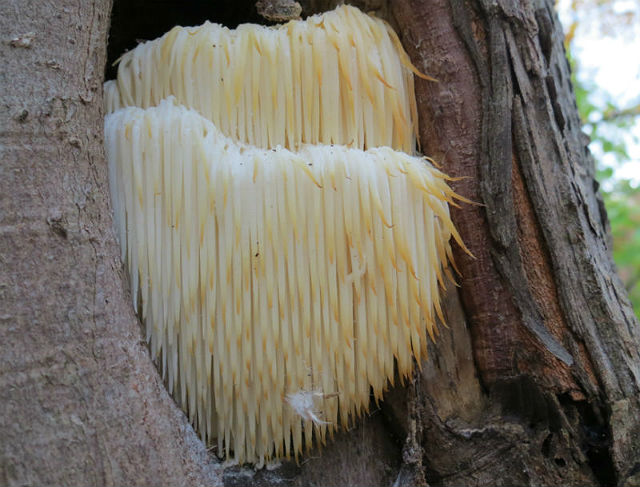
Native to North America, Europe and Asia, it can be identified by its icicle-like projections, its appearance on hardwoods and its tendency to grow a single clump of dangling spines.

Hericium erinaceus Lion's Mane_8880

About a dozen studies have been published on the neuroregenerative properties of Lion’s Mane Mushroom since 1991; tests have confirmed that it stimulates nerve regeneration.

Hericium erinaceus Lion's Mane_8885

This historical Chinese medicine is developing a following in the world of modern smart drugs. It is also very tasty to eat.

Hericium erinaceus Lion's Mane_8884

Like all fungi, Lion’s Mane Mushroom is a vital decomposer in the ecosystem, breaking down dead organisms and biological waste and freeing nutrients for use by other organisms.

Hericium erinaceus Lion's Mane_8883

This mushroom has a variety of common names, including Bearded Tooth, Old Man’s Beard, Satyr’s Beard, Monkey Head, Bear’s Head, Sheep’s Head, Hedgehog Fungus, Tree Hedgehog and Pom Pom.

Third Eye Herp
E-mail

Fan-shaped Jelly Fungus

fungus_6853

It has been rather rainy as of late and the ground is soggy, the air is heavy with humidity – these days are good days to look for fungi.

Fan-shaped Jelly Fungus_7122

This decaying tree branch had fallen to the forest floor in Cuyahoga Valley National Park. The bright yellow-orange coloration on it caught my eye. Fan-shaped Jelly Fungus enjoys a practically worldwide distribution.

Fan-shaped Jelly Fungus_7132

It has a rubbery texture and lack of gills and is a specialist for growing out of cracks in dead wood, which it feeds on and breaks down into components that can be recycled back into the earth – without this process, wood and other plant matter would not decompose.

Fan-shaped Jelly Fungus_7125

The fruiting bodies are less than 7/8 of an inch tall and grow in clusters or rows along cracks in decaying wood; often the wood has lost its bark. Each fruiting body has a curved fan-like shape, thin in cross-section and widening toward the top. They are translucent and bright in color, and are gelatinous to the touch.

Fan-shaped Jelly Fungus_7122

In our modern-day, decomposition and decay are often viewed quite negatively, yet they are the yin to the yang of growth, and together they form two halves of the whole that is the closed-loop cycle of natural ecosystems. In Chinese culture, it is called literally “sweet osmanthus ear,” referring to its similarity in appearance to that flower.

Third Eye Herp
E-mail