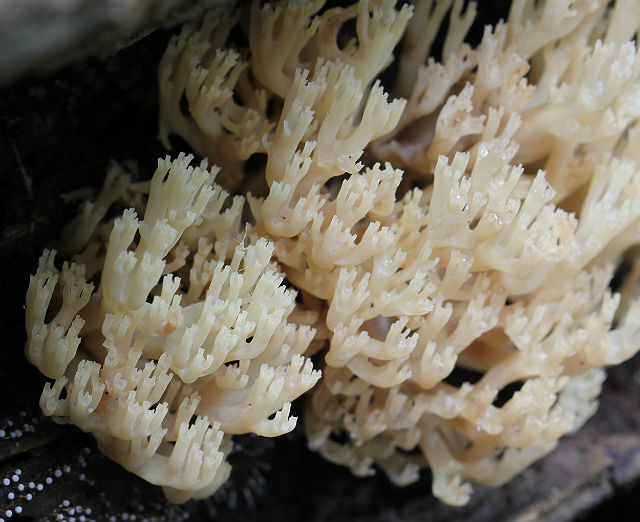
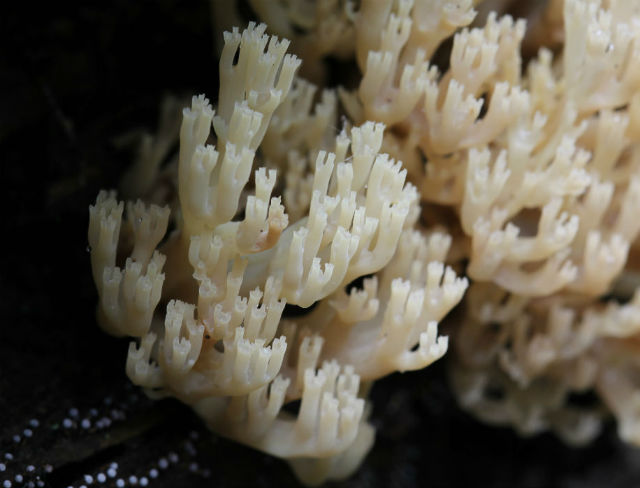
Lemon Disco Fungus

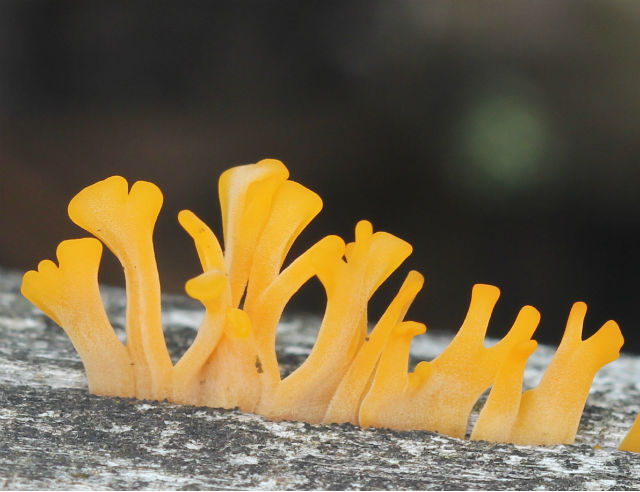
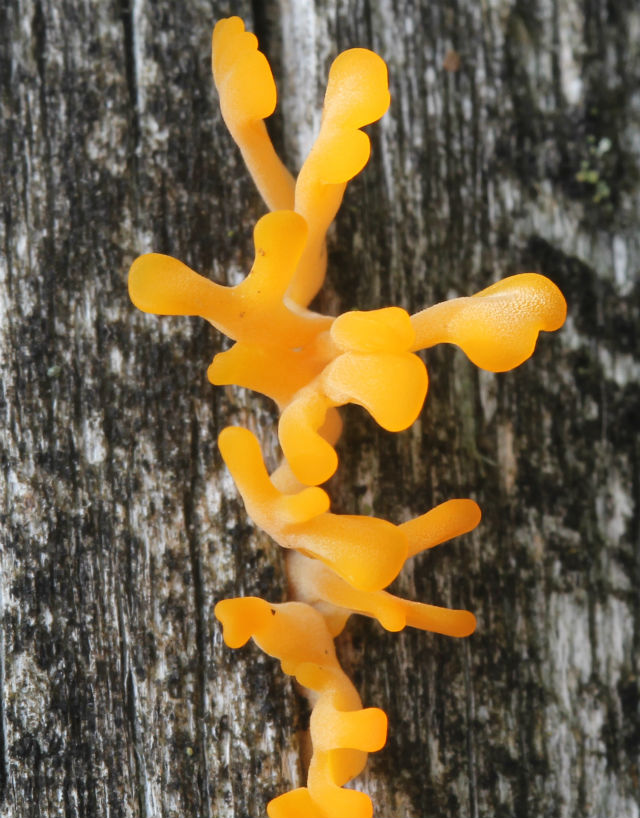
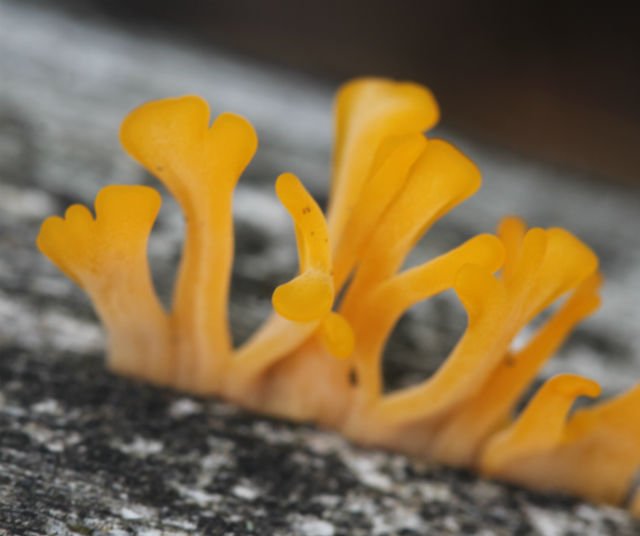
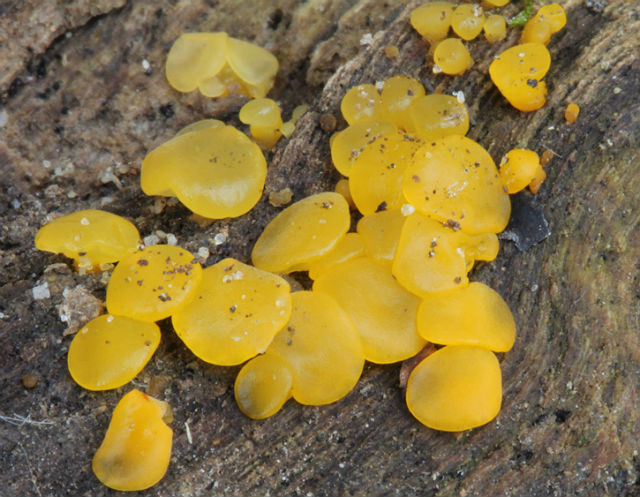
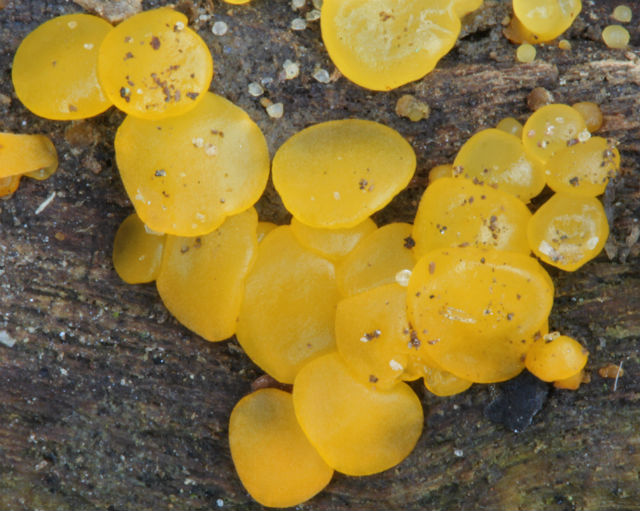
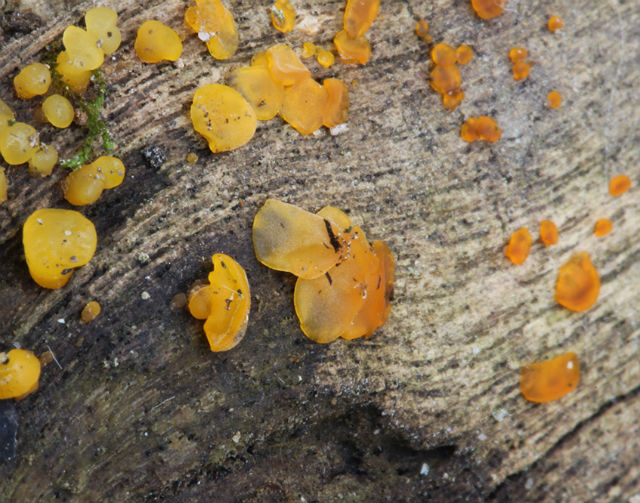
I was doing some yardwork this week and I came across this fine fungi. It produces tiny yellow cups about a tenth of an inch in diameter, often without stalks, that fruit in groups or dense clusters on decaying wood that has lost its bark.

Lemon Disco Fungus_4547

Lemon Disco Fungus is fairly common, but is easily overlooked due to its small size. It is also wide-ranging and can be found in North Africa, Asia, Europe, North America, and Central and South America.

Lemon Disco Fungus_4545

Fruit bodies begin as spherical, closed globules, before expanding to become shallowly cupped or disc-shaped. The inner surface becomes smooth and bright yellow, while the outer surface is a more pale yellow. Fruit bodies that are dried are wrinkled and have a dull orangish-brown color. Its species Latin name, citrina, is a derivation of the word citrin – which means “lemon-yellow.”

Lemon Disco Fungus_4546

Like other fungi, Lemon Disco Fungus plays an important part of nature’s continuous rebirth by breaking down dead wood into useful nutrients. Fungi digest their food outside their bodies by releasing enzymes into the surrounding environment and converting organic matter into a form they can absorb; nothing else is able to perform the function of reducing these forest byproducts back down into soil.

Lemon Disco Fungus_4548

It was a nice surprise to come across this tiny treasure on an otherwise ordinary day.

Third Eye Herp
E-mail

Bird’s Nest Fungus

Bird's Nest Fungus_3837

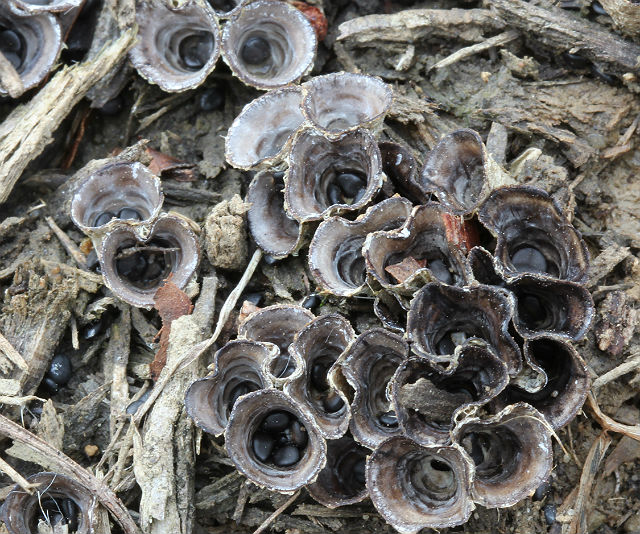
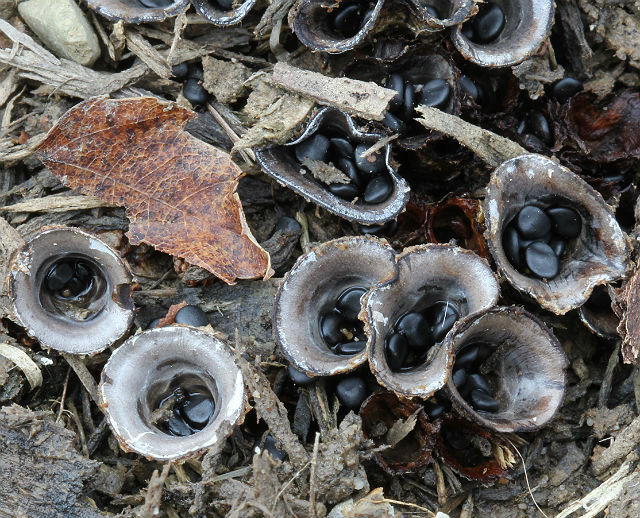
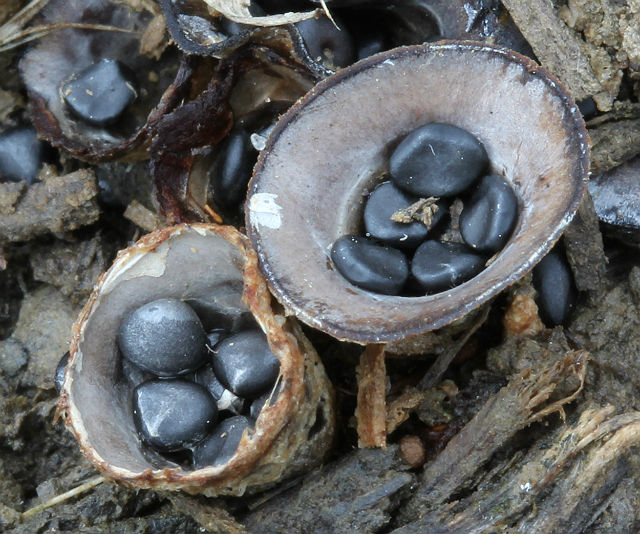
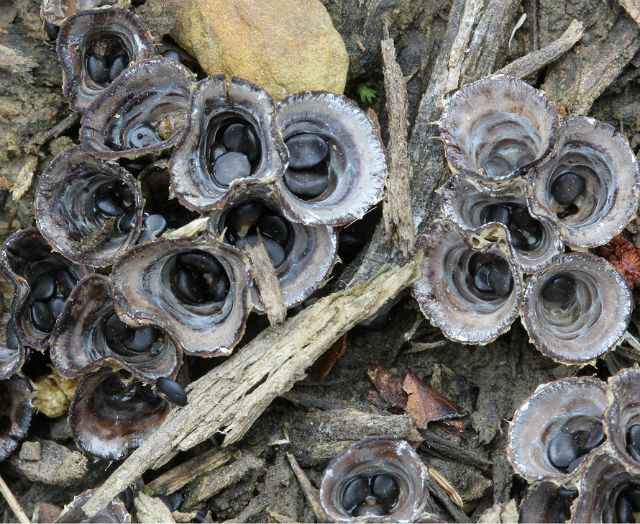
While I was doing a little yard work this week, I came across something tiny, yet awesome. They look like tiny cups filled with a few dark seeds or, as their name implies, tiny bird’s nests.

Bird's Nest Fungus_3834

There are several different species of this Bird’s Nest Fungi in northeast Ohio, but they all belong to the same family, Nidulariaceae. The scientific name is derived from the Latin word “nidus,” meaning nest.

Bird's Nest Fungus_3835

Bird’s Nest Fungi feeds on decomposing organic matter and is often seen growing on decaying wood and in soil enriched with wood chips or bark mulch. These were living where a tree had been cut down almost a year ago and only its ground up stump remained. Like so many fungi, most of the organism is hidden from view. The fungus spends most of its life as a series of nearly invisible threads among strands of decaying wood. The threads secrete enzymes which have the ability to digest wood.

Bird's Nest Fungus_3341

The cuplike nests which are visible are fruiting bodies which contain spore-filled eggs. The nests act as “splash-cups.” When a raindrop hits one at the right angle, the walls are shaped so the eggs are expelled to as much as a yard away from the cup. This unique little fungus is an evolutionary masterpiece and it was very cool to see it for the first time ever in my backyard.

Third Eye Herp
E-mail

Puffballs

puffball_3178

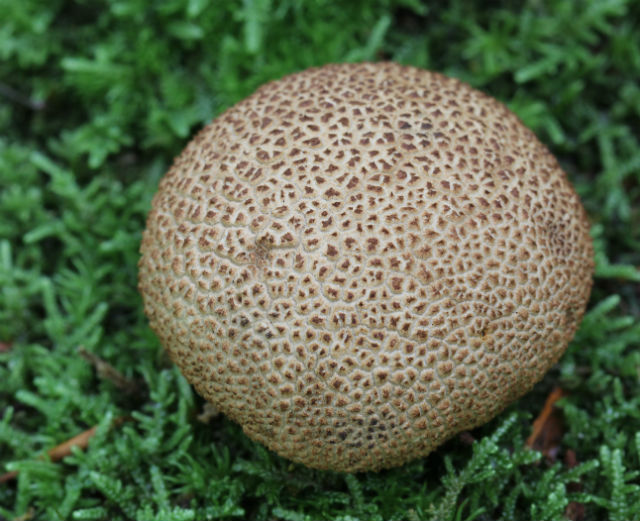
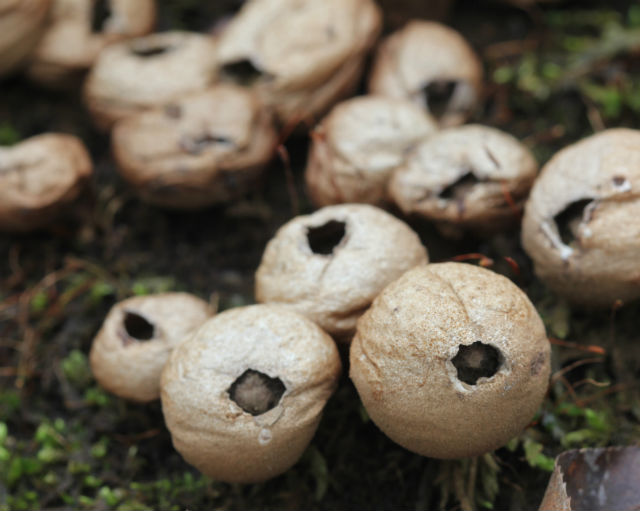
A Puffball is a type of mushroom that looks like a ball when it matures. Once mature, it splits open, or a perforation develops on surface of the ball, through which the spores escape. Some sort of disturbance is needed to cause the spores to eject, like raindrops landing on the Puffball, wind, or an animal brushing up against it.

puffball_1087

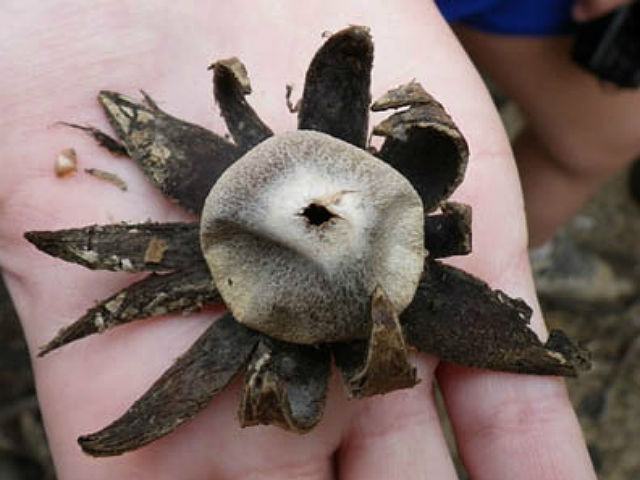
These mushrooms differ widely in size and texture, from tiny species that grow in clusters on wood, to large, terrestrial species growing in fairy rings in meadows. Earthstar Puffballs have layer of fruit body tissue that splits open in a star-like manner.
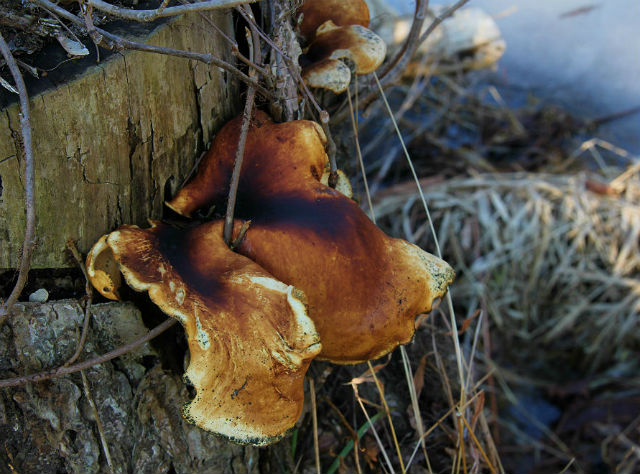
earthstarpuffball

Puffballs follow the same life cycle but look different than the typical mushroom with which you might be familiar. When sliced open, puffballs contain only flesh or, if they have matured, spore dust.
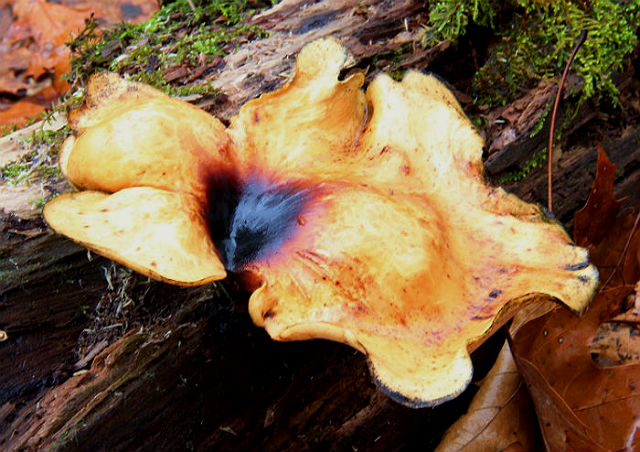
puffball _8284

Some types of these mushrooms have tradtionally been used for medicine as well as food. Not to mention that they perform the important feat of breaking down once-living matter to release carbon, oxygen, nitrogen and other matter back into the soil and atmosphere.

Third Eye Herp
E-mail

Little Nest Polypore

Little Nest Polypore_9101

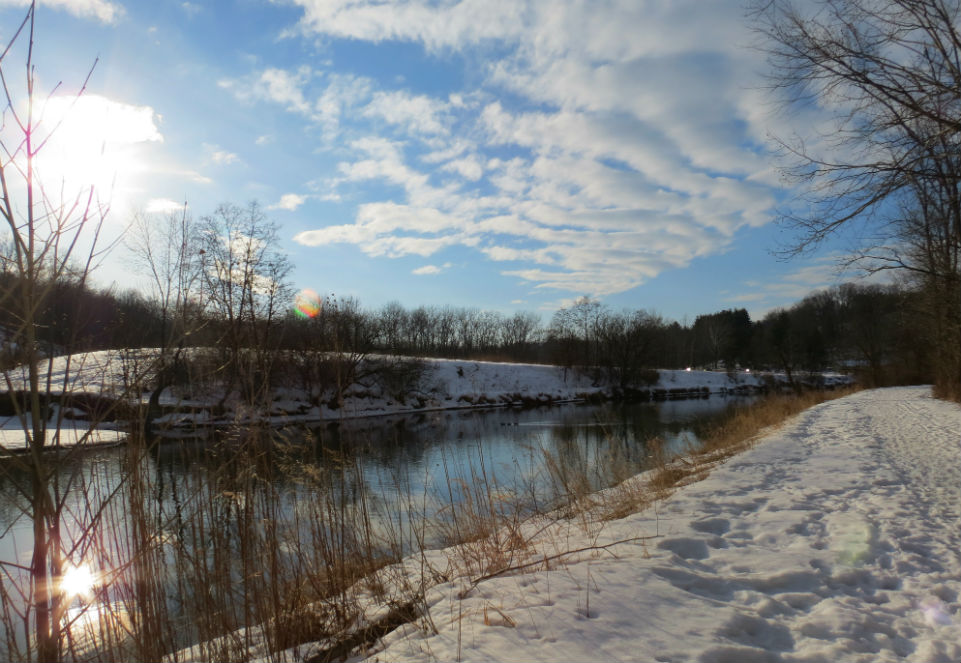
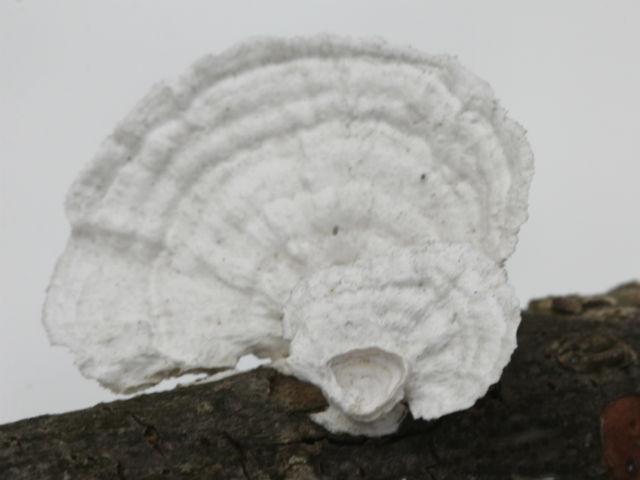
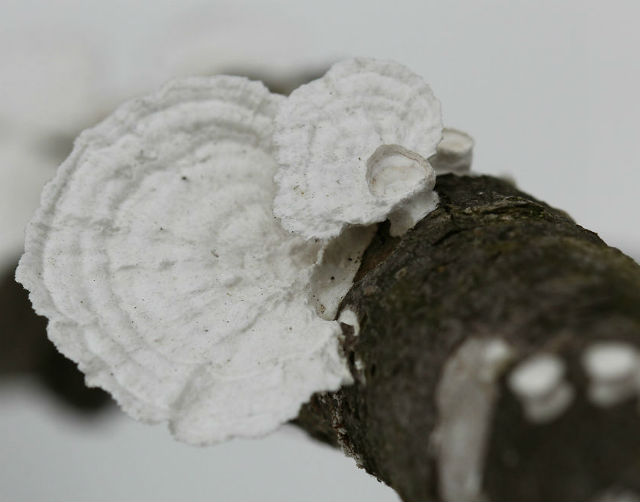
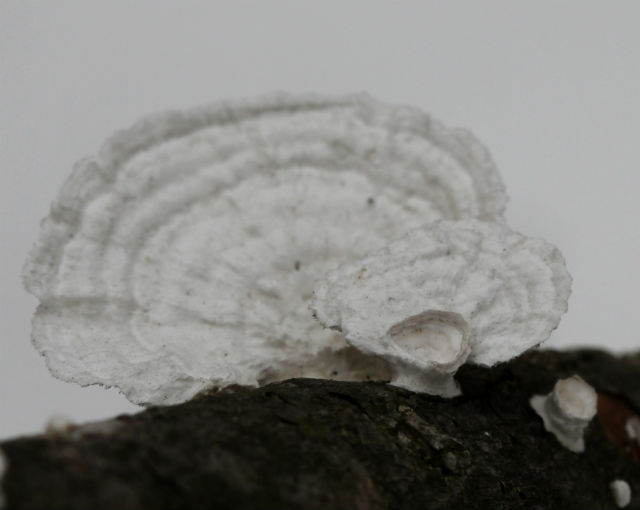
As Winter comes to a close and I walk through the woods, I occasionally encounter Little Nest Polypores, which blend in with the snow. The cap of this mushroom is about 1-2 inches wide and is thin, fan-shaped and white.

Little Nest Polypore_7901

This common fungus grows “splash cups,” which are round hollow areas that contain spores. The spores are splashed out by falling rain to distribute them in other places and start new polypores.

Little Nest Polypore Poronidulus conchifer_7894

Its habitat is woodland forests and rather than growing on trees, it is usually found on small sticks. Polypores are also called bracket fungi, and their woody fruiting bodies (the only part of that organism one typically sees) are called conks.

Little Nest Polypore_7896

Polypores are among the most efficient decomposers of the main components of wood. Through decomposing tree trunks, they recycle a major part of nutrients in forests. Because of this, the nutrient cycle continues, and the forest remains alive and diverse.

Third Eye Herp
E-mail

Tinder Conk Mushroom

tinder conk_8332

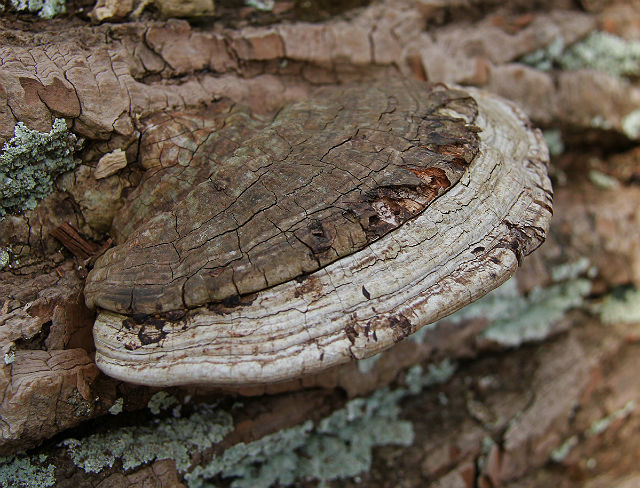
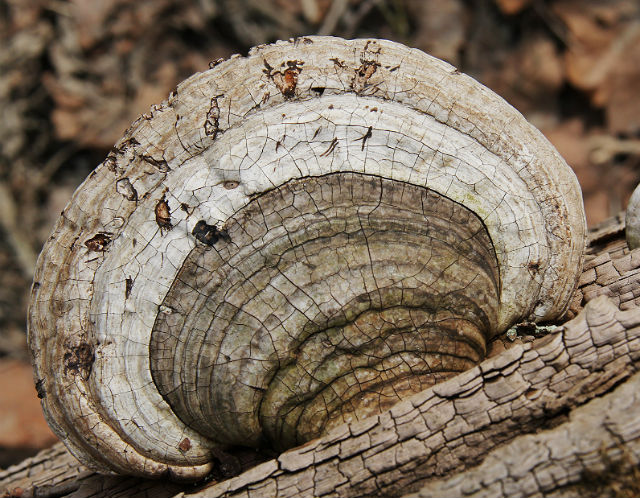
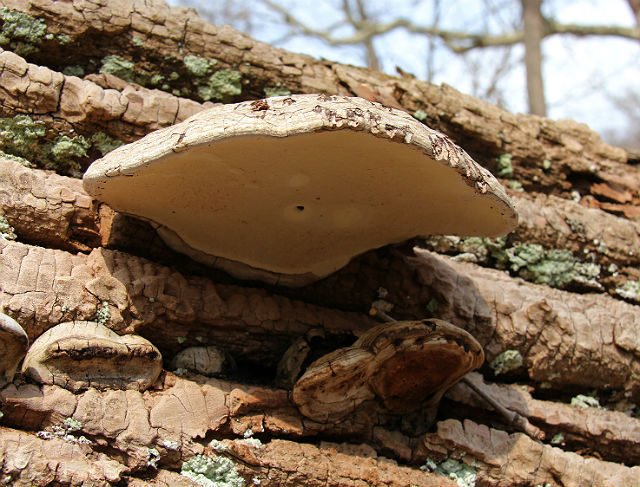
The species of fungus produces very large fruit bodies which are shaped like a horse’s hoof and vary in color from a silvery grey to almost black, though they are normally brown.

tinder conk 010

It contains a spongy material used primarily as tinder, but also used to make clothing and other items. The 5,000-year-old Ötzi the Iceman (a well-preserved natural mummy) carried four pieces of this fungus, thought to be used for tinder.

tinder conk 018

It’s scientific name is Fomes fomentarius. The Latin word fomes means “tinder” or “touchwood” and the Latin word fomentarius means “material to feed a fire” – both the generic and species names emphasize the use of this fungus for fires.

tinder conk 022

It also has a long history of being used for a variety of medical purposes. Hippocrates in the fifth century BC described it as a “cauterization substance for wounds.” The fungus is credited with helping to stop bleeding. Due to this fact, surgeons at the time found use for it.

tinder conk 020

This species of fungus dwells on bark of trees. If not picked, it does not fall off the bark. It remains attached to the tree until it is dead; then it starts to initiate rotting of the tree bark. This often provides the beginning of a hole that birds which nest in tree cavities eventually use.

Third Eye Herp
E-mail

Turkey Tail

turkeytail013

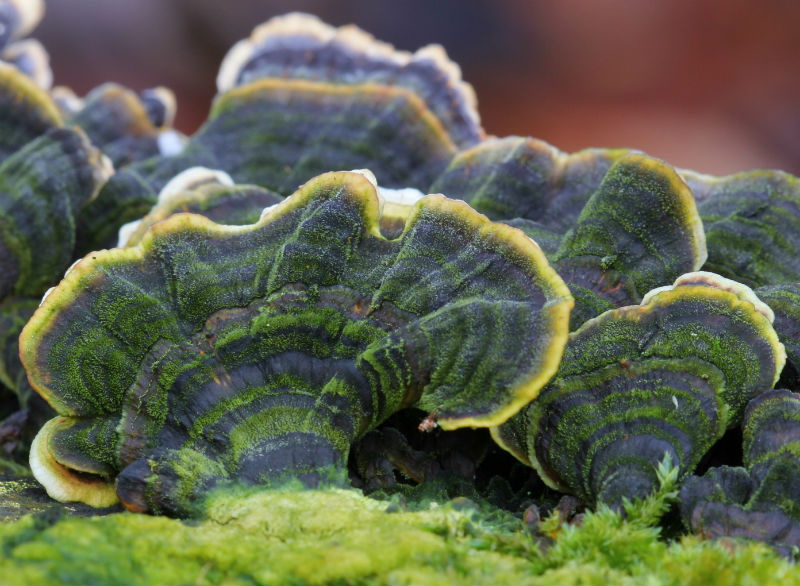
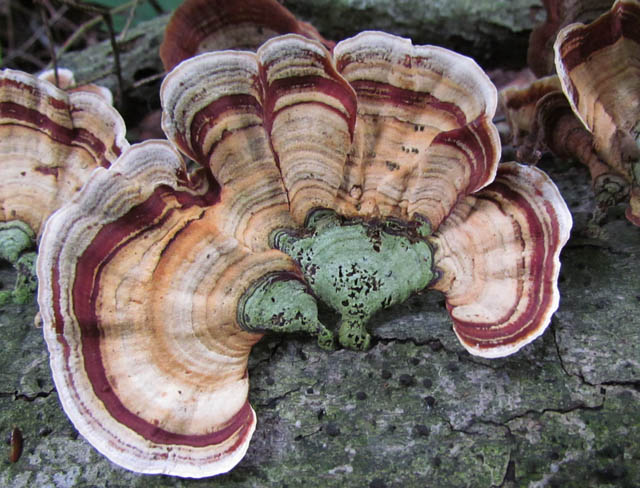
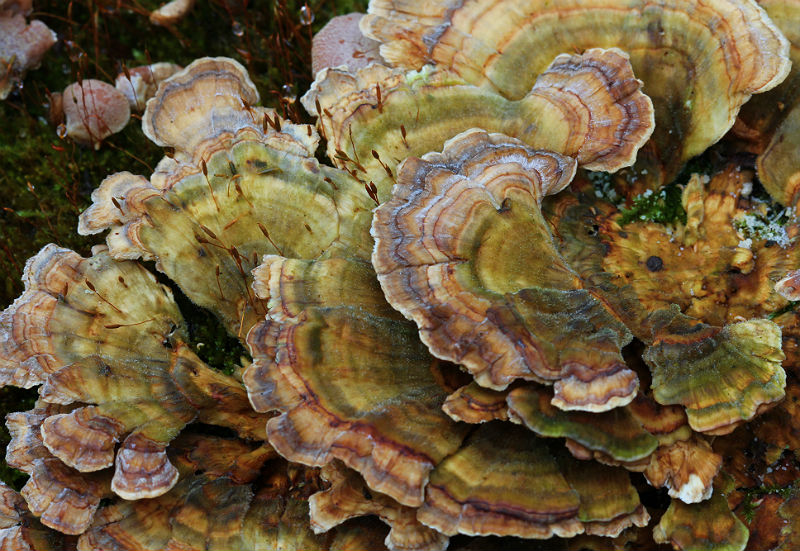
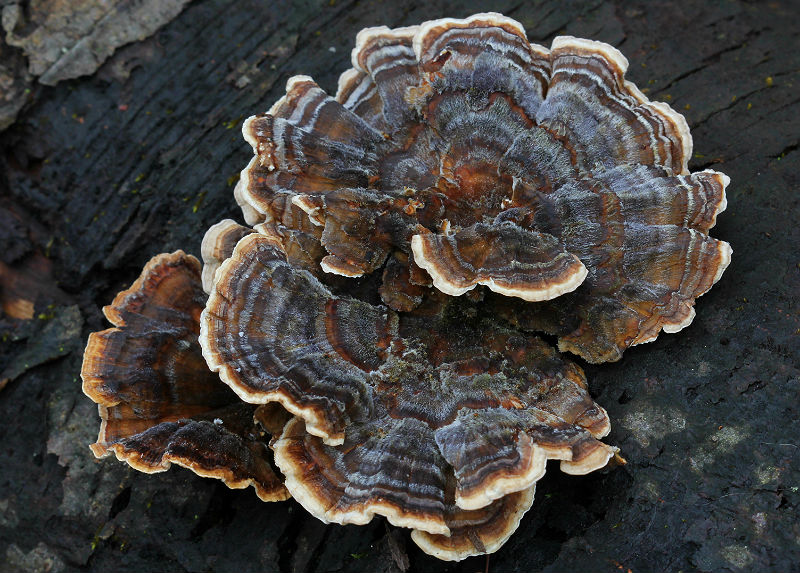
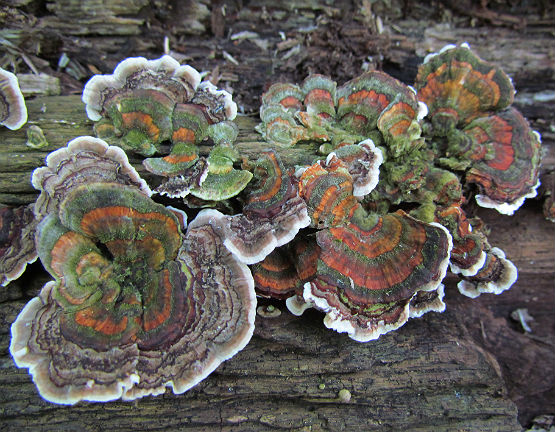
Turkey Tail is a bracket fungus which grows on the sides of logs or trees. It’s easy to see how it gets its common name. The fan-shaped fruiting bodies have the same kind of concentric banding and roughly the same palette of colors as an actual Wild Turkey’s tail.

tt_3015

Fungi are recyclers. By digesting dead organic matter, they release carbon bound in plant cells. To do this they secrete digestive enzymes to chemically break down food into a form that they can absorb. Eventually, due to this process, nutrients are returned to the soil to be used again.

turkeytail018

Turkey Tail is spoon-shaped, up to four inches wide, and can be very colorful. Its colors can range from brown, white, tan, orange, red, or purple – or all of these colors at once. They often overlap each other and feel leathery to the touch.

turkeytail021

Like other fungi, Turkey Tail is the name for the part that you see. Most of the fungus is inside the bark of the log. The “tail” that you see is like the “flower” of the fungus.

tt_4011

Turkey Tails are among the most common and most beautiful fungi in the woods and on a dreary November day, finding and photographing them can make for an enjoyable way to spend the afternoon.

Third Eye Herp
E-mail

Oyster Mushrooms

oyster_3043

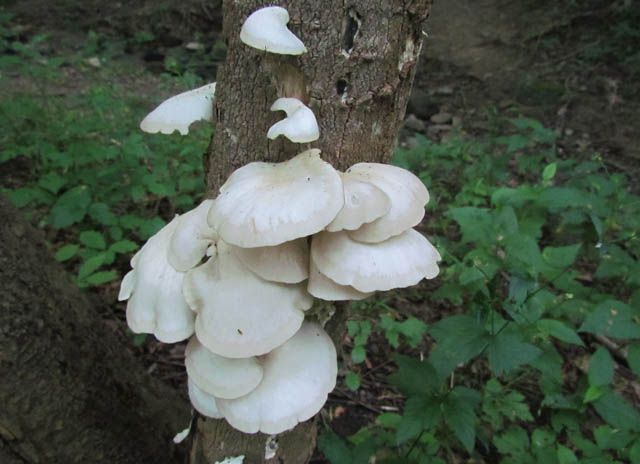
The Autumn forest is brightened with the delicate, translucent, caps cascading from the surface of dead hardwood trees. This is a mushroom that lives up to its name — it looks, smells, and tastes like oysters.

oyster_1470

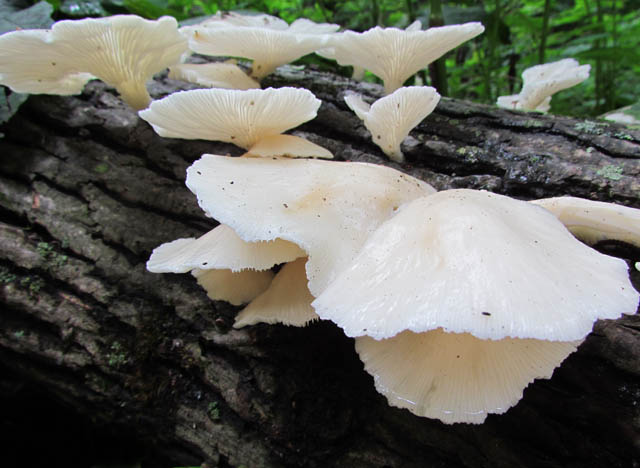
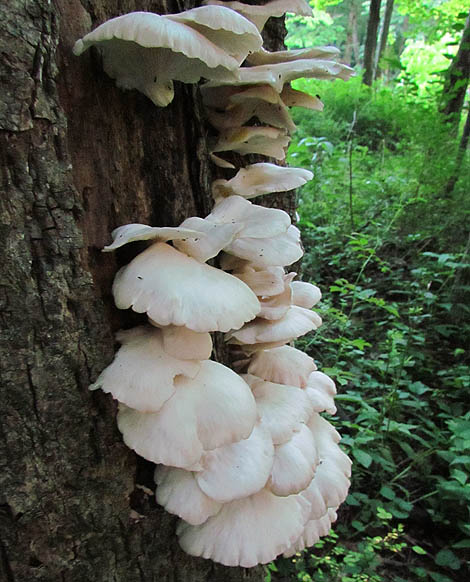
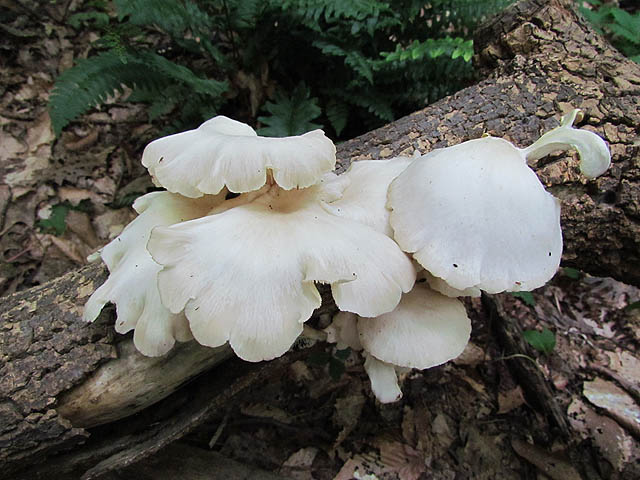
Oyster Mushrooms are wide and fleshy. They can be white, gray or brown. The caps can be up to eight inches wide and are usually in a semi-circle shape.

oyster_1462

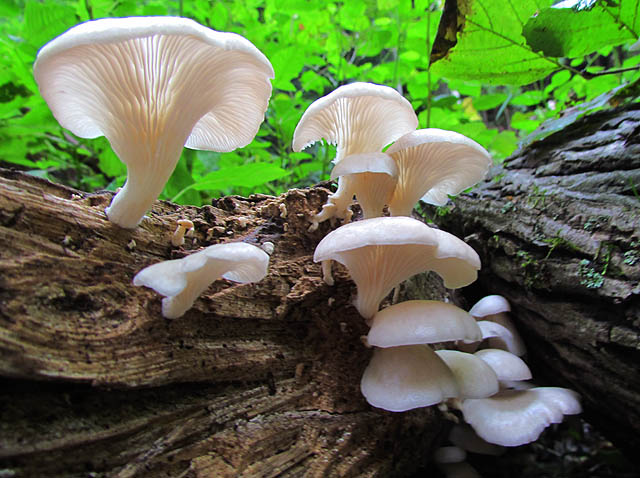
The white, hairless gills (which become yellowish with age) descend the short, stub-like, lateral stalk.

oyster_3046

They grow throughout North America. If it rains enough and it’s not too hot or cold, you can find them during anytime, although they’re most commonly seen around this time of year.

oyster_1538

Oyster Mushrooms, like other fungi, are good food and habitat for small creatures, such as insects. These small animals also help spread spores (like seeds of a plant) so that new Oyster Mushrooms can grow in new places.

oyster_1463

Larger animals like to eat this fungi too, like Eastern Box Turtles, White-tailed Deer and Eastern Gray Squirrels. They are also an edible favorite among wild mushroom collectors and are cultivated on farms for human consumption.

Third Eye Herp
E-mail

Crown-Tipped Coral Mushrooms

Crown-Tipped Coral Mushrooms 005

These tend to grow on wood that has been dead for a very long time. They will grow on both hardwood and coniferous logs. This coral fungus or coral mushroom is appropriately named because it looks like coral from the ocean floor. It is rather small, as it Latin species name, pyxidata, hints at.

Crown-Tipped Coral Mushrooms 006

Crown-Tipped Coral Mushrooms are actually one of the duller-colored coral fungi. There are some very striking, brightly-colored coral fungi, especially west of the Great Plains.

Crown-Tipped Coral Mushrooms 008

Like so many fungi, this species exists as a network of cells that obtains nourishment by digesting the rotting wood that it lives within. Most of the mushroom hidden. When ready to reproduce, the branching “fruiting body” develops outside the wood, which is a reproductive structure.

Crown-Tipped Coral Mushrooms 007a

Crown-Tipped Coral Mushrooms, like other fungi, perform an important feat of breaking down once-living matter to release carbon, oxygen, nitrogen and other matter back into the soil and atmosphere.

Third Eye Herp
E-mail

Black-Footed Polypore

black-footed polypore 072

The Black-Footed Polypore has a smooth, wavy cap that is often sunken in the center. Its off-center stalk is black near the base. It can grow singly or in groups on dead wood and stumps of trees. Although it is typically seen in Autumn, it has the ability to overwinter.

black-footed polypore 026

This species lives within rotting logs as a whitish network of cells that digests and decomposes the dead wood. When ready to reproduce, mushrooms develop and emerge from the log. Not only is its appearance distinct, sometimes convex and sometimes funnel-shaped, but it is rather large – about 8 inches across.

polypore032

This is one of the many fungus species that live on decaying wood. It and other related fungi play an incredibly important role in breaking down the tough materials wood is made of and returning those nutrients to the soil.

black-footed polypore 035

Mushrooms decorate woodlands the way wildflowers do, adding to our enjoyment of hikes. Many mushrooms are most prominent in the Fall, when wildflowers are winding down. Mushrooms that overwinter are an especially welcome sight on a February day like today.

Third Eye Herp
E-mail

Pixie Cup Lichen

pixie cup lichen 004

Pixie Cup Lichen typically grows on moss on the forest floor, usually on logs or at the base of trees. I have these growing in the rock garden in my backyard. Like other types of lichens, it is a symbiotic relationship between algae and a fungus. The algae provide nutrients with their chlorophyll while being protected from drying out by the fungus.

pixie cup lichen 013

They are shaped like somewhat battered and sand-blasted miniature golf-tees. This lichen has an extremely rough appearance. The rim of the cup often has a reddish tint. The stem has scales which become larger the further down, as it reaches the ground. The “undergrowth” is a mass of these flattish scales. They are only about half an inch tall.

pixie cup lichen 016

The cup is thought to act as a spore dispersal mechanism when hit by raindrops. Pixie Cups and related species contain Didymic Acid which was once collected from the lichen and used in folk-lore medicine to treat tuberculosis.

pixie cup lichen 005

Not only is it an example of a symbiotic relationship with a cool shape and texture, but Pixie Cup Lichen is a sign of life that can been seen in the winter if you do some careful searching.

pixie cup lichen 017

Third Eye Herp
E-mail