Chicken of the Woods

chicken of the woods_3651

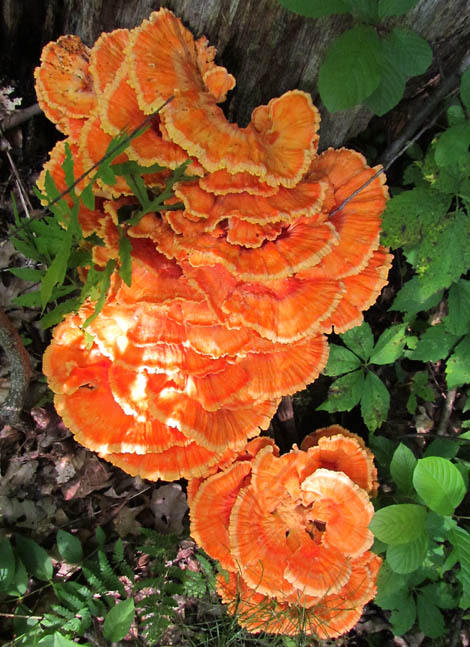
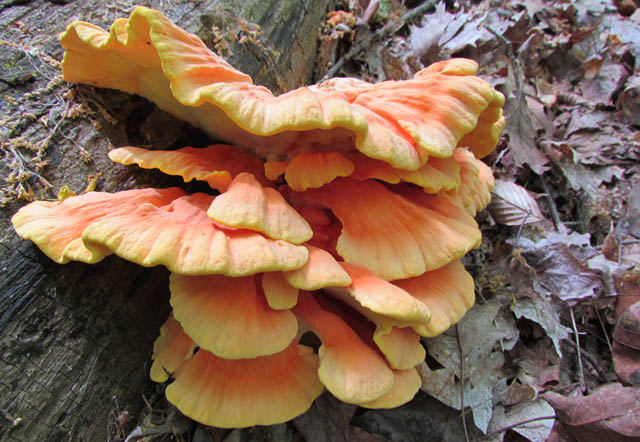
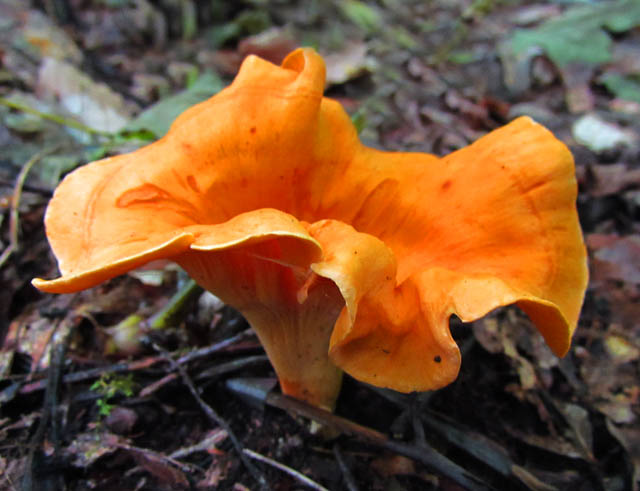
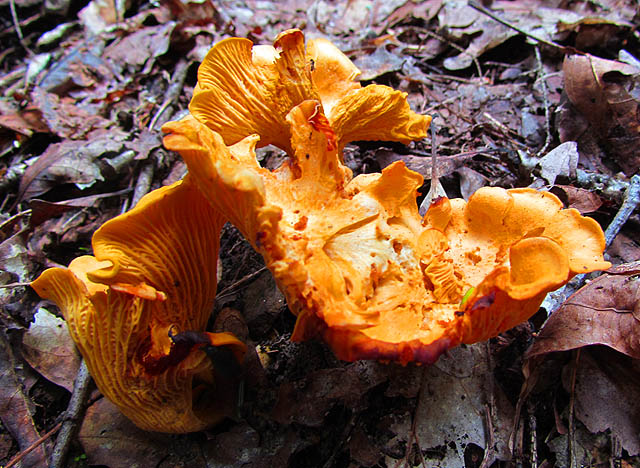
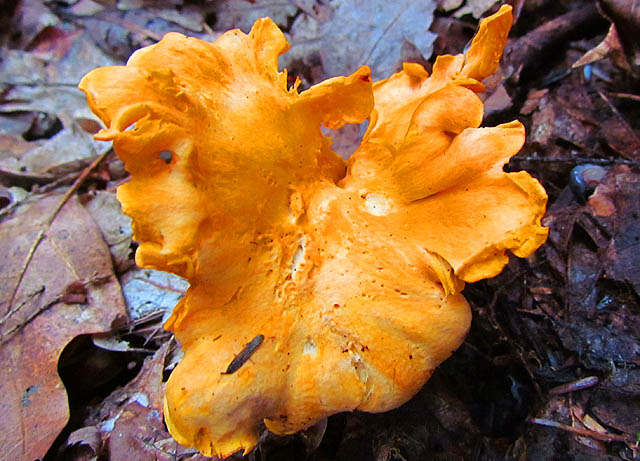
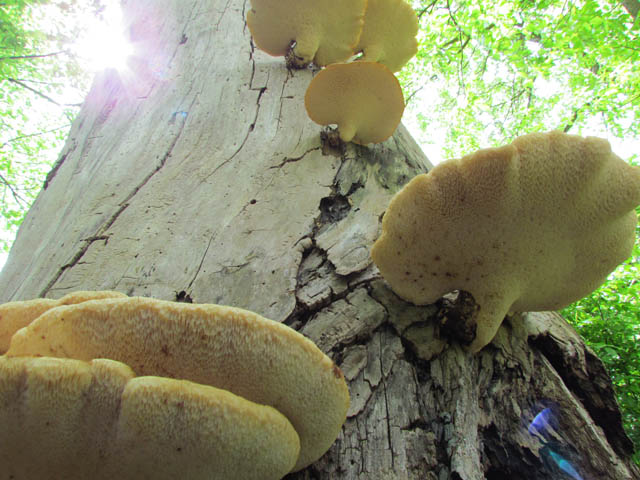
It would be hard to miss this layered, fan-shaped, fleshy, big orange-to-yellow mushroom when hiking through the woods.

chicken of the woods_4035

They are easily recognized by their large clusters of overlapping brackets and bright colors. They tend to lighten in color near the edges. The colors fade as the mushroom grows older.

chicken_05_19 012

It’s edible and considered a delicacy in some parts of the world. This mushroom has a lemony, meaty taste. Some think it tastes like its chicken namesake; others describe the flavor as being more like crab or lobster.

chicken_05_19 015

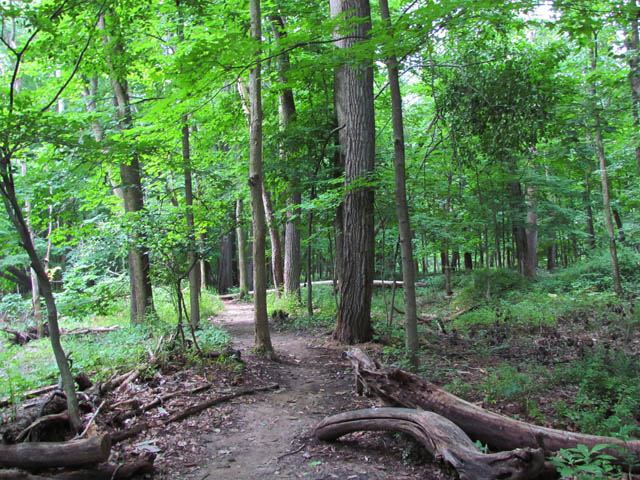
Chicken of the Woods is frequently discovered during the Summer and Fall, but only rarely in Winter or Spring.

chicken_5087

Although nice to look at, it also performs a function. This is one of the many fungus species that live on decaying wood and it plays an important role in breaking down the tough materials wood is made of and returning those nutrients to the soil.

Third Eye Herp
E-mail

Lobster Mushrooms

lobster_1903

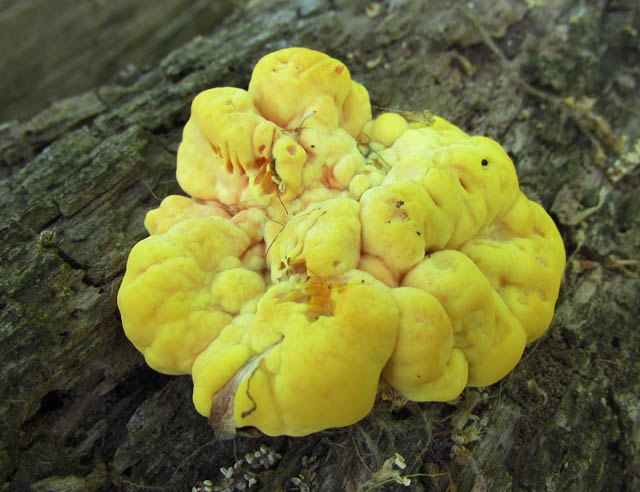
Lobster mushrooms are a fascinating departure from what we typically consider mushrooms. They have a color similar to cooked lobster meat or lobster shell.

lobster_3053

This “species” is actually an example of a mold attacking a mushroom. The mold parasitizes Russula brevipes and covers the entire fruiting body with an orange skin.

lobster_3067

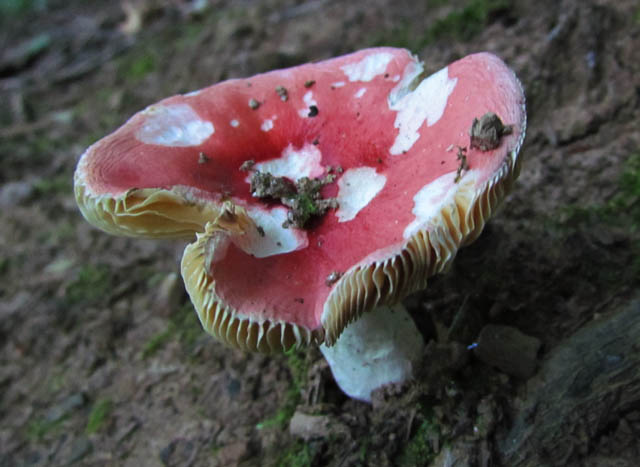
Eventually, the fungus even begins to transform the shape of the host mushroom, twisting it into odd contortions. Here’s what an unparasitized Russula brevipes (apparently this species has no common name) looks like.

lobster_1489

The idea of eating a fungus infected by a mold may sound pretty gross, but Lobster Mushrooms are considered “gourmet food.”

lobster_3063

The presence of the parasite dramatically increases the flavor of its host. The taste of a Lobster Mushroom is said to resemble that of an actual lobster. Who knew?

lobster_1592

Third Eye Herp
E-mail

Pheasant’s Back Mushroom

Pheasant Back Mushroom_4460

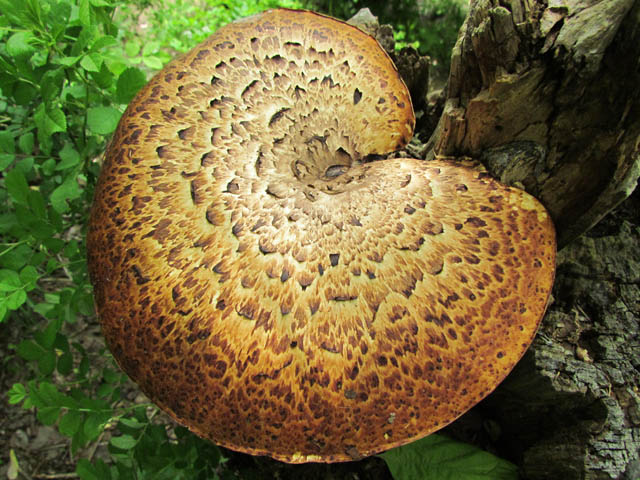
When out hiking recently I came across these large brackets growing out of dead trees. Their size (up to two feet across) and wild bird-like colors and patters were rather eye-catching.

Pheasant Back Mushroom_4474

This large and distinctive fungus is not likely to be overlooked in nature. The radial bands of dark, flat scales on the upper surface of the cap make this species easy to identify, since there is nothing else quite like it in the forests of eastern North America.

Pheasant Back Mushroom_4464

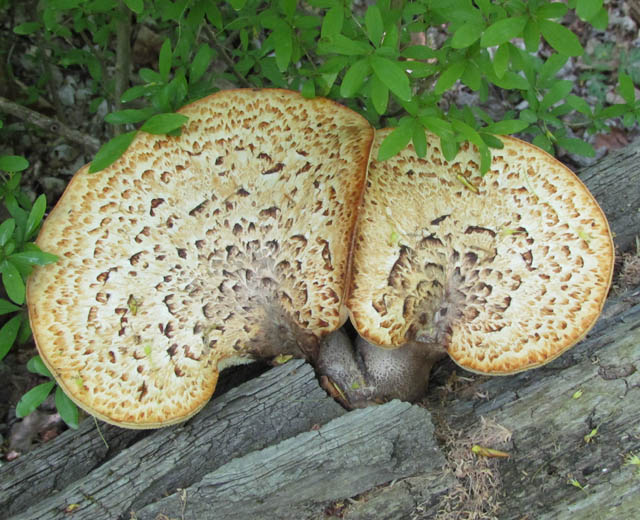
The underside of the shelf has large, irregularly-shaped, angular pores instead of gills. Most grow as a shelf-shaped or fan-shaped structure with a thick stem. Occasionally they grow as a complete circular, funnel-shaped mushroom.

Pheasant Back Mushroom_4517

Like its relatives, Pheasant’s Back Mushroom plays an important role in breaking down the tough materials wood is made of and returning those nutrients to the soil. This is a key part of a forest’s recycling process.

Pheasant Back Mushroom_4487

This organism is also known as Dryad’s Saddle. In Greek mythology, dryads were forest nymphs who were responsible for the trees and did not mingle with the other gods. They were depicted with oak-leave crowns and carried axes to protect their charges from intruders.

Pheasant Back Mushroom_4149

This fungus is also pretty cool because it smells like watermelon!

Third Eye Herp
E-mail

Greenshield Lichen

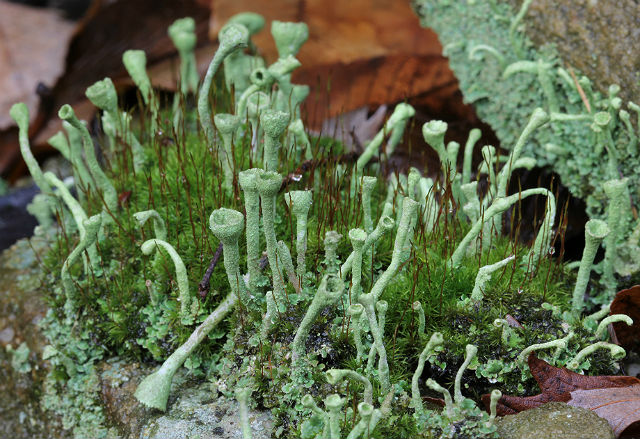
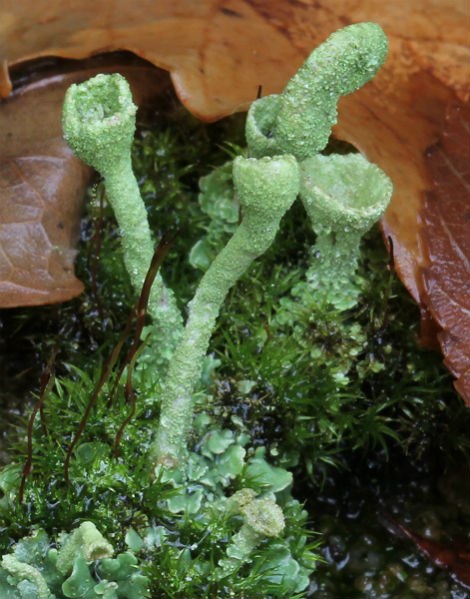
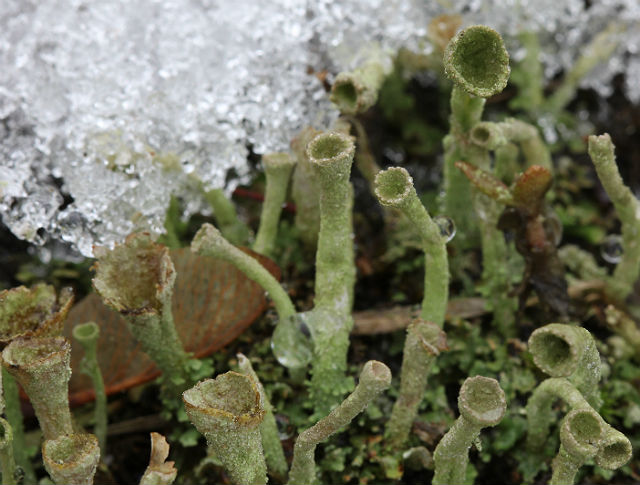
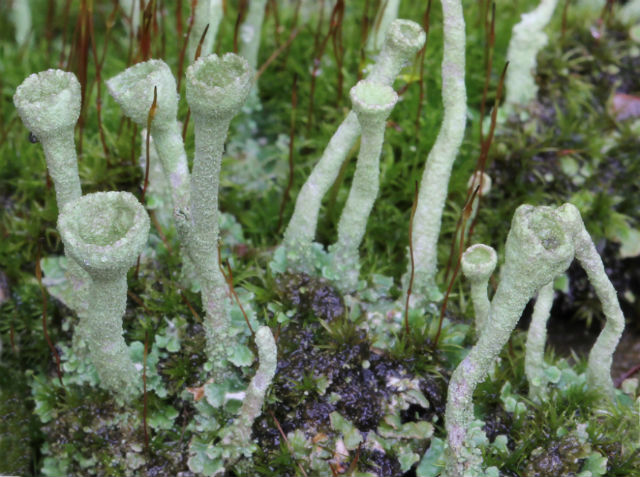
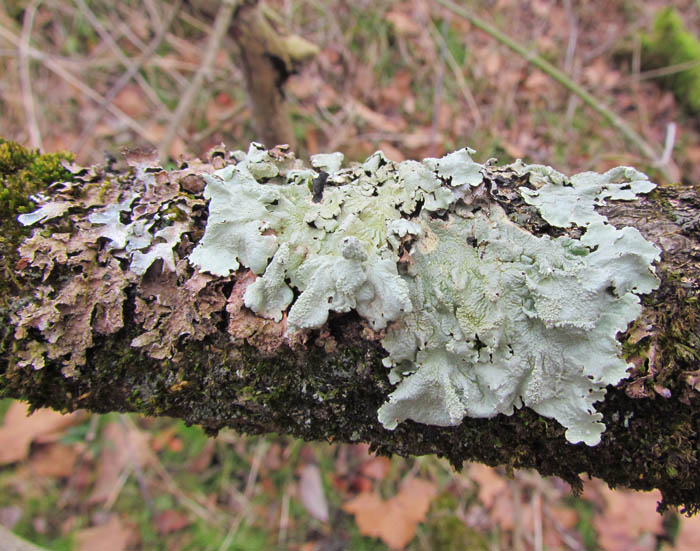
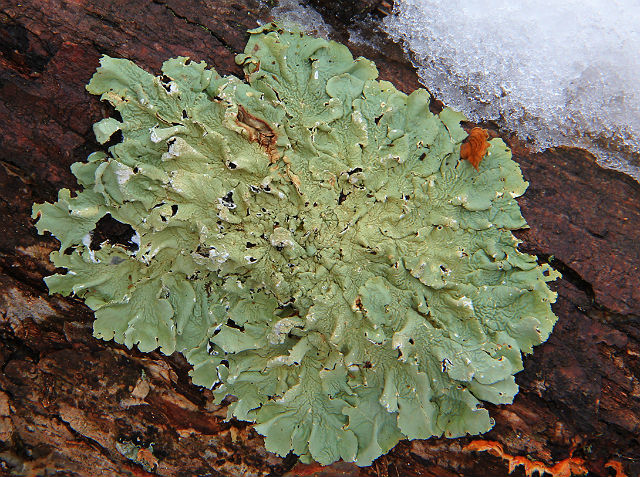
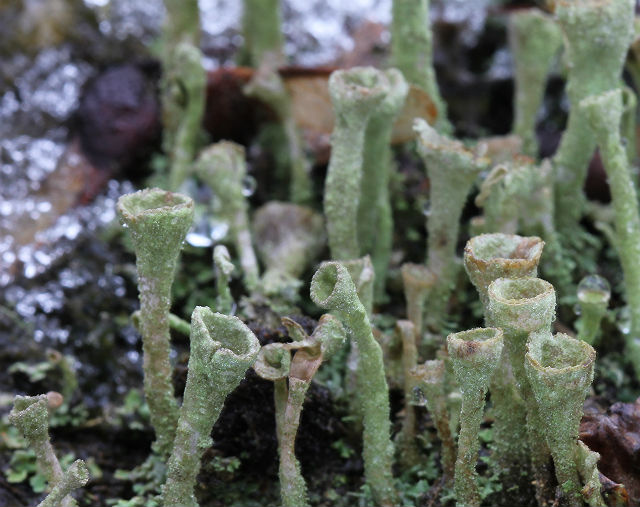
A lichen is special, because it is not one organism, but two. It is a complicated relationship between a fungus and an alga.

The alga provides nutrients through photosynthesis, while the fungus (which the alga lives inside of) protects the alga from the elements. The result is a new organism distinctly different from its component species.

Lichens are also fascinating because of the diversity of their shapes and colors. They often occupy niches that, at least sometime during the season, are so dry or hot that nothing else can live there. I sometimes see yellow lichens on rocks in the desert, like this one found on Mount Charleston (NV) a couple of years ago.

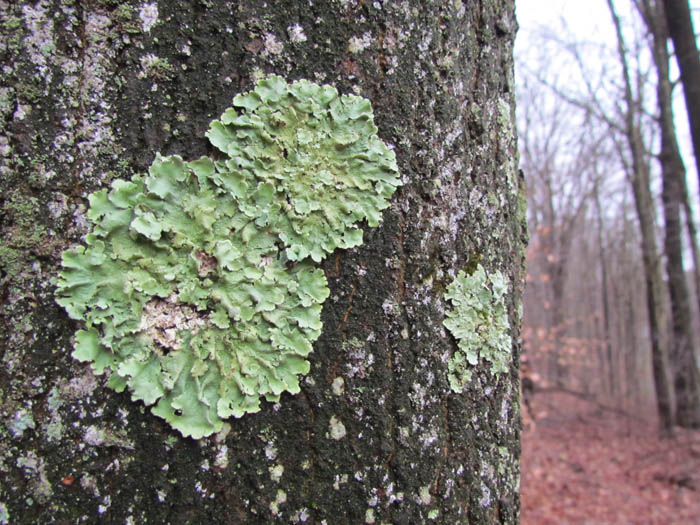
The successful alliance between a fungus and an alga allows each to do what it does best and thrive as a result of a natural cooperation. Greenshield Lichens are usually greenish-gray. They look a lot like tiny leaves.

lichen028

Greenshield Lichens live on tree trunks and rocks, preferring shady, damp places – look for them in the woods. Lichens do not damage trees, but over time, a colony of lichens can break down rocks and put nutrients back into the soil.

Lichens are very sensitive to pollution and are an indicator of air quality. Got lichens? Then you’re breathing clean air!

Third Eye Herp
E-mail

Cinnabar-red Polypore

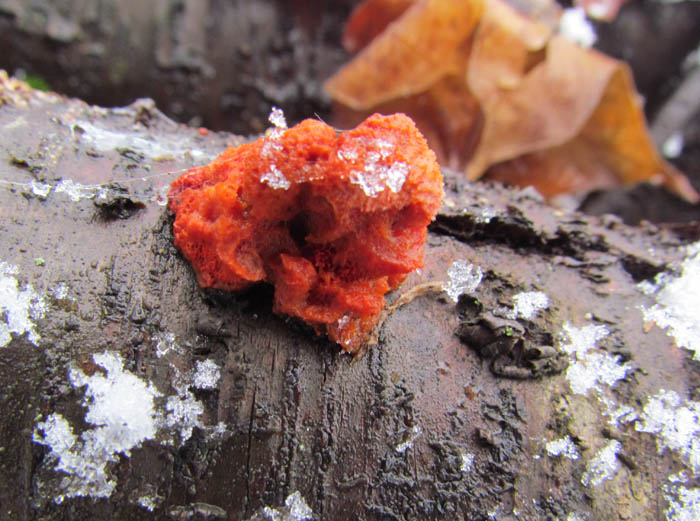
What’s the best looking fungus in the land? Right now this one has my vote. Polypores are fungi with many tiny holes, or pores, on the undersides of their shelves. They are also called “bracket fungi.”

Fungi provide a critical part of nature’s continuous rebirth by recycling dead organic matter into useful nutrients. They digest food outside their bodies by releasing enzymes into the surrounding environment and breaking down organic matter into a form they can absorb.

Without fungi, forests would become choked with logs, sticks and dead plants; nothing else is able to perform the function of reducing these forest byproducts back down into soil.

“Poly” means “many.” Checking out the underside of one of the shelves, it’s easy to see why it’s called a polypore. The pores are used to release spores into the air, which is the way fungi reproduce.

The shelves (or brackets) are the fruiting bodies of the organism – they are also known as conks. Most of the fungus is embedded in fallen wood. The pores are all perfectly vertical, as the spores must be able to fall out of the pores without sticking to the sides.

Cinnabar-red Polypores are often found on fallen cherry trees (like this one). They are widely distributed in North America, but a number of sources state that they are rare, so finding these today was an unexpected surprise.

Third Eye Herp
E-mail

Fun with Fungus

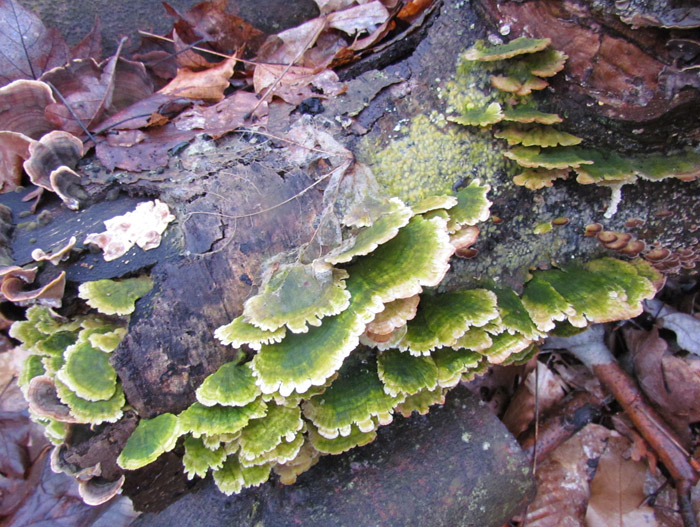
Did you know that fungi are more closely related to people than to plants? It’s OK, I didn’t know that either until I took Biology at CSU a couple of years ago. I contemplated this as I saw several different types of rather eye-catching fungus while out this afternoon.

In addition to the beauty of some types, fungi provide a critical part of nature’s continuous rebirth: fungi recycle dead organic matter into useful nutrients. Fungi feed by absorbing nutrients from the organic material in which they live.

Fungi were listed in the Plant Kingdom for many years. Then scientists learned that fungi show a closer relation to animals, but are unique and separate life forms. So now fungi are placed in their own Kingdom.

You probably use fungal products every day without being aware of it. People eat mushrooms of all shapes, sizes and colors. Yeasts are used in making bread, wine, beer and solvents. Drugs made from fungi cure diseases and stop the rejection of transplanted hearts and other organs. Fungi are also grown in large vats to produce flavorings for cooking, vitamins and enzymes for removing stains.

Third Eye Herp
E-mail