Turtlehead

turtlehead_09 055

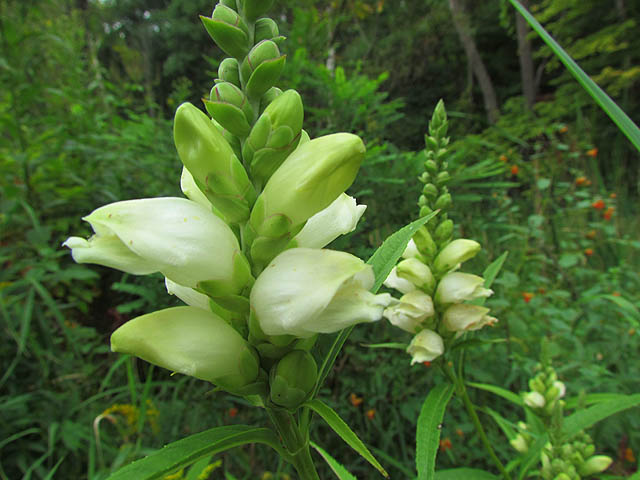
Turtlehead is also known as balmony, bitter herb, codhead, fish mouth, shellflower, snakehead, snake mouth and turtle bloom.
turtlehead_09 045

Its scientific name is Chelone glabra. In Greek mythology, there was a nymph named Chelone who insulted the gods; in punishment, she was turned into a turtle. The flowers of this plant are said to look like the heads of turtles. In Latin glabra means smooth, because of the texture of this plant’s stems and leaves.
turtlehead_09 043

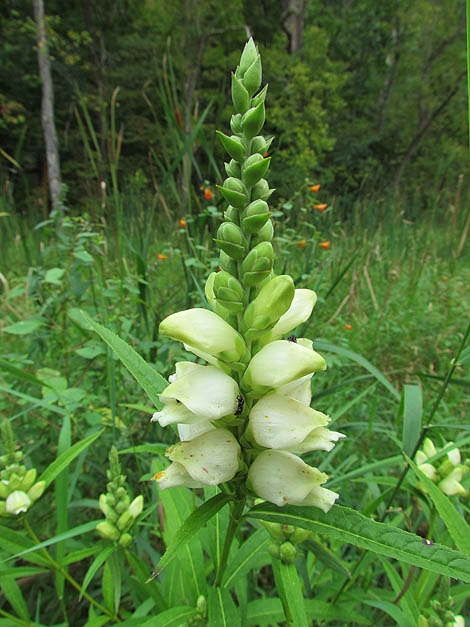
I found these examples on the Ohio Erie Canal Towpath. Turtlehead is usually found along stream banks on damp ground and typically grows to a height of 2 to 3 feet. Turtlehead serves as the primary host plant for the very rare Baltimore Checkerspot Butterfly, Maryland’s official state insect.
turtlehead_09 050

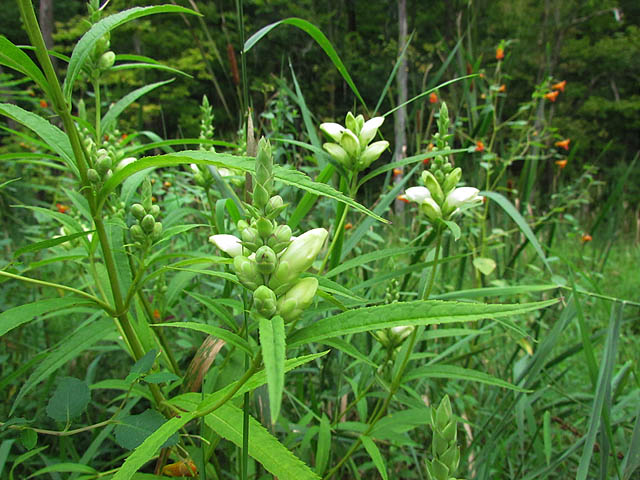
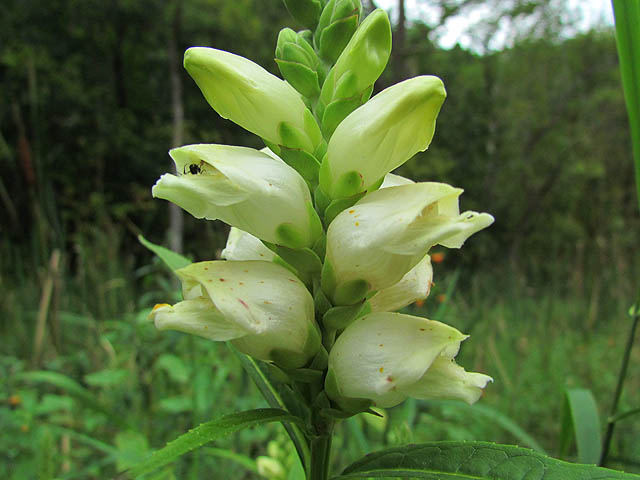
Its flowers are in a densely packed spike at the top of the main stem. It has narrow, sharp-toothed, opposite leaves.

turtlehead_09 049

This member of the Figwort/Snapdragon family has distinctive, two lipped tubular flowers are 1 to 1-1/2 inches long. The upper lip arches over the lower lip, creating the resemblance to a turtle’s head.
Third Eye Herp
E-mail

White Snakeroot

White Snakeroot_1597

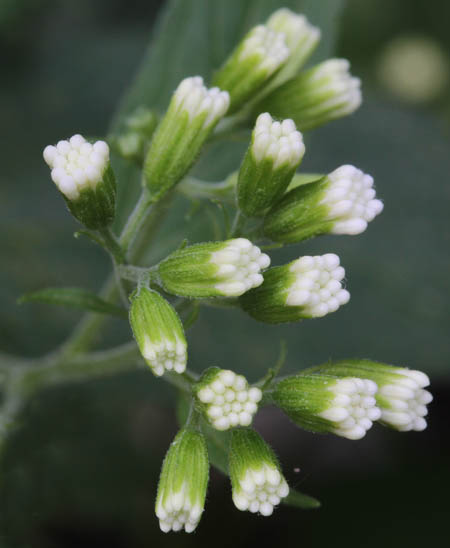
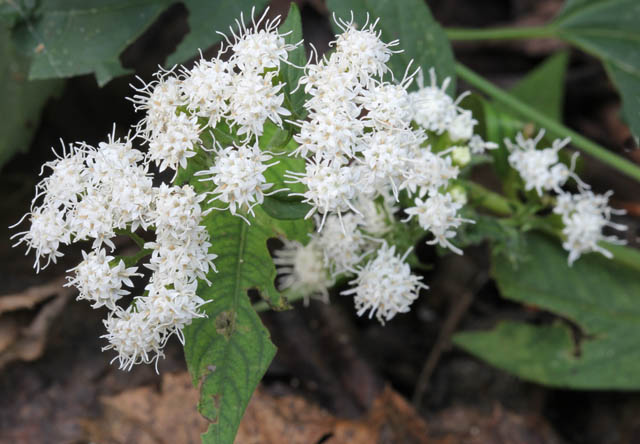
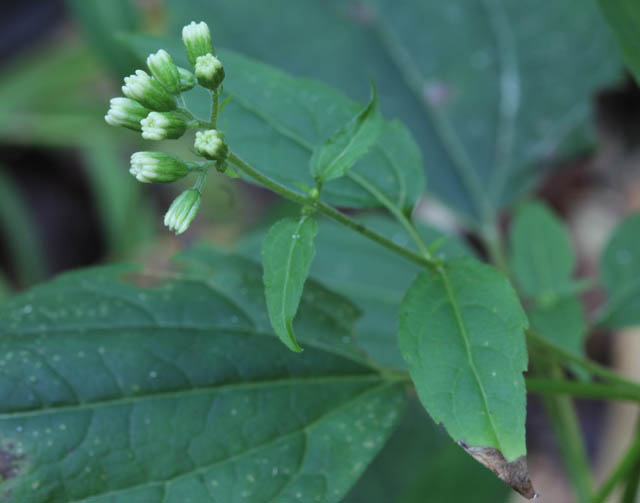
White Snakeroot usually occurs in and around shady woodlands. It is a common and well-known Fall wildflower that has flat-topped clusters of small fuzzy white flower heads. The flower heads eventually transform to black seeds with silken parachutes attached to carry them away. The leaves are long, large-toothed and somewhat heart-shaped on long stems.

White Snakeroot_1595

It’s fitting that this wildflower grows along the edge of Snake Road in southern Illinois. White Snakeroot contains the toxin trematol, responsible for “milk sickness,” which caused problems for the livestock of early European settlers and killed Abraham Lincoln’s mother in 1818. When eaten, the toxins will pass into milk produced by animals that ingest the plant, and the tainted milk can fatally poison humans.

White Snakeroot_1598 

This is one of the last wildflowers to bloom during the Fall. The flowers are often fragrant and their nectar attracts a variety of insects.

White Snakeroot_1597

The common name of this species derives from the erroneous belief among early settlers that the bitter roots were beneficial in the treatment of snakebite. In fact, the foliage and roots are highly toxic.

Third Eye Herp
E-mail

Black-eyed Susan

How about that storm? After 36 hours without power, it’s nice to have heat and light again. Ever wonder about one of America’s favorite wildflowers?  Who was Black-eyed Susan?  Her story is one of the grand romantic tales of the wildflowers. Legend says it comes from an Old English poem of the post-Elizabethan era entitled “Black-eyed Susan.”

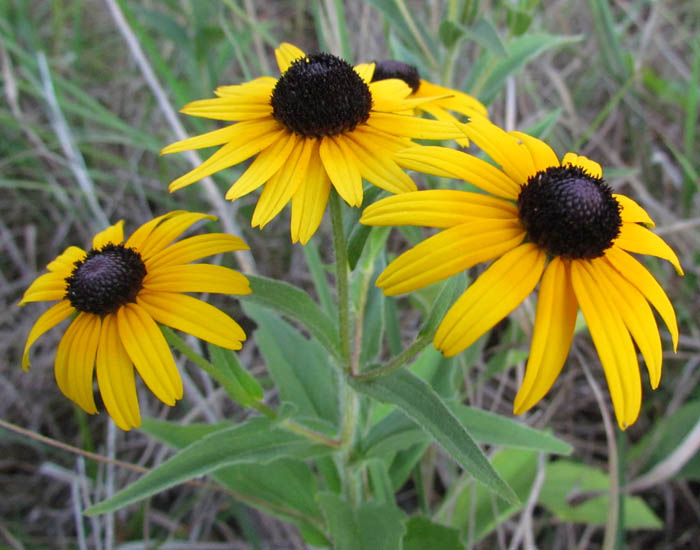
These plants are most easily recognized by their flowers, which are yellow with a brownish-purple center. Black-eyed Susans grow in open woods, gardens, fields, and roadsides. They grow quickly in just about any kind of soil.

They are a pioneer plant; this means that they are one of the first plants to grow in a new field. For example, if a fire burns down part of a forest, this plant will be one of the first to recolonize the charred land.

Black-eyed Susans generally bloom from June to October. They are considered beautiful plants and many people include them in their gardens, where they attract butterflies. Birds also enjoy their ripe seeds.

Third Eye Herp
E-mail

Autumn Sneezeweed

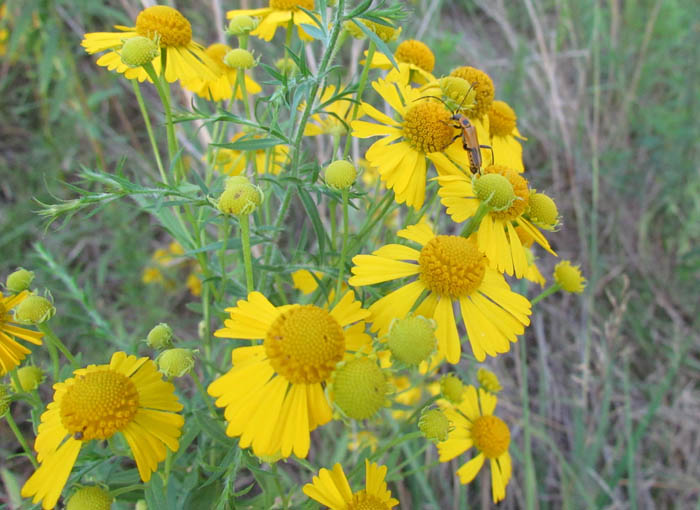
Lately I’ve been seeing a lot of this plant, which is a type of aster with clusters of up to 100 flower heads on each plant. The flowers are usually about an inch wide.

The common name is based on the former use of its dried leaves in making snuff, inhaled to cause sneezing that would supposedly rid the body of evil spirits. As the other part of its name implies, Autumn Sneezeweed blooms in late summer or fall.

Its Latin name, Helenium autumnale, is thought to have been named for Helen of Troy. The legend is that the flowers sprung up from the ground where her tears fell.

Third Eye Herp
E-mail