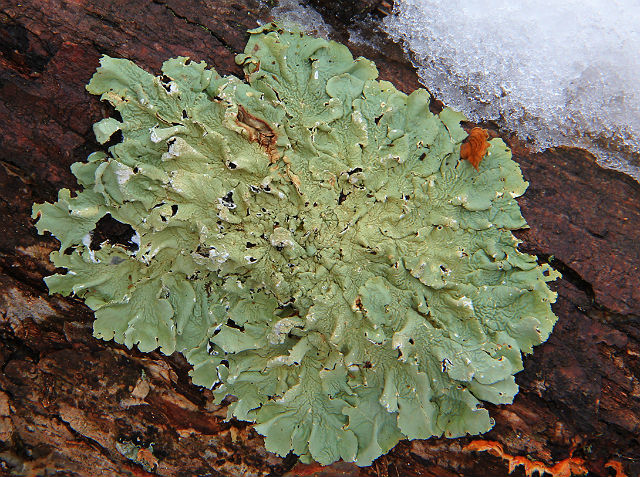
Greenshield Lichen

A lichen is special, because it is not one organism, but two. It is a complicated relationship between a fungus and an alga.
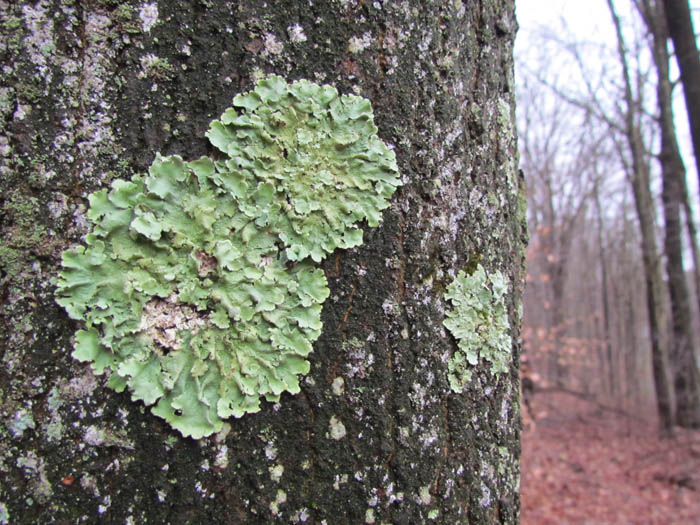
The alga provides nutrients through photosynthesis, while the fungus (which the alga lives inside of) protects the alga from the elements. The result is a new organism distinctly different from its component species.
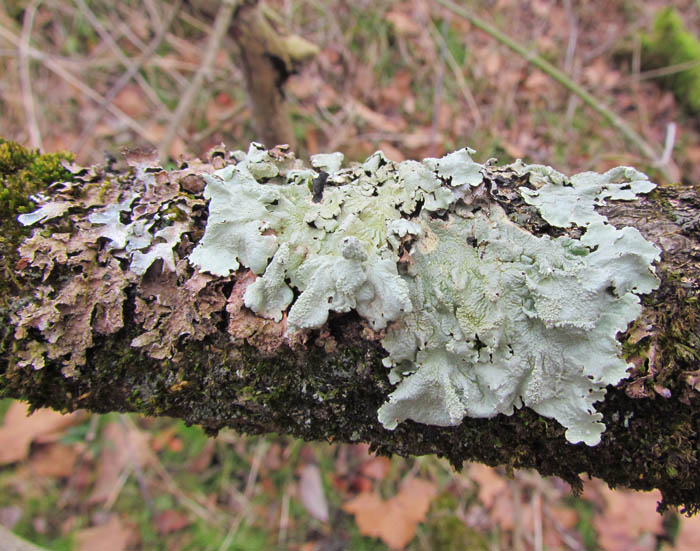
Lichens are also fascinating because of the diversity of their shapes and colors. They often occupy niches that, at least sometime during the season, are so dry or hot that nothing else can live there. I sometimes see yellow lichens on rocks in the desert, like this one found on Mount Charleston (NV) a couple of years ago.

The successful alliance between a fungus and an alga allows each to do what it does best and thrive as a result of a natural cooperation. Greenshield Lichens are usually greenish-gray. They look a lot like tiny leaves.
lichen028

Greenshield Lichens live on tree trunks and rocks, preferring shady, damp places – look for them in the woods. Lichens do not damage trees, but over time, a colony of lichens can break down rocks and put nutrients back into the soil.

Lichens are very sensitive to pollution and are an indicator of air quality. Got lichens? Then you’re breathing clean air!

Third Eye Herp
E-mail

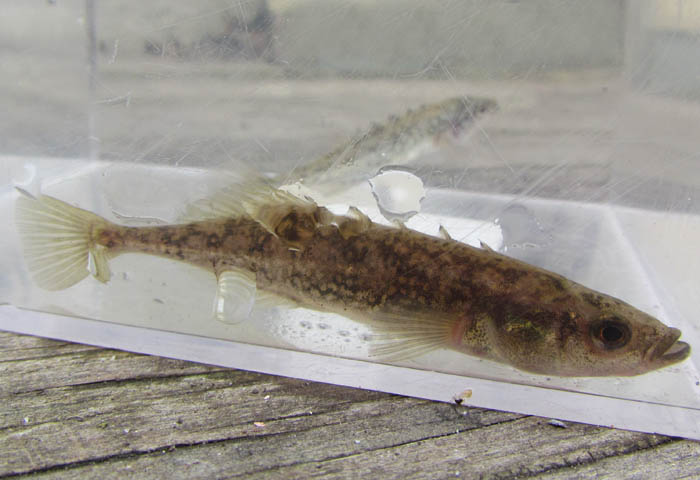
Brook Stickleback

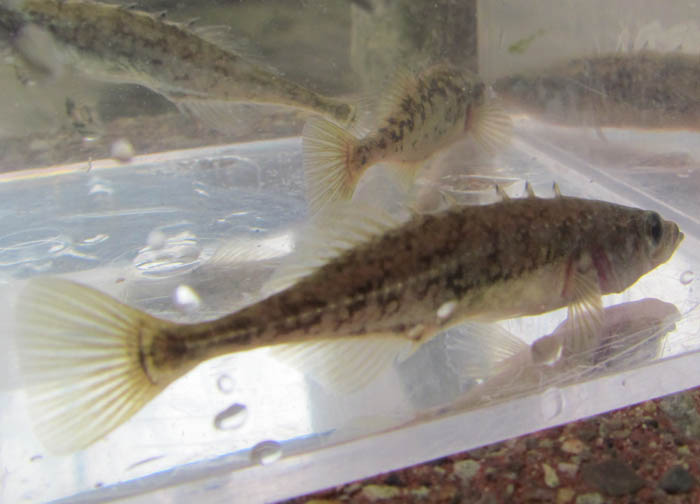
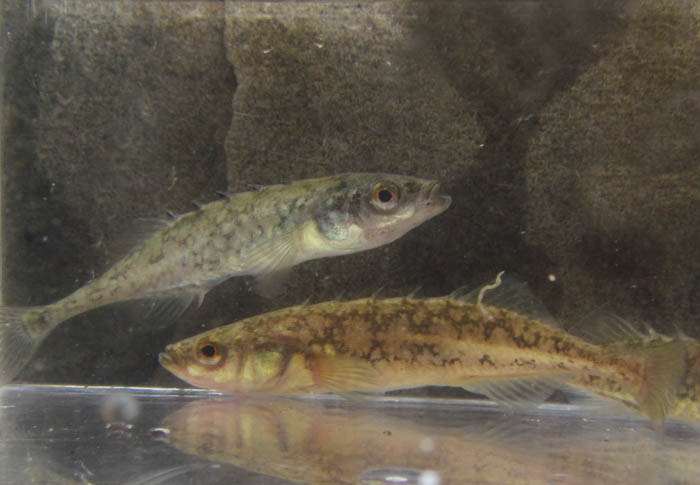
Today I encountered a fish that I’ve never seen “in person” before, but I knew exactly what it was. This species is easily identified by the four to six spikes on its back.

The Brook Stickleback has a pugnacious attitude. It aggressively defends its small territory from other fish. Despite its toughness, it is small and only grows to about two inches.

Its unique dorsal fin composed of an average of 5 short, isolated, backswept spines – followed by a more typical-looking back fin. This feature makes it distinguishable from all other Ohio fish.

In Northeast Ohio they can be found in small streams. They prefer cold, clear water with submerged vegetation. Sticklebacks eat tiny aquatic insects and crustaceans. They help control mosquitoes by eating the insect’s larvae.

The Brook Stickleback is a nest building species. Males have the ability to produce mucous from their kidneys, which they use to bind together a nest made out of bits of vegetation.

This fish is proof positive that very cool creatures sometimes come in rather small packages.

Third Eye Herp
E-mail

American Beaver

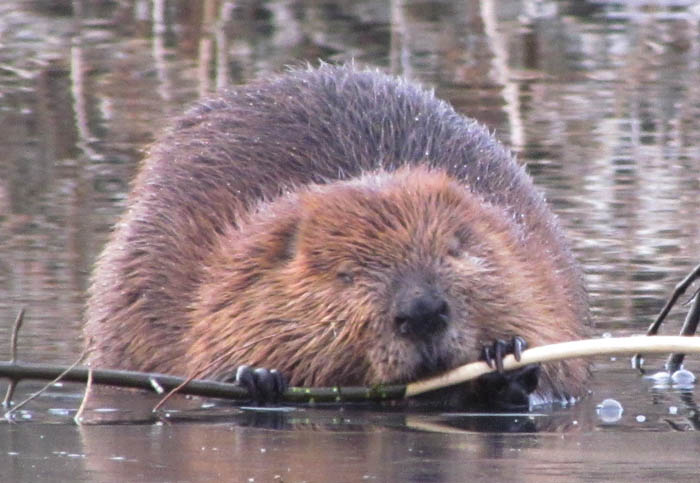
The beaver is North America’s largest rodent – it can weigh up to 65 pounds. It is often cited as one of the prime forces motivating exploration and European settlement of the United States and Canada, due to the value of its fur.

Unregulated hunting resulted in a drastic drop in beaver numbers; by 1830, there were none left in Ohio. Wildlife management practices were instrumental and effective in allowing the beaver to return to Ohio and establish a thriving population today.

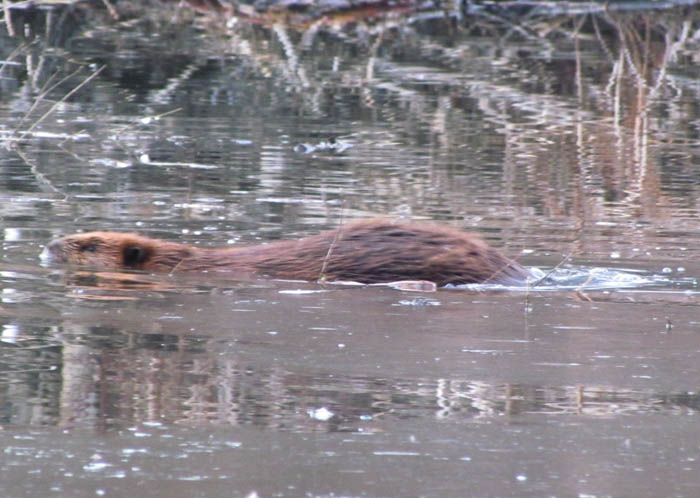
The beaver has dark chestnut-brown fur, a large, flat, scaled tail and webbed hind feet. It has several special adaptations that are not visible, like valves in its nose and ears that close when it swims. It also has oversized lungs that allow it to retain enough oxygen to stay underwater for 10 to 15 minutes.

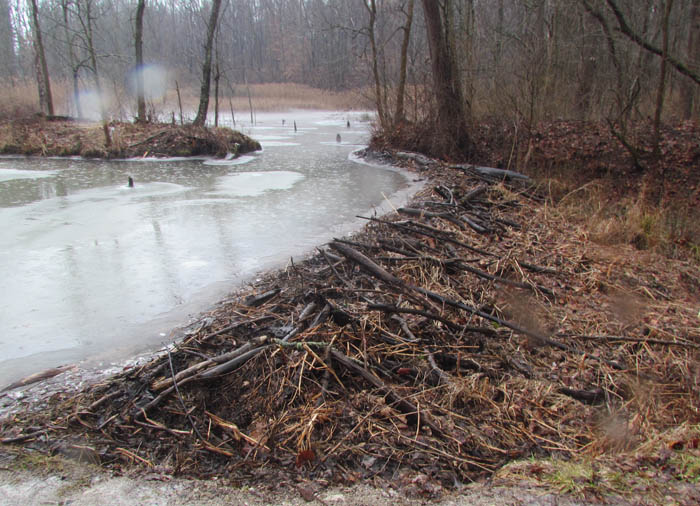
The beaver’s behavior is among the most unique and interesting in the animal world. American Beavers alter the existing habitat to suit their needs. Once a beaver has located an ideal habitat, it proceeds to construct an elaborate and effective dam.

Behind the dam, the beavers build an intricate domed lodge made of twigs, logs, and mud, that has at least two underwater entrances. American Beavers live in extended family colonies. This grouping is usually made up of an adult male and female and four or five of their offspring.

They like to eat the bark of aspen, willow, birch and maple trees. Beavers also enjoy the roots of aquatic plants, especially pond lilies. They tend to be most active in the evening and at night. Like all rodents, they need to gnaw to keep their ever-growing front teeth worn down. I could hear this one chewing from where I was standing.

Their broad, flat tail is used to navigate through and under the water. It also functions as a warning device to other beavers. A loud slap of the tail on the water’s surface is an alarm, telling of some type of disturbance or danger in the immediate area.

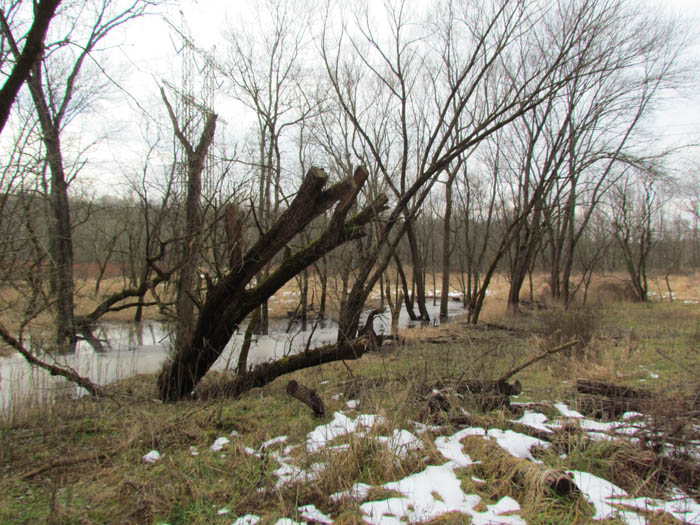
Beavers don’t just live off the land — they modify it to fit their needs. Only humans change the landscape more. A beaver’s hard work creates valuable wetlands which provides habitat for themselves as well as other wildlife.

Third Eye Herp
E-mail

Skunk Cabbage Melting Ice

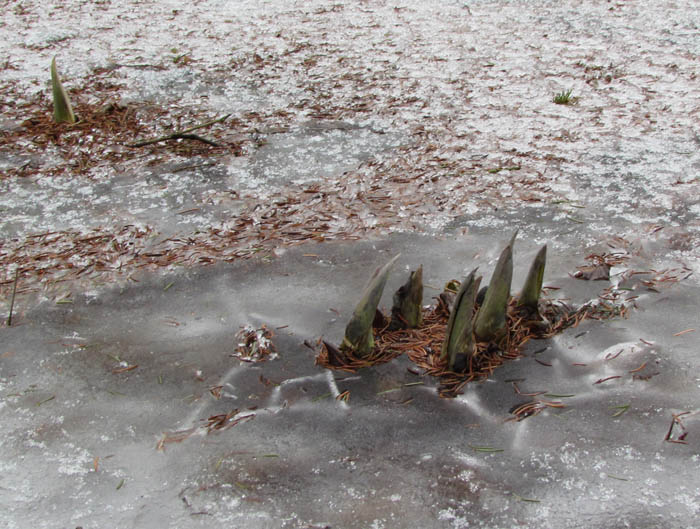
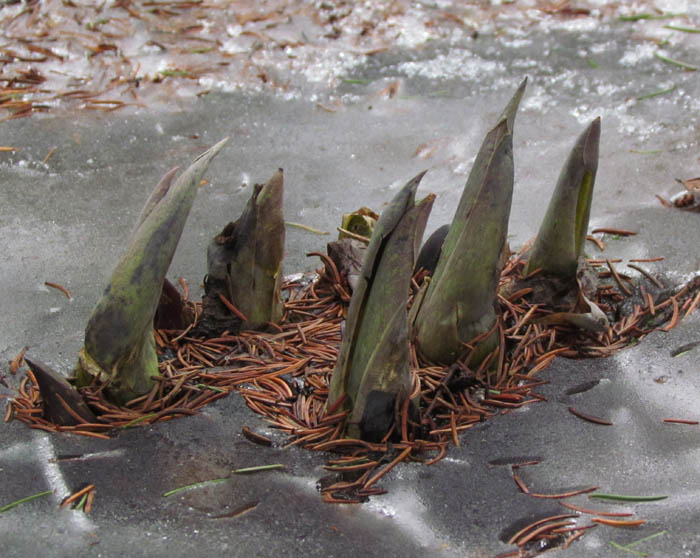
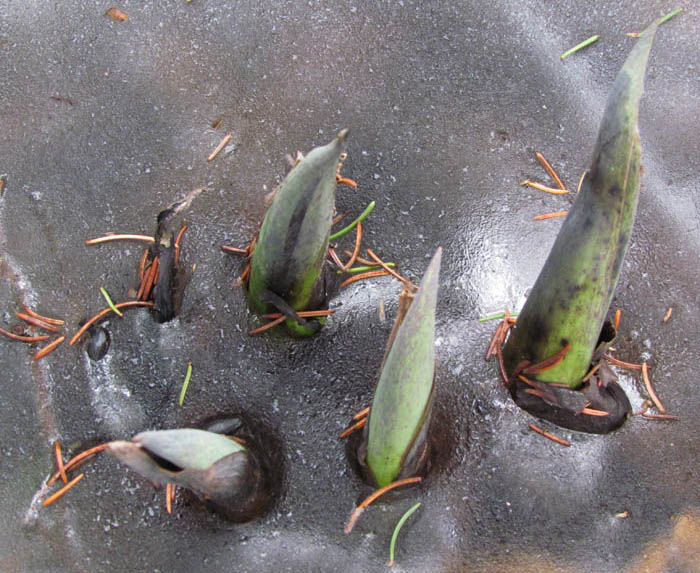
Skunk Cabbage brings a whole new meaning to the words “power plant.” This ice was thick enough for me to walk on today, yet these spikes had pushed right through it. This plant’s ability to generate heat enables it to grow and flower while snow is still on the ground – even though the plant is not frost-resistant – because frost never touches it.

There are only a few thermogenic (heat generating) plants in the world and in late Winter Skunk Cabbage can produce enough heat to stay between 60 and 95 degrees above the air temperature.

Instead of producing a colorful flower to attract insects, cold-tolerant bees and flies are drawn to the plant’s carcass-like smell. Heat causes the smell to travel farther than normal and once they arrive, pollinating insects have a place to warm up.

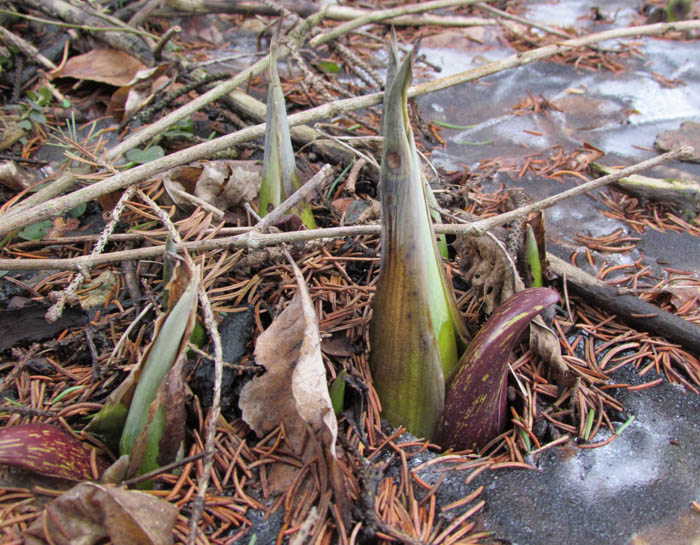
That purplish spike serves as a bud that holds and protects the flower when it emerges out of the ground.

To me, Skunk Cabbage is the first sign of Spring around here, so seeing this unique, yet smelly plant is a welcome sight.

Third Eye Herp
E-mail

Pileated Woodpecker

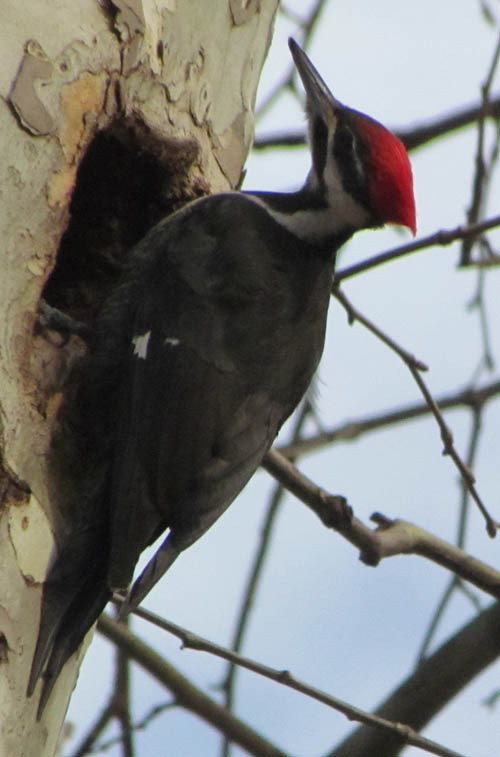
Sometimes the best way to find cool wildlife is not by watching, but rather by listening. As I walked through the woods, I heard a noise that got my attention. The Pileated Woodpecker is one of the biggest, most striking forest birds on the continent.

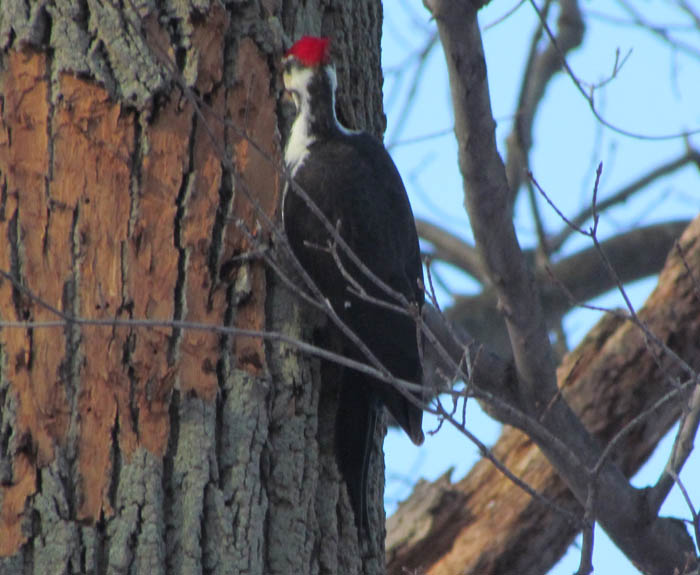
Males can be differentiated from females by their red “mustache” and red crest extending from the forehead, rather than starting at the crown of the head.

This crow-sized bird is quite secretive and more often seen than heard. Its call is often described as a maniacal jungle animal sound, somewhat like a monkey.

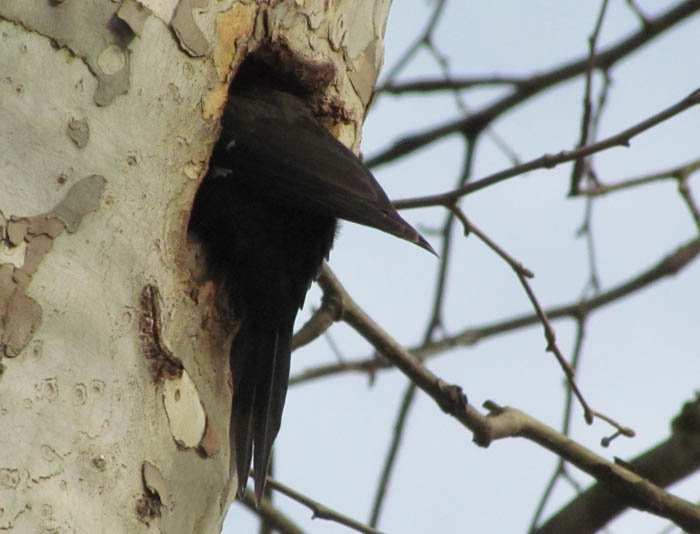
Pileated Woodpeckers excavate holes in trees for food storage and nests. The cavities are also utilized by other animals, such as ducks, owls, snakes and squirrels. Unlike  the cavities created by other woodpeckers, the holes they create are rectangular, rather than circular in shape.

Pileated Woodpeckers stay with the same mate for life. Pairs of these birds establish forest territories of 150 acres or larger in woodlands where many large trees are present. They drum on trees with their beaks to attract mates and to announce the boundaries of their territories.

This one is using its powerful, chisel-like beak to pry off tree bark in search of its main food, Carpenter Ants. It uses its long, sticky tongue to poke into holes and drag out the ants. They also eat wood-boring beetles, as well as wild fruits and nuts.

Seeing one of these birds is always a noteworthy experience. I have a pair that live in my neighborhood and sometimes they visit my backyard.

Third Eye Herp
E-mail

Evergreen Bagworm

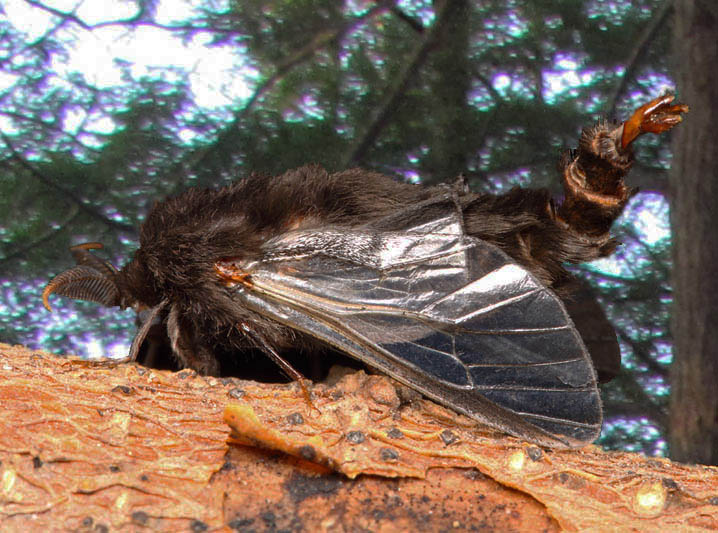
The Evergreen Bagworm is an interesting caterpillar. It has the peculiar habit of living inside a “bag” constructed of bits of the plant material it feeds on, and dragging it around as it eats. When disturbed, the bagworm pulls itself back into the bag.

The bags are carefully interwoven using silk produced by the caterpillar and bits of leaves and twigs from the host plant resulting in a well-disguised covering. On pine trees, its cone-shaped bags are often mistaken for pine cones, which help them to go undetected. At this time of year, eggs are over-wintering inside this bag made by their mother last year. Here’s one that I saw earlier in the week in the Cuyahoga Valley National Park.

The bee-like adult males have clear wings and fur covered bodies. But females do not look like moths (they have no wings, legs, antennae, eyes, or mouthparts) and remain in their silken bags throughout their entire lives.

Nature has an array of clever camouflage, and the Evergreen Bagworm is a great example of a creature that goes about its life largely unnoticed.

Third Eye Herp
E-mail

Sycamore Tree

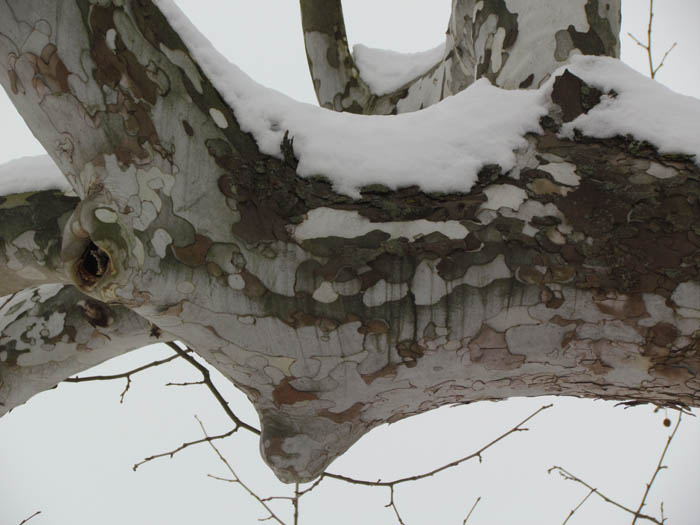
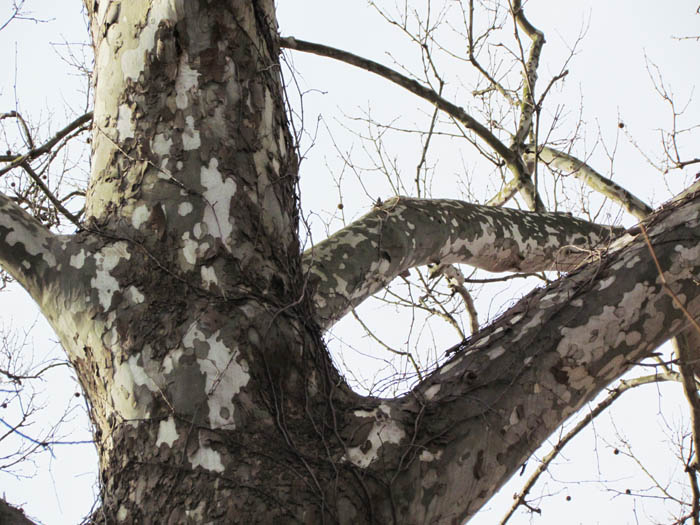
In the Winter, the exfoliating bark of Sycamore Trees can look quite appealing under the January sky. The bark flakes off in great irregular masses, leaving the trunk surface mottled, and greenish-white, gray and reddish-brown.

The rigid, brittle nature of the bark tissue lacks the elasticity of the bark of some other trees, so it is incapable of stretching to accommodate the growth of the wood underneath and the tree sheds it off.

This makes for an easy tree to identify – you don’t even need to see the leaves. The camouflage-patterned bark is a feature allowing Sycamore Trees to be recognized in any season.

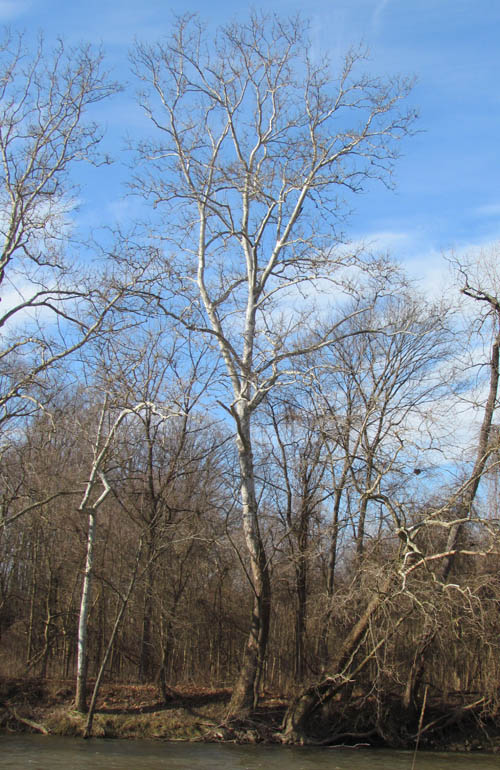
Growing up in Cleveland, these trees were planted by the city as “shade trees”; they lined the street that I lived on. In a natural setting they are “flood plain” inhabitants and often grow along the edges of rivers and large creeks.

This tree easily reaches heights of 80 feet tall and 60 feet wide, but can grow much larger. While not the tallest tree, is considered the most massive tree (as defined by its circumference) in the eastern United States.

The Sycamore Tree’s leaves are very large and can reach 7 to 8 inches long and wide. Here’s a leaf from last Summer.

The fruit clusters appear as hanging balls, one per stalk. The fruit hangs on all Winter, then falls apart in early Spring to disperse their many small seeds.

During this time of year, Sycamore Trees stand ghostly along river edges, with their smooth white limbs in stark contrast to the brown, textured bark of the trees that surround them.

Third Eye Herp
E-mail


Western Blacknose Dace

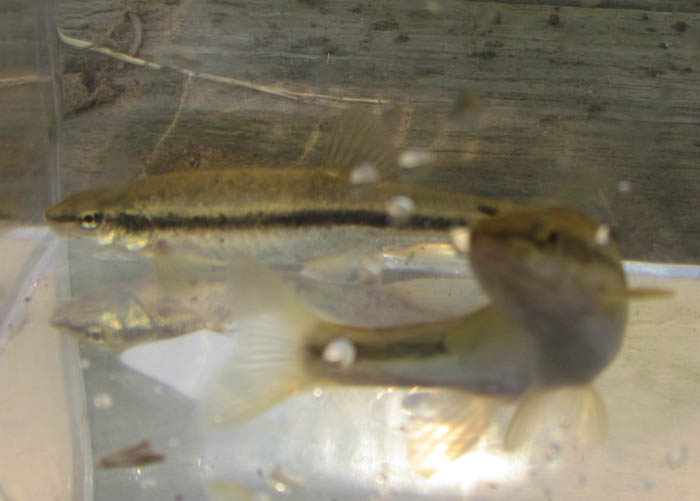
Minnows are a huge family of fish. North America has over 230 species – let’s check out a type that lives in my backyard.

The Western Blacknose Dace is a small, slender minnow that grows to about three inches long. During the Winter this fish often wedges itself under rocks, where it is quite sluggish as it patiently waits out the cold weather.

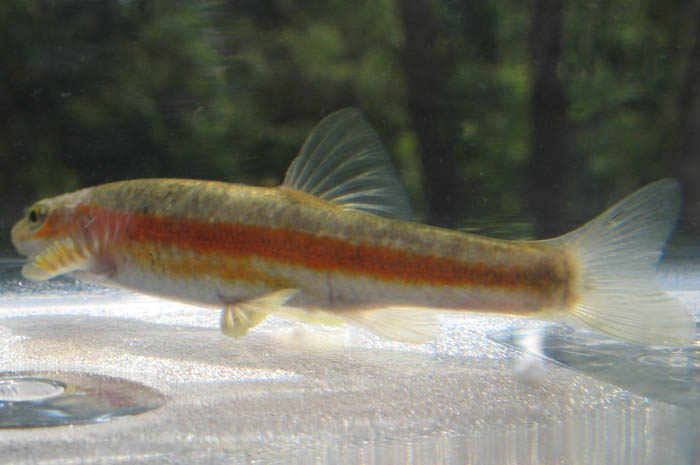
Its species name, atratulus, is derived from a word that means “clothed in black.” Sprinkled along the sides are dark scales that give the fish a spotted appearance. The fish’s most obvious characteristic is its black side stripe. The stripe runs from the snout through the eye, and along the length of the side to the tail.

These fish are creatures of flowing water. Although they thrive in stream pools as well as rocky riffles, they won’t be found in the still water of lakes and ponds. Dace feed on many types of aquatic insects, worms and algae.

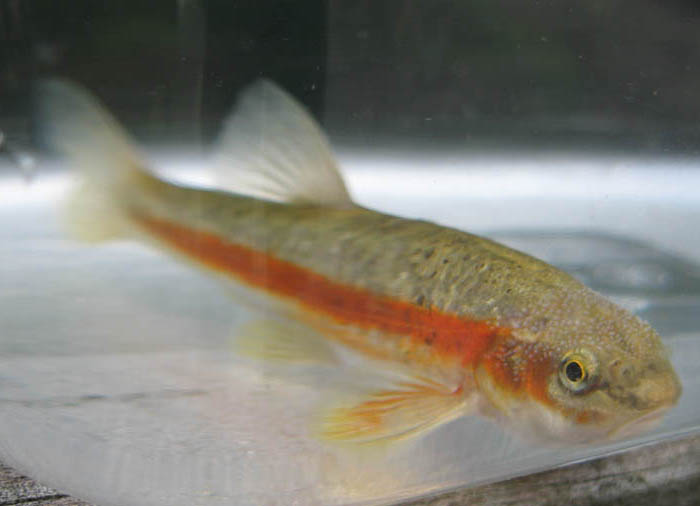
During breeding season, the male’s black side stripe transforms into beautiful red-orange hue. Here’s a male that I caught in the Summer. At this time a male will stake out a territory and guard a bit of underwater turf against other male minnows. The male circles the area and seems to “dance” to attract females.

Many fishing lures have been modeled after the Western Black-nosed Dace, because this fish is known to be a favorite prey item for many sport fish, especially trout.

The humble dace is a wonderful river species that inhabits tiny little streams to huge waterways.

Third Eye Herp
E-mail

Belted Kingfisher

The kingfisher actively hunts for small fish by perching on limbs over the water. When it spots a fish, it leaves its post and hovers over the water until it plunges in after its prey.

After snapping up a fish with its bill, the bird takes it back to its perch, where it stuns the fish by beating it against a branch or tree trunk before gulping it down.

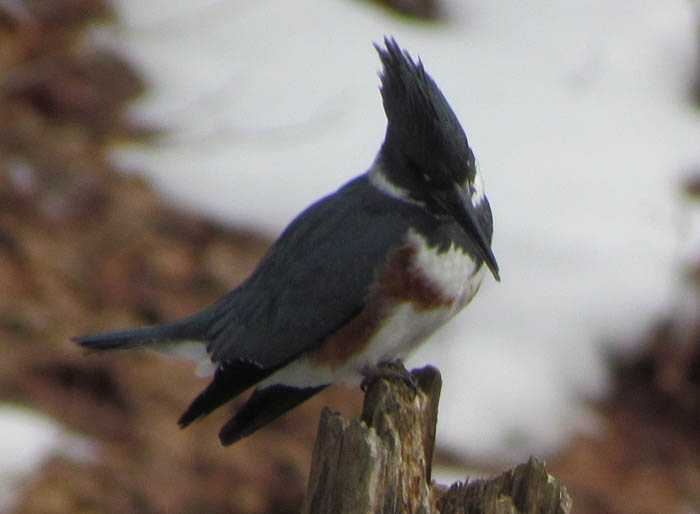
Somewhat larger than a pigeon, they can grow up to 13 inches long. Belted Kingfishers have a large, shaggy crest and a long, heavy beak – causing them to look rather top-heavy.

This bird is a female. Belted Kingfishers are unusual in that females are more colorful than males, which lack the rust colored markings.

They are often first detected by their distinctive dry, rattling call. They do not hesitate to scold any invader who enters their hunting territory – including humans. I discovered this particular bird’s territory on the Erie Canal Towpath last Summer; I can usually find her there whenever I visit the area.

Water is not only their resource for obtaining food, but it can provide an escape route as well. A trick Belted Kingfishers use to avoid being caught by hawks is to dive into the water at the last minute.

These birds are solitary except during breeding season, when the male and female will dig a tunnel into a mud bank. The tunnel, which can be up to eight feet long, has a small chamber at the end. Belted Kingfishers sometimes share their tunnel with swallows, which make small “rooms” off of the tunnel’s “main hallway.”

With its brushy crown, energetic flight, and piercing call, the Belted Kingfisher seems to have an air of royalty as it patrols the shoreline of its domain.

Third Eye Herp
E-mail

The First Herps of 2013

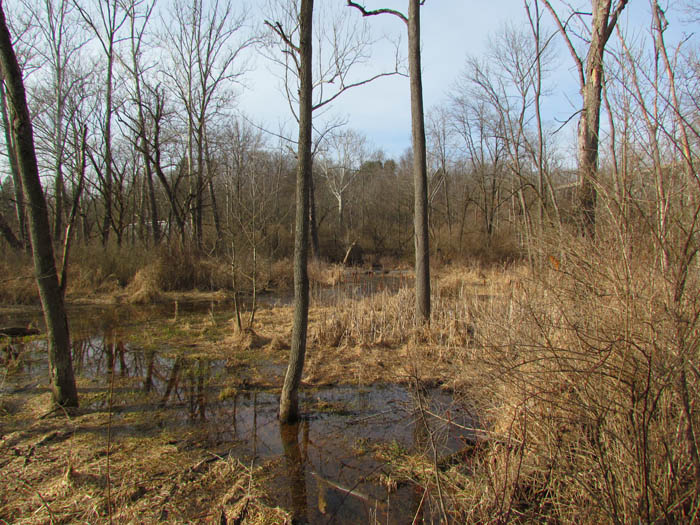
With temperatures hitting the mid-60s today, I decided to go outside and take a look around. Though warm, there were still patches of snow on the ground and many areas of standing water were still frozen.

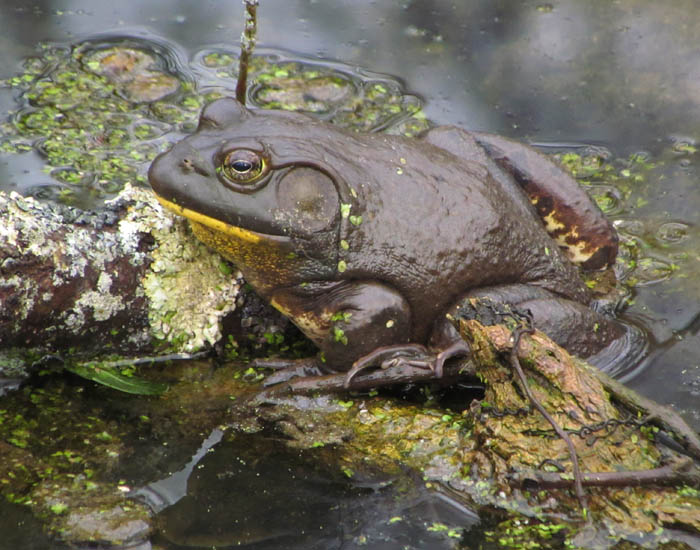
As I hiked, I could hear Spring Peepers calling off in the distance, but there calls were scattered and sporadic. The first herp of 2013 was a much bigger frog than a Spring Peeper – American Bullfrog.

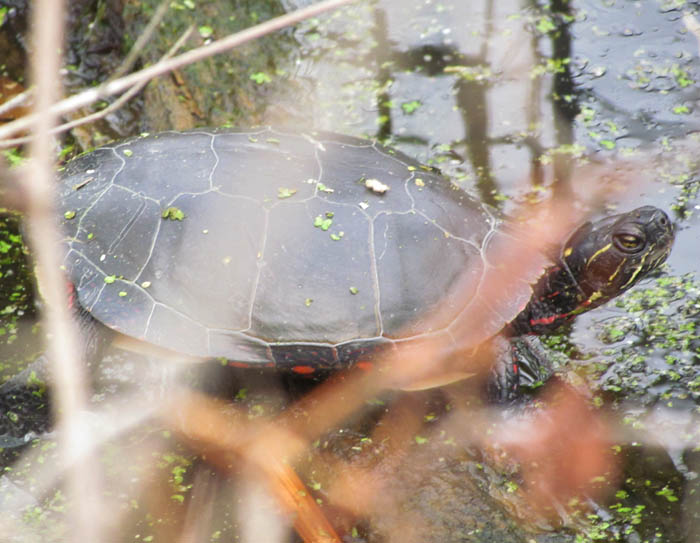
In the same area while looking through the underbrush, I spotted my first reptile of the year – Midland Painted Turtle. I could hear lone Spring Peepers calling off in the distance, but these herps were right in front of me, so I photographed them.

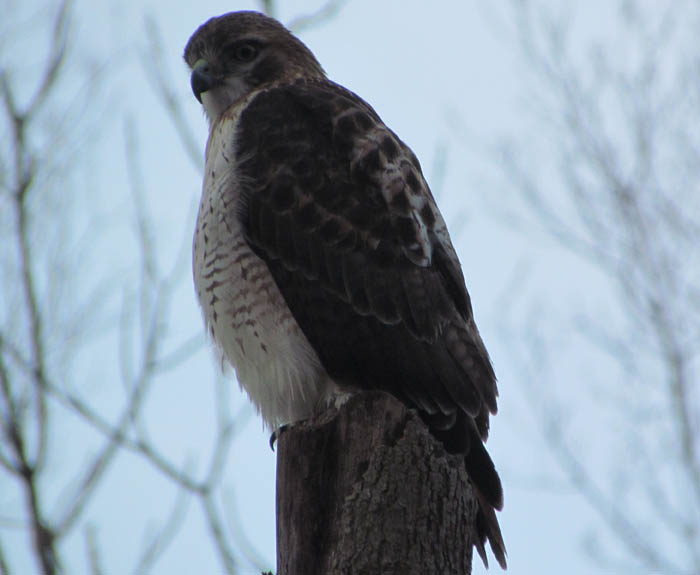
I wasn’t the only one herping today – Red-tailed Hawk.

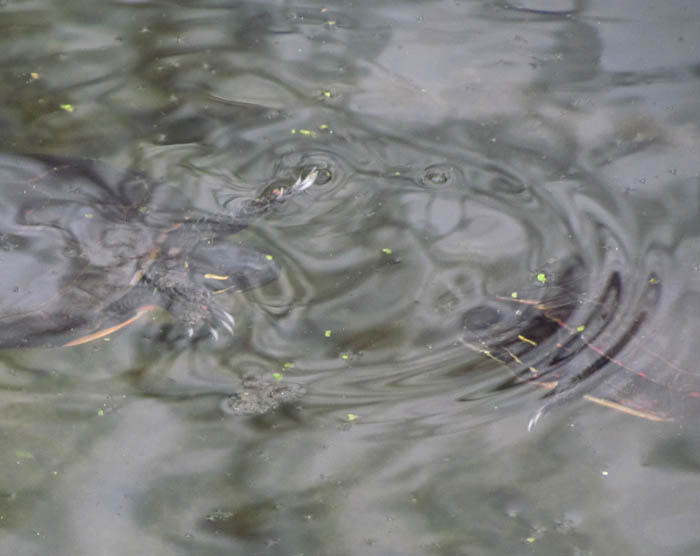
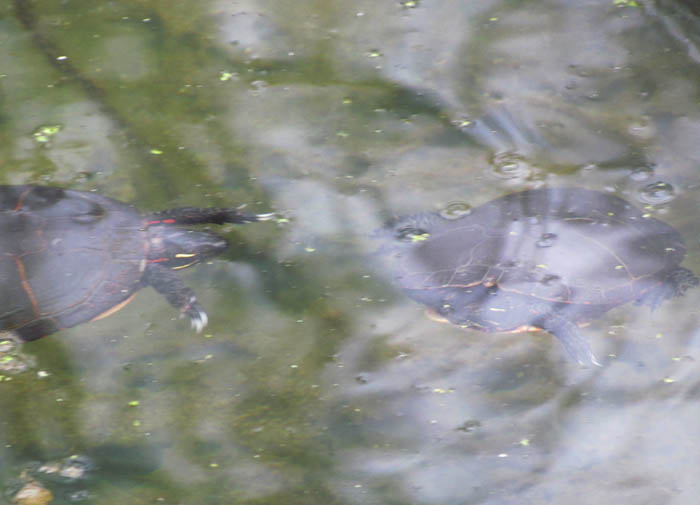
Here’s male a Midland Painted Turtle courting a female. To express his affections, he scratches her cheeks with his extra-long front fingernails.

She did not seem impressed with his technique.

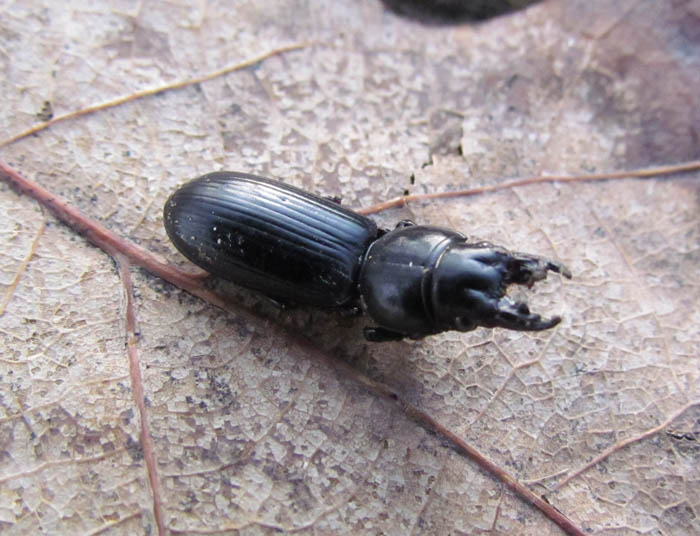
These Ground Beetles are cool. They have big jaws and “play dead” by freezing in this position when they feel that they’re in danger.

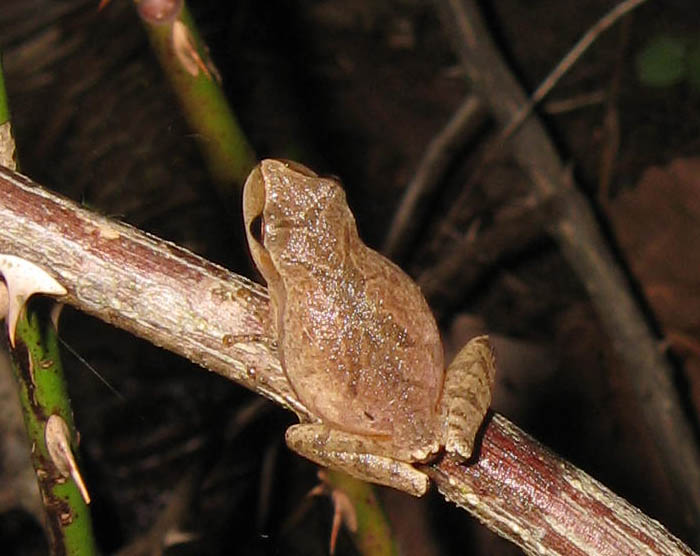
Soon it began getting dark. I decided to track down one of those Spring Peepers that I’d been hearing throughout the day. Finding one can be tricky, they are very small and tend to stop calling as they are approached. But persistence paid off.

Not a bad outing for January 12th in the Greater Cleveland area!

Third Eye Herp
E-mail