
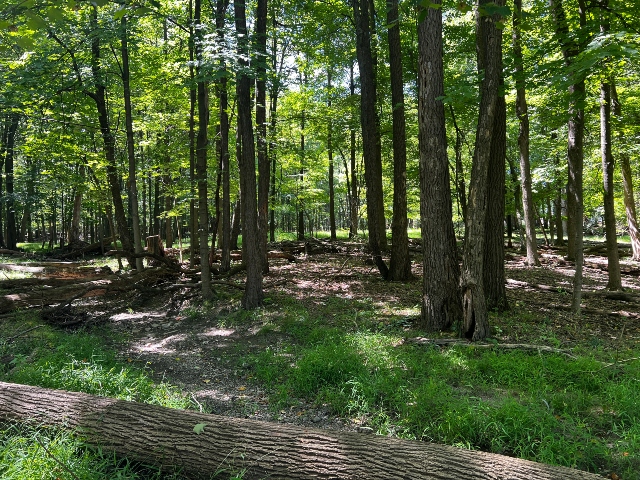
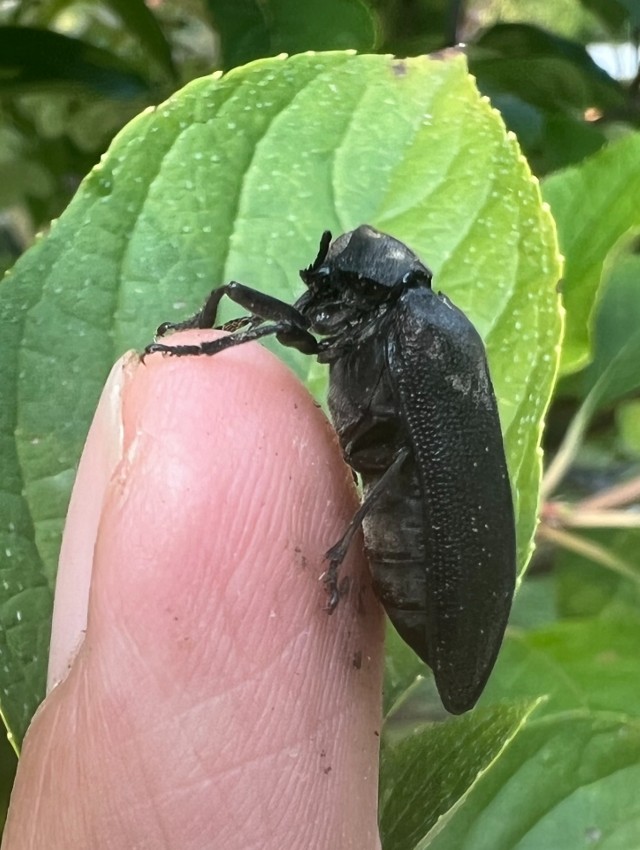
While walking in the wooded lot across the street from my house, I came across this very interesting insect that I’ve never seen (or heard of) before.
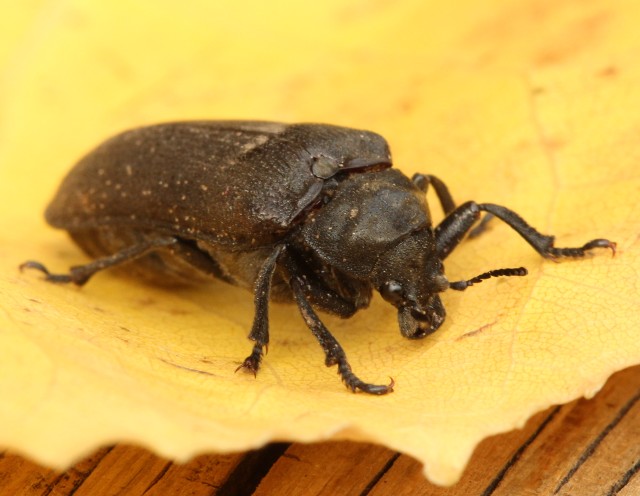
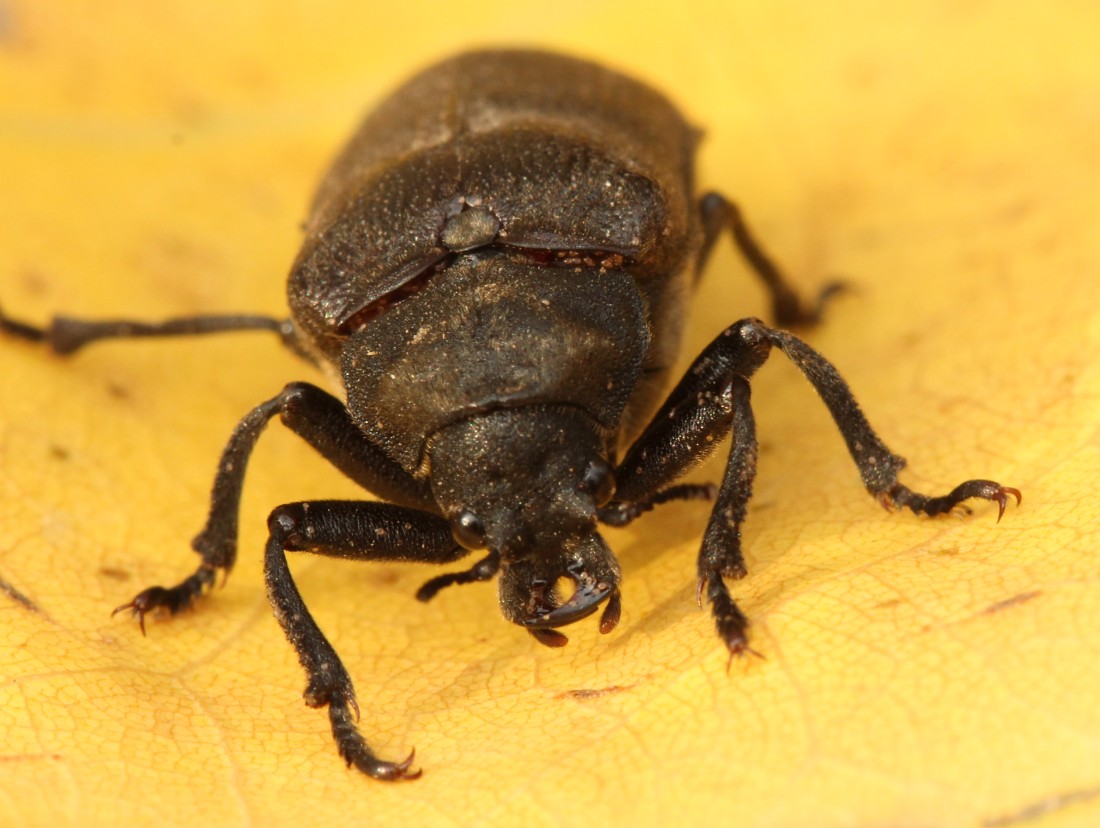
Cicada Parasite Beetle adults are large, stocky, dark brown insects that are about one inch long. They are flattened dorsally with a downward pointed head.
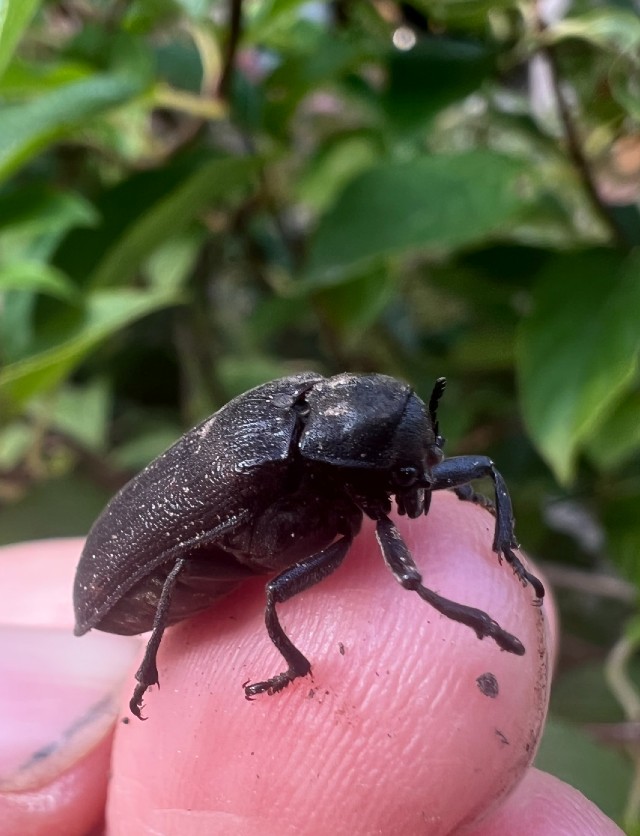
This species is known from southern Ontario to Florida, west to Colorado and Texas. These beetles are interesting due to their habits and lifestyle.
The adult beetles lay their eggs bark cracks; the eggs hatch into slender, active larvae called triungulins. These larvae burrow through the soil seeking out cicada nymphs.
Once a cicada nymph is found, the triungulin larva molts into a slow-moving, grub-like larva that grabs onto the cicada nymph and feeds on its hemolymph (blood).
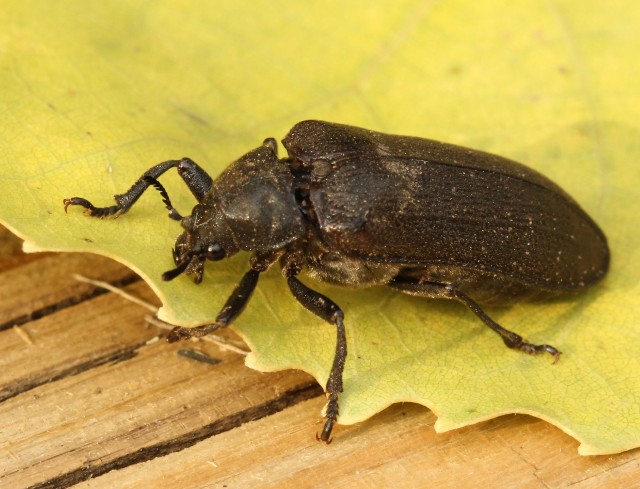
Mature larvae pupate and emerge as adults in the same years when periodical cicadas emerge. Although both females and males fly, the females are usually found motionless on the side of the elm trees.