
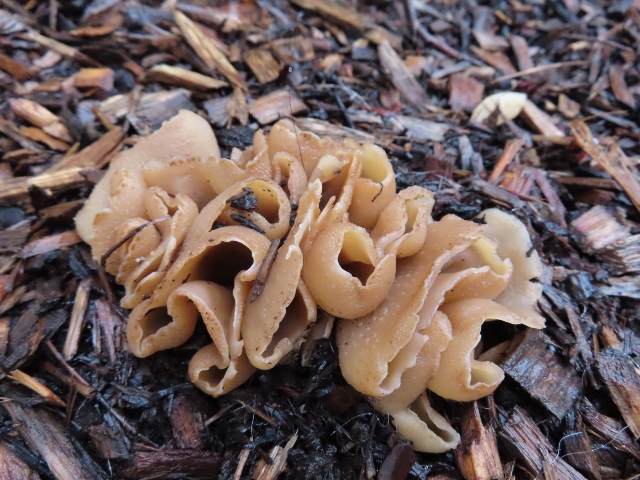
Sometimes you don’t have to look far to find cool things in nature. While leaving the house, I saw this unusual-looking organism sprouting up in several spots in the mulch near our house. Mushrooms and fungi play vitally important roles in nature and to humans.
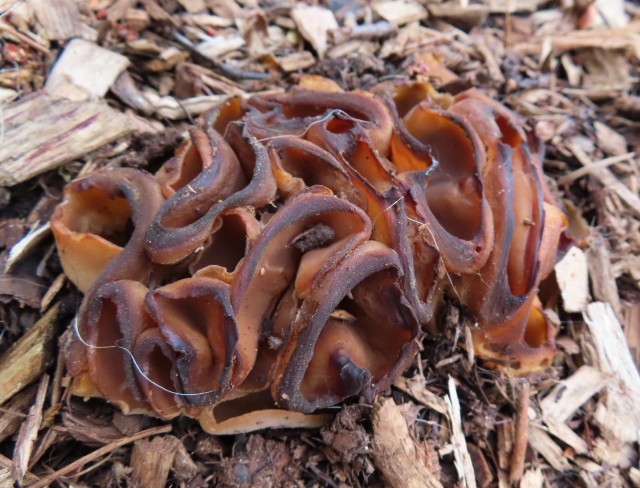
Brown Cups look just like their name, as they are brown inside and out and their cup-like structure is usually just a few inches across and high. The sides of this mushroom are quite fragile and are often seen in a caved-in type state. This mushroom is also known as Pig’s Ears.
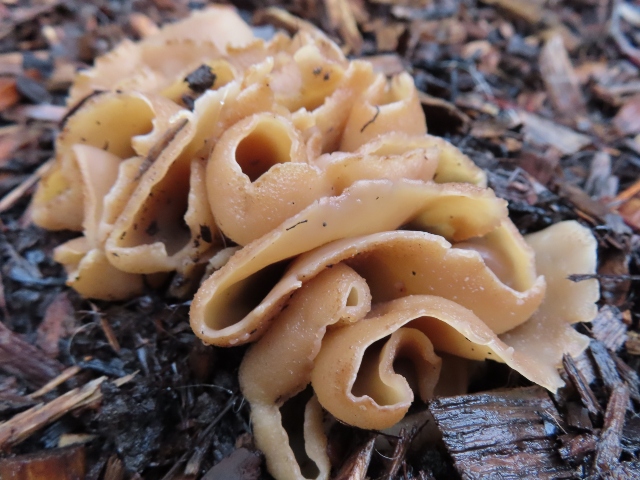
Most often seen in Spring, the cup shape is designed to propel raindrops into splashing its spores out of the cup. Additionally, the curvature enables wind currents to blow the spores out in as a way to distribute them a distance from the fruiting body. It is quite an experience to tap a cup; if the spores are sufficiently mature, it is possible to see millions of them eject into the air from the inside surface like a puff of fine cigar smoke.
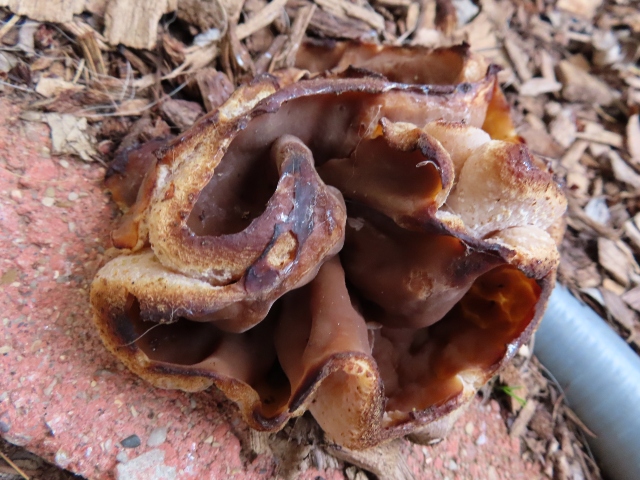
Few of us see the entire life cycle of mushrooms, since most of it takes place underground or beneath the bark of dead or living trees. Before developing the mushroom structure, the fungus lives as a mycelium, a mat-like or netlike network of filaments infusing a patch of soil or wood. When conditions are right, the mycelium develops a fruiting structure, a mushroom, which emerges from the ground or the tree.
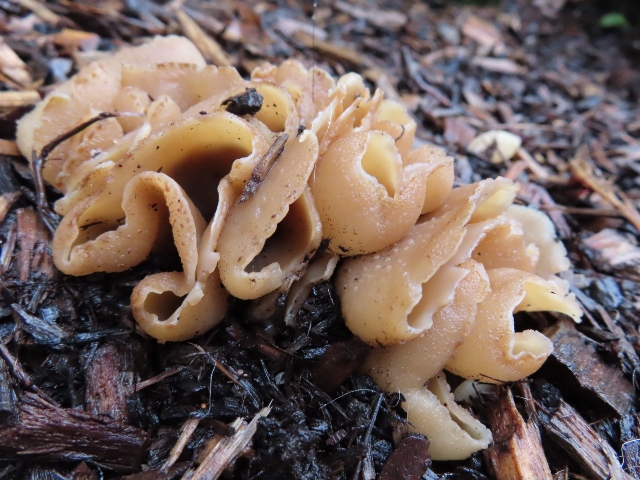
There are over 200 hundred species of Cup Mushrooms and they tend to be interesting in color and shape. They frequently resemble cups or saucers. The Orange Peel Fungus resembles a discarded orange rind. They may also be vividly colored, like the Scarlet Cup, which is often one of the first signs of spring in the temperate regions where it grows.
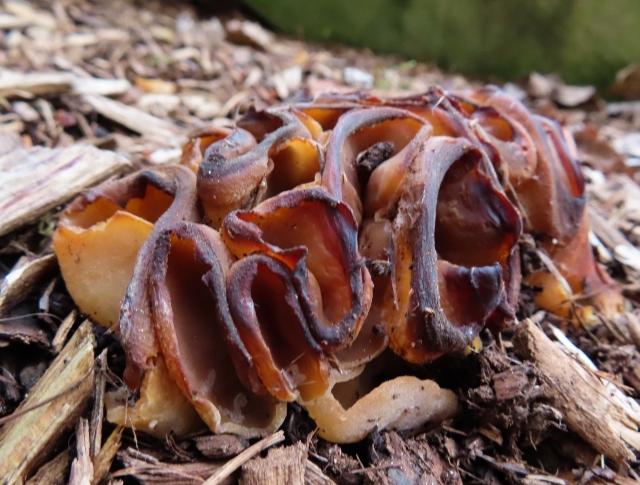
Mushrooms are a lot like plants, but they lack chlorophyll and have to take nutrients from other materials. Mushrooms are neither plants nor animals. They constitute their own kingdom: the Fungi. Common Brown Cup grows solitarily or in dense clusters on soil or on well-decayed logs. It is found in Europe, North America, and Iceland.