
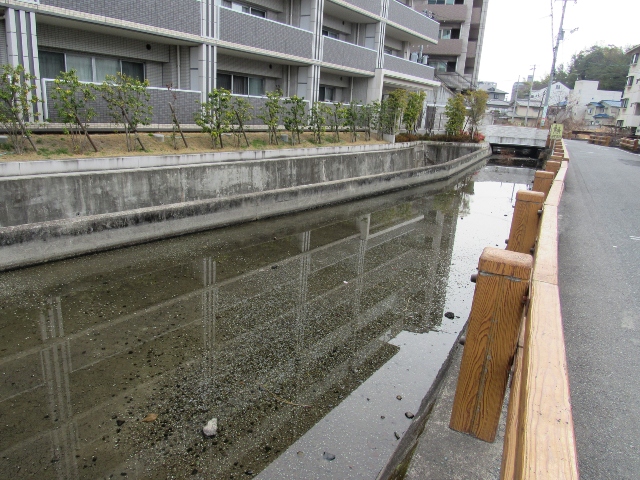
While walking the streets of Fukuyama, Japan, the canals along the avenues had several different types of creatures living in them – the most conspicuous being this shelled being. Their variation in the form of the shell is considerable, with colors of dark brown, yellow-green and/or dark green.
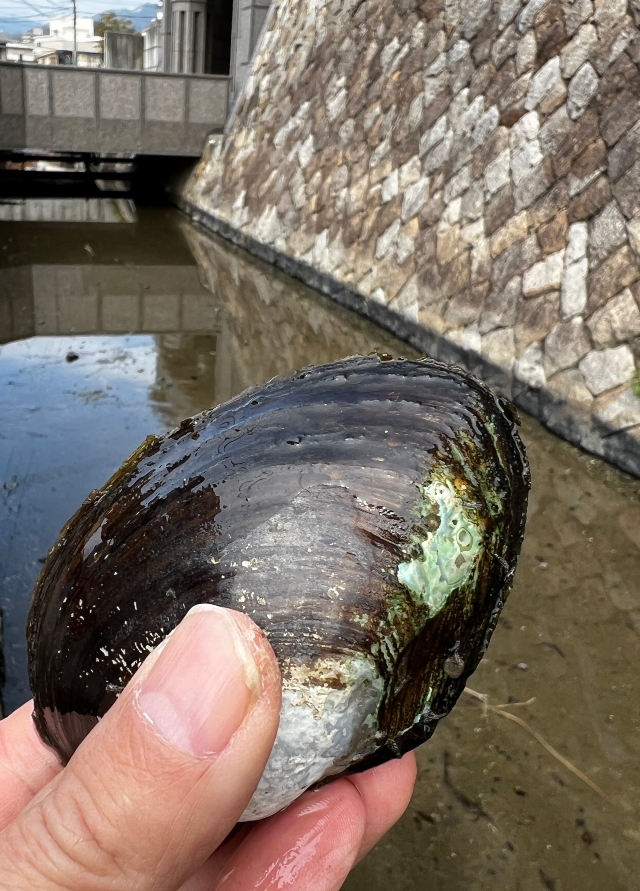
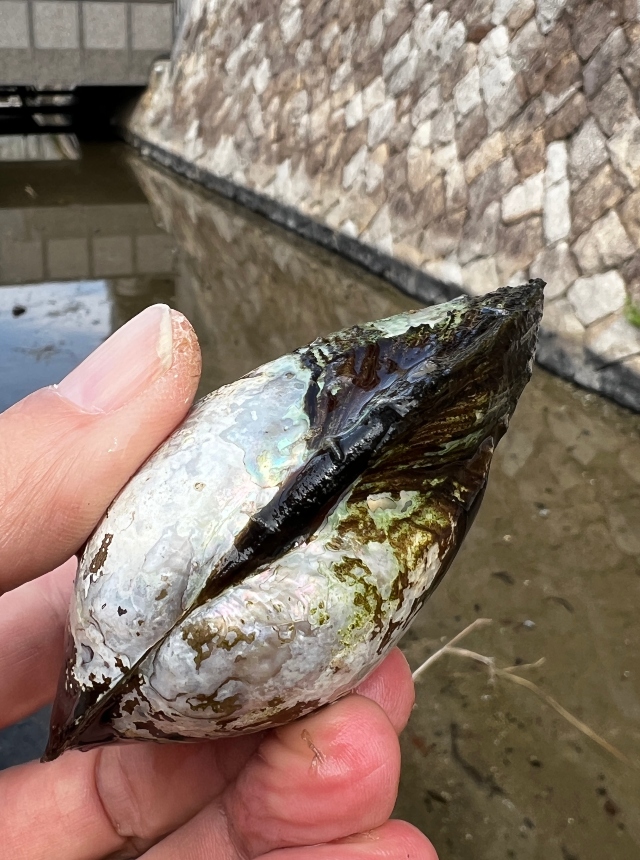
The Eastern Asiatic Freshwater Clam can grow to almost a foot in length and attain an age of 12–14 years. It can reproduce by the end of its first year, while only an inch and a half in size. The form of the shell is relatively short and elliptical to almost rounded and very high in the central part.
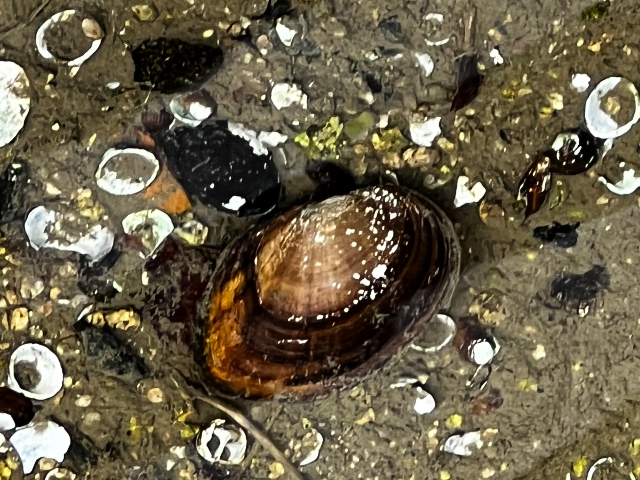
This species is a habitat generalist found in heavily modified and artificial habitats and is tolerant to high siltation rates. It prefers substrates of silt and clay, turbid conditions with relatively high water temperatures and is found in either standing or slow-flowing water. It is established worldwide.
Belonging to the Unionidae Family, like all members of its family, it has an obligatory parasitic stage, in which the larva must attach on a host fish to complete its development. Host species include invasive, non-native and native fishes.
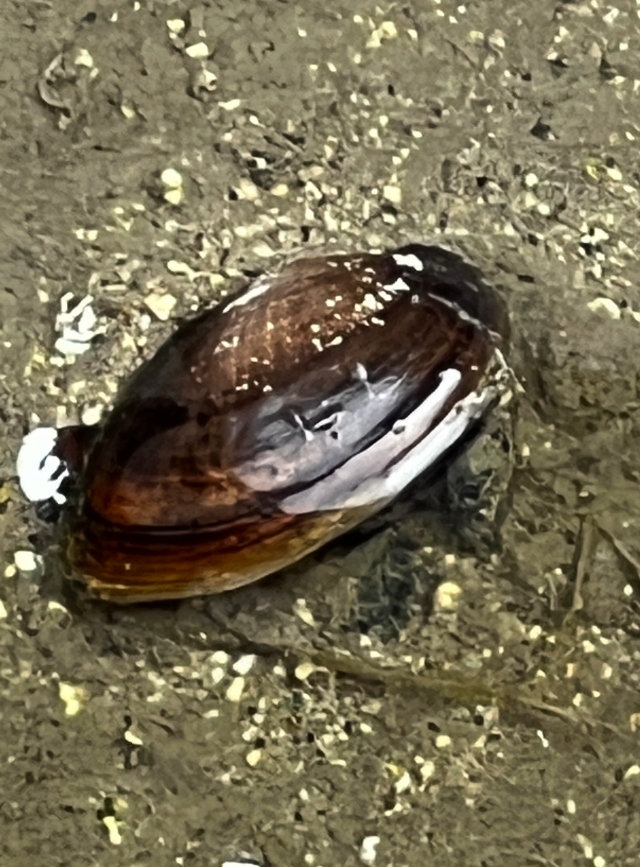
The Eastern Asiatic Freshwater Clam’s great success is distribution is attributed to the importation and commercialization of Asian Carp, its native Asian host (which is now found worldwide as well). Most likely the mussels arrived as larvae attached to the gills of these imported fish.
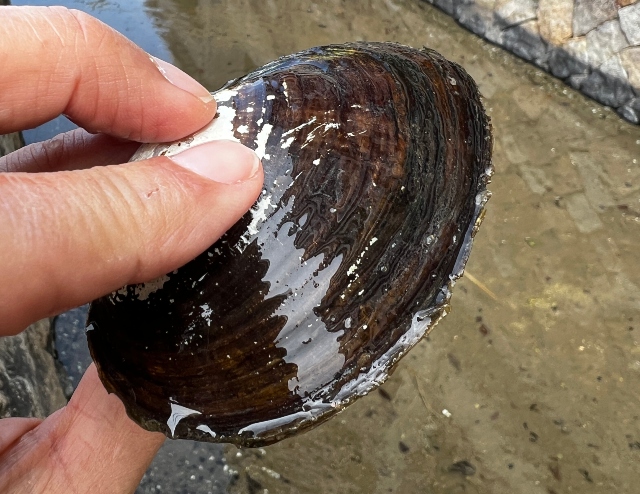
An additional possible direct means of dispersal is its being unintentionally marketed and sold by garden centers and aquarium shops as a species for biological control and water purification in several European countries. Invasive populations in Indonesia are considered as an important protein source and has significant economic value.
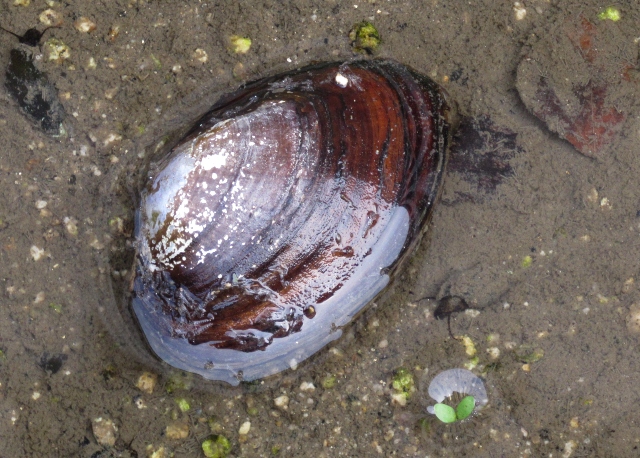
You never know what you’ll find in a ditch on the side of the road, and this mollusk made for a fun discovery.