
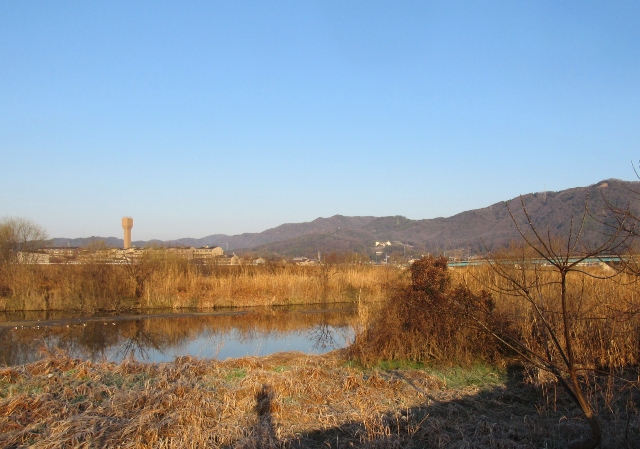
While vacationing in Japan, I found my first “international herp.” This reptile is a species belonging to the Wall Lizard Family. It resides in grassy areas and thickets, as well as around human homes.
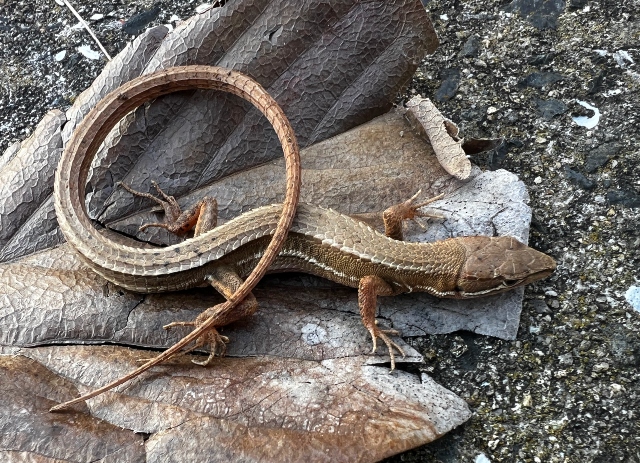
The Japanese Grass Lizard is a reptile that is native to Japan and is widely distributed throughout the country. It is dull brown in color, with a dark brown stripe running from the eye to the tail, and a light-colored line underneath.
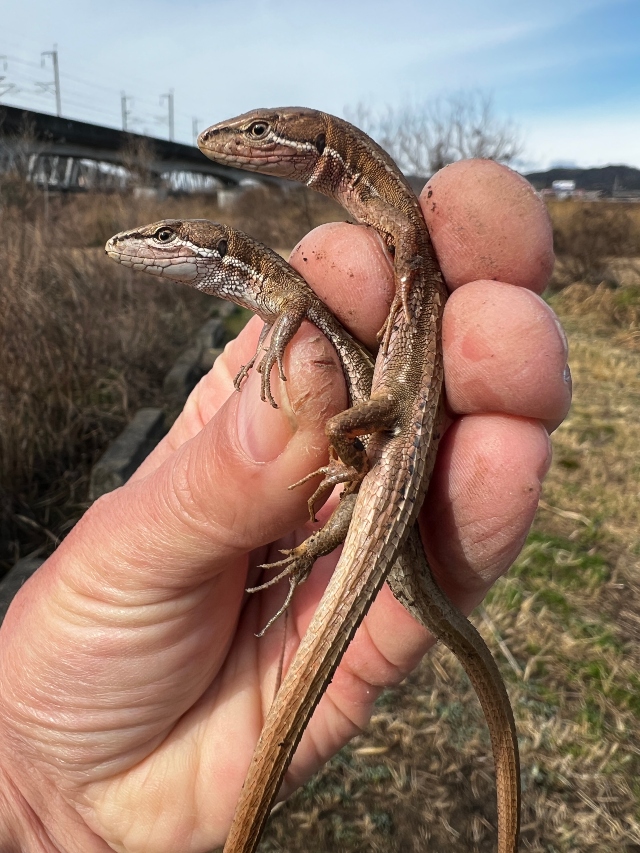
In terms of size, it is relatively small compared to other lizard species. On average, it reaches a length of about 6-8 inches. Males are slightly larger than the females. Their bodies are slender and elongated, allowing them move swiftly through grassy habitat.
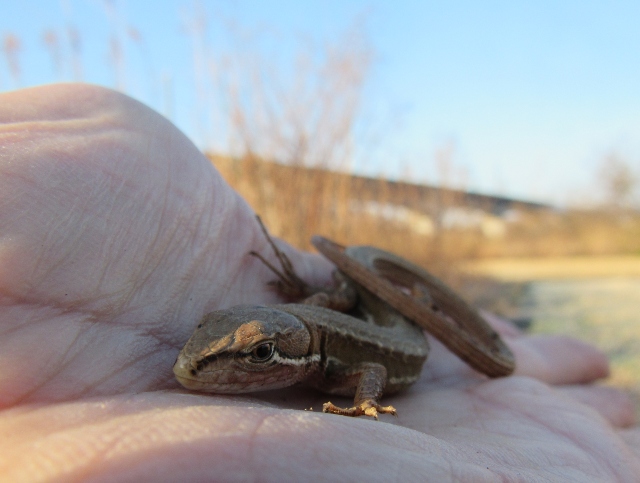
Perhaps the most distinctive feature of the Japanese Grass Lizard is its tail. With a tail that can be over 300% longer than their body, they have the longest tails of any living animal on earth when compared to its body length. Its tail serves multiple functions, including balance and locomotion.
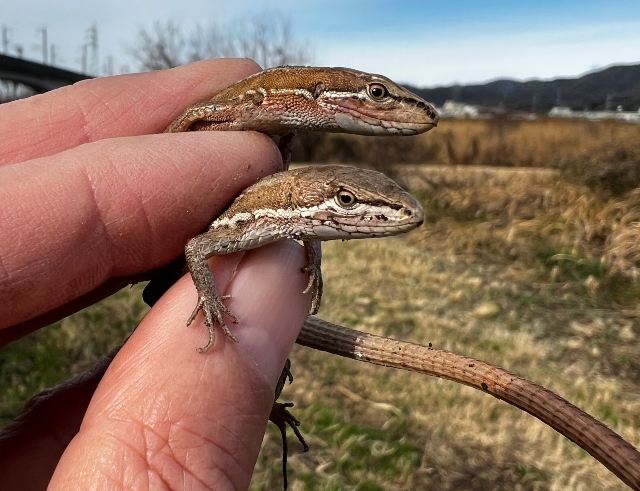
Like many lizards, it uses the sun to control its body temperature. It often basks in sunny spots to warm up. In rural areas this lizard may be glimpsed as it quickly runs across a road or hiking trail to move from one patch of grassland to another.
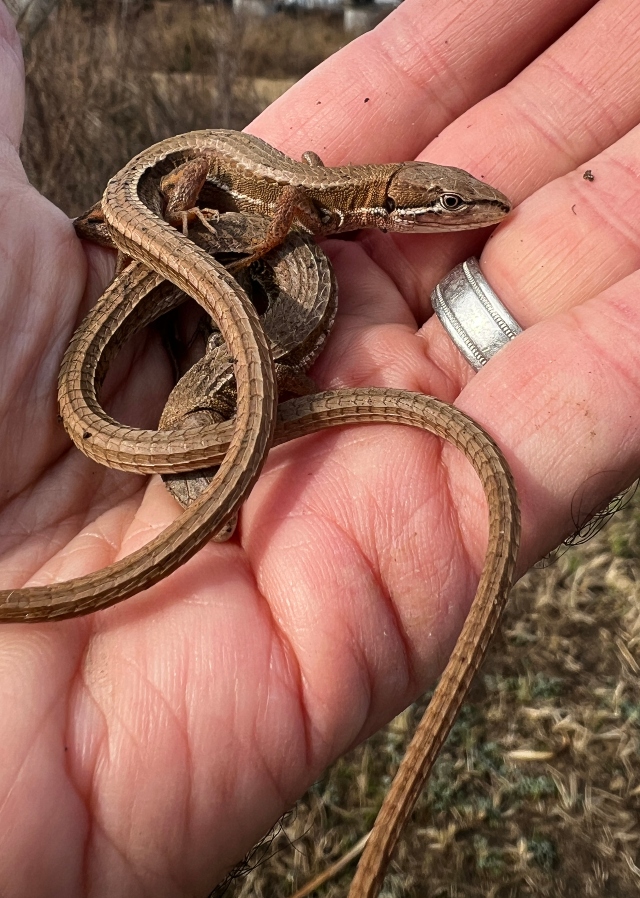
When in danger, it escapes by climbing up grass or dead branches. If attacked, it can use caudal autonomy (dropping its tail) to keep the attention of a predator while it escapes.
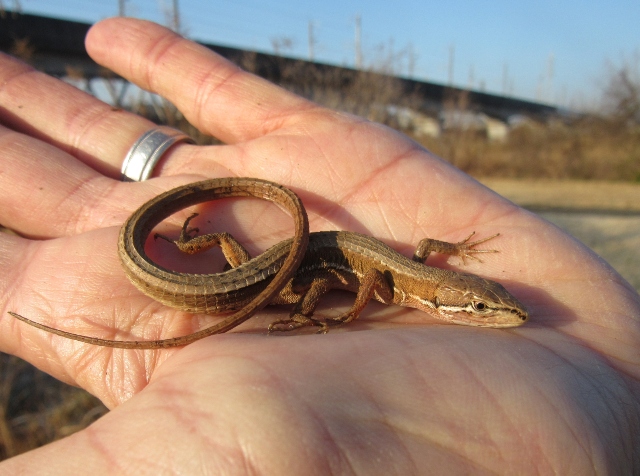
While their primary source of food consists of insects such as beetles, ants, and flies as well as other small invertebrates, such as spiders, isopods and millipedes, they also consume plant matter like fruit and flowers.
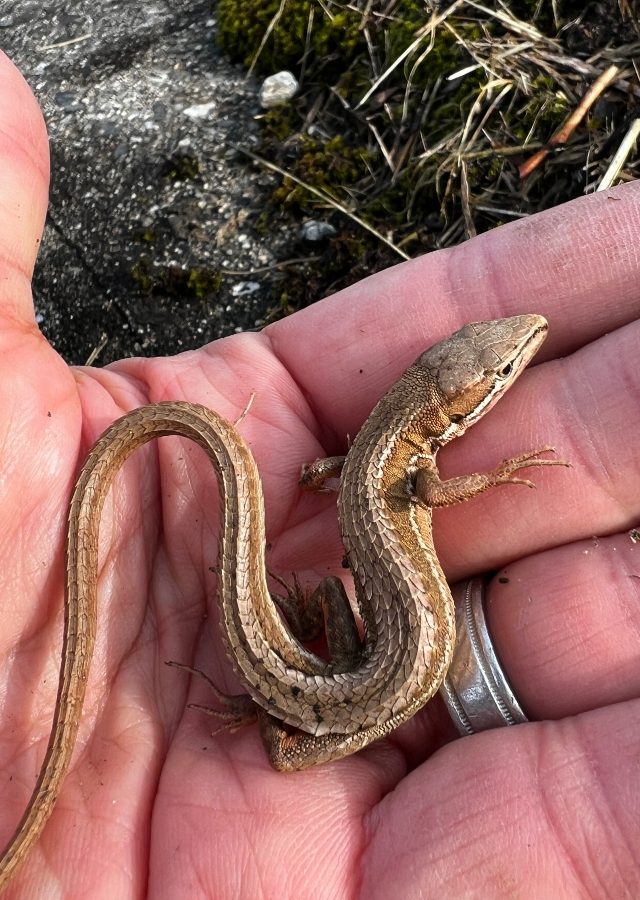
Myths of this creature describe it as a small but agile little snake with a venomous and deadly bite. Its Japanese name is “kanahebi” (カナヘビ). “Hebi” means “snake” in Japanese, although this lizard is not a snake and is harmless to humans. Whatever you call it, this reptile was an exciting find for me.