
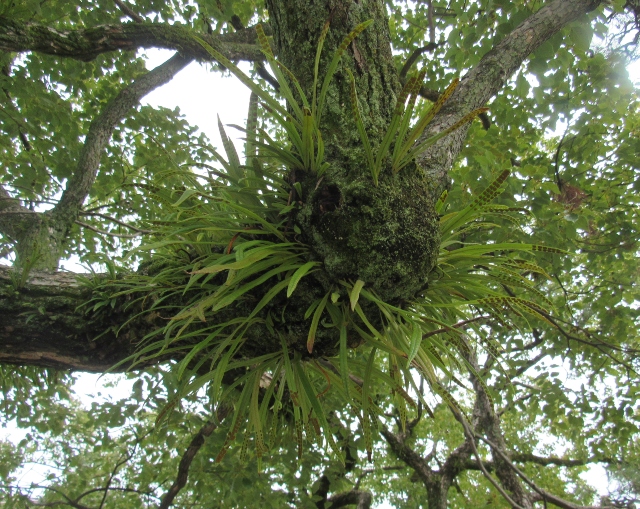
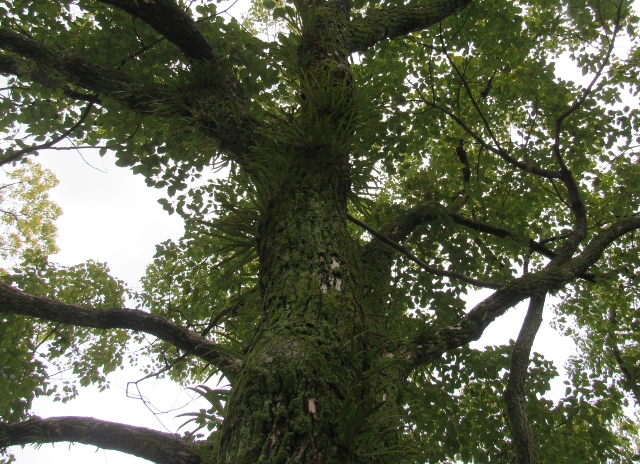
While looking at trees on my visit to Japan, I would often find other plants growing on their trunks and their larger branches. The most abundant among such epiphytes (plants that grow upon another plant) was this evergreen fern with linear 10 inch leaves.
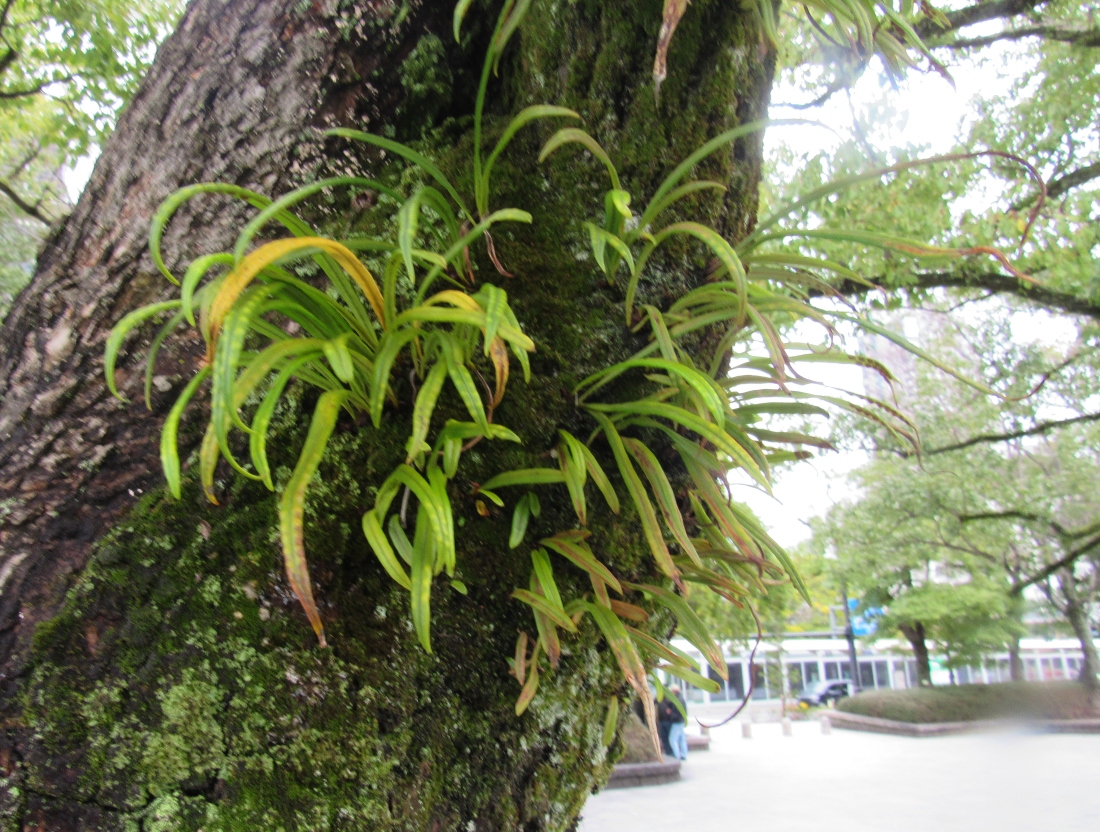
This plant is widely distributed in Japan, as well as Korea, China, Indochina and the Philippines. It is familiar to Japanese people because it also grows on eaves (especially of thatched roof houses) and on stones in yards. The Japanese name Noki-shinobu, means “eaves fern,” and is derived from this favored artificial habitat.
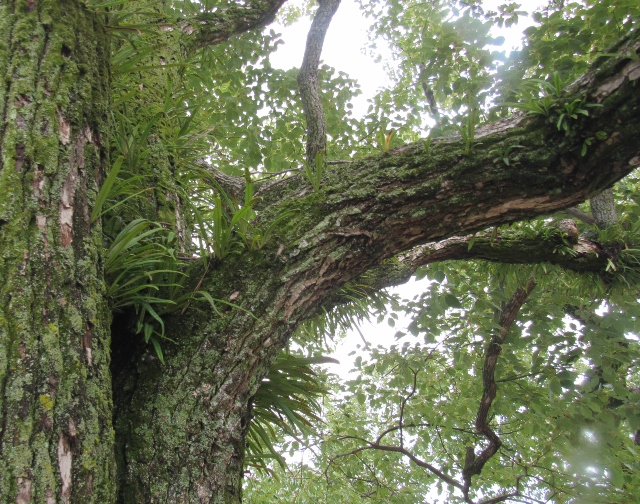
The density of Weeping Ferns on a tree depends on the tree species, because the morphology and texture of tree bark is somewhat variable and may hold different amounts and types of resources.
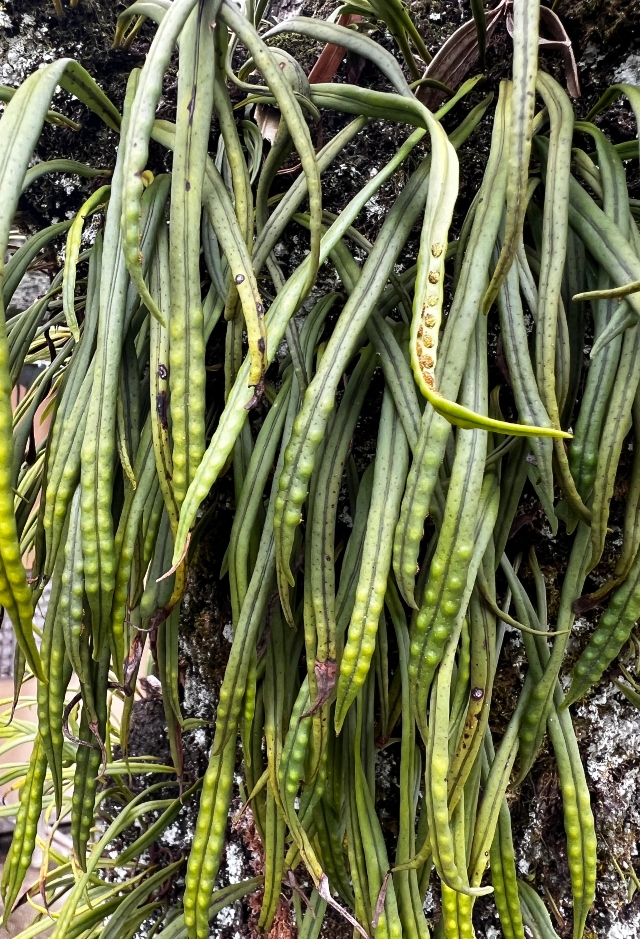
Its leaf surface is yellow-green, but lighter on the back. The leaf texture is thick like leather, to help it survive cold weather. The sides of leaves curled backwards when dry, and then go back to their normal shape once they get enough moisture.
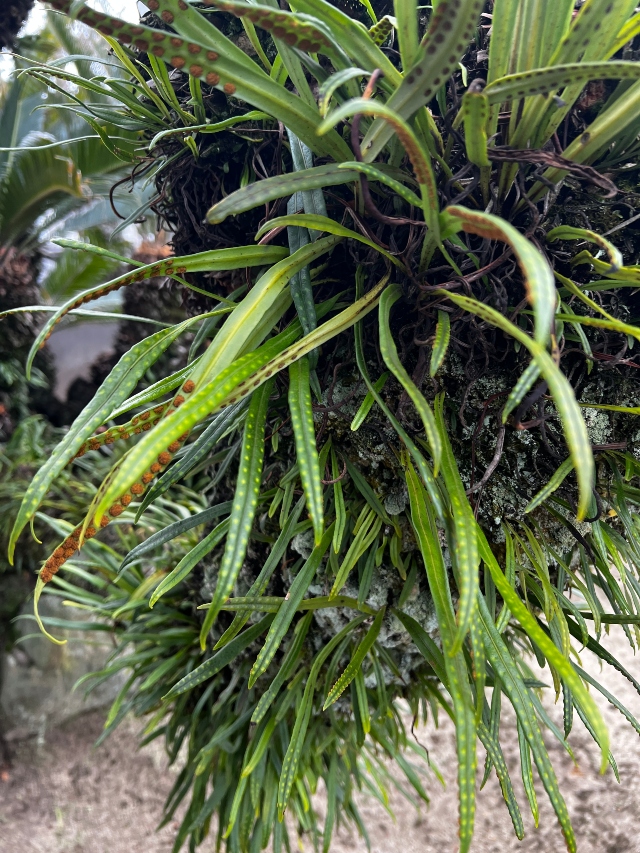
This plant’s sorus (spore sac that store spores) is about a tenth of an inch in diameter and placed in two lines on the upper parts of the back of the Weeping Fern’s leaves.
As an epiphyte, it grows on the surface of another plant and derives its moisture and nutrients from the air, rain, or from debris accumulating around it. Epiphytes differ from parasites in that they grow on other plants for physical support and do not necessarily affect their host negatively.
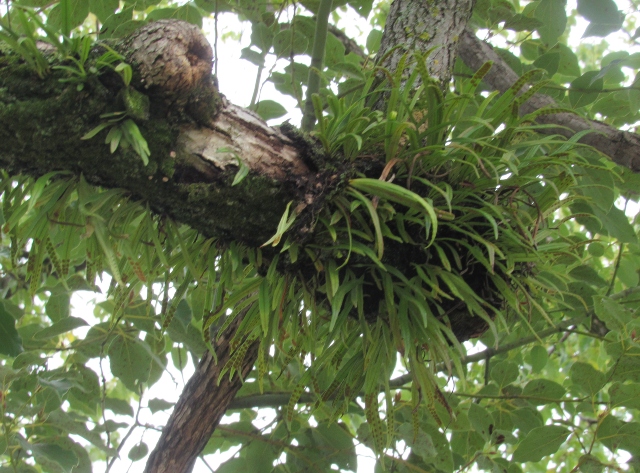
Weeping Fern was a neat plant to see in the many places that I travelled to on my trip.