Rough-skinned Newt

Rough-skinned Newt_2793

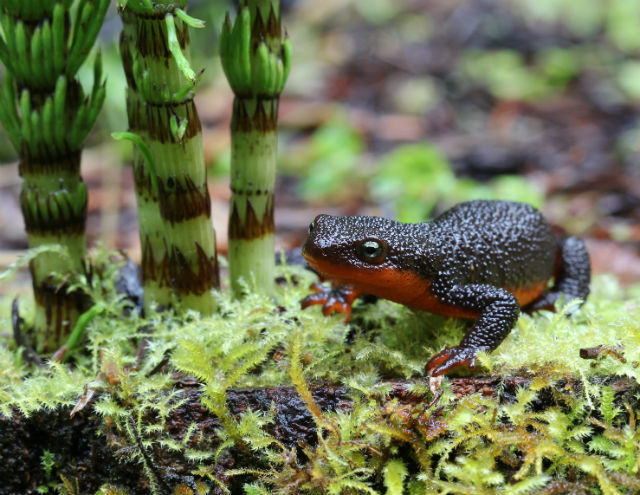
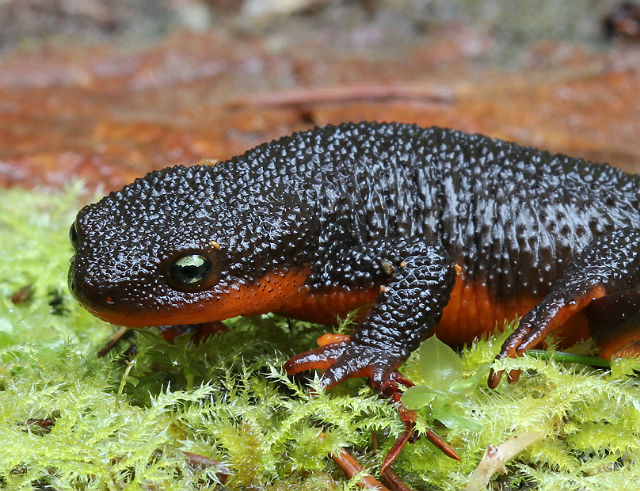
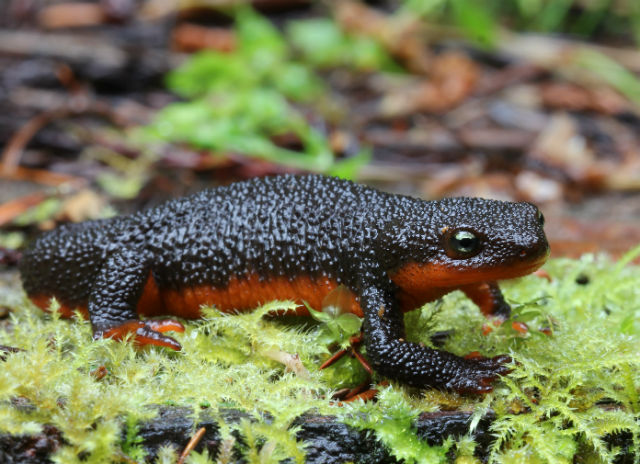
Rough-skinned Newts have relatively grainy and dry skin compared to other salamanders. They also have a fairly stocky shape. This distinctive salamander is two toned: dull grey to brown on top, and bright orange to yellow below.

Rough-skinned Newt 148

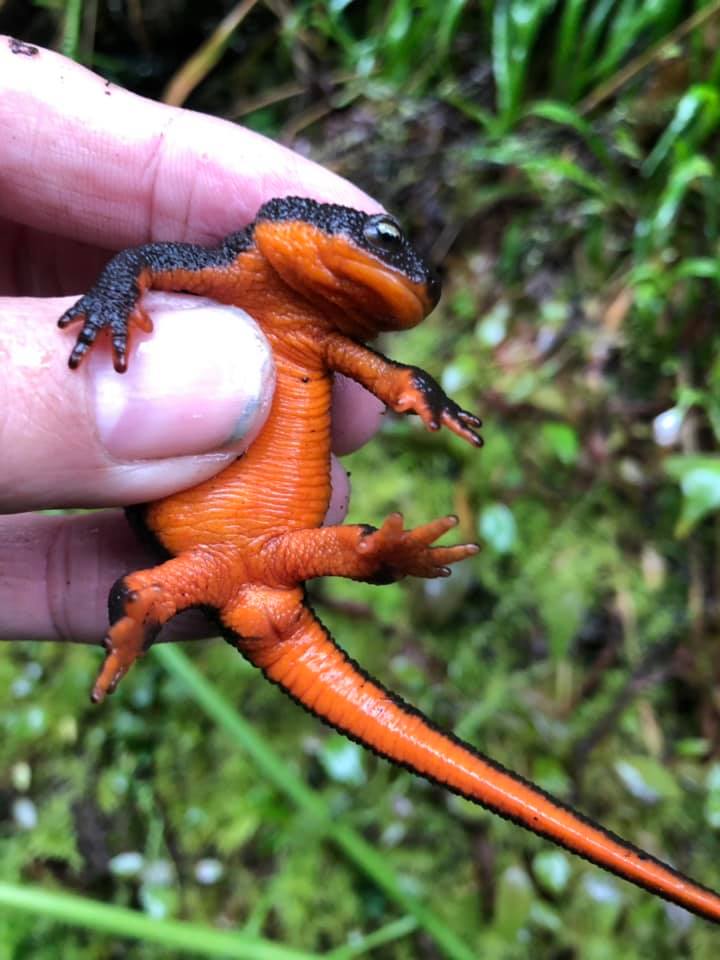
Their bright belly color serves as a warning to would-be predators. When disturbed, the newt will curve its head, neck and tail upwards to display it.

Rough-skinned Newt_01

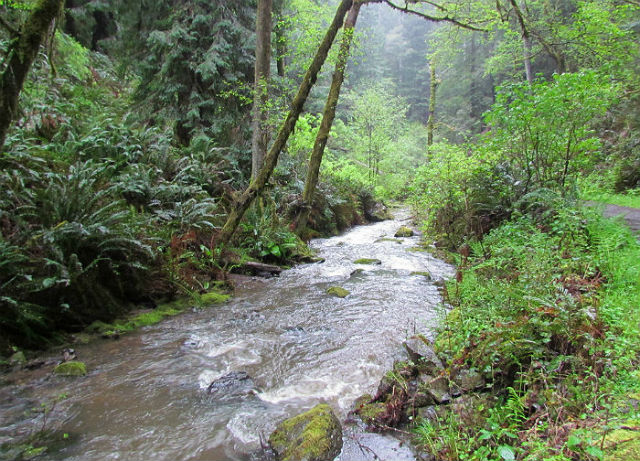
I often find them in forested environments under rotting logs. Like most amphibians, newts become more active and come out of hiding when it rains, but unlike other salamander species they will venture out during the day.

Rough-skinned Newt 143

Adult newts eat a variety of organisms, including insects, slugs, worms, and even amphibian eggs and larvae.

Rough-skinned Newt 144

Protected by powerful tertrodotoxins, the Rough-skinned Newt is the most poisonous amphibian in the Pacific Northwest. One contains enough poison to kill 25,000 mice.

Third Eye Herp
E-mail

Yellow-cheeked Chipmunk

redwoods_2781

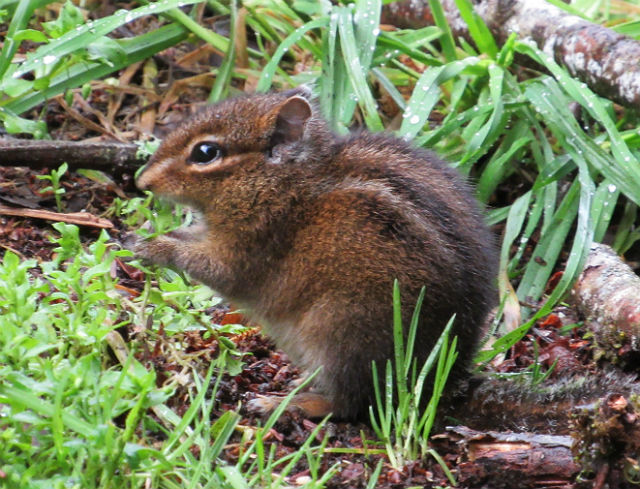
While visiting Van Damme State Park in California, I saw a few of these cool rodents. Also known as the Redwood Chipmunk, this is a member Squirrel Family. It is endemic to areas near the coast of northern California in the United States where it inhabits coastal coniferous forest.

IMG_3894

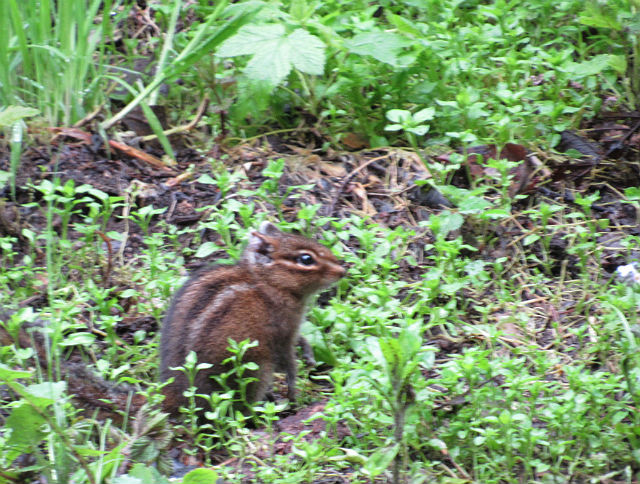
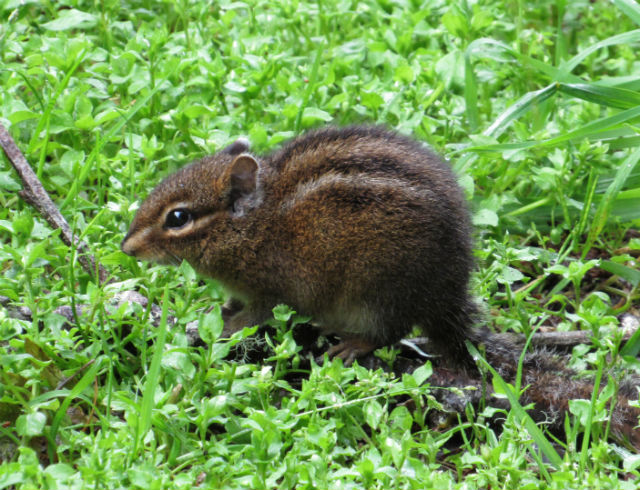
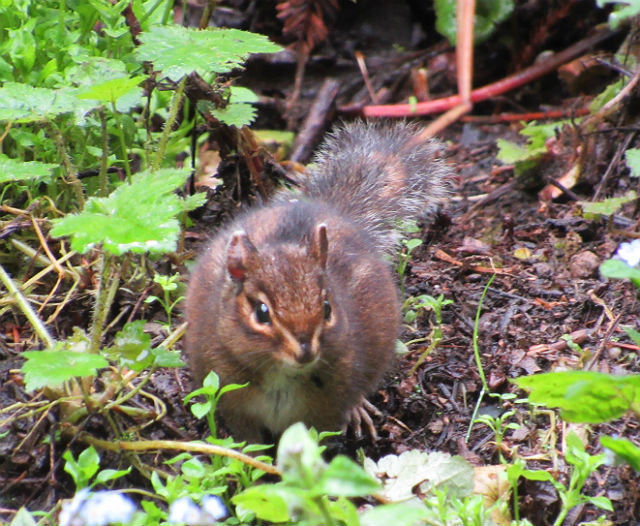
The Yellow-cheeked Chipmunk is tawny olive in color with five dark stripes on the body and three on the head. As the name implies. As its name implies, a pale patch of fur is found immediately behind the ear.

IMG_3906

This animal is secretive in its habits and rarely seen, but it can often be heard emitting its characteristic shrill double-syllable “chuck-chuck” call. These animals rely on Coastal Redwood forests and mixed conifer or Douglas Fir forests for their habitat.

IMG_3897

At the end of winter and beginning of spring, a significant portion of their diet consists of fungi. The rest of the year they consume is a very wide range of seeds. The Yellow-cheeked Chipmunk has a limited range with a total area of occupancy of only 7,700 square miles, though its population is steady and it faces no particular threats.

IMG_3901

This is a neat creature that few people get to see – and a great part of my California adventure.

Third Eye Herp
E-mail

Northern Alligator Lizard

Northern Alligator Lizard 20078

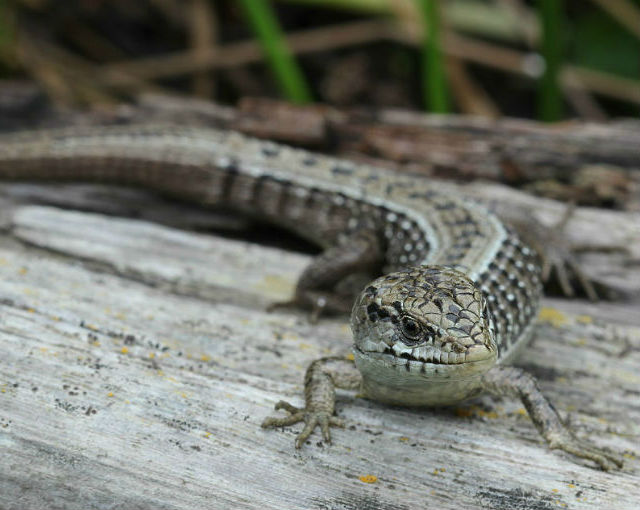
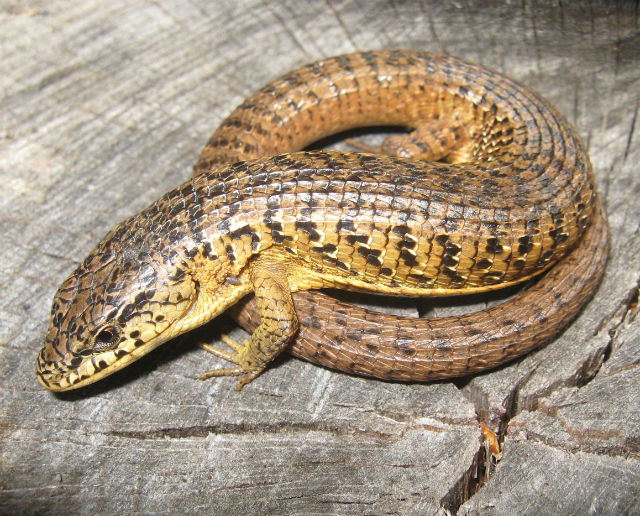
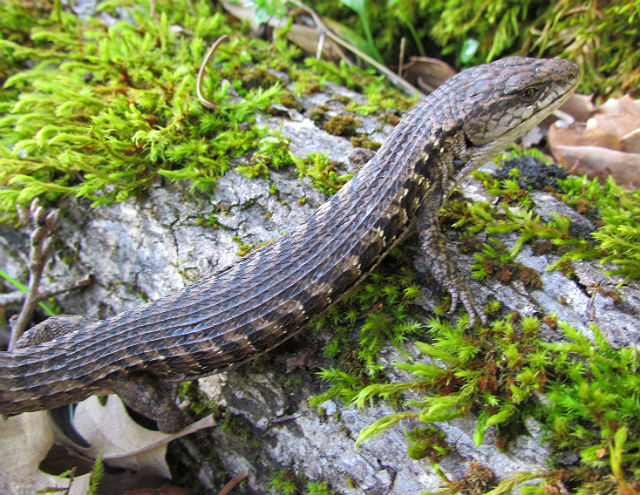
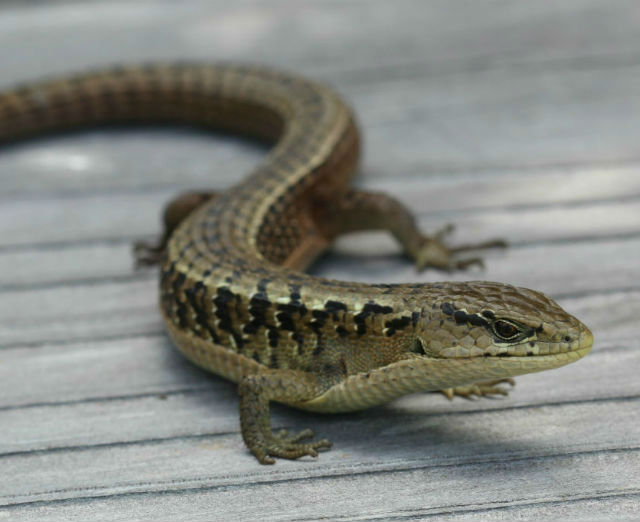
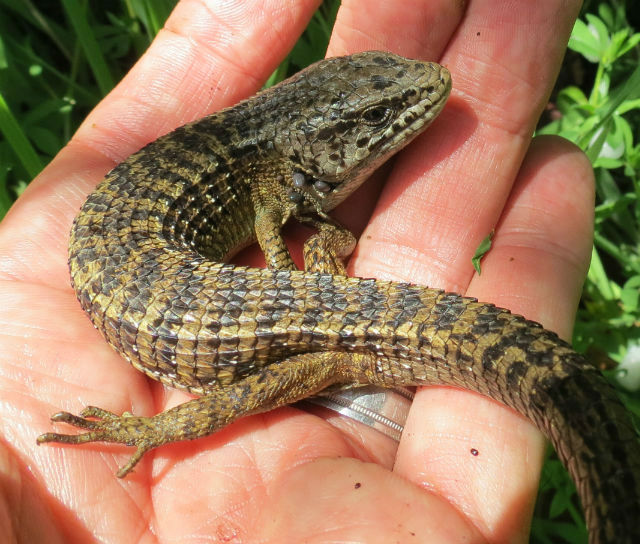
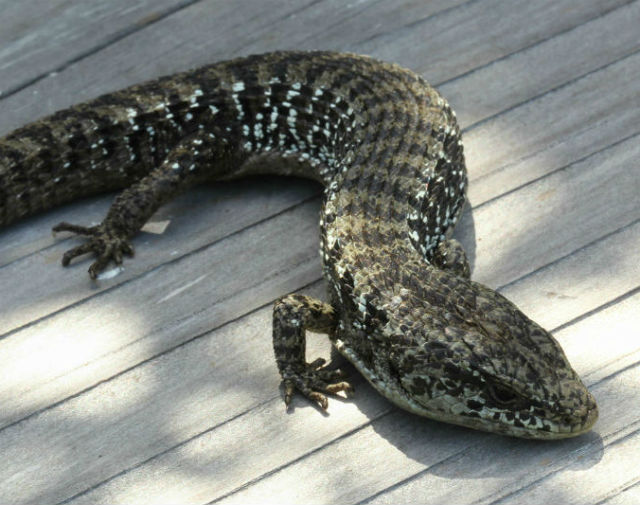
This lizard occurs along the Pacific Coast and in the Rocky Mountains from southern British Columbia to central California. Square bony scales, a large head on an elongated body and powerful jaws probably give this reptile its common name.

Northern Alligator Lizard 0096

Northern Alligator Lizards are small to medium-sized rough-scaled lizards with short limbs and a long tail. Their body is around 4 inches long and their tail adds an additional 6 inches.

Northern Alligator Lizard_4134

I often find them in grassy, bushy, or rocky openings in forests, but they can also reside in areas of low to moderate development, including in rock retaining walls, woody debris and rock piles. Lizards need the sunny openings to bask in to thermoregulate.

Northern Alligator Lizard_1734

Northern Alligator Lizards are found in cooler and wetter environments than other species of lizards in the United States. This reptile feeds on a variety of food items, including crickets, spiders, beetles, moths, snails, small lizards and baby mice.

Northern Alligator Lizard_9372

Alligator Lizards are characterized by a distinct fold of skin along their lower sides. This allows the body to expand when the lizard is breathing, full of food, or in the case of females, carrying offspring.

Northern Alligator Lizard_0811

This creature has the ability to “release” (autotomize) its tail. The dropped tail acts as a decoy, distracting the potential predator. Over time, the lizard will regenerate a shorter, fatter tail.

Northern Alligator Lizard_9378

Unlike its relative the Southern Alligator Lizard (an egglaying species), this reptile gives birth to live offspring.

Third Eye Herp
E-mail

Plains Garter Snake

Plains Garter Snake_1849

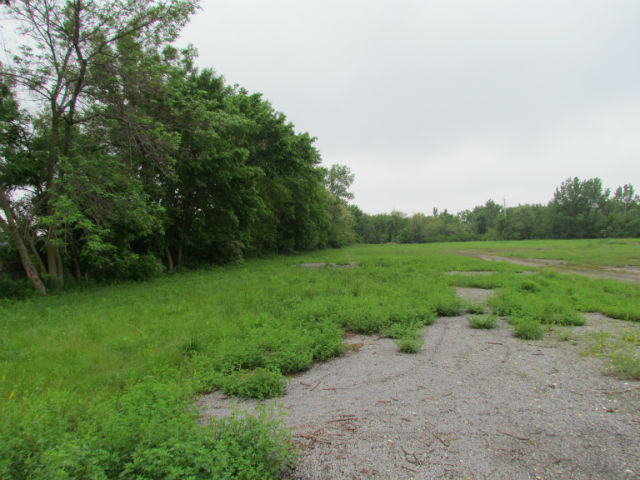
While flipping some debris behind a gas station in Kankakee, Illinois, I came across this “lifer” reptile.

Plains Garter Snake_1855

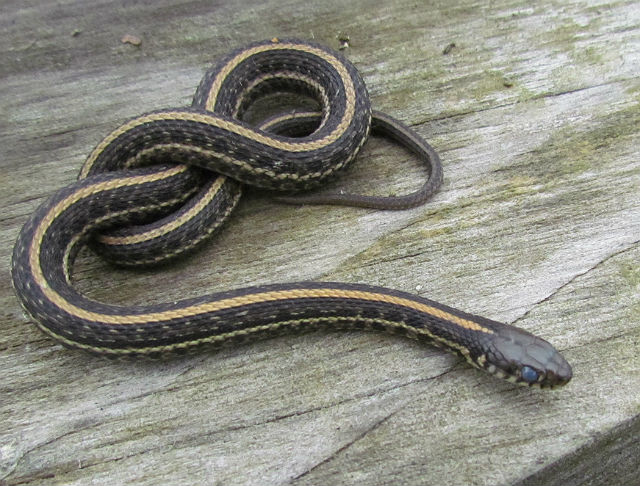
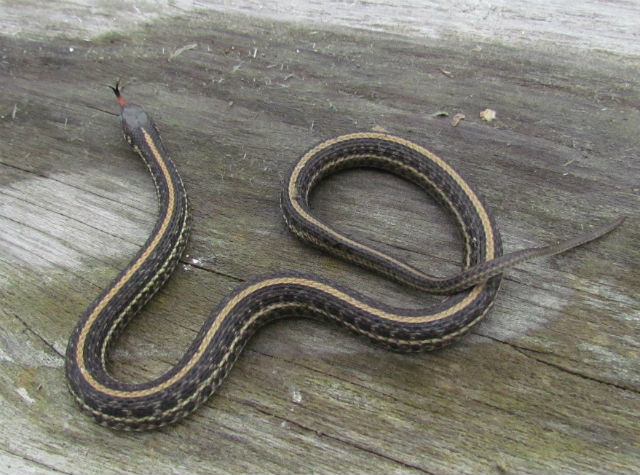
This snake occurs in grassy areas such as vacant lots, abandoned fields, meadows and pastures. It is not unusual to find them near towns.

Plains Garter Snake_1850

Plains Garter Snakes are native to most of the central United States and range as far north as Canada and as far south as Texas. In my home state of Ohio, we have an isolated population.

Plains Garter Snake_1853

Their diet is similar to that of most other garter snakes; they favor frogs and toads, salamanders, fish, small rodents, leeches and earthworms.

Plains Garter Snake_1852

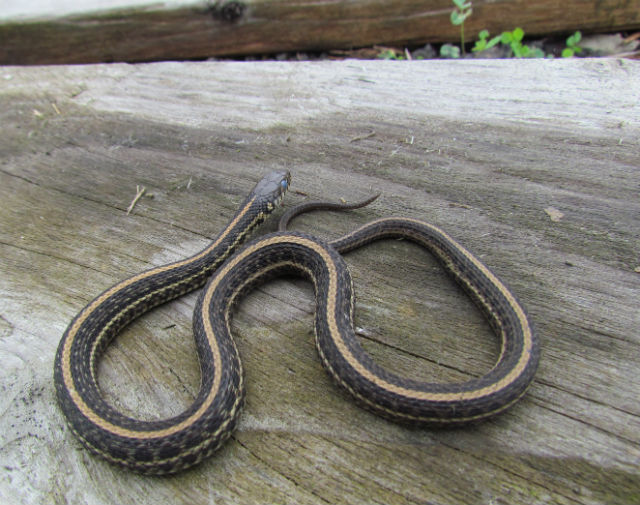
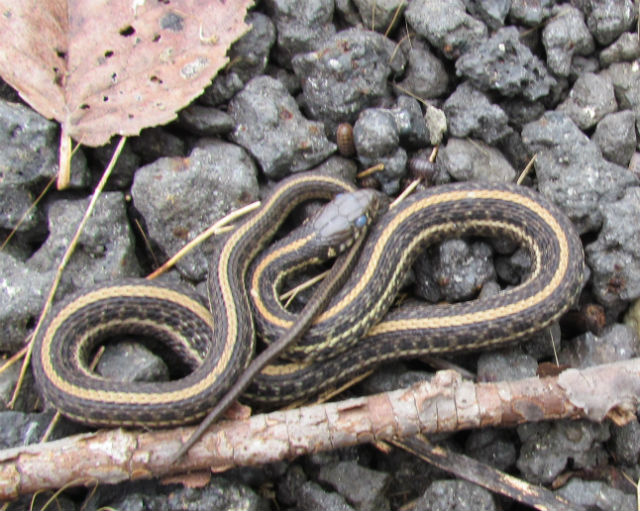
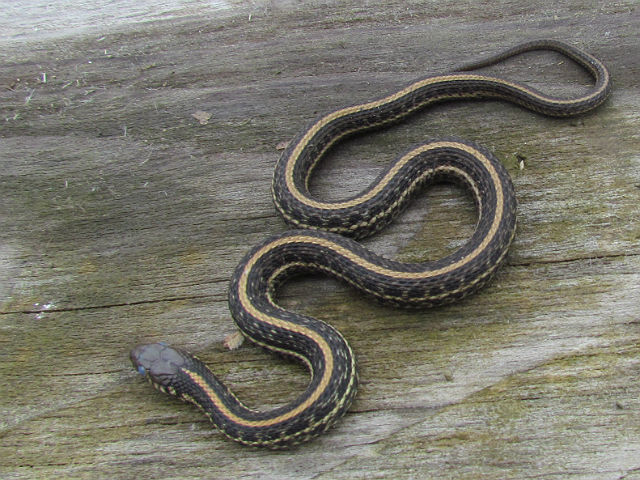
Like other garters, the Plains Garter Snake features three yellow stripes on a background color of dark brown to dark green. Described as “one of the most cold-tolerant snakes,” on warmer Winter days, it often comes out of hibernation to bask in the sun.

Plains Garter Snake_1851

Though the habitat was unglamorous, while visiting the “Land of Lincoln, it was super cool to find this snake that I’ve never seen in the field before.

Third Eye Herp
E-mail

Snowdrops

snowdrops_4570

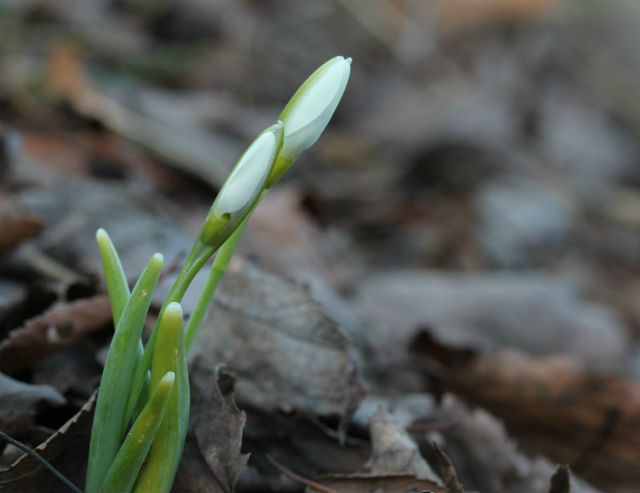
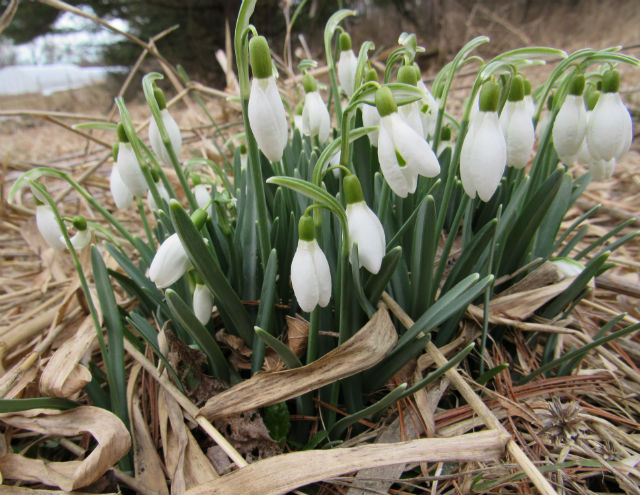
The young shoots of snowdrops emerging from the frost-covered ground provides anticipation for the beginning of Spring.

snowdrop_8855

Snowdrops are in the amaryllis family and there are only a dozen cultivated species, mostly native to the deciduous woodlands of Europe and western Asia.

snowdrops_3328

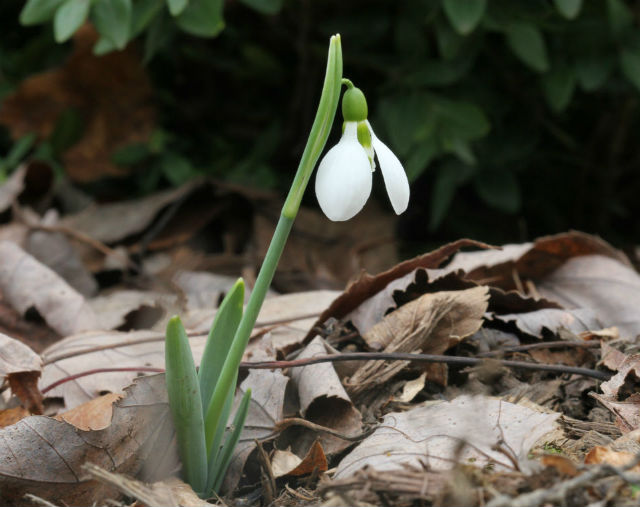
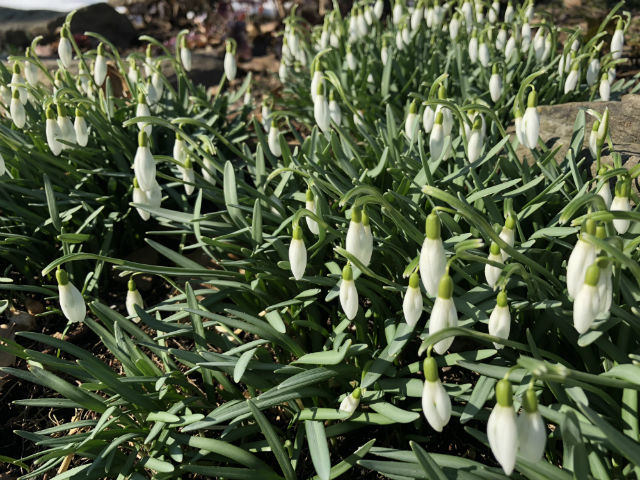
Flowering from January to March, it can naturally be found growing in the woods and by streams. The plants have two linear leaves and a single small white drooping bell-shaped flower.

Snowdrops_0111

Snowdrops have been known since early times, being described by the classical Greek author Theophrastus in the fourth century BC.

snowdrops_3327

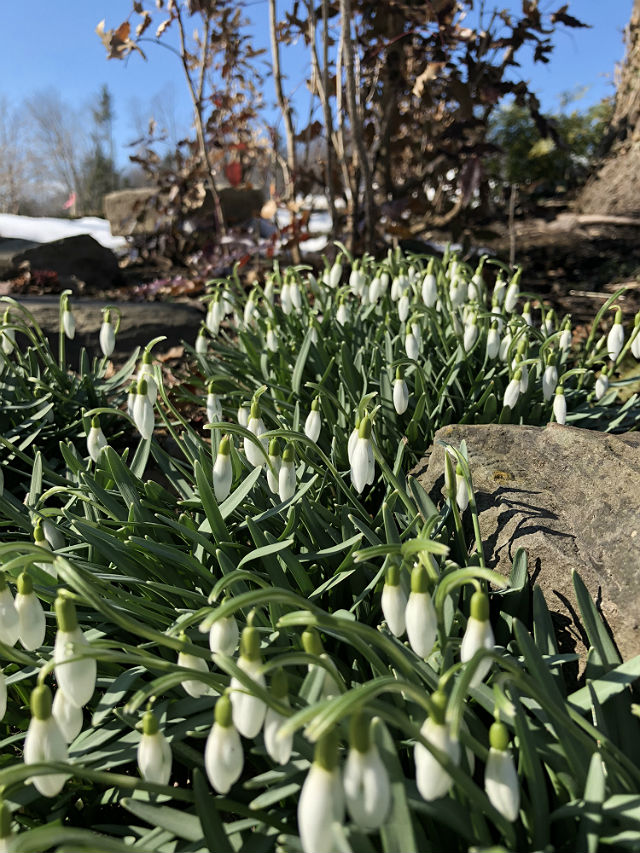
Celebrated as a sign of Spring, Snowdrops can form impressive carpets of white in areas where they are native or have been naturalized.

Snowdrops_0110

I enjoy seeing them in my yard as well as when I’m out and about in late Winter and early Spring.

Third Eye Herp
E-mail

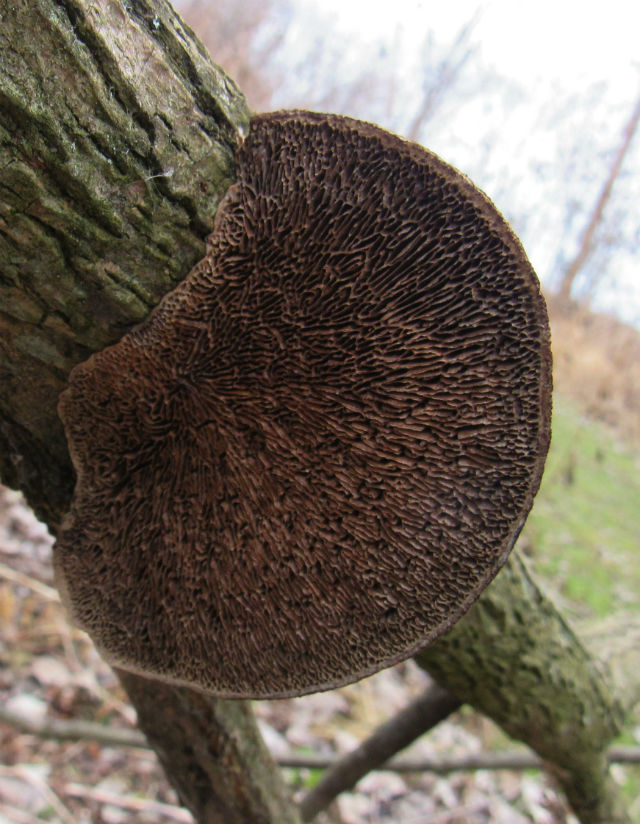
Fragrant Bracket Fungus

Fragrant Bracket Fungus_3490

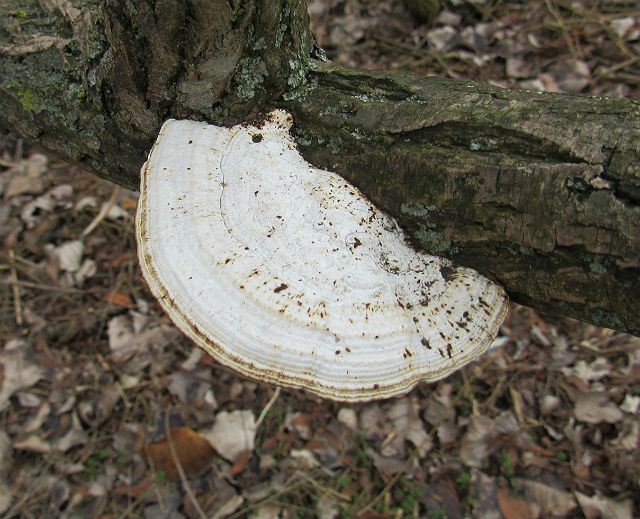
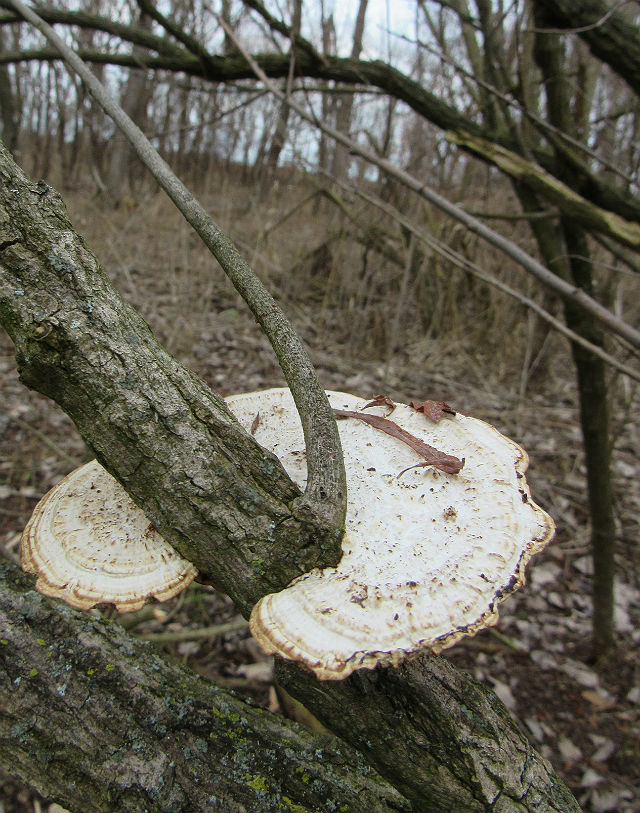
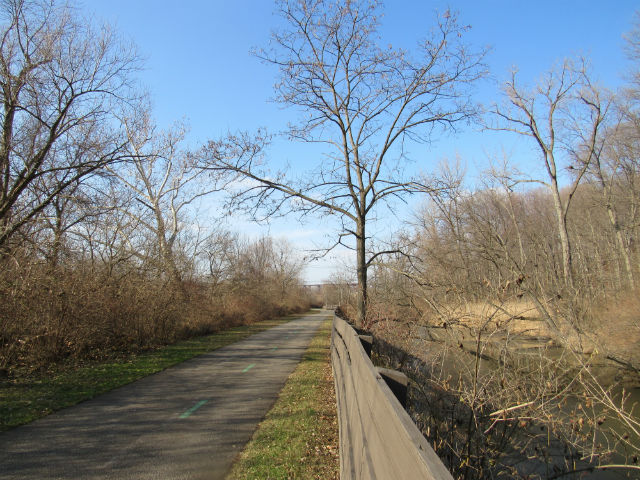
While on a hike in Cleveland Lakefront Nature Preserve, I noticed a fair number of these white organisms.

Fragrant Bracket Fungus_3481

Looking at its Latin Name, Trametes suaveolens, Trametes means “one who is thin,” while suaveolens means “sweet-smelling” in reference to the anise scent of fresh specimens.

Fragrant Bracket Fungus_3484

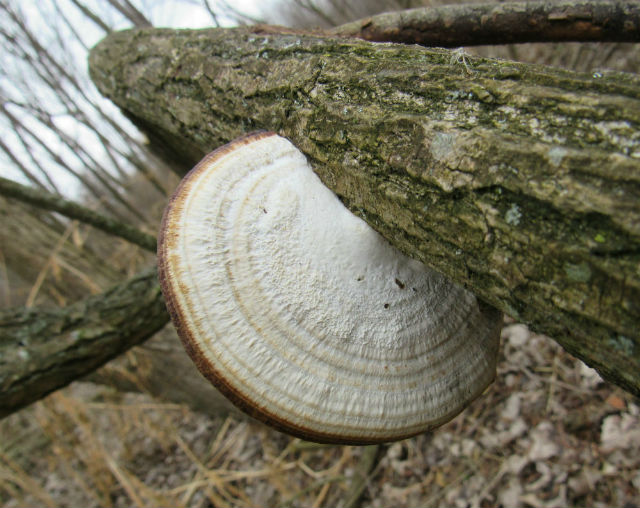
It is found mainly on living or dead broad-leaved trees – usually Poplar and Willow. This fungi is known as a polypore; a type that forms fruiting bodies with pores or tubes on the underside.

Fragrant Bracket Fungus_3489

Most polypores inhabit tree trunks or branches while consuming the wood. They play a very significant role in nutrient cycling and carbon dioxide production of forest ecosystems.

Fragrant Bracket Fungus_3478

Bracket Fungus is also known as Shelf Fungus, because they produce shelf- or bracket-shaped fruiting bodies called conks. Most of the fungus is hidden from view within the body of the tree and it consists of an extensive network of filamentous threads.

Seeing these fungi on an otherwise dreary day added some brightness to the woodland environment where they reside.

Third Eye Herp
E-mail

American Tree Sparrow

American Tree Sparrow_2724

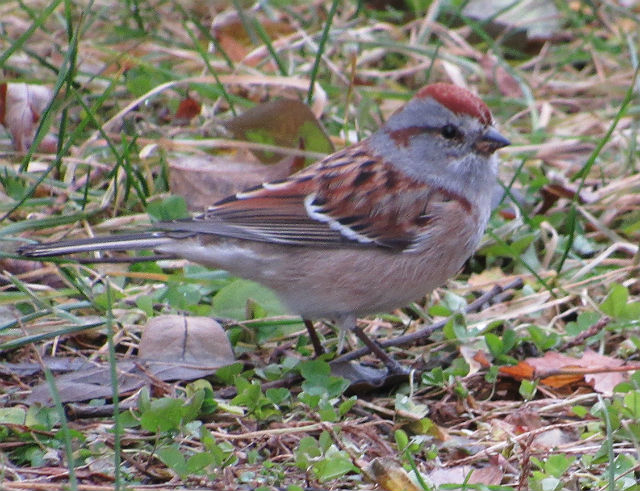
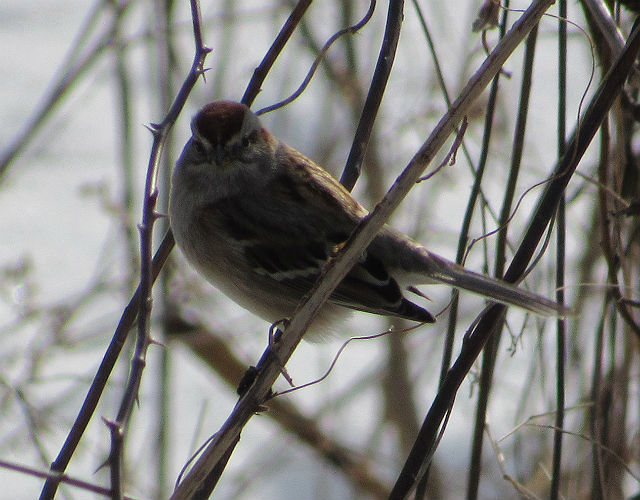
I often see these small birds while hiking on the Ohio & Erie Canal Towpath. This is a northern species that visits the United States in the Winter. It can tolerate very harsh weather and low temperatures if it has a good food supply.

American Tree Sparrow_2527

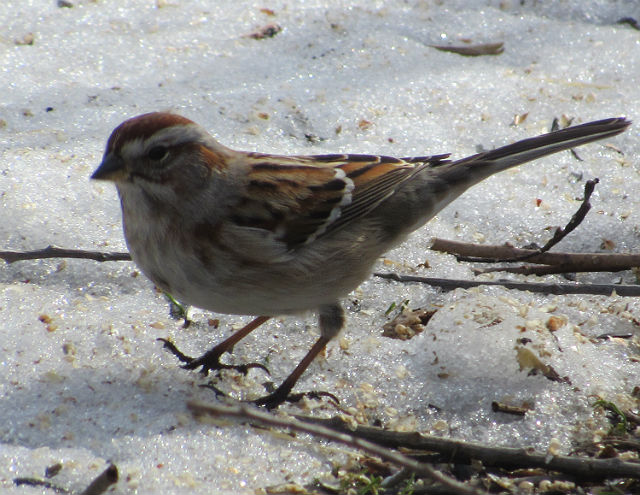
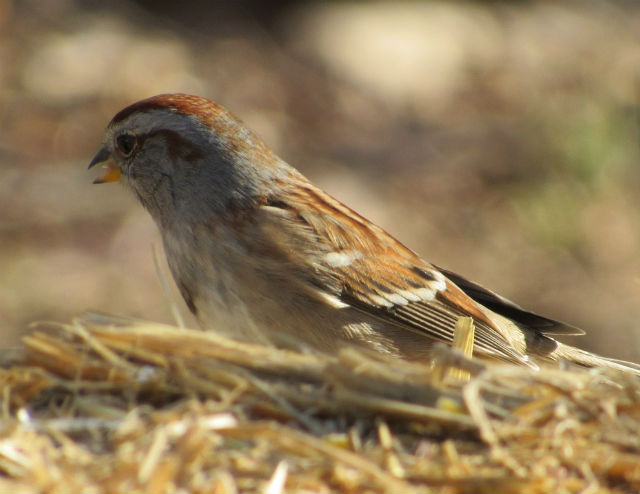
American Tree Sparrows are mostly gray with a rufous crown and ear stripe. Their upperparts are streaked brown. There is one dark spot in the center of the breast; another good identification characteristic of this bird is its bi-colored beak.

American Tree Sparrow_4148

In the Winter, they are gregarious and form flocks, sometimes hanging out with other bird species. They mainly search on the ground for seeds, but they also may ascend on plants, to look for seeds, berries and invertebrates.

American Tree Sparrow_2847

Their preferred habitat is weedy fields with hedgerows or shrubs, usually along forest edges or near waterways. American Tree Sparrow often visit backyards, especially if there’s a birdfeeder.

American Tree Sparrow4164

This species breeds in the far north and is rarely seen outside of northern Canada in the Summer. It is fun to watch, as it adds its color and song to our sometimes drab Winters.

Third Eye Herp
E-mail

Spotted Dorid

Spotted Dorid_2537

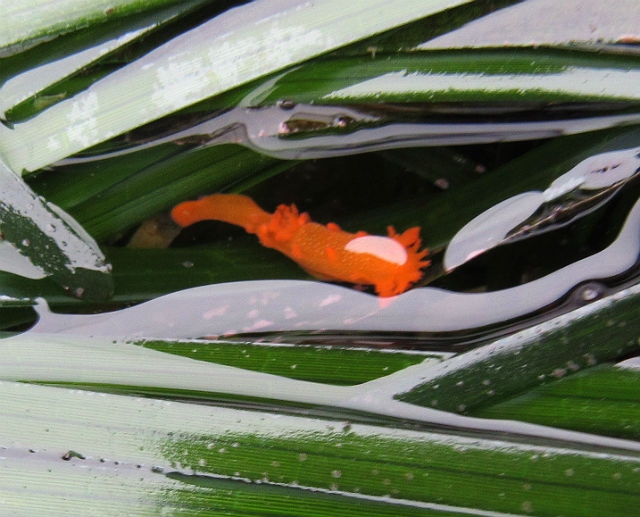
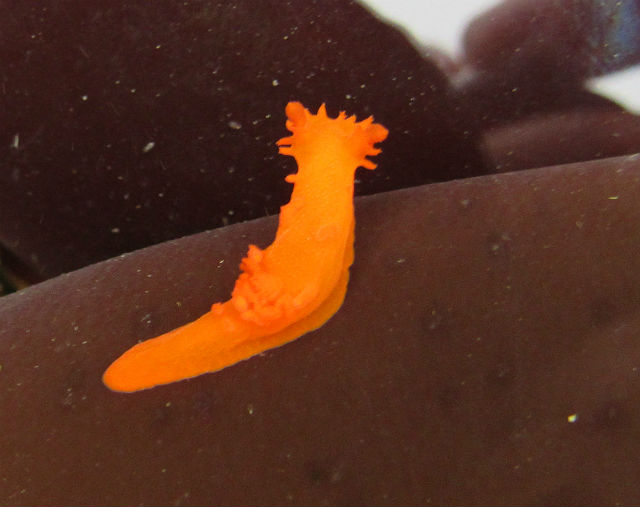
In Central California this is often the most common sea slug around, though this impression may be due to the fact that its orange coloration makes it one of the easiest to find.

Spotted Dorid_4116

While the body shape is consistent, there are several color forms associated with age: the smallest often appear pure orange, medium individuals (1-1/2 inches long) are dark brown with white spots and large examples (3 inches) are light orange with distinctive white spots.

Spotted Dorid_4120

This species lives in the eastern Pacific Ocean, from Vancouver, British Columbia, Canada, to Baja California, Mexico. It also lives in Japan. It feeds on bryozoans.

Spotted Dorid_4115

It was neat to experience this a shell-less marine gastropod in the wild.

Third Eye Herp
E-mail

Purple Sea Urchin

Purple Sea Urchin_3014

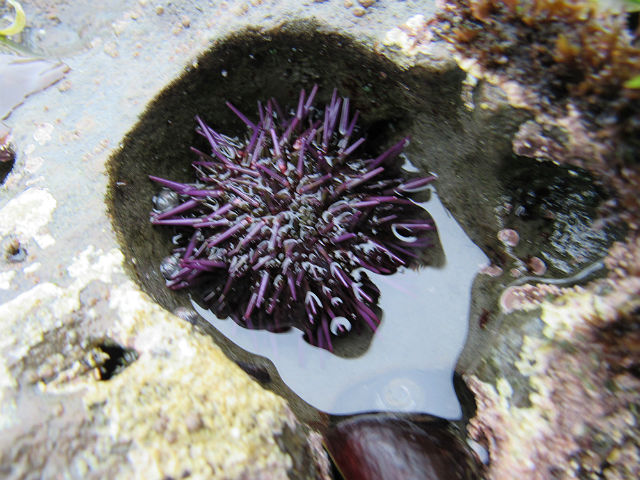
The largely unnoticed creatures of kelp forests and tidepools often look like something out of a sci-fi movie. Strange sea anemones, odd fish and brightly colored Sea Slugs are fixtures in an underwater landscape. The Purple Sea Urchin is right at home in this environment; with its bright color and sharp spines. It’s hard to tell whether it’s a plant or an animal, let alone a species of this planet.
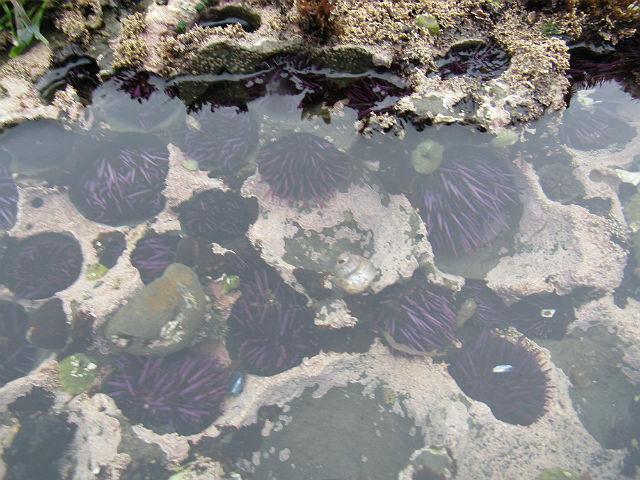
Purple Sea Urchin_4122

Despite its extraterrestrial look, it is an animal related to a starfish. Like the starfish, it lives along the rocky shores and sea floors on the Pacific Coast in shallow areas affected by the crashing waves. Also, like starfish, sea urchins have tube feet, but unlike the five legs of a starfish, tube feet cover the whole spiny external part of the sea urchin and enable it to move slowly using hydraulics.
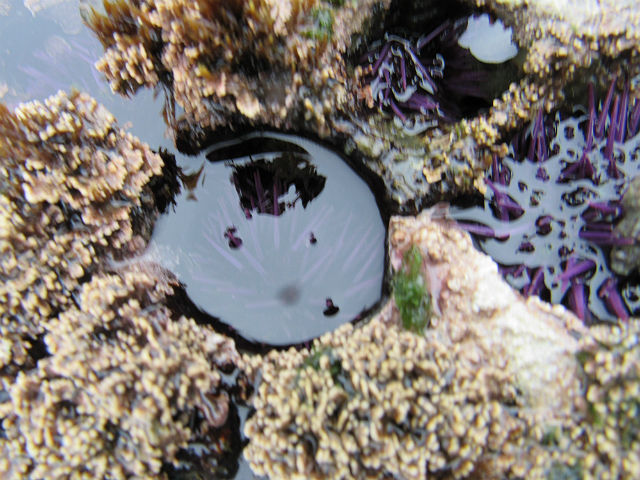
Purple Sea Urchin_4123

Sea urchins feed mostly on algae and decaying organic matter, although they are known to eat kelp and sponges as well. The mouth of the sea urchin, located on the underside of its body, has five calcium carbonate teeth.
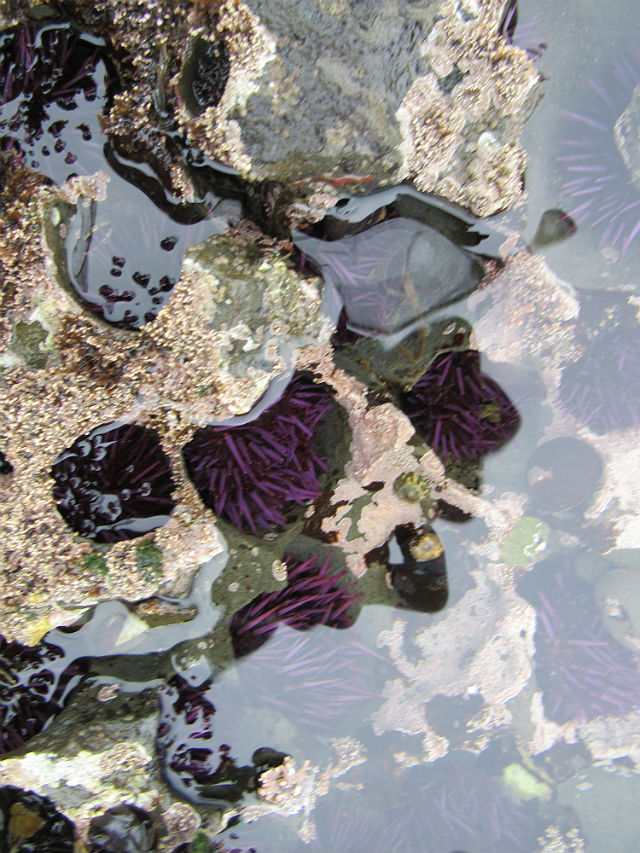
Purple Sea Urchin_4131

The sea urchin actually uses these teeth to “dig” into rocks, where it lodges itself for extended periods of time. In fact, if a sea urchin carves out a hideout for itself at a young age, it can grow too large over time and get stuck in its own hole.
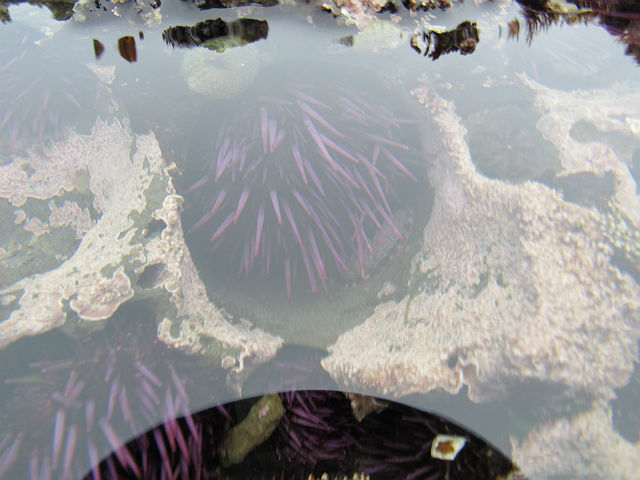
Purple Sea Urchin_4124

Unfortunately, large groups of sea urchins can actually be detrimental to kelp forests. Sea urchins feed upon kelp and often eat the stems of the plant found near the rocky ocean floor. This effectively kills the entire kelp plant. It is often sea otter predation on the sea urchins that keeps sea urchin populations in check and preserves the kelp forests.
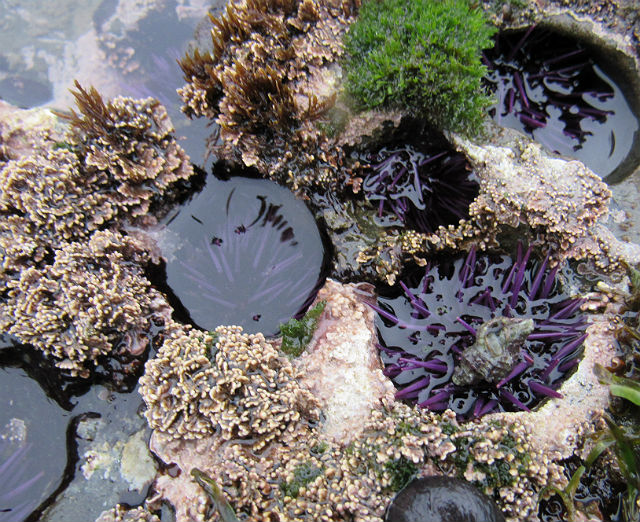
Purple Sea Urchin_4126

However, the sea urchin is not defenseless against these hungry predators. Its first line of defense is its sharp spines, which many divers can tell you are no joke. The next line of defense is the tiny stinging structures found in their spines, called pedicellarines.
Purple Sea Urchin_4130

Purple Sea Urchins are considered an indicator species. They are very sensitive to changes in their environment, and usually are one of the first in their ecosystems to show signs of distress when the water quality starts to decline. Stress in sea urchins often shows itself as drooping spines and a lack of movement.

Third Eye Herp
E-mail

Aggregating Anemone

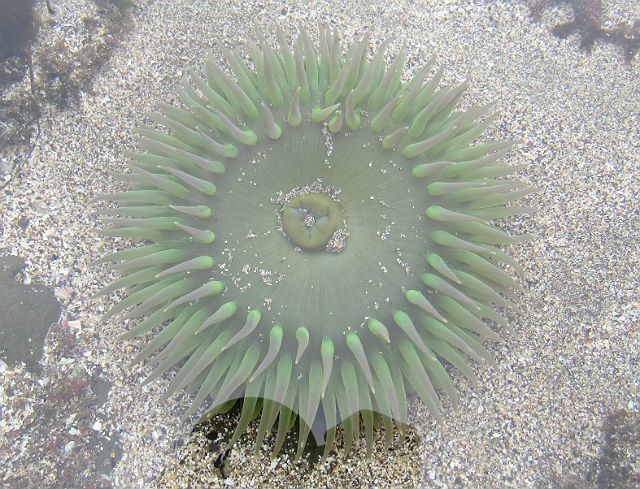
Aggregating Anemone_1123

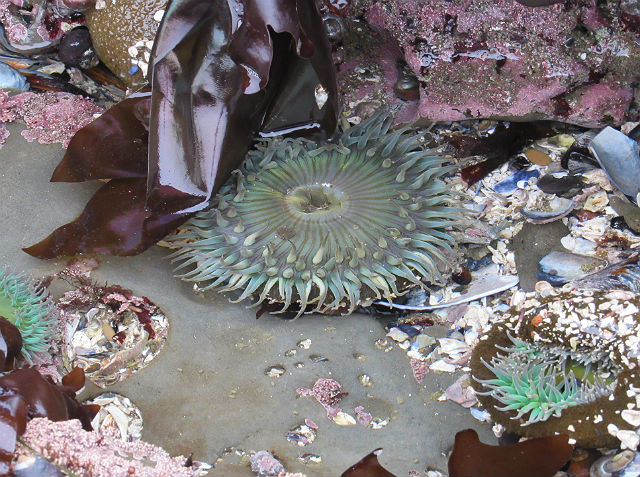
This organism was quite abundant and frequently seen on my quest for Pacific Ocean tidepool creatures.
Aggregating Anemone_4096

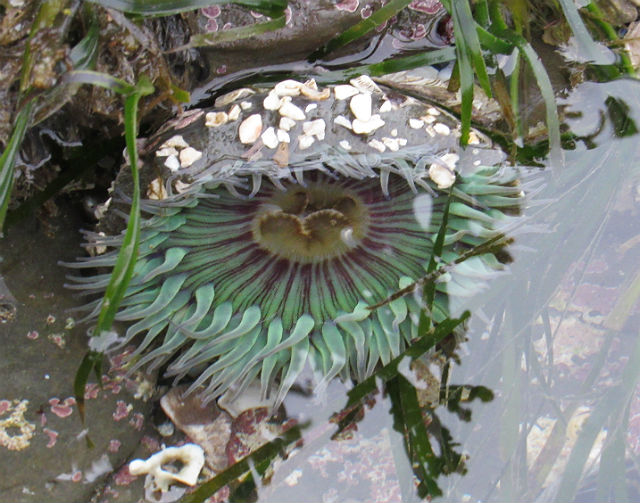
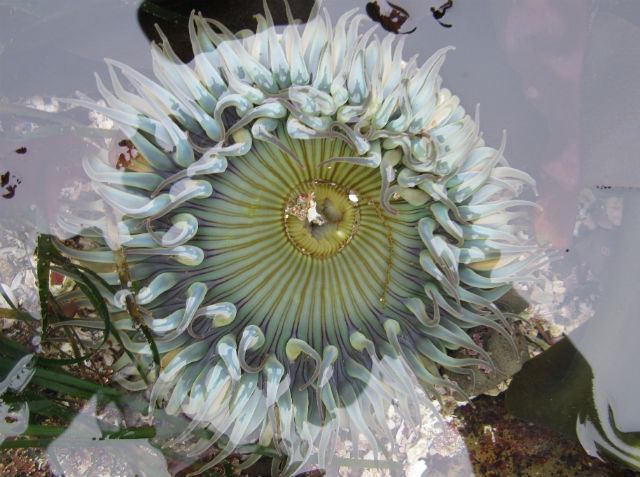
Their green color comes from an endosymbiotic (living within the anemone mutually benefiting both organisms), photosynthetic algae in their tentacles and body.

Aggregating Anemone_4093

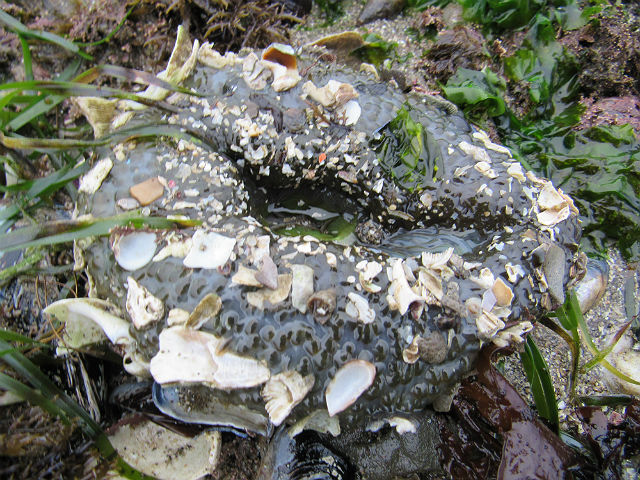
The tentacles can be retracted inside the body cavity or expanded to catch passing prey. When not submerged in the water, they pretty much look like blobs covered with fragments of shells from things they’ve eaten.

Aggregating Anemone_4082

Aggregating Anemones catch prey that comes within reach of their tentacles and immobilize it with the aid of their venom-filled stinging cells within their tentacles.

Aggregating Anemone_4103

The tentacles are triggered by the slightest touch, firing a harpoon-like filament into their victim and injecting a paralyzing neurotoxin. The prey is then transported to the anemone’s mouth and engulfed.

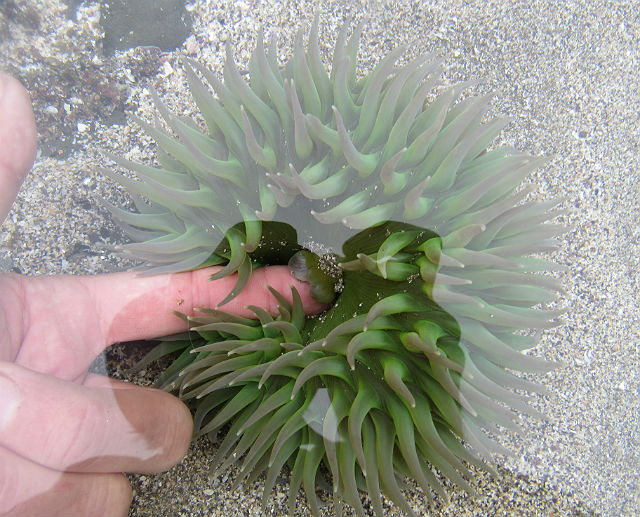
Aggregating Anemone_4228

Despite the potency of its venom to its prey, sea anemones are harmless to humans. I stuck my finger near this one and it wrapped around it, trying to pull my finger into its mouth!

IMG_4235

The closest relatives of these amazing creatures are jellyfish and corals. This was a fun animal to make an acquaintance with on my trip to California.

Third Eye Herp
E-mail