Ochre Sea Star

Ochre Sea Star_0650

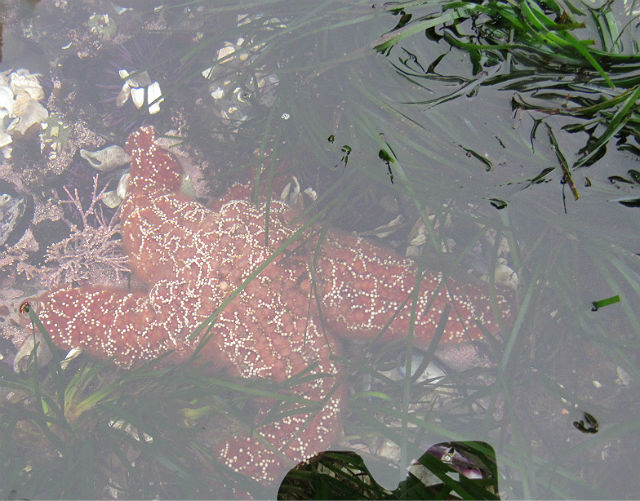
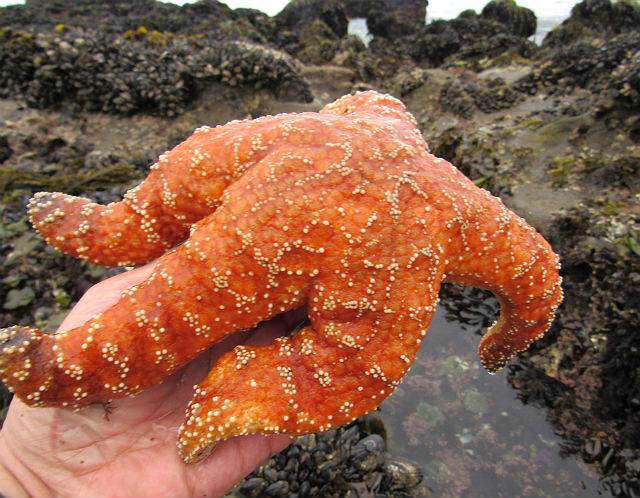
While tidepooling near San Francisco, I came across a number of these cool creatures. They are relatively large sea stars, with five arms and a rough texture. Their short spines on the upper surface are arranged in wavy patterns.
Ochre Sea Star_4132

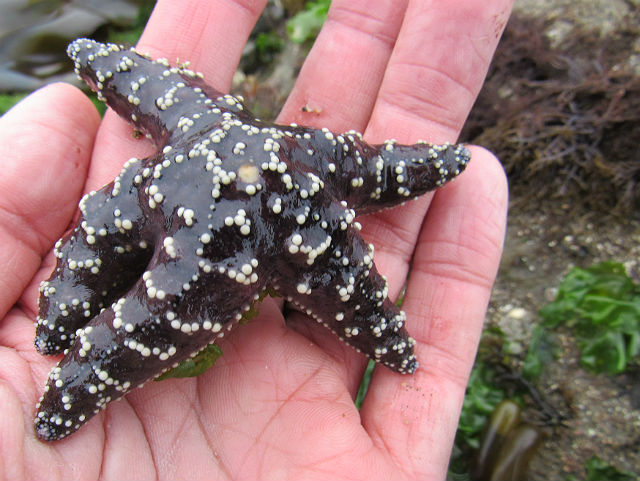
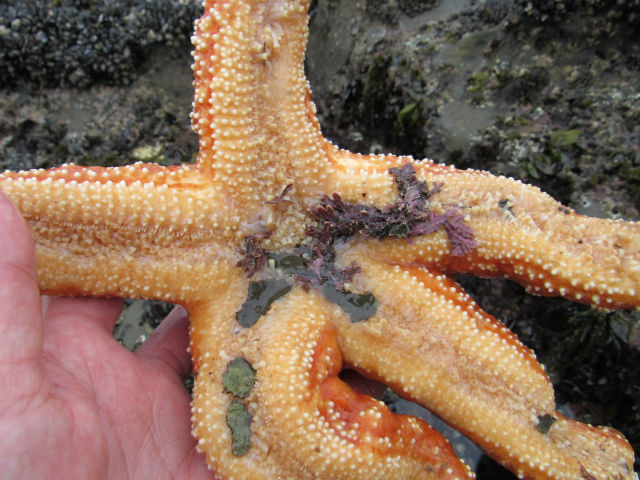
Most of them are either orange (ochre) or purple, and there is no explanation as to why they come in two dramatically different colors. The bottoms of each of its five stout arms are covered with thousands of tiny tube feet tipped with suction cups.
Ochre Sea Star_4214

Ochre Sea Stars are classic intertidal animals. They have been called a “keystone species,” as their presence or absence significantly affects the entire community in the intertidal zone.
Ochre Sea Star_4150

One of this animal’s favorite foods is mussels. Although slow-moving, it does wander about, searching for prey. When it finds a mussel, it wraps a its arms around it and is able to pull the mussel’s shell slightly apart.
Ochre Sea Star_4147

To eat, sea stars extrude their stomach out through their mouth. They then lay their stomach on the soft tissue of their prey. Digestive juices from the stomach dissolve tissue and the stomach absorbs the dissolved material.

Ochre Sea Star_0402

Also commonly known as the Pacific Sea Star, it can regrow a lost arm, though it may take a year to do so. It was a great experience to encounter these impressive, colorful tidepool residents.

Third Eye Herp
E-mail

Pacific Red Octopus

Pacific Red Octopus 0078

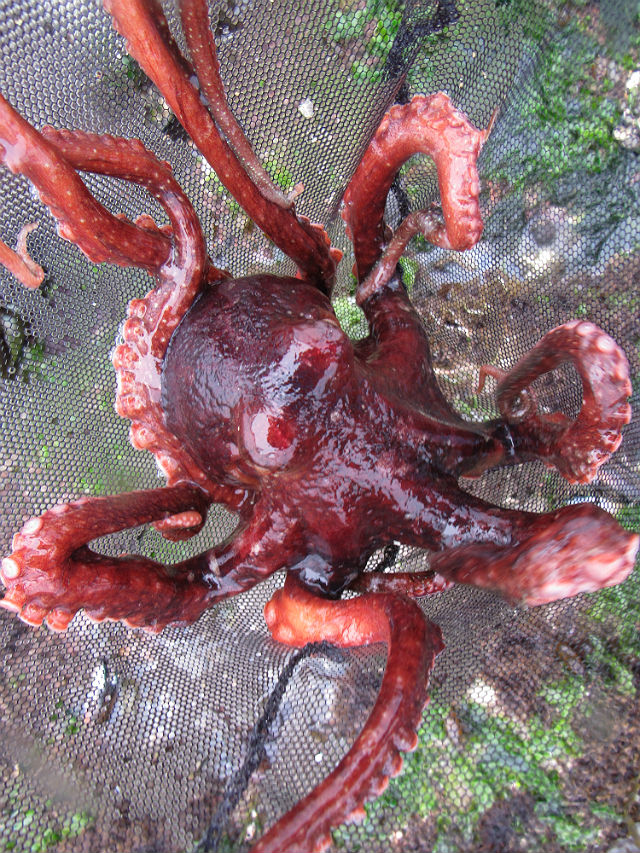
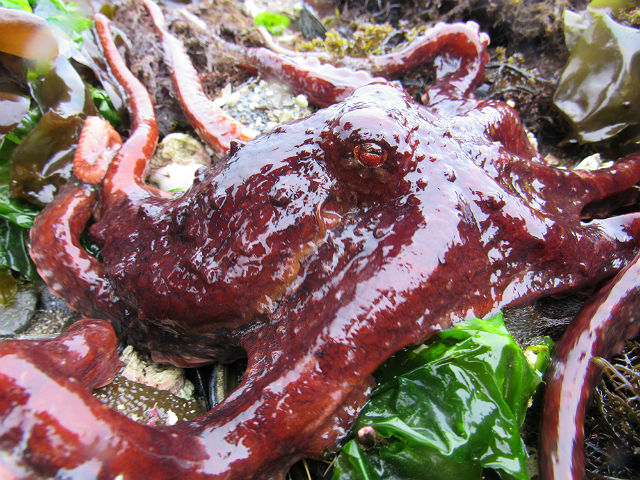
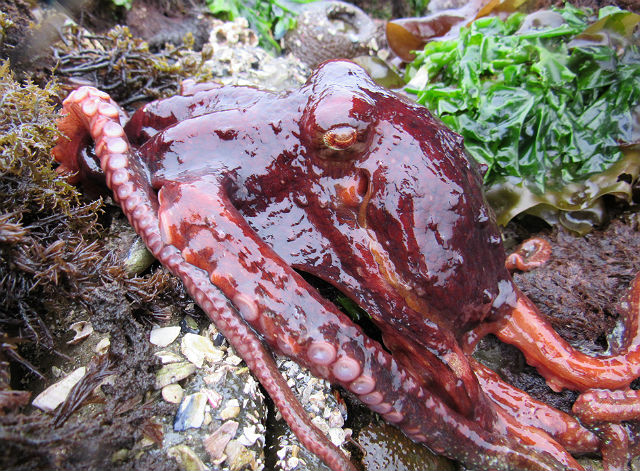
One of the unquestionable highlights of tidepooling in California was seeing this cool creature – the first octopus I’ve ever encountered in the wild. The Pacific Red Octopus doesn’t seem to be as picky when it comes to its diet as many other species of octopus and will consume whatever food they can find, like crabs, clams, barnacles and scallops.

Pacific Red Octopus_4193

An octopus usually collects food at night and then retreats to its den to eat at its leisure. It kills its prey with venom secreted from its salivary glands, then cracks the shell with its sharp beak.

Pacific Red Octopus_4196

It can also drill a hole in the snail’s shell and inject a chemical that separates the snail’s flesh from its shell. An octopus deposits empty shells outside its den in a pile – commonly called an “octopus’s garden.”

Pacific Red Octopus_4207

Although it has excellent eyesight, The Pacific Red Octopus uses touch and smell to find food; thousands of chemical receptors and millions of texture receptors line the rims of its suckers for the purpose of detecting food.

Pacific Red Octopus_4218

Like all octopuses, it can change its color and texture, making its appearance highly variable. Color can vary from a deep brick red, to brown, to white, or mottled mixtures of the three.

Pacific Red Octopus_4205

These are thought to be among the most intelligent of all invertebrates. The presence of individual personalities is a hallmark of intelligence, and the Pacific Red Octopus was the first invertebrate in which individual personalities were demonstrated.

Third Eye Herp
E-mail

Opalescent Nudibranch

Opalescent Nudibranch_4060

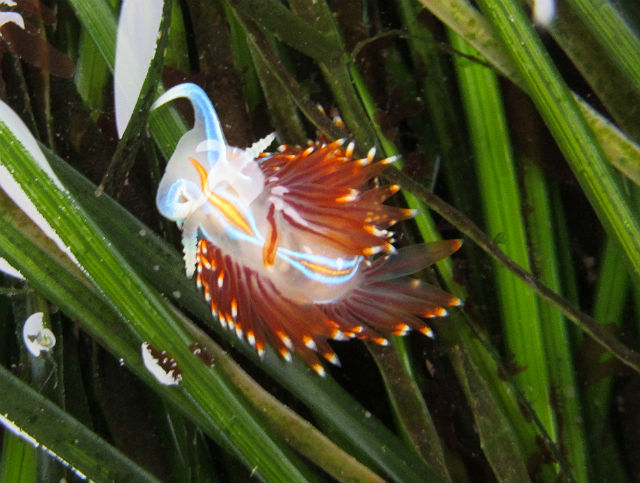
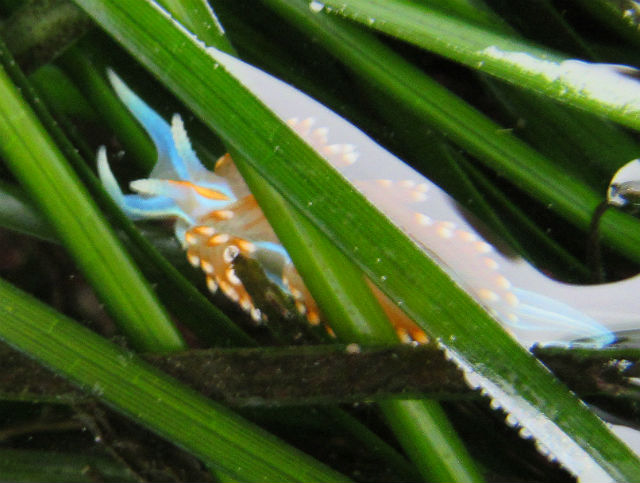
While on a tidal pool adventure at Pillar Point, California, I came across this brightly colored marine invertebrate. Though it is small, only growing to about 2 inches, it is one of the prettiest and most colorful of the sea slugs.

Opalescent Nudibranch_4084

The Opalescent Nudibranch feeds mainly on hydra-like marine organisms such as sea anemones. It sometimes attacks other sea slugs and will eat smaller specimens of its own species. It can be found around tidepools, as well as on rocks, pier pilings and mudflats. It can also be found from low-tide line water to water up to 100 feet deep.
Opalescent Nudibranch_4089

Not only is it beautiful, but this creature is also a model organism and used in studies into classical conditioning, memory consolidation and associative learning, the structure of neural circuits and neural physiology. In addition, it is widely used in studies of ecology, pharmacology and toxicology.

Third Eye Herp
E-mail

Red Rock Crab

Red Rock Crab_4072

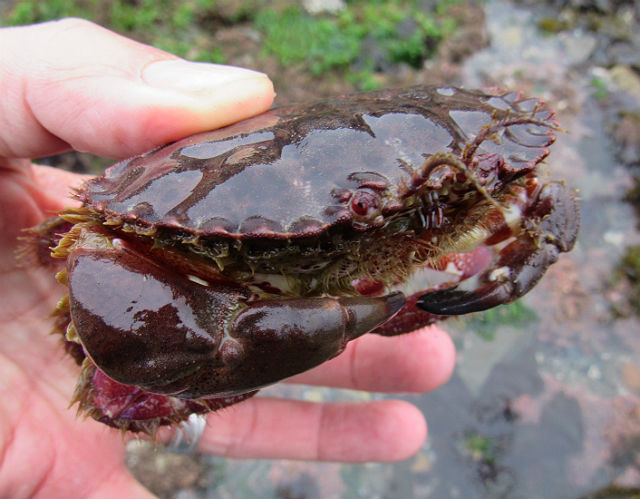
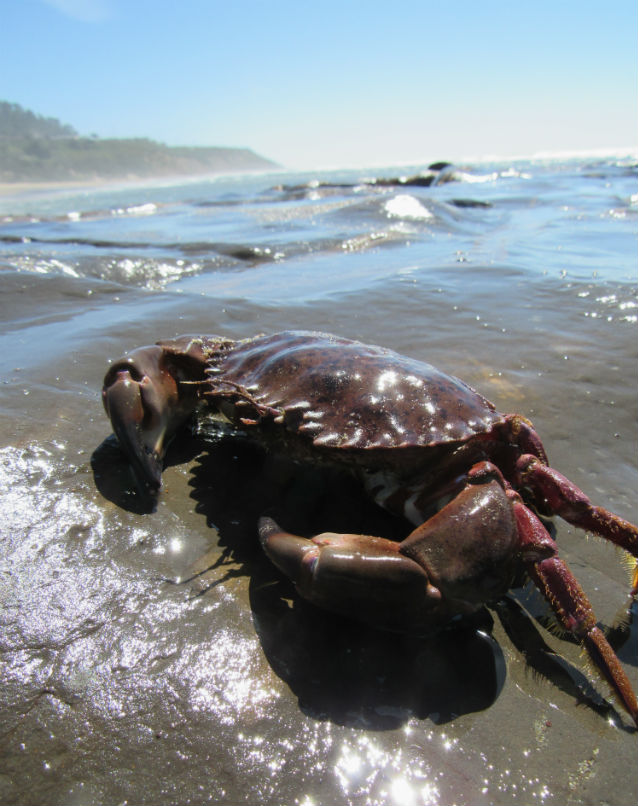
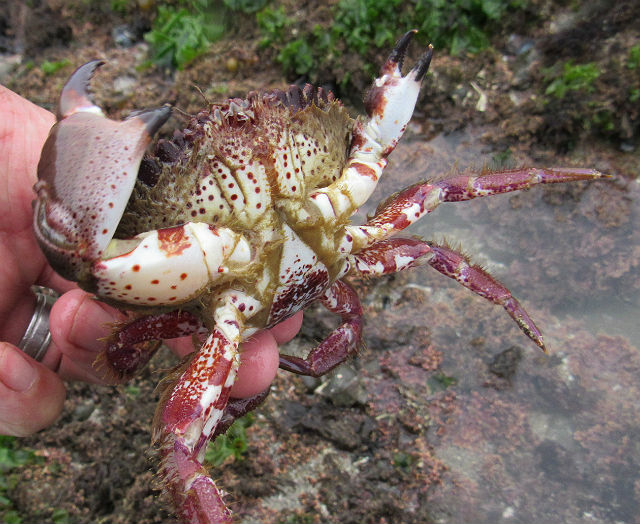
As its name implies, this crustacean is often found in and around rocky places and features reddish-purple coloration.

Red Rock Crab_4175

It can grow to more than 10 inches across, but 4 to 6 inches is more common. Its large claws are tipped in black and they have a wide, fan-shaped body.

Red Rock Crab_2550

This cool creature crushes barnacles with its large pincers and eats them. It also eats smaller crabs, sea cucumbers, and many other intertidal invertebrates, as well as dead fish.

Red Rock Crab_4185

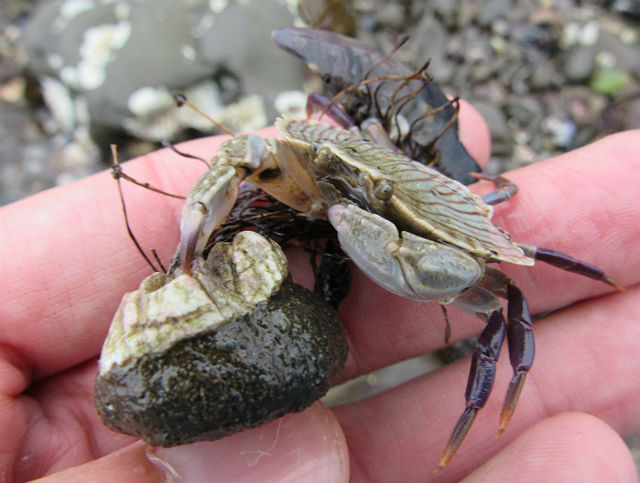
While searching tidepools, I saw this “shell” move. It didn’t take long to realize that it was not a shell at all, but rather a juvenile Red Rock Crab, which can be white with a pattern of dark lines.
Red Rock Crab_4170

I enjoy finding these hard-shelled creatures, whose other common names include Red Crab, Cancer Crab and Red Cancer Crab.
Third Eye Herp
E-mail

Monkeyface Prickleback

Monkeyface Prickleback_4128

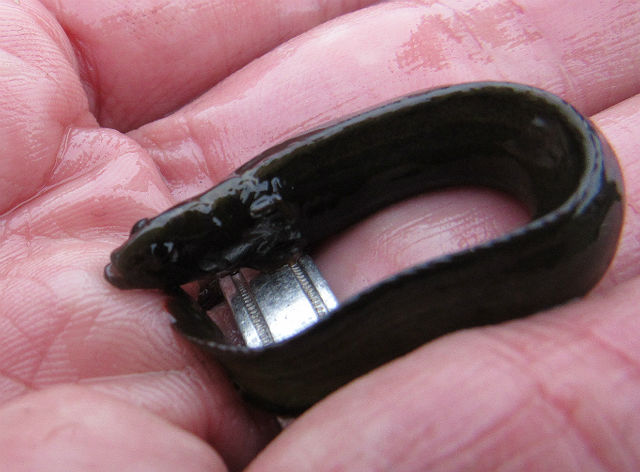
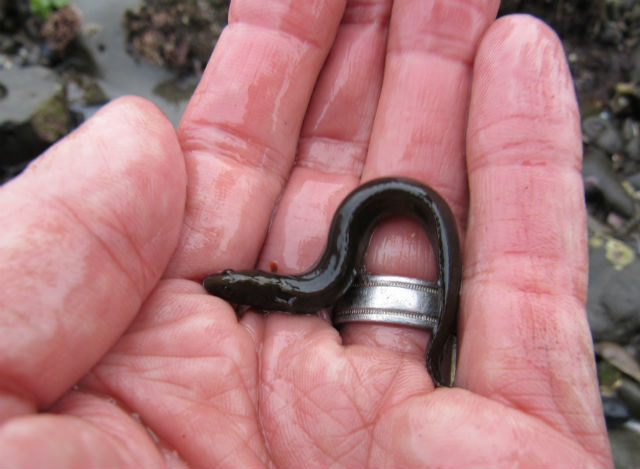
While exploring tide pools in north-central California, I came across this wonderful little fish. It tends to stay near the coast, rather than roaming the open ocean, and is often found in rocky areas.

Monkeyface Prickleback_4069

Young Monkeyface Pricklebacks, like this one, feed on zooplankton and crustaceans, while adults are primarily herbivorous, mainly consuming red and green algae.

Monkeyface Prickleback_4067

These long, slender fish, grow to about 18 inches in length and possess the unfishlike ability to breathe and survive out of water while hidden under seaweed or rocks. This was one of many fun finds during my tidal pool adventure.

Third Eye Herp
E-mail

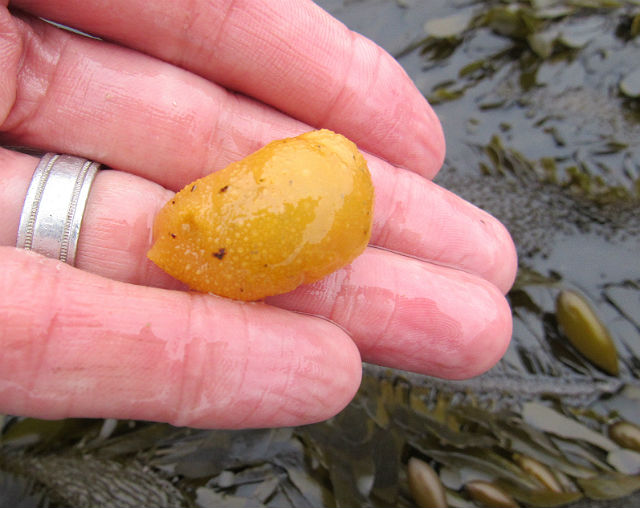
Sea Lemon

Sea Lemon_4057

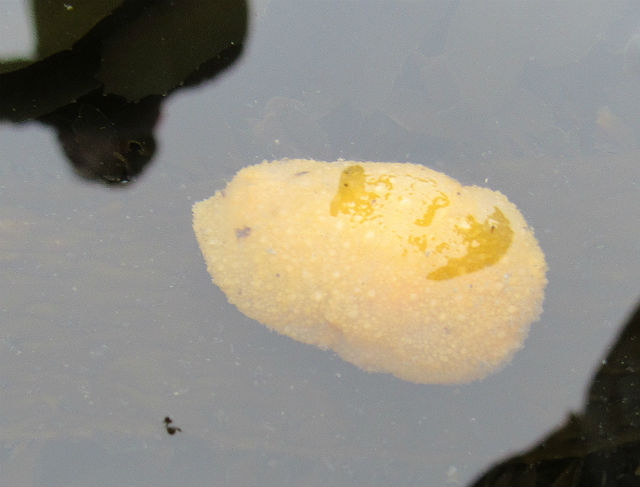
While investigating tide pools near San Francisco, I found several cool creatures, this was one of them. It is a medium-sized, shell-less colorful Sea Slug – a marine gastropod mollusk. Its common name comes from this animal’s visual similarity to a lemon, featuring roughened skin, an oval shape (when seen from above), and its yellow coloration.

Sea Lemon_4073

Its bright colors are an advertisement to its distastefulness; its fruity, penetrating odor and acidic taste repels most predators, though Sea Slugs eat other Sea Slugs, this type feeds mainly on sponges. Like a land slug, it uses its filelike tongue to scrape sponges, its favorite being the Breadcrumb Sponge.

Sea Lemon_4078

The Sea Lemon has a ring of upright feathery gills, which are quickly retracted when a disturbance is sensed, similar to how a land slug retracts its eyes. It is hermaphroditic, possessing both male and female organs. This fascinating invertebrate is relatively short-lived, having a lifespan of about a year.

Third Eye Herp
E-mail

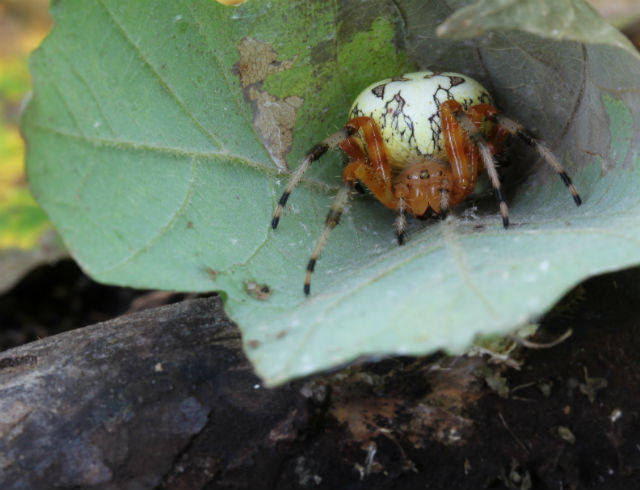
Marbled Orbweaver

IMG_6560

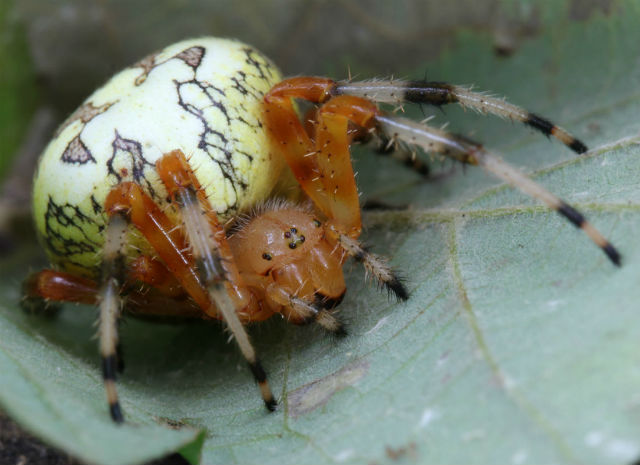
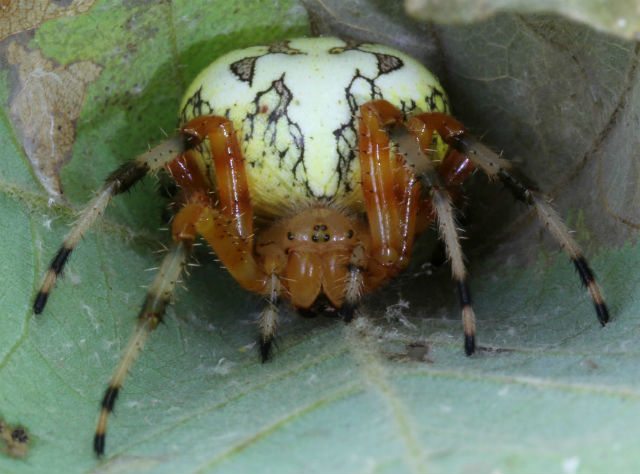
While hiking along the edge of a swamp in southern Illinois, I came across this very cool creature. This species is impressive in both size and pattern. The unique marbled pattern of colors on the abdomen, as well its orange head and black and white legs make for visually stunning arachnid.

IMG_8030

This spider tends to build its web in trees and shrubs in moist, wooded settings. Unlike most other orbweavers in its genus, it hides in a silken retreat near its web. The retreat is made of leaves folded over and held together with silk. One strand of silk extends all the way the retreat. If it vibrates, the spider knows it has caught something.

marbled orb weaver_8038

The “orbweaver” part of the name comes from its web, which the spider weaves to form a circular, or orb-like grid. The fragile web is easily damaged, so the spider spends time each day repairing it, regularly rebuilding it entirely.

marbled orb weaver_8032

The Marbled Orbweaver often falls to the ground if it senses it is in danger. It is sometimes also called the Pumpkin Spider because of its resemblance to orange pumpkin.

Third Eye Herp
E-mail

Zigzag Salamander

Zigzag Salamander_7484

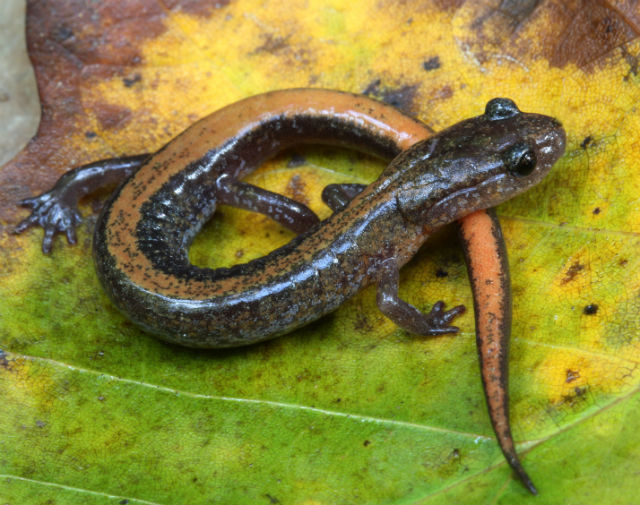
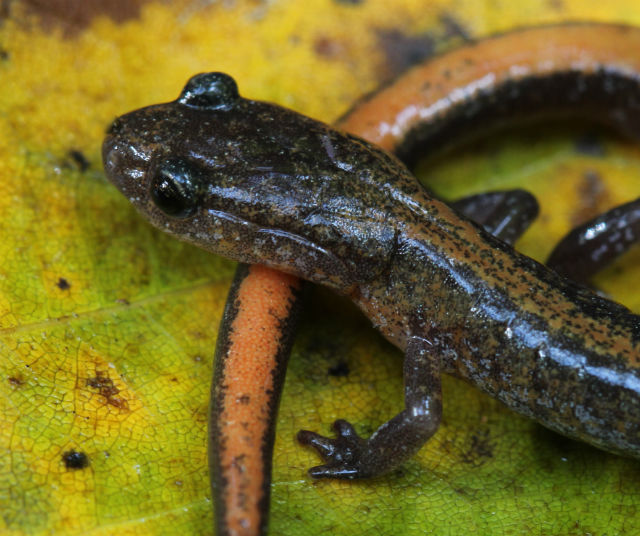
While visiting Snake Road in southern Illinois, I came across this “lifer” amphibian which I’ve never seen “in person” before. It reminded me of a smaller version of a Redback Salamander that is common in my area of Ohio. Its body color is dark grey with a red or orangish wavy pattern, or “zigzag,” extending from the neck down the back to the base of the tail where it straightens out.

Zigzag Salamander_8253

This species is part of a large group known as Lungless Salamanders. They have no lungs and breathe through their skin and mouth. This unique trait requires them to keep the surface of their skin moist at all times. Females lay their eggs deep in underground cavities and guard their eggs until hatching. The baby salamanders do not go through an aquatic larval stage. Instead, when young salamanders emerge from their eggs they look like miniature versions of adults.

Zigzag Salamander_8249

Zigzag Salamanders inhabit temperate forests, rocky areas and caves. They have a preference for moist, rocky slopes. There they hunt for spiders and beetles, which comprise most of their diet. This is one of the smallest salamanders in the United States, reaching only about three inches in total length.

Third Eye Herp
E-mail

Poison Ivy

Poison Ivy_8448

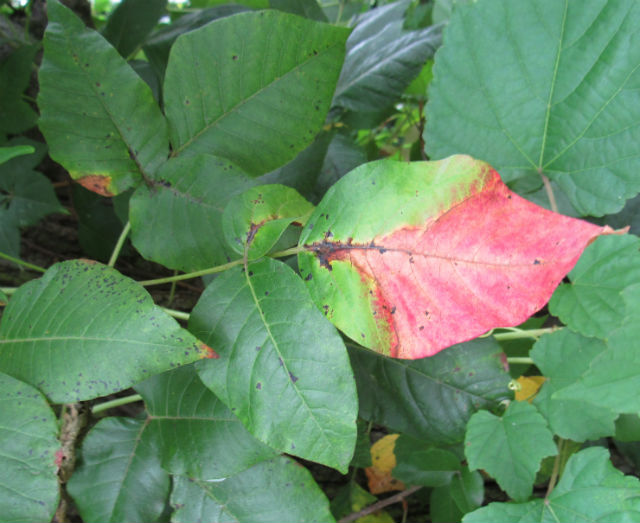
While visiting southern Illinois, I had several instances when I came across this plant, which belongs to the same family as mangoes and cashews. All three of these types produce urushiol, the compound that causes an itchy rash.

Poison Ivy_8769

Every part of the Poison Ivy (leaves, stems and roots) is poisonous, so not only should it not be touched, it should not be burned. With burning, the urushiol becomes volatilized in the smoke and you can get it in your lungs, which is very dangerous and can even lead to death.

Poison Ivy_8446

Scientists speculate urushiol evolved as an antimicrobial defense agent. Birds, deer, squirrels, reptiles and insects are not affected by it. In humans, contact with Poison Ivy causes a reaction known as a cell-mediated immune response. The rash it causes is a result of your immune system attacking its own skin cells.

Poison Ivy_0520

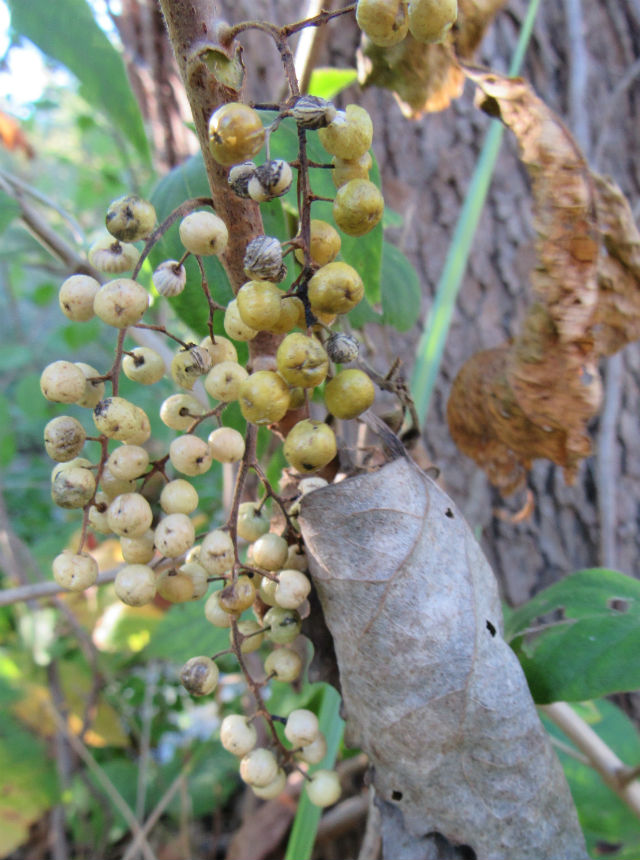
Poison Ivy fruit, called drupes, are an important food for wildlife. Over 60 types of birds eat Poison Ivy berries. Deer and insects eat the leaves.

Poison Ivy_8689

“Leaves of three, let it be; berries white, take flight” is a familiar saying to help identify and avoid Poison Ivy, though its characteristics are very diverse and change in different habitats.

Poison Ivy_8449

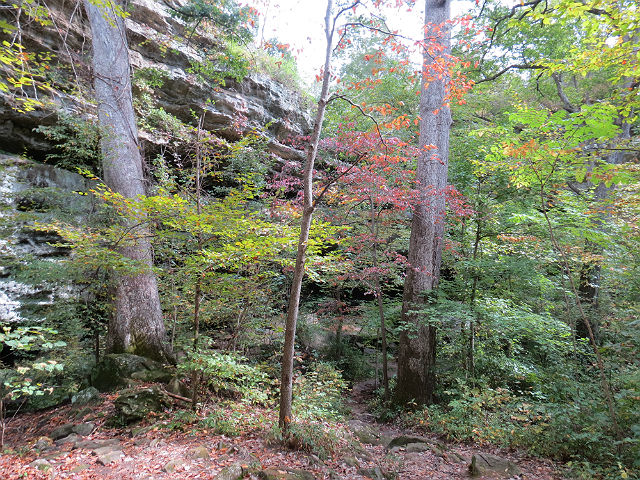
This plant often follows civilization, cropping up in disturbed sites like cut banks, roadsides and old fence rows. It prefers woodland borders and clearings and shuns the dense forest. Despite its common name, it is not a true ivy.

Poison Ivy_8762

For those who are allergic to the plant, its benefits are often overlooked. Poison Ivy is an early colonizer, often taking hold in areas disturbed by humans and it begins the slow process of rebuilding the landscape. It requires very little nourishment or moisture and it attracts and sustains a variety of wildlife.

Third Eye Herp
E-mail

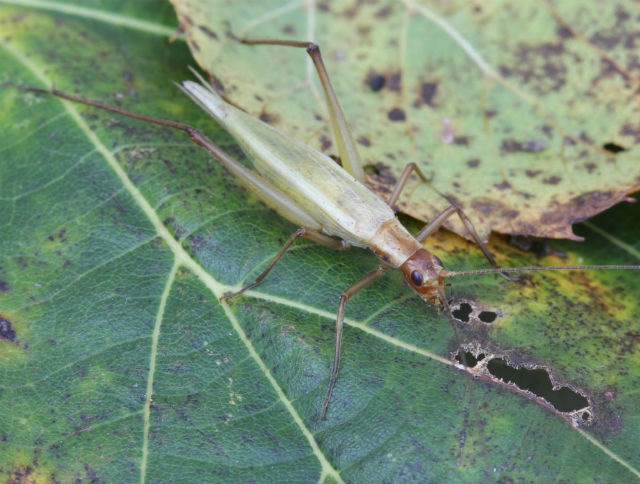
Snowy Tree Cricket

Snowy Tree Cricket_7931

I often find this insect in the Autumn, not only when visiting southern Illinois, but also in my home state of Ohio.

snowy tree cricket_3110

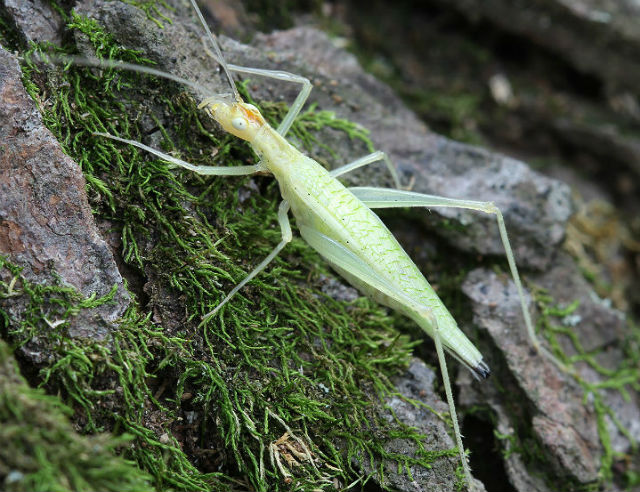
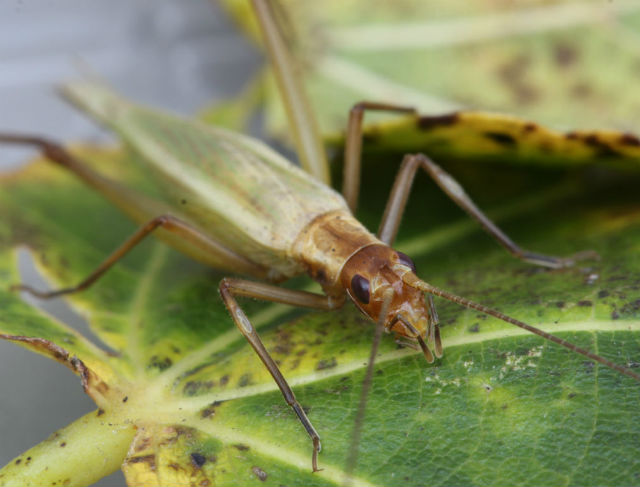
This pale green species occurs over a wide distribution in the northern United States and parts of southern Canada.

Snowy Tree Cricket_1956

The Snowy Tree Cricket is known for having a chirping rate highly correlated with ambient temperature. This relationship is known as Dolbear’s Law and was published in 1897 in an article called “The Cricket as a Thermometer.”

Snowy Tree Cricket_7664

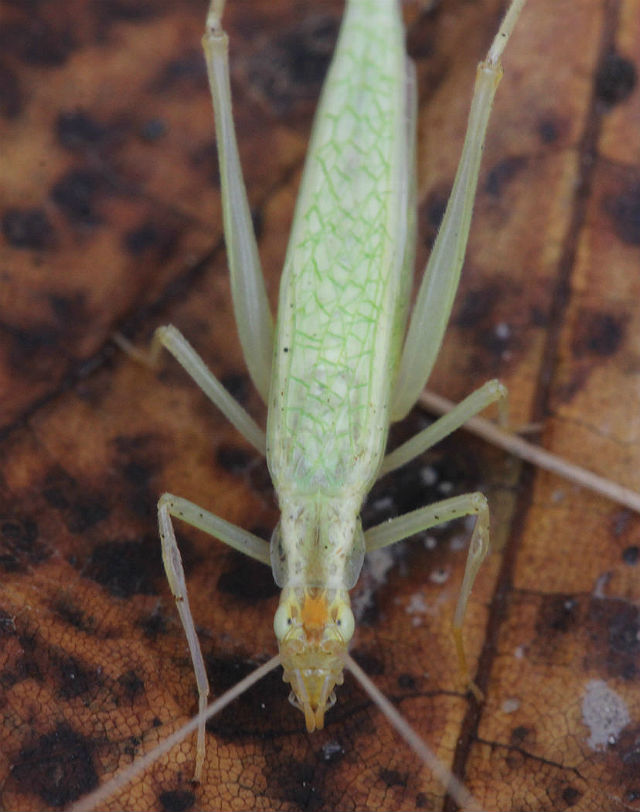
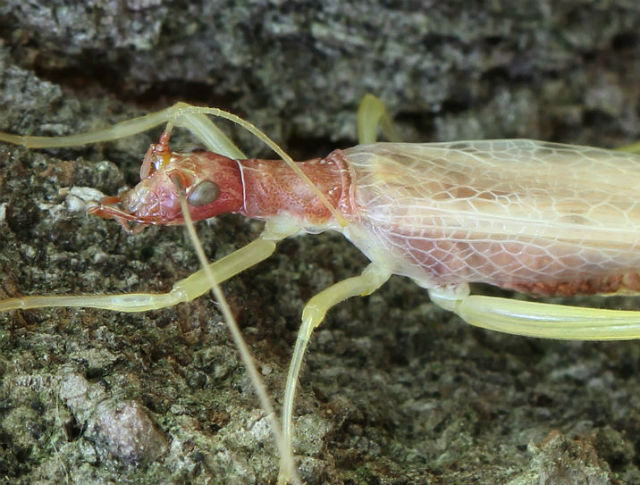
As their name implies, these creatures live in trees and shrubs, for which they are well camouflaged. The bodies of tree crickets are long and skinny compared to the bodies of other types of familiar crickets.

Snowy Tree Cricket 016

Like other species of in their family, they feed on a wide range of items like plant parts, other insects and even fungi.

Snowy Tree Cricket_1949

The call of the Snowy Tree Cricket is commonly used as a background sound in movies and on television in order to depict a warm Summer evening.

Snowy Tree Cricket_1952

This is a neat, delicate-appearing invertebrate that I enjoy coming across, whether while doing yardwork or out herping.

Third Eye Herp
E-mail